1. Search Result
Search Result
Results for "

ABCB1-IN-1

" in MedChemExpress (MCE) Product Catalog:

21

Inhibitors & Agonists

1

Natural
Products

Cat. No. Product Name Target Research Areas Chemical Structure
  • HY-109061
    Lazertinib
    3 Publications Verification

    YH25448; GNS-1480

    Apoptosis Akt TRP Channel EGFR ERK Infection Neurological Disease Metabolic Disease Cancer
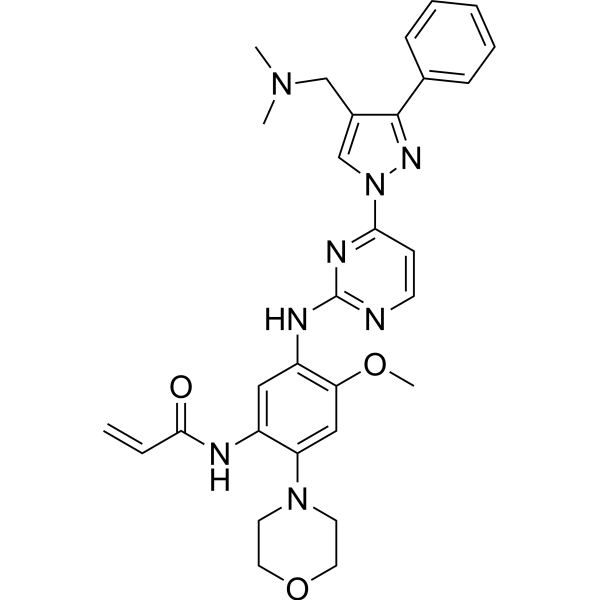
    Lazertinib (YH25448; GNS-1480) is an orally active, blood-brain barrier permeable third-generation EGFR tyrosine kinase inhibitor, as well as an ABCB1/ABCG2 inhibitor and a TRPA1 activator. Lazertinib exhibits IC50 values of 0.4 mM and 0.2 mM against human ABCB1 and ABCG2, respectively. By inhibiting mutant EGFR signaling, EGFR phosphorylation and the downstream ERK/AKT pathway, as well as upregulating surface expression of EGFR/MET, Lazertinib induces cell cycle arrest, apoptosis, spontaneous calcium responses, hyperexcitability of dorsal root ganglion (DRG) neurons, and TRPA1-dependent pain-like behaviors. Lazertinib competitively binds to the substrate-binding sites of ABCB1/ABCG2, stimulates their ATPase activity without altering their expression or plasma membrane localization, thereby enhancing ADCC activity, acting as a chemosensitizer, and reversing ABCB1-mediated multidrug resistance. It exerts antitumor activity as a single agent or in combination with other drugs. Lazertinib is applicable to research related to non-small cell lung cancer, multidrug-resistant cancers, and paresthesia .
    Lazertinib
  • HY-101511

    P-glycoprotein Cancer
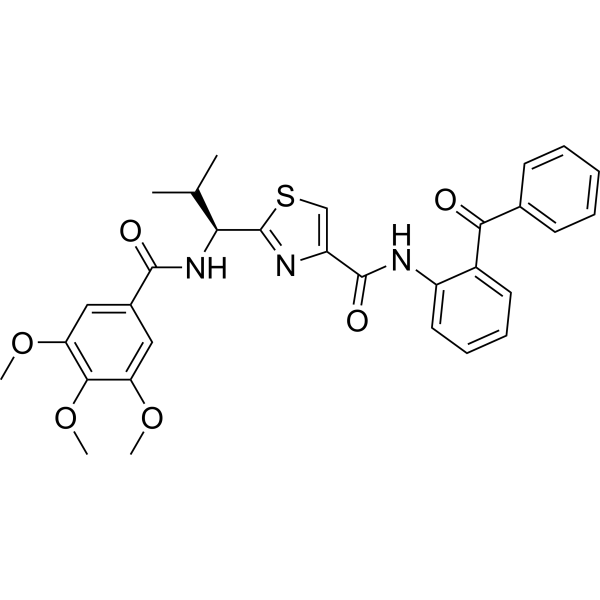
    TTT-28 is a synthesized thiazole-valine peptidomimetic, a novel selective inhibitor of ABCB1 (P-gp/MDR1) with high efficacy and low toxicity, which reverses the ATP-binding cassette sub-family B member 1 (ABCB1)-mediated multidrug resistance (MDR) by selectively blocking the efflux function of ABCB1 .
    TTT-28
  • HY-17013
    Dofequidar
    2 Publications Verification

    MS-209 free base

    P-glycoprotein Cancer
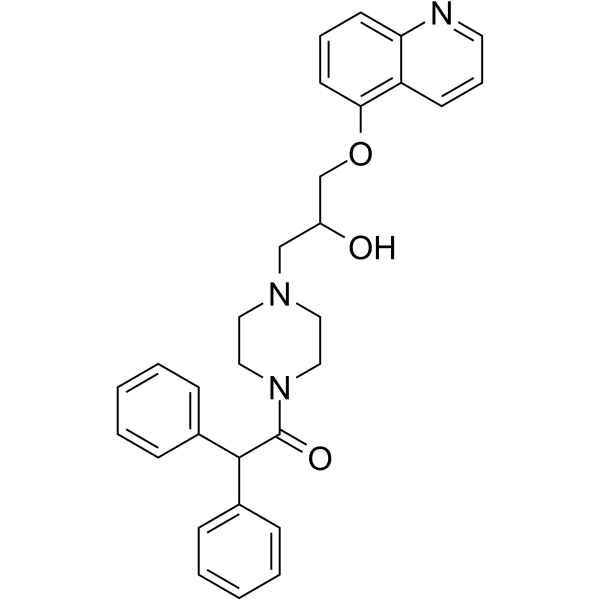
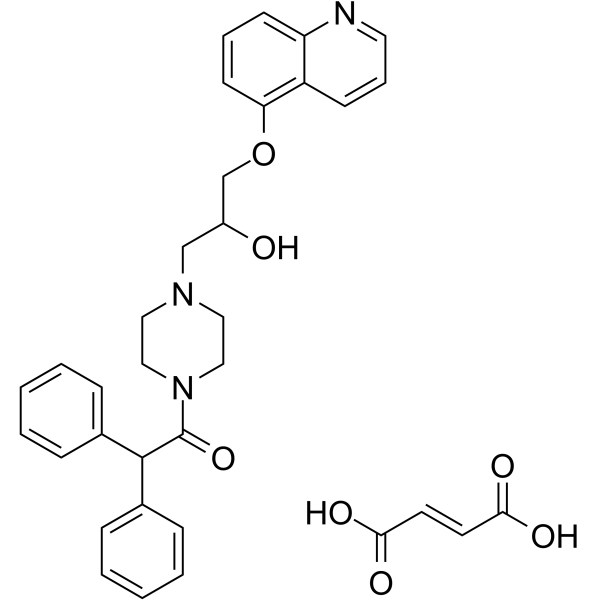
    Dofequidar (MS-209 free base) is an orally active quinoline compoundthat blocks P-glycoprotein (P-gp) and multidrug resistance-associated protein-1 (MDR-1). Dofequidar has highly potent reversing effect on multidrug-resistant tumor cells. Dofequidar competitively inhibits ABCB1/P-gp, ABCC1/MRP-1, blocks the efflux of chemotherapeutic agents, increases the drug concentration in cancer cells, and enhances the chemotherapeutic effect .
    Dofequidar
  • HY-109061B
    Lazertinib mesylate
    3 Publications Verification

    YH25448 mesylate; GNS-1480 mesylate

    TRP Channel EGFR Akt ERK Apoptosis Cancer
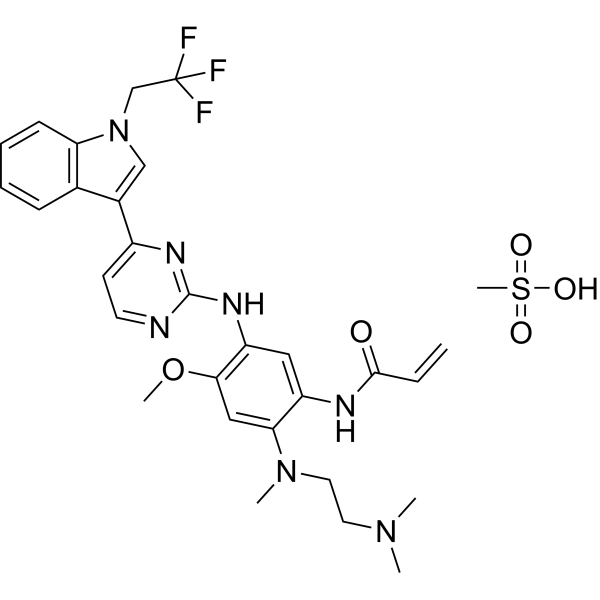
    Lazertinib (YH25448; GNS-1480) mesylate is an orally active, blood-brain barrier permeable third-generation EGFR tyrosine kinase inhibitor, as well as an ABCB1/ABCG2 inhibitor and a TRPA1 activator. Lazertinib mesylate exhibits IC50 values of 0.4 mM and 0.2 mM against human ABCB1 and ABCG2, respectively. By inhibiting mutant EGFR signaling, EGFR phosphorylation and the downstream ERK/AKT pathway, as well as upregulating surface expression of EGFR/MET, Lazertinib mesylate induces cell cycle arrest, apoptosis, spontaneous calcium responses, hyperexcitability of dorsal root ganglion (DRG) neurons, and TRPA1-dependent pain-like behaviors. Lazertinib mesylate competitively binds to the substrate-binding sites of ABCB1/ABCG2, stimulates their ATPase activity without altering their expression or plasma membrane localization, thereby enhancing ADCC activity, acting as a chemosensitizer, and reversing ABCB1-mediated multidrug resistance. It exerts antitumor activity as a single agent or in combination with other drugs. Lazertinib mesylate is applicable to research related to non-small cell lung cancer, multidrug-resistant cancers, and paresthesia .
    Lazertinib mesylate
  • HY-137433
    Befotertinib
    2 Publications Verification

    D-0316

    EGFR P-glycoprotein Apoptosis Cancer
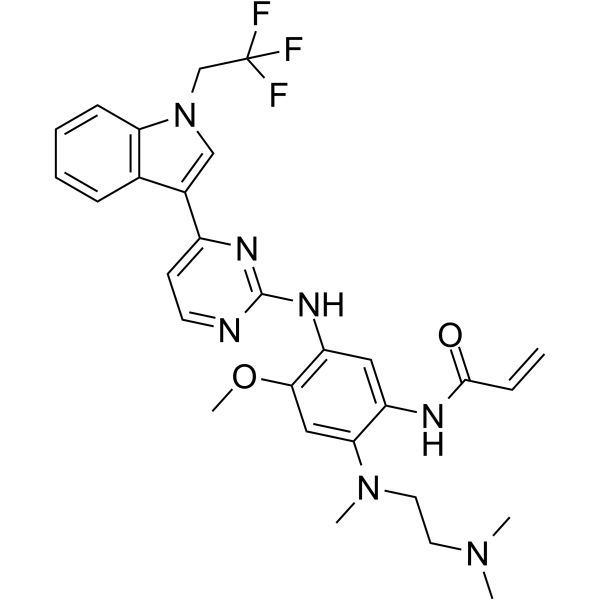
    Befotertinib (D-0316) is an orally active EGFR inhibitor and ABCB1 inhibitor. Befotertinib selectively targets EGFR mutations including EGFR T790M, EGFR L858R and delE746-A750, forms covalent bonds with EGFR C797, inhibits oncogenic signaling pathways, and exerts antiproliferative effects. Befotertinib inhibits ABCB1-mediated drug efflux, activates the ATPase activity of ABCB1, acts as a chemosensitizer and apoptosis enhancer, and restores the sensitivity of multidrug-resistant cancer cells. Befotertinib can be used in research related to multidrug-resistant cancers and non-small cell lung cancer .
    Befotertinib
  • HY-17013A
    Dofequidar fumarate
    2 Publications Verification

    MS-209

    P-glycoprotein Cancer
    Dofequidar fumarate (MS-209) is an orally active quinoline compoundthat blocks P-glycoprotein (P-gp) and multidrug resistance-associated protein-1 (MDR-1). Dofequidar fumarate has highly potent reversing effect on multidrug-resistant tumor cells. Dofequidar fumarate competitively inhibits ABCB1/P-gp, ABCC1/MRP-1, blocks the efflux of chemotherapeutic agents, increases the drug concentration in cancer cells, and enhances the chemotherapeutic effect .
    Dofequidar fumarate
  • HY-N1514

    P-glycoprotein Cancer
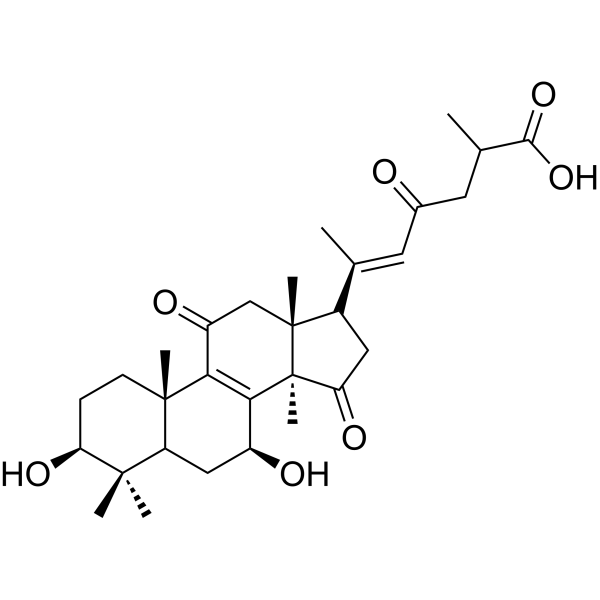
    Ganoderenic acid B is a lanostane-type triterpene isolated from Ganoderma lucidum. Ganoderenic acid B exhibits potent reversal effect on ABCB1-mediated multidrug resistance of HepG2/ADM cells to Doxorubicin .
    Ganoderenic acid B
  • HY-149366

    P-glycoprotein Cancer
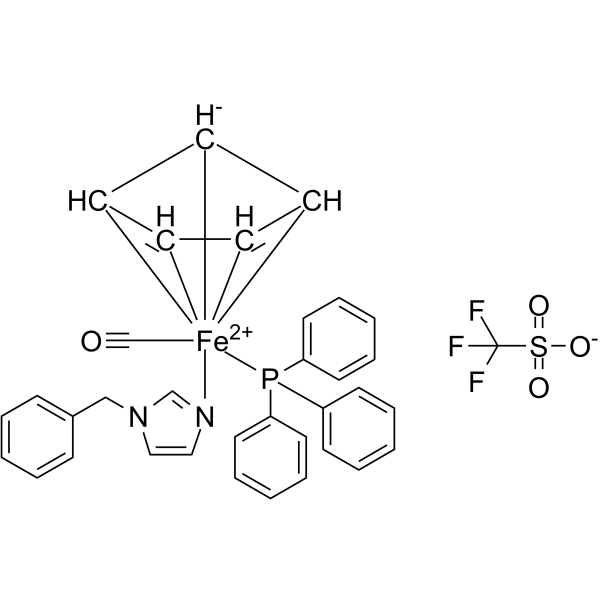
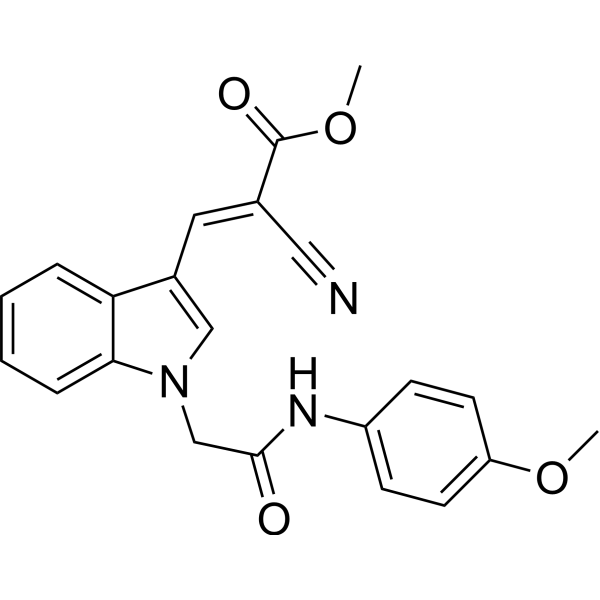
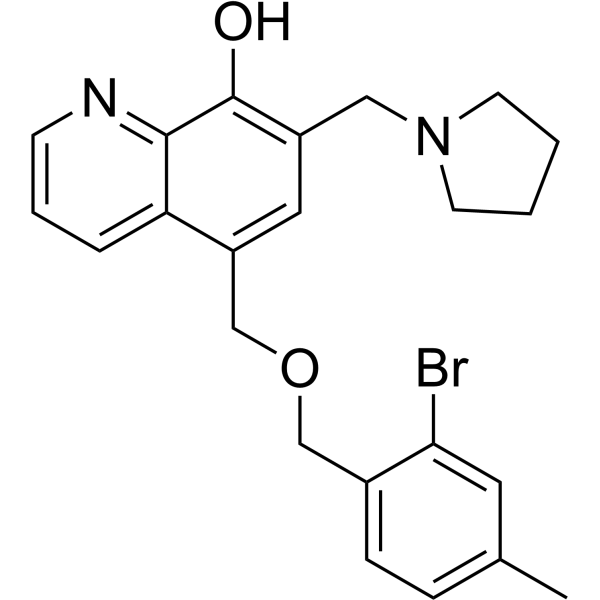
    ABCB1-IN-1 (compound 3) is a potent ABCB1 inhibitor. ABCB1-IN-1 induces cell apoptosis. ABCB1-IN-1 bearing 1-benzylimidazole has IC50 values of 1.26 μM and 2.21 μM for Colo205 and Colo320 cells, respectively .
    ABCB1-IN-1
  • HY-148574

    Monocarboxylate Transporter P-glycoprotein Cancer
    MCT1-IN-3 is a monocarboxylate transporter 1 (MCT1) inhibitor with an IC50 value of 81.0 nM. MCT1-IN-3 has also significant inhibitivity against the multidrug transporter ABCB1. MCT1-IN-3 can be used for the research of cancer .
    MCT1-IN-3
  • HY-162324

    Survivin Cancer
    MX106-4C is a survivin inhibitor that selectively kills ABCB1-positive colorectal cancer cells. MX106-4C can exert synergistic anticancer effects with Doxorubicin or resensitize drug-resistant ABCB1 cells to Doxorubicin .
    MX106-4C
  • HY-137433A

    D-0316 mesylate

    EGFR P-glycoprotein Apoptosis Inflammation/Immunology Cancer
    Befotertinib (D-0316) mesylate is an orally active EGFR inhibitor and ABCB1 inhibitor. Befotertinib mesylate selectively targets EGFR mutations including EGFR T790M, EGFR L858R and delE746-A750, forms covalent bonds with EGFR C797, inhibits oncogenic signaling pathways, and exerts antiproliferative effects. Befotertinib mesylate inhibits ABCB1-mediated drug efflux, activates the ATPase activity of ABCB1, acts as a chemosensitizer and apoptosis enhancer, and restores the sensitivity of multidrug-resistant cancer cells. Befotertinib mesylate can be used in research related to multidrug-resistant cancers and non-small cell lung cancer .
    Befotertinib mesylate
  • HY-163981

    P-glycoprotein Cancer
    ABCB1-IN-2 (compound 16q) is a functional inhibitor that can directly bind to the ABCB1 protein and stabilize its structure without affecting the expression and subcellular localization of ABCB1. ABCB1-IN-2 can increase the sensitivity of MCF-7/ADR cells to paclitaxel (PTX), increase the accumulation of PTX, and prevent the accumulation and excretion of luciferin Rh123 mediated by ABCB1. ABCB1-IN-2, as an ABCB1-mediated multidrug resistance (MDR) reversal agent, shows a strong ability to reverse MDR .
    ABCB1-IN-2
  • HY-162714

    P-glycoprotein Cancer
    C3N-Dbn-Trp2 is an inhibitor for ATP-binding cassette transporter ABCB1. C3N-Dbn-Trp2 inhibits the ABCB1-mediated Rhodamine 123 (HY-D0816) efflux in cells HEK293T and HCT-15 with IC50 of 5.9 µM and 2.2 µM. C3N-Dbn-Trp2 inhibits the Doxorubicin (HY-15142A) efflux, enhances the cytotoxicity of Doxorubicin in ABCB1-expressing cells .
    C3N-Dbn-Trp2
  • HY-163918

    P-glycoprotein Cancer
    N,N-Dimethyl-idarubicin, an Idarubicin (HY-17381) derivative, is a potent histone evictor which does not induce DNA double-strand breaks. N,N-Dimethyl-idarubicin, an anthracycline, is an effective cytotoxic agent for ABCB1-overexpressing, Doxorubicin-resistant cells .
    N,N-Dimethyl-idarubicin
  • HY-150565

    P-glycoprotein Cancer
    P-gp inhibitor 5 is a potent P-glycoprotein (P-gp) inhibitor. P-gp inhibitor 5 has antiproliferative activity against certain cancer cell lines. P-gp inhibitor 5 is effective in reversing the multidrug resistance (MDR) phenotype in ABCB1/Flp-In TM-293 and KBvin cells by restoring their sensitivity to Vincristine (HY-N0488A) and Paclitaxel (HY-B0015) .
    P-gp inhibitor 5
  • HY-17013D

    MS-209 sesquifumarate

    P-glycoprotein Cancer
    Dofequidar (MS-209) sesquifumarate is an orally active quinoline compoundthat blocks P-glycoprotein (P-gp) and multidrug resistance-associated protein-1 (MDR-1). Dofequidar sesquifumarate has highly potent reversing effect on multidrug-resistant tumor cells. Dofequidar sesquifumarate competitively inhibits ABCB1/P-gp, ABCC1/MRP-1, blocks the efflux of chemotherapeutic agents, increases the drug concentration in cancer cells, and enhances the chemotherapeutic effect .
    Dofequidar sesquifumarate
  • HY-168921

    P-glycoprotein Apoptosis Cancer
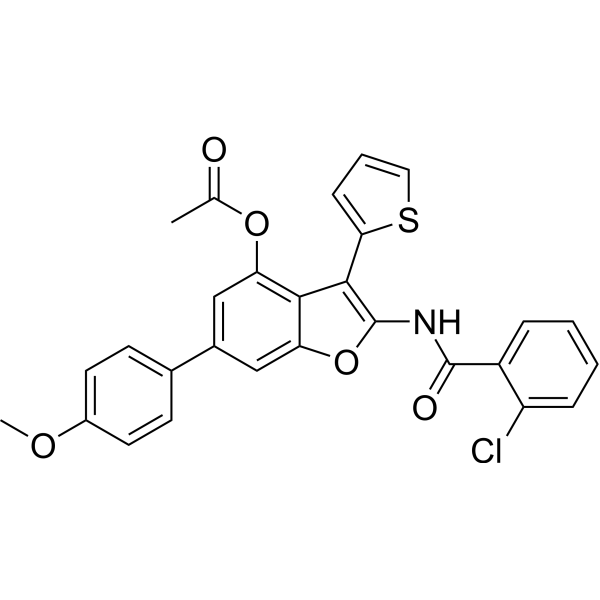
    ABCB1-IN-3 (Compound K27) is an orally active inhibitor of ABCB1, and induces apoptosis. ABCB1-IN-3 directly binds to ABCB1 to inhibit efflux function, ensuring stable intracellular concentration of Paclitaxel (PTX) (HY-B0015) without affecting ABCB1 normal expression. ABCB1-IN-3 significantly increases the sensitivity of ABCB1-mediated multidrug resistance (MDR) to Paclitaxel in vitro, enhances cell cycle arrest, and inhibits proliferation. BCB1-IN-3 combined with Paclitaxel exhibits potent tumor suppression in vivo without generating toxicity .
    ABCB1-IN-3
  • HY-101511R

    P-glycoprotein Reference Standards Cancer
    TTT-28 (Standard) is the analytical standard of TTT-28 (HY-101511). This product is intended for research and analytical applications. TTT-28 is a synthesized thiazole-valine peptidomimetic, a novel selective inhibitor of ABCB1 (P-gp/MDR1) with high efficacy and low toxicity, which reverses the ATP-binding cassette sub-family B member 1 (ABCB1)-mediated multidrug resistance (MDR) by selectively blocking the efflux function of ABCB1 .
    TTT-28 (Standard)
  • HY-180357

    Checkpoint Kinase (Chk) Reactive Oxygen Species (ROS) DNA/RNA Synthesis Cancer
    Graviquinone is a Chk1 inhibitor. Graviquinone exhibits potent cytotoxicity against various cancer cell lines. Graviquinone possesses the characteristics of bypassing ABCB1-mediated multidrug resistance, selectively damaging cancer cell DNA, and regulating the DNA damage response. Graviquinone can also enhance cytotoxicity by increasing ROS levels in cancer cells. Graviquinone can be used for cancer research .
    Graviquinone
  • HY-17013AR

    MS-209 (Standard)

    P-glycoprotein Reference Standards Cancer
    Dofequidar (fumarate) (Standard) is the analytical standard of Dofequidar (fumarate). This product is intended for research and analytical applications. Dofequidar fumarate (MS-209) is an orally active quinoline compoundthat blocks P-glycoprotein (P-gp) and multidrug resistance-associated protein-1 (MDR-1). Dofequidar fumarate has highly potent reversing effect on multidrug-resistant tumor cells. Dofequidar fumarate competitively inhibits ABCB1/P-gp, ABCC1/MRP-1, blocks the efflux of chemotherapeutic agents, increases the drug concentration in cancer cells, and enhances the chemotherapeutic effect .
    Dofequidar fumarate (Standard)
  • HY-109061A

    YH25448 mesylate hydrate; GNS-1480 mesylate hydrate

    Apoptosis Akt TRP Channel EGFR ERK Cancer
    Lazertinib (YH25448; GNS-1480) mesylate hydrate is an orally active, blood-brain barrier permeable third-generation EGFR tyrosine kinase inhibitor, as well as an ABCB1/ABCG2 inhibitor and a TRPA1 activator. Lazertinib mesylate hydrate exhibits IC50 values of 0.4 mM and 0.2 mM against human ABCB1 and ABCG2, respectively. By inhibiting mutant EGFR signaling, EGFR phosphorylation and the downstream ERK/AKT pathway, as well as upregulating surface expression of EGFR/MET, Lazertinib mesylate hydrate induces cell cycle arrest, apoptosis, spontaneous calcium responses, hyperexcitability of dorsal root ganglion (DRG) neurons, and TRPA1-dependent pain-like behaviors. Lazertinib mesylate hydrate competitively binds to the substrate-binding sites of ABCB1/ABCG2, stimulates their ATPase activity without altering their expression or plasma membrane localization, thereby enhancing ADCC activity, acting as a chemosensitizer, and reversing ABCB1-mediated multidrug resistance. It exerts antitumor activity as a single agent or in combination with other drugs. Lazertinib mesylate hydrate is applicable to research related to non-small cell lung cancer, multidrug-resistant cancers, and paresthesia .
    Lazertinib mesylate hydrate

Inquiry Online

Your information is safe with us. * Required Fields.

Salutation


Country or Region *

Applicant Name *


Organization Name *

Department *


Email Address *


Product Name *

Cat. No.


Requested quantity *

Phone Number *


Remarks

Inquiry Online

Inquiry Information

Product Name:
Cat. No.:
Quantity:
MCE Japan Authorized Agent:

