20 Results for "

APE-1

" in MedChemExpress (MCE) Product Catalog:
Products (20)

20 Results for "APE-1" in MCE Product Catalog:

4
4 Cited Publications
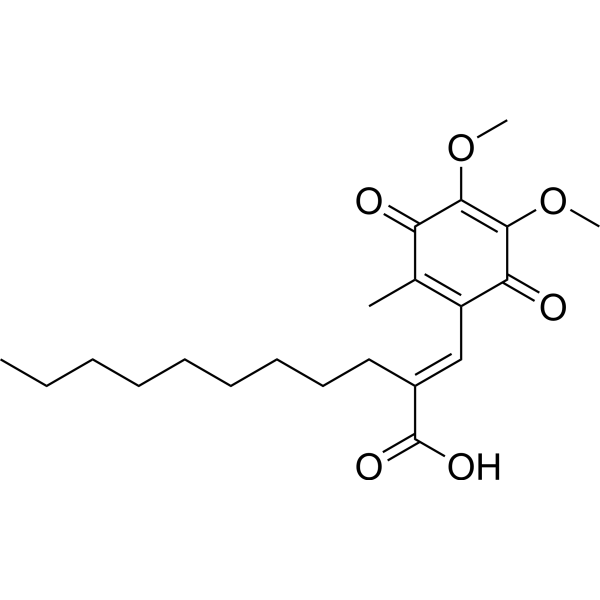
Cat. No.: HY-19357
CAS No.: 136164-66-4
Synonyms: E3330; APX-3330
Erenapursta (E3330) is a direct, orally active and selective inhibitor of Ape-1 (apurinic/apyrimidinic endonuclease 1)/Ref-1 (redox factor-1) redox. Erenapursta is able to impair tumor growth and blocks the activity of NF-κB, AP-1, and HIF-1α in pancreatic cancer. Erenapursta shows anticancer activities [1] .
2
2 Cited Publications
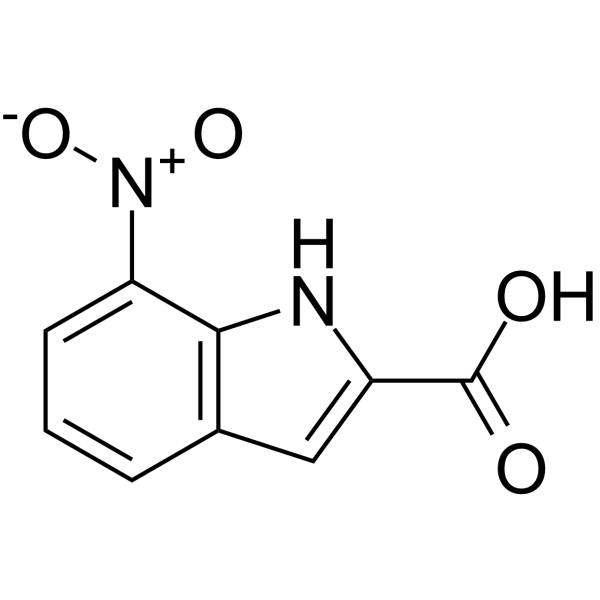
Cat. No.: HY-W014622
CAS No.: 6960-45-8
Target:  

DNA/RNA Synthesis

Research Areas:  

Cancer

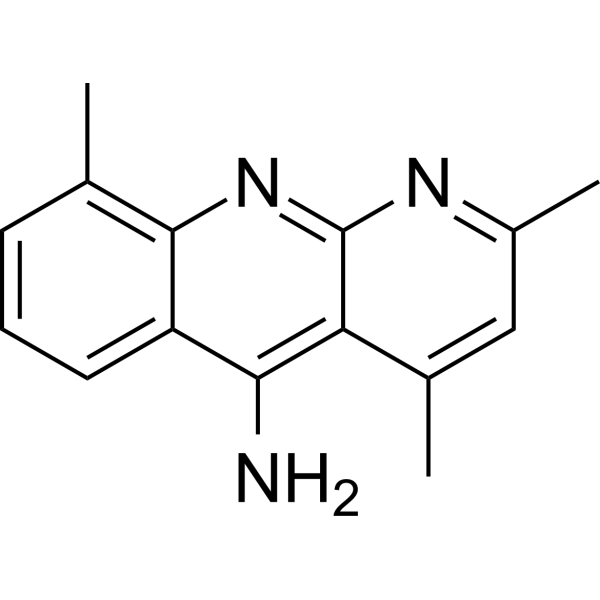
CRT0044876 is a potent and selective apurinic/apyrimidinic endonuclease 1 (APE1) inhibitor (IC50=~3 μM). CRT0044876 inhibits the AP endonuclease, 3′-phosphodiesterase and 3′-phosphatase activities of APE1, and is a specific inhibitor of the exonuclease III family of enzymes to which APE1 belongs. CRT0044876 potentiates the cytotoxicity of several DNA base-targeting compounds [1].
2
2 Cited Publications
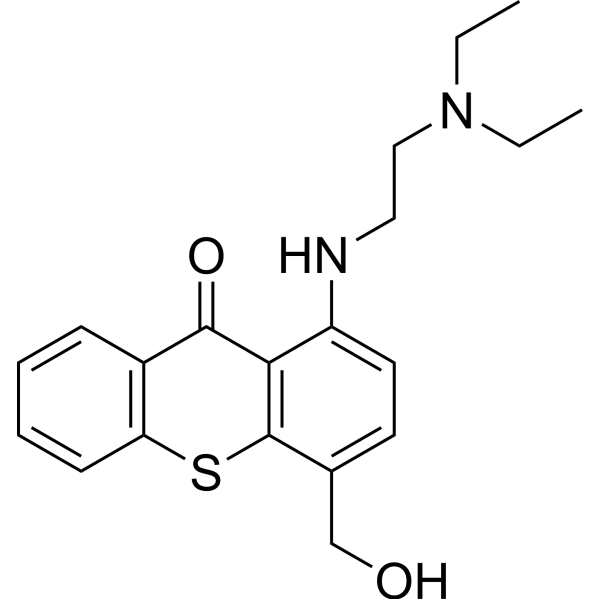
Cat. No.: HY-B1099
CAS No.: 3105-97-3
Research Areas:  

Infection

Hycanthone is a thioxanthenone DNA intercalator and inhibits RNA synthesis as well as the DNA topoisomerases I and II. Hycanthone inhibits nucleic acid biosynthesis and inhibits apurinic endonuclease-1 (APE1) by direct protein binding with a KD of 10 nM. Hycanthone is a bioactive metabolite of Lucanthone (HY-B2098) and has anti-schistosomal agent [1].
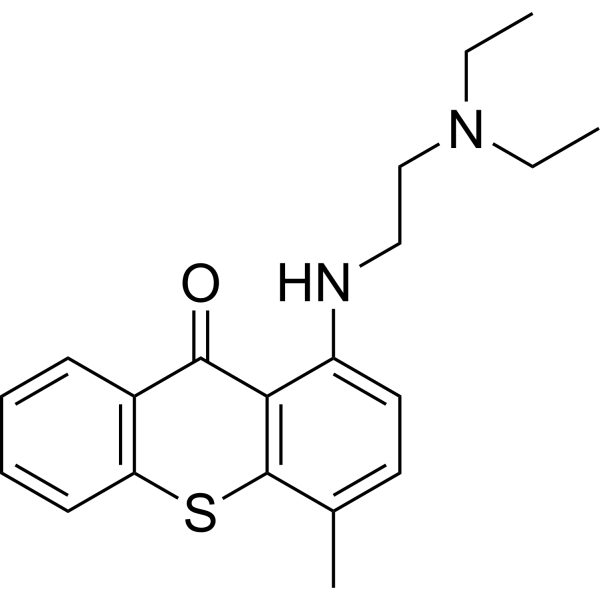
Cat. No.: HY-B2098
CAS No.: 479-50-5
Target:  

Autophagy Parasite

Research Areas:  

Cancer

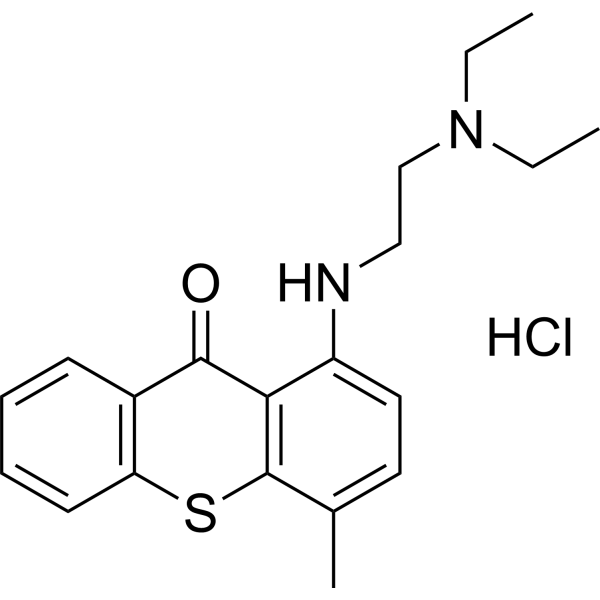
Lucanthone is an endonuclease inhibitor of Apurinic endonuclease-1 (APE-1).
Cat. No.: HY-136731
CAS No.: 524708-03-0
Purity:  99.52%
Target:  

DNA/RNA Synthesis

Research Areas:  

Cancer

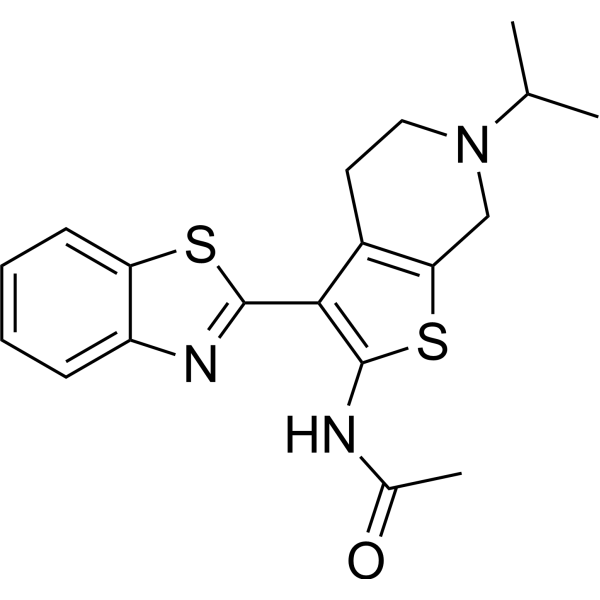
APE1-IN-1 is a potent and blood-brain barrier (BBB) penetrant apurinic/apyrimidinic (AP) endonuclease 1 (APE1) inhibitor with an IC50 value of 2 μM. APE1-IN-1 can potentiate the cytotoxicity of the alkylating agents Methylmethane sulfonate and Temozolomide (HY-17364) to cancer cells [1].
Cat. No.: HY-151883
CAS No.: 2923433-95-6
Purity:  98.28%
Target:  

Apoptosis MDM-2/p53

Research Areas:  

Cancer

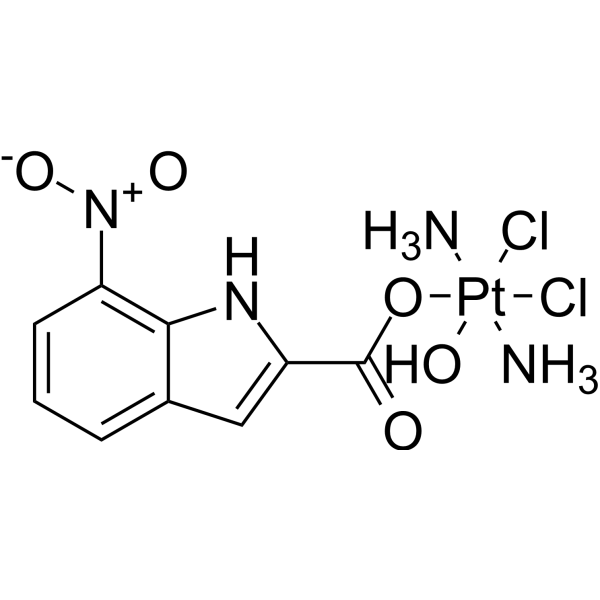
APE1-IN-2 (compound AP1) is a Pt(IV) proagent, targeting a critical BER protein, apurinic/apyrimidinic endonuclease 1 (APE1). APE1-IN-2 shows anticancer activity. APE1-IN-2 induces intracellular accumulation of platinum and activates DNA damage response and apoptosis signals [1].
Cat. No.: HY-120069
CAS No.: 1415030-15-7
Target:  

Apoptosis

Research Areas:  

Cancer

APX2009 is a specific APE1/REF-1 redox inhibitor with anticancer activities which decreases the proliferative, migratory, and invasive properties of breast cancer cell and induces apoptosis in breast cancer cell [1].
Cat. No.: HY-119993
CAS No.: 510721-85-4
Synonyms: BMH-23
Target:  

DNA/RNA Synthesis

Research Areas:  

Cancer

AR03 (BMH-23) is an apurinic/apyrimidinic endonuclease 1 (Ape1) inhibitor with an IC50 of 2.1 µM. AR03 has low affinity for double-stranded DNA. AR03 potentiates the cytotoxicity of methyl methanesulfonate and temozolomide in SF767 cells [1].
Cat. No.: HY-149442
CAS No.: 1227098-30-7
Target:  

DNA/RNA Synthesis

Research Areas:  

Cancer

APE1-IN-3 (Compound 1) is a APE1 inhibitor. APE1-IN-3 can be used for the research of cancer [1].
Cat. No.: HY-179014
OGG1 activator-1 (Compound 30) is a selective 8-oxoguanine DNA glycosylase-1 (OGG1) activator with an AC50 value of 0.58 μM. OGG1 activator-1 does not activate nor inhibit the key downstream repair enzyme APE1, and shows > 150-fold selectivity for the activation effect on OGG1. OGG1 activator-1 exhibits extremely high metabolic stability and almost no cytotoxicity. OGG1 activator-1 can be used for the study of oxidative stress-related diseases (such as neurodegenerative diseases, fibrotic diseases, cancer, inflammation, etc.) [1].
Cat. No.: HY-B2098A
CAS No.: 548-57-2
Target:  

Autophagy Parasite

Research Areas:  

Cancer

Lucanthone hydrochloride is an endonuclease inhibitor of Apurinic endonuclease-1 (APE-1).
Cat. No.: HY-133795
CAS No.: 5615-06-5
Target:  

DNA/RNA Synthesis

Research Areas:  

Others

Lucanthone N-oxide is the nitrogen oxide of Lucanthone (HY-B2098), an endonuclease inhibitor of Apurinic endonuclease-1 (APE-1) [1].
Cat. No.: HY-B2098R
CAS No.: 479-50-5
Research Areas:  

Cancer

Lucanthone (Standard) is the analytical standard of Lucanthone. This product is intended for research and analytical applications. Lucanthone is an endonuclease inhibitor of Apurinic endonuclease-1 (APE-1).
Cat. No.: HY-176996
CAS No.: 1136839-60-5
Target:  

DNA/RNA Synthesis

Research Areas:  

Cancer

Ape1/Ref-1 redox-IN-1 (Compound 52) is an Ape1/Ref-1 redox inhibitor. Ape1/Ref-1 redox-IN-1 can be used in the research of cancer [1].
Cat. No.: HY-P84226
Synonyms: APE; APX; APE1; APEN; APEX; HAP1; REF1

Host:  

Mouse

Application:  

WB, IHC-P, FC, ELISA

Reactivity:  

Human, Rat, Monkey

Cat. No.: HY-B1099R
CAS No.: 3105-97-3
Hycanthone (Standard) is the analytical standard of Hycanthone. This product is intended for research and analytical applications. Hycanthone is a thioxanthenone DNA intercalator and inhibits RNA synthesis as well as the DNA topoisomerases I and II. Hycanthone inhibits nucleic acid biosynthesis and inhibits apurinic endonuclease-1 (APE1) by direct protein binding with a KD of 10 nM. Hycanthone is a bioactive metabolite of Lucanthone (HY-B2098) and has anti-schistosomal agent [1].
Cat. No.: HY-P84226A
Synonyms: APE; APX; APE1; APEN; APEX; HAP1; REF1

Host:  

Mouse

Application:  

WB, IHC-P, FC, ELISA

Reactivity:  

Human, Rat, Monkey

Cat. No.: HY-P7523
Purity:  ≥ 90%, as determined by reducing SDS-PAGE.
Synonyms: rHuAPE; APE1; APEX; APE
Species:  
Source:  
Cat. No.: HY-P82375
Synonyms: APEX1; APE; APE1; APEX; APX; HAP1; REF1; DNA-(apurinic or apyrimidinic site) lyase; APEX nuclease; APEN; Apurinic-apyrimidinic endonuclease 1; AP endonuclease 1; APE-1; REF-1; Redox factor-1

Host:  

Rabbit

Application:  

WB

Reactivity:  

Human, Mouse, Rat

Cat. No.: HY-RS00815
Research Areas:  

Others

APEX1 Human Pre-designed siRNA Set A contains three designed siRNAs for APEX1 gene (Human), as well as a negative control, a positive control, and a FAM-labeled negative control.

  • 1

