1. Search Result
Search Result
Results for "

AR

" in MedChemExpress (MCE) Product Catalog:

947

Inhibitors & Agonists

2

Screening Libraries

5

Fluorescent Dye

10

Biochemical Assay Reagents

28

Peptides

12

Inhibitory Antibodies

74

Natural
Products

20

Recombinant Proteins

93

Isotope-Labeled Compounds

28

Antibodies

6

Click Chemistry

29

Oligonucleotides

2

GMP Molecules

Cat. No. Product Name Target Research Areas Chemical Structure
  • HY-13248
    AR-C155858
    45+ Cited Publications

    Monocarboxylate Transporter Others
    AR-C155858 is a selective monocarboxylate transporter MCT1 and MCT2 inhibitor with Kis of 2.3 nM and 10 nM, respectively.
    AR-C155858
  • HY-108449
    Acoltremon
    2 Publications Verification

    WS-12; AR-15512; AVX-012

    TRP Channel Neurological Disease
    Acoltremon (WS-12; AR-15512) is a potent and selective TRPM8 agonist, the menthol derivative, as a cooling agent. Acoltremon shows analgesic effect, and can be used in chronic neuropathic pain research .
    Acoltremon
  • HY-110126
    AR-C118925XX
    3 Publications Verification

    P2Y Receptor Inflammation/Immunology Cancer
    AR-C118925XX is a selective P2Y2 receptor antagonist. AR-C118925XX inhibits ATP-induced IL-6 production and phosphorylation of p38. AR-C118925XX also inhibits Bleomycin (HY-108345)-induced dermal fibrosis in mice. AR-C118925XX also inhibits ATP-induced tumor growth .
    AR-C118925XX
  • HY-101106
    AR7
    10+ Cited Publications

    RAR/RXR Neurological Disease Cancer
    AR7 is an atypical RARA/RARα (retinoic acid receptor, alpha) antagonist. AR7 specifically activates chaperone-mediated-autophagy (CMA) activity without affecting macroautophagy .
    AR7
  • HY-10512
    AR-A014418
    15+ Cited Publications

    AR 0133418; GSK 3β inhibitor VIII; AR 014418

    GSK-3 Metabolic Disease Cancer
    AR-A014418 is a potent, selective and ATP-competitive GSK3β inhibitor (IC50=104 nM; Ki=38 nM) .
    AR-A014418
  • HY-10547
    OSU-03012
    5+ Cited Publications

    AR-12; PDK1 inhibitor AR-12

    PDK-1 Autophagy Cancer
    OSU-03012 (AR-12; PDK1 inhibitor AR-12) is a blood-brain permeable PDK-1 inhibitor with an IC50 of 5 μM .
    OSU-03012
  • HY-176521

    Androgen Receptor Epigenetic Reader Domain Cancer
    AR/BRD4 RIPTAC-1 (Compound II-5) is an orally active Regulatory-inducible proximity-targeting chimera (RIPTAC). AR/BRD4 RIPTAC-1 induces the formation of a stable ternary complex between the androgen receptor (AR) and BRD4, thereby blocking BRD4 function. AR/BRD4 RIPTAC-1 inhibits the growth and proliferation of tumor cells. AR/BRD4 RIPTAC-1 holds promise for use in prostate cancer research .
    AR/BRD4 RIPTAC-1
  • HY-12798C

    AR-13324 M1 metabolite

    PKC ROCK Cardiovascular Disease Neurological Disease
    AR-13503 (AR-13324 M1 metabolite) is the hydrolytic metabolite of AR-13324 mesylate. AR-13324 is a ROCK kinase and PKC inhibitor with anti-angiogenic and retinal health-improving effects, showing potential for use in retinal disease research .
    AR-13503
  • HY-N6703

    (+)-AR-Turmerone

    Apoptosis Neurological Disease Inflammation/Immunology Cancer
    ar-Turmerone ((+)-ar-Turmerone) is an orally active and major bioactive compound of the herb Curcuma longa with anti-tumorigenesis and anti-inflammatory activities. ar-Turmerone induces apoptosis in U937 cells. ar-Turmerone exerts positive modulation on murine DCs. ar-Turmerone induces NSC proliferation in vitro and in vivo, and can be used for various neurologic disorders study .
    ar-Turmerone
  • HY-15564
    AR 231453
    2 Publications Verification

    GPR119 Metabolic Disease
    AR 231453 is a potent, specific and orally available GPR119 agonist. AR 231453 can stimulate β-cell replication and improve islet graft function s .
    AR 231453
  • HY-116522
    AR420626
    4 Publications Verification

    Free Fatty Acid Receptor Histone Methyltransferase HDAC mTOR CaMK p38 MAPK Epigenetic Reader Domain GLUT nAChR TNF Receptor Metabolic Disease Inflammation/Immunology Cancer
    AR420626 is a selective agonist of free fatty acid receptor 3 (FFAR3) (IC50=117 nM). AR420626 has anti-inflammatory, anticancer and antidiabetic activities. AR420626 improves neurogenic diarrhea by inhibiting nAChR mediated neural pathways. AR420626 inhibits the growth of HepG2 xenografts and inhibits the proliferation of hepatoma cells by inducing apoptosis. AR420626 also suppresses allergic asthma and eczema and has the ability to activate GPR41 to increase Ca 2+ signal-mediated glucose uptake and improve diabetes .
    AR420626
  • HY-130845A

    Ligands for E3 Ligase Ligands for Target Protein for PROTAC Androgen Receptor Cancer
    AR antagonist 1 (compound 29) hydrochloride is a potent androgen receptor (AR) antagonist and binds to E3 ligase ligands with weak binding affinities to VHL protein in the synthesis of PROTAC ARD-266 (HY-133020) .
    AR antagonist 1 hydrochloride
  • HY-13265
    AR-42
    4 Publications Verification

    HDAC-42; OSU-HDAC42

    HDAC Autophagy Apoptosis Cancer
    AR-42 (HDAC-42; OSU-HDAC42) is a potent, orally bioavailable pan-HDAC inhibitor (IC50=16 nM). AR-42 induces growth inhibition, cell-cycle arrest, apoptosis, and activation of caspases-3/7. AR-42 promotes hyperacetylation of H3, H4, and alpha-tubulin, and up-regulation of p21. AR-42 shows cytotoxicity against various human cancer cell lines .
    AR-42
  • HY-111151

    APAU

    Epoxide Hydrolase Infection Cardiovascular Disease Metabolic Disease
    AR9281 (APAU) is a potent, selective and orally active soluble epoxide hydrolase (s-EH) inhibitor. AR-9281 can inhibits human sEH (HsEH) and murine sEH (MsEH) with IC50 values of 13.8 nM and 1.7 nM, respectively. AR9281 can be used for the research of inflammation, hypertension and type 2 diabetes .
    AR-9281
  • HY-145709

    Androgen Receptor Cancer
    Ar-V7-IN-1 is a potent inhibitor of Ar-V7. Ar-V7-IN-1 inhibits the transcriptional activity of androgen receptor (AR) and the secretion of prostate-specific antigen (PSA) with an eGFP IC50 of 1232 nM and the PSA IC50 of 1391 μM. Ar-V7-IN-1 has the potential for the research of various indications, in particular cancers such as prostate cancer .
    Ar-V7-IN-1
  • HY-16758

    AR-12286

    ROCK Neurological Disease
    Verosudil (AR-12286) is a ROCK inhibitor. Verosudil has equal inhibitory activity against ROCK1 and ROCK2 (Ki: 2 nM). Verosudil is less selective for PKA, PKCT, MRCKA, and CAM2A (Ki: 69 nM, 9322 nM, 28 nM, 5855 nM, respectively). Verosudil increases trabecular outflow capacity to reduce intraocular pressure. Verosudil is useful in the study of glaucoma and ocular hypertension .
    Verosudil
  • HY-119993

    BMH-23

    DNA/RNA Synthesis Cancer
    AR03 (BMH-23) is an apurinic/apyrimidinic endonuclease 1 (Ape1) inhibitor with an IC50 of 2.1 µM. AR03 has low affinity for double-stranded DNA. AR03 potentiates the cytotoxicity of methyl methanesulfonate and temozolomide in SF767 cells .
    AR03
  • HY-12122A

    NO Synthase Neurological Disease Inflammation/Immunology
    AR-C102222 hydrochloride is a potent, competitive, orally active and highly selective inducible nitric oxide synthase (iNOS) inhibitor, with an IC50 of 37 nM . AR-C102222 hydrochloride has antinociception and anti-inflammatory activities .
    AR-C102222 hydrochloride
  • HY-19506

    Antibiotic Bacterial Infection
    AR-709 is a diaminopyrimidine antibiotic. AR-709 exhibits potent antibacterial activity against Streptococcus pneumoniae (MIC = 0.03 mg/L). AR-709 can be used for research on bacterial infections .
    AR-709
  • HY-163641

    Molecular Glues Androgen Receptor E1/E2/E3 Enzyme Cancer
    AR Degrader-1 (Compound ML 2-9) is a molecular glue androgen receptor (AR) monovalent degrader. AR Degrader-1 degrades AR through DCAF16 (E3 ligase) without obvious cytotoxicity in LNCaP prostate cancer cells .
    AR Degrader-1
  • HY-133127

    Glucokinase Metabolic Disease
    AR453588 is a potent and orally bioavailable anti-diabetic glucokinase activator, with an EC50 of 42 nM. AR453588 shows anti-hyperglycemic activity .
    AR453588
  • HY-135483A

    nAChR Neurological Disease
    AR-R17779 hydrochloride is a potent and selective full agonist of nAChR, with Kis of 92 and 16000 nM for α7 and α4β2 subtype, respectively. AR-R17779 hydrochloride can improve learning and memory in rats. AR-R17779 hydrochloride also has anxiolytic activity. AR-R17779 hydrochloride can reduce inflammation by activating antiinflammatory cholinergic (vagal) pathways .
    AR-R17779 hydrochloride
  • HY-119996A
    AR-C141990 hydrochloride
    1 Publications Verification

    Monocarboxylate Transporter Inflammation/Immunology
    AR-C141990 hydrochloride is a potent lactate transporters (monocarboxylate transporters; MCTs) inhibitor with pKi values of 7.6, 6.6 for MCT-1 and MCT-2, respectively . AR-C141990 hydrochloride has immunosuppressive properties and inhibits graft versus host response .
    AR-C141990 hydrochloride
  • HY-16055

    AR-67; DB 67

    Topoisomerase Cancer
    Silatecan (AR-67; DB 67) is a Camptothecin (HY-16560) analogue with improved stability and lipophilicity. Silatecan is an inhibitor for topoisomerase I, that inhibits the DNA replication and transcription, and exhibits antitumor and radiosensitizing activities
    Silatecan
  • HY-101039A

    Opioid Receptor Neurological Disease
    AR-M 1000390 hydrochloride is an exceptionally selective, potent δ opioid receptor agonist with an EC50 of 7.2±0.9 nM for δ agonist potency.
    AR-M 1000390 hydrochloride
  • HY-123358

    Drug Derivative Others
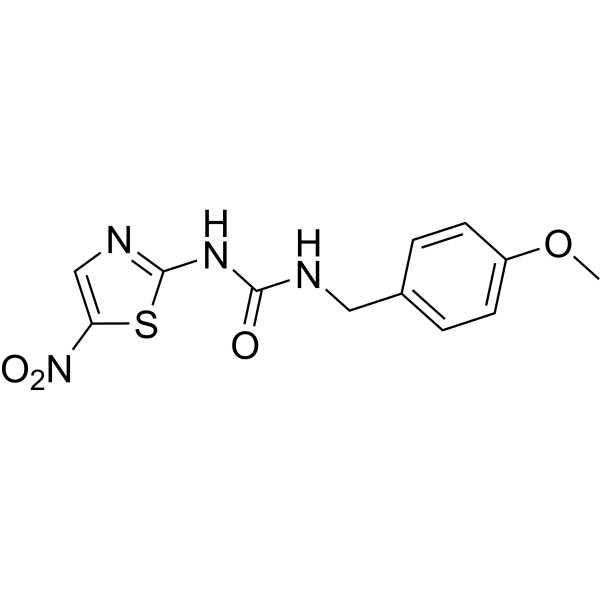
    AR-H049020XX is an active compound.
    AR-H049020XX
  • HY-130845

    Ligands for E3 Ligase Ligands for Target Protein for PROTAC Cancer
    AR antagonist 1 (compound 29) is a potent androgen receptor (AR) antagonist and binds to E3 ligase ligands with weak binding affinities to VHL protein in the synthesis of PROTAC ARD-266 (HY-133020).
    AR antagonist 1
  • HY-400666

    Ligands for Target Protein for PROTAC Androgen Receptor Cancer
    AR ligand-44 is an androgen receptor ligand that can be used in the synthesis of PROTACs, such as ARD-2051 (HY-149862) .
    AR ligand-44
  • HY-176521A

    Androgen Receptor Epigenetic Reader Domain Cancer
    AR/BRD4 RIPTAC-1 (Compound II-5) TFA is an orally active Regulatory-inducible proximity-targeting chimera (RIPTAC). AR/BRD4 RIPTAC-1 TFA induces the formation of a stable ternary complex between the androgen receptor (AR) and BRD4, thereby blocking BRD4 function. AR/BRD4 RIPTAC-1 TFA inhibits the growth and proliferation of tumor cells. AR/BRD4 RIPTAC-1 TFA holds promise for use in prostate cancer research .
    AR/BRD4 RIPTAC-1 TFA
  • HY-163510

    Androgen Receptor Cancer
    AR/AR-V7-IN-1 (Compound 20i) is an AR/ARV7 inhibitor (IC50 = 172.85 nM). AR/AR-V7-IN-1 potently inhibits cell growth with IC50 values of 4.87 and 2.07 μM in the LNCaP and 22RV1 cell lines, respectively. AR/AR-V7-IN-1 exhibits effective tumor growth inhibition in the 22RV1 xenograft study. AR/AR-V7-IN-1 can be used for the research of prostate cancer .
    AR/AR-V7-IN-1
  • HY-113526

    Drug Derivative Endogenous Metabolite Cardiovascular Disease
    AR-12463 is a derivative of Trapidil (HY-B1016). AR-12463 inhibits the conversion of [14C]acetate to cholesterol. AR-12463 significantly reduces the elevation of total cholesterol in rabbit serum and prevents cholesterol incorporation into tissues. AR-12463 can be used to study atherosclerosis.
    AR-12463
  • HY-19885

    Bacterial Dihydrofolate reductase (DHFR) Infection
    AR-102 has inhibitory activity towards Staphylococcus aureus. AR-102 exhibits a competitive potent inhibition of the F98Y mutant DHFR (Ki = 0.22 nM). AR-102 has been determined as ternary complex with NADPH in both wild-type S. aureus DHFR and the TMP-resistant F98Y mutant enzyme .
    AR-102
  • HY-P11191

    Bacterial Infection
    AR-23 is a melittin-related antimicrobial peptide that can be isolated from Rana tagoi. AR-23 exhibits broad-spectrum growth inhibitory activity against aerobic bacteria, the opportunistic yeast pathogen Candida albicans and clinical isolates of Methicillin (HY-121544)-resistant Staphylococcus aureus (MRSA). AR-23 can be used for antimicrobial research .
    AR-23
  • HY-178938

    Molecular Glues Androgen Receptor Caspase Apoptosis Endocrinology Cancer
    AR Degrader-3 is an orally active molecular glue that targets AR/ARV7 and induces the degradation of AR and ARV7 through the ubiquitin-proteasome pathway (UPP). AR Degrader-3 directly interacts with the ligand-binding domain (LBD) and the N-terminal domain (NTD) of AR. AR Degrader-3 effectively suppresses the transcriptional activity of wild-type AR (AR-WT), AR mutants, and ARV7. AR Degrader-3 downregulates the mRNA and protein levels of downstream AR target genes, thereby overcoming antiandrogen resistance mediated by ARV7 and AR point mutations. AR Degrader-3 induces apoptosis in Enzalutamide (HY-70002) (ENZa)-resistant cells and increases cleaved caspase-3 protein levels. AR Degrader-3 can be used for the study of castration-resistant prostate cancer (CRPC) .
    AR Degrader-3
  • HY-174391

    Androgen Receptor Apoptosis Cancer
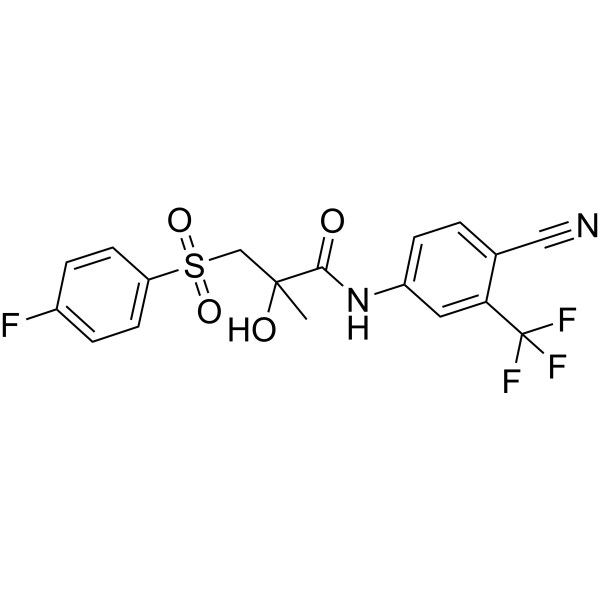
    AR antagonist 15 is an orally active androgen receptor (AR) antagonist with the IC50 of 97 nM for ART787A. AR antagonist 15 disrupts AR nuclear translocation, hinders AR homodimerization, and suppresses transcription of AR-regulated genes by competitive binding to the ligand binding pocket. AR antagonist 15 can significantly lower the prostate-specific antigen (PSA) level. AR antagonist 15 induces apoptosis by reducing the expression of apoptosis pathway related proteins. AR antagonist 15 can be used for the research of prostate cancer.
    AR antagonist 15
  • HY-174157

    Autophagy AMPK Neurological Disease Metabolic Disease
    AR493 is an autophagy activator acting on AMPK (adenosine monophosphate-activated protein kinase). AR493 regulates pathways related to cellular energy sensing and increases autophagy levels. AR493 is promising for research of aging-associated diseases (such as diabetes, neurodegenerative diseases) and autophagy regulation .
    AR493
  • HY-148300

    P2Y Receptor Cardiovascular Disease
    AR-C66096 is a potent and selective antagonist of the Gi-coupled P2Y12 receptor. AR-C66096 suppresses platelet thrombus stability under physiological flow conditions. AR-C66096 inhibits ADP-induced aggregation in whole blood aggregometry. AR-C66096 can be used for antithrombotic research .
    AR-C66096
  • HY-144127

    Androgen Receptor Cancer
    AR antagonist 3 is a potent and selective androgen receptor (AR) antagonist with an IC50 of 0.47 µM. AR antagonist 3 exhibits a dose-dependent decrease of the FRET signal (IC50= 18.05 μM). AR antagonist 3 shows effective inhibition on tumor growth when administered intratumorally .
    AR antagonist 3
  • HY-170330

    Ligands for Target Protein for PROTAC Androgen Receptor Cancer
    AR ligand-33 is the ligand for androgen receptor, that can be used for synthesis of PROTAC AR Degrader-8 (HY-170329) as the target protein ligand .
    AR ligand-33
  • HY-160692

    Androgen Receptor Others
    AR antagonist 7 (86) is an androgen receptor (AR) antagonist that can be used in the research of hair loss .
    AR antagonist 7
  • HY-124742

    Na+/K+ ATPase Others
    AR-HO47108 is an orally active reversible Na+/K+ ATPase inhibitor. AR-HO47108 reversibly blocks the final step of gastric acid secretion by competitively binding to the potassium ion binding site of the Na+/K+ ATPase in the gastric wall cells. AR-HO47108 can be used for research on diseases related to excessive gastric acid secretion, such as peptic ulcers .
    AR-HO47108
  • HY-171809

    Ligands for Target Protein for PROTAC Androgen Receptor Endocrinology
    AR ligand 42 is a androgen receptor ligand. AR ligand 42 can be used to synthesize androgen receptor PROTAC degrader ITRI-90 (HY-171808) .
    AR ligand 42
  • HY-168299

    Androgen Receptor Ligands for Target Protein for PROTAC Cancer
    AR ligand-30 is a target protein ligand for PROTAC Bavdegalutamide (HY-138641), which can be used in prostate cancer research .
    AR ligand-30
  • HY-173373

    Ligands for Target Protein for PROTAC Androgen Receptor Cancer
    AR ligand-39, an androgen receptor (AR) ligand, is a PROTAC target protein ligand (Ligand for Target Protein for PROTAC). AR ligand-39 can be used for synthesis PROTAC AR Degrader-10 (HY-173372) .
    AR ligand-39
  • HY-178148

    Androgen Receptor Endocrinology Cancer
    AR antagonist 17 is a selective, orally active, low brain-penetrant Androgen Receptor (AR) antagonist (IC50 = 0.010 μM), effectively blocking AR dimerization and nuclear translocation, and demonstrating potent efficacy in several castration-resistant prostate cancer (CRPC) cells. AR antagonist 17 showed superior efficacy against variant drug-resistant AR mutants. AR antagonist 17 can inhibit tumor growth in an LNCaP xenograft model without apparent toxicity. AR antagonist 17 can be used for the study of castration-resistant prostate cancer (CRPC) .
    AR antagonist 17
  • HY-172624

    Ligands for Target Protein for PROTAC Cancer
    AR antagonist 14 is is a PROTAC target protein ligand (Ligands for Target Protein for PROTAC). AR antagonist 14 can be combined with VH 101-amide-piperidine-Pip-alkyne (HY-172625) to synthesize PROTAC degraders (ARD-69 (HY-114402)) .
    AR antagonist 14
  • HY-151266

    Androgen Receptor Cancer
    AR antagonist 4 (Compound 67-b) is an orally active androgen receptor (AR) antagonist with an IC50 of 246.6 nM against wt-AR, and is also an AR degrader with a DC50 of 2.84 μM .
    AR antagonist 4
  • HY-15564R

    GPR119 Metabolic Disease
    AR 231453 (Standard) is the analytical standard of AR 231453. This product is intended for research and analytical applications. AR 231453 is a potent, specific and orally available GPR119 agonist. AR 231453 can stimulate β-cell replication and improve islet graft function s .
    AR 231453 (Standard)
  • HY-19346

    ROCK Others
    AR-13324 analog mesylate is an analog of AR-13324. AR-13324 is an ROCK and norepinephrine transporter (NET) inhibitor .
    AR-13324 analog mesylate
  • HY-P991493

    RSV Infection
    AR-201 is a human IgG1 monoclonal antibody (mAb) targeting F, Fusion glycoprotein F0. AR-201 has anti-respiratory syncytial virus (RSV) activity. AR-201 can be used in lower respiratory tract illness (LRTI) research. Recommended isotype control: Human IgG1 kappa, Isotype Control (HY-P99001).
    AR-201

Inquiry Online

Your information is safe with us. * Required Fields.

Salutation


Country or Region *

Applicant Name *


Organization Name *

Department *


Email Address *


Product Name *

Cat. No.


Requested quantity *

Phone Number *


Remarks

Inquiry Online

Inquiry Information

Product Name:
Cat. No.:
Quantity:
MCE Japan Authorized Agent:

