1. Search Result
Search Result
Results for "

Antispasmodic Agent

" in MedChemExpress (MCE) Product Catalog:

40

Inhibitors & Agonists

4

Natural
Products

6

Isotope-Labeled Compounds

Cat. No. Product Name Target Research Areas Chemical Structure
  • HY-14621
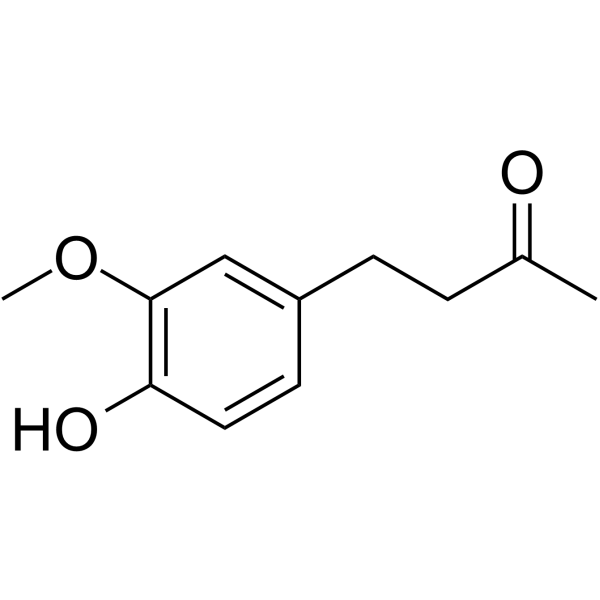
    Zingerone
    5+ Cited Publications

    Vanillylacetone; Gingerone

    Environmental Pollutants NF-κB Neurological Disease Metabolic Disease Inflammation/Immunology Cancer
    Zingerone (Vanillylacetone) is a nontoxic methoxyphenol isolated from Zingiber officinale, with potent anti-inflammatory, antidiabetic, antilipolytic, antidiarrhoeic, antispasmodic and anti-tumor properties . Zingerone alleviates oxidative stress and inflammation, down-regulates NF-κB mediated signaling pathways . Zingerone acts as an anti-mitotic agent, and inhibits the growth of neuroblastoma cells . Zingerone can cross the blood-brain barrier (BBB) .
    Zingerone
  • HY-B1339

    Dicycloverine hydrochloride

    mAChR Neurological Disease
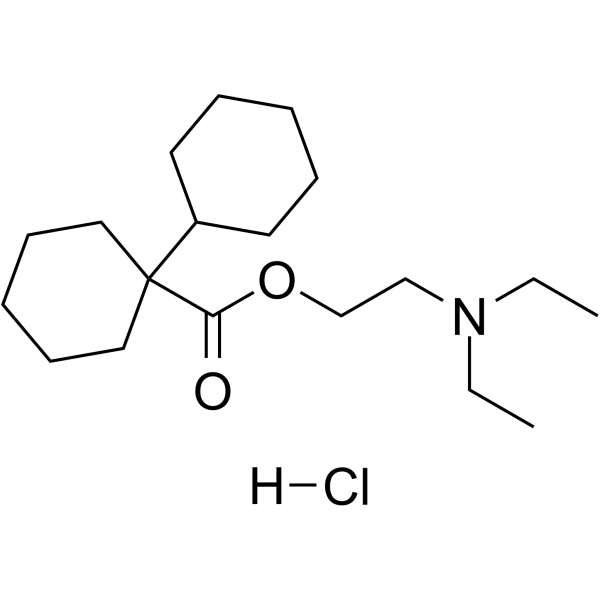
    Dicyclomine hydrochloride is a potent and orally active muscarinic cholinergic receptors antagonist. Dicyclomine hydrochloride shows high affinity for muscarinic M1 receptor subtype (Ki=5.1 nM) and M2 receptor subtype (Ki=54.6 nM) in brush-border membrane and basal plasma membranes, respectively . Dicyclomine is an antispasmodic agent and relieves smooth muscle spasm of the gastrointestinal tract in vivo .
    Dicyclomine hydrochloride
  • HY-N4113

    Keap1-Nrf2 AMPK Cancer
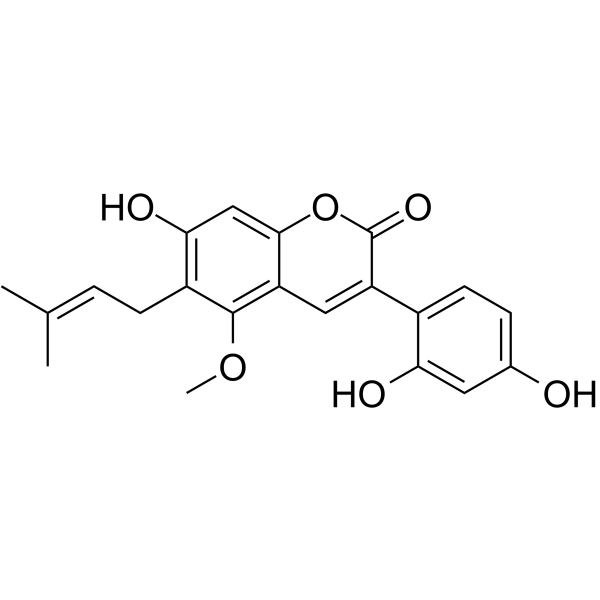
    Glycycoumarin is a potent antispasmodic agent. Glycycoumarin is a major bioactive coumarin of licorice and exhibits antispasmodic activity. Glycycoumarin also has hepatoprotective effect. Glycycoumarin can be used for the research of abdominal pain and liver diseases .
    Glycycoumarin
  • HY-100562

    5-HT Receptor COMT Neurological Disease
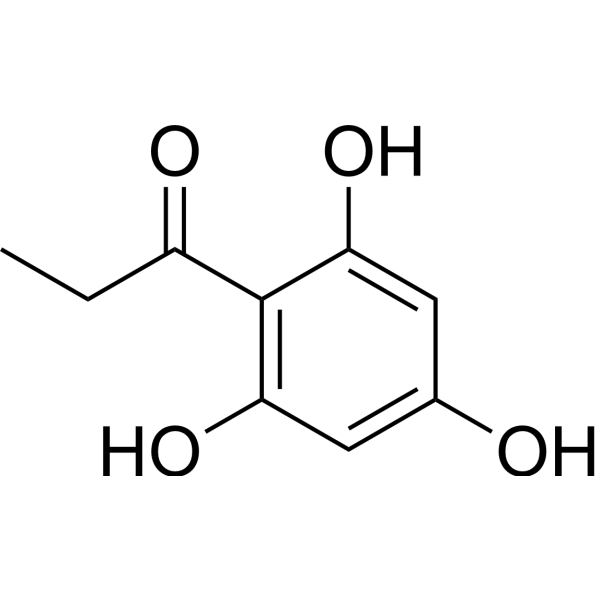
    Flopropione is a 5-HT receptor antagonist and also a catechol-o-methyltransferase (COMT) inhibitor . Flopropione also as an antispasmodic agent .
    Flopropione
  • HY-B1239
    Drofenine hydrochloride
    1 Publications Verification

    Hexahydroadiphenine hydrochloride

    Cholinesterase (ChE) Potassium Channel Amyloid-β TRP Channel Tau Protein NOD-like Receptor (NLR) JNK NF-κB IKK Neurological Disease Metabolic Disease Inflammation/Immunology
    Drofenine (Cycloadiphene; Hexahydroadiphenine) hydrochloride is an brain-penetrant antispasmodic agent. Drofenine hydrochloride is a Kv2.1 channel inhibitor with human IC50 of 9.53 μM. Drofenine hydrochloride is a butyrylcholinesterase (BChE) inhibitor with Ki of 0.003 mM, and is a TRPV3 activator. Drofenine hydrochloride blocks Kv2.1-dependent potassium efflux, inhibits Kv2.1/JNK/NF-κB and IkBa/NF-kB signaling, suppresses Kv2.1 mRNA/protein expression. Drofenine suppresses oligomeric -induced microglial NLRP3 inflammasome activation and neuronal Tau hyperphosphorylation, improves cognitive impairment, promotes neurite outgrowth. Drofenine hydrochloride induces calcium influx in keratinocytes and exert cytotoxicity against keratinocytes. Drofenine hydrochloride ameliorates diabetic peripheral neuropathy -like pathology. Drofenine hydrochloride can be used for the researches of Alzheimer's disease, diabetic peripheral neuropathy and smooth muscle spasm .
    Drofenine hydrochloride
  • HY-B1440

    Calcium Channel Monoamine Oxidase Cardiovascular Disease
    Ethaverine hydrochloride, a derivative of papaverine, inhibits cardiac L-type calcium channel. Ethaverine hydrochloride is a peripheral vasodilator and antispasmodic agent. Ethaverine hydrochloride can be used for research of peripheral vascular disease .
    Ethaverine hydrochloride
  • HY-B1806A

    Pathilon chloride

    mAChR Neurological Disease Inflammation/Immunology
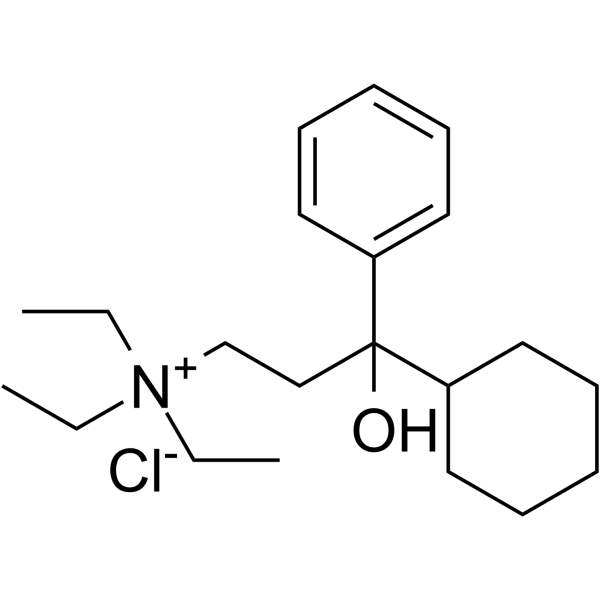
    Tridihexethyl (Pathilon) chloride is an orally active anticholinergic agent and mAChR antagonist, shows activities of antimuscarinic and anticholinergic. Tridihexethyl chloride shows pronounced antispasmodic and antisecretory effects on the gastrointestinal tract. Tridihexethyl chloride can be used in studies of peptic ulcer disease and acquired nystagmus .
    Tridihexethyl chloride
  • HY-105652

    Vasopressin Receptor Neurological Disease
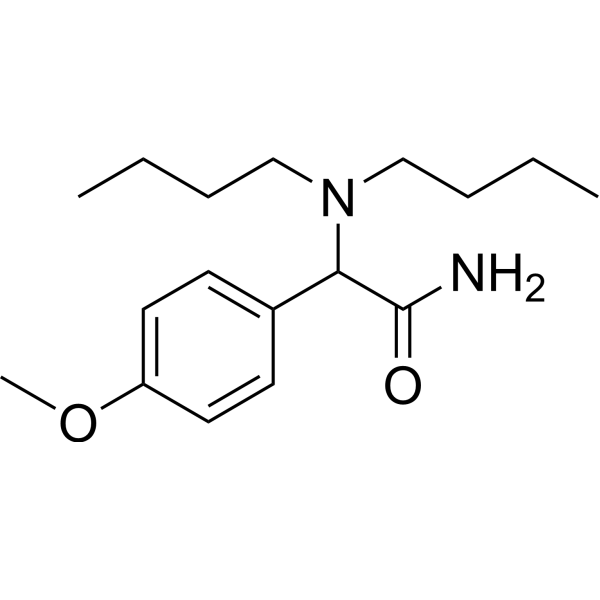
    Ambucetamide is an antispasmodic agent. Ambucetamide alleviates menstrual pain .
    Ambucetamide
  • HY-105771

    mAChR Neurological Disease
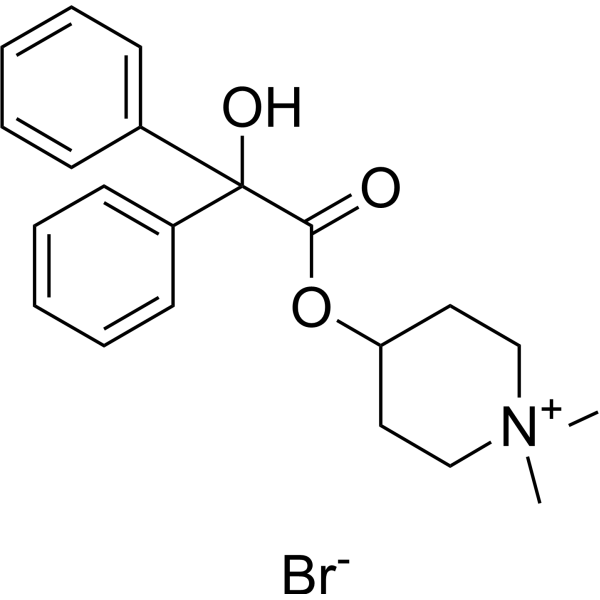
    Parapenzolate bromide, an antispasmodic, is an orally active mAChR antagonist. Parapenzolate bromide is an anticholinergic agent .
    Parapenzolate bromide
  • HY-122520

    mAChR Neurological Disease
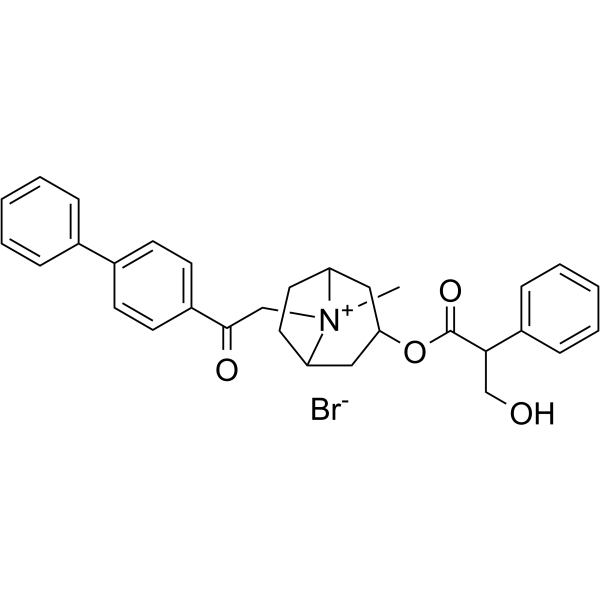
    Fentonium bromide is an anti-ulcerogenic, anticholinergic and antispasmodic agent. Fentonium bromide can be used in the research of neurological conditions, such as unstable bladder .
    Fentonium bromide
  • HY-12769

    Mebeverine metabolite Mebeverine acid

    Drug Metabolite Neurological Disease
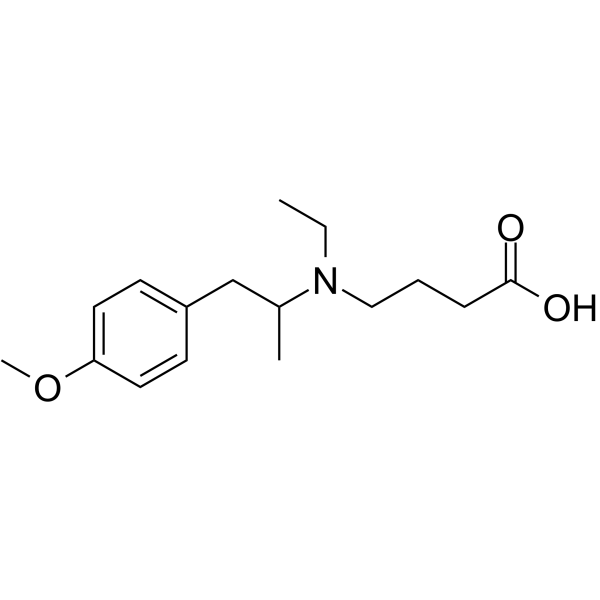
    Mebeverine acid (Mebeverine metabolite Mebeverine acid) is a secondary metabolite of the intestinal antispasmodic agent Mebeverine (HY-A0078). Mebeverine acid is generated by the hydrolysis of Mebeverine in the body and is considered a key circulating metabolite. Mebeverine acid is an important marker for oral Mebeverine .
    Mebeverine acid
  • HY-12752

    Trimeprazine

    Histamine Receptor Neurological Disease Inflammation/Immunology Cancer
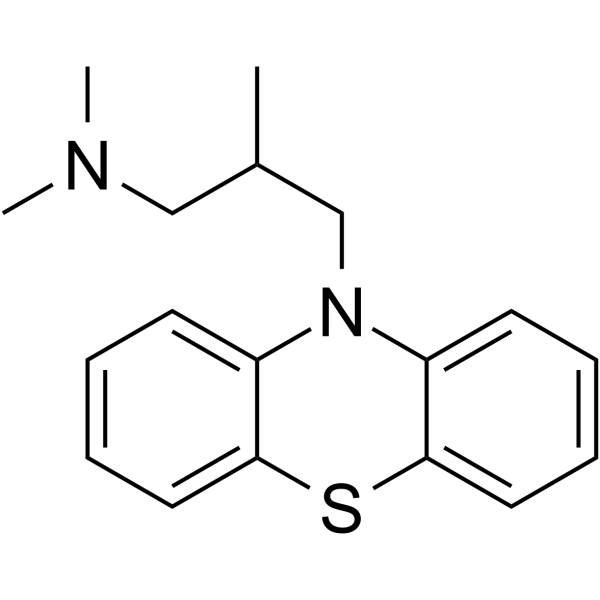
    Alimemazine is a phenothiazine derivative that is generally used as an antipruritic agent and also a hemagglutinin (HA)-receptor antagonist.Alimemazine (Trimeprazine) is also acts as a partial agonist against the histamine H1 receptor (H1R) and other GPCRs. Alimemazine displays antiserotonin, antispasmodic, and antiemetic properties .
    Alimemazine
  • HY-128891

    P2X Receptor Neurological Disease
    Eperisone ((±)-Eperisone) is an antispasmodic agent and centrally acting muscle relaxant useful in the study of diseases characterized by muscle stiffness and pain. Eperisone acts by relaxing skeletal and vascular smooth muscle, resulting in vasodilation, decreased muscle tone, improved circulation, and inhibition of pain reflexes. Eperisone is also a potent P2X7 receptor antagonist .
    Eperisone
  • HY-19699

    NAAM; 1-Naphthaleneacetamide; α-Naphthylacetamide

    Environmental Pollutants Phytohormone Neurological Disease Endocrinology
    1-Naphthylacetamide is an orally active nonsteroidal anti-inflammatory agent (NAIA) and also an indole-type auxin plant growth regulator. 1-Naphthylacetamide inhibits inflammatory response-related pathways and modulates plant hormone signaling, exhibiting anti-inflammatory, local anesthetic, antispasmodic, analgesic, and diuretic activities. 1-Naphthylacetamide promotes plant cell expansion, differentiation, and fruit enlargement. Additionally, 1-Naphthylacetamide induces central nervous system (CNS) depression in mice, characterized by reduced spontaneous activity, decreased irritability, decreased muscle tone, and attenuated ear-cuff reflex, ipsilateral flexor reflex, and corneal reflex [1][2].
    1-Naphthylacetamide
  • HY-160994

    Drug Derivative Others
    Pyrophendane is an antispasmodic agent .
    Pyrophendane
  • HY-136634

    mAChR Others
    BTM-1042 is a newly synthesized compound with antispasmodic effects. It can inhibit the twitch reaction of the guinea pig ileum under electrical stimulation and is not affected by naloxone. It has similar effects to atropine and can block muscarinic receptors, but has less effect on other types of receptors. BTM-1042 also has an inhibitory effect on the ileal reaction caused by nicotine and 5-hydroxytryptamine. BTM-1042 showed a dose-dependent inhibitory effect on the spontaneous movement of the rabbit stomach. In general, BTM-1042 is a agent with a strong antispasmodic effect.
    BTM-1042
  • HY-12769S1

    Mebeverine metabolite Mebeverine acid-d5 hydrochloride

    Isotope-Labeled Compounds Drug Metabolite Neurological Disease
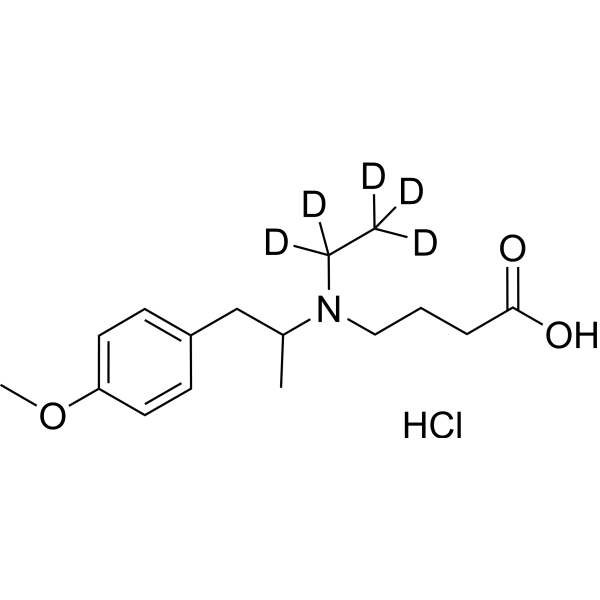
    Mebeverine acid-d5 (Mebeverine metabolite Mebeverine acid-d5) hydrochloride is deuterium labeled Mebeverine acid hydrochloride. Mebeverine acid hydrochloride is a secondary metabolite of the intestinal antispasmodic agent Mebeverine (HY-A0078). Mebeverine acid hydrochloride is generated by the hydrolysis of Mebeverine in the body and is considered a key circulating metabolite. Mebeverine acid hydrochloride is an important marker for oral Mebeverine.
    Mebeverine acid-d5 hydrochloride
  • HY-B1339A

    Dicycloverine

    mAChR Neurological Disease
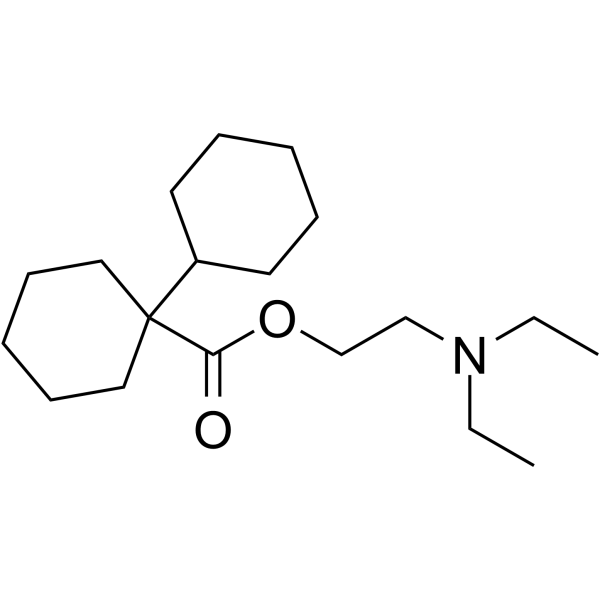
    Dicyclomine (Dicycloverine) is a potent and orally active muscarinic cholinergic receptors antagonist. Dicyclomine (Dicycloverine) shows high affinity for muscarinic M1 receptor subtype (Ki=5.1 nM) and M2 receptor subtype (Ki=54.6 nM) in brush-border membrane and basal plasma membranes, respectively . Dicyclomine is an antispasmodic agent and relieves smooth muscle spasm of the gastrointestinal tract in vivo .
    Dicyclomine
  • HY-118524

    LD-935 free base

    Adrenergic Receptor Neurological Disease
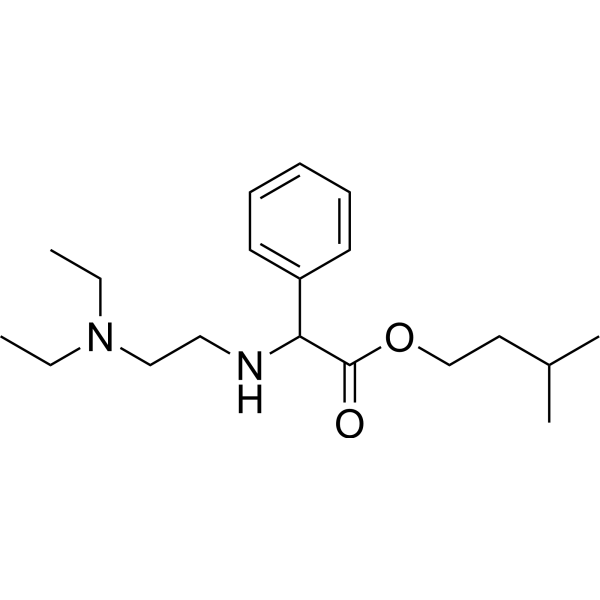
    Dipiproverine (LD-935 free base) is an alpha-amino acid ester, an antispasmodic compound, which is used as an anticholinergic agent .
    Dipiproverine
  • HY-118524A

    LD-935

    Adrenergic Receptor Neurological Disease
    Dipiproverine (hydrochloride) is the hydrochloride form of Dipiproverine (HY-118524). Dipiproverine (hydrochloride) is an alpha-amino acid ester, an antispasmodic compound, which is used as an anticholinergic agent .
    Dipiproverine hydrochloride
  • HY-W201842

    mAChR Neurological Disease
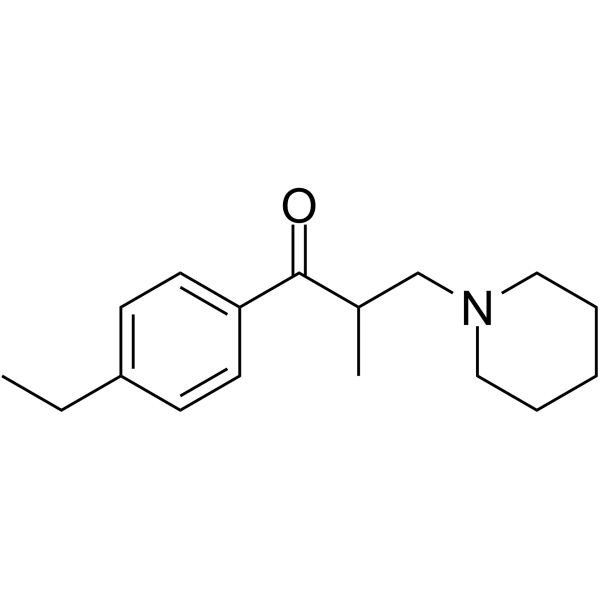
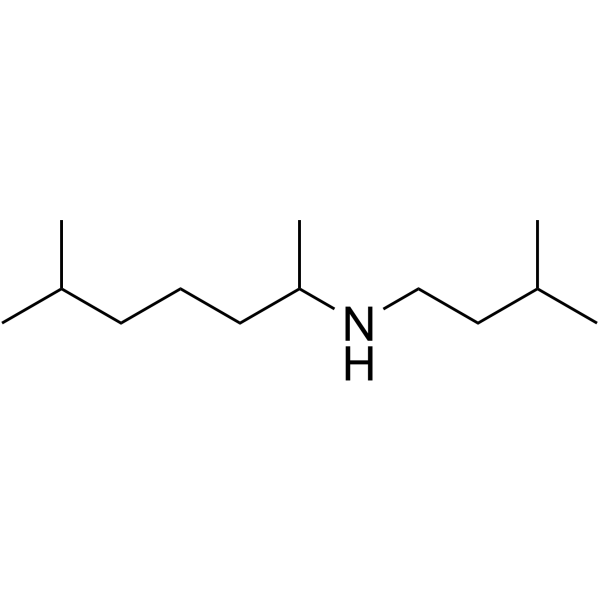
    Octamylamine is an anticholinergic and antispasmodic agent .
    Octamylamine
  • HY-W201842B

    mAChR Neurological Disease
    Octamylamine hydrochloride is an anticholinergic and antispasmodic agent .
    Octamylamine hydrochloride
  • HY-W201842A

    mAChR Neurological Disease
    Octamylamine sulfamate is an anticholinergic and antispasmodic agent .
    Octamylamine sulfamate
  • HY-N4113R

    Reference Standards Keap1-Nrf2 AMPK Cancer
    Glycycoumarin (Standard) is the analytical standard of Glycycoumarin. This product is intended for research and analytical applications. Glycycoumarin is a potent antispasmodic agent. Glycycoumarin is a major bioactive coumarin of licorice and exhibits antispasmodic activity. Glycycoumarin also has hepatoprotective effect. Glycycoumarin can be used for the research of abdominal pain and liver diseases .
    Glycycoumarin (Standard)
  • HY-122409

    Others Others
    Cularine is a compound that relaxes guinea pig tracheal and human bronchial smooth muscle, inhibits contraction induced by a variety of contractile agents, and has nonspecific antispasmodic activity, and its activity is structure-related.
    Cularine
  • HY-106745

    Ro 22-4839

    Calmodulin Cardiovascular Disease
    Elziverine (Ro 22-4839) is a brain circulation improvement agent with vasospasm antispasmodic effects. Elziverine is a calmodulin antagonist. Elziverine inhibits erythrocyte cell membrane rupture, platelet aggregation and lipid peroxidation .
    Elziverine
  • HY-16489

    Potassium Channel mAChR Calcium Channel Metabolic Disease
    Terodiline, an antispasmodic agent, blocks hERG current with the IC50 of 375 nM. Terodiline has both anticholinergic and calcium antagonist properties, and effectively reduces abnormal bladder contractions caused by detrusor instability. Terodiline can be used for the research of urinary incontinence .
    Terodiline
  • HY-B1440R

    Reference Standards Calcium Channel Monoamine Oxidase Cardiovascular Disease
    Ethaverine (hydrochloride) (Standard) is the analytical standard of Ethaverine (hydrochloride). This product is intended for research and analytical applications. Ethaverine hydrochloride, a derivative of papaverine, inhibits cardiac L-type calcium channel. Ethaverine hydrochloride is a peripheral vasodilator and antispasmodic agent. Ethaverine hydrochloride can be used for research of peripheral vascular disease .
    Ethaverine hydrochloride (Standard)
  • HY-101128R

    FR2054 (Standard)

    Reference Standards Bacterial Antibiotic Infection
    Ethaverine (hydrochloride) (Standard) is the analytical standard of Ethaverine (hydrochloride). This product is intended for research and analytical applications. Ethaverine hydrochloride, a derivative of papaverine, inhibits cardiac L-type calcium channel. Ethaverine hydrochloride is a peripheral vasodilator and antispasmodic agent. Ethaverine hydrochloride can be used for research of peripheral vascular disease .
    Bicyclomycin benzoate (Standard)
  • HY-12769S

    Mebeverine metabolite Mebeverine acid-d5

    Isotope-Labeled Compounds Drug Metabolite Neurological Disease
    Mebeverine acid-d5 (Mebeverine metabolite Mebeverine acid-d5) is the deuterium labeled Mebeverine Acid (HY-12769). Mebeverine acid is a secondary metabolite of the intestinal antispasmodic agent Mebeverine (HY-A0078). Mebeverine acid is generated by the hydrolysis of Mebeverine in the body and is considered a key circulating metabolite. Mebeverine acid is an important marker for oral Mebeverine.
    Mebeverine acid-d5
  • HY-12752BS

    Trimeprazine-d6 hydrochloride

    Histamine Receptor Isotope-Labeled Compounds Neurological Disease Inflammation/Immunology Cancer
    Alimemazine-d6 hydrochloride (Trimeprazine-d6 hydrochloride) is the deuterium labeled Alimemazine (HY-12752). Alimemazine is a phenothiazine derivative that is generally used as an antipruritic agent and also a hemagglutinin (HA)-receptor antagonist.Alimemazine (Trimeprazine) is also acts as a partial agonist against the histamine H1 receptor (H1R) and other GPCRs. Alimemazine displays antiserotonin, antispasmodic, and antiemetic properties .
    Alimemazine-d6 hydrochloride
  • HY-14621R

    Vanillylacetone (Standard); Gingerone (Standard)

    Reference Standards NF-κB Metabolic Disease Inflammation/Immunology Cancer
    Zingerone (Standard) is the analytical standard of Zingerone. This product is intended for research and analytical applications. Zingerone (Vanillylacetone) is a nontoxic methoxyphenol isolated from Zingiber officinale, with potent anti-inflammatory, antidiabetic, antilipolytic, antidiarrhoeic, antispasmodic and anti-tumor properties . Zingerone alleviates oxidative stress and inflammation, down-regulates NF-κB mediated signaling pathways . Zingerone acts as an anti-mitotic agent, and inhibits the growth of neuroblastoma cells .
    Zingerone (Standard)
  • HY-B1339AS

    Dicycloverine-d4

    mAChR Neurological Disease
    Dicyclomine-d4 is the deuterium labeled Dicyclomine . Dicyclomine (Dicycloverine) is a potent and orally active muscarinic cholinergic receptors antagonist. Dicyclomine (Dicycloverine) shows high affinity for muscarinic M1 receptor subtype (Ki=5.1 nM) and M2 receptor subtype (Ki=54.6 nM) in brush-border membrane and basal plasma membranes, respectively . Dicyclomine is an antispasmodic agent and relieves smooth muscle spasm of the gastrointestinal tract in vivo .
    Dicyclomine-d4
  • HY-B1339R

    Dicycloverine hydrochloride (Standard)

    Reference Standards mAChR Neurological Disease
    Dicyclomine (hydrochloride) (Standard) is the analytical standard of Dicyclomine (hydrochloride). This product is intended for research and analytical applications. Dicyclomine hydrochloride is a potent and orally active muscarinic cholinergic receptors antagonist. Dicyclomine hydrochloride shows high affinity for muscarinic M1 receptor subtype (Ki=5.1 nM) and M2 receptor subtype (Ki=54.6 nM) in brush-border membrane and basal plasma membranes, respectively . Dicyclomine is an antispasmodic agent and relieves smooth muscle spasm of the gastrointestinal tract in vivo .
    Dicyclomine hydrochloride (Standard)
  • HY-B1339S

    Dicycloverine-d4 hydrochloride

    Isotope-Labeled Compounds mAChR Neurological Disease
    Dicyclomine-d4 hydrochloride (Dicycloverine-d4 hydrochloride) is the deuterium labeled Dicyclomine hydrochloride (HY-B1339). Dicyclomine hydrochloride is a potent and orally active muscarinic cholinergic receptors antagonist. Dicyclomine hydrochloride shows high affinity for muscarinic M1 receptor subtype (Ki=5.1 nM) and M2 receptor subtype (Ki=54.6 nM) in brush-border membrane and basal plasma membranes, respectively . Dicyclomine is an antispasmodic agent and relieves smooth muscle spasm of the gastrointestinal tract in vivo .
    Dicyclomine-d4 hydrochloride
  • HY-120695

    Others Neurological Disease
    Nafiverine is an antispasmodic agent. Nafiverine shows a high myolytic activity on the smooth muscles of the ileum, uterus, and coronary vessels .
    Nafiverine
  • HY-B1239A

    Cycloadiphene; Hexahydroadiphenine

    Potassium Channel Cholinesterase (ChE) TRP Channel NOD-like Receptor (NLR) Amyloid-β Tau Protein JNK NF-κB IKK Neurological Disease Metabolic Disease Inflammation/Immunology
    Drofenine (Cycloadiphene; Hexahydroadiphenine) is an brain-penetrant antispasmodic agent. Drofenine is a Kv2.1 channel inhibitor with human IC50 of 9.53 μM. Drofenine is a butyrylcholinesterase (BChE) inhibitor with Ki of 0.003 mM, and is a TRPV3 activator. Drofenine blocks Kv2.1-dependent potassium efflux, inhibits Kv2.1/JNK/NF-κB and IkBa/NF-kB signaling, suppresses Kv2.1 mRNA/protein expression. Drofenine suppresses oligomeric -induced microglial NLRP3 inflammasome activation and neuronal Tau hyperphosphorylation, improves cognitive impairment, promotes neurite outgrowth. Drofenine induces calcium influx in keratinocytes and exert cytotoxicity against keratinocytes. Drofenine ameliorates diabetic peripheral neuropathy -like pathology. Drofenine can be used for the researches of Alzheimer's disease, diabetic peripheral neuropathy and smooth muscle spasm .
    Drofenine
  • HY-129518

    Others Neurological Disease
    Phenamacide hydrochloride is an anti-spasmodic agent that can be used for the study of urinary incontinence .
    Phenamacide hydrochloride
  • HY-131507

    mAChR Metabolic Disease
    Emepronium bromide is an antispasmodic agent for the bladder and a muscarinic receptor ligand, with an IC50 of 236 nM. Emepronium bromide is applicable to research related to bladder diseases .
    Emepronium bromide
  • HY-12769S2

    Mebeverine metabolite Mebeverine acid-d3

    Isotope-Labeled Compounds Drug Derivative Neurological Disease
    Mebeverine acid-d3 (Mebeverine metabolite Mebeverine acid-d3) is the deuterium labeled Mebeverine Acid (HY-12769). Mebeverine acid is a secondary metabolite of the intestinal antispasmodic agent Mebeverine (HY-A0078). Mebeverine acid is generated by the hydrolysis of Mebeverine in the body and is considered a key circulating metabolite. Mebeverine acid is an important marker for oral Mebeverine.
    Mebeverine acid-d3

Inquiry Online

Your information is safe with us. * Required Fields.

Salutation


Country or Region *

Applicant Name *


Organization Name *

Department *


Email Address *


Product Name *

Cat. No.


Requested quantity *

Phone Number *


Remarks

Inquiry Online

Inquiry Information

Product Name:
Cat. No.:
Quantity:
MCE Japan Authorized Agent:

