
1. Search Result
Search Result
Results for "

B. subtilis

" in MedChemExpress (MCE) Product Catalog:

112

Inhibitors & Agonists

1

Fluorescent Dye

1

Biochemical Assay Reagents

23

Peptides

43

Natural
Products

2

Recombinant Proteins

Cat. No. Product Name Target Research Areas Chemical Structure
  • HY-B0364A
    Dyclonine hydrochloride
    1 Publications Verification

    Dyclocaine hydrochloride

    Bacterial Fungal Aldehyde Dehydrogenase (ALDH) Infection Cancer
    Dyclonine (Dyclocaine) hydrochloride is an orally effective ALDH covalent inhibitor (crosses blood-brain barrier), with an IC50 of 35 μM for ALDH2 and 76 μM for ALDH3A1. Dyclonine hydrochloride has sensitizing activities for targeted cancer cells and antibacterial. Dyclonine hydrochloride is also a local agent that can suppress or relieve pain. that blocks the transmission of various nerve impulses or stimuli and inhibits the sensation of touch and pain .
    Dyclonine hydrochloride
  • HY-112665

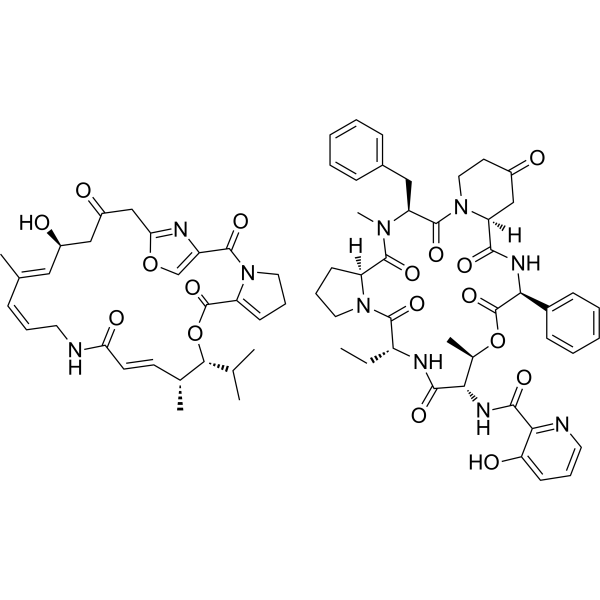
    Streptogramin; Mikamycin; RP 7293

    Antibiotic Bacterial Infection
    Virginiamycin Complex (Streptogramin) is an antibiotic containing two streptogramins, virginiamycin M (VM) and virginiamycin S (VS), which are produced by S. virginiae. As a complex, these two antibiotics in Virginiamycin Complex act synergistically. The action of VM is persistent and catalytic, and it can alter the affinity of ribosomes for VS. Virginiamycin Complex irreversibly inhibits protein synthesis in bacteria and has antibacterial activity .
    Virginiamycin Complex
  • HY-125733

    Bacterial Antibiotic Infection
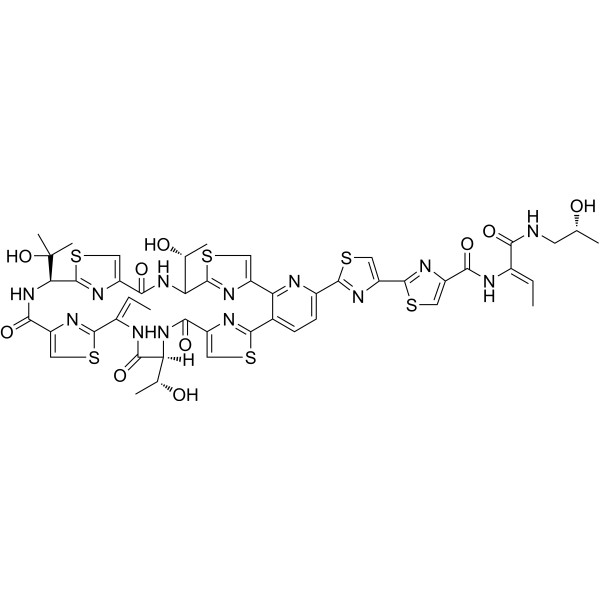
    Thiocillin I is a thiopeptide antibiotic and has in vitro antibacterial activity against Gram-positive bacterial strains. The MIC values of Thiocillin I against S. aureus 1974149, E. faecalis 1674621, B. subtilis ATCC 6633 and S. pyogenes 1744264 are 2 μg/mL, 0.5 μg/mL, 4 μg/mL and 0.5 μg/mL, respectively .
    Thiocillin I
  • HY-N0656
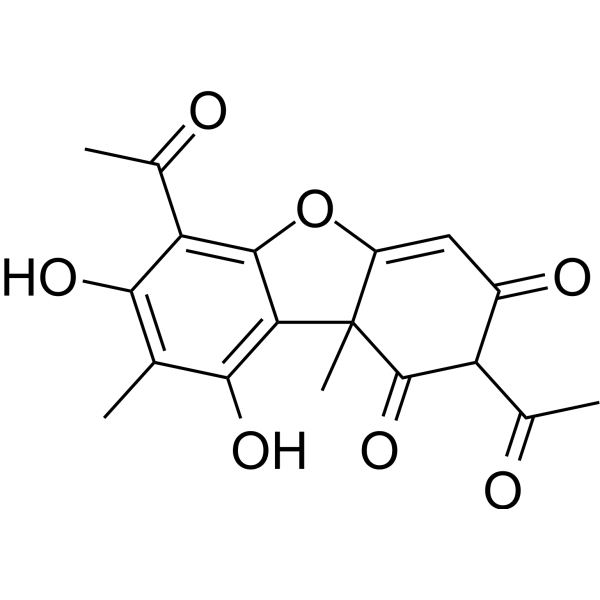
    Usnic acid
    2 Publications Verification

    Bacterial DNA/RNA Synthesis Nuclear Factor of activated T Cells (NFAT) Apoptosis Infection Inflammation/Immunology Cancer
    Usnic acid is a secondary metabolite of lichens with a unique dibenzofuran skeleton. Usnic acid inhibits DNA/RNA synthesis and has antibacterial activity. Usnic acid induces cell cycle arrest and apoptosis and has anticancer activity. Usnic acid inhibits RANKL-mediated osteoclast formation and function by reducing the transcriptional and translational expression of NFATc1. Usnic acid has antioxidant and anti-inflammatory activities by inhibiting lipid peroxidation and myeloperoxidase .
    Usnic acid
  • HY-N5127

    Bacterial Infection
    Nonacosane, isolated from Baphia massaiensis, exhibits weak activities against E. coli, B. subtilis, P. aeruginosa and S. aureus .
    Nonacosane
  • HY-N10087

    Bacterial Infection
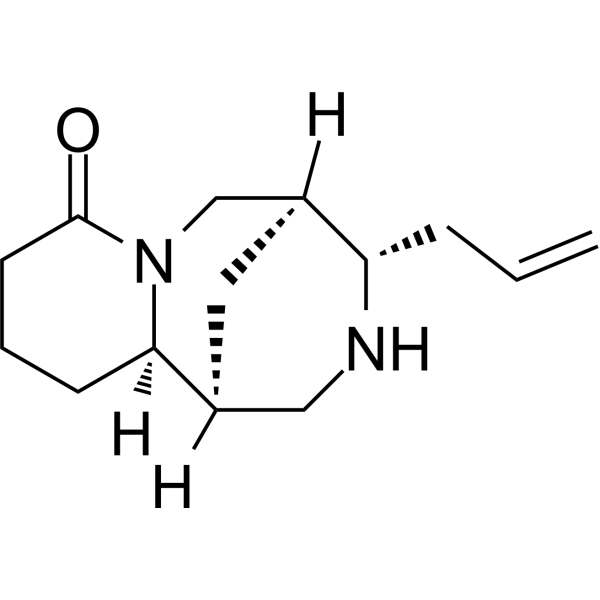
    Angustifoline, an alkaloid, can be isolated from Lupinus angustifolius L. alkaloid extract. Angustifoline exhibits antimicrobial activity. Angustifoline could have bacteriostatic effects against S. aureus, B. subtilis, E. coli, P. aeruginosa and B. thuringiensis .
    Angustifoline
  • HY-D0128

    7-Methoxy-4-methylcoumarin

    Bacterial Infection
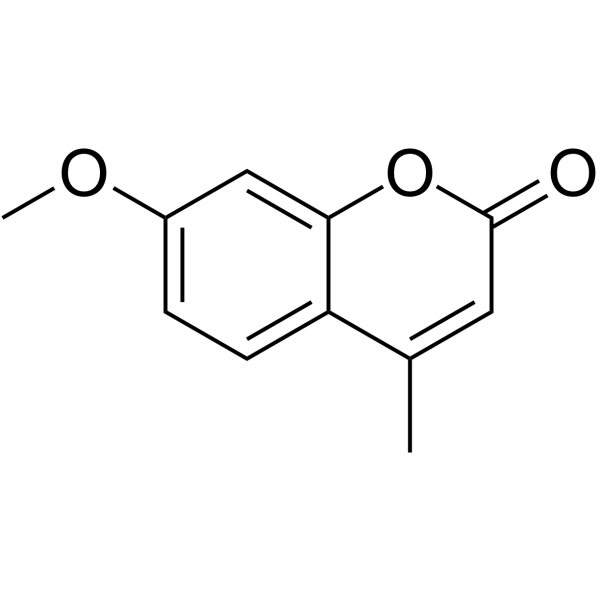
    4-Methylherniarin (7-Methoxy-4-methylcoumarin) is a coumarin derivative and fluorescent label, has an antimicrobial activitiy against both gram positive and gram negative bacterial stains. 4-Methylherniarin displays good activity against B. subtilis and S.sonnei with IC50 values of 11.76 μg/ml and 13.47 μg/ml .
    4-Methylherniarin
  • HY-10979

    Bacterial Infection Inflammation/Immunology
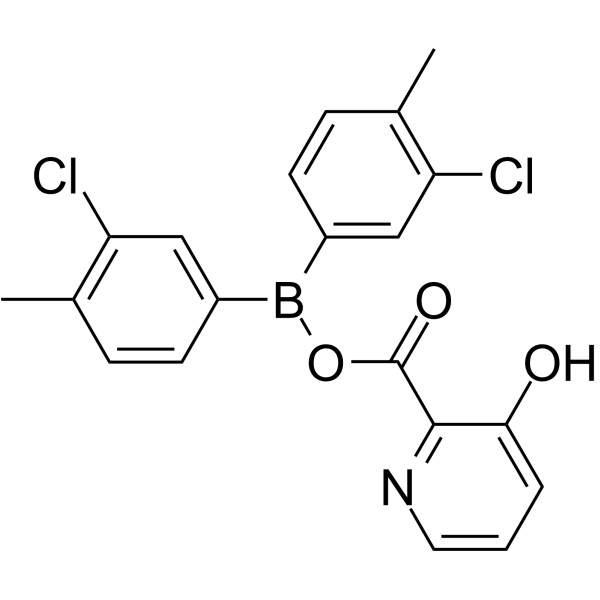
    AN0128 is a boron-containing antibacterial and anti-inflammatory agent. AN0128 against S. aureus, S. epidermidis, P. acnes, B. subtilis with minimum inhibitory concentration (MIC) values of 1, 0.5, 0.3, 1 μg/mL. AN0128 can be used for the research of periodontal disease and cutaneous diseases .
    AN0128
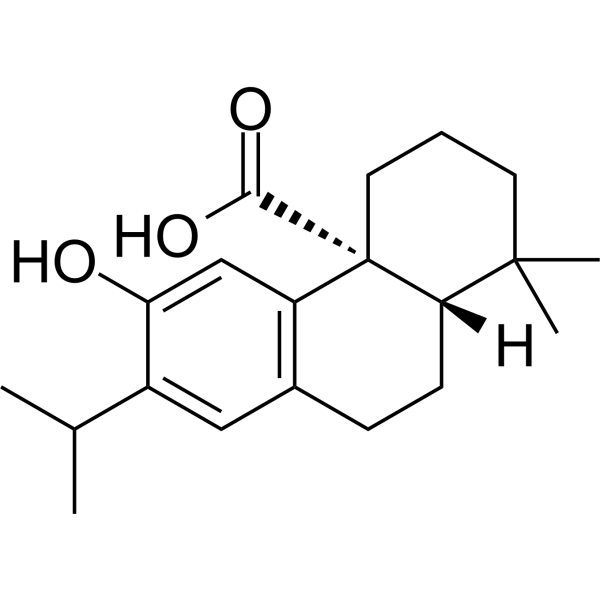
  • HY-W354851

    Bacterial Antibiotic Infection
    Pisiferic acid is an antibacterial agent with inhibitory activity against Gram-negative/positive bacteria such as P. vulgaris, S. aureus and B. subtilis. Pisiferic acid can be used to study bacterial infections .
    Pisiferic acid
  • HY-W094847

    Environmental Pollutants Biochemical Assay Reagents Infection
    Eicosane is an alkane with anti-microbial effects. Eicosane inhibits the growth of B. subtilis, E. coli and P. aeruginosa. Eicosane is used to form candles .
    Eicosane
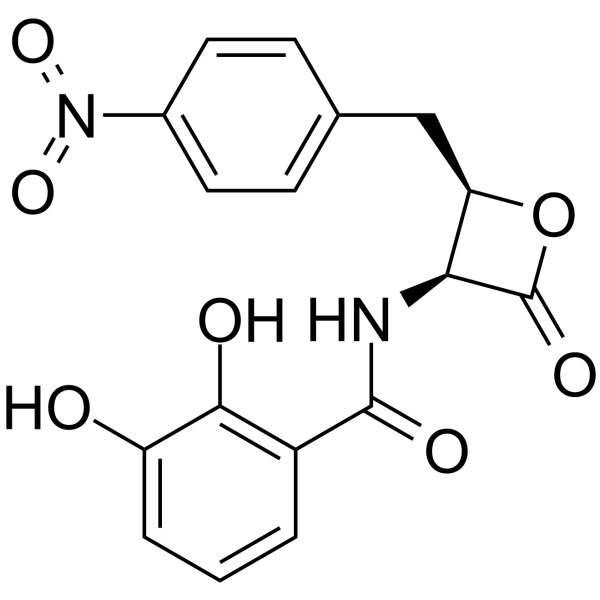
  • HY-138075

    Antibiotic Bacterial Parasite Infection
    Obafluorin is a β-lactone antibiotic. Obafluorin inhibits threonyl-tRNA synthetase (PfThrRS) with an IC50 of 4.3 nM. Obafluorin inhibits the aminoacylation activity of EcThrRS and ObaO. Obafluorin exhibits Fe 3+-enhanced antibacterial activity. Obafluorin can be used in studies related to infections caused by bacterial and parasites such as Plasmodium .
    Obafluorin
  • HY-105282

    MM 45289; A 82846A

    Antibiotic Bacterial Infection
    Eremomycin (MM 45289) is a potent glycopeptide antibiotic closely related to Vancomycin (HY-B0671). Eremomycin shows antibacterial activity in Staphylococcus spp. and Bacillus subtilis ATCC6633, with the MIC values of 0.03-1.6 μg/mL .
    Eremomycin
  • HY-N16374

    Antibiotic Bacterial Fungal Infection Cancer
    Mazethramycin B (Compound II) is an antitumor antibiotic. Mazethramycin B can be isolated from the Streptomyces thioluteusM ME561-L4. Mazethramycin B has a broad-spectrum antimicrobial activity (such as MICs of 1.56 and 6.25 μg/mL for the bacteria Bacillus subtilis PCI 219 and the fungus Candida pseudotropicalis, resepectively). Mazethramycin B significantly increases survival in L1210 leukemia mice model .
    Mazethramycin B
  • HY-129316

    CGP 52547

    Antibiotic Fungal Bacterial Infection
    (S)-Dihydroaeruginoic acid is an antibiotic originally isolated from P. fluorescens. It has antimicrobial activity in a disc assay against R. solani, P. ultimum, B. cinera, S. rolfsii, C. gloeosporioide, F. oxysporum, and S. tritici fungi as well as B. subtilis, E. herbicola, and S. albus bacteria when used at a concentration of 200 μg/disc.
    (S)-Dihydroaeruginoic acid
  • HY-P10230

    Bacterial Infection
    Sublancin is an antimicrobial peptide, which inhibits DNA replication, transcription and translation, without affecting membrane integrity. Sublancin suppresses glucose uptake for the competition of phosphotransferase system (PTS). Sublancin inhibits B. subtilis strain 168 ΔSPβ with MIC of 0.312 μM .
    Sublancin
  • HY-W751002

    (+)-Orthosporin

    Endogenous Metabolite Bacterial HIV Reverse Transcriptase Infection
    Orthosporin ((+)-Orthosporin), a phytotoxic isocoumarin compound, is a microbial secondary metabolite. Orthosporin can be isolated from the endophytic fungus Lasiodiplodia tbeobromae. Orthosporin has potent antibacterial activity against B. subtilis, E. coli and P. aeruginosa. Orthosporin also has antioxidant activity against DPPH radical and antiviral activities with inhibition of HIV-1 reverse transcriptase activity .
    Orthosporin
  • HY-N0656R

    Reference Standards Bacterial DNA/RNA Synthesis Nuclear Factor of activated T Cells (NFAT) Apoptosis Infection Inflammation/Immunology Cancer
    Usnic acid is a secondary metabolite of lichens with a unique dibenzofuran skeleton. Usnic acid inhibits DNA/RNA synthesis and has antibacterial activity. Usnic acid induces cell cycle arrest and apoptosis and has anticancer activity. Usnic acid inhibits RANKL-mediated osteoclast formation and function by reducing the transcriptional and translational expression of NFATc1. Usnic acid has antioxidant and anti-inflammatory activities by inhibiting lipid peroxidation and myeloperoxidase .
    Usnic acid (Standard)
  • HY-175539

    Bacterial Topoisomerase DNA/RNA Synthesis Infection
    DNA gyrase/Topo IV-IN-2 (Compound AK19) is an antibacterial agent with IC50 values of 0.783 μM and 7.136 μM against E. coli DNA gyrase and topoisomerase IV, respectively. DNA gyrase/Topo IV-IN-2 exhibits broad-spectrum antibacterial efficacy against both Gram-positive and Gram-negative pathogens. DNA gyrase/Topo IV-IN-2 can inhibit the biofilms of B. subtilis and MRSA, with an MIC of 1.9 μM against both B. subtilis and MRSA. DNA gyrase/Topo IV-IN-2 can be used in research related to anti-drug-resistant bacterial drugs .
    DNA gyrase/Topo IV-IN-2
  • HY-173054

    Bacterial Infection
    FtsZ-IN-12 (Compound 16e) is the inhibitor for filamentous temperature-sensitive mutant Z (FtsZ) that promotes the polymerization of FtsZ protein, inhibits its GTPase activity, thereby interfering with bacterial cell division process. FtsZ-IN-12 exhibits boardspectrum antibacterial activity that inhibits B. subtilis ATCC9372, B. pumilus CMCC63202, S. aureus ATCC25923, E. coli BW25113 and A. baumannii ATCC19606 with MIC of 0.062-1 μg/mL. FtsZ-IN-12 inhibits the formation of bacterial biofilms and exhibits a clearing effect on mature biofilms. FtsZ-IN-12 exhibits bactericidal activity without hemolytic toxicity to mammalian red blood cells (15 mg/kg) .
    FtsZ-IN-12
  • HY-N15480

    Bacterial Cancer
    Nanangenine C is a drimane sesquiterpene that has been found in Aspergillus. It is active against B. subtilis (IC50 = 5.7 μg/ml) and cytotoxic to NS-1 mouse myeloma cells (IC50 = 4.1 μg/ml).
    Nanangenine C
  • HY-147960

    Glycosyltransferase Infection
    Glycosyltransferase-IN-1 (compound 5m) is a potent glycosyltransferase inhibitor, with an IC50 of 82.8 μM. Glycosyltransferase-IN-1 shows antibacterial activity, with MIC values of 6 μg/mL for MSSA, MRSA, B. subtilis and 12 μg/mL for E. coli .
    Glycosyltransferase-IN-1
  • HY-152138

    Bacterial Fungal Infection
    Antituberculosis agent-8 (Compound 9i) is an antitubercular agent with an MIC of 3.53 μM (1.6 μg/mL) against M. tuberculosis H37Rv. Antituberculosis agent-8 also shows good antifungal activity against A. niger with an MIC of 62.50 μM .
    Antituberculosis agent-8
  • HY-W104527

    Bacterial Fungal Infection
    2,4-Dinitrobenzenesulfonamide (Compound 2d) is an antibacterial and antifungal agent. 2,4-Dinitrobenzenesulfonamide interacts with dihydrofolate synthetase. 2,4-Dinitrobenzenesulfonamide shows inhibitory effect against A. niger, C. albicans, B. subtilis, and S. aureus .
    2,4-Dinitrobenzenesulfonamide
  • HY-121178

    Bacterial Fungal Infection
    Deoxyviolacein is a bacterial metabolite and byproduct in the biosynthesis of the bisindole alkaloid violacein (HY-119809) that has anticancer, antibacterial, and antifungal properties. It inhibits proliferation of hepatocellular carcinoma cells when used at concentrations ranging from 0.1 to 1 μM. Deoxyviolacein (125 μg/mL) has antibacterial activity against Gram-positive bacteria, including S. aureus, B. subtilis, and B. megaterium. It also has antifungal activity against R. solani when used at a concentration of 2 mg/ml.
    Deoxyviolacein
  • HY-147522

    Bacterial Antibiotic Infection Cancer
    ADG-2e is a potent antibacterial agent with MICs of 16, 4, 2, and 2 μg/mL for E. coli [KCTC 1682], P. aeruginosa [KCTC 1637], B.subtilis [KCTC 3068], and S. aureus [KCTC 1621], respectively. ADG-2e shows anti-metastatic activity against breast cancer cells .
    ADG-2e
  • HY-N7307

    Bacterial Infection
    Pachybasin is a major metabolite from culture broth of endophytic coelomyceteous AFKR-18 fungus. Pachybasin showes antimicrobial activities against E. coli, B. subtilis, M. luteus, S. cerevisiae, C. albicans, A. niger, and A. flavus, with MIC values of 64.0 μg/mL, and against S. aureus and F. oxysporum with MIC values of 32.0 and 16.0 μg/mL respectively .
    Pachybasin
  • HY-N12258

    Antibiotic Bacterial Infection
    Aranciamycin A is an anthracyclic antibiotic and can be isolated from Streptomyces. Aranciamycin A shows antibacterial activity against M. bovis and B. subtilis with the MIC values of 30 and 7.5 µM, respectively .
    Aranciamycin A
  • HY-157143

    Bacterial Infection
    Antibacterial agent 164 (compound 2a) is an antibacterial and antibiofilm agent. Antibacterial agent 164 inhibits S. aureus and B. subtilis (MIC of 0.09 mM), and also exhibits strong anti-B. Subtilis biofilm formation .
    Antibacterial agent 164
  • HY-111396

    Bacterial Infection
    PC58538 is a cell division inhibitor, targeting to FtsZ. PC58538 shows moderate antibacterial activity, and inhibits cell division in vegetative cells of wild-type B. subtilis. PC58538 is also known to modulate the rate of GTP hydrolysis .
    PC58538
  • HY-N10087A

    Bacterial Infection
    Angustifoline hydrochloride, an alkaloid, can be isolated from Lupinus angustifolius L. alkaloid extract. Angustifoline hydrochloride exhibits antimicrobial activity. Angustifoline hydrochloride could have bacteriostatic effects against S. aureusB. subtilisE. coliP. aeruginosa and B. thuringiensis .
    Angustifoline hydrochloride
  • HY-146593

    Bacterial Infection
    Antibacterial agent 88 (Compound 5h) is a potent antibacterial agent with MIC values of both ≤0.0156 μg/mL against MRSA, MRSE and S. aureus. Antibacterial agent 88 also inhibits B. subtilis with an MIC of 4 μg/mL .
    Antibacterial agent 88
  • HY-N12096

    α-Acetylsalazinic acid

    Bacterial Infection
    Galbinic acid (α-Acetylsalazinic acid), a lichen acid, shows antibacterial activities against the Gram-positive bacteria B. cereus, B. subtilis, and S. aureus (MICs=62.5, 62.5, 250 μg/ml, respectively). Galbinic acid inhibits the Gram-negative bacterium E. coli (MIC=125 μg/ml) .
    Galbinic acid
  • HY-P0135

    Bacterial Infection
    Penta lysine is an antibacterial agent, that inhibits E. coli, A. baumannii, P. aeruginos, S. aureus, and B. subtilis, with MIC of 1.1-18 μM .
    Penta lysine
  • HY-P11086

    Bacterial Infection
    c(R3W4V) is an antimicrobial peptide. c(R3W4V) has a relatively stable transmembrane structure. c(R3W4V) has IC50 values of 0.27 μM, 0.46 μM, and 0.05 μM for E. coli, S. aureus, and B. subtilis, respectively .
    c(R3W4V)
  • HY-119022

    Bacterial Infection
    MAC-0547630 is a potent inhibitor of undecaprenyl diphosphate synthase (UppS), with IC50s of 0.05 μM and 1.6 μM for UppS BS and UppS BA, respectively. MAC-0547630 is active against B. subtilis in vitro (MIC 0.1 ng/mL) .
    MAC-0547630
  • HY-151357

    Bacterial Infection
    MraY-IN-3 (12a) is a potent bacterial translocase MraY inhibitor with an IC50 value of 140 µM. MraY-IN-3 acts on E. coli K12, B. subtilis W23 and P. fluorescens Pf-5 with the MIC50 values of 7 µg/mL, 12 µg/mL, and 46 µg/mL, respectively .
    MraY-IN-3
  • HY-163882

    Bacterial DNA/RNA Synthesis Infection
    CUHK242 is a bacterial transcription inhibitor, with a MIC of 2 μg/mL for B. subtilis reporter strain BS2019. CUHK242 has antimicrobial activity against Staphylococcus aureus. CUHK242 can inhibit RNA synthesis in cells, thereby simultaneously reducing protein synthesis .
    CUHK242
  • HY-128222

    Hydrazinecarboselenoamide

    Bacterial Infection Cancer
    Selenosemicarbazide (Hydrazinecarboselenoamide) exhibits antimicrobial activity, that inhibits B. subtilis, S. aureus, Klebsiella pneumoniae, Sarcina lutea and Mycobacterium tuberculosis. Selenosemicarbazide forms complex with metal ions, and exhibits antitumor efficacy against cancer cells
    Selenosemicarbazide
  • HY-119648

    Bacterial Infection
    CCR-11 is an antibacterial agent. CCR-11 can inhibit the proliferation of B. subtilis cells with an IC50 value of 1.2 μM. CCR-11 inhibits HeLa cell proliferation with an IC50 value of 18.1 μM. CCR-11 inhibits bacterial cytokinesis by inhibiting FtsZ assembly. CCR-11 can be used for the research of FtsZ-targeted antibacterial agents .
    CCR-11
  • HY-162273

    Bacterial Smo Gli Infection Cancer
    Antibacterial agent 189 (compound 3a) is a potent antimicrobial agent. Antibacterial agent 189 offers high binding energy against the target OMPA/exo-1,3-beta-glucanase proteins. Antibacterial agent 189 exhibits the potent antimicrobial activities against E. coli, P. aeruginosa, S. aureus, B. subtilis, C. Albicans and A. flavus. Antibacterial agent 189 shows high binding energy against target SMO and SUFU/GLI-1 proteins .
    Antibacterial agent 189
  • HY-N14359

    Bacterial Infection
    Megovalicin B has the effect against subtilis and E.coli .
    Megovalicin B
  • HY-176516

    Diarginine Peptidomimetic-1

    Antibiotic Infection
    dAPM-1 (acetate) is a peptidomimetic antibiotic agent. dAPM-1 (acetate) can selectively induces intracellular aggregation in B. subtilis. dAPM-1 (acetate) is active against S. aureus, methicillin-resistant S. aureus (MRSA), B. subtilis, E. faecium, and M. smegmatis with MICs of 8, 4, 4, 8, and 16 µg/ml, respectively .
    dAPM-1 acetate
  • HY-P5698

    Bacterial Infection
    Cyclopetide 1 (Compound 1) is an antimicrobial peptide with moderate activity against B. subtilis, with a MIC of 25 μg/mL .
    Cyclopetide 1
  • HY-P5699

    Bacterial Infection
    Cyclopetide 2 (Compound 2) is an antimicrobial peptide with moderate activity against B. subtilis, with a MIC of 50 μg/mL .
    Cyclopetide 2
  • HY-P5715

    Bacterial Infection
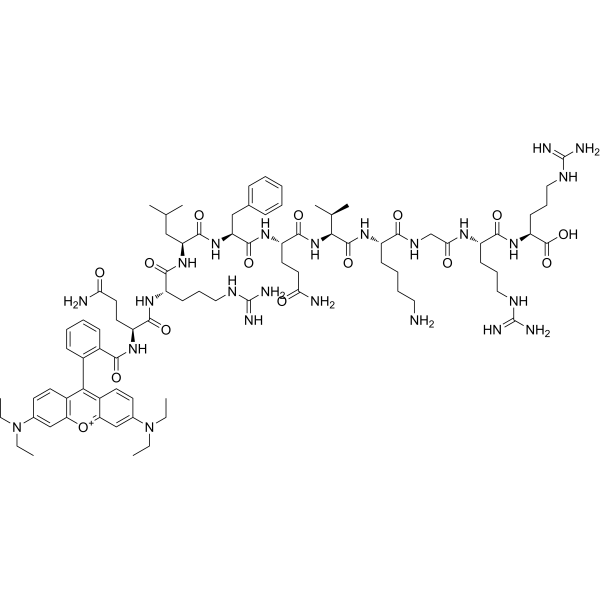
    Im6 is an antimicrobial peptide. Im6 is active against S. aureus and B.subtilis (Gram-positive bacterial) .
    Im6
  • HY-N16401

    Bacterial Drug Derivative Infection
    Aspergillumarin B (Compound 2) is a derivative of dihydroisocoumarin. Aspergillumarin B can be isolated from the endophytic fungus Aspergillus sp.. Aspergillumarin B has a weak antibacterial activity against Staphylococcus aureus and Bacillus subtilis .
    Aspergillumarin B
  • HY-124138

    Albomycetin; Amaromycin

    Antibiotic Bacterial Infection
    Pikromycin is a macrolide antibiotic that has been found in S. venezuelae and active against E. coli, S. aureus and B. subtilis .
    Pikromycin
  • HY-N14110

    Bacterial HIV Infection
    Curromycin B has antibacterial activity against Gram-positive bacteria such as Bacillus subtilis. Curromycin B can inhibit the replication of human immunodeficiency virus (HIV), inhibit mouse melanoma B16 and leukemia P388 cells .
    Curromycin B
  • HY-P5562

    Bacterial Infection
    PP102 is an antimicrobial peptide is active against gram-positive B. subtilis (MIC: 25 uM), S. aureus (MIC: 13.3 uM), S. lutea (MIC: 63 uM), and B. pumilu (MIC: 23 uM) .
    PP102
  • HY-N14089

    Bacterial Infection
    Chrysospermin B has antibacterial activities against individual Gram-positive bacteria (Staphylococcus aureus, Bacillus subtilis), Klebsiella pneumoniae and individual yeasts (Ocher echinoderma, saccharomyces cerevisiae) .
    Chrysospermin B

Inquiry Online

Your information is safe with us. * Required Fields.

Salutation


Country or Region *

Applicant Name *


Organization Name *

Department *


Email Address *


Product Name *

Cat. No.


Requested quantity *

Phone Number *


Remarks

Inquiry Online

Inquiry Information

Product Name:
Cat. No.:
Quantity:
MCE Japan Authorized Agent:

