1. Search Result
Search Result
Results for "

Corynebacterium

" in MedChemExpress (MCE) Product Catalog:

21

Inhibitors & Agonists

2

Fluorescent Dyes

6

Natural
Products

4

Recombinant Proteins

Cat. No. Product Name Target Research Areas Chemical Structure
  • HY-B0435
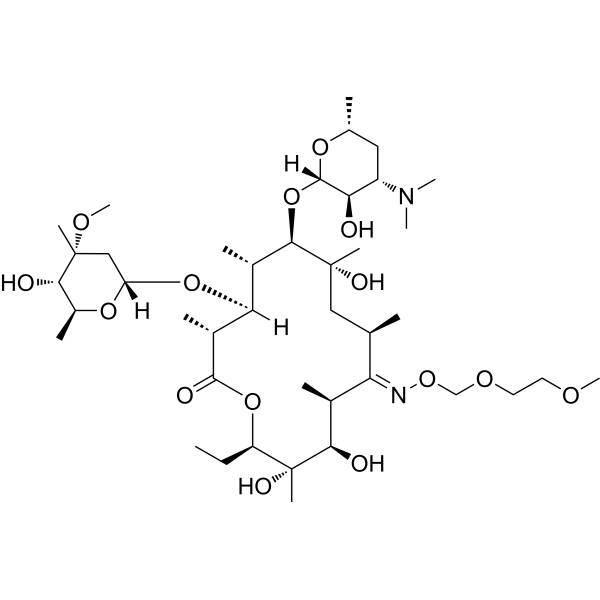
    Roxithromycin
    5+ Cited Publications

    RU-28965

    Bacterial Antibiotic Apoptosis p38 MAPK NF-κB Infection Cardiovascular Disease Inflammation/Immunology Cancer
    Roxithromycin (RU-28965) is an orally active semi-synthethic macrolide antibiotic. Roxithromycin inhibits protein biosynthesis in the elongation step by binding to 50S bacterial ribosome. Roxithromycin has antimicrobial, antiproliferative, anti-inflammatory, tumour vasculature inhibiting and lung injury ameliorating effects .
    Roxithromycin
  • HY-D2919

    Fluorescent Dye Infection
    DMN-Tre is a conjugate of a solvatochromic fluorescent dye and trehalose. DMN-Tre takes advantage of the substrate promiscuity of the endogenous antigen 85 protein complex in mycobacteria to be metabolically integrated into the hydrophobic mycobacterial membrane. Once entering this hydrophobic environment, the linked DMN dye fluorescence is "turned on", enabling specific labeling . DMN-Tre can be used to reflect bacterial metabolic activity and support physiological studies of Mycobacterium tuberculosis .
    DMN-Tre
  • HY-N3686

    AMPK PGC-1α Metabolic Disease
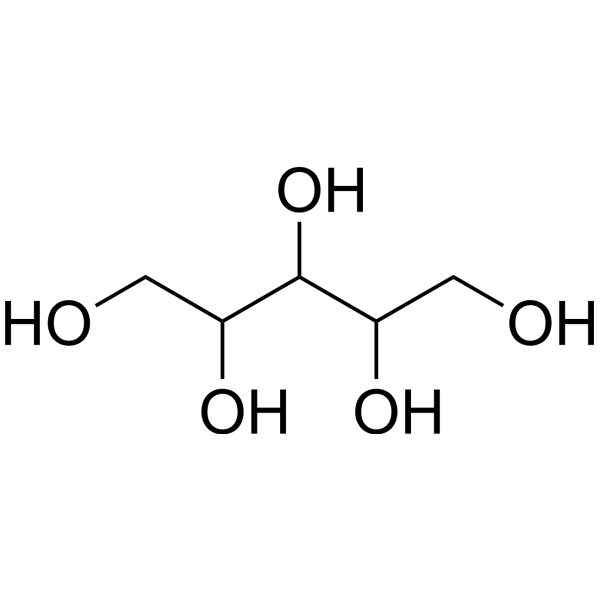
    D-Arabitol is an orally active D-enantiomer of arabitol. D-Arabitol modulates the composition of gut microbiota, increases short-chain fatty acids, and promotes AMPK-PGC-1α-related browning of white adipose tissue. D-Arabitol improves weight gain, fat accumulation, insulin resistance, lipid deposition and inflammatory responses. D-Arabitol serves as the sole carbon/energy source for Bacillus methanolicus MGA3, a strain that can co-utilize it with mannitol. D-Arabitol is applicable to obesity-related research .
    D-Arabitol
  • HY-N1416
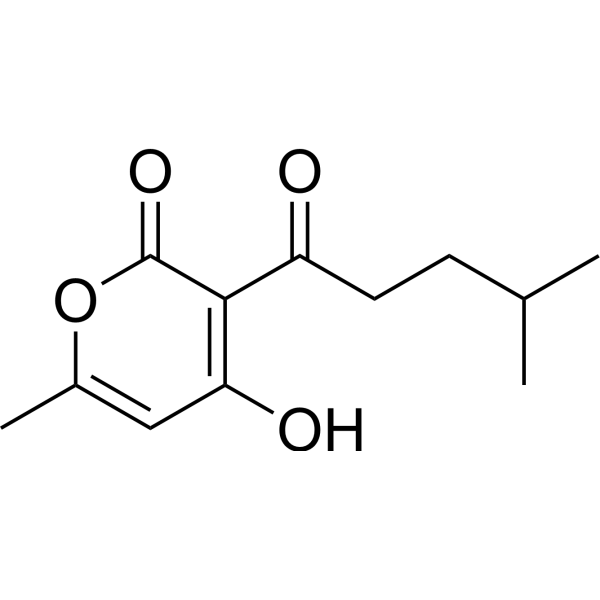
    Pogostone
    2 Publications Verification

    Bacterial Apoptosis Autophagy Infection Inflammation/Immunology Cancer
    Pogostone is isolated from patchouli oil with anti-bacterial and anti-cancer activities. Pogostone inhibits both gram negative and gram positive bacteria, also show inhibitory effect on corynebacterium xerosis with a MIC value of 0.098 µg/ml . Pogostone induces cell apoptosis and autophagy .
    Pogostone
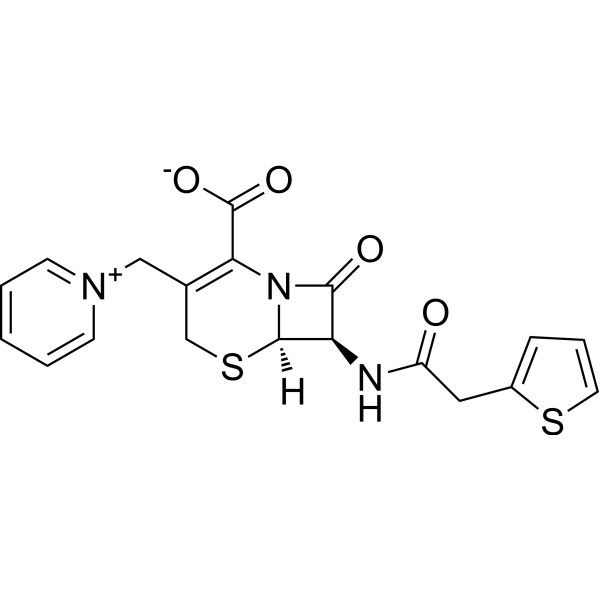
  • HY-B2072A

    Antibiotic Bacterial Infection
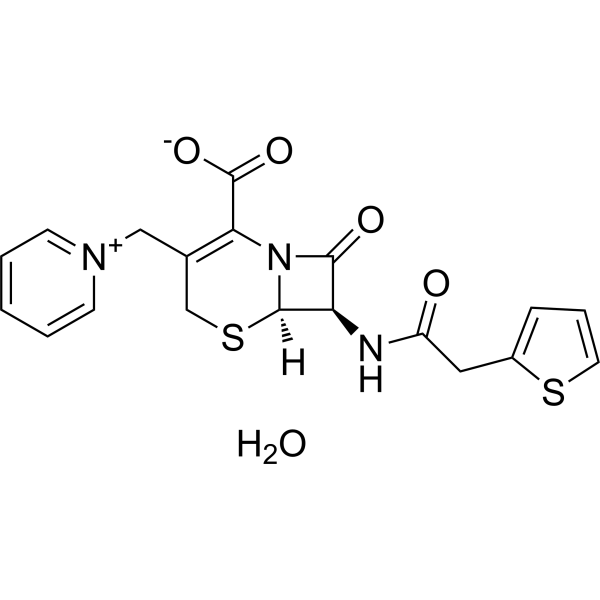
    Cephaloridine hydrate is a broad-spectrum antibacterial antibiotic. Cephaloridine has certain dose-related nephrotoxicity .
    Cephaloridine hydrate
  • HY-19393

    Phosphodiesterase (PDE) Cardiovascular Disease Inflammation/Immunology Cancer
    SCH 351591 is a highly selective, orally active PDE4 inhibitor, with IC50 values of 58 nM and 153 nM in humans and rats, respectively. SCH 351591 effectively inhibits pathological processes such as cytokine production, eosinophilia, airway hyperresponsiveness and bronchospasm. SCH 351591 also induces microvascular injury, activates mast cells and endothelial cells, and causes increases in serum histamine and various inflammatory factors, leading to early vascular damage. SCH 351591 has been widely used in studies related to asthma, chronic obstructive pulmonary disease and drug-induced vascular injury .
    SCH 351591
  • HY-106526

    Bactacine; Nanbacine

    Bacterial Infection Inflammation/Immunology
    Xibornol (Bactacine) has strong antibacterial action against Streptococcus pneumoniae, Streptococcus pyogenes, and Staphyloccus aureus, as well as against Actinomyces israelii and Corynebacterium ulcerans. Xibornol has the potential for using for the antisepsis of the oral cavity and as adjuvant in pharyngeal infections caused by Gram-positive microorganisms .
    Xibornol
  • HY-B2072

    Antibiotic Bacterial Infection
    Cephaloridine is a broad-spectrum antibacterial antibiotic. Cephaloridine has certain dose-related nephrotoxicity .
    Cephaloridine
  • HY-N15184

    Pradimicin C

    Bacterial Fungal Infection
    Benanomicin B (Pradimicin C) is an antifungal antibiotic that also has antibacterial activity against two Gram-positive bacteria: Micrococcus luteus and Corynebacterium bovis .
    Benanomicin B
  • HY-N1416R

    Reference Standards Bacterial Apoptosis Autophagy Infection Inflammation/Immunology
    Pogostone (Standard) is the analytical standard of Pogostone. This product is intended for research and analytical applications. Pogostone is isolated from patchouli oil?with anti-bacterial and anti-cancer activities.?Pogostone inhibits both gram negative and gram positive bacteria, also show inhibitory effect on corynebacterium xerosis with a MIC value of 0.098 μg/ml .?Pogostone induces cell apoptosis and autophagy .
    Pogostone (Standard)
  • HY-126746

    Antibiotic Infection
    Corynecin I is an antibiotic produced by Corynebacterium hydrocarboclastus, and its precursor (D-(-) threo-p-amino phenyl serinol-N-acetylamine) has a minimal inhibitory effect on the synthesis of Corynecin from mevalonic acid .
    Corynecin I
  • HY-123598

    Antibiotic Bacterial Infection
    Corynecin III is a Chloramphenicol (HY-B0239)-like antibiotic, which is found in Corynebacterium. Corynecin III inhibits the growth of Gram-positive and Gram-negative bacteria with MIC values of 2.6-83 μg/mL .
    Corynecin III
  • HY-B2072AR

    Reference Standards Antibiotic Bacterial Infection
    Cefadroxil (hydrate) (Standard) is the analytical standard of Cefadroxil (hydrate). This product is intended for research and analytical applications. Cefadroxil hydrate (BL-S 578 hydrate) is an orally active and first-generation cephalosporin with a broad spectrum antibacterial activity. Cefadroxil hydrate (BL-S 578 hydrate) also acts as a substrate of the peptide transporter PEPT1 and PEPT2 .
    Cephaloridine hydrate (Standard)
  • HY-E70082A

    Biochemical Assay Reagents Others
    Fructosyl-Amino Acid Oxidase, Corynebacterium sp. catalyzes the oxidative deglycation of low molecular weight fructosamines. Fructosyl-Amino Acid Oxidase, Corynebacterium sp. catalyzes the oxidation of the C-N bond linking the C1 of the fructosyl moiety and the nitrogen of the amino group of fructosyl amino acids.
    Fructosyl-Amino Acid Oxidase, Corynebacterium sp.
  • HY-135849E

    Biochemical Assay Reagents Metabolic Disease
    Catalase, Corynebacterium sp. (EC 1.11.1.6) activates the decomposition of hydrogen peroxide, a reactive oxygen species, into water and oxygen. Catalase functions as a natural antioxidant, protecting cells against oxidative damage to proteins, lipids and nucleic acids.
    Catalase, Corynebacterium sp.
  • HY-135849D

    Biochemical Assay Reagents Metabolic Disease
    Catalase, Corynebacterium glutamicum (EC 1.11.1.6) activates the decomposition of hydrogen peroxide, a reactive oxygen species, into water and oxygen. Catalase functions as a natural antioxidant, protecting cells against oxidative damage to proteins, lipids and nucleic acids.
    Catalase, Corynebacterium glutamicum
  • HY-180414

    Bacterial Topoisomerase Infection
    Premafloxacin is a potent antimicrobial agent that exhibits activity against Staphylococcus aureus, Corynebacterium bovis, and Corynebacterium amylocolatum. Premafloxacin demonstrated potent antimicrobial activity against S. aureus by targeting topoisomerase IV, and is a poor substrate for NorA efflux pump. Premafloxacin can be used for antimicrobial research .
    Premafloxacin
  • HY-126747

    Endogenous Metabolite Infection
    Corynecin IV is a chloramphenicol-like bacterial metabolite originally isolated from Corynebacterium .
    Corynecin IV
  • HY-126745

    Endogenous Metabolite Infection
    Corynecin V is a chloramphenicol-like bacterial metabolite originally isolated from Corynebacterium .
    Corynecin V
  • HY-D3391

    Bacterial Infection
    RMR-Tre is a fluorescent probe targeting the mycobacterial acyltransferase Ag85. Under the catalysis of Ag85, RMR-Tre undergoes 6-position mycoloylation and anchors to the mycobacterial membrane, while achieving fluorescence activation by inhibiting the intramolecular twisted charge transfer state transition. RMR-Tre can distinguish live mycobacteria from dead ones through metabolism-driven labeling, enabling rapid, wash-free, low-background detection of viable bacteria. RMR-Tre reports the drug resistance of Mycobacterium tuberculosis via the trehalose catalytic shift activity readout associated with TreS. In addition, RMR-Tre can be combined with flow cytometry or high-content imaging techniques to visualize and quantitatively analyze the metabolic heterogeneity of Mycobacterium tuberculosis related to persistence and drug resistance. RMR-Tre is widely used in tuberculosis-related research .
    RMR-Tre
  • HY-Y1805

    1,2,3,4-Tetrahydronaphthalene

    Environmental Pollutants Biochemical Assay Reagents Bacterial Infection
    Tetralin (1,2,3,4-Tetrahydronaphthalene) is an Antibacterial agent. Tetralin inhibits the growth of E. coli and Arthrobacter strain T2. Tetralin serves as a probe molecule for cracking and hydrotreating the light cycle oil .
    Tetralin

Inquiry Online

Your information is safe with us. * Required Fields.

Salutation


Country or Region *

Applicant Name *


Organization Name *

Department *


Email Address *


Product Name *

Cat. No.


Requested quantity *

Phone Number *


Remarks

Inquiry Online

Inquiry Information

Product Name:
Cat. No.:
Quantity:
MCE Japan Authorized Agent:

