14 Results for "

DBD

" in MedChemExpress (MCE) Product Catalog:
Products (14)

14 Results for "DBD" in MCE Product Catalog:

7
7 Cited Publications
Cat. No.: HY-138280
CAS No.: 897326-30-6
Purity:  99.82%
Target:  

HSP

Research Areas:  

Cancer

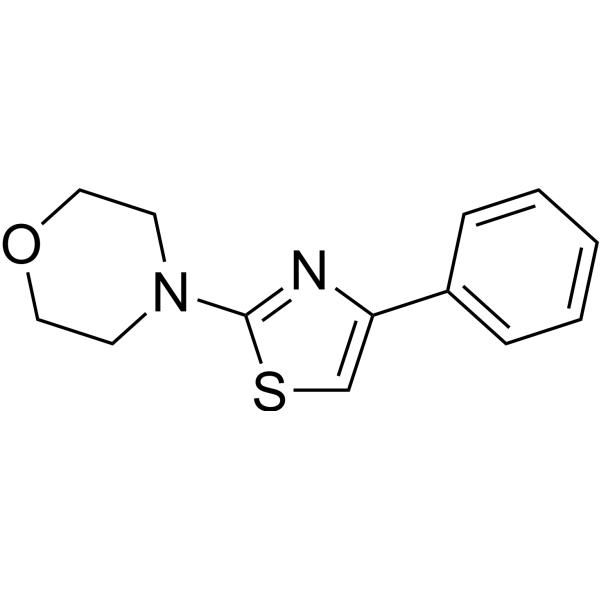
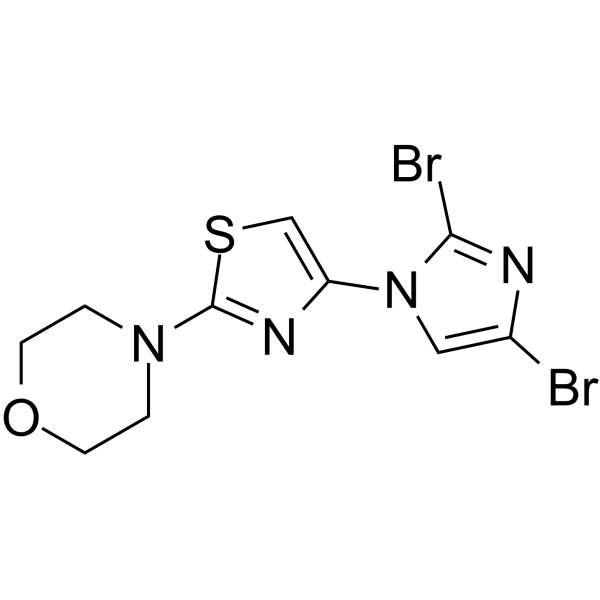
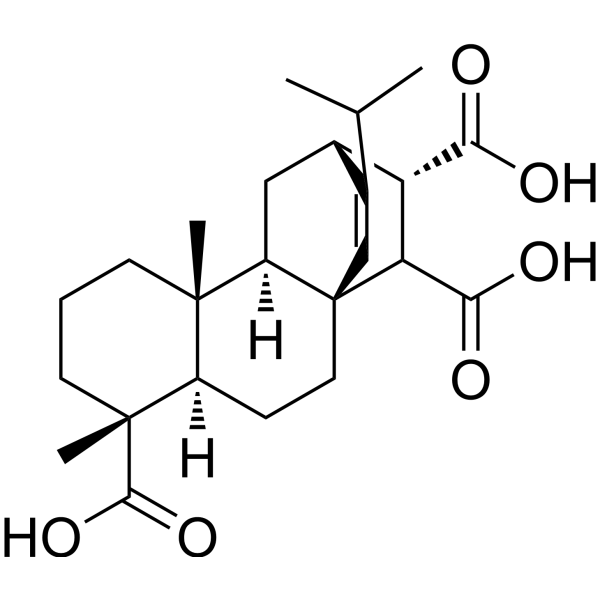
DTHIB is a direct and selective heat shock factor 1 (HSF1) inhibitor with a Kd of 160 nM for DTHIB binding to the HSF1 DNA binding domain (DBD). DTHIB inhibits HSF1 cancer gene signature (HSF1 CaSig) and selectively stimulates degradation of nuclear HSF1. DTHIB has potently anticancer activities and can be used for prostate cancer research .
loading...
    loading...
3
3 Cited Publications
Cat. No.: HY-110088
CAS No.: 922150-11-6
Purity:  99.73%
Target:  

MDM-2/p53

Research Areas:  

Cancer

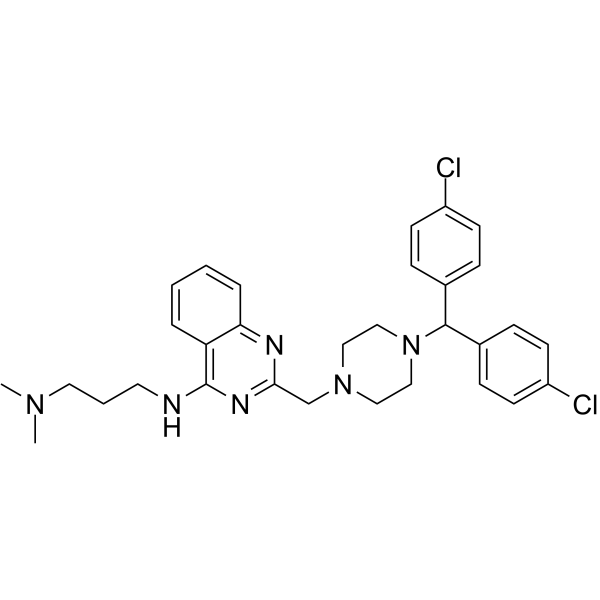
SCH529074 is a potent and orally active p53 activator. SCH529074 binds specifically and conformation-dependently to p53 DBD ( DNA binding domain) with a Ki of 1-2 μM in a saturable manner. SCH529074 restores mutant p53 function and interrupts HDM2-mediated ubiquitination of wild Type p53. SCH529074 can be used for the study of non-small-cell lung carcinoma (NSCLC) .
loading...
    loading...
Cat. No.: HY-172085
CAS No.: 3099543-90-2
Research Areas:  

Cancer

SH514 is an orally active IRF4 inhibitor (IC50 = 2.63 μM). SH514 binds to the IRF4-DBD domain, thereby inhibiting the interaction of IRF4 protein with DNA (KD = 1.28 μM). SH514 can inhibit the proliferation of IRF4-high-expressing NCI-H929 and MM.1R cells, and displays no cytotoxicity for normal cells. SH514 significantly downregulates the expression of IRF4 downstream target genes concentration-dependently. SH514 inhibits the expression of cell cycle-related proteins CDC2, Cyclin B1, Cyclin D1, Cyclin E1, and CMYC in Multiple Myeloma cells. SH514 can induce DNA damage and increase the expression of γH2AX. SH514 effectively inhibits the proliferation of multiple myeloma tumors .
loading...
    loading...
Cat. No.: HY-117669
CAS No.: 19983-28-9
Purity:  99.36%
Target:  

Androgen Receptor

Research Areas:  

Cancer

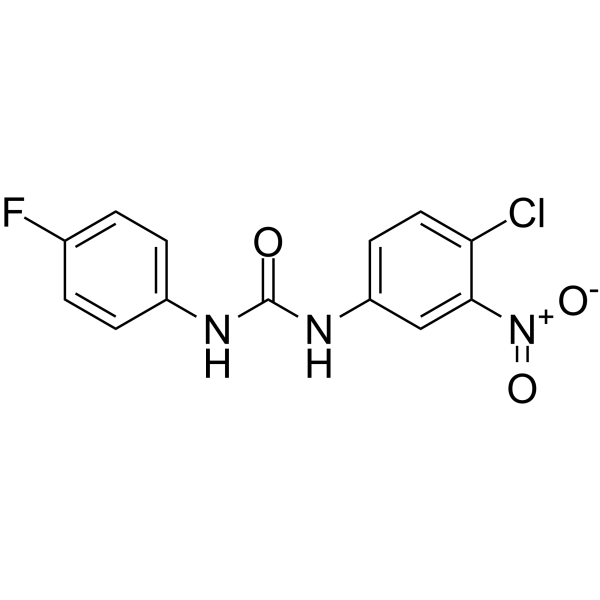
VPC-14228 is an inhibitor that selectively targets androgen receptor DNA binding domain (AR-DBD). VPC-14228 inhibits the interaction between AR and DNA, thereby blocking AR-mediated transcriptional activation. VPC-14228 does not rely on nuclear localization inhibition, but rather inhibits the activity of full-length AR and splice variant AR-V7 by interfering with AR binding to chromatin. And VPC-14228 has high selectivity for other nuclear receptors such as ER and PR. VPC-14228 can be used in the study of prostate cancer [2].
loading...
    loading...
Cat. No.: HY-116501
CAS No.: 1621375-32-3
Purity:  99.51%
Target:  

Androgen Receptor

Research Areas:  

Cancer

VPC-14449 is a potent and selective inhibitor of the DNA-binding domain of the androgen receptor (AR-DBD), with IC50 of 0.34 μM for full-length human AR. VPC-14449 reduces the ability of full-length AR as well as AR variants to interact with chromatin. VPC-14449 can be used for the research of prostate cancer .
loading...
    loading...
Cat. No.: HY-138155
CAS No.: 730960-98-2
Purity:  99.90%
Target:  

DNA/RNA Synthesis

Research Areas:  

Cancer

NSC15520 is a small molecular inhibitor of Replication Protein A (RPA). NSC15520 specifically recognizes the RPA N-terminal DNA binding domain (DBD), and blocks the interaction of RPA with p53 or RAD9. NSC15520 also inhibtis helix destabilization of a duplex DNA (dsDNA) oligonucleotide, involves in DNA replication, DNA repair, DNA recombination, and DNA damage response signaling .
loading...
    loading...
Cat. No.: HY-145785A
CAS No.: 2990065-87-5
Purity:  99.67%
Target:  

MDM-2/p53 Apoptosis

Research Areas:  

Cancer

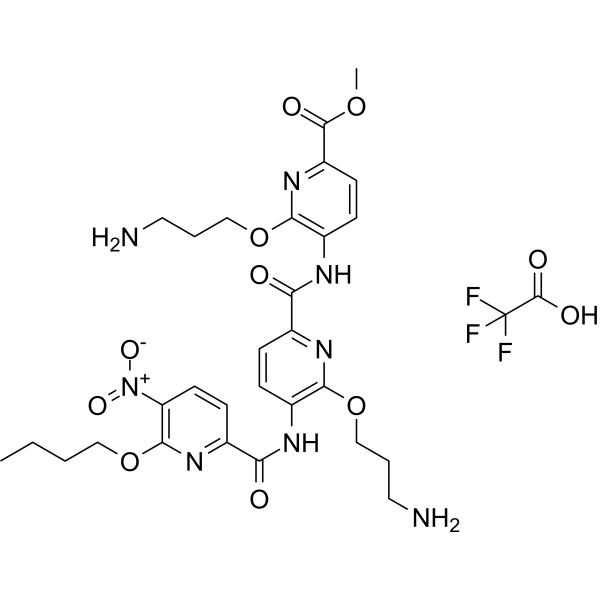
ADH-6 TFA is a tripyridylamide compound. ADH-6 abrogates self-assembly of the aggregation-nucleating subdomain of mutant p53 DBD. ADH-6 TFA targets and dissociates mutant p53 aggregates in human cancer cells, which restores p53's transcriptional activity, leading to cell cycle arrest and apoptosis. ADH-6 TFA has the potential for the research of cancer diseases .
loading...
    loading...
Cat. No.: HY-175455
Research Areas:  

Cancer

LYA914 is an orally active AR/AR-V7 PROTAC degrader. LYA914 targets the proteolytic degradation of the conserved DNA binding domain (DBD) of the androgen receptor (AR). LYA914 exhibits potent antiproliferative effects in Enzalutamide (HY-70002)-insensitive/resistant cells. LYA914 inhibits tumor growth in VCaP/LNCaP tumor mouse models. LYA914 can be used to study castration-resistant prostate cancer (CRPC) .
loading...
    loading...
Cat. No.: HY-145785
CAS No.: 2227429-65-2
Target:  

MDM-2/p53 Apoptosis

Research Areas:  

Cancer

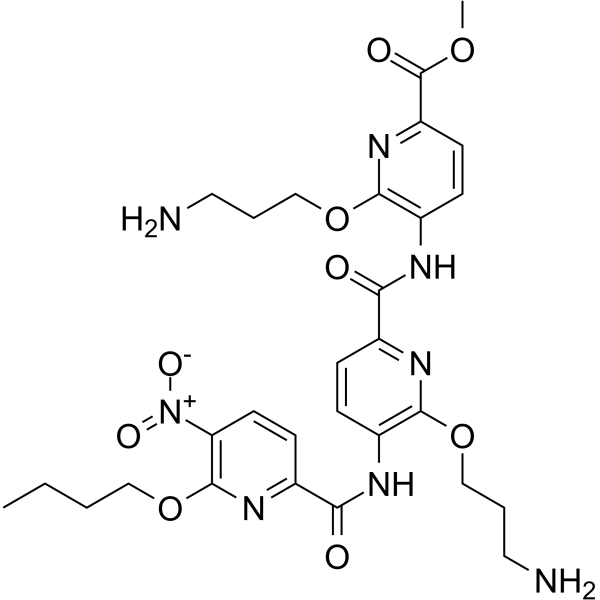
ADH-6 is a tripyridylamide compound. ADH-6 abrogates self-assembly of the aggregation-nucleating subdomain of mutant p53 DBD. ADH-6 targets and dissociates mutant p53 aggregates in human cancer cells, which restores p53's transcriptional activity, leading to cell cycle arrest and apoptosis. ADH-6 has the potential for the research of cancer diseases[1].
loading...
    loading...
Cat. No.: HY-P11494
Synonyms: CP29 peptide
AWWNTEW (CP29) is a FOXM1-DBD peptide ligand with cytotoxicity to cancer cells. AWWNTEW has a strong affinity and binds to the FOXM1 protein. AWWNTEW is a component of FPP29 (HY-P11228) . X
loading...
    loading...
Cat. No.: HY-175456
CAS No.: 3108871-05-9
AR-DBD ligand-1 is an AR-DBD ligand. AR-DBD ligand-1 can be used to synthesize PROTAC LYA914 (HY-175455) .
loading...
    loading...
Cat. No.: HY-175457
AR-DBD ligand-Linker Conjugate 1 is a conjugate of AR-DBD ligand and linker. AR-DBD ligand-Linker Conjugate 1 can be used to synthesize PROTAC LYA914 (HY-175455) .
loading...
    loading...
Cat. No.: HY-184309
Target:  

HSP Apoptosis

Research Areas:  

Cancer

HSF1-IN-3 is a heat shock transcription factor 1 (HSF1) inhibitor with a Kd value of 23.8 μM against HSF1-DBD. HSF1-IN-3 inhibits the proliferation of cancer cells and induces their apoptosis, with stronger activity in androgen-dependent prostate cancer cells. HSF1-IN-3 reduces the expression of HSP70 and HSP90, downstream effectors of HSF1, and attenuates HSE-driven transcriptional activity. HSF1-IN-3 can be used in the research of cancers such as prostate cancer and leukemia .
loading...
    loading...
Cat. No.: HY-165381
CAS No.: 71555-14-1
Research Areas:  

Cancer

ZMC2 is a thiosemicarbazone-class metal ion chelator and zinc ionophore with a human mutant p53 R175H binding Ka of 27.4 nM.ZMC2 binds Fe, Cu, Mn, Zn, and other transition metals.ZMC2 facilitates zinc transport across membranes.ZMC2 restores zinc binding to zinc-deficient p53 mutants, restoring wild-type structure and function, including site-specific DNA binding.ZMC2 generates reactive oxygen species (ROS).ZMC2 can be used for the research of cancer .
loading...
    loading...
  • 1

