1. Search Result
Search Result
Pathways Recommended: Cell Cycle/DNA Damage
Results for "

DNA cleavage activity

" in MedChemExpress (MCE) Product Catalog:

29

Inhibitors & Agonists

1

Fluorescent Dye

8

Natural
Products

1

Isotope-Labeled Compounds

Cat. No. Product Name Target Research Areas Chemical Structure
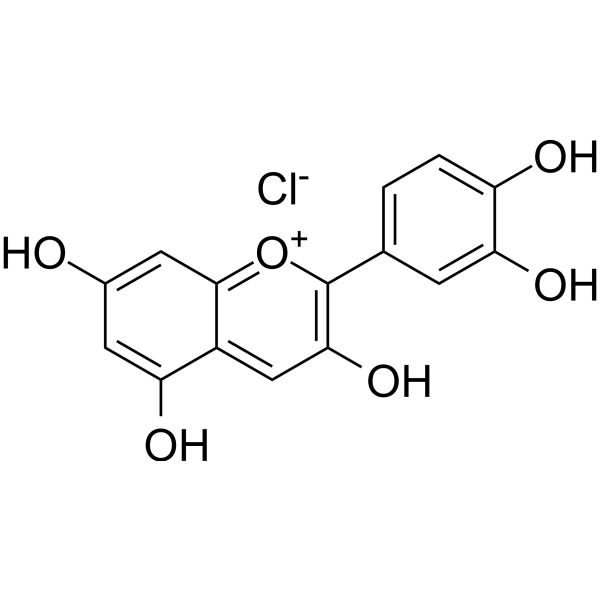
  • HY-N0499
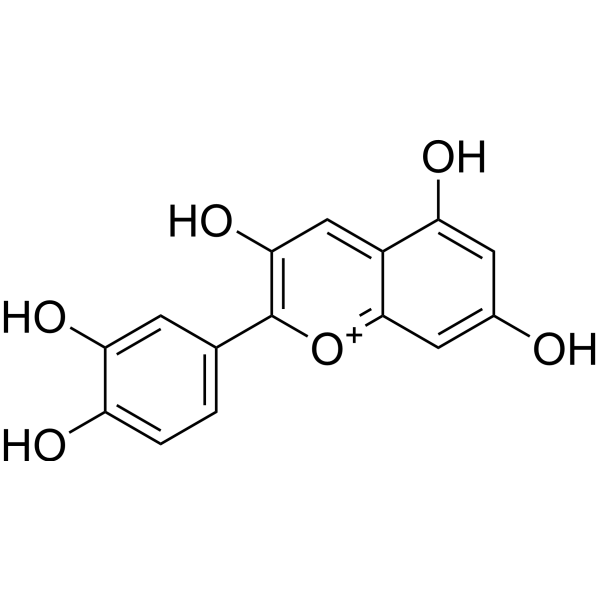
    Cyanidin Chloride
    4 Publications Verification

    IdB 1027

    Prostaglandin Receptor Inflammation/Immunology
    Cyanidin Chloride (IdB 1027) is an orally active antioxidant and enzyme inhibitor. Cyanidin Chloride has IC50 values of 90 μM and 60 μM against PGHS-1 and PGHS-2, respectively. Cyanidin Chloride exhibits excellent antioxidant and anti-inflammatory activities, scavenges free radicals, inhibits lipid peroxidation, and protects DNA from cleavage. Cyanidin Chloride can be used in the research of inflammatory diseases .
    Cyanidin Chloride
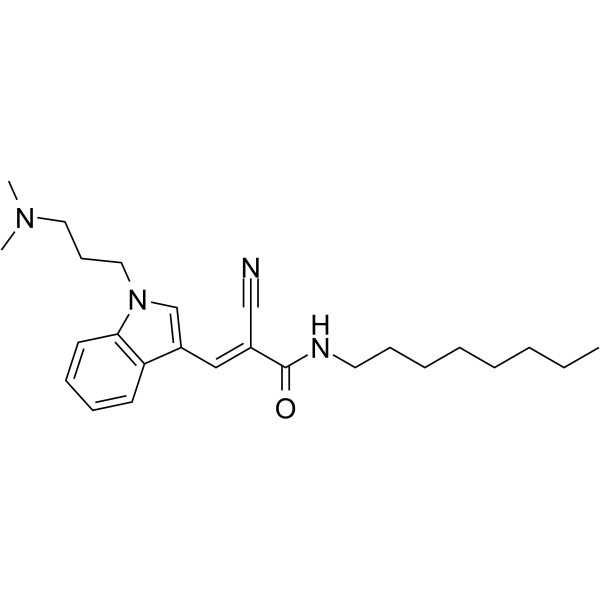
  • HY-107545
    Dynole 34-2
    1 Publications Verification

    Dynamin Apoptosis Cancer
    Dynole 34-2 is a potent dynamin GTPase inhibitor (IC50s=6.9 and 14.2 µM for dynamin1 and dynamin2 GTPase activity, respectively) with antimitotic effect. Dynole 34-2 induces apoptosis, as revealed by cell blebbing, DNA fragmentation, and PARP cleavage. Dynole 34-2 also potently inhibits receptor mediated endocytosis (RME) .
    Dynole 34-2
  • HY-164729

    Antibody-Drug Conjugates (ADCs) Topoisomerase Apoptosis Cancer
    FZ-AD005 is a DLL3-targeting antibody-drug conjugate (ADC) with high selectivity, composed of the anti-DLL3 antibody FZ-A038 (HY-P990896), a dipeptide linker (Val-Ala), and DXd (HY-13631D). The Kd value of FZ-AD005 for human DLL3 ranges from 13.29 to 58.3 pmol/L. After binding to DLL3 on the cell surface, FZ-AD005 mediates endocytosis, and the payload DXd is released via cleavage by lysosomal cathepsins. DXd inhibits topoisomerase TopI to induce double-strand DNA breaks, cell cycle arrest and apoptosis, and FZ-AD005 exhibits bystander killing activity against adjacent DLL3-negative cells. FZ-AD005 shows stable circulation in vivo, has good tolerance and acceptable pharmacokinetic profiles in rats and cynomolgus monkeys, and effectively inhibits the growth of DLL3-expressing tumor cells. FZ-AD005 serves as a promising candidate molecule for research on small cell lung cancer and human neuroendocrine prostate cancer .
    FZ-AD005
  • HY-108882C

    DNA/RNA Synthesis Inflammation/Immunology
    DNase I is an enzyme that degrades DNA. DNase I is mainly produced by digestive system organs, such as the pancreas and parotid gland. Three types of DNase I are known in mammals: pancreatic type, parotid type, and pancreatico-parotid type. DNase I plays a key role in the cleavage of extracellular DNA, and is critical for limiting inflammatory responses and maintaining homeostasis. DNase I is responsible for digesting extracellular nucleoproteins, which may be essential for preventing autoimmune reactions. Decreased DNase I activity may be associated with the occurrence and development of systemic lupus erythematosus (SLE). DNase I (filtered) is filtered through a 0.22 μM membrane and is not tested for pyrogenicity .
    DNase I (filtered)
  • HY-108882B
    DNase I RNase & Protease free
    Maximum Cited Publications
    29 Publications Verification

    DNA/RNA Synthesis Inflammation/Immunology
    DNase I is an enzyme that degrades DNA. DNase I is mainly produced by digestive system organs, such as the pancreas and parotid gland. Three types of DNase I are known in mammals: pancreatic type, parotid type, and pancreatico-parotid type. DNase I plays a key role in the cleavage of extracellular DNA, and is critical for limiting inflammatory responses and maintaining homeostasis. DNase I is responsible for digesting extracellular nucleoproteins, which may be essential for preventing autoimmune responses. Decreased DNase I activity may be associated with the onset and progression of systemic lupus erythematosus (SLE). DNase I (RNase & Protease free) is a molecular biology-grade DNase I purified by chromatography to remove RNase and protease .
    DNase I RNase & Protease free
  • HY-107194

    FGFR c-Myc DNA/RNA Synthesis Caspase Reactive Oxygen Species (ROS) Cancer
    NSC12 is an orally active pan-FGF trap. NSC12 inhibits the interaction between FGF2/FGFR. NSC12 suppresses the phosphorylation of FGFR3. NSC12 reduces c-Myc levels, induces DNA damage, triggers the cleavage of Caspase 3, and promotes ROS production. NSC12 exhibits anticancer activity against lung cancer and multiple myeloma .
    NSC12
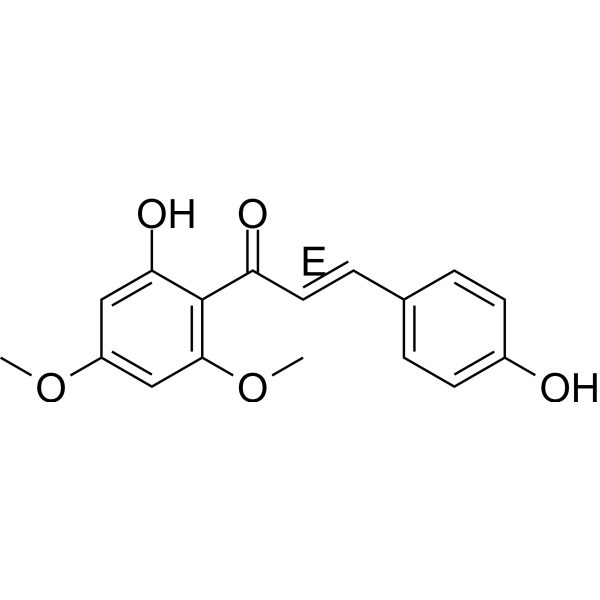
  • HY-N2445
    Flavokawain C
    4 Publications Verification

    Apoptosis Akt JNK PERK Caspase PARP MDM-2/p53 IAP Reactive Oxygen Species (ROS) SOD FABP Autophagy AMPK mTOR GLUT EGFR PI3K HSP VEGFR FAK Cancer
    Flavokawain C is an orally active natural chalcone. Flavokawain C inhibits the proliferation of various cancer cells. Flavokawain C upregulates GADD153 in cancer cells, inhibits the phosphorylation of Akt and JNK, suppresses early ERK phosphorylation, activates late ERK phosphorylation, activates caspase related subtypes, induces PARP-1 cleavage, causes upregulation of p21 and p27, downregulation of mutant p53 and anti-apoptotic IAP proteins, elevates intracellular ROS levels, reduces SOD activity, and induces apoptosis. Flavokawain C downregulates FABP4, induces autophagy in cancer cells, and activates the AMPK/mTOR pathway . Flavokawain C decreases the expression of glycolysis-related proteins GLUT1 and HK2, and inhibits glycolysis in nasopharyngeal carcinoma cells. Flavokawain C inhibits the activation of the EGFR/PI3K/Akt/mTOR signaling pathway and reduces the expression of HSP90B1. Flavokawain C inhibits angiogenesis by decreasing the expression of angiogenic proteins Ang-1 and VEGF in human umbilical vein endothelial cells. Flavokawain C increases γ-H2AX levels in cells, inhibits the phosphorylation of FAK, PI3K and AKT in cells, and induces DNA damage in cells. Flavokawain C exerts anti-tumor activity in multiple tumor xenograft mouse models. Flavokawain C is applicable to research related to colorectal cancer, colon adenocarcinoma, nephroblastoma, nasopharyngeal carcinoma and liver cancer .
    Flavokawain C
  • HY-W008598

    p-Fluorophenacyl bromide

    DNA/RNA Synthesis Cancer
    2-Bromo-4'-fluoroacetophenone (p-Fluorophenacyl bromide) is a photoinducible DNA cleavage inducer.2-Bromo-4'-fluoroacetophenone generates fluorine-substituted phenyl radicals upon excitation and irradiation to cleave DNA, converting circular supercoiled DNA to circular relaxed and linear DNA forms.2-Bromo-4'-fluoroacetophenone exhibits concentration-dependent DNA cleaving activity.2-Bromo-4'-fluoroacetophenone can be used for the research of cancer .
    2-Bromo-4'-fluoroacetophenone
  • HY-147291

    c-Myc PARP Apoptosis Cancer
    VPC-70063 is a potent Myc-Max inhibitor with an IC50 value of 8.9 μM for Myc-Max transcriptional activity inhibition. VPC-70063 reduces UBE2C promotor activity and AR-V7 levels, and induces PARP cleavage. VPC-70063 induces apoptosis and blocks Myc-Max interactions with DNA. VPC-70063 can be used for researching anticancer .
    VPC-70063
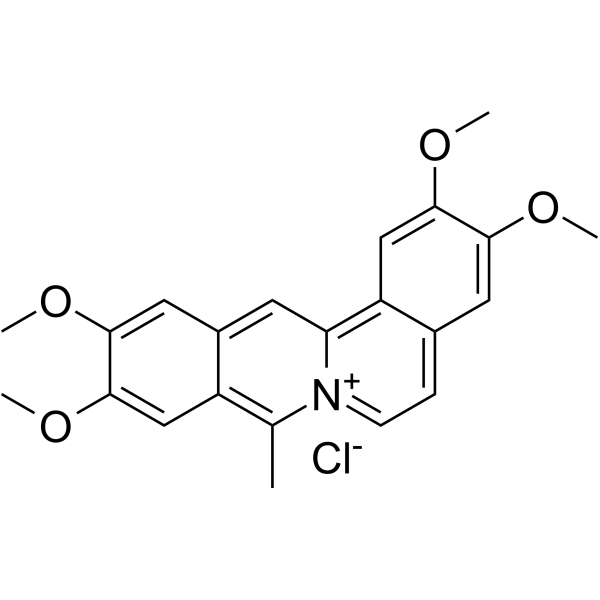
  • HY-118581
    Coralyne chloride
    1 Publications Verification

    Topoisomerase Cancer
    Coralyne chloride is a protoberberine alkaloid with potent anti-cancer activities. Coralyne chloride acts as a potent topoisomerase I poison and induces Top I mediated DNA cleavage . Coralyne chloride can be used for preparing?coralyne derivatives?as DNA binding fluorescent probes .
    Coralyne chloride
  • HY-N0499A

    Prostaglandin Receptor Inflammation/Immunology
    Cyanidin is an orally active antioxidant and enzyme inhibitor. Cyanidin has IC50 values of 90 μM and 60 μM against PGHS-1 and PGHS-2, respectively. Cyanidin exhibits excellent antioxidant and anti-inflammatory activities, scavenges free radicals, inhibits lipid peroxidation, and protects DNA from cleavage. Cyanidin can be used in the research of inflammatory diseases .
    Cyanidin
  • HY-50936S

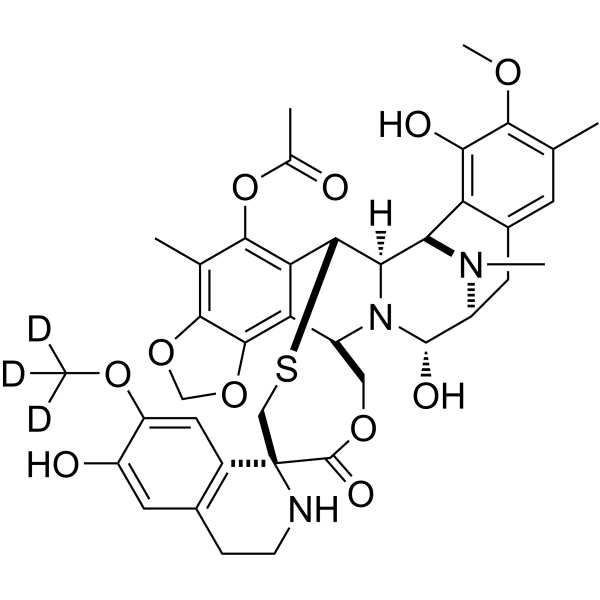
    Ecteinascidin 743-d3; ET-743-d3

    Isotope-Labeled Compounds Reactive Oxygen Species (ROS) Apoptosis Inflammation/Immunology Cancer
    Trabectedin D3 (Ecteinascidin 743 D3) is deuterium labeled Trabectedin. Trabectedin is a tetrahydroisoquinoline alkaloid with potent antitumor activity. Trabectedin binds to the minor groove of DNA, blocks transcription of stress-induced proteins, induces DNA backbone cleavage and cancer cells apoptosis, and increases the generation of ROS in MCF-7 and MDA-MB-453 cells. Trabectedin has tje potential for soft tissue sarcoma and ovarian cancer treatment .
    Trabectedin-d3
  • HY-N0499R

    IdB 1027 (Standard)

    Reference Standards Prostaglandin Receptor Inflammation/Immunology
    Cyanidin Chloride (IdB 1027) (Standard) is the analytical standard of Cyanidin Chloride (IdB 1027). This product is intended for research and analytical applications. Cyanidin Chloride (IdB 1027) is an orally active antioxidant and enzyme inhibitor. Cyanidin Chloride has IC50 values of 90 μM and 60 μM against PGHS-1 and PGHS-2, respectively. Cyanidin Chloride exhibits excellent antioxidant and anti-inflammatory activities, scavenges free radicals, inhibits lipid peroxidation, and protects DNA from cleavage. Cyanidin Chloride can be used in the research of inflammatory diseases.
    Cyanidin Chloride (Standard)
  • HY-117137

    CMV Infection
    GW 275175X is an inhibitor of the terminase complex involved in cleavage and packaging of the unit length DNA into the capsids. GW 275175X exhibits long plasma half-life. GW 275175X is a BDCRB derivative. GW 275175X exhibits anti-HCMV activity through inhibiting maturation of viral DNA .
    GW 275175X
  • HY-171184

    PARP Bcr-Abl Apoptosis Mitosis Cancer
    EAPB0503 is a quinoline compound with anti-tumor activity, showing strong cytotoxicity against melanoma cells in vitro (IC50=200 nM). EAPB0503 can induce specific cell cycle arrest in mitosis of CML cells and directly activate apoptosis, leading to an increase in the G0 cell population, disruption of mitochondrial membrane potential, PARP cleavage, and DNA fragmentation. EAPB0503 also reduces the levels of BCR-ABL protein .
    EAPB0503
  • HY-178178

    PARP Reactive Oxygen Species (ROS) DNA/RNA Synthesis Apoptosis Cancer
    PARP1-IN-46 is a potent PARP-1 inhibitor with an IC50 of 2.4 nM. PARP1-IN-46 demonstrates remarkable anti-proliferative activity in both rat (C6) and human (U87MG) glioma cells. PARP1-IN-46 promotes PARP cleavage, triggers DNA damage, and increases ROS. PARP1-IN-46 effectively inhibits the migration, invasion and colony formation of glioma cells, and ultimately induces cell apoptosis. PARP1-IN-46 can be used to the study of glioma .
    PARP1-IN-46
  • HY-147959

    Bacterial Infection
    Antibacterial agent 114 (compound 1) is a potent antibacterial agent. Antibacterial agent 114 shows antibacterial activity against P.aeruginosa, B.subtilis, E.coli, E.faecalis, S.typhimuriumand, S.mutans, and S.aureus microorganisms, with MIC values of 625, 625, 625, 625, 625, 1250 and 1250 μM, respectively .
    Antibacterial agent 114
  • HY-147958

    Bacterial Infection
    Antibacterial agent 113 (compound 3) is a potent antibacterial agent. Antibacterial agent 113 shows antibacterial activity against P.aeruginosa, S.mutans, B.subtilis, E.coli, E.faecalis, S.typhimuriumand, and S.aureus microorganisms, with MIC values all of 156.25 μM .
    Antibacterial agent 113
  • HY-147957

    Bacterial Infection
    Antibacterial agent 112 (compound 2) is a potent antibacterial agent. Antibacterial agent 112 shows antibacterial activity against P.aeruginosa, S.mutans, B.subtilis, E.coli, E.faecalis, S.typhimuriumand, and S.aureus microorganisms, with MIC values of 625, 625, 1250, 1250, 1250, 1250 and 1250 μM, respectively .
    Antibacterial agent 112
  • HY-120173

    Topoisomerase Others
    Ro 47-3359 is a pyrimido[1,6-a]benzimidazole compound with the activity of enhancing eukaryotic topoisomerase II-mediated DNA cleavage and being toxic to Kc cells.
    Ro 47-3359
  • HY-N15319

    Canangine

    Topoisomerase Fungal Infection
    Eupolauridine (Canangine) is a selective DNA topoisomerase II inhibitor with IC50 values of 20 μM for fungal topoisomerase I and 33 μM for human topoisomerase I. Eupolauridine exerts antifungal activity by inhibiting the catalytic activity of topoisomerase II and stabilizing its cleavage complex with DNA, leading to DNA damage. Eupolauridine is promising for research of fungal infectious diseases .
    Eupolauridine
  • HY-172229

    Topoisomerase Bacterial Infection
    NBTI 5463 is a bacterial type II topoisomerases (topoisomerase II) inhibitor with antibacterial activity. NBTI 5463 inhibits GyrA and TopoIV in Pseudomonas aeruginosa and Escherichia coli. NBTI 5463 binds to topoisomerase II to prevent DNA cleavage and religation, inhibiting bacterial DNA replication and transcription. NBTI 5463 is promising for research of Gram-negative bacterial infection .
    NBTI 5463
  • HY-N8617

    DNA/RNA Synthesis Caspase PARP Bcl-2 Family Mitochondrial Metabolism Apoptosis Cancer
    Trijuganone C is a tanshinone-type diterpenoid compound. Trijuganone C can be isolated from the roots of Salvia miltiorrhiza Bunge. Trijuganone C induces chromatin condensation, DNA fragmentation, activation of Caspase-3, -8 and -9, as well as cleavage of PARP. Trijuganone C activates Bid and Bax, leading to loss of mitochondrial membrane potential and inducing the release of cytochrome c from mitochondria into the cytosol. Trijuganone C exerts antiproliferative effects through Apoptosis induction mediated by Mitochondrial dysfunction and Caspase activation. Trijuganone C exhibits significant antiproliferative activity against leukemia cells and colon cancer cells .
    Trijuganone C
  • HY-185449

    HIV Reverse Transcriptase DNA/RNA Synthesis Infection
    HIV RT-IN-2 is a HIV reverse transcriptase inhibitor with an IC50 value of 1.2 μM for HIV-1 RT RNA-dependent DNA polymerase. HIV RT-IN-2 potently inhibits all three modes of HIV-1 RT-associated RNase H activity (internal, 3'-DNA directed, 5'-RNA directed cleavage) and inhibits HIV-1 replication. HIV RT-IN-2 can be used for the research of HIV-1 infection .
    HIV RT-IN-2
  • HY-120031

    STAT PARP Apoptosis Cancer
    NSC-368262 is a STAT3 inhibitor. NSC-368262 selectively alkylates and covalently modifies STAT3 Cys468 at the DNA-binding interface of STAT3, blocks the DNA-binding activity of STAT3, and inhibits the phosphorylation of STAT3. NSC-368262 blocks the accumulation of activated STAT3 in the nucleus of cancer cells, induces PARP cleavage and apoptosis in cells, and inhibits tumor growth in mouse models. NSC-368262 can be used in research related to breast cancer and cervical cancer .
    NSC-368262
  • HY-117208

    Glyoxalase (GLO) Apoptosis DNA/RNA Synthesis PARP Cancer
    TLSC702 is a human glyoxalase I (hGLO I) inhibitor with an IC50 of 2.0 μM. TLSC702 inhibits the activity of human glyoxalase I, thereby leading to the accumulation of methylglyoxal and its derived advanced glycation end products. TLSC702 inhibits tumor cell proliferation, induces apoptotic morphological changes, internucleosomal DNA fragmentation and PARP cleavage in tumor cells. TLSC702 can be used in research related to leukemia and lung cancer .
    TLSC702
  • HY-N17442

    Topoisomerase Caspase PARP Fungal DNA/RNA Synthesis Infection Cancer
    Echinoside A is a saponin. Echinoside A can be isolated from sea cucumber. Echinoside A inhibits the catalytic activity of Top2α, reduces the noncovalent binding of Top2α to DNA. Echinoside A activates Caspase-3 and induces PARP cleavage. Echinoside A induces Apoptosis. Echinoside A has anticancer activity against prostate cancer, hepatocellular carcinoma, and S-180 sarcoma. Echinoside A exhibits antifungal activity against a variety of fungi, with a minimum growth inhibitory concentration range of 3.12 to 50.0 μg/mL, including potent activity against Aspergillus and Penicillium species .
    Echinoside A
  • HY-107545R

    Reference Standards Dynamin Apoptosis Cancer
    Dynole 34-2 (Standard) is the analytical standard of Dynole 34-2 (HY-107545). This product is intended for research and analytical applications. Dynole 34-2 is a potent dynamin GTPase inhibitor (IC50s=6.9 and 14.2 µM for dynamin1 and dynamin2 GTPase activity, respectively) with antimitotic effect. Dynole 34-2 induces apoptosis, as revealed by cell blebbing, DNA fragmentation, and PARP cleavage. Dynole 34-2 also potently inhibits receptor mediated endocytosis (RME) .
    Dynole 34-2 (Standard)
  • HY-N10342

    Apoptosis Bcl-2 Family Caspase PARP Reactive Oxygen Species (ROS) Bacterial PI3K Akt NF-κB P-glycoprotein Infection Cancer
    Cajanol is an isoflavanone that can be isolated from the roots of Cajanus cajan (L.) Millsp. . Cajanol inhibits cancer cell proliferation and induces cancer cell apoptosis. Cajanol promotes the expression of Bax, inhibits the expression of Bcl-2, activates caspase-9 and caspase-3, induces PARP cleavage, arrests the cell cycle at the G2/M phase, generates ROS, disrupts mitochondrial membrane potential and triggers cytochrome c release. Cajanol induces bacterial DNA damage, disrupts bacterial cell membranes, and exerts antibacterial activity in vitro. Cajanol reduces the expression of PI3K, inhibits the phosphorylation of Akt and NF-κB, downregulates the expression and transport function of P-gp, restores the sensitivity of drug-resistant cancer cells to Paclitaxel, and inhibits the growth of Paclitaxel-resistant metastatic ovarian tumors. Cajanol is applicable to research related to breast cancer, ovarian cancer and bacterial infections .
    Cajanol

Inquiry Online

Your information is safe with us. * Required Fields.

Salutation


Country or Region *

Applicant Name *


Organization Name *

Department *


Email Address *


Product Name *

Cat. No.


Requested quantity *

Phone Number *


Remarks

Inquiry Online

Inquiry Information

Product Name:
Cat. No.:
Quantity:
MCE Japan Authorized Agent:

