
1. Search Result
Search Result
Results for "

Depolarizing

" in MedChemExpress (MCE) Product Catalog:

207

Inhibitors & Agonists

2

Fluorescent Dye

2

Biochemical Assay Reagents

18

Peptides

2

Inhibitory Antibodies

19

Natural
Products

5

Isotope-Labeled Compounds

6

Oligonucleotides

Cat. No. Product Name Target Research Areas Chemical Structure
  • HY-Y0537E
    Potassium chloride, for cell culture
    1 Publications Verification

    Environmental Pollutants Calcium Channel Potassium Channel Biochemical Assay Reagents Neurological Disease
    Potassium chloride, for cell culture is potassium chloride that can be used for cell culture. Potassium chloride, for cell culture increases extracellular potassium ion concentration to induce cellular depolarization, thereby activating voltage-gated calcium channels and regulating intracellular calcium signaling. Potassium chloride, for cell culture upregulates Brn-5. Potassium chloride, for cell culture inhibits the proliferation of neurons and some plant cells .
    Potassium chloride, for cell culture
  • HY-17440
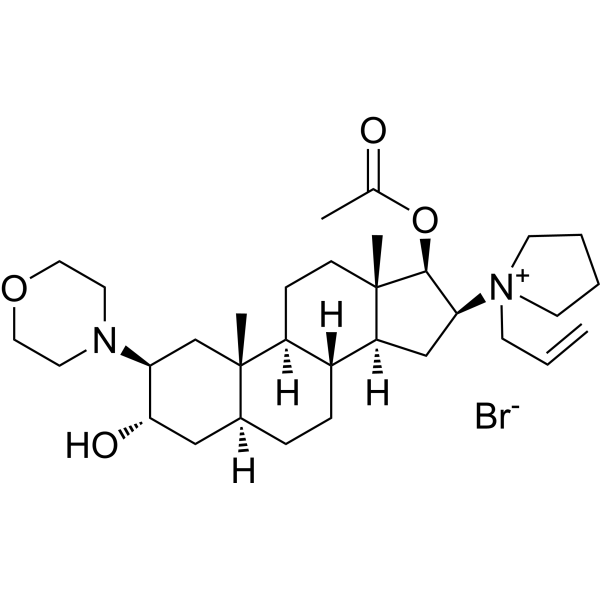
    Rocuronium Bromide
    2 Publications Verification

    ORG 9426 Bromide

    nAChR Neurological Disease Inflammation/Immunology Cancer
    Rocuronium Bromide (ORG 9426 Bromide) is an aminosteroid non-depolarizing neuromuscular blocker or muscle relaxant used in modern anaesthesia, to facilitate endotracheal intubation and to provide skeletal musclerelaxation during surgery or mechanical ventilation.
    Rocuronium Bromide
  • HY-B0118A

    ORG NC 45

    nAChR Neurological Disease Cancer
    Vecuronium (ORG NC 45) bromide is a non-depolarizing neuromuscular blocking agent that also acts as a nicotinic acetylcholine receptor (nAChR) inhibitor, a muscle relaxant, and can be used for pre-surgical anesthesia .
    Vecuronium bromide
  • HY-B0292A
    Atracurium besylate
    1 Publications Verification

    BW-33A

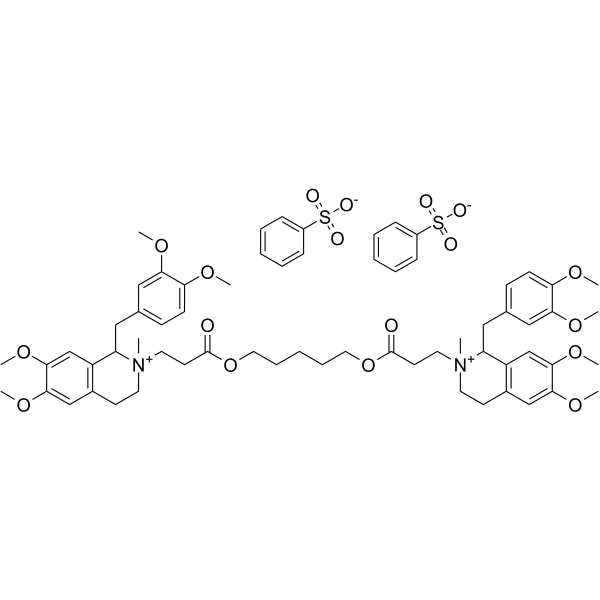
    nAChR Neurological Disease Inflammation/Immunology Cancer
    Atracurium (BW-33A) besylate is a potent, competitive and non-depolarizing neuromuscular blocking agent. Atracurium besylate also is an AChR receptor antagonist. Atracurium besylate induces bronchoconstriction and neuromuscular blockade. Atracurium besylate promotes astroglial differentiation .
    Atracurium besylate
  • HY-B0517
    Mepivacaine
    1 Publications Verification

    Sodium Channel Neurological Disease
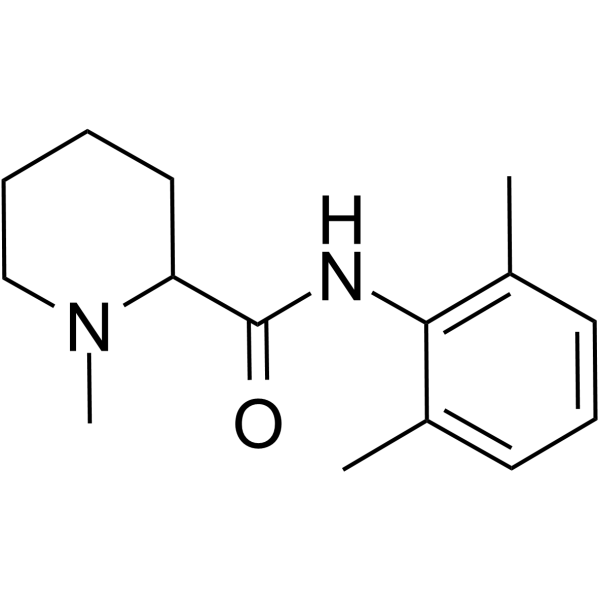
    Mepivacaine is an amide-type local anesthetic agent. Mepivacaine binds to specific voltage-gated sodium ion channels in neuronal cell membranes, which inhibits both sodium influx and membrane depolarization .
    Mepivacaine
  • HY-B1700A

    nAChR Neurological Disease
    Mivacurium dichloride is a benzylisoquinoline derivative and is a short-acting non-depolarizing neuromuscular blocking agent and skeletal muscle relaxant. Mivacurium dichloride couples with the nAChR to reduce or inhibit the depolarizing effect of acetylcholine on the terminal disc of the muscle cell .
    Mivacurium dichloride
  • HY-70050C

    GR 68755C; GR 68755 Hydrochloride; GR 68755X Hydrochloride

    5-HT Receptor Neurological Disease
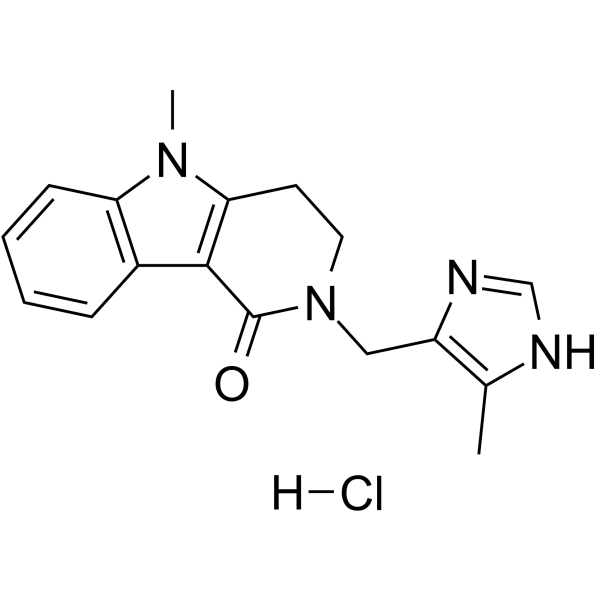
    Alosetron Hydrochloride (GR 68755C) is a potent and highly selective serotonin 5-HT3 receptor antagonist. Alosetron Hydrochloride is used for the research of irritable bowel syndrome (IBS). Alosetron blocks the fast 5HT3-mediated depolarisation of guinea-pig myenteric and submucosal neurons, with IC50 at ~55 nM. Alosetron Hydrochloride attenuates the visceral nociceptive effect of rectal distension in conscious or anaesthetised dogs. Anti-inflammatory effects .
    Alosetron Hydrochloride
  • HY-135121

    Ethacizin; NIK-244

    Sodium Channel Cardiovascular Disease
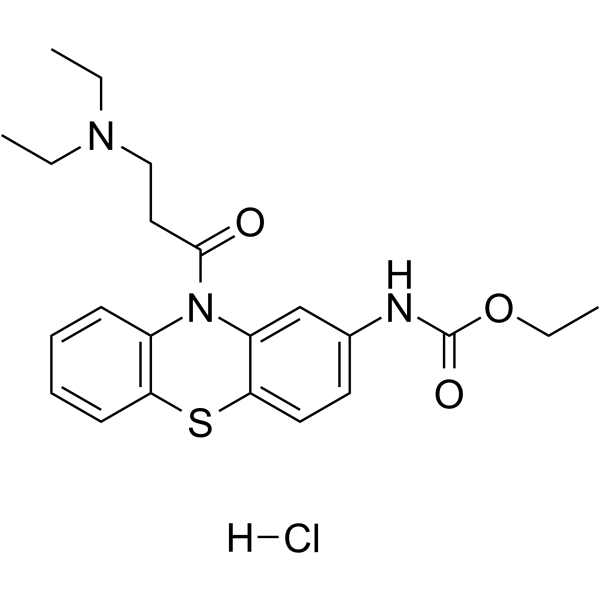
    Ethacizine hydrochloride (Ethacizin; NIK-244) is a longer-lasting Class Ic antiarrhythmic agent than Flecainide . Ethacizine hydrochloride (Ethacizin; NIK-244) inhibits the depolarizing current responsible for the intraatrial and His-Purkinje-ventricular conduction .
    Ethacizine hydrochloride
  • HY-B0517A
    Mepivacaine hydrochloride
    1 Publications Verification

    Sodium Channel Neurological Disease
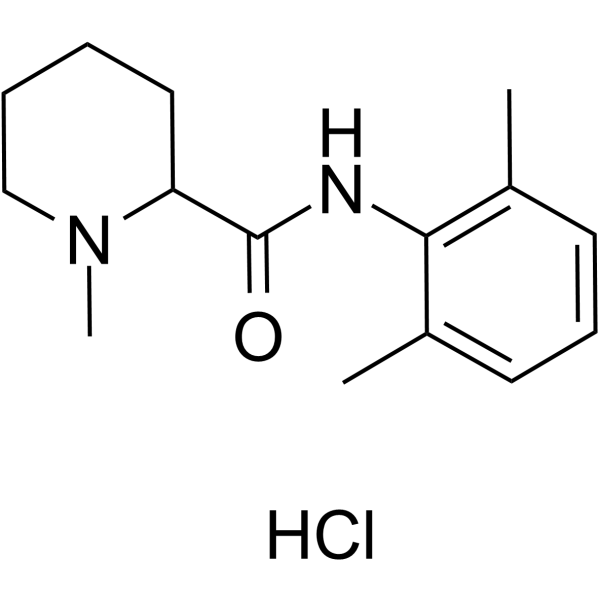
    Mepivacaine hydrochloride binds to specific voltage-gated sodium ion channels in neuronal cell membranes, which inhibits both sodium influx and membrane depolarization .
    Mepivacaine hydrochloride
  • HY-70050A

    GR 68755; GR 68755X

    5-HT Receptor Neurological Disease Inflammation/Immunology
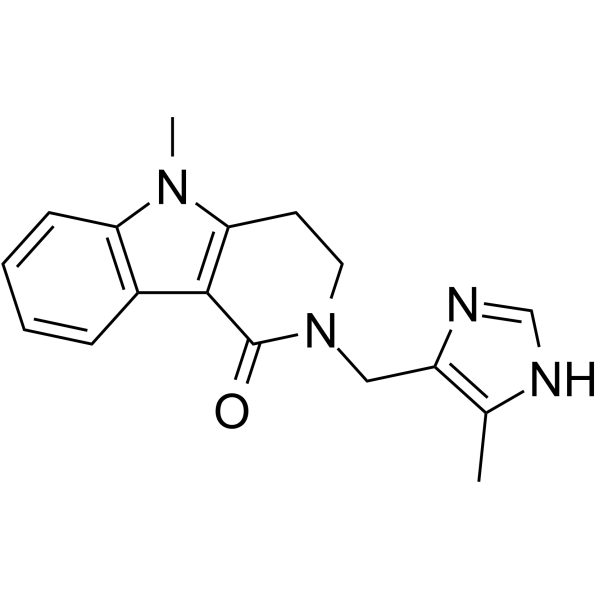
    Alosetron (GR 68755) is a potent and highly selective serotonin 5-HT3 receptor antagonist. Alosetron is used for the research of irritable bowel syndrome (IBS). Alosetron blocks the fast 5HT3-mediated depolarisation of guinea-pig myenteric and submucosal neurons, with IC50 at ~55 nM. Alosetron attenuates the visceral nociceptive effect of rectal distension in conscious or anaesthetised dogs. Anti-inflammatory effects .
    Alosetron
  • HY-B1532

    (S)-Anabasine; (+)-Anabasine

    Environmental Pollutants nAChR Neurological Disease
    Anabasine ((S)-Anabasine) is an alkaloid that found as a minor component in tobacco (Nicotiana). Anabasine is a botanical pesticide nicotine, acts as a full agonist of nicotinic acetylcholine receptors (nAChRs). Anabasine induces depolarization of TE671 cells endogenously expressing human fetal muscle-type nAChRs (EC50=0.7 μM) .
    Anabasine
  • HY-126220

    Fluorescent Dye Others
    KMG-301AM is the acetoxy methyl esterified form of KMG-301. KMG-301AM successfully accumulates in mitochondria and then it is hydrolyzed to KMG-301. KMG-301 is an Mg 2+-selective fluorescent probe functional in mitochondria in intact cells. Since the mitochondrial membrane is impermeable to KMG-301, it is not released upon depolarization of the mitochondrial membrane potential. KMG-301 can indicate changes in mitochondrial Mg2+ concentration and shows Mg 2+ transport across the mitochondrial membrane in the early phases of a cellular model .
    KMG-301AM
  • HY-W017424

    Drug Intermediate Caspase Apoptosis Neurological Disease Cancer
    2-Aminobenzothiazole acts as a caspase 3/7 activator, an anticancer cytotoxic agent, and also exhibits neurotoxicity. 2-Aminobenzothiazole drives the apoptotic pathway by activating caspase 3/7, induces mitochondrial inner membrane depolarization, and triggers both early and late apoptosis via a caspase-dependent pathway. In zebrafish models, 2-Aminobenzothiazole induces oxidative damage in brain tissues and inhibits genes related to GABA and 5-HT synthesis pathways. Long-term exposure to 2-Aminobenzothiazole impairs motor ability, social behavior, anxiety-like state and cognitive function. 2-Aminobenzothiazole can be used in studies of human laryngeal carcinoma and related neurotoxicity .
    2-Aminobenzothiazole
  • HY-B0570
    Decamethonium Bromide
    1 Publications Verification

    nAChR Neurological Disease
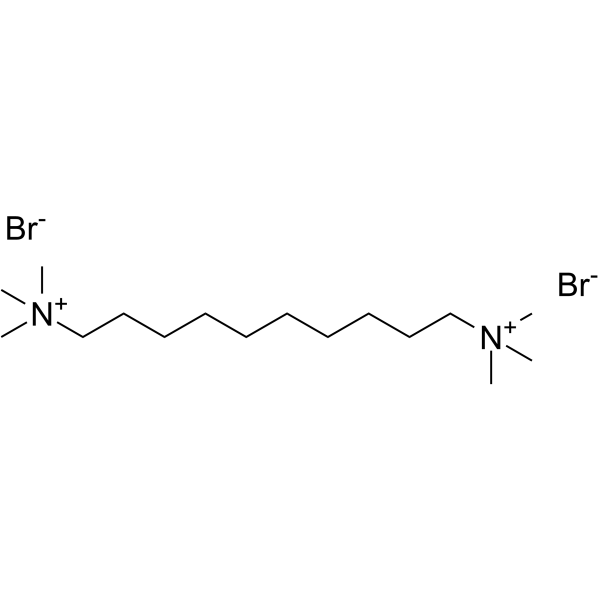
    Decamethonium Bromide is an acetylcholine receptor inhibitor and muscle relaxant. Decamethonium Bromide first induces depolarization of skeletal muscles, and then binds to postsynaptic acetylcholine receptors to induce persistent paralysis .\n
    Decamethonium Bromide
  • HY-B1730
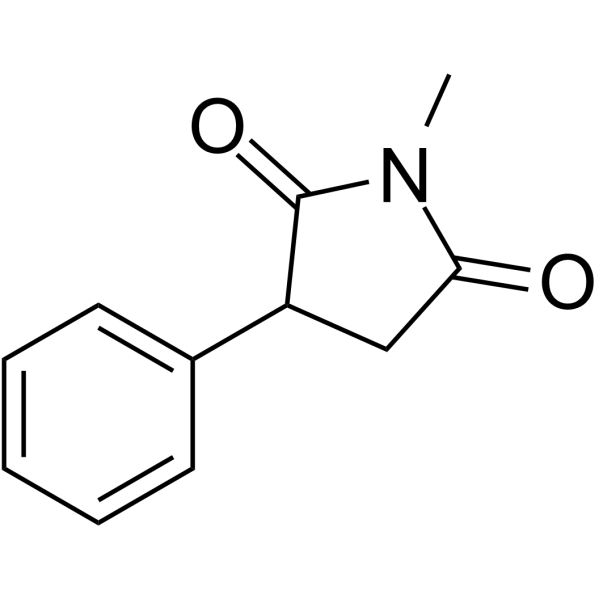
    Phensuximide
    2 Publications Verification

    Cyclic GMP-AMP Synthase Neurological Disease Metabolic Disease
    Phensuximide is an orally active succinimide antiepileptic and anticonvulsant agent. Phensuximide inhibits cyclic AMP and cyclic GMP accumulation in depolarized brain tissue. Phensuximide can be used for the study of seizure and petit mal .
    Phensuximide
  • HY-136909

    Calcium Channel Cardiovascular Disease
    SR33805 is a potent Ca 2+ channel antagonist, with EC50s of 4.1 nM and 33 nM in depolarized and polarized conditions, respectively. SR33805 blocks L-type but not T-type Ca 2+ channels. SR33805 can be used for the research of acute or chronic failing hearts .
    SR33805
  • HY-126220A

    Fluorescent Dye Others
    KMG-301AM TFA is the acetoxy methyl esterified form of KMG-301. KMG-301AM TFA successfully accumulates in mitochondria and then it is hydrolyzed to KMG-301. KMG-301 is an Mg 2+-selective fluorescent probe functional in mitochondria in intact cells. Since the mitochondrial membrane is impermeable to KMG-301, it is not released upon depolarization of the mitochondrial membrane potential. KMG-301 can indicate changes in mitochondrial Mg2+ concentration and shows Mg 2+ transport across the mitochondrial membrane in the early phases of a cellular model .
    KMG-301AM TFA
  • HY-W141392

    Nucleoside Antimetabolite/Analog Xanthine Oxidase Phosphoramidites Cancer
    2'-Fluoro-5'-O-DMT-2'-deoxyinosine-3'-CE-phosphoramidite is a hypoxanthine analog. Hypoxanthine is a kind of purine base mainly present in muscle tissue. And it is a metabolite produced by purine oxidase acting on xanthine. Hypoxanthine has typical anti-inflammatory effects and is a potential endogenous poly(ADP-ribose) polymerase (PARP) inhibitor. It is cytoprotective by inhibiting PAPR activity, inhibiting peroxynitrite-induced mitochondrial depolarization and secondary superoxide production. Hypoxanthine can also be used as an indicator of hypoxia .
    2'-Fluoro-5'-O-DMT-2'-deoxyinosine-3'-CE-phosphoramidite
  • HY-178963

    Sodium Channel Calcium Channel Neurological Disease
    Nav1.2-IN-2 is a Nav1.2 inhibitor with a human IC50 of 0.18 μM. Nav1.2-IN-2 preferentially binds to the inactivated state of Nav1.2, reduces window current, suppresses neuronal depolarization and action potential generation. Nav1.2-IN-2 suppresses Veratridine (HY-N6691)-induced Ca 2+ influx. Nav1.2-IN-2 can be used for the research of epilepsy .
    Nav1.2-IN-2
  • HY-114410

    Mitochondrial Metabolism Cancer
    CCI-006 is a selective inhibitor and chemosensitizer of MLL-rearranged leukemia cells, by inhibits mitochondrial respiration resulting in insurmountable mitochondrial depolarization and a pro-apoptotic unfolded protein response (UPR) in a subset of MLL-r leukemia cells .
    CCI-006
  • HY-111014

    Calcium Channel Cardiovascular Disease
    VK-II-36 is a carvedilol analog that suppresses sarcoplasmic reticulum Ca 2+release but does not block the β-receptor.VK-II-36 inhibits triggered activities evoked by both early and delayed after depolarizations .
    VK-II-36
  • HY-119961

    Dexivacaine; (S)-Mepivacaine

    Sodium Channel Cardiovascular Disease
    (+)-Mepivacaine is a racemic isomer of Mepivacaine (HY-B0517), which has analgesic and vasoconstrictive activity. Mepivacaine is an amide type agent that temporarily causes local loss of consciousness. Mepivacaine binds to specific voltage-gated sodium channels on neuronal cell membranes, inhibiting sodium influx and membrane depolarization .
    (+)-Mepivacaine
  • HY-136980

    Asp-Glu

    Endogenous Metabolite Neurological Disease
    Aspartylglutamate (Asp-Glu) is a dipeptide that exhibits excitatory activity, as it has been shown to depolarize CA1 pyramidal neurons and increase conductance in response to stimulation. Aspartylglutamate selectively binds to certain glutamate receptors and demonstrates potent effects in specific regions of the hippocampus, particularly in the stratum radiatum where it enhances excitatory neurotransmission.
    Aspartylglutamate
  • HY-152696

    Xanthine Oxidase Nucleoside Antimetabolite/Analog Others
    6-O-Methylinosine is a hypoxanthine analogue. Hypoxanthine is a kind of purine base mainly present in muscle tissue. And it is a metabolite produced by purine oxidase acting on xanthine. Hypoxanthine has typical anti-inflammatory effects and is a potential endogenous poly(ADP-ribose) polymerase (PARP) inhibitor. It is cytoprotective by inhibiting PAPR activity, inhibiting peroxynitrite-induced mitochondrial depolarization and secondary superoxide production. Hypoxanthine can also be used as an indicator of hypoxia .
    6-O-Methylinosine
  • HY-17033

    Org-9426

    nAChR Neurological Disease Cancer
    Rocuronium (Org-9426) is an aminosteroid non-depolarizing neuromuscular blocker or muscle relaxant used in modern anaesthesia.
    Rocuronium
  • HY-16423

    Org 9487

    mAChR Neurological Disease
    Rapacuronium bromide (Org 9487), a non-depolarizing neuromuscular blocker, is an allosteric modulator of muscarinic acetylcholine receptor (mAChR) .
    Rapacuronium bromide
  • HY-100823

    mGluR Neurological Disease
    (1S,3R)-ACPD is a mGluR agonist that can depolarize pyramidal cells .
    (1S,3R)-ACPD
  • HY-B0615AS

    EN 313-d8; Ethmozin-d8; Moracizine-d8

    Isotope-Labeled Compounds Cardiovascular Disease
    Moricizine-d8 Hydrochloride is the deuterium labeled Moricizine Hydrochloride (HY-B0615A). Moricizine Hydrochloride is an orally active Class I antiarrhythmic agent. Moricizine Hydrochloride decreases the maximum rate of phase 0 depolarization; increases rates of phase 2 and 3 repolarization, decreases action potential duration, and decreases effective refractory period .
    Moricizine-d8Hydrochloride
  • HY-W392836

    Nucleoside Antimetabolite/Analog Xanthine Oxidase Phosphoramidites Cancer
    2'-O-Methyl-5'-O-dmt-inosine-3'-CE-phosphoramidite is a hypoxanthine analog. Hypoxanthine is a kind of purine base mainly present in muscle tissue. And it is a metabolite produced by purine oxidase acting on xanthine. Hypoxanthine has typical anti-inflammatory effects and is a potential endogenous poly(ADP-ribose) polymerase (PARP) inhibitor. It is cytoprotective by inhibiting PAPR activity, inhibiting peroxynitrite-induced mitochondrial depolarization and secondary superoxide production. Hypoxanthine can also be used as an indicator of hypoxia .
    2'-O-Methyl-5'-O-dmt-inosine-3'-CE-phosphoramidite
  • HY-120035

    Proteasome Ribosomal S6 Kinase (RSK) Apoptosis Cancer
    DD1, a proteasome inhibitor, targets Bax activation and P70S6K degradation during acute myeloid leukemia (AML) apoptosis. DD1 induces apoptosis in the caspase-dependent manner. DD1 induces mitochondrial membrane depolarization and Bad dephosphorylation .
    DD1
  • HY-A0258A

    Metocurine iodide; Dimethylchondrocurarine iodide

    nAChR Neurological Disease
    Metubine (Metocurine iodide) is a non-depolarizing muscle relaxant. Metubine has neuromuscular blocking activities .
    Metubine
  • HY-100815C

    (±)-AMPA hydrobromide

    iGluR Neurological Disease
    (RS)-AMPA ((±)-AMPA) hydrobromide is a glutamate analogue and a potent and selective excitatory neurotransmitter L-glutamic acid agonist. (RS)-AMPA hydrobromide does not interfere with binding sites for kainic acid or NMDA receptors .
    (RS)-AMPA hydrobromide
  • HY-N6882

    G8CG

    Mitochondrial Metabolism Apoptosis Cancer
    Genistein 8-c-glucoside (G8CG) is a glucoside. Genistein 8-c-glucoside induces mitochondrial membrane depolarization and induces apoptosis .
    Genistein 8-c-glucoside
  • HY-B0517S

    Sodium Channel Neurological Disease
    Mepivacaine-d3 is the deuterium labeled Mepivacaine. Mepivacaine is an amide-type local anesthetic agent. Mepivacaine binds to specific voltage-gated sodium ion channels in neuronal cell membranes, which inhibits both sodium influx and membrane depolarization .
    Mepivacaine-d3
  • HY-178450

    P2X Receptor Neurological Disease
    HW091077 is a highly selective P2X3 receptor antagonist with an IC50 of 17 nM. HW091077 blocks ATP-induced calcium influx and cell depolarization to inhibit cough reflex pathways. HW091077 is promising for research of chronic cough .
    HW091077
  • HY-P3889

    Neurokinin Receptor Neurological Disease
    Substance P (6-11) is the C-terminal hexapeptideamide of Substance P (HY-P0201). Substance P (6-11) binds to NK-1 tachykinin receptor. Substance P (6-11) shows depolarization of motoneurons and a hypotensive effect .
    Substance P (6-11)
  • HY-14764

    SPI 8811

    Chloride Channel Mitochondrial Metabolism Inflammation/Immunology
    Cobiprostone (SPI 8811) is a type-2 chloride channel activator. Cobiprostone protects against Indomethacin (HY-14397)-induced depolarization of mitochondrial membrane potential and reverses the loss of mitochondrial membrane potential. Cobiprostone protects against NSAID-induced cellular damage .
    Cobiprostone
  • HY-N1306

    Bacterial Reactive Oxygen Species (ROS) Apoptosis Infection Cancer
    Sideroxylin is a C-methylated flavone isolated from Callistemon lanceolatus and exerts antimicrobial activity against Staphylococcus aureus. Sideroxylin inhibits ovarian cancer cell proliferation and induces apoptosis, causing DNA fragmentation, depolarization of the mitochondrial membrane, the generation of reactive oxygen species (ROS) .
    Sideroxylin
  • HY-127149

    Ro 40-8757

    Apoptosis Reactive Oxygen Species (ROS) Caspase Cancer
    Mofarotene (Ro 40-8757), an arotinoid, is anticancer compound. Mofarotene induces apoptosis, associated with mitochondrial membrane depolarization, activation of caspase-3 and -9, and enhanced production of reactive oxygen species. Mofarotene inhibits hematopoiesis in vitro by inhibiting maturation from primitive progenitor cells .
    Mofarotene
  • HY-107519

    iGluR Neurological Disease
    (R)-3,4-DCPG is an AMPA and NMDA antagonist with a Kd of 77 μM for AMPA. (R)-3,4-DCPG complete antagonizes the NMDA-induced depolarization at a concentration of 500 μM. (R)-3,4-DCPG exhibits a weak antagonistic effect on kainate-induced depolarizations .
    (R)-3,4-DCPG
  • HY-165544

    Others Neurological Disease
    Decamethonium chloride is a depolarizing neuromuscular blocking agent that can be used to study the mechanism of action of muscle relaxants .
    Decamethonium chloride
  • HY-135121R

    Ethacizin (Standard); NIK-244 (Standard)

    Sodium Channel Reference Standards Cardiovascular Disease
    Ethacizine (hydrochloride) (Standard) is the analytical standard of Ethacizine (hydrochloride). This product is intended for research and analytical applications. Ethacizine hydrochloride (Ethacizin; NIK-244) is a longer-lasting Class Ic antiarrhythmic agent than Flecainide . Ethacizine hydrochloride (Ethacizin; NIK-244) inhibits the depolarizing current responsible for the intraatrial and His-Purkinje-ventricular conduction .
    Ethacizine hydrochloride (Standard)
  • HY-106688A

    St-567 hydrobromide

    Potassium Channel Cardiovascular Disease
    Alinidine (St-567) hydrobromide is a specific bradycardic agent. Alinidine hydrobromide reduces the slope of the diastolic depolarization in sinoatrial tissue and Purkinje fibers. Alinidine hydrobromide shows antiischemic and antiarrhythmic effects .
    Alinidine hydrobromide
  • HY-108984

    5-(Benzylsulfonyl)-4-bromo-2-methyl-3(2H)-pyridazinone

    Mitochondrial Metabolism Neurological Disease
    BBMP is a permeability transition pore (PTP) inhibitor. BBMP prevents Ca 2+-induced permeability transition and mitochondrial depolarization. BBMP possess potential for the neurodegenerative disorders research .
    BBMP
  • HY-117055

    Calcium Channel Cardiovascular Disease
    Ro 18-3981 is a dihydropyridine that inhibits cardiac Ca 2+ channels. Ro 18-3981 shows higher inhibitory activity when the cell membrane is in a depolarized state (Vh=-20 mV: IC50=2.3 nM; Vh=-50 mV: IC50=100 nM) .
    Ro 18-3981
  • HY-B0517R

    Reference Standards Sodium Channel Neurological Disease
    Mepivacaine (Standard) is the analytical standard of Mepivacaine. This product is intended for research and analytical applications. Mepivacaine is an amide-type local anesthetic agent. Mepivacaine binds to specific voltage-gated sodium ion channels in neuronal cell membranes, which inhibits both sodium influx and membrane depolarization .
    Mepivacaine (Standard)
  • HY-B1194A

    Potassium Channel Parasite PKA Infection Cardiovascular Disease
    Tetramisole is an orally active, selective inward rectifier potassium channel agonist with an EC50 of approximately 30 μM for the Kir2.1 subunit. Tetramisole is also an anti-nematode agent that blocks neuromuscular transmission by non-competitive depolarization. Tetramisole promotes the forward transport of Kir2.1 channels, hyperpolarizes the resting potential (RP), shortens the action potential duration (APD), inhibits intracellular calcium overload and the PKA signaling pathway, and exerts anti-arrhythmic and anti-myocardial remodeling activities. Tetramisole can be used in cardiac electrophysiology research and research related to myocardial ischemia and heart failure .
    Tetramisole
  • HY-169845

    Calcium Channel Neurological Disease
    Calcium Channel antagonist 6 (Compound 328) is a highly selective antagonist of voltage-gated calcium channel CaV2.2 with an IC50 value of 0.37 μM. Calcium Channel antagonist 6 inhibits of neuron depolarization-induced Ca 2+ influx. Calcium Channel antagonist 6 is promising for research of neuropathic pain .
    Calcium Channel antagonist 6
  • HY-103313

    Calcium Channel Cardiovascular Disease
    SR33805 oxalate is a potent Ca 2+ channel antagonist, with EC50s of 4.1 nM and 33 nM in depolarized and polarized conditions, respectively. SR33805 oxalate blocks L-type but not T-type Ca 2+ channels. SR33805 oxalate can be used for the research of acute or chronic failing hearts .
    SR33805 oxalate
  • HY-W039271

    2-Chloro-6-O-methyl-inosine

    Nucleoside Antimetabolite/Analog Xanthine Oxidase Cancer
    2-Chloro-6-methoxypurine riboside is a hypoxanthine analog. Hypoxanthine is a kind of purine base mainly present in muscle tissue. And it is a metabolite produced by purine oxidase acting on xanthine. Hypoxanthine has typical anti-inflammatory effects and is a potential endogenous poly(ADP-ribose) polymerase (PARP) inhibitor. It is cytoprotective by inhibiting PAPR activity, inhibiting peroxynitrite-induced mitochondrial depolarization and secondary superoxide production. Hypoxanthine can also be used as an indicator of hypoxia .
    2-Chloro-6-methoxypurine riboside

Inquiry Online

Your information is safe with us. * Required Fields.

Salutation


Country or Region *

Applicant Name *


Organization Name *

Department *


Email Address *


Product Name *

Cat. No.


Requested quantity *

Phone Number *


Remarks

Inquiry Online

Inquiry Information

Product Name:
Cat. No.:
Quantity:
MCE Japan Authorized Agent:

