



166095-21-2
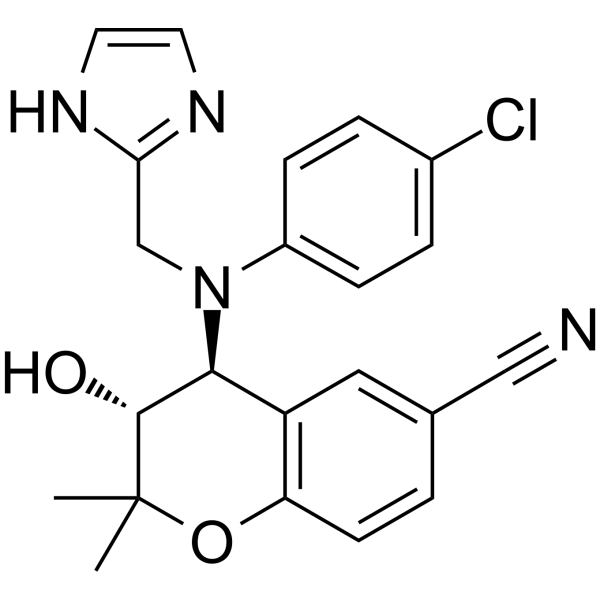
166095-21-2
Chemical Structure
BMS-191095
- CAS. Nr.: 166095-21-2
- Formula:C22H21ClN4O2
- Molecular Weight:408.88
IUPAC Name: (3R,4S)-4-(((1H-imidazol-2-yl)methyl)(4-chlorophenyl)amino)-3-hydroxy-2,2-dimethylchromane-6-carbonitrile
InChIKey: SMIKIPXIDLITMP-LEWJYISDSA-N
SMILES: CC(O1)(C)[C@H](O)[C@@H](N(CC2=NC=CN2)C3=CC=C(Cl)C=C3)C4=C1C=CC(C#N)=C4
Biological Activity: BMS-191095 is a selective activator of mitochondrial ATP-sensitive potassium (mitoKATP) channels. BMS-191095 inhibits human platelet aggregation by opening mitochondrial K(ATP) channels[1][2][3].
| Art. -Nr. | Produktname | Reinheit | Beschreibung | Pricing | |||||||||||||||||||
|---|---|---|---|---|---|---|---|---|---|---|---|---|---|---|---|---|---|---|---|---|---|---|---|
|
|
BMS-191095 | 98.01% | BMS-191095 is a selective activator of mitochondrial ATP-sensitive potassium (mitoKATP) channels. BMS-191095 inhibits human platelet aggregation by opening mitochondrial K(ATP) channels. | ||||||||||||||||||||
|
loading...
/
|
|||||||||||||||||||||||
Structural Analogs
-
Similarity Score 0.98
 HY-14257BMS-191095 hydrochloride
-
Similarity Score 0.70
 HY-118960ABMS-199264
-
Similarity Score 0.69
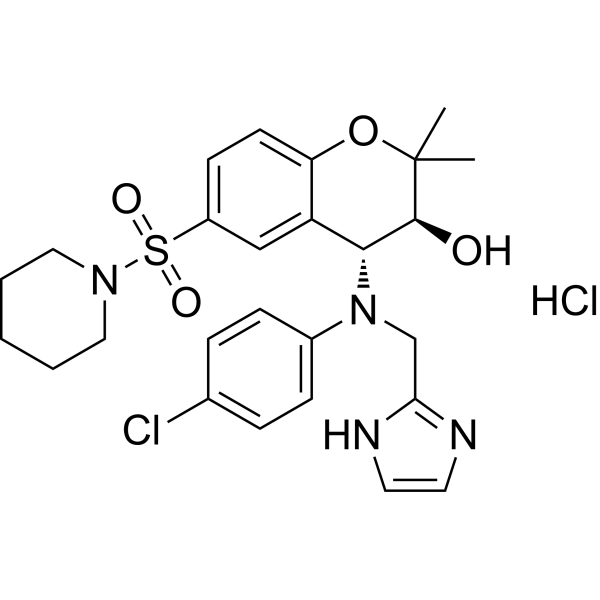 HY-118960BMS-199264 hydrochloride
-
Similarity Score 0.55
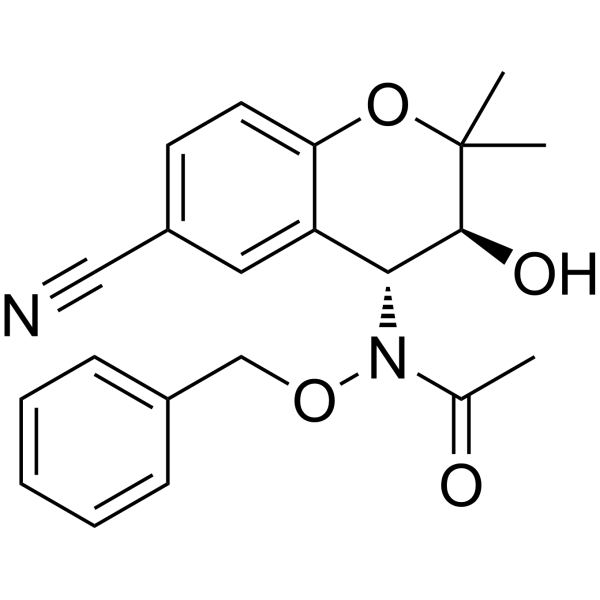 HY-108582Y-27152
-
Similarity Score 0.51
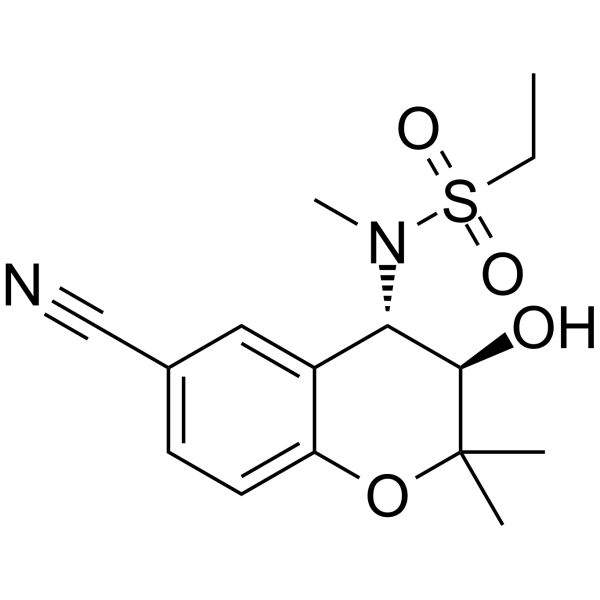 HY-108575Chromanol 293B
-
Similarity Score 0.51
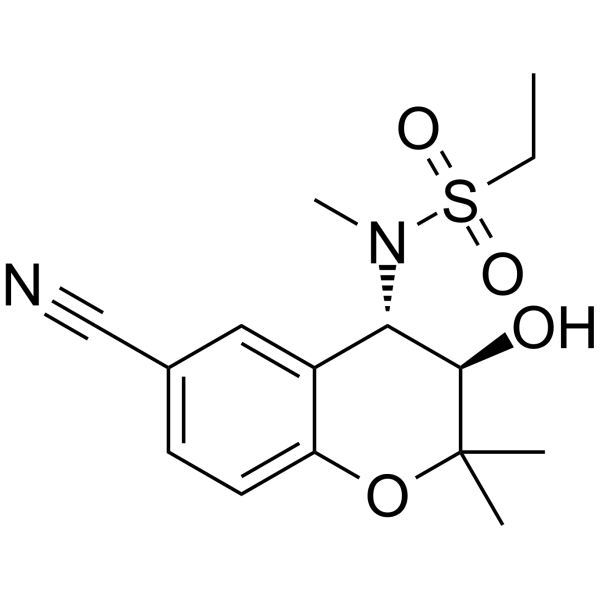 HY-110015(-)-Chromanol 293B
-
Similarity Score 0.50
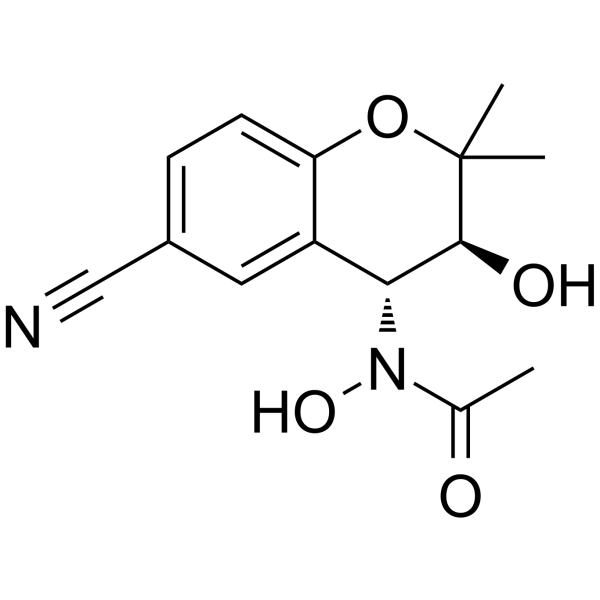 HY-101069Y-26763
-
Similarity Score 0.49
 HY-19244JTV-506
-
Similarity Score 0.49
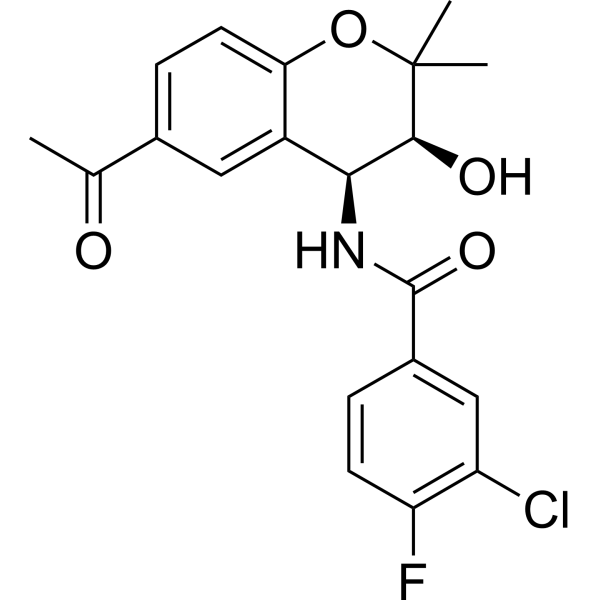 HY-15204Tonabersat
-

Explore the MedChemAI to find more analogs


References
- [1]. Katakam PV, et al. Diversity of mitochondria-dependent dilator mechanisms in vascular smooth muscle of cerebral arteries from normal and insulin-resistant rats. Am J Physiol Heart Circ Physiol. 2014 Aug 15;307(4):H493-503. [Content Brief]
- [2]. Cho MR, et al. BMS-191095, a cardioselective mitochondrial K(ATP) opener, inhibits human platelet aggregation by opening mitochondrial K(ATP) channels. Arch Pharm Res. 2005 Jan;28(1):61-7. [Content Brief]
- [3]. Mayanagi K, et al. The mitochondrial K(ATP) channel opener BMS-191095 reduces neuronal damage after transient focal cerebral ischemia in rats. J Cereb Blood Flow Metab. 2007 Feb;27(2):348-55. [Content Brief]



