



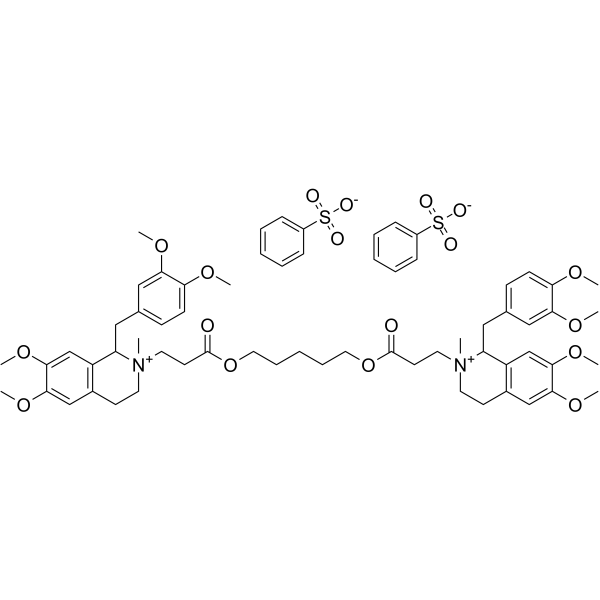
Atracurium besylate
Based on 1 publication(s) in Google Scholar
Atracurium (BW-33A) besylate is a potent, competitive and non-depolarizing neuromuscular blocking agent. Atracurium besylate also is an AChR receptor antagonist. Atracurium besylate induces bronchoconstriction and neuromuscular blockade. Atracurium besylate promotes astroglial differentiation.
For research use only. We do not sell to patients.
- Purity : 98.64%
- CAS No.: 64228-81-5
- Formula: C65H82N2O18S2
- Molecular Weight:1243.48
-
Storage:
4°C, sealed storage, away from moisture
* In solvent : -80°C, 6 months; -20°C, 1 month (sealed storage, away from moisture)

To place orders, for customer services and technical support, please contact: MedChemExpress USA
Tel: 609-228-6898 E-mail: [email protected] [email protected]


-
 Biological Activity
-
Chemical Information
-
Solvent & Solubility
- Purity & Documentation
- References
-
 Help & FAQs


-
HY-B0141
Estradiol -
HY-B0511
Biotin -
HY-14546
Aripiprazole -
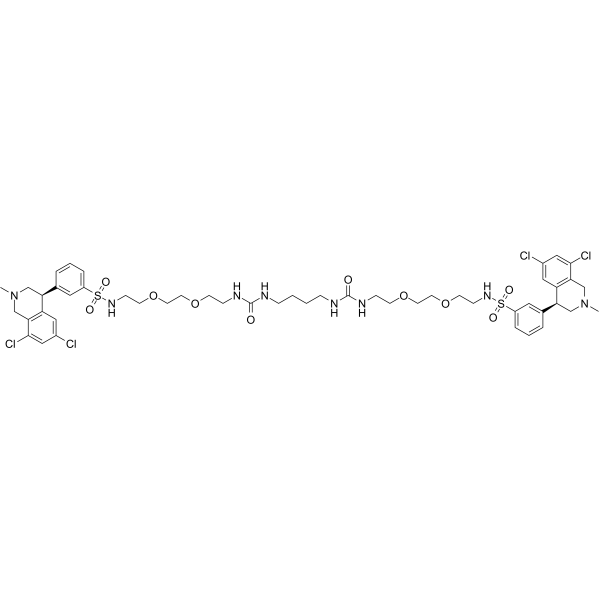
HY-15991
Tenapanor -
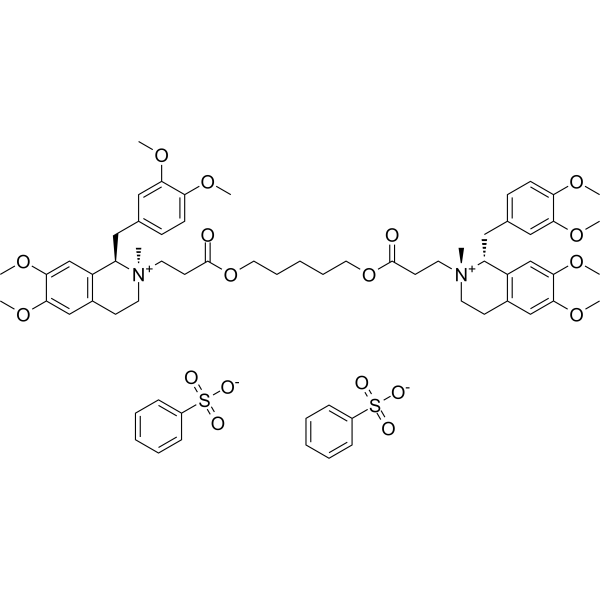
HY-13596
Cisatracurium besylate -
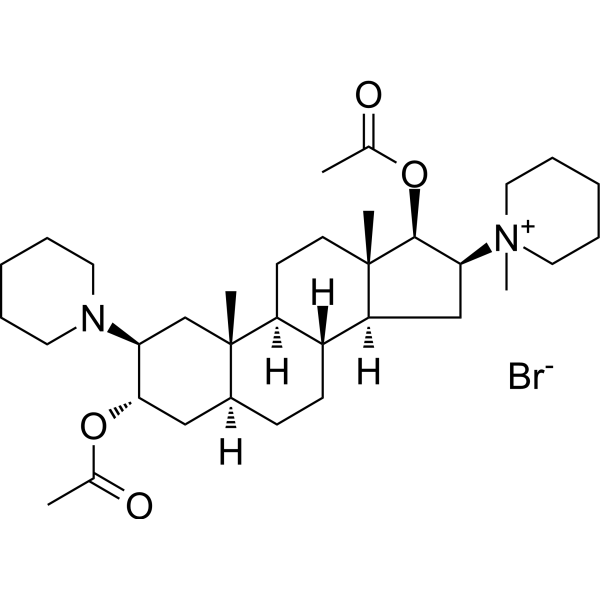
HY-B0118A
Vecuronium bromide -
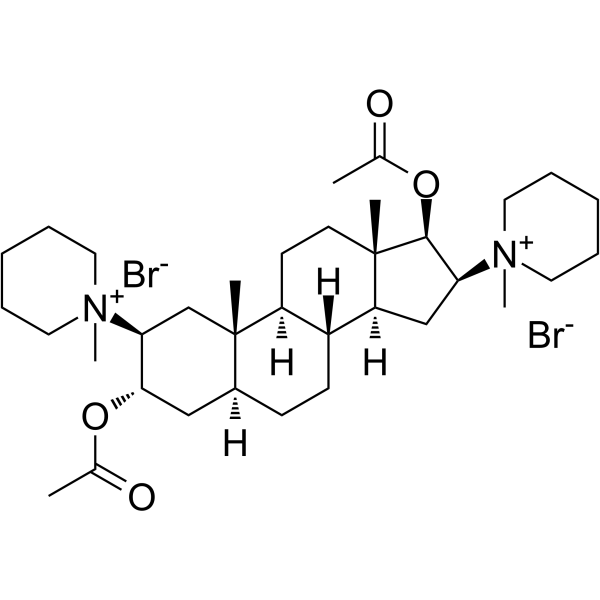
HY-B0429
Pancuronium dibromide -

HY-B0292AR
Atracurium (besylate) (Standard) -
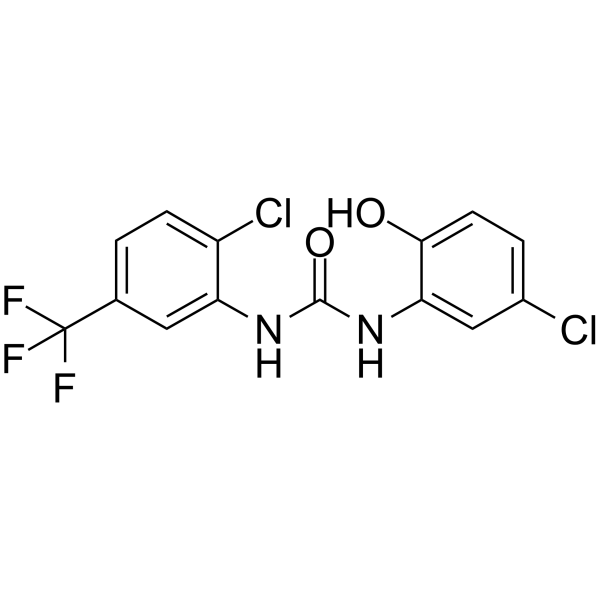
HY-12151
NS 1738 -
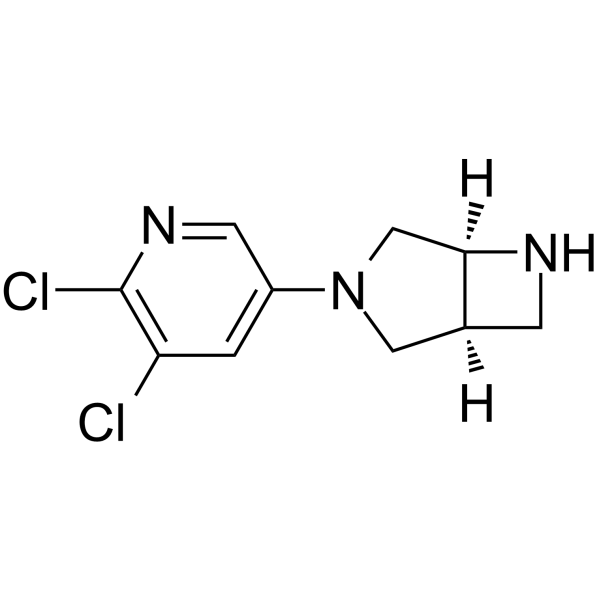
HY-14824
Sofiniclin -
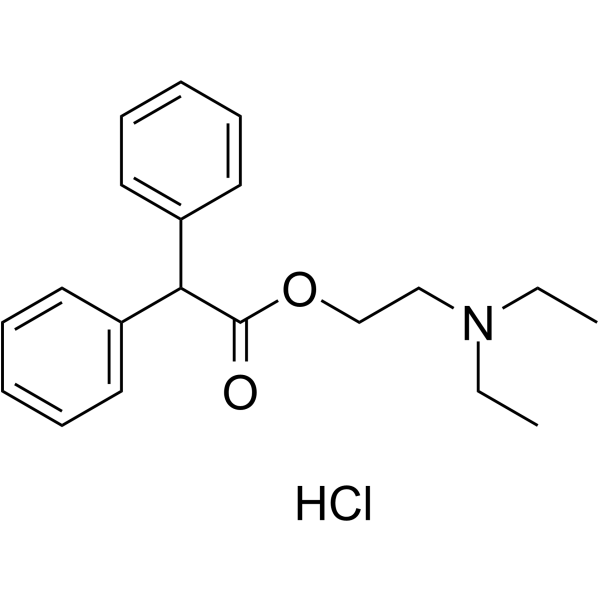
HY-B0379A
Adiphenine hydrochloride -
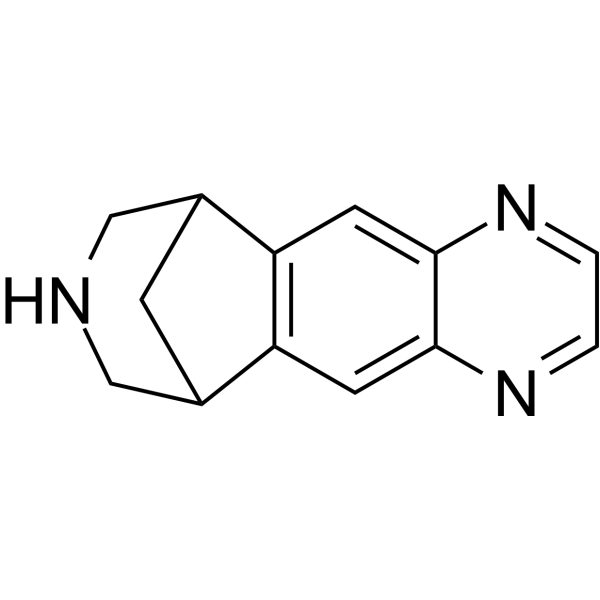
HY-10019
Varenicline
Publications Citing Use of MedChemExpress (MCE) Atracurium besylate
More

Biological Activity
Description
In Vitro
Atracurium besylate (10 μM; 72 h) promotes astroglial but not neuronal differentiation in HSR040622 and HSR040821 cells[4].
Atracurium besylate (10 μM; 48 h) reduces tumor engraftment and increases survival of mice xenotransplanted with ex-vivo treated GSCs[4].
Atracurium besylate (2.4 μM; 120 min) induces a complete fade of the tetanic contraction while only slightly affected the twitch in rat extensor digitorum longus muscle cells[5].
MedChemExpress (MCE) has not independently confirmed the accuracy of these methods. They are for reference only.
-
Cell Line:glioblastoma stem (GSC) cells
-
Concentration:3, 10, 20 µM
-
Incubation Time:72 h
-
Result:Increased the percentage of GFP-positive cells in a dose-dependent manner from 5.3% in DMSO to 15.4%, 81.1%, and 86.8% in 3 μM, 10 μM, and 20 μM, respectively.
In Vivo
Atracurium besylate (4.8 mg/kg; i.v.) induces neuromuscular blockade in rats[3].
MedChemExpress (MCE) has not independently confirmed the accuracy of these methods. They are for reference only.
-
Animal Model:5-12 weeks, 15-20 g male mice[2]
-
Dosage:1, 5, 10, 20, 50 mg/kg
-
Administration:I.v.
-
Result:Induced bronchoconstriction and Atracurium-induced airway hyperresponsiveness in DBA/2 mice was eliminated in a dose-dependent manner by pretreatment with atropine or pancuronium.
-
Animal Model:290 ± 30 g Male Sprague±Dawley rats (60 mg/kg heat-killed Corynebacteriumparvum for i.v.)[3]
-
Dosage:4.8 mg/kg
-
Administration:I.v.
-
Result:Induced neuromuscular blockade in Corynebacteriumparvum-injected rats.


Chemical Information
-
CAS No. 64228-81-5
-
Appearance Solid
-
Molecular Weight 1243.48
-
Formula C65H82N2O18S2
-
Color White to off-white
-
SMILES
O=S(C1=CC=CC=C1)([O-])=O.O=C(OCCCCCOC(CC[N+]2(C)C(CC3=CC=C(OC)C(OC)=C3)C4=C(C=C(OC)C(OC)=C4)CC2)=O)CC[N+]5(C)C(CC6=CC=C(OC)C(OC)=C6)C7=C(C=C(OC)C(OC)=C7)CC5.O=S(C8=CC=CC=C8)([O-])=O
-
Synonyms
BW-33A
-
Shipping
Room temperature in continental US; may vary elsewhere.
-
Storage
4°C, sealed storage, away from moisture
* In solvent : -80°C, 6 months; -20°C, 1 month (sealed storage, away from moisture)


Publications (1)
-
Journal Impact Factor
-
Most Recent
-
Cell Rep Methods
RECOVER identifies synergistic drug combinations in vitro through sequential model optimization. [Abstract]2023 Oct 23;3(10):100599. PMID: 37797618


Solvent & Solubility
In Vitro:
DMSO : 125 mg/mL (100.52 mM; Need ultrasonic; Hygroscopic DMSO has a significant impact on the solubility of product, please use newly opened DMSO)
Please refer to the solubility information to select the appropriate solvent. Once prepared, please aliquot and store the solution to prevent product inactivation from repeated freeze-thaw cycles.
Storage method and period of stock solution: -80°C, 6 months; -20°C, 1 month (sealed storage, away from moisture). When stored at -80°C, please use it within 6 months. When stored at -20°C, please use it within 1 month.
Please refer to the solubility information to select the appropriate solvent. Once prepared, please aliquot and store the solution to prevent product inactivation from repeated freeze-thaw cycles.
Storage method and period of stock solution: -80°C, 6 months; -20°C, 1 month (sealed storage, away from moisture). When stored at -80°C, please use it within 6 months. When stored at -20°C, please use it within 1 month.
Concentration (start) × Volume (start) = Concentration (final) × Volume (final)


Purity & Documentation
-
Data Sheet (277 KB)
-
SDS (393 KB)
- English - EN (393 KB)
- Français - FR (393 KB)
- Deutsch - DE (393 KB)
- Norwegian - NO (393 KB)
- Español - ES (393 KB)
- Swedish - SV (393 KB)
- Italian - IT (393 KB)
- Korean - KR (393 KB)
- Portuguese - PT (393 KB)
-
Handling Instructions (2659 KB)
References
[1]. Basta SJ, et al. Clinical pharmacology of atracurium besylate (BW 33A): a new non-depolarizing muscle relaxant. Anesth Analg. 1982 Sep;61(9):723-9. [Content Brief]
[2]. Levitt RC, et al. Genetic susceptibility to atracurium-induced bronchoconstriction. Am J Respir Crit Care Med. 1995 May;151(5):1537-42. [Content Brief]
[3]. Mayer B, et al. Inflammatory liver disease shortens atracurium-induced neuromuscular blockade in rats. Eur J Anaesthesiol. 2001 Sep;18(9):599-604. [Content Brief]
[4]. Spina R, et al. Atracurium Besylate and other neuromuscular blocking agents promote astroglial differentiation and deplete glioblastoma stem cells. Oncotarget. 2016 Jan 5;7(1):459-72. [Content Brief]
[5]. Nascimento DC, et al. Cellular mechanisms of atracurium-induced tetanic fade in the isolated rat muscle. Basic Clin Pharmacol Toxicol. 2004 Jul;95(1):9-14. [Content Brief]


Complete Stock Solution Preparation Table
Please refer to the solubility information to select the appropriate solvent. Once prepared, please aliquot and store the solution to prevent product inactivation from repeated freeze-thaw cycles.
Storage method and period of stock solution: -80°C, 6 months; -20°C, 1 month (sealed storage, away from moisture). When stored at -80°C, please use it within 6 months. When stored at -20°C, please use it within 1 month.
| Optional Solvent | Concentration Solvent Mass | 1 mg | 5 mg | 10 mg | 25 mg |
|---|---|---|---|---|---|
| DMSO | 1 mM | 0.8042 mL | 4.0210 mL | 8.0419 mL | 20.1049 mL |
| 5 mM | 0.1608 mL | 0.8042 mL | 1.6084 mL | 4.0210 mL | |
| 10 mM | 0.0804 mL | 0.4021 mL | 0.8042 mL | 2.0105 mL | |
| 15 mM | 0.0536 mL | 0.2681 mL | 0.5361 mL | 1.3403 mL | |
| 20 mM | 0.0402 mL | 0.2010 mL | 0.4021 mL | 1.0052 mL | |
| 25 mM | 0.0322 mL | 0.1608 mL | 0.3217 mL | 0.8042 mL | |
| 30 mM | 0.0268 mL | 0.1340 mL | 0.2681 mL | 0.6702 mL | |
| 40 mM | 0.0201 mL | 0.1005 mL | 0.2010 mL | 0.5026 mL | |
| 50 mM | 0.0161 mL | 0.0804 mL | 0.1608 mL | 0.4021 mL | |
| 60 mM | 0.0134 mL | 0.0670 mL | 0.1340 mL | 0.3351 mL | |
| 80 mM | 0.0101 mL | 0.0503 mL | 0.1005 mL | 0.2513 mL | |
| 100 mM | 0.0080 mL | 0.0402 mL | 0.0804 mL | 0.2010 mL |


Atracurium besylate Related Classifications
HY-B0292A Related Classifications
 Powered by Bioz