1. Search Result
Search Result
Results for "

Depressive Disorder

" in MedChemExpress (MCE) Product Catalog:

120

Inhibitors & Agonists

1

Screening Libraries

1

Biochemical Assay Reagents

2

Peptides

13

Natural
Products

15

Isotope-Labeled Compounds

1

Click Chemistry

Cat. No. Product Name Target Research Areas Chemical Structure
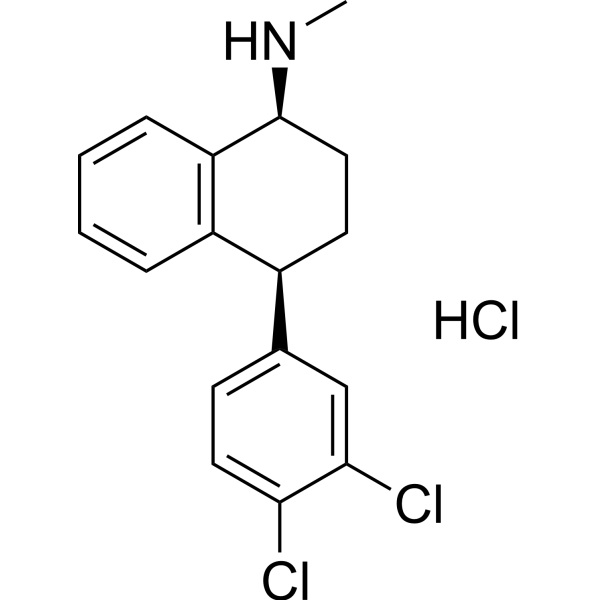
  • HY-B0176A
    Sertraline hydrochloride
    15+ Cited Publications

    Serotonin Transporter Neurological Disease Cancer
    Sertraline hydrochloride is an antidepressant of the selective serotonin reuptake inhibitor (SSRI) class. Sertraline hydrochloride is researched for a number of diseases, such as major depressive disorder and obsessive .
    Sertraline hydrochloride
  • HY-B0492
    Paroxetine hydrochloride
    15+ Cited Publications

    BRL29060 hydrochloride; BRL29060A

    Autophagy Serotonin Transporter G Protein-coupled Receptor Kinase (GRK) Neurological Disease Cancer
    Paroxetine hydrochloride is a potent selective serotonin-reuptake inhibitor, commonly prescribed as an GRK2 inhibitor with IC50 of 14 μM. Paroxetine hydrochloride can be used for the research of depressive disorder .
    Paroxetine hydrochloride
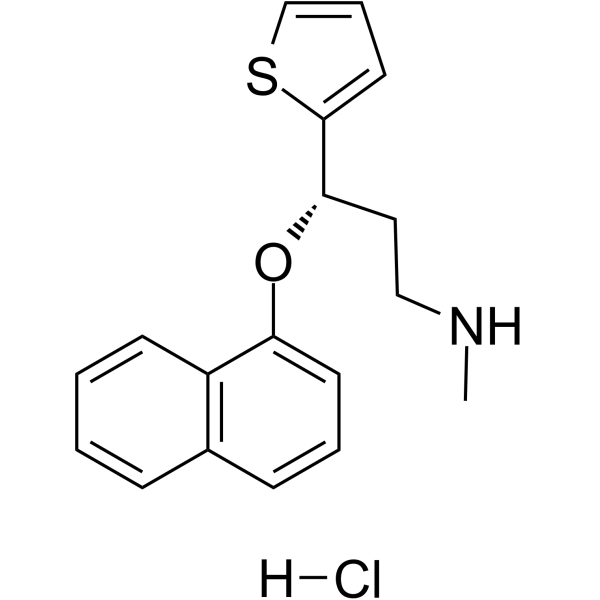
  • HY-B0161A
    Duloxetine hydrochloride
    10+ Cited Publications

    (S)-Duloxetine hydrochloride; LY-248686 hydrochloride

    Serotonin Transporter Neurological Disease Cancer
    Duloxetine hydrochloride ((S)-Duloxetine hydrochloride) is a serotonin-norepinephrine reuptake inhibitor (SNRI) with a Ki of 4.6 nM, used for treatment of major depressive disorder and generalized anxiety disorder (GAD) .
    Duloxetine hydrochloride
  • HY-14199
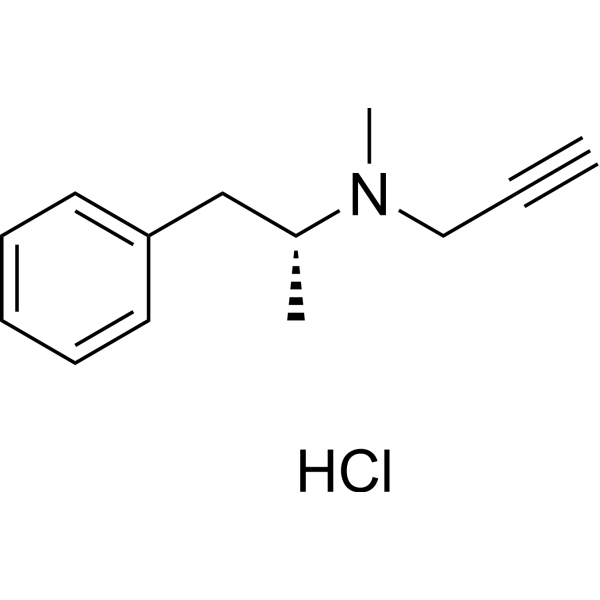
    Selegiline hydrochloride
    5+ Cited Publications

    Deprenyl hydrochloride; (-)-Selegiline hydrochloride; (-)-Deprenyl hydrochloride

    Monoamine Oxidase Neurological Disease
    Selegiline (Deprenyl) hydrochloride is a potent, selective and irreversible inhibitor of MAO-B, with an IC50 of 51 nM. Selegiline hydrochloride exhibits 450-flod selectivity for MAO-B over MAO-A (IC50=23 μM). Selegiline hydrochloride can be used for the research of Parkinson's disease, Alzheimer's disease and major depressive disorder .
    Selegiline hydrochloride
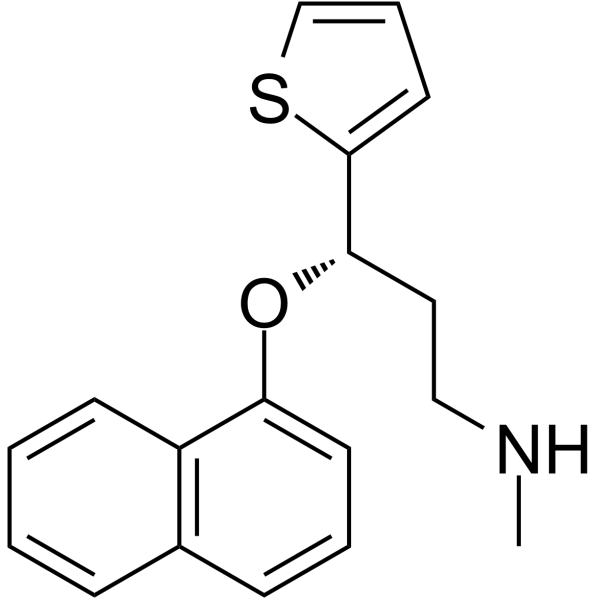
  • HY-B0161
    Duloxetine
    10+ Cited Publications

    LY248686

    Serotonin Transporter Neurological Disease Cancer
    Duloxetine is a serotonin-norepinephrine reuptake inhibitor with a Ki of 4.6 nM, used for treatment of major depressive disorder and generalized anxiety disorder (GAD) .
    Duloxetine
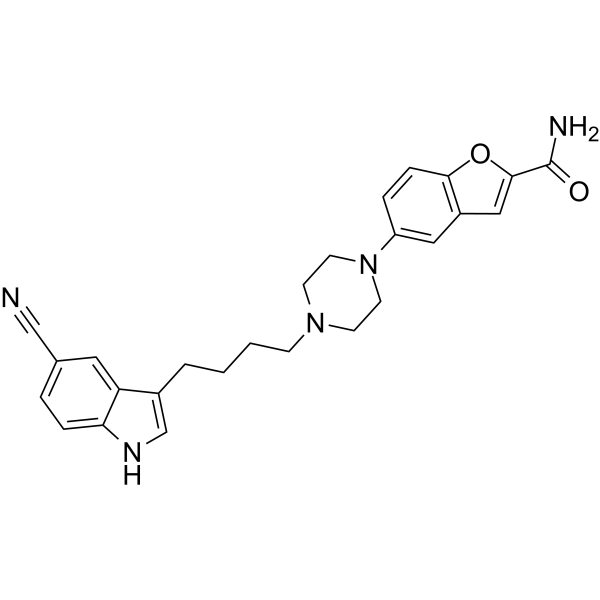
  • HY-14262
    Vilazodone
    5+ Cited Publications

    EMD 68843; SB659746A

    5-HT Receptor Serotonin Transporter Neurological Disease
    Vilazodone (EMD 68843; SB 659746A) is a potent, selective and orally active serotonin reuptake inhibitor (SSRI) and partial 5-HT1A receptor agonist. Vilazodone exhibits antidepressant efficacy in vivo can be used for the research of major depressive disorder (MDD) and affective disorders .
    Vilazodone
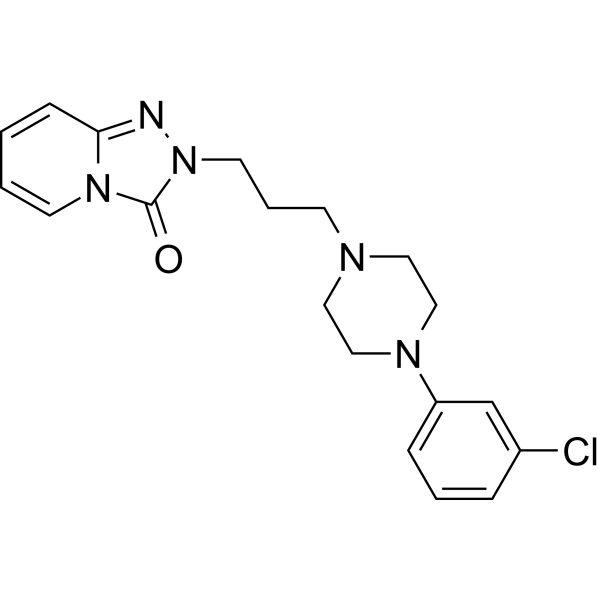
  • HY-B0478A
    Trazodone
    5+ Cited Publications

    AF-1161 free base

    5-HT Receptor Serotonin Transporter Histamine Receptor Adrenergic Receptor Neurological Disease
    Trazodone (AF-1161 free base) is a triazolopyridine derivative that belongs to the class of serotonin receptor antagonists and reuptake inhibitors (SARIs). Trazodone has anti-depressant and anti-insomnious activity. Trazodone exerts antagonistic properties against a1- and a2-adrenergic receptors and histamine H1 receptors, with minimal anticholinergic effects .
    Trazodone
  • HY-115864

    TAK-653; NBI-1065845

    iGluR Lipoxygenase Neurological Disease
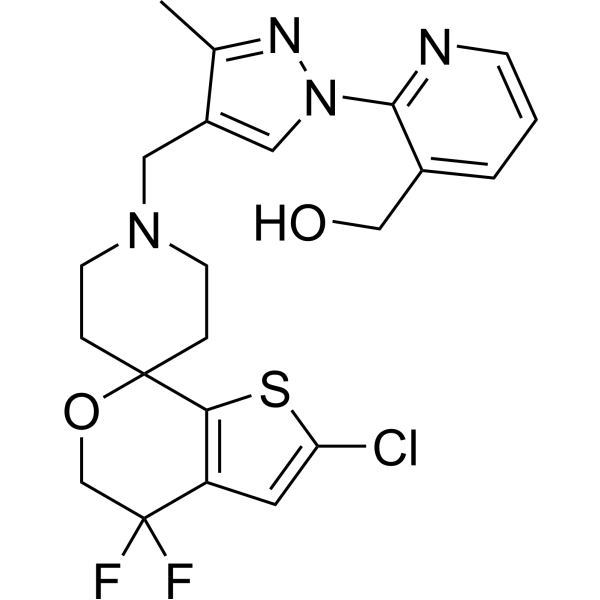
    Osavampator (TAK-653) is a AMPA receptor positive allosteric modulator. Osavampator selectively binds to AMPA-R in a glutamate-dependent manner and induces Ca2+ influx in hGluA1i CHO cells (EC50 = 3.3 μM). Osavampator improves learning and memory in many models. Osavampator is can be used for the research of depressive disorders .
    Osavampator
  • HY-17038
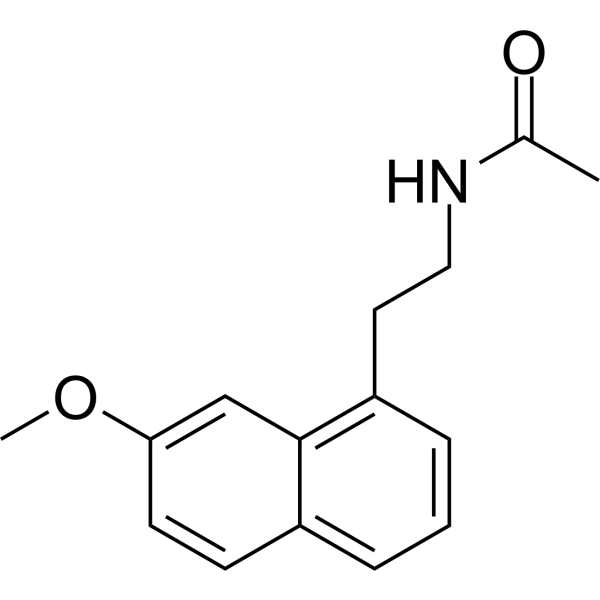
    Agomelatine
    Maximum Cited Publications
    9 Publications Verification

    S-20098

    Melatonin Receptor 5-HT Receptor Endogenous Metabolite Neurological Disease
    Agomelatine (S-20098) is a specific agonist of MT1 and MT2 receptors with Kis of 0.1, 0.06, 0.12, and 0.27 nM for CHO-hMT1, HEK-hMT1, CHO-hMT2, and HEK-hMT2, respectively . Agomelatine is a selective 5-HT2C receptor antagonist with pKis of 6.4 and 6.2 at native (porcine) and cloned, human 5-HT2C receptors, respectively .
    Agomelatine
  • HY-122422

    5-HT Receptor Others
    Gepirone is a selective and affinitive 5-HT1A agonist. Gepirone binds selectively to 5-HT1A receptor binding site. Gepirone acts as an antidepressant agent can be used for anxiety and major depressive disorder research .
    Gepirone
  • HY-B0168A
    Milnacipran hydrochloride
    2 Publications Verification

    Serotonin Transporter PERK Neurological Disease
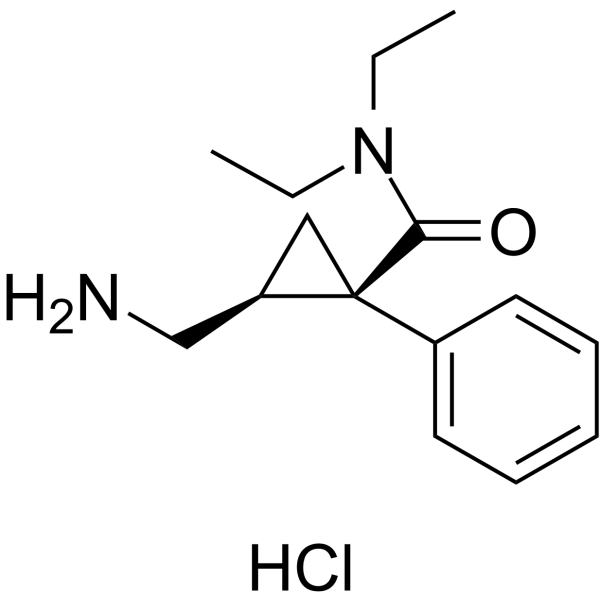
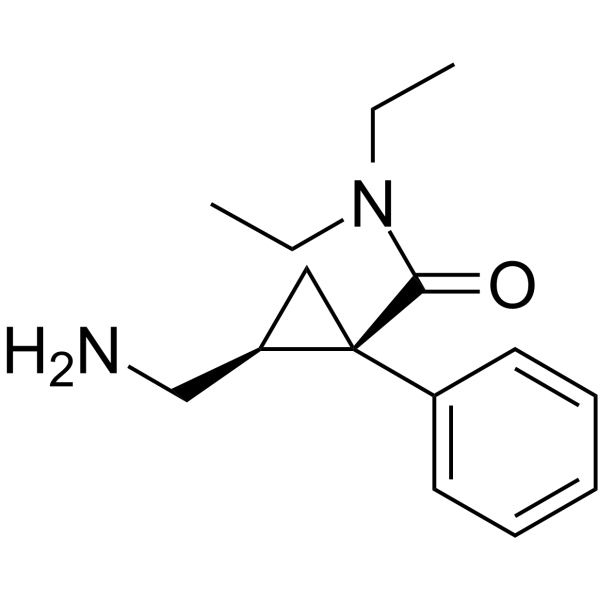
    Milnacipran hydrochloride is an orally active Serotonin (HY-B1473A) and Norepinephrine (HY-13715) reuptake inhibitor. Milnacipran hydrochloride inhibits monoamine transporters, especially the norepinephrine transporter and the serotonin transporter (Ki values of 31 and 8.5 nM, respectively). Milnacipran hydrochloride inhibits pERK1/2 activation. Milnacipran hydrochloride has antidepressant, anxiolytic and analgesic properties. Milnacipran hydrochloride inhibits biting behavior in mice. Milnacipran hydrochloride can be used in the study of major depressive disorder, anxiety disorders, and neuropathic pain (e.g., fibromyalgia) .
    Milnacipran hydrochloride
  • HY-148417

    Serotonin Transporter Neurological Disease
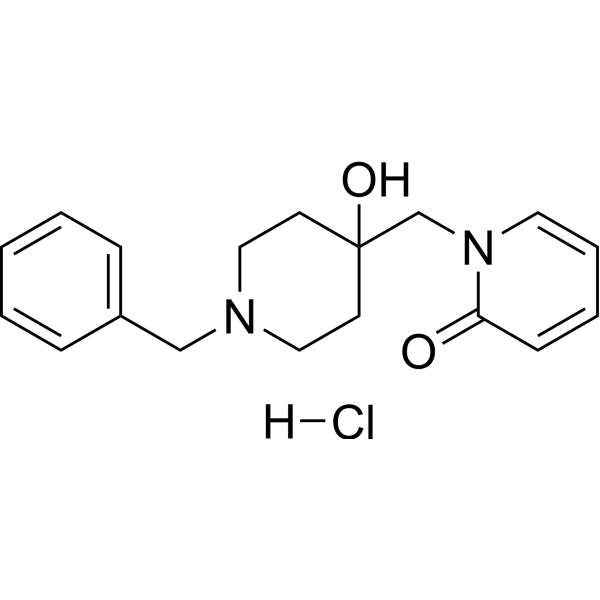
    ZZL-7 is a fast-onset antidepressant agent. ZZL-7 works by disrupting the interaction between the serotonin transporter (SERT) and neuronal nitric oxide synthase (nNOS) in the dorsal raphe nucleus (DRN). ZZL-7 can cross the blood-brain barrier readily. ZZL-7 can be used for the research of major depressive disorder (MDD) .
    ZZL-7
  • HY-W250122
    Glutamic acid sodium salt
    1 Publications Verification

    Monosodium glutamate

    Biochemical Assay Reagents Reactive Oxygen Species (ROS) Mitochondrial Metabolism Apoptosis HSP Bcl-2 Family Neurological Disease Metabolic Disease Inflammation/Immunology
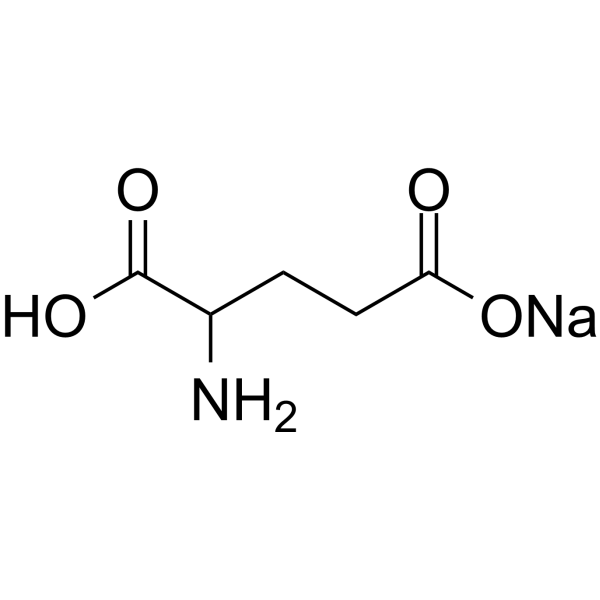
    Glutamic acid sodium salt (Monosodium glutamate) is an orally active food flavor enhancer. Glutamic acid sodium salt causes ROS generation, mitochondrial dysfunction, and Apoptosis. Glutamic acid sodium salt upregulates CHOP, Grp78, and Bcl-2. Glutamic acid sodium salt impairs cognition, induces depressive-like behavior, induces hyperalgesia, and induces obesity and insulin resistance. Glutamic acid sodium salt can be used to study neurotoxicity (e.g., brain damage, cognitive impairment), metabolic disorders (e.g., obesity, insulin resistance), hepatotoxicity, and renal toxicity, as well as pain-related disorders .
    Glutamic acid sodium salt
  • HY-114452
    LY2940094
    1 Publications Verification

    BTRX-246040

    Opioid Receptor Neurological Disease
    LY2940094 (BTRX-246040) is a potent, selective and orally available nociceptin receptor (NOP receptor) antagonist with high affinity (Ki=0.105 nM) and antagonist potency (Kb=0.166 nM). LY2940094 reduces ethanol self-administration in animal models .
    LY2940094
  • HY-N7085

    5,7-Dimethoxycoumarin; Limettin

    Environmental Pollutants ERK p38 MAPK JNK Neurological Disease Inflammation/Immunology Cancer
    Citropten (5, 7-dimethoxycoumarin) is one of the coumarin derivatives. Citropten is an effective oral anticancer agent. Citropten has anti-proliferative activity against A2058 and B16 melanoma cells. Citropten exerts anti-inflammatory effects through the NFκB and MAPK signaling pathways. Citropten acts as an antidepressant through heat shock protein-70, monoamine oxidase-A and inhibition of apoptosis .
    Citropten
  • HY-16728
    Rapastinel
    1 Publications Verification

    GLYX-13

    iGluR ERK mTOR Neurological Disease Cancer
    Rapastinel (GLYX-13) is a potent NMDAR modulator capable of crossing the blood-brain barrier, and it exhibits extremely high affinity for human NMDAR (EC50=0.0017-9.9 nM). Rapastinel enhances ERK signaling and activates the mTOR pathway, thereby upregulating the expression of BDNF and VGF, and inducing significant neuroplastic changes such as enhanced LTP and increased mature dendritic spine density in the hippocampus. Rapastinel moderately elevates the efflux of dopamine, norepinephrine and 5-HT in the prefrontal cortex, and uniquely avoids side effects of traditional antidepressants such as dissociation, addiction or sedation. Rapastinel is applicable to the research of major depressive disorder and hepatocellular carcinoma .
    Rapastinel
  • HY-172550

    HCN Channel Neurological Disease
    MS7710 is a hyperpolarization-activated cyclic nucleotide-gated (HCN) channel inhibitor with blood-brain barrier permeability and an excellent brain/plasma concentration ratio. MS7710 inhibits HCN channel-mediated Ih current, and reduces the firing frequency and burst activity of dopaminergic neurons in the ventral tegmental area. MS7710 ameliorates chronic social defeat stress-induced deficits in social interaction and impairments in reward-related cognitive flexibility in mice. MS7710 exerts only limited effects on ventral tegmental area dopaminergic neuron activity, social interaction, exploratory behavior, locomotor activity or sucrose preference in control mice. MS7710 is applicable to the research of major depressive disorder .
    MS7710
  • HY-14198

    Deprenyl; (-)-Selegiline; (-)-Deprenyl

    Monoamine Oxidase Neurological Disease
    Selegiline (Deprenyl) is a potent, selective and irreversible inhibitor of MAO-B, with an IC50 of 51 nM. Selegiline exhibits 450-flod selectivity for MAO-B over MAO-A (IC50=23 μM). Selegiline can be used for the research of Parkinson's disease, Alzheimer's disease and major depressive disorder .
    Selegiline
  • HY-160207

    MA-JD21; ABX-002

    Thyroid Hormone Receptor Neurological Disease
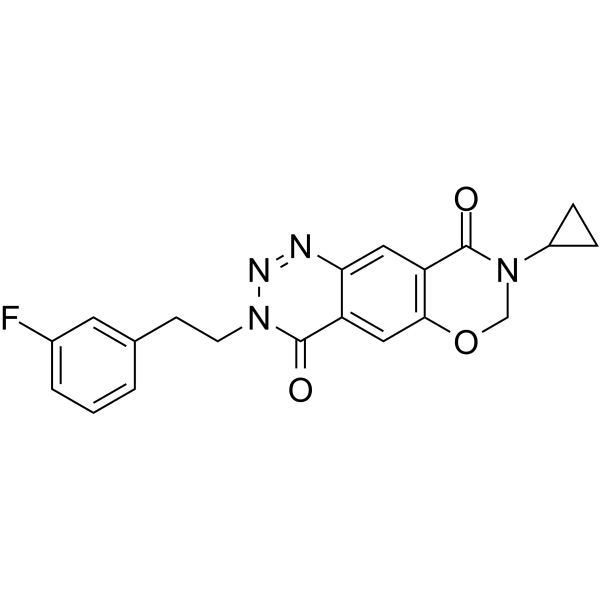
    Elunetirom (MA-JD21 )is a TR-β selective CNS-penetrant TR-β agonist prodrug and can be used for study of major depressive disorder (MDD) .
    Elunetirom
  • HY-109046
    Tulrampator
    2 Publications Verification

    CX-1632; S-47445

    iGluR mTOR Neurological Disease
    Tulrampator (S-47445) is an orally active selective AMPA receptor modulator. Tulrampator possesses procognitive, enhancing synaptic plasticity, anti-depressant-anxiolytic-like, procognitive and potential neuroprotective properties. Tulrampator can be used for research of alzheimer’s disease and in major depressive disorder .
    Tulrampator
  • HY-114452A
    LY2940094 tartrate
    1 Publications Verification

    BTRX-246040 tartrate

    Opioid Receptor Neurological Disease
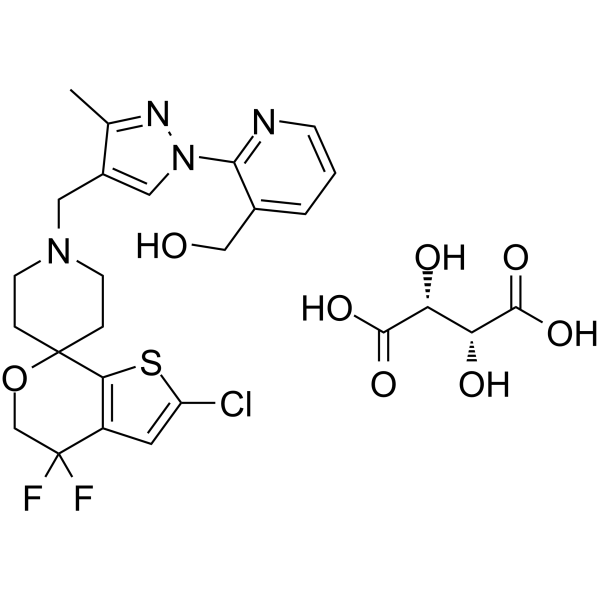
    LY2940094 (BTRX-246040) tartrate is a potent, brain penetrant, selective and orally available N/OFQ peptide (NOP) receptor antagonist with high affinity (Ki=0.105 nM) and antagonist potency (Kb=0.166 nM). LY2940094 tartrate reduces Ethanol self-administration and Ethanol seeking in animal models .
    LY2940094 tartrate
  • HY-157521

    Acyltransferase Neurological Disease Metabolic Disease
    AANAT-IN-1 is an arylalkylamine N-acetyltransferase (AANAT) inhibitor with a sheep AANAT IC50 of 9.9 μM. AANAT-IN-1 binds to the active site of sheep AANAT, interacting with amino acid residues via hydrogen bonds, hydrophobic interactions, ionic interactions, and water bridges, inhibiting the enzyme's catalytic activity. AANAT-IN-1 can be used for the researches of circadian rhythm-associated neuropsychiatric conditions, seasonal affective disorder, and other diseases associated with abnormally elevated melatonin levels .
    AANAT-IN-1
  • HY-122347A

    GW823296 maleate

    Neurokinin Receptor Neurological Disease Inflammation/Immunology
    Orvepitant maleate (GW823296 maleate) is potent, selective, orally active and well-tolerated neurokinin-1 receptor (NK-1) antagonist with a pKi of 10.2 for human neurokinin-1 receptor. Orvepitant maleate can across the blood-brain barrier. Orvepitant maleate has the potential for depressive disorder and chronic refractory cough (CRC) treatment .
    Orvepitant maleate
  • HY-100769
    Hypidone hydrochloride
    2 Publications Verification

    YL0919

    5-HT Receptor Neurological Disease
    Hypidone hydrochloride (YL0919) is an orally active antidepressant agent with dual activity as a highly seletive 5-HT uptake blocker and an effective 5-HT1A receptor agonist (Ki=0.19 nM). Hypidone hydrochloride inhibits the uptake of [ 3H]-5-HT into rat cerebral cortical synaptosomes and HEK293 cells with IC50s of 1.78 nM and 1.93 nM, respectively. Hypidone hydrochloride shows remarkable antidepressant effects in animal models and has the poential for the investigation of depressive disorder .
    Hypidone hydrochloride
  • HY-110023

    Serotonin Transporter Neurological Disease
    Zimelidine dihydrochloride is an orally active selective serotonin reuptake inhibitor. Zimelidine dihydrochloride competitively inhibits central 5-HT uptake and desensitizes 5-HT autoreceptors in dorsal raphe nucleus. Zimelidine dihydrochloride time-dependently modulates 5-HT neuronal firing and hippocampal CA3 responses. Zimelidine dihydrochloride strengthens central serotonergic neurotransmission and produces related behavioral changes. Zimelidine dihydrochloride exerts anxiolytic, analgesic, feeding-suppressive and tolerance-attenuating effects. Zimelidine dihydrochloride is used for the study of depressive disorders and analgesic tolerance .
    Zimelidine dihydrochloride
  • HY-15413A

    LY 2216684 hydrochloride

    Serotonin Transporter Neurological Disease
    Edivoxetine (LY 2216684) hydrochloride is a potent and selective norepinephrine reuptake inhibitor. Edivoxetine hydrochloride can be used for the study of major depressive disorder (MDD) and attention-deficit/hyperactivity disorder (ADHD) .
    Edivoxetine hydrochloride
  • HY-120717

    mGluR Cytochrome P450 Neurological Disease
    VU6001966 is a brain-penetrant and selective mGlu2 receptor inhibitor. VU6001966 blocks mGlu2 receptor activity, counteracts LY379268 (HY-103558)-mediated blood-brain barrier protection and inflammatory cytokine dampening in microglia under inflammatory conditions. VU6001966 enhances antidepressant effects when combined with Scopolamine (HY-N0296). VU6001966 can be used for the research of major depressive disorder .
    VU6001966
  • HY-19686

    TVX Q 7821 free base

    5-HT Receptor Neurological Disease
    Ipsapirone (TVX Q 7821) is an anxiolytic compound and a 5-HT1A receptor partial agonist. Ipsapirone (TVX Q 7821) also exhibits 5-HT1A receptor antagonistic effect, and only at high doses it can also produce an inhibitory effect on 5-HT2 and the α1-adrenergic function .
    Ipsapirone
  • HY-B0176AR

    Reference Standards Serotonin Transporter Neurological Disease Cancer
    Sertraline (hydrochloride) (Standard) is the analytical standard of Sertraline (hydrochloride). This product is intended for research and analytical applications. Sertraline hydrochloride is an antidepressant of the selective serotonin reuptake inhibitor (SSRI) class. Sertraline hydrochloride is researched for a number of diseases, such as major depressive disorder and obsessive .
    Sertraline hydrochloride (Standard)
  • HY-B0168
    Milnacipran
    2 Publications Verification

    Serotonin Transporter PERK Neurological Disease
    Milnacipran is an orally active Serotonin (HY-B1473A) and Norepinephrine (HY-13715) reuptake inhibitor. Milnacipran inhibits monoamine transporters, especially the norepinephrine transporter and the serotonin transporter (Ki values of 31 and 8.5 nM, respectively). Milnacipran inhibits pERK1/2 activation. Milnacipran has antidepressant, anxiolytic and analgesic properties. Milnacipran inhibits biting behavior in mice. Milnacipran can be used in the study of major depressive disorder, anxiety disorders, and neuropathic pain (e.g., fibromyalgia) .
    Milnacipran
  • HY-14196
    Toloxatone
    1 Publications Verification

    MD 69276

    Monoamine Oxidase Neurological Disease
    Toloxatone (MD 69276) is a reversible, selective MAO-A inhibitor that can cross the blood-brain barrier. Toloxatone increases the levels of serotonin (5-HT) and norepinephrine in the brain. Toloxatone reduces the immobility time in the forced swimming test in mice, inhibits killing behavior in rats without causing sedation, and shows a correlation between its free plasma concentration and cerebrospinal fluid concentration. Toloxatone is widely used in research related to depression, depressive disorders and Parkinson's disease .
    Toloxatone
  • HY-B0161S

    Isotope-Labeled Compounds Serotonin Transporter Neurological Disease
    Duloxetine-d7 ((S)-Duloxetine-d7) is the deuterium labeled Duloxetine. Duloxetine is a serotonin-norepinephrine reuptake inhibitor with a Ki of 4.6 nM, used for treatment of major depressive disorder and generalized anxiety disorder (GAD) .
    Duloxetine-d7
  • HY-B0176AS

    Isotope-Labeled Compounds Serotonin Transporter Neurological Disease
    rel-Sertraline-d3 (hydrochloride) is the deuterium labeled Sertraline hydrochloride. Sertraline hydrochloride is an antidepressant of the selective serotonin reuptake inhibitor (SSRI) class. Sertraline hydrochloride is researched for a number of diseases, such as major depressive disorder and obsessive .
    rel-Sertraline-d3 hydrochloride
  • HY-155352

    mGluR Neurological Disease
    mGluR5 antagonist-1 is an orally active mGluR5 antagonist with an IC50 value of 11.5 nM. mGluR5 antagonist-1 has anti-depressant effect. mGluR5 antagonist-1 can be used for the study of depressive disorder .
    mGluR5 antagonist-1
  • HY-W703376

    Serotonin Transporter Monoamine Transporter Dopamine Transporter Neurological Disease
    2-(tert-Butylamino)-1-phenylpropan-1-one hydrochloride (Compound Imp.1) is a non-selective monoamine transporter (DAT/NET/SERT) agonist. tert-Butylcathinone hydrochloride is promising for research of depressive disorders .
    2-(tert-Butylamino)-1-phenylpropan-1-one hydrochloride
  • HY-B0492S1

    BRL29060-d4 hydrochloride; BRL29060A-d4

    Isotope-Labeled Compounds Autophagy Serotonin Transporter G Protein-coupled Receptor Kinase (GRK) Neurological Disease Cancer
    Paroxetine-d4 (hydrochloride) is deuterium labeled Paroxetine (hydrochloride). Paroxetine hydrochloride is a potent selective serotonin-reuptake inhibitor, commonly prescribed as an and has GRK2 inhibitory ability with IC50 of 14?μM. Paroxetine hydrochloride can be used for the research of depressive disorder .
    Paroxetine-d4 hydrochloride
  • HY-W039283

    MCHR1 (GPR24) Neurological Disease Cancer
    MCH-1 antagonist 2 (l-BROMO-2,4-DIFLUORO-5-NITROBEN-ZENE) is a melanin concentrating hormone-1 (MCH1) receptor-selective 4-aryl piperidine. MCH-1 antagonist 2 can be used for the research of depression, anxiety, obesity, urge incontinence, urinary incontinence, major depression, bipolar disorder, agoraphobia, specific phobia, social phobia, obsessive-compulsive disorder, post-traumatic stress disorder, acute stress disorder, urinary frequency, urinary urgency, nocturia, enuresis, bulimia, bulimia nervosa, anorexia nervosa, major depressive disorder, dysthymic disorder, bipolar 1 and 2 disorders, schizoaffective disorder, cognitive disorders with depressed mood, personality disorders, insomnia, hypersomnia, narcolepsy, circadian rhythm sleep disorder, nightmare disorder, sleep terror disorder, sleepwalking disorder, panic disorder, social anxiety disorder, generalized anxiety disorder, overactive bladder .
    MCH-1 antagonist 2
  • HY-177085

    Orexin Receptor (OX Receptor) Neurological Disease
    Fumiporexant (Compound Example 93) is an orally active, brain-penetrant and selective Orexin receptor 2 (OX2R) antagonist. Fumiporexant regulates the sleep-wake cycle and emotion-related pathways in the central nervous system. Fumiporexant is promising for research of nervous system diseases such as insomnia and major depressive disorder .
    Fumiporexant
  • HY-15469
    GW791343 dihydrochloride
    1 Publications Verification

    P2X Receptor Neurological Disease
    GW791343 dihydrochloride is a potent human P2X7 receptor negative allosteric modulator (exhibits species-specific activity), produces a non-competitive antagonist effect on human P2X7 receptor, with a pIC50 of 6.9-7.2. GW791343 dihydrochloride can enhance ATP rhythm. GW791343 dihydrochloride can be used in study of neurological disease .
    GW791343 dihydrochloride
  • HY-17038A
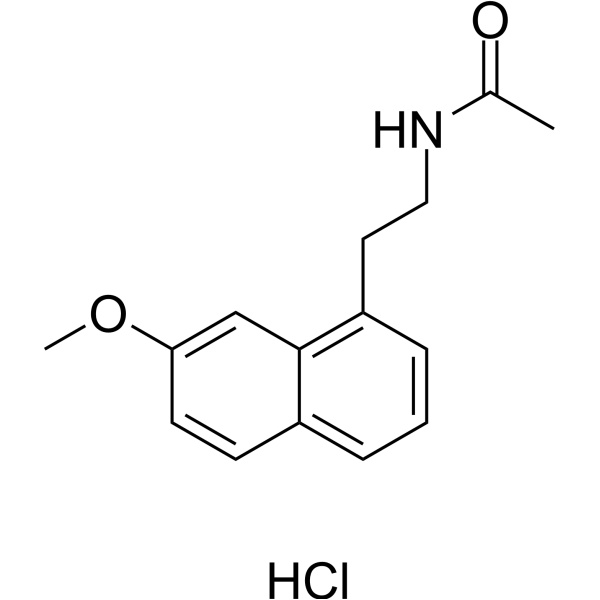
    Agomelatine hydrochloride
    Maximum Cited Publications
    9 Publications Verification

    S-20098 hydrochloride

    Melatonin Receptor 5-HT Receptor Endogenous Metabolite Neurological Disease
    Agomelatine hydrochloride (S-20098 hydrochloride) is a specific agonist of MT1 and MT2 receptors with Kis of 0.1, 0.06, 0.12, and 0.27 nM for CHO-hMT1, HEK-hMT1, CHO-hMT2, and HEK-hMT2, respectively . Agomelatine hydrochloride is a selective 5-HT2C receptor antagonist with pKis of 6.4 and 6.2 at native (porcine) and cloned, human 5-HT2C receptors, respectively .
    Agomelatine hydrochloride
  • HY-163728

    5-HT Receptor Neurological Disease
    DSP-6745 is a potent and orally active 5-HT Receptor inhibitor. DSP-6745 can be used in the study of depressive disorder .
    DSP-6745
  • HY-14262S1

    EMD 68843-d8; SB659746A-d8

    5-HT Receptor Serotonin Transporter Isotope-Labeled Compounds Neurological Disease
    Vilazodone-d8 hydrochloride is deuterated labeled Vilazodone (HY-14262). Vilazodone (EMD 68843; SB 659746A) is a potent, selective and orally active serotonin reuptake inhibitor (SSRI) and partial 5-HT1A receptor agonist. Vilazodone exhibits antidepressant efficacy in vivo can be used for the research of major depressive disorder (MDD) and affective disorders .
    Vilazodone-d8 hydrochloride
  • HY-B0161E

    (Rac)-Duloxetine hydrochloride

    Serotonin Transporter Neurological Disease
    (±)-Duloxetine ((Rac)-Duloxetine) hydrochloride is the racemate of Duloxetine hydrochloride. Duloxetine hydrochloride, a serotonin-norepinephrine reuptake inhibitor, can be used for diabetic neuropathic pain and fibromyalgia as well as major depressive disorder research .
    (±)-Duloxetine hydrochloride
  • HY-B0176AS1

    Isotope-Labeled Compounds Serotonin Transporter Neurological Disease
    (±)-cis-Sertraline-d3 (hydrochloride) is the deuterium labeled Sertraline hydrochloride. Sertraline hydrochloride is an antidepressant of the selective serotonin reuptake inhibitor (SSRI) class. Sertraline hydrochloride is researched for a number of diseases, such as major depressive disorder and obsessive .
    (±)-cis-Sertraline-d3 hydrochloride
  • HY-122422A

    5-HT Receptor Neurological Disease
    Gepirone is a selective 5-HT1A agonist. Gepirone binds selectively to 5-HT1A receptor binding site. Gepirone acts as an antidepressant agent can be used for anxiety and major depressive disorder research .
    Gepirone hydrochloride
  • HY-110255
    AZD 2066
    1 Publications Verification

    mGluR Calcium Channel Trk Receptor Neurological Disease
    AZD-2066 is a selective, orally active and blood-brain barrier-permeating mGluR5 antagonist. AZD 2066 activates the BDNF/trkB signaling pathway. AZD 2066 can be used in the research of neuropathic pain, major depressive disorder and gastroesophageal reflux disease .
    AZD 2066
  • HY-15470

    P2X Receptor Neurological Disease
    GW791343 trihydrochloride is a potent human P2X7 receptor negative allosteric modulator (exhibits species-specific activity), produces a non-competitive antagonist effect on human P2X7 receptor, with a pIC50 of 6.9-7.2. GW791343 trihydrochloride can enhance ATP rhythm. GW791343 trihydrochloride can be used in study of neurological disease .
    GW791343 trihydrochloride
  • HY-17038B
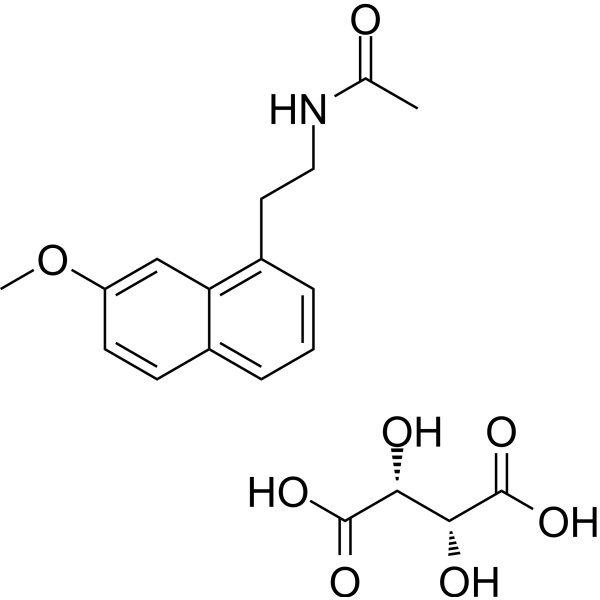
    Agomelatine (L(+)-Tartaric acid)
    Maximum Cited Publications
    9 Publications Verification

    S-20098 L(+)-Tartaric acid

    Melatonin Receptor 5-HT Receptor Endogenous Metabolite Neurological Disease
    Agomelatine L(+)-Tartaric acid (S-20098 L(+)-Tartaric acid) is a specific agonist of MT1 and MT2 receptors with Kis of 0.1, 0.06, 0.12, and 0.27 nM for CHO-hMT1, HEK-hMT1, CHO-hMT2, and HEK-hMT2, respectively . Agomelatine L(+)-Tartaric acid is a selective 5-HT2C receptor antagonist with pKis of 6.4 and 6.2 at native (porcine) and cloned, human 5-HT2C receptors, respectively .
    Agomelatine (L(+)-Tartaric acid)
  • HY-17038R

    S-20098 (Standard)

    Reference Standards Melatonin Receptor 5-HT Receptor Endogenous Metabolite Neurological Disease
    Agomelatine (Standard) is the analytical standard of Agomelatine. This product is intended for research and analytical applications. Agomelatine (S-20098) is a specific agonist of MT1 and MT2 receptors with Kis of 0.1, 0.06, 0.12, and 0.27 nM for CHO-hMT1, HEK-hMT1, CHO-hMT2, and HEK-hMT2, respectively . Agomelatine is a selective 5-HT2C receptor antagonist with pKis of 6.4 and 6.2 at native (porcine) and cloned, human 5-HT2C receptors, respectively .
    Agomelatine (Standard)
  • HY-B0168S

    Isotope-Labeled Compounds Serotonin Transporter PERK Neurological Disease
    Milnacipran-d10 (hydrochloride) is the deuterium labeled Milnacipran hydrochloride (HY-B0168A). Milnacipran hydrochloride is an orally active Serotonin (HY-B1473A) and Norepinephrine (HY-13715) reuptake inhibitor. Milnacipran hydrochloride inhibits monoamine transporters, especially the norepinephrine transporter and the serotonin transporter (Ki values of 31 and 8.5 nM, respectively). Milnacipran hydrochloride inhibits pERK1/2 activation. Milnacipran hydrochloride has antidepressant, anxiolytic and analgesic properties. Milnacipran hydrochloride inhibits biting behavior in mice. Milnacipran hydrochloride can be used in the study of major depressive disorder, anxiety disorders, and neuropathic pain (e.g., fibromyalgia) .
    Milnacipran-d10 hydrochloride

Inquiry Online

Your information is safe with us. * Required Fields.

Salutation


Country or Region *

Applicant Name *


Organization Name *

Department *


Email Address *


Product Name *

Cat. No.


Requested quantity *

Phone Number *


Remarks

Inquiry Online

Inquiry Information

Product Name:
Cat. No.:
Quantity:
MCE Japan Authorized Agent:

