
21 Results for "

Erwinia

" in MedChemExpress (MCE) Product Catalog:
Products (21)

21 Results for "Erwinia" in MCE Product Catalog:

5
5 Cited Publications
Cat. No.: HY-114936
CAS No.: 2738-64-9
Purity:  ≥99.0%
Synonyms: AR-054
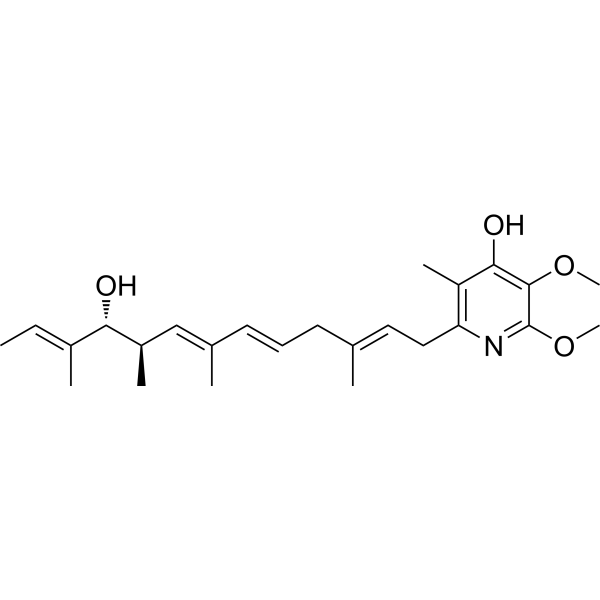
Piericidin A (AR-054) is a natural mitochondrial NADH-ubiquinone oxidoreductase (complex I) inhibitor. Piericidin A is a potent neurotoxin and inhibits mitochondrial respiration by disrupting the electron transport system through its action on NADH-ubiquinone reductase. Piericidin A is also a potential quorum-sensing inhibitor that suppresses the expression of the virulence genes of Erwinia carotovora subsp. atroseptica (Eca). Piericidin A is an ADC cytotoxin and has anti-bacterial, anticancer, insecticidal activity .
loading...
    loading...
Cat. No.: HY-W008806
CAS No.: 143537-62-6
Synonyms: OHHL; N-(3-Oxohexanoyl)homoserine lactone
Target:  

Bacterial

Research Areas:  

Infection Inflammation/Immunology

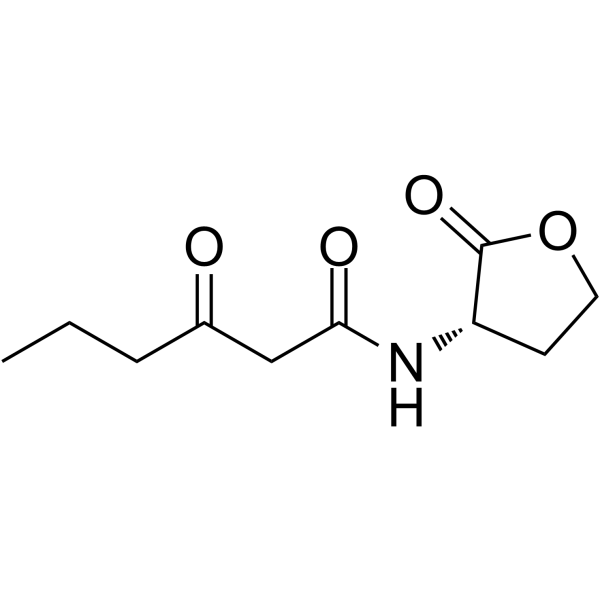
N-(3-Oxohexanoyl)-L-homoserine lactone (OHHL; N-(3-Oxohexanoyl)homoserine lactone) is a specific agonist of LuxR-type transcription factor CarR with a Kd of 1.8 μM. N-(3-Oxohexanoyl)-L-homoserine lactone activates CarR by inducing protein multimerization, promoting its binding to target DNA sequences in the carR-carA intergenic region, thereby upregulating the transcription of carbapenem biosynthesis genes. N-(3-Oxohexanoyl)-L-homoserine lactone acts as a quorum sensing signal molecule, enabling bacteria to coordinate the production of carbapenem antibiotics in a cell density-dependent manner. N-(3-Oxohexanoyl)-L-homoserine lactone is used to study bacterial quorum sensing mechanisms, especially the secondary metabolism and virulence factor regulatory pathways of Erwinia carotovora and Yersinia enterocolitica .
loading...
    loading...
Cat. No.: HY-W718227
CAS No.: 9013-95-0
Levan from Erwinia herbicola, 98% is a substrate used in levansucrase activity assays.
loading...
    loading...
Cat. No.: HY-P2816
CAS No.: 37278-89-0
Research Areas:  

Others

Xylanase is an enzyme targeting 1,4-β-D-xylan that randomly cleaves the β-1,4 backbone of xylan, a complex polysaccharide in plant cell walls. Xylanase finds applications in the food, feed and industrial sectors, including pulp and paper processing, baking, animal feed improvement, and biotransformation of waste .
loading...
    loading...
Cat. No.: HY-E70119
CAS No.: 9015-75-2
Target:  

Fungal

Research Areas:  

Infection

Pectate Lyase is an enzyme that exists in microorganisms, plants and animals. Pectate Lyase degrades pectic acid via the β-elimination mechanism. Pectate Lyase induces plant immune responses and participates in virulence. Pectate Lyase is applied in fields such as plant fiber degumming and fruit and vegetable processing .
loading...
    loading...
Cat. No.: HY-N12954
CAS No.: 57128-11-7
(R)-Mucronulatol is a flavonoid that can be isolated from Astragalus adsurgens. (R)-Mucronulatol shows antibacterial activity against Escherichia coli, Bacillus cereus, Staphylococcus aureus, Erwinia carotovora and Bacillus subtili, with MICs of 15.5, 15.5, 7.8, 7.8, 15.5 μg/mL respectively .
loading...
    loading...
Cat. No.: HY-W127393
CAS No.: 177158-21-3
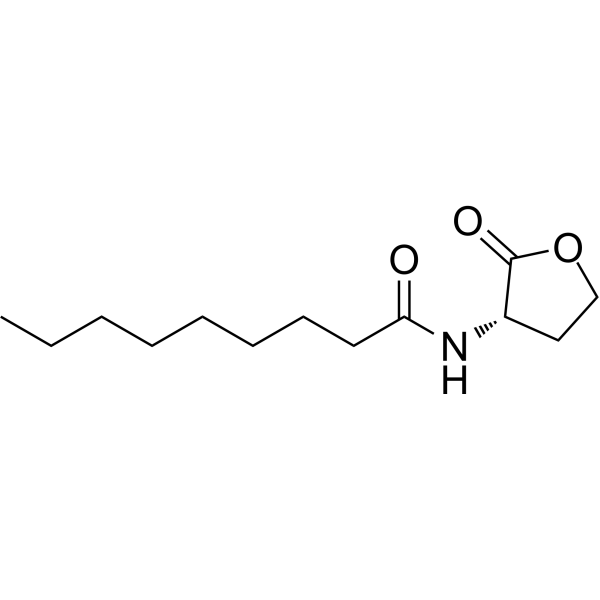
Quorum sensing is a regulatory system used by bacteria to control gene expression in response to increased cell density. This regulatory process manifests itself in a variety of phenotypes, including biofilm formation and virulence factor production. Coordinated gene expression is achieved through the production, release and detection of small diffusible signaling molecules called autoinducers. N-acylated homoserine lactones (AHLs) comprise a class of such autoinducers, each of which generally consists of a fatty acid coupled to a homoserine lactone (HSL). Modulation of bacterial quorum-sensing signaling systems to suppress pathogenesis represents a new approach to antimicrobial research for infectious diseases. AHLs differ in acyl length (C4-C18), C3 substitution (hydrogen, hydroxyl, or oxo group), and the presence or absence of one or more carbon-carbon double bonds in the fatty acid chain. These differences confer signaling specificity through the affinity of the LuxR family of transcriptional regulators. C9-HSL is a rare odd-numbered acyl carbon chain produced by wild-type Erwinia carotovora strain SCC 3193 grown in nutrient-rich Luria-Bertani broth (LB) medium.
loading...
    loading...
Cat. No.: HY-P5642
CAS No.: 536757-16-1
Synonyms: RC-101
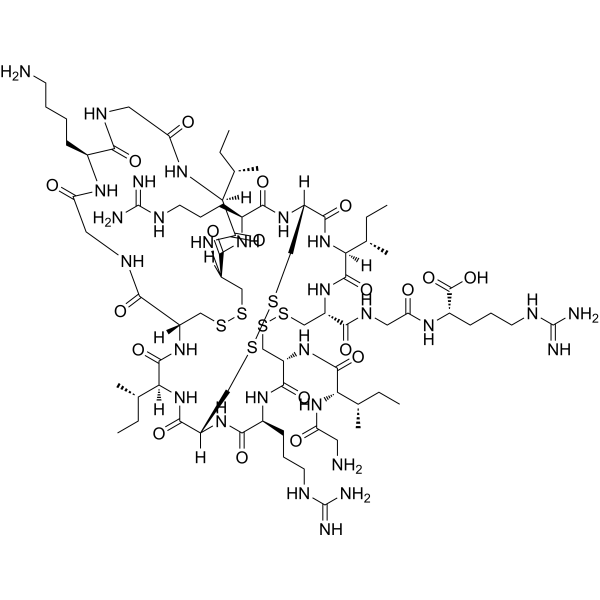
Retrocyclin-101 (RC-101) is a synthetic cyclic θ-defensin, a broad-spectrum antimicrobial peptide with anti-pathogen (covering viruses, bacteria and fungi) activity and anti-inflammatory activity. Retrocyclin-101 exhibits significant inhibitory activity against HIV, SARS-CoV-2, flaviviruses, influenza viruses, HSV-1/2, Staphylococcus aureus and others. Retrocyclin-101 inhibits TLR4 and TLR2-mediated signal transduction and reduces pro-inflammatory cytokine expression .
loading...
    loading...
Cat. No.: HY-124236
CAS No.: 120124-51-8
Target:  

Bacterial

Chrysobactin is a compound isolated from the plant pathogenic bacterium Erwinia chrysanthemi. Chrysobactin has siderophore activity .
loading...
    loading...
Cat. No.: HY-N5197
CAS No.: 1196054-26-8
Dapdiamide A is an Antibiotic. Dapdiamide A is isolated from P. agglomerans. Dapdiamide A targets the plant pathogen Erwinia amylovora. Dapdiamide A can be used for the research of fire blight .
loading...
    loading...
Cat. No.: HY-N15117
CAS No.: 37331-24-1
Polymyxin P1 is a lipopeptide antibiotic belonging to the Polymyxin family, and it is a secondary metabolite produced by the rhizosphere bacterium Paenibacillus polymyxa M-1. Polymyxin P1 binds to bacterial outer membrane lipopolysaccharides, permeabilizes cell membranes, and induces dense protrusions on the cell surface of phytopathogenic Erwinia strains. Polymyxin P1 inhibits the growth of phytopathogenic Erwinia amylovora and E. carotovora. Polymyxin P1 can be used for the research of fire blight and soft rot .
loading...
    loading...
Cat. No.: HY-120242
CAS No.: 148433-27-6
Target:  

Bacterial

Research Areas:  

Infection

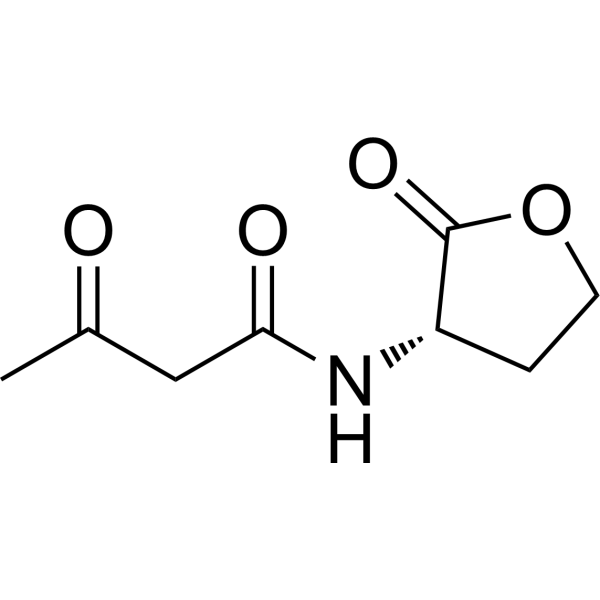
N-(3-Oxobutanoyl)-L-homoserine lactone (3-oxo-C4-HSL) is a carbapenem antibiotic biosynthesis autoregulator in Erwinia carotovora ATCC 39048. N-(3-Oxobutanoyl)-L-homoserine lactone induces expression of rhiI in R. leguminosarum .
loading...
    loading...
Cat. No.: HY-174125
CAS No.: 128999-51-9
Target:  

Bacterial

Research Areas:  

Infection

4-(Cyclohexyldisulfaneyl)pyridine is a Type III secretion system (T3SS) inhibitor that suppresses the promoter activity of T3SS-related genes (hrpA and hrpL) in Erwinia amylovora CFBP1430. 4-(Cyclohexyldisulfaneyl) pyridine can be utilized in study on fire blight disease .
loading...
    loading...
Cat. No.: HY-N16065
CAS No.: 959124-85-7
Target:  

Bacterial

Prenylterphenyllin (Compound 1) is an antibacterial agent. Prenylterphenyllin can be isolated from marine-derived fungus Aspergillus candidus IF10. Prenylterphenyllin has cytotoxic activity against KB3-1 cells with an IC50 of 8.5 mg/mL. Prenylterphenyllin also has antibacterial activities against Xanthomonas oryzae and Erwinia amylovora with MICs of both 20 μg/mL .
loading...
    loading...
Cat. No.: HY-N15117A
Target:  

Antibiotic Bacterial

Research Areas:  

Infection

Polymyxin P1 TFA is a lipopeptide antibiotic belonging to the Polymyxin family, and it is a secondary metabolite produced by the rhizosphere bacterium Paenibacillus polymyxa M-1. Polymyxin P1 TFA binds to bacterial outer membrane lipopolysaccharides, permeabilizes cell membranes, and induces dense protrusions on the cell surface of phytopathogenic Erwinia strains. Polymyxin P1 TFA inhibits the growth of phytopathogenic Erwinia amylovora and E. carotovora. Polymyxin P1 TFA can be used for the research of fire blight and soft rot .
loading...
    loading...
Cat. No.: HY-N5197A
Dapdiamide A acetate is an Antibiotic. Dapdiamide A acetate is isolated from P. agglomerans. Dapdiamide A acetate targets the plant pathogen Erwinia amylovora. Dapdiamide A acetate can be used for the research of fire blight .
loading...
    loading...
Cat. No.: HY-184853
CAS No.: 99-84-3
Target:  

Drug Intermediate

Research Areas:  

Inflammation/Immunology

β-Terpinene is a naturally occurring monoterpene, prohapten/metabolic substrate, and contact allergen inducer, with moderate potency as a sensitizer .β-Terpinene undergoes metabolic activation to epoxides that conjugate with glutathione .β-Terpinene induces contact allergy via reactive allylic epoxide metabolites .β-Terpinene does not significantly reduce growth of Erwinia amylovora at concentrations up to 1500 mg/l .β-Terpinene can be used for the research of Aspergillus flavus infection.
loading...
    loading...
Cat. No.: HY-W268942
CAS No.: 156-10-5
Target:  

Bacterial

Research Areas:  

Infection Inflammation/Immunology

4-Nitrosodiphenylamine shows great antibacterial activity against Erwinia amylovora, with an EC50 value of 5.715 mg/L .
loading...
    loading...
Cat. No.: HY-N18934
CAS No.: 2435-59-8
Indigoidine is a natural biological pigment that appears in a bright blue color and is a natural blue dye with industrial applications. Indigoidine can act as a free radical scavenger, helping plant pathogens tolerate oxidative stress; and it also has antimicrobial activity .
loading...
    loading...
Cat. No.: HY-W714201
CAS No.: 4726-14-1
Target:  

Herbicide Parasite

Research Areas:  

Infection

Nitralin is a dinitroaniline herbicide. Nitralin exhibits inhibitory activity against Cryptosporidium parvum, with a IC50 of 4.5 µM .
loading...
    loading...

