1. Search Result
Search Result
Results for "

FabI Inhibitor

" in MedChemExpress (MCE) Product Catalog:

20

Inhibitors & Agonists

5

Natural
Products

2

Isotope-Labeled Compounds

Targets Recommended:
Cat. No. Product Name Target Research Areas Chemical Structure
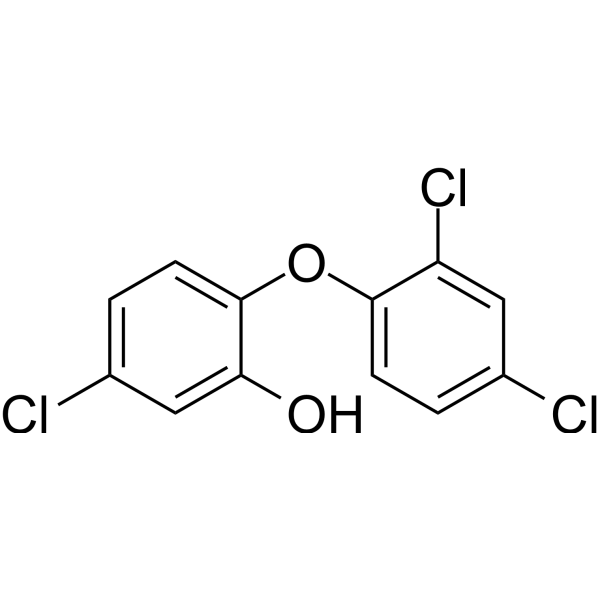
  • HY-B1119
    Triclosan
    5+ Cited Publications

    Environmental Pollutants Antibiotic Apoptosis Bacterial Fungal Infection Cancer
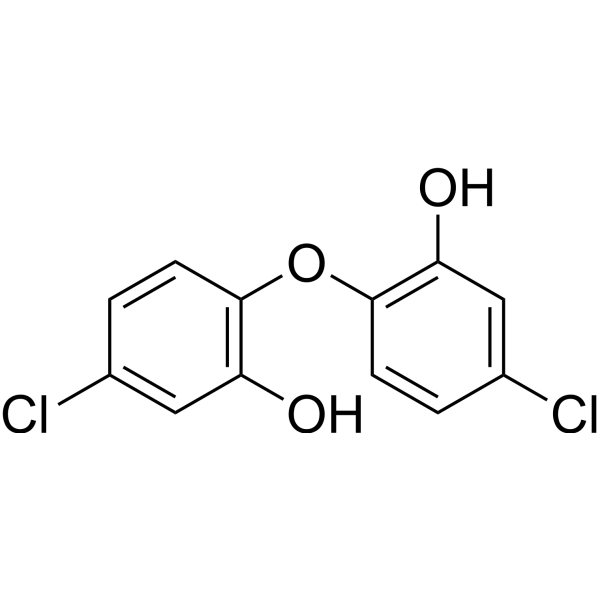
    Triclosan is a broad-spectrum antibacterial agent that inhibits bacterial fatty acid synthesis at the enoyl-acyl carrier protein reductase (FabI) step. Triclosan inhibits E. coli enoyl-acyl carrier protein reductase (FabI) and FabI containing a glycine-to-valine substitution at position 93 (FabIG93V) with IC50s of 2 µM and 10 µM, respectively. Triclosan causes apoptotic effect in cultured rat neural stem cells (NSC). Triclosan exacerbates colitis and colitis-associated colorectal tumorigenesis in animal models .
    Triclosan
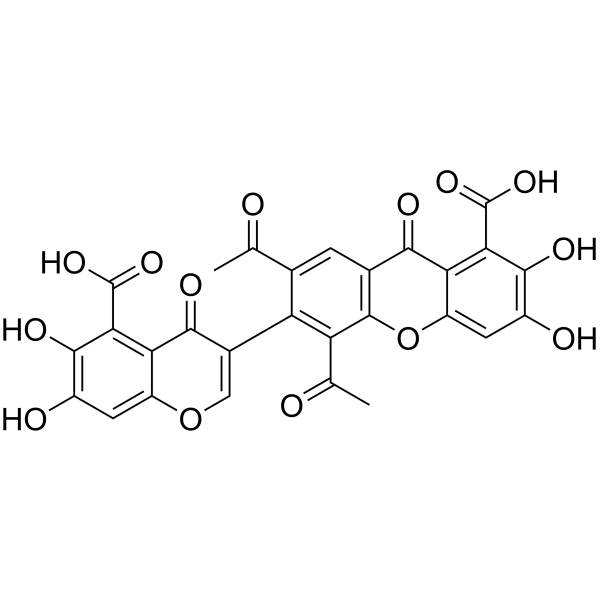
  • HY-N9480
    Vinaxanthone
    3 Publications Verification

    SM-345431

    Phospholipase Bacterial Infection Cancer
    Vinaxanthone (SM-345431) is a potent and selective semaphorin3A, phospholipase C (PLC) and FabI inhibitor, with IC50s of 0.1-0.2 μM and 0.9 mM for semaphorin3A and FabI. Vinaxanthone inhibits the substrate (t-o-NAC thioester) and the cofactor (NADPH) with Kis of 3.1 μM and 1.0 μM, respectively. Vinaxanthone can be used to handle infections caused by multidrug-resistant pathogens .
    Vinaxanthone
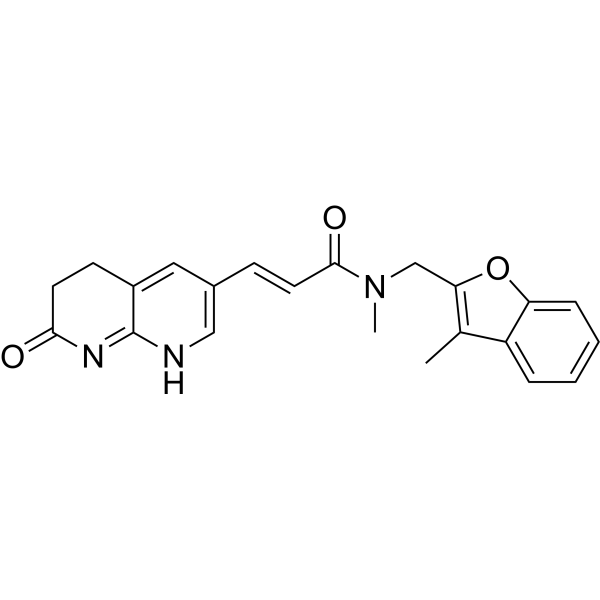
  • HY-16911
    AFN-1252
    Maximum Cited Publications
    11 Publications Verification

    API-1252; Debio 1452

    Bacterial Antibiotic Infection
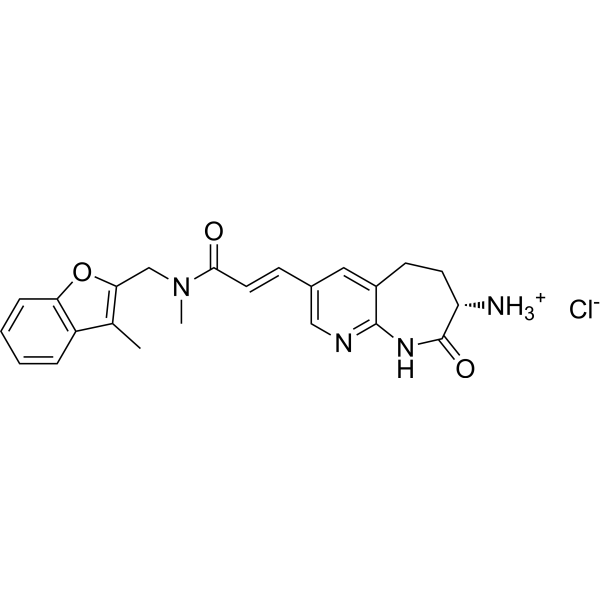
    AFN-1252 is an orally active and selective inhibitor of FabI, an essential enzyme in fatty acid biosynthesis in Staphylococcus spp. AFN-1252 exhibits exquisite and highly selective activity against Staphylococcus spp. AFN-1252 exhibits typical MIC90 values of ⩽0.015 μg/ml against diverse clinical isolates of S. aureus. AFN-1252 is efficacious in a mouse model of septicemia providing 100% protection from an otherwise lethal peritoneal infection of S. aureus Smith .
    AFN-1252
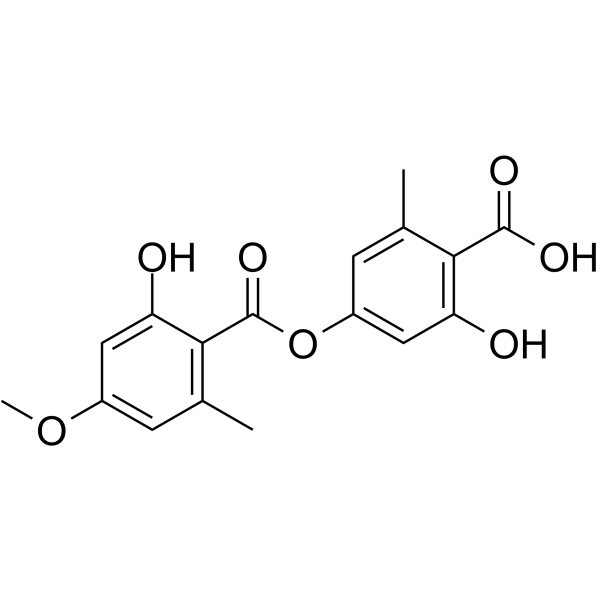
  • HY-121362

    Bacterial Endogenous Metabolite TrxR Infection Neurological Disease Inflammation/Immunology Cancer
    Evernic Acid is an orally active thioredoxin reductase 1 (TrxR1) inhibitor and antiproliferative agent. Evernic Acid inhibits the proliferation and migration of human breast cancer cells. Evernic Acid blocks the NF-κB pathway by inhibiting p65 nuclear translocation and IκBα phosphorylation, thereby suppressing downstream inflammatory mediators. Evernic Acid acts as an antioxidant, anti-inflammatory agent and neuroprotective agent, protects neurons from cell death, mitochondrial dysfunction and oxidative stress damage, reduces astrocyte activation, and ameliorates dopaminergic neuron loss and neuroinflammation. Evernic Acid inhibits enoyl reductases FabI and FabZ of Plasmodium falciparum. Evernic Acid downregulates the expression of lasB and rhlA genes in Pseudomonas aeruginosa, inhibits quorum sensing and biofilm formation, and exerts antibacterial activity against Gram-positive bacteria, Gram-negative bacteria and fungi. Evernic Acid is applicable to research related to breast cancer, Parkinson's disease, bacterial infections and fungal infections .
    Evernic Acid
  • HY-109000

    Debio 1450; AFN-1720

    Bacterial Infection
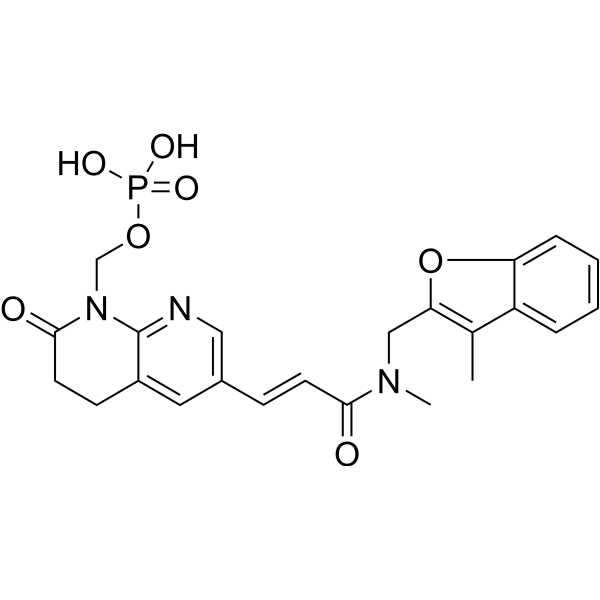
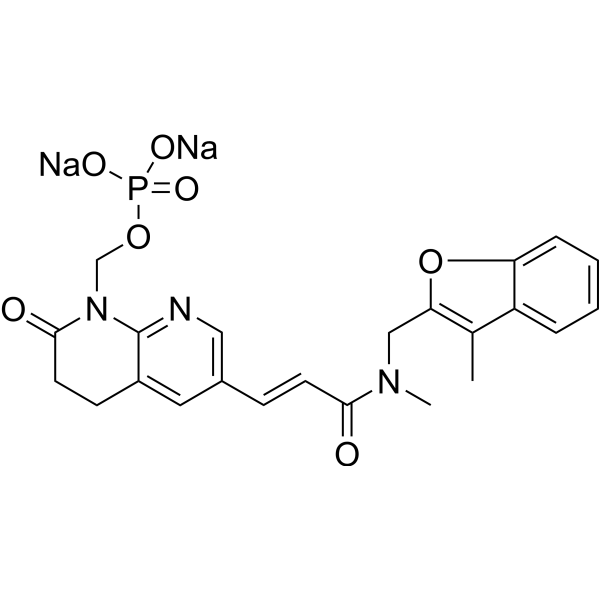
    Afabicin (Debio 1450) is the proagent of Debio1452, specifically targeting staphylococci without significant activity against other Gram-positive or Gram-negative species. Debio1452 is an inhibitor FabI, an enzyme critical to fatty acid biosynthesis in staphylococci.
    Afabicin
  • HY-18169

    Fab-001

    Bacterial Infection
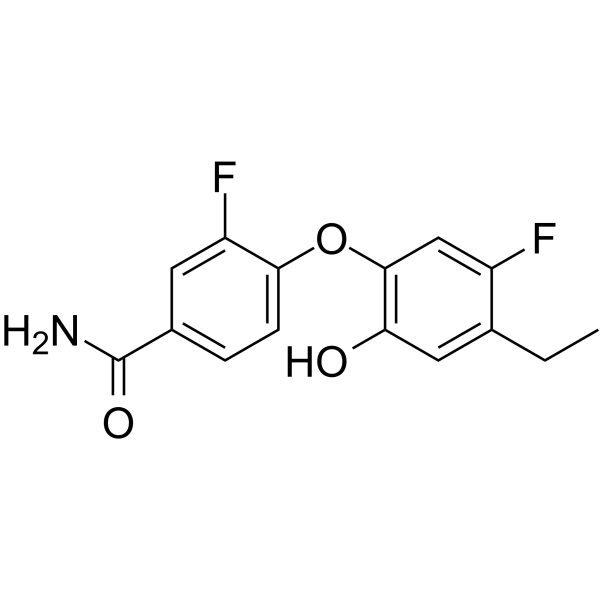
    MUT056399 (Fab-001) is a highly potent inhibitor of the FabI enzyme of both S. aureus and E. coli with 50% inhibitory concentration IC50s of 12 nM and 58 nM, respectively.
    MUT056399
  • HY-151102

    Antibiotic Bacterial Infection
    Fabimycin is a FabI inhibitor with potent antibacterial activity against gram-negative bacteria. Fabimycin is effective against drug-resistant gram-negative Infections in vivo .
    Fabimycin
  • HY-W747491

    Isotope-Labeled Compounds Antibiotic Apoptosis Bacterial Fungal Infection Cancer
    Triclosan- 13C12 is 13C labeled Triclosan (HY-B1119). Triclosan is a broad-spectrum antibacterial agent that inhibits bacterial fatty acid synthesis at the enoyl-acyl carrier protein reductase (FabI) step. Triclosan inhibits E. coli enoyl-acyl carrier protein reductase (FabI) and FabI containing a glycine-to-valine substitution at position 93 (FabIG93V) with IC50s of 2 μM and 10 μM, respectively. Triclosan causes apoptotic effect in cultured rat neural stem cells (NSC). Triclosan exacerbates colitis and colitis-associated colorectal tumorigenesis in animal models .
    Triclosan-13C12
  • HY-111071

    CG-400549

    Bacterial Antibiotic Infection Inflammation/Immunology
    Nilofabicin is an enoyl-(acyl-carrier protein) reductase (FabI) inhibitor. Nilofabicin had an MIC(90) of 0.5 microg/ml for Staphylococcus aureus strains and was more potent than either linezolid or vancomycin .
    Nilofabicin
  • HY-W653962

    Isotope-Labeled Compounds Apoptosis Antibiotic Fungal Bacterial Infection Cancer
    Triclosan- 13C6 is 13C labeled Triclosan. Triclosan is a broad-spectrum antibacterial agent that inhibits bacterial fatty acid synthesis at the enoyl-acyl carrier protein reductase (FabI) step. Triclosan inhibits E. coli enoyl-acyl carrier protein reductase (FabI) and FabI containing a glycine-to-valine substitution at position 93 (FabIG93V) with IC50s of 2 μM and 10 μM, respectively. Triclosan causes apoptotic effect in cultured rat neural stem cells (NSC). Triclosan exacerbates colitis and colitis-associated colorectal tumorigenesis in animal models .
    Triclosan-13C6
  • HY-178347

    Bacterial Infection
    Debio 1453 is a bactericidal FabI inhibitor potent against N. gonorrhoeae (IC50 = 0.6 nM), including drug-resistant strains. Debio 1453 demonstrates a low propensity for resistance selection and is effective in eradicating both planktonic and intracellular bacteria through a mechanism of concurrently inhibiting FabI and engaging the non-mutable NADH cofactor. Debio 1453 clears antibiotic-resistant N. gonorrhoeae infection in a murine vaginal model. Debio 1453 can be used for gonorrhoea research .
    Debio 1453
  • HY-N6797

    Bacterial c-Met/HGFR Antibiotic Infection Cancer
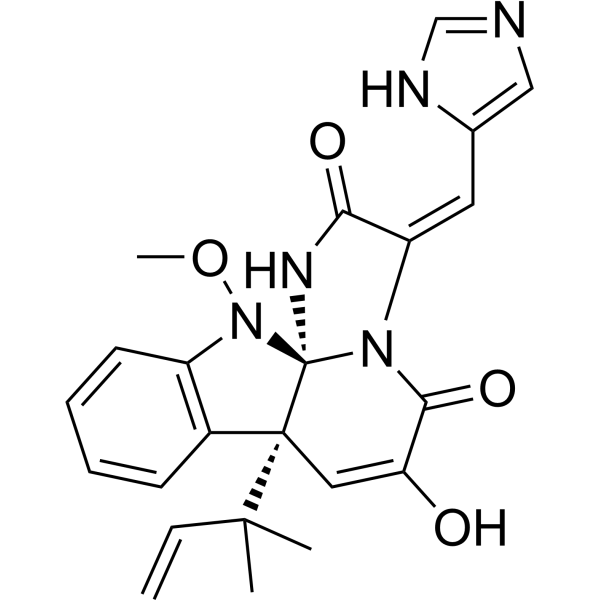
    Meleagrin is a roquefortine C-derived alkaloid produced by fungi of the genus Penicillium and has antimicrobial and anti-proliferative activities. Meleagrin is a class of FabI inhibitor. Meleagrin is a lead c-Met inhibitory entity useful for the control of c-Met-dependent metastatic and invasive breast malignancies .
    Meleagrin
  • HY-124199

    Antibiotic Bacterial Infection
    Cephalochromin is an antibiotic and an inhibitor for bacterial fatty acid synthase (FabI). Cephalochromin inhibits FabI of Staphylococcus aureus and Escherichia coli with IC50 of 1.9 and 1.8 μM. Cephalochromin inhibits gram-positive methicillin-resistant S. aureus (MRSA) and quinolone-resistant S. aureus (QRSA), with MIC of 2-8 µg/mL .
    Cephalochromin
  • HY-B1119R

    Reference Standards Bacterial Fungal Antibiotic Apoptosis Infection Cancer
    Triclosan (Standard) is the analytical standard of Triclosan. This product is intended for research and analytical applications. Triclosan is a broad-spectrum antibacterial agent that inhibits bacterial fatty acid synthesis at the enoyl-acyl carrier protein reductase (FabI) step. Triclosan inhibits E. coli enoyl-acyl carrier protein reductase (FabI) and FabI containing a glycine-to-valine substitution at position 93 (FabIG93V) with IC50s of 2 µM and 10 µM, respectively. Triclosan causes apoptotic effect in cultured rat neural stem cells (NSC). Triclosan exacerbates colitis and colitis-associated colorectal tumorigenesis in animal models .
    Triclosan (Standard)
  • HY-157315

    Bacterial Infection
    21272541 is a potent inhibitor of FabI protein. 21272541 significantly inhibits the infections caused by Gram-negative organisms .
    Fabl inhibitor 21272541
  • HY-109000A

    Debio 1450 disodium; AFN-1720 disodium

    Bacterial Infection
    Afabicin (Debio 1450) is the proagent of Debio1452, specifically targeting staphylococci without significant activity against other Gram-positive or Gram-negative species. Debio1452 is an inhibitor FabI, an enzyme critical to fatty acid biosynthesis in staphylococci .
    Afabicin disodium
  • HY-114622

    API-1252 tosylate; Debio 1452 tosylate

    Bacterial Antibiotic Infection
    AFN-1252 (API-1252) tosylate is an orally active and selective inhibitor of FabI, an essential enzyme in fatty acid biosynthesis in Staphylococcus spp. AFN-1252 tosylate exhibits exquisite and highly selective activity against Staphylococcus spp. AFN-1252 tosylate exhibits typical MIC90 values of 0.015 μg/ml against diverse clinical isolates of S. aureus. AFN-1252 tosylate is efficacious in a mouse model of septicemia providing 100% protection from an otherwise lethal peritoneal infection of S. aureus Smith .
    AFN-1252 tosylate
  • HY-181751

    Bacterial Infection
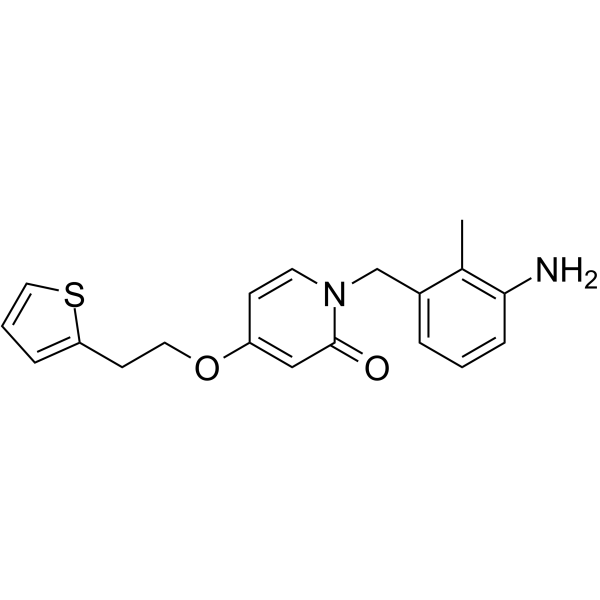
    FabI-IN-1 is a FabI (enoyl-acyl carrier protein reductase) inhibitor with a Ki of 0.32 μM against E. coli FabI. FabI-IN-1 inhibits exhibits activity against Gram-negative bacteria including Escherichia coli (MIC = 6.25 μM) and Klebsiella pneumoniae. FabI-IN-1 rescues Galleria mellonella larvae from lethal Escherichia coli infection. FabI-IN-1 exerts a synergistic effect with Colistin (HY-113678) against Escherichia coli. FabI-IN-1 can be used for the research of gram-negative bacterial infection .
    FabI-IN-1
  • HY-165368

    Bacterial Infection
    Atromentin, a phthalide derivative that can be isolated from the wood fungus Hypoxylon fendleri BCC32408, is a selective enoyl-ACP reductase FabK inhibitor with an IC50 of 0.24 μM. Atromentin exhibits selectivity over FabI. Atromentin can be used for antimicrobial research .
    Atromentin
  • HY-109000B

    Debio 1450 diolamine; AFN-1720 diolamine

    Bacterial Infection
    Afabicin diolamine (Debio 1450 diolamine) is the proagent of Debio1452 (HY-16911), specifically targeting staphylococci without significant activity against other Gram-positive or Gram-negative species. Debio1452 is an inhibitor FabI, an enzyme critical to fatty acid biosynthesis in staphylococci .
    Afabicin diolamine

Inquiry Online

Your information is safe with us. * Required Fields.

Salutation


Country or Region *

Applicant Name *


Organization Name *

Department *


Email Address *


Product Name *

Cat. No.


Requested quantity *

Phone Number *


Remarks

Inquiry Online

Inquiry Information

Product Name:
Cat. No.:
Quantity:
MCE Japan Authorized Agent:

