12 Results for "

Gαq proteins

" in MedChemExpress (MCE) Product Catalog:
Products (12)

12 Results for "Gαq proteins" in MCE Product Catalog:

19
19 Cited Publications
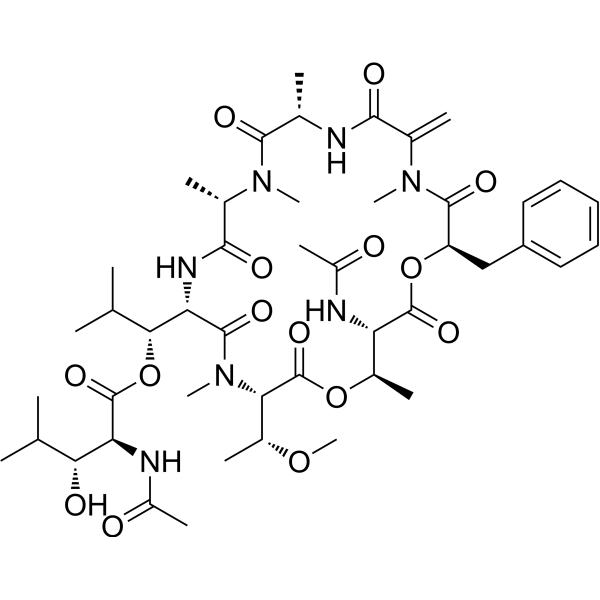
Cat. No.: HY-111557
CAS No.: 568580-02-9
Purity:  ≥95.0%
YM-254890 is a selective Gαq/11 protein inhibitor isolated from Chromobacterium sp. YM-254890 shows no inhibition of other G protein subtypes. YM-254890 inhibits platelet aggregation induced by ADP by blocking the P2Y1 signal transduction pathway, with an IC50 value below 0.6 μM .
loading...
    loading...
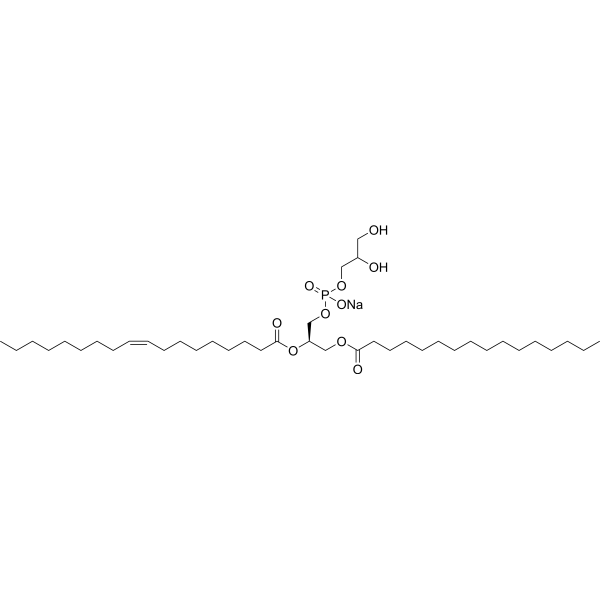
Cat. No.: HY-130463
CAS No.: 268550-95-4
Purity:  99.23%
Synonyms: PG(16:0/18:1) sodium; 1-Palmitoyl-2-oleoyl-sn-glycero-3-phospho-(1'-rac-glycerol) sodium
POPG (sodium) is a negatively charged phospholipid. POPG (sodium) affects the interactions of membrane proteins with other molecules by changing the charge characteristics of the lipid environment. POPG (sodium) increases the apparent affinity of Gαq and Gβ1γ1 for activated NTS1. POPG (sodium) can interact with the positive charge of peptides. POPG sodium salt can be used in Parkinson's disease research .
loading...
    loading...
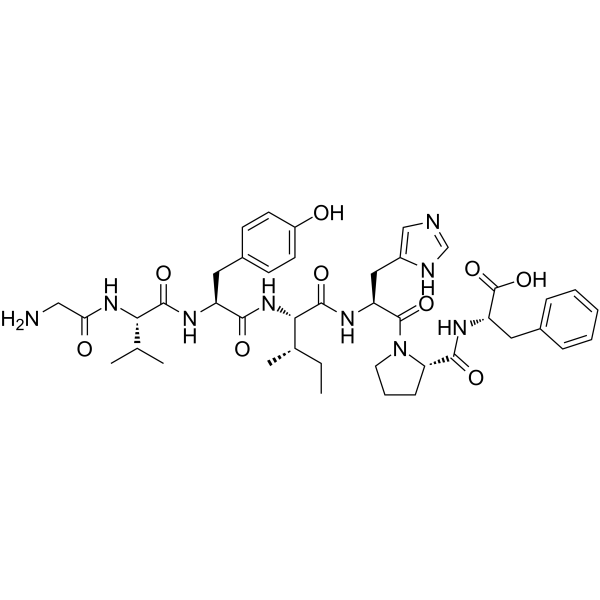
Cat. No.: HY-P3136
CAS No.: 25849-90-5
Synonyms: TRV120055
Research Areas:  

Cardiovascular Disease

TRV055 (TRV120055) is a G protein-biased agonist of angiotensin II type 1 receptors (AT1Rs). TRV120055 induces fibroblast proliferation, overexpression of collagen I and α-SMA, and stress fibre formation in human cardiac fibroblasts. TRV055 activates AT1 receptor/Gαq-mediated signaling pathways, upregulates TGF-β1 and p-ERK1/2. TRV055 induces collagen secretion in adult rat myofibroblasts at a level comparable to Ang II. TRV055 can be used to study the role of G protein-biased signaling of AT1Rs in regulating fibrotic responses [1]
loading...
    loading...
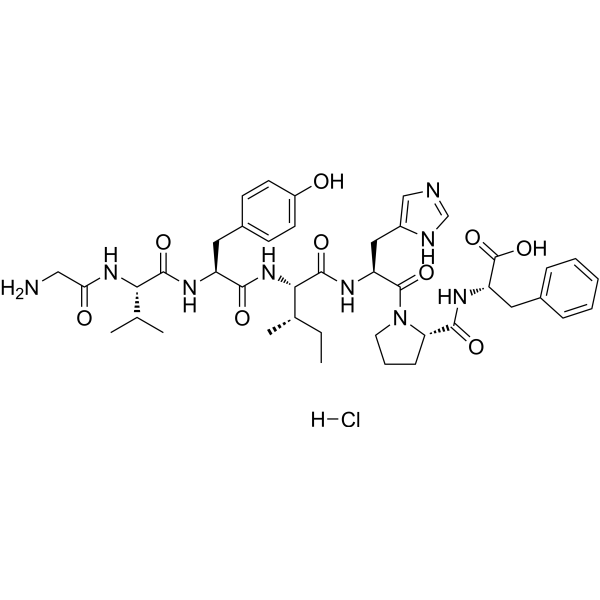
Cat. No.: HY-P3136A
Synonyms: TRV120055 hydrochloride
Target:  

Angiotensin Receptor

Research Areas:  

Cardiovascular Disease

TRV055 (TRV120055) hydrochloride is a G protein-biased agonist of angiotensin II type 1 receptors (AT1Rs). TRV055 hydrochloride induces fibroblast proliferation, overexpression of collagen I and α-SMA, and stress fibre formation in human cardiac fibroblasts. RV055 hydrochloride activates AT1 receptor/Gαq-mediated signaling pathways, upregulates TGF-β1 and p-ERK1/2. RV055 hydrochloride induces collagen secretion in adult rat myofibroblasts at a level comparable to Ang II. RV055 hydrochloride can be used to study the role of G protein-biased signaling of AT1Rs in regulating fibrotic responses [1]
loading...
    loading...
Cat. No.: HY-161317
Research Areas:  

Cancer

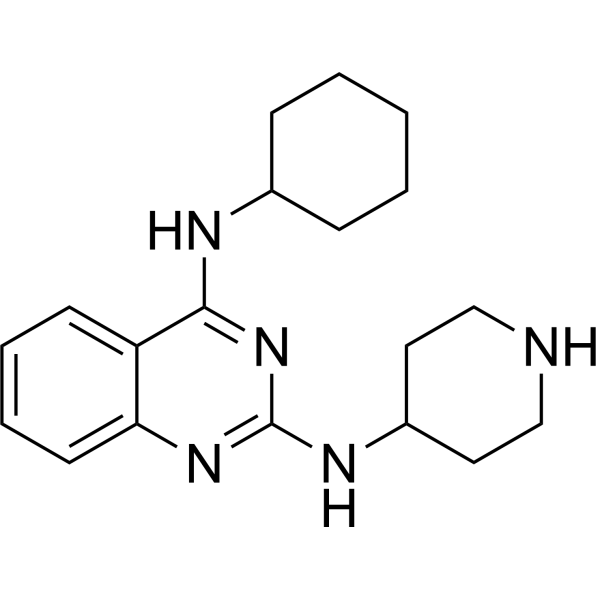
Gαq/11 protein-IN-1 (compound F33) is an inhibitor of Gαq/11 protein with an IC50 value of 9.4 μM. Gαq/11 protein-IN-1 has antitumor activity .
loading...
    loading...
Cat. No.: HY-108554
CAS No.: 1052076-77-3
Research Areas:  

Others

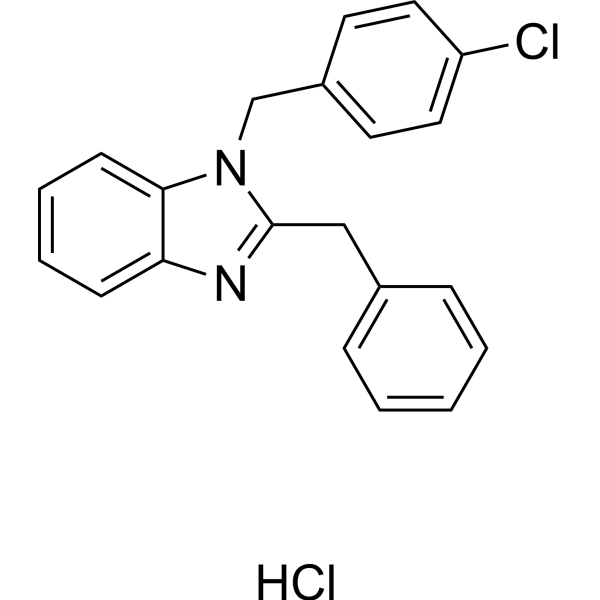
Q94 hydrochloride, a selective PAR1 antagonist (IC50=916 nM), can selectively block PAR1/Gαq interaction and signalling. Q94 hydrochloride blocks PAR1-mediated increases in both CCL2 mRNA and protein levels in a dose-dependent manner. Q94 hydrochloride also completely blocks thrombin-induced ERK1/2 and MLC phosphorylation .
loading...
    loading...
Cat. No.: HY-179165
Target:  

P2Y Receptor Apoptosis YAP

Research Areas:  

Cancer

Gαq/11 protein-IN-2 (Compound 9g) is a Gαq/11 protein inhibitor, with an IC50 of 11.3 μM. Gαq/11 protein-IN-2 induces Apoptosis, increases p-YAP. Gαq/11 protein-IN-2 has anticancer activity against uveal melanoma .
loading...
    loading...
Cat. No.: HY-182405
CAS No.: 2625582-70-7
Target:  

Apoptosis YAP ERK

Research Areas:  

Cancer

GQ127 is an orally active Gαq/11 inhibitor with an IC50 of 22.6 μM. GQ127 binds directly to Gαq/11 protein and inhibits its activity. GQ127 induces Apoptosis, suppresses viability, migration and invasion of uveal melanoma cells. GQ127 increases the phosphorylation level of YAP and decreases the phosphorylation level of ERK. GQ127 inhibits the growth of uveal melanoma xenografts in mouse models. GQ127 can be used for research related to uveal melanoma .
loading...
    loading...
Cat. No.: HY-178787S
Synonyms: PG(16:0/18:1)-d62; 1-Palmitoyl-2-oleoyl-sn-glycero-3-phospho-(1'-rac-glycerol)-d62
POPG-d62 (PG(16:0/18:1)-d62) is the deuterium labeled POPG (HY-142991). POPG sodium salt is a negatively charged phospholipid. POPG sodium salt affects the interactions of membrane proteins with other molecules by changing the charge characteristics of the lipid environment. POPG sodium salt increases the apparent affinity of Gαq and Gβ1γ1 for activated NTS1. POPG sodium salt can interact with the positive charge of peptides. POPG sodium salt can be used in Parkinson's disease research.
loading...
    loading...
Cat. No.: HY-130463R
CAS No.: 268550-95-4
Synonyms: PG(16:0/18:1) sodium (Standard); 1-Palmitoyl-2-oleoyl-sn-glycero-3-phospho-(1'-rac-glycerol) sodium (Standard)
POPG (Standard) (PG(16:0/18:1) (Standard)) sodium is the analytical standard of POPG (sodium) (HY-130463). This product is intended for research and analytical applications. POPG (sodium) is a negatively charged phospholipid. POPG (sodium) affects the interactions of membrane proteins with other molecules by changing the charge characteristics of the lipid environment. POPG (sodium) increases the apparent affinity of Gαq and Gβ1γ1 for activated NTS1. POPG (sodium) can interact with the positive charge of peptides. POPG sodium salt can be used in Parkinson's disease research .
loading...
    loading...
Cat. No.: HY-183400
CAS No.: 195450-11-4
BIM-46174 is a heterotrimeric G protein complex inhibitor. BIM-46174 blocks GPCR downstream signaling by trapping Gα proteins in a nucleotide-free pocket conformation, thereby inhibiting Gαq-mediated calcium release, Gαs-mediated cAMP production, and GPCR-regulated cancer cell invasion. In vitro, BIM-46174 effectively suppresses a variety of clinically multidrug-resistant cell lines and induces tumor cell apoptosis through activation of caspase-3 and PARP cleavage. BIM-46174 also inhibits activation of the Neu1-MMP-9-GPCR signaling platform and downstream NF-κB signaling, and is widely used in the study of cancer signaling pathways and inflammation-related research, including lung cancer, pancreatic cancer, breast cancer, melanoma, and leukemia .
loading...
    loading...
Cat. No.: HY-187560
Target:  

5-HT Receptor

Research Areas:  

Neurological Disease

VCU-1012 is a serotonin 2A receptor (5-HT2AR) agonist, with a pEC50 of 5.81 and a pKi of 5.75 against human receptors. VCU-1012 binds to the canonical orthosteric binding pocket of 5-HT2AR, triggers intracellular calcium release and Gαq protein dissociation, and its agonistic activity depends on specific amino acid residues in the receptor binding pocket. VCU-1012 can be used in research related to depression, anxiety disorders, and chemotherapy-induced mood disorders .
loading...
    loading...
  • 1

