1. Search Result
Search Result
Results for "

GABA

" in MedChemExpress (MCE) Product Catalog:

428

Inhibitors & Agonists

5

Screening Libraries

2

Fluorescent Dye

5

Biochemical Assay Reagents

13

Peptides

1

Inhibitory Antibodies

70

Natural
Products

11

Recombinant Proteins

44

Isotope-Labeled Compounds

13

Antibodies

3

Click Chemistry

Targets Recommended:
Cat. No. Product Name Target Research Areas Chemical Structure
  • HY-N0067
    γ-Aminobutyric acid
    5 Publications Verification

    4-Aminobutyric acid

    Environmental Pollutants Endogenous Metabolite GABA Receptor Neurological Disease Metabolic Disease
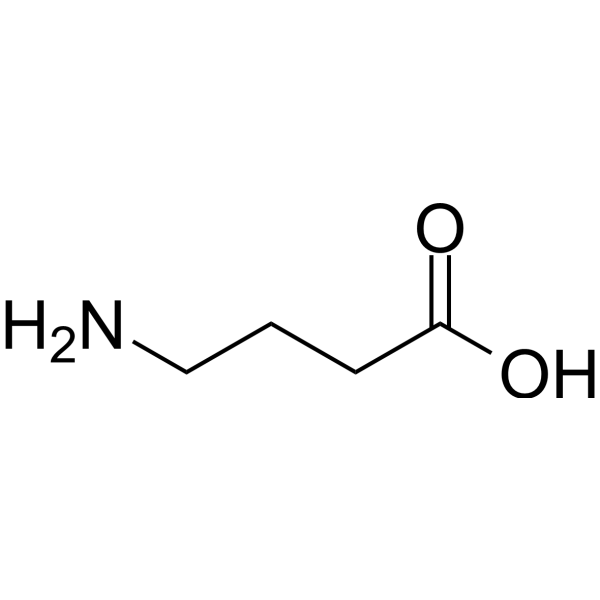
    γ-Aminobutyric acid (4-Aminobutyric acid) is a major inhibitory neurotransmitter in the adult mammalian brain, binding to the ionotropic GABA receptors (GABAA receptors) and metabotropic receptors (GABAB receptors. γ-Aminobutyric acid shows calming effect by blocking specific signals of central nervous system .
    γ-Aminobutyric acid
  • HY-A0057
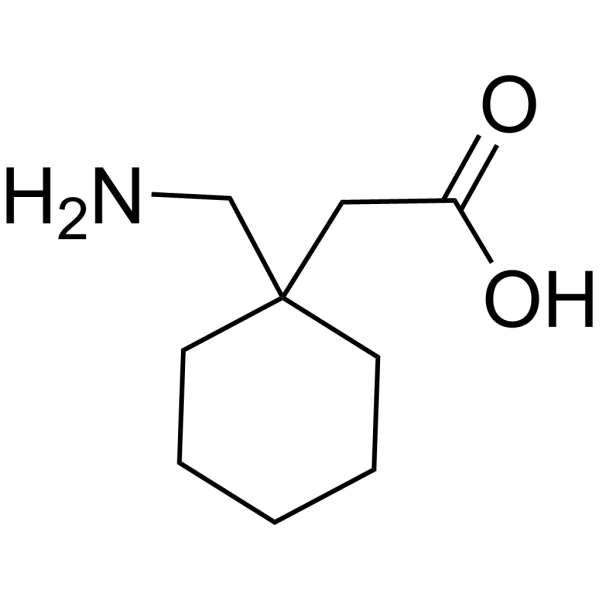
    Gabapentin
    10+ Cited Publications

    Calcium Channel Neurological Disease Cancer
    Gabapentin is a potent, orally active P/Q type Ca 2+ channel blocker. Gabapentin inhibits neuronal Ca 2+ influx and reduction of neurotransmitter release. Gabapentin is a GABA analog that can be used to relieve neuropathic pain .
    Gabapentin
  • HY-103533
    Gabazine
    5+ Cited Publications

    SR95531

    GABA Receptor Neurological Disease
    Gabazine is a selective and competitive antagonist of GABAA receptor, with an IC50 of ~0.2 μM for GABA receptor.
    Gabazine
  • HY-15399
    Vigabatrin
    5+ Cited Publications

    γ-Vinyl-GABA

    GABA Receptor Neurological Disease
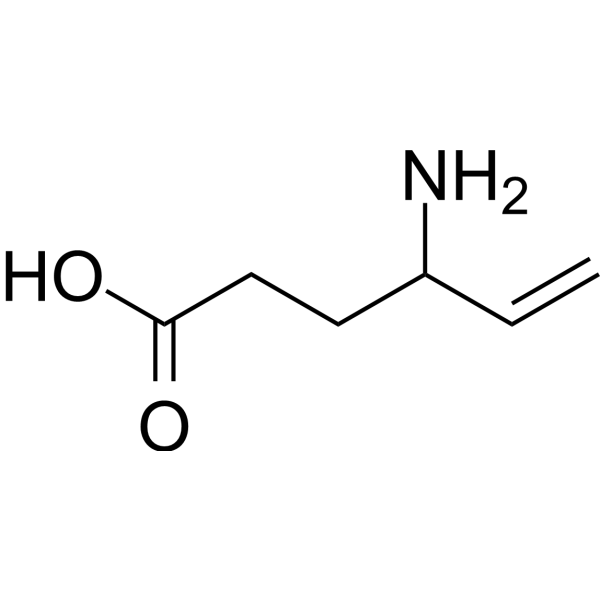
    Vigabatrin (γ-Vinyl-GABA), an inhibitory neurotransmitter GABA vinyl-derivative, is an orally active and irreversible GABA transaminase inhibitor. Vigabatrin is an antiepileptic agent, which acts by increasing GABA levels in the brain by inhibiting the catabolism of GABA by GABA transaminase .
    Vigabatrin
  • HY-B0007
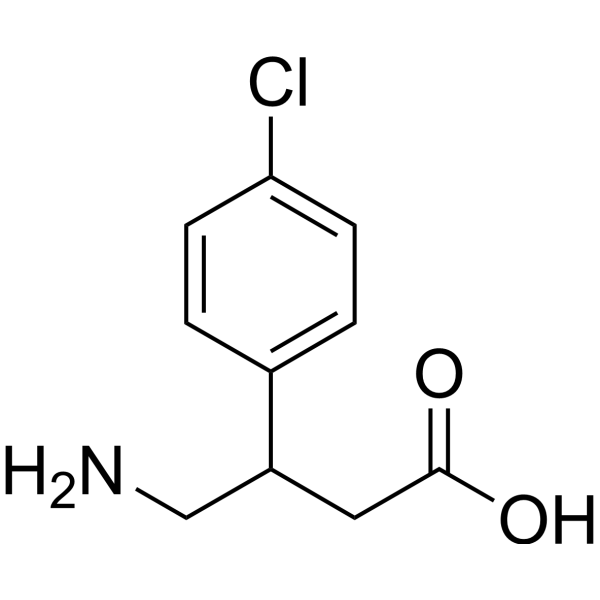
    Baclofen
    10+ Cited Publications

    GABA Receptor Neurological Disease
    Baclofen, a lipophilic derivative of γ-aminobutyric acid (GABA), is an orally active, selective metabotropic GABAB receptor (GABABR) agonist with blood-brain barrier permeability. Baclofen mimics the action of GABA and produces slow presynaptic inhibition through the GABAB receptor. Baclofen has high blood brain barrier penetrance. Baclofen has the potential for muscle spasticity research .
    Baclofen
  • HY-B1494
    Picrotoxinin
    4 Publications Verification

    Chloride Channel GABA Receptor Neurological Disease
    Picrotoxinin, a potent convulsant, is a chloride channel blocker. Picrotoxinin is a noncompetitive GABAA receptor antagonist, which negatively modulates the action of GABA on GABAA receptors. Picrotoxinin inhibits α1β2γ2L GABAA receptor with an IC50 of 1.15 μM .
    Picrotoxinin
  • HY-A0057A
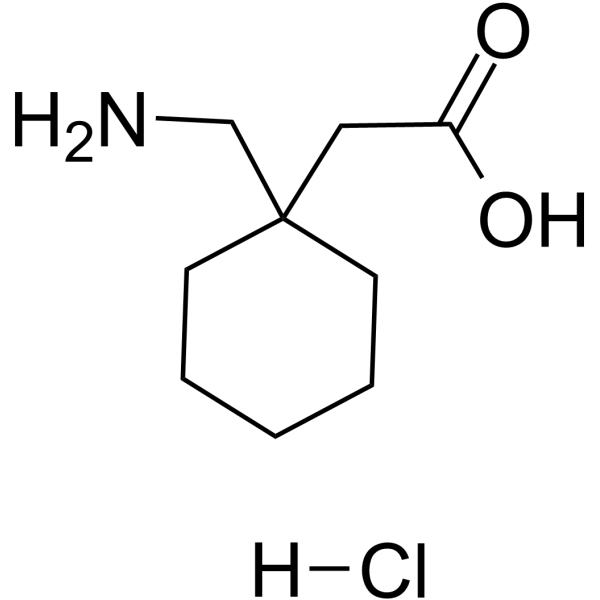
    Gabapentin hydrochloride
    10+ Cited Publications

    Calcium Channel Neurological Disease Cancer
    Gabapentin hydrochloride is a potent, orally active P/Q type Ca 2+ channel blocker. Gabapentin hydrochloride inhibits neuronal Ca 2+ influx and reduction of neurotransmitter release. Gabapentin hydrochloride is a GABA analog that can be used to relieve neuropathic pain .
    Gabapentin hydrochloride
  • HY-101411
    4-Acetamidobutanoic acid
    1 Publications Verification

    N-acetyl GABA

    GABA Receptor Endogenous Metabolite Bacterial Others
    4-Acetamidobutanoic acid (N-acetyl GABA), the main metabolite of GABA, exhibits antioxidant and antibacterial activities .
    4-Acetamidobutanoic acid
  • HY-103504
    (S)-SNAP5114
    1 Publications Verification

    GABA Receptor Neurological Disease
    (S)-SNAP5114 is a non-covalent murine GABA transporter inhibitor with blood-brain barrier penetration ability, which exhibits significant subtype-selective inhibitory activity against mGAT4 (pIC50=5.71, pKi=4.56), much higher than its effects on mGAT1, mGAT2 and mGAT3. (S)-SNAP5114 elevates extracellular GABA concentrations by blocking the GABA reuptake mechanism, thereby enhancing thalamus-specific GABAergic signaling and exerting potential neuromodulatory effects. (S)-SNAP5114 is widely used in studies related to epilepsy, neuropathic pain, anxiety and depression, and various neurodegenerative diseases .
    (S)-SNAP5114
  • HY-B0007C
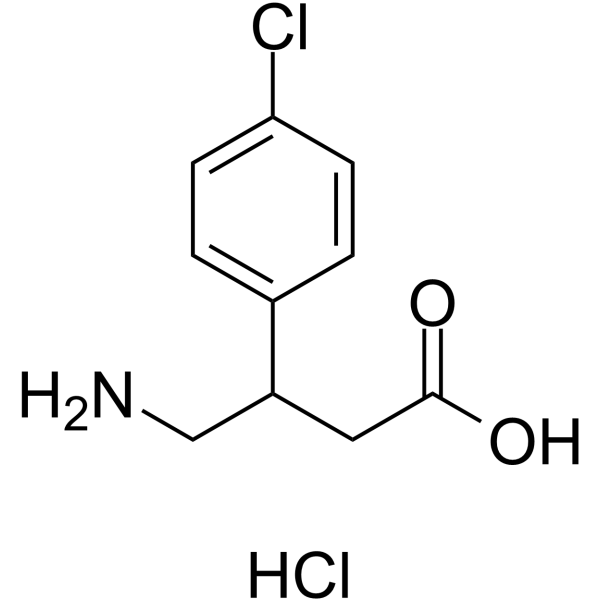
    Baclofen hydrochloride
    10+ Cited Publications

    GABA Receptor Neurological Disease
    Baclofen hydrochloride, a lipophilic derivative of γ-aminobutyric acid (GABA), is an orally active, selective metabotropic GABAB receptor (GABABR) agonist. Baclofen hydrochloride mimics the action of GABA and produces slow presynaptic inhibition through the GABAB receptor. Baclofen hydrochloride has high blood brain barrier penetrance. Baclofen hydrochloride has the potential for muscle spasticity research .
    Baclofen hydrochloride
  • HY-B0033
    Vigabatrin hydrochloride
    5+ Cited Publications

    γ-Vinyl-GABA hydrochloride

    GABA Receptor Neurological Disease
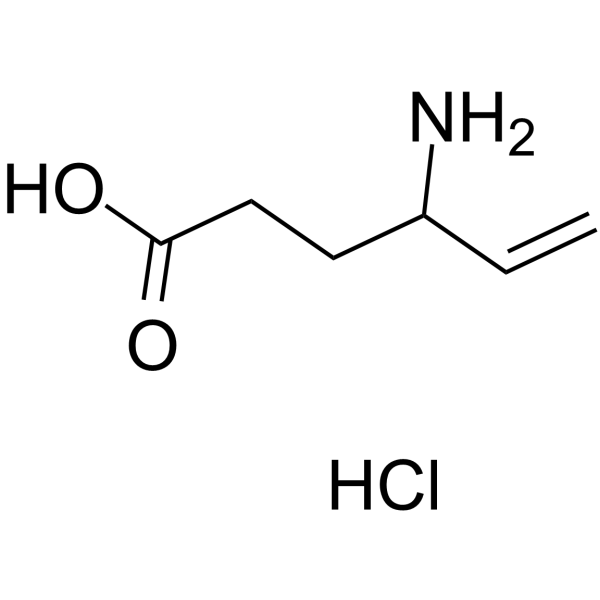
    Vigabatrin hydrochloride (γ-Vinyl-GABA hydrochloride), a inhibitory neurotransmitter GABA vinyl-derivative, is an orally active and irreversible GABA transaminase inhibitor. Vigabatrin hydrochloride is an antiepileptic agent, which acts by increasing GABA levels in the brain by inhibiting the catabolism of GABA by GABA transaminase .
    Vigabatrin hydrochloride
  • HY-108403

    β-Phenyl-GABA; 4-Amino-3-phenylbutanoic acid

    GABA Receptor Neurological Disease
    Phenibut (β-Phenyl-GABA) is a GABA-B agonist . Phenibut acts as a GABA-mimetic, primarily at GABAB receptors. Phenibut has anxiolytic and nootropic (cognition enhancing) effects .
    Phenibut
  • HY-W041333

    β-Phenyl-GABA hydrochloride; 4-Amino-3-phenylbutanoic acid hydrochloride; 4-Amino-3-phenylbutyric acid hydrochloride

    GABA Receptor Neurological Disease
    Phenibut (β-Phenyl-GABA) hydrochloride is an orally active GABA-B agonist . Phenibut hydrochloride acts as a GABA-mimetic, primarily at GABAB?receptors. Phenibut hydrochloride has anxiolytic and nootropic (cognition enhancing) effects .
    Phenibut hydrochloride
  • HY-124467

    Ro 07-4065

    GABA Receptor Neurological Disease
    Difludiazepam (Ro 07-4065), a benzodiazepine derivative, is a GABAA receptor ligand with an IC50 of 4.1 nM. Difludiazepam binds to an allosteric site on the GABAA receptor to potentiate the receptor's response to GABA, reducing neuron excitability. Difludiazepam contains halogenated groups at the ortho position of its phenyl ring .
    Difludiazepam
  • HY-W004697

    PROTAC Linkers Cancer
    Boc-GABA-OH is a PROTAC linker which can be used to synthesis UNC6852, an EED-targeted PROTAC .
    Boc-GABA-OH
  • HY-100800

    trans-4-Aminocrotonic acid

    GABA Receptor Neurological Disease
    TACA (trans-4-Aminocrotonic acid) is a potent agonist of GABAA and GABAC receptors (KD= 0.6 μM). TACA also is GABA uptake inhibitor and substrate for GABA-T. TACA produces late biphasic responses in the MPG neurons .
    TACA
  • HY-69359
    Nipecotic acid
    1 Publications Verification

    (±)-β-Homoproline; Hexahydronicotinic acid; 3-Carboxypiperidine

    GABA Receptor Neurological Disease
    Nipecotic acid ((±)-β-Homoproline) is a potent inhibitor of neuronal and glial-aminobutyric acid (GABA) uptake in vitro. Nipecotic acid can also directly activate GABAA-like chloride channels, with an EC50 of approximately 300 μM .
    Nipecotic acid
  • HY-100798

    GABA Receptor Neurological Disease
    Phaclofen is a selective GABAB receptor antagonist. Phaclofen is a peripheral and central baclofen antagonist. Phaclofen maybe a potential compound in determining the physiological significance of central and peripheral bicuculline-insensitive receptors with which GABA and (-)-baclofen interact .
    Phaclofen
  • HY-W067716

    (S)-Spinacine

    GABA Receptor Neurological Disease
    Spinacine ((S)-Spinacine) is a GABA uptake inhibitor. Spinacine enhances synaptic GABA effects via inhibition of gamma-aminobutyric acid uptake in cerebral cortex slices. Spinacine inhibits reflex responses of ventral roots in isolated spinal cord. Spinacine inhibits motor activity and reduces approaches to water dispensers in conflict situations. Spinacine raises pain sensitivity threshold via subarachnoidal injection .
    Spinacine
  • HY-131693A

    GAG hydrochloride

    GABA Receptor Neurological Disease Cancer
    γ-Acetylenic GABA (GAG) hydrochloride is an irreversible inhibitor of GABA-transaminase. γ-Acetylenic GABA hydrochloride can increase the concentration of GABA in rat brain . γ-Acetylenic GABA (hydrochloride) is a click chemistry reagent, it contains an Alkyne group and can undergo copper-catalyzed azide-alkyne cycloaddition (CuAAc) with molecules containing Azide groups.
    γ-Acetylenic GABA hydrochloride
  • HY-115685

    GABA Receptor Neurological Disease
    3-Methyl-GABA is a potent GABA aminotransferase activator. 3-Methyl-GABA can fit the binding pocket of GABAA receptor (GABAaR). 3-Methyl-GABA can activate L-glutamic acid decarboxylase (GAD). 3-Methyl-GABA has anticonvulsant activity .
    3-Methyl-GABA
  • HY-114883

    L-Homocarnosine

    GABA Receptor Endogenous Metabolite Neurological Disease Inflammation/Immunology
    Homocarnosine is a dipeptide of γ-aminobutyric acid (GABA) and histidine unique to brain. Homocarnosine is an inhibitory neuromodulator synthesized in the neuron from GABA and exhibiting anticonvulsant effects .Homocarnosine has antioxidant and anti-inflammatory actions, prevention of DNA damage, and inhibition of advanced glycation end-product formation .
    Homocarnosine
  • HY-124030

    Drug Metabolite Neurological Disease
    3-Hydroxyphenazepam is an active metabolite of Cinazepam. Cinazepam is a GABAA receptor agonist. 3-Hydroxyphenazepam can inhibit synaptosomal transporter-mediated [ 3H]GABA uptake .
    3-Hydroxyphenazepam
  • HY-101411S

    N-acetyl GABA-d3

    Bacterial GABA Receptor Endogenous Metabolite Isotope-Labeled Compounds Others
    4-Acetamidobutanoic acid-d3 is the deuterated analog of 4-Acetamidobutanoic acid (HY-101411). 4-Acetamidobutanoic acid (N-acetyl GABA), the main metabolite of GABA, exhibits antioxidant and antibacterial activities .
    4-Acetamidobutanoic acid-d3
  • HY-114883A

    L-Homocarnosine TFA

    GABA Receptor Endogenous Metabolite Neurological Disease
    Homocarnosine TFA is a dipeptide of γ-aminobutyric acid (GABA) and histidine unique to brain. Homocarnosine TFA is an inhibitory neuromodulator synthesized in the neuron from GABA and exhibiting anticonvulsant effects . Homocarnosine TFA has antioxidant and anti-inflammatory actions, prevention of DNA damage, and inhibition of advanced glycation end-product formation .
    Homocarnosine TFA
  • HY-N15001

    GABA Receptor Neurological Disease
    Gabaculine is an amino acid neurotoxin and blood-brain barrier-permeable GABA transaminase inhibitor, with an IC50 of 1 μM in beef and Pseudomonas ovalis. Gabaculine elevates endogenous synaptic and brain GABA levels and enhances GABA activity. Gabaculine induces sedation, hypothermia, loss of righting reflex, and prevents convulsions in mice. Gabaculine is applicable to research related to neurological disorders .
    Gabaculine
  • HY-22295

    Biochemical Assay Reagents Others
    Fmoc-4-aminobutanoic acid is a biochemical reagent that can be used as a biological material or organic compound for life science related research.
    Fmoc-GABA-OH
  • HY-160649

    Drug-Linker Conjugates for ADC Topoisomerase Cancer
    MC-Gly-Gly-Phe-Gly-GABA-Exatecan is an agent linker conjugate for ADC, with an inhibitor for Topoisomerase Exatecan (HY-13631) with IC50 of 22 μM. MC-Gly-Gly-Phe-Gly-GABA-Exatecan targets various antibodies, exhibits cytotoxic and antitumor efficacy in vitro and in vivo .
    MC-Gly-Gly-Phe-Gly-GABA-Exatecan
  • HY-118583A

    β-(4-Fluorophenyl)-GABA hydrochloride; F-Phenibut hydrochloride

    Drug Derivative Neurological Disease
    4-Fluoro phenibut (β-(4-Fluorophenyl)-GABA) hydrochloride is a Gabapentinoid and is structurally similar to known nootropics .
    4-Fluoro phenibut hydrochloride
  • HY-116910

    GABA Receptor Neurological Disease
    CPP-115 is a GABA transaminase inactivator with higher affinity and lower retinal toxicity than Vigabatrin (HY-15399). CPP-115 increases brain GABA levels by inhibiting GABA transaminase catabolism. CPP-115 can be used in the study of drug addiction and infantile spasms .
    CPP-115
  • HY-W008645

    GABA Receptor Neurological Disease
    NCS-382 (sodium) is a potent GABA receptor antagonist. NCS-382 (sodium) has anti-sedative and anti-hypnotic activities and can be used in research related to neurological diseases .
    NCS-382 sodium
  • HY-177552

    GABA Receptor Chloride Channel Insecticide Infection
    4''-Oxoavermectin B1a is a potentiator targeting GABA (γ-aminobutyric acid) and glutamate-gated chloride channels with insecticidal and acaricidal activities. 4''-Oxoavermectin B1a is promising for research of agricultural pests .
    4''-Oxoavermectin B1a
  • HY-P5380

    Dabcyl-GABA-Pro-Gln-Gly-Leu-Glu(EDANS)-Ala-Lys-NH2

    MMP Fluorescent Dye Others
    TNO211 (Dabcyl-GABA-Pro-Gln-Gly-Leu-Glu(EDANS)-Ala-Lys-NH2) is a fluorogenic substrate, containing the MMP cleavable Gly-Leu bond and EDANS/Dabcyl as fluorophore/quencer combination. TNO211 can specifically detect MMP activity (Ex/Em = 340/485 nm) .
    TNO211
  • HY-103534

    GABA Receptor Neurological Disease
    CI-966 hydrochloride is a potent, selective, orally active and brain-penetrant inhibitor of the GABA transporter GAT-1, with IC50s of 0.26 μM and 1.2 μM for hGAT-1, rGAT-1, respectively. CI-966 hydrochloride shows more than 200-fold selectivity over GAT-2, GAT-3, and BGT-3. CI-966 hydrochloride exhibits anticonvulsant and neuroprotective activities .
    CI-966 hydrochloride
  • HY-103507

    GABA Receptor Neurological Disease
    N-Arachidonoyl-GABA is one member of a new class of lipoamino acids related to anandamide identified in bovine brain. N-Arachidonoyl-GABA displays analgesic activity .
    N-Arachidonyl-GABA
  • HY-W105694

    (3-Aminopropyl)phosphonic acid

    GABA Receptor Neurological Disease
    3-Aminopropylphosphonic acid ((3-Aminopropyl)phosphonic acid) is a phosphonic acid analogue of GABA and a GABAB receptor agonist .
    3-Aminopropylphosphonic acid
  • HY-103527

    GABA Receptor Neurological Disease
    RuBi-GABA is a new ruthenium-based caged GABA compound. RuBi-GABA photocleaves and releases GABA after being excited with visible wavelengths. RuBi-GABA produces gaba receptor-mediated currents .
    RuBi-GABA
  • HY-131693

    GAG

    GABA Receptor Neurological Disease Cancer
    γ-Acetylenic GABA (4-Aminohex-5-ynoic acid) is an irreversible inhibitor of GABA-transaminase. γ-Acetylenic GABA can increase the concentration of GABA in rat brain . γ-Acetylenic GABA is a click chemistry reagent, it contains an Alkyne group and can undergo copper-catalyzed azide-alkyne cycloaddition (CuAAc) with molecules containing Azide groups.
    γ-Acetylenic GABA
  • HY-A0057S

    Calcium Channel Neurological Disease
    Gabapentin-d4 is the deuterium labeled Gabapentin. Gabapentin (Neurontin) is a pharmaceutical agent, specifically a GABA analog. It was originally developed to treat epilepsy, and currently is also used to relieve neuropathic pain.
    Gabapentin-d4
  • HY-D2341

    Fluorescent Dye Cancer
    6FC-GABA-Taxol is a fluorescent probe with cell permeability, which is formed by connecting 6FC to the anticancer drug Taxol (HY-B0015) via γ-aminobutyric acid (GABA). 6FC-GABA-Taxol can bind to microtubules in living cells and image them through confocal microscopy. Additionally, 6FC-GABA-Taxol enables the quantification of microtubule binding using flow cytometry without the addition of efflux inhibitors .
    6FC-GABA-Taxol
  • HY-B0033S

    γ-Vinyl-GABA-13C,d2 hydrochloride

    Isotope-Labeled Compounds GABA Receptor Neurological Disease
    Vigabatrin- 13C,d2 (hydrochloride) is the 13C- and deuterium labeled Vigabatrin (hydrochloride). Vigabatrin hydrochloride (γ-Vinyl-GABA hydrochloride), a inhibitory neurotransmitter GABA vinyl-derivative, is an orally active and irreversible GABA transaminase inhibitor. Vigabatrin hydrochloride is an antiepileptic agent, which acts by increasing GABA levels in the brain by inhibiting the catabolism of GABA by GABA transaminase .
    Vigabatrin-13C,d2 hydrochloride
  • HY-N16421

    Insecticide GABA Receptor Sodium Channel Infection
    Leporin A is an insecticide. Leporin A binds to GABA receptors or sodium channels to disrupt neurotransmission .
    Leporin A
  • HY-155238

    GABA Receptor Neurological Disease
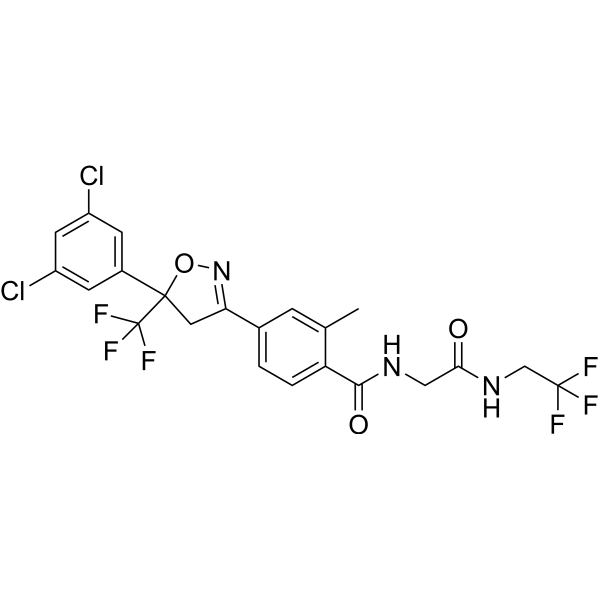
    E2730 is a noncompetitive but selective inhibitor of gamma-aminobutyric acid (GABA) transporter 1 (GAT1) with orally available and antiepileptic activity. E2730-mediated GAT1 inhibition is positively correlated with environmental GABA levels and selectively inhibits GAT1-mediated GABA uptake. E2730 (5-50 mg/kg; po) in rat amygdala ignition model, and in mouse cornea ignition (5-50 mg/kg), drug resistance 6Hz-44mA has demonstrated in vivo efficacy in models of psychomotor epilepsy (5-50 mg/kg), fragile X syndrome (2.5-300 mg/kg), and Dravet syndrome (10 mg/kg, 20 mg/kg) .
    E2730
  • HY-177573

    GABA Receptor Neurological Disease
    Cholesteryl γ-aminobutyrate is a γ-aminobutyric acid (GABA)-mimetic prodrug. Cholesteryl γ-aminobutyrate inhibits the orthodromically-evoked discharge of pyramidal cells in the CA1 region of the hippocampus. Cholesteryl γ-aminobutyrate suppresses the open-field activity of mice and rats in a dose-dependent manner and inhibits Bicuculline (HY-N0219)-induced seizures in mice. Cholesteryl γ-aminobutyrate can be used for the study of CNS diseases related to impaired GABAergic neuronal function .
    Cholesteryl γ-aminobutyrate
  • HY-B0007S2

    GABA Receptor Isotope-Labeled Compounds Neurological Disease
    Baclofen-d5 hydrochloride is deuterated labeled Baclofen (HY-B0007). Baclofen, a lipophilic derivative of γ-aminobutyric acid (GABA), is an orally active, selective metabotropic GABAB receptor (GABABR) agonist. Baclofen mimics the action of GABA and produces slow presynaptic inhibition through the GABAB receptor. Baclofen has high blood brain barrier penetrance. Baclofen has the potential for muscle spasticity research .
    Baclofen-d5 hydrochloride
  • HY-P5380A

    Dabcyl-GABA-Pro-Gln-Gly-Leu-Glu(EDANS)-Ala-Lys-NH2 TFA

    MMP Fluorescent Dye Cancer
    TNO211 (Dabcyl-GABA-Pro-Gln-Gly-Leu-Glu(EDANS)-Ala-Lys-NH2) TFA is a fluorogenic substrate, containing the MMP cleavable Gly-Leu bond and EDANS/Dabcyl as fluorophore/quencer combination. TNO211 TFA can specifically detect MMP activity (Ex/Em = 340/485 nm) .
    TNO211 TFA
  • HY-W722556

    3α,5α-Androstanol

    GABA Receptor Constitutive Androstane Receptor Metabolic Disease
    5α-Androstan-3α-ol is a γ-aminobutyric acid (GABA) receptor agonist. 5α-Androstan-3α-ol can inhibit the transcriptional activity of the orphan nuclear receptor CAR (constitutive androstane receptor). 5α-Androstan-3α-ol negatively regulates the activity of CAR by binding to CAR and promoting its dissociation from coactivator proteins. 5α-Androstan-3α-ol can be used to study nuclear receptor-mediated hormone metabolism and drug detoxification mechanisms .
    5α-Androstan-3α-ol
  • HY-103526

    GABA Receptor Neurological Disease
    DPNI-GABA is a nitroindoline cage compound that inhibits GABA(A) receptors and reduces GABA-evoked peak responses with an IC50 value of 0.5 mM .
    DPNI-GABA
  • HY-147982

    GABA Receptor Neurological Disease
    GABA-AT-IN-1 (Compound 6) is a γ-aminobutyric acid aminotransferase (GABA-AT) inhibitor and significantly elevates the mouse brain GABA level. GABA-AT-IN-1 has the ability to cross the BBB and can be used as an anticonvulsant .
    GABA-AT-IN-1
  • HY-15399R

    γ-Vinyl-GABA (Standard)

    Reference Standards GABA Receptor Neurological Disease
    Vigabatrin (Standard) is the analytical standard of Vigabatrin. This product is intended for research and analytical applications. Vigabatrin (γ-Vinyl-GABA), an inhibitory neurotransmitter GABA vinyl-derivative, is an orally active and irreversible GABA transaminase inhibitor. Vigabatrin is an antiepileptic agent, which acts by increasing GABA levels in the brain by inhibiting the catabolism of GABA by GABA transaminase .
    Vigabatrin (Standard)

Inquiry Online

Your information is safe with us. * Required Fields.

Salutation


Country or Region *

Applicant Name *


Organization Name *

Department *


Email Address *


Product Name *

Cat. No.


Requested quantity *

Phone Number *


Remarks

Inquiry Online

Inquiry Information

Product Name:
Cat. No.:
Quantity:
MCE Japan Authorized Agent:

