



BrBzGCp2
Based on 6 publication(s) in Google Scholar
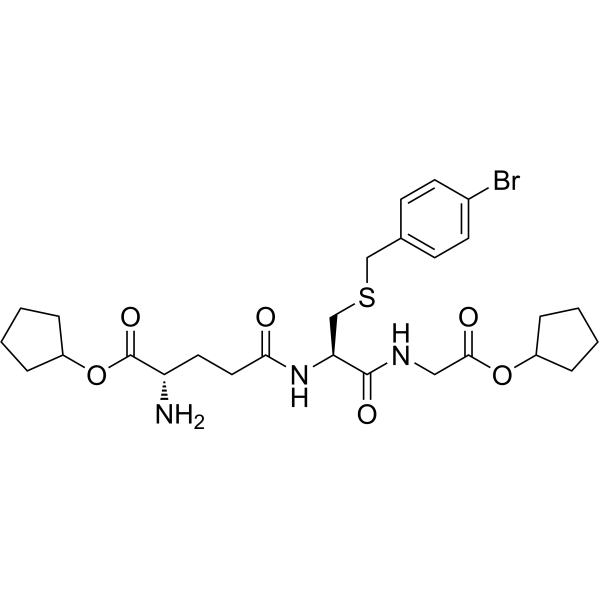
BrBzGCp2 is a Glyoxalase 1 (GLO1) inhibitor, with a GC50 of 4.23 μM in HL-60 cells. BrBzGCp2 possesses antitumor and neuroprotective activity.
For research use only. We do not sell to patients.
- Purity : 99.00%
- CAS No.: 166038-00-2
- Formula: C27H38BrN3O6S
- Molecular Weight:612.58
-
Storage:
-20°C, stored under nitrogen
* In solvent : -80°C, 6 months; -20°C, 1 month (stored under nitrogen)

To place orders, for customer services and technical support, please contact: MedChemExpress USA
Tel: 609-228-6898 E-mail: [email protected] [email protected]


-
 Biological Activity
-
Chemical Information
-
Solvent & Solubility
- Purity & Documentation
- References
-
 Help & FAQs


-
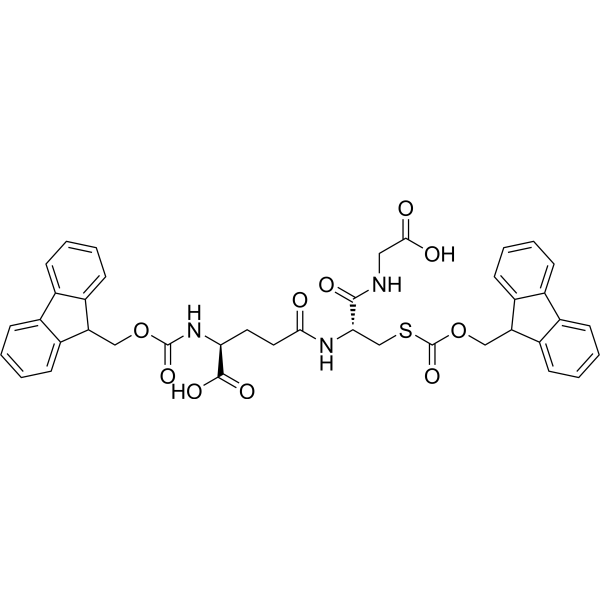
HY-P4277
N,S-Bis-Fmoc-GlutathioneGlyoxalase II Inhibitor -
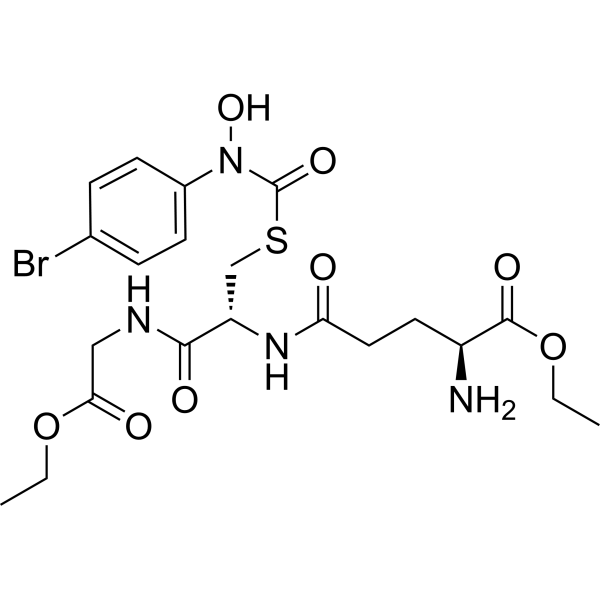
HY-15167A
Glyoxalase I inhibitor free baseGLO1 Inhibitor -
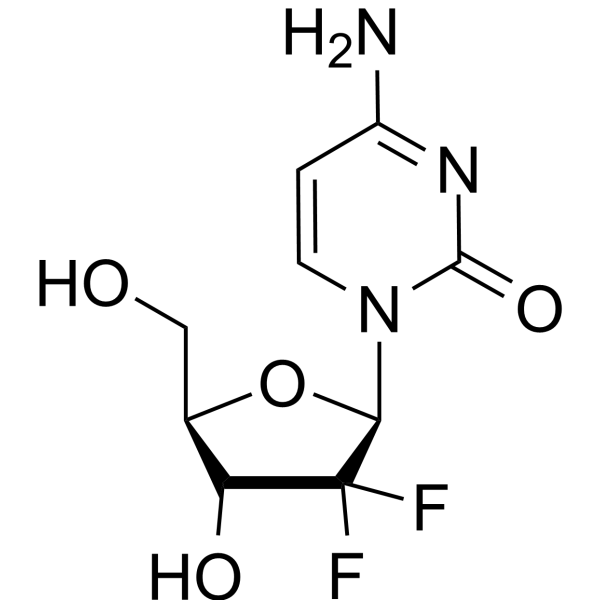
HY-17026
GemcitabineDNA Synthesis Inhibitor -
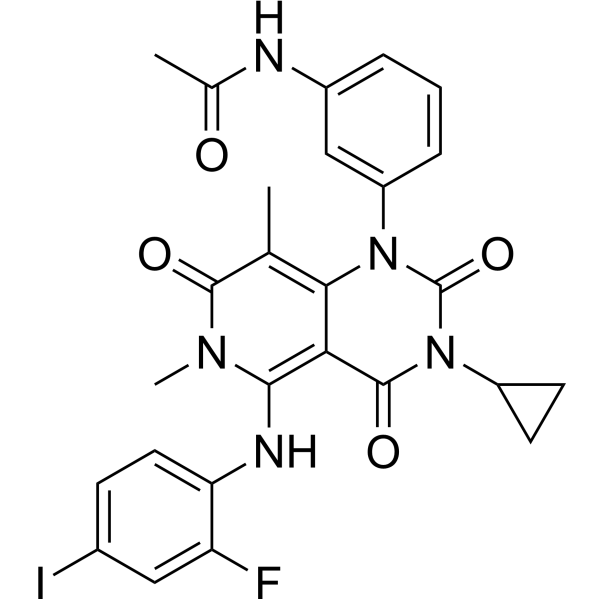
HY-10999
TrametinibMEK Inhibitor -
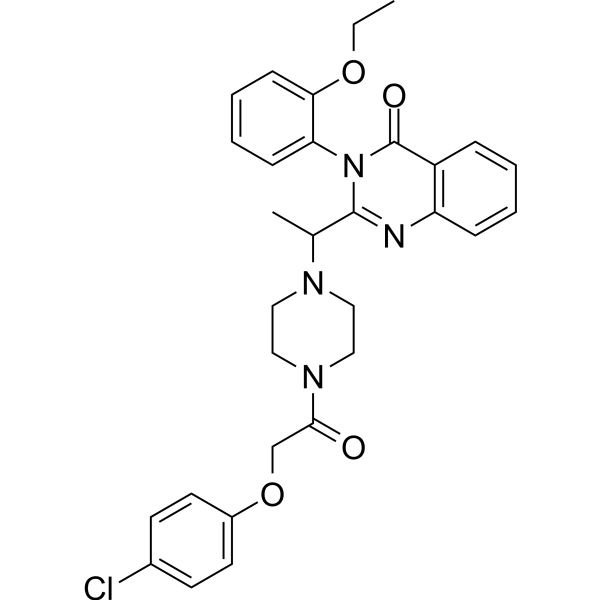
HY-15763
ErastinFerroptosis Inducer -
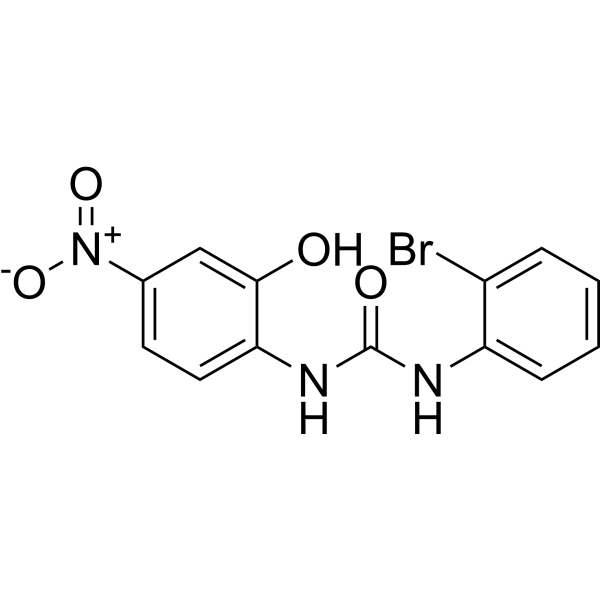
HY-16711
SB225002CXCR2 Antagonist -
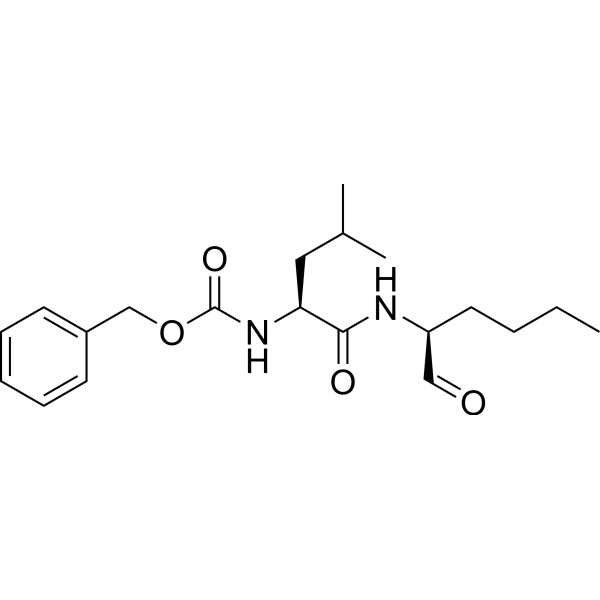
HY-100223
CalpeptinCalpain Inhibitor -
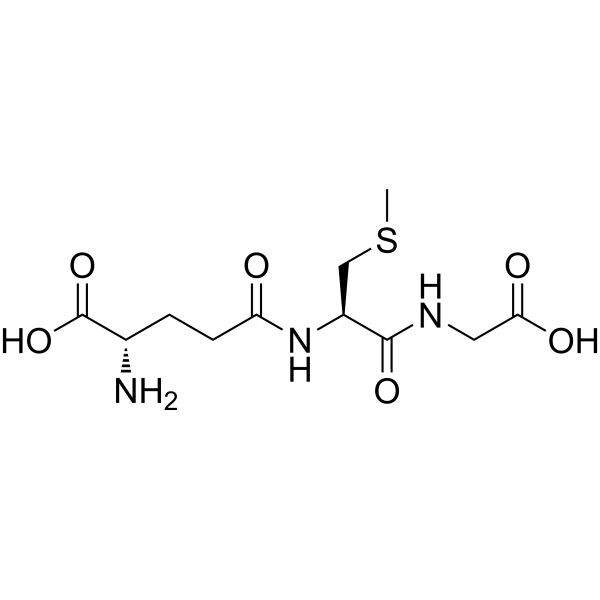
HY-W009177
S-MethylglutathioneNucleophile -
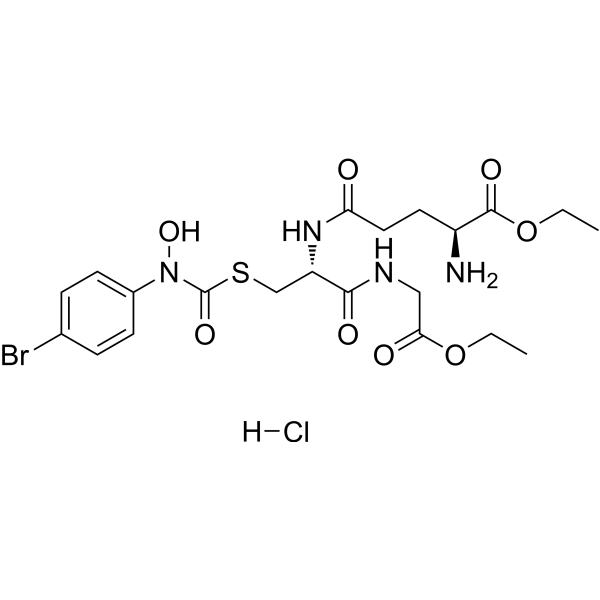
HY-15167
Glyoxalase I inhibitorGlyoxalase I Inhibitor
Publications Citing Use of MedChemExpress (MCE) BrBzGCp2
More Customer Validation & Images

-
Bio/Physico-chemical Assay

-
WB

-
In Vivo Efficacy Study

-
In Vivo Efficacy Study

-
Bio/Physico-chemical Assay


Biological Activity
Description
IC50 & Target
GC50: 4.23 μM (GLO1)[1].
In Vivo
BrBzGCp2 pre-treatment decreases seizure duration[3].
BrBzGCp2 injection alleviates the level of anxiety in mice, and mice with less anxiety and fear were more likely to explore the unknown area, implying that inhibition of GLO1 activity mitigated anxiety levels[4].
BrBzGCp2 treatment restores the VPA-induced inhibition effect on GABAA receptor activation[4].
BrBzGCp2 significantly lowers the blood pressure and ameliorated endothelial dysfunction in diabetic mice[5].
MedChemExpress (MCE) has not independently confirmed the accuracy of these methods. They are for reference only.
-
Animal Model:Male CD-1 mice[2].
-
Dosage:50 mg/kg.
-
Administration:IP once (Two hours post-injection, mice were sacrificed, and brains were rapidly dissected and flash-frozen on dry ice. MG concentration was measured)
-
Result:Allowed MG levels to accumulate for 2 hours


Chemical Information
-
CAS No. 166038-00-2
-
Appearance Solid
-
Molecular Weight 612.58
-
Formula C27H38BrN3O6S
-
Color White to off-white
-
SMILES
O=C(NCC(OC1CCCC1)=O)[C@@H](NC(CC[C@H](N)C(OC2CCCC2)=O)=O)CSCC(C=C3)=CC=C3Br
-
Synonyms
S-p-Bromobenzylglutathione cyclopentyl diester
-
Shipping
Room temperature in continental US; may vary elsewhere.
-
Storage
-20°C, stored under nitrogen
* In solvent : -80°C, 6 months; -20°C, 1 month (stored under nitrogen)


Publications (6)
-
Journal Impact Factor
-
Most Recent
-
Cell Res
Nonenzymatic lysine D-lactylation induced by glyoxalase II substrate SLG dampens inflammatory immune responses. [Abstract]2025 Feb;35(2):97-116. PMID: 39757301
BrBzGCp2 purchased from MedChemExpress. Usage Cited in: Cell Res. 2025 Feb;35(2):97-116. [Abstract]
LC-MS quantification of SLG in BMDMs treated with DiFMOC-G (0.4 μM) or BrBzGCp2 (5 μM) for 24 h.
BrBzGCp2 purchased from MedChemExpress. Usage Cited in: Cell Res. 2025 Feb;35(2):97-116. [Abstract]
Immunoblot of KD-La levels in BMDMs pretreated with indicated concentrations of BrBzGCP2 (0-20 μM) then stimulated by VSV or not.
-
-
Adv Sci (Weinh)
2025 Sep 4:e05356. PMID: 40908564
BrBzGCp2 purchased from MedChemExpress. Usage Cited in: Adv Sci (Weinh). 2025 Sep 4:e05356. [Abstract]
We investigated whether combining the GLO1 inhibitor BrBzGCp2 (50 mg/kg, i.p., once daily, 5 days per week) with IKE could enhance anticancer efficacy in an orthotopic model using immunocompetent C57BL/6J mice.
BrBzGCp2 purchased from MedChemExpress. Usage Cited in: Adv Sci (Weinh). 2025 Sep 4:e05356. [Abstract]
Survival curves for mice treated with vehicle, IKE, and/or BrBzGCp2.
-
Oncogene
S-p-bromobenzyl-glutathione cyclopentyl diester (BBGC) as novel therapeutic strategy to enhance trabectedin anti-tumor effect in soft tissue sarcoma preclinical models. [Abstract]2024 Sep;43(40):2986-2994. PMID: 39198616
BrBzGCp2 purchased from MedChemExpress. Usage Cited in: Oncogene. 2024 Sep;43(40):2986-2994. [Abstract]
Percentage of 402.91 WT (left) and 402.91 ET (right) H2A.X phospho positive cells after trabectedin treatment, alone or in combination with BBGC (BrBzGCp2).
-
Mol Cell Biochem
UCHL1-mediated deubiquitination of GLOD4 regulates mitochondrial homeostasis and PTC malignant progression via GLO1. [Abstract]2026 May 21. PMID: 42166003 -
PLoS One
Molecular mechanism of ectopic lipid accumulation induced by methylglyoxal via activation of the NRF2/PI3K/AKT pathway implicates renal lipotoxicity caused by diabetes mellitus. [Abstract]2024 Oct 16;19(10):e0306575. PMID: 39413106


Solvent & Solubility
In Vitro:
DMSO : 250 mg/mL (408.11 mM; Need ultrasonic; Hygroscopic DMSO has a significant impact on the solubility of product, please use newly opened DMSO)
Please refer to the solubility information to select the appropriate solvent. Once prepared, please aliquot and store the solution to prevent product inactivation from repeated freeze-thaw cycles.
Storage method and period of stock solution: -80°C, 6 months; -20°C, 1 month (stored under nitrogen). When stored at -80°C, please use it within 6 months. When stored at -20°C, please use it within 1 month.
Please refer to the solubility information to select the appropriate solvent. Once prepared, please aliquot and store the solution to prevent product inactivation from repeated freeze-thaw cycles.
Storage method and period of stock solution: -80°C, 6 months; -20°C, 1 month (stored under nitrogen). When stored at -80°C, please use it within 6 months. When stored at -20°C, please use it within 1 month.
Concentration (start) × Volume (start) = Concentration (final) × Volume (final)
In Vivo:
Select the appropriate dissolution method based on your experimental animal and administration route.
- For the following dissolution methods, please ensure to first prepare a clear stock solution using an In Vitro approach and then sequentially add co-solvents:
- To ensure reliable experimental results, the clarified stock solution can be appropriately stored based on storage conditions. As for the working solution for In Vivo experiments, it is recommended to prepare freshly and use it on the same day.
- The percentages shown for the solvents indicate their volumetric ratio in the final prepared solution. If precipitation or phase separation occurs during preparation, heat and/or sonication can be used to aid dissolution.
Add each solvent one by one: 10% DMSO 90% (20% SBE-β-CD in Saline)
Solubility: ≥ 2.08 mg/mL (3.40 mM); Clear solution
This protocol yields a clear solution of ≥ 2.08 mg/mL (saturation unknown).
Taking 1 mL working solution as an example, add 100 μL DMSO stock solution (20.8 mg/mL) to 900 μL 20% SBE-β-CD in Saline, and mix evenly.
Preparation of 20% SBE-β-CD in Saline (4°C, storage for one week): 2 g SBE-β-CD powder is dissolved in 10 mL Saline, completely dissolve until clear.
In Vivo Dissolution Calculator
Please enter the basic information of animal experiments:
-
-
-
-
Recommended: Prepare an additional quantity of animals to account for potential losses during experiments.
Please enter your animal formula composition:
-
%DMSO +
Recommended: Keep the proportion of DMSO in working solution below 2% if your animal is weak.
-
%+
-
+%Tween-80 + +
-
%Saline +
The co-solvents required include: DMSO, . All of co-solvents are available by MedChemExpress (MCE). , Tween 80. All of co-solvents are available by MedChemExpress (MCE).
Working solution concentration: 0.22 mg/mL
Method for preparing stock solution: mg drug dissolved in μL DMSO. Stock solution concentration: mg/mL. * In solvent : -80°C, 6 months; -20°C, 1 month (stored under nitrogen)
1. Take μL DMSO stock solution;
2. Add μL .
μL , mix evenly;
3. Then add μL Tween 80, mix evenly;
4. Then add μL
Please ensure that the stock solution in the first step is dissolved to a clear state, and add co-solvents in sequence. You can use ultrasonic heating (ultrasonic cleaner, recommended frequency 20-40 kHz), vortexing, etc. to assist dissolution.


Purity & Documentation
-
Data Sheet (275 KB)
-
SDS (252 KB)
- English - EN (252 KB)
- Français - FR (252 KB)
- Deutsch - DE (252 KB)
- Norwegian - NO (252 KB)
- Español - ES (252 KB)
- Swedish - SV (252 KB)
- Italian - IT (252 KB)
- Korean - KR (252 KB)
- Portuguese - PT (252 KB)
-
Handling Instructions (2659 KB)
References
[1]. P J Thornalley, et al. Antitumor activity of S-(p-bromobenzyl)glutathione diesters in vitro: a structure-activity study. J Med Chem. 1996 Aug 16;39(17):3409-11. [Content Brief]
[2]. Margaret G Distler, et al. Glyoxalase 1 increases anxiety by reducing GABAA receptor agonist methylglyoxal. J Clin Invest. 2012 Jun;122(6):2306-15. [Content Brief]
[3]. Katherine M. J. McMurray, et al. GLO1 inhibitors for neuropsychiatric and anti-epileptic drug development. Biochem Soc Trans. 2014 Apr;42(2):461-7. [Content Brief]
[4]. Margaret G Distler, et al. Glyoxalase 1 and its substrate methylglyoxal are novel regulators of seizure susceptibility. Epilepsia. 2013 Apr;54(4):649-57. [Content Brief]


Complete Stock Solution Preparation Table
Please refer to the solubility information to select the appropriate solvent. Once prepared, please aliquot and store the solution to prevent product inactivation from repeated freeze-thaw cycles.
Storage method and period of stock solution: -80°C, 6 months; -20°C, 1 month (stored under nitrogen). When stored at -80°C, please use it within 6 months. When stored at -20°C, please use it within 1 month.
| Optional Solvent | Concentration Solvent Mass | 1 mg | 5 mg | 10 mg | 25 mg |
|---|---|---|---|---|---|
| DMSO | 1 mM | 1.6324 mL | 8.1622 mL | 16.3244 mL | 40.8110 mL |
| 5 mM | 0.3265 mL | 1.6324 mL | 3.2649 mL | 8.1622 mL | |
| 10 mM | 0.1632 mL | 0.8162 mL | 1.6324 mL | 4.0811 mL | |
| 15 mM | 0.1088 mL | 0.5441 mL | 1.0883 mL | 2.7207 mL | |
| 20 mM | 0.0816 mL | 0.4081 mL | 0.8162 mL | 2.0405 mL | |
| 25 mM | 0.0653 mL | 0.3265 mL | 0.6530 mL | 1.6324 mL | |
| 30 mM | 0.0544 mL | 0.2721 mL | 0.5441 mL | 1.3604 mL | |
| 40 mM | 0.0408 mL | 0.2041 mL | 0.4081 mL | 1.0203 mL | |
| 50 mM | 0.0326 mL | 0.1632 mL | 0.3265 mL | 0.8162 mL | |
| 60 mM | 0.0272 mL | 0.1360 mL | 0.2721 mL | 0.6802 mL | |
| 80 mM | 0.0204 mL | 0.1020 mL | 0.2041 mL | 0.5101 mL | |
| 100 mM | 0.0163 mL | 0.0816 mL | 0.1632 mL | 0.4081 mL |


BrBzGCp2 Related Classifications
HY-136684 Related Classifications
 Powered by Bioz