1. Search Result
Search Result
Results for "

Glycosyltransferase

" in MedChemExpress (MCE) Product Catalog:

30

Inhibitors & Agonists

4

Biochemical Assay Reagents

1

Peptides

2

Natural
Products

7

Recombinant Proteins

1

Click Chemistry

2

Oligonucleotides

Targets Recommended:
Cat. No. Product Name Target Research Areas Chemical Structure
  • HY-W039915

    Glycosidase Others
    Allyl α-D-galactopyranoside is an α-galactoside and acceptor/donor substrate for transgalactosylation reactions. Allyl α-D-galactopyranoside acts as an acceptor substrate in α-galactosidase-catalyzed transgalactosylation, and serves as a donor substrate to form longer α-galactosyl-containing oligosaccharides. Allyl α-D-galactopyranoside serves as a model compound for investigating the catalytic mechanism and substrate specificity of glycoside hydrolases and glycosyltransferases .
    Allyl α-D-galactopyranoside
  • HY-E70047

    A4GALT

    Glycosyltransferase Metabolic Disease
    alpha-1,4-Galactosyltransferase (LgtC) (A4GALT) is a glycosphingolipid-specific glycosyltransferase. alpha-1,4-Galactosyltransferase (LgtC) transfers a galactose to the alpha-1,4 position of lactosylceramide to form globotriaosylceramide. alpha-1,4-Galactosyltransferase (LgtC) can be used for the synthesis of P1 blood group antigens .
    alpha-1,4-Galactosyltransferase (LgtC)
  • HY-E70290

    GALNT1

    Endogenous Metabolite β-catenin Wnt Cancer
    N-Acetylgalactosaminyltransferase 1 (GALNT1) is a glycosyltransferase that initiates mucin-type O-glycosylation by transferring α-GalNAc from UDP-GalNAc to serine (Ser) or threonine (Thr) residues in proteins. Overexpression of N-Acetylgalactosaminyltransferase 1 in gastric cancer can promote abnormal O-glycosylation of CD44, thereby activating the Wnt/β-catenin signaling pathway and regulating the malignant behavior of gastric cancer cells. Additionally, N-Acetylgalactosaminyltransferase 1 plays a crucial role in cancer growth and metastasis by modifying the O-glycosylation of various glycoproteins, such as mucin (MUC1), osteopontin (OPN), matrix metalloproteinase-14 (MMP14), and integrin α3 .
    N-Acetylgalactosaminyltransferase 1
  • HY-148596

    UDP-N-Acetyl-D-glucosamine; Uridine diphospho-N-acetylglucosamine; UDP-N-acetylglucosamine

    Endogenous Metabolite P2Y Receptor Drug Intermediate Glycosyltransferase Infection
    UDP-GlcNAc (UDP-N-Acetyl-D-glucosamine) is an important component and precursor of bacterial peptidoglycan. UDP-GlcNAc is a nucleotide sugar used by Glycosyltransferases to synthesize glycoproteins, glycosaminoglycans, glycolipids, and glycoRNA. UDP-GlcNAc also serves as the donor substrate for forming O-GlcNAc, a dynamic intracellular protein modification involved in diverse signaling and disease processes. UDP-GlcNAc is the sugar nucleotide donor for the synthesis of O-GlcNAc modified proteins. UDP-GlcNAc also acts as a full agonist of the P2Y14 receptor and inhibits the formation of cAMP. UDP-GlcNAc can be used in studies related to bacterial infections .
    UDP-GlcNAc
  • HY-E70425

    Glycosyltransferase Metabolic Disease
    Sucrose synthase belongs to glycosyltransferases and is a reversible catalyst present in plants, which catalyzes the conversion of sucrose into fructose and UDP-G or ADP-G. Sucrose synthase localizes to the cytoplasm, plasma membrane, cell wall, vacuole and mitochondria of plants. Sucrose synthase regulates sugar metabolism, supports the development of taproots, fruits, seeds and vascular tissues, drives the synthesis of starch, cellulose and callose, and enhances nitrogen fixation capacity. Sucrose synthase mediates signal transduction in plant meristems. Sucrose synthase is associated with plant growth, anaerobic stress tolerance, as well as shoot apical meristem and leaf morphology; overexpression of this enzyme promotes plant growth, increases xylem size, and elevates cellulose and starch contents .
    Sucrose synthase
  • HY-147960

    Glycosyltransferase Infection
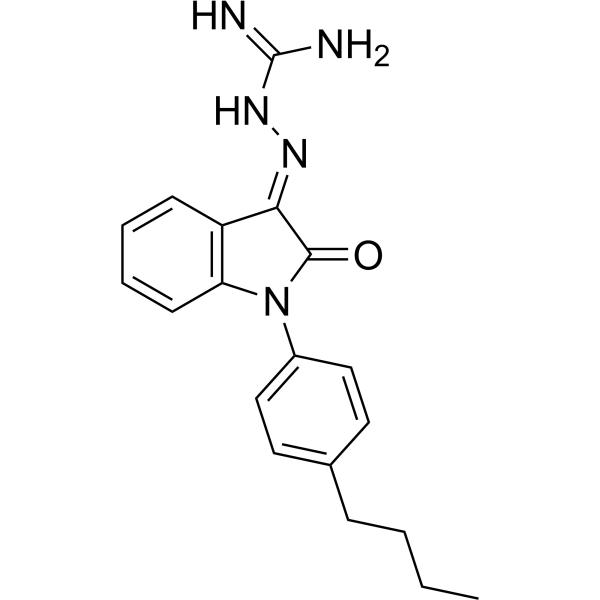
    Glycosyltransferase-IN-1 (compound 5m) is a potent glycosyltransferase inhibitor, with an IC50 of 82.8 μM. Glycosyltransferase-IN-1 shows antibacterial activity, with MIC values of 6 μg/mL for MSSA, MRSA, B. subtilis and 12 μg/mL for E. coli .
    Glycosyltransferase-IN-1
  • HY-E70046A

    Bovine B4GALT1

    Glycosyltransferase Others
    Bovine beta-1,4-Galactosyltransferase (Bovine B4GALT1) is a one member of the glycosyltransferase family of enzymes. Bovine beta-1,4-Galactosyltransferase transfers galactose from UDP-galactose to N-acetylglucosamine (GlcNAc) to produce N-acetyllactosamine with a β-1,4-glycosidic linkage .
    Bovine beta-1,4-Galactosyltransferase
  • HY-E70139

    EC:2.4.1.313; B3GALNT2; β-1,3-N-acetylgalactosaminyltransferase II

    Glucosylceramide Synthase (GCS) Others
    UDP-GalNAc:β-1,3-N-acetylgalactosaminyltransferase 2 ( EC:2.4.1.313; B3GALNT2; β-1,3-N-acetylgalactosaminyltransferase II) is a glycosyltransferase .
    UDP-GalNAc:β-1,3-N-acetylgalactosaminyltransferase 2
  • HY-175697

    Glycosyltransferase SARS-CoV Angiotensin-converting Enzyme (ACE) DNA/RNA Synthesis Infection
    Glycosyltransferase-IN-2 (Compound 20) is a Glycosyltransferase inhibitor. Glycosyltransferase-IN-2 has a broad-spectrum anticoronavirus activity with IC50s of 11.3, 5.5 and ~16.2 μM for MHV, HCoV-NL63 and SARS-CoV-2, respectively. Glycosyltransferase-IN-2 interferes with the coronavirus infectivity, alters viral protein glycosylation with inhibition of interaction with the ACE2 receptor or SC-VLP secretion, and inhibits RNA replication. Glycosyltransferase-IN-2 can be used for coronavirus infections research .
    Glycosyltransferase-IN-2
  • HY-164169

    Biochemical Assay Reagents Others
    GDP-Azido-Fucose is a chemically modified donor substrate. GDP-Azido-Fucose can be used to synthesize fluorophore-conjugated GDP-fucose. GDP-Azido-Fucose can be used to study glycosyltransferase reactions .
    GDP-azido-fucose
  • HY-E70044

    Glycosyltransferase Metabolic Disease
    beta-1, 3-N-Acetylhexaminyltransferase (LgtA) is a glycosyltransferase, is often used in biochemical studies. beta-1, 3-N-Acetylhexaminyltransferase (LgtA) catalyzes the transfer of N-acetylglucosamine from UDP-GlcNAc to N-acetyllactosamine and lactose .
    beta-1, 3-N-Acetylhexaminyltransferase (LgtA)
  • HY-135785

    OGT Acyltransferase Metabolic Disease
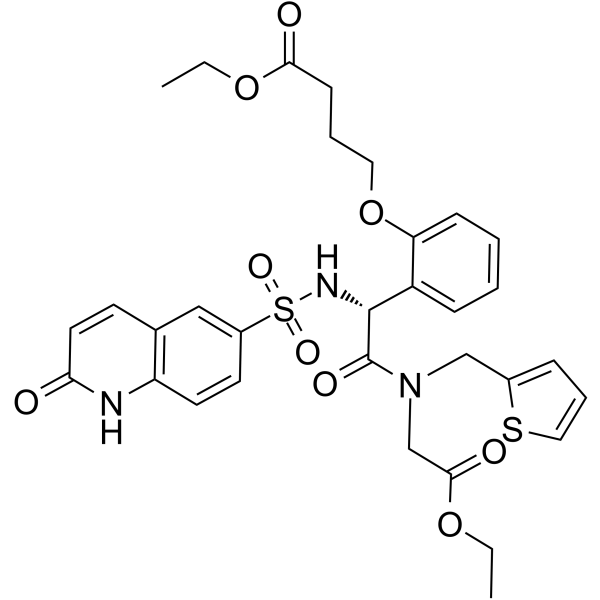
    OSMI-3 (Compound 2b) is a potent, long-lasting, and cell-permeable O-linked N-acetylglucosamine transferase (OGT) inhibitor. Cells contain a large nuclear pool of partially spliced OGT transcript, and OSMI-3 increases detained intron splicing in cells .
    OSMI-3
  • HY-163121

    Glycosyltransferase TGF-β Receptor FAK Galectin Collagen Endocrinology Cancer
    PST3.1a is an orally active and brain-penetrant N-acetylglucosamine glycosyltransferase (MGAT5) inhibitor with a human IC50 of 2 µM. PST3.1a inhibits TGFβR and FAK signaling pathway activity. PST3.1a alters β1,6-GlcNAc N-glycans and microtubule/microfilament integrity, increases OLIG2 expression, and inhibits proliferation, migration, invasiveness, and clonogenic capacities of glioblastoma initiating cells. PST3.1a reduces invasive and proliferative capacity of glioblastoma initiating cells in orthotopic graft models, increases overall survival of orthotopic graft model mice. PST3.1a blunts MGAT5 overexpression, decreases renal fibrosis via collagen 1, collagen 4, and galectin 3 downregulation in a rat chronic kidney disease model. PST3.1a can be used for the research of glioblastoma multiforme and chronic kidney disease .
    PST3.1a
  • HY-N11483

    Others Others
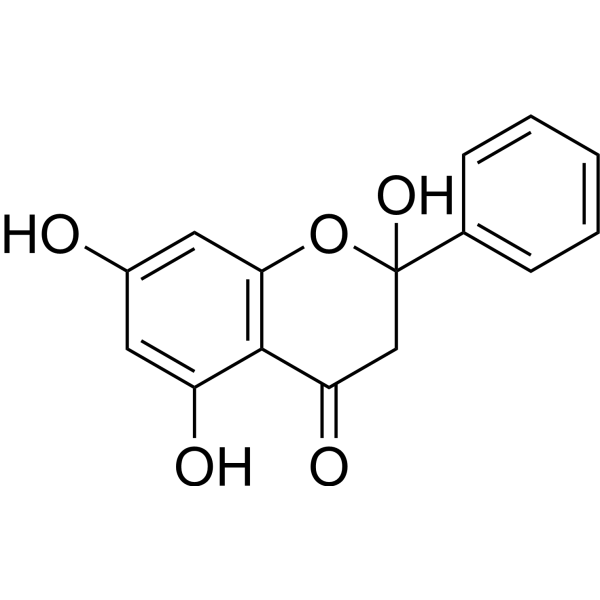
    2-Hydroxypinocembrin is a 2-hydroxyflavanones substrate of flavonoid C-glycosyltransferases .
    2-Hydroxypinocembrin
  • HY-W039855A

    Biochemical Assay Reagents Others
    1,2,3,4-Tetra-O-benzyl-β-D-glucopyranoside is a substrate for enzymatic glycosylation reactions and glycosyltransferase assays.
    1,2,3,4-Tetra-O-benzyl-β-D-glucopyranoside, 98%
  • HY-E70160

    EC:2.4.1.221; POFUT1

    Glycosyltransferase Others
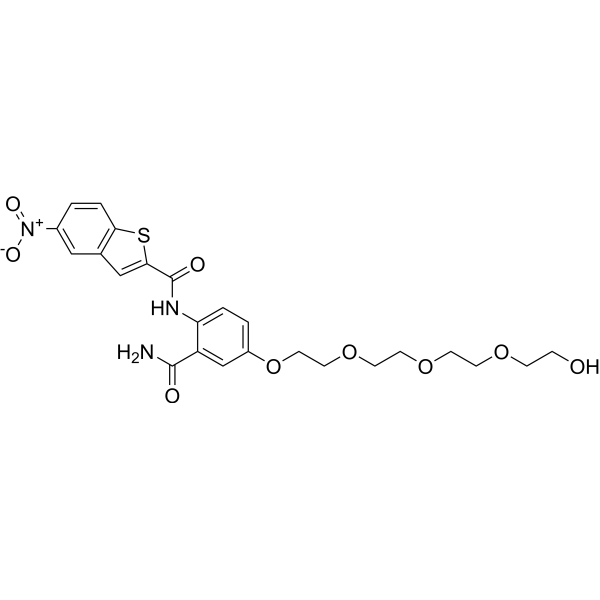
    Protein O-Fucosyltransferase 1 (EC:2.4.1.221; POFUT1) is a Glycosyltransferase containing the cysteine-rich motifs as the acceptor sugar and GDP-fucose as the donor .
    Protein O-Fucosyltransferase 1
  • HY-169084

    Glycosyltransferase Cancer
    ST-IN-1 (compound (R)-1) is a selective ST inhibitor (Ki=70 nM, rat a-2,6-ST; Ki=19 nM, hST6GAL1) with antitumor activity. ST-IN-1 inhibits tumor growth and metastasis by delipidating the surface of tumor cells .
    ST-IN-1
  • HY-155716

    Bacterial Glucosylceramide Synthase (GCS) Infection
    G43-C3-TEG is a glycosyl-transferase inhibitor. G43-C3-TEG reduces the biofilm formation by decreasing the production of EPS (extracellular polysaccharides) .
    G43-C3-TEG
  • HY-E70297

    MGAT4A

    Endogenous Metabolite Cancer
    N-Acetylglucosaminyltransferase IVa (MGAT4A) is a glycosyltransferase that can enhance the migration, invasion, and adhesion abilities of cancer cells, and increase β1,4GlcNAc branched glycans on integrin β1 (ITGB1), a tumor-associated glycoprotein closely related to cell motility .
    N-Acetylglucosaminyltransferase IVa
  • HY-E70291

    GALNT4

    MAP3K p38 MAPK JNK NF-κB Endogenous Metabolite Cancer
    N-Acetylgalactosaminyltransferase 4 (GALNT4) is a glycosyltransferase capable of inhibiting the activation of ASK1. By directly binding to ASK1, N-Acetylgalactosaminyltransferase 4 suppresses its N-terminal dimerization and subsequent phosphorylation, leading to robust inactivation of downstream JNK/p38 and NF-κB signals, and thereby improving the prognosis of liver surgery .
    N-Acetylgalactosaminyltransferase 4
  • HY-E71206

    Glycosyltransferase Others
    α,α-Trehalose phosphorylase (EC 2.4.1.64) belongs to the family of glycosyltransferases, specifically the hexosyltransferases.
    α,α-Trehalose phosphorylase
  • HY-E71154

    Glycosyltransferase Metabolic Disease
    1,3-β-Glucan synthase (EC 2.4.1.34) belongs to the family of glycosyltransferases, specifically the hexosyltransferases.
    1,3-β-Glucan synthase
  • HY-E71160

    Glycosyltransferase Metabolic Disease
    1,4-α-Glucan 6-α-glucosyltransferase (EC 2.4.1.24) belongs to the family of glycosyltransferases, specifically the hexosyltransferases.
    1,4-α-Glucan 6-α-glucosyltransferase
  • HY-164169A

    Biochemical Assay Reagents Others
    GDP-Azido-Fucose disodium is a chemically modified donor substrate. GDP-Azido-Fucose disodium can be used to synthesize fluorophore-conjugated GDP-fucose. GDP-Azido-Fucose can be used to study glycosyltransferase reactions .
    GDP-azido-fucose disodium
  • HY-178631

    Biochemical Assay Reagents Metabolic Disease
    UDP-Mannose exists in mouse brain, especially hypothalamus and neocortex at a higher concentration compared to other organs. UDP-Mannose regulates glycosylation, in particular mannosylation in specific organs or conditions. UDP-Mannose can be used as a substrate for structural study of glycosyltransferase .
    UDP-Mannose
  • HY-E71174

    Biochemical Assay Reagents Others
    10-Deoxymethynolide desosaminyltransferase (EC 2.4.1.277) is the glycosyltransferase responsible for the attachment of dTDP-D-desosamine to 10-Deoxymethynolide or narbonolide during the biosynthesis of methymycin, neomethymycin, narbomycin, and pikromycin in the bacterium Streptomyces venezuelae. Activity requires an additional protein partner, DesVIII.
    10-Deoxymethynolide desosaminyltransferase
  • HY-E71162

    Biochemical Assay Reagents Others
    1,4-β-D-Xylan synthase (EC 2.4.2.24) belongs to the family of glycosyltransferases, specifically the pentosyltransferases. 1,4-β-D-Xylan synthase (EC 2.4.2.24) participates in starch and sucrose metabolism and nucleotide sugars metabolism.
    1,4-β-D-Xylan synthase
  • HY-E71155

    Glycosyltransferase Metabolic Disease
    1,3-β-Oligoglucan phosphorylase (EC 2.4.1.30) belongs to the family of glycosyltransferases, specifically the hexosyltransferases. The two substrates of this enzyme are (1,3-beta-D-glucosyl) n and phosphate, whereas its two products are (1,3-beta-D-glucosyl) n-1 and alpha-D-glucose 1-phosphate.
    1,3-β-Oligoglucan phosphorylase
  • HY-E71140

    Biochemical Assay Reagents Others
    1,2-Diacylglycerol 3-α-glucosyltransferase (EC 2.4.1.337) functions under phosphate-deficient conditions, generating glycolipids as substitutes for phospholipids. 1,2-Diacylglycerol 3-α-glucosyltransferase (EC 2.4.1.337) belongs to the GT4 family of conformation-retaining glycosyltransferases. Many diacylglycerols with long-chain acyl groups can act as acceptors.
    1,2-Diacylglycerol 3-α-glucosyltransferase
  • HY-W727481

    Parasite Insecticide Infection
    Cyetpyrafen is a pyrazole insecticide/acaricide with broad-spectrum insecticidal activity. Cyetpyrafen binds to DhelOBP4 (Ki = 4.95 μM) and DhelOBP21 (Ki = 5.51 μM) to mediate olfactory recognition in *Cryptolaemus montrouzieri*. Cyetpyrafen induces dose-dependent electroantennogram responses in *Cryptolaemus montrouzieri* and exhibits repellent effects on the species. Cyetpyrafen has bioaccumulative properties, is rapidly and passively absorbed by the roots of lettuce and rice, reaches a steady state within 24 h, preferentially accumulates in roots, and shows limited xylem/phloem translocation .
    Cyetpyrafen

Inquiry Online

Your information is safe with us. * Required Fields.

Salutation


Country or Region *

Applicant Name *


Organization Name *

Department *


Email Address *


Product Name *

Cat. No.


Requested quantity *

Phone Number *


Remarks

Inquiry Online

Inquiry Information

Product Name:
Cat. No.:
Quantity:
MCE Japan Authorized Agent:

