57 Results for "

Hep G2

" in MedChemExpress (MCE) Product Catalog:
Products (57)

57 Results for "Hep G2" in MCE Product Catalog:

2
2 Cited Publications
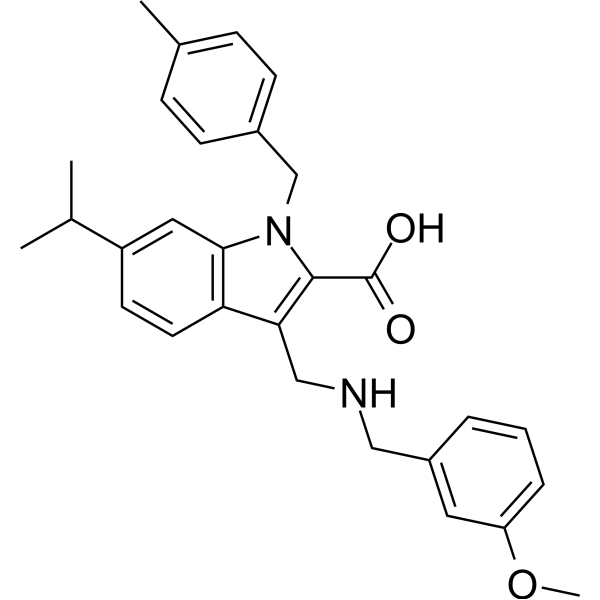
Cat. No.: HY-146302
CAS No.: 2770842-10-7
Purity:  99.00%
Research Areas:  

Cancer

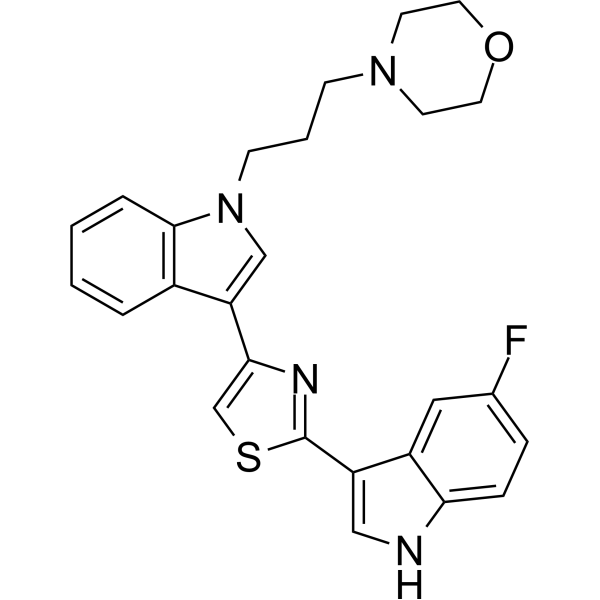
14-3-3η Protein inhibitor 1 (Compound C11) is a 14-3-3η protein inhibitor with a KD of 35 µM. 14-3-3η Protein inhibitor 1 shows inhibitory activities against several typical human liver cancer cell lines. 14-3-3η Protein inhibitor 1 induces cell apoptosis and G1-S cell cycle arrest with good metabolic stability .
loading...
    loading...
1
1 Cited Publications
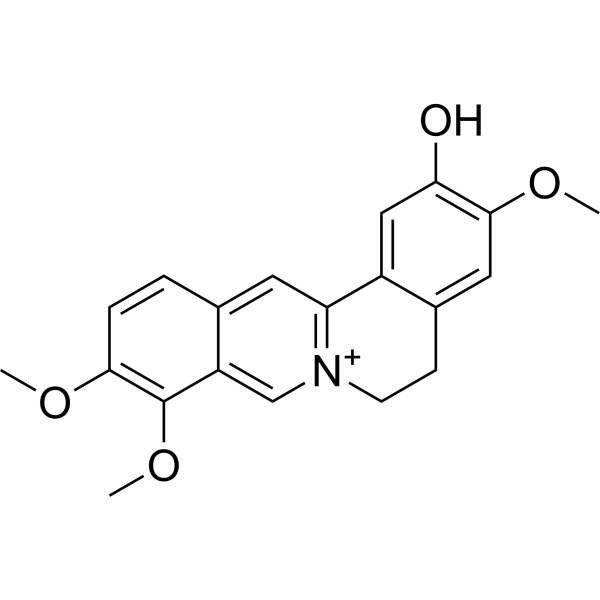
Cat. No.: HY-N0926
CAS No.: 3621-36-1
Synonyms: Columbamin; Dehydroisocorypalmine
Columbamine (Columbamin; Dehydroisocorypalmine) is an organic heterotetracyclic alkaloid extracted from plants. Columbamine is a metabolite of Berberine (HY-N0716). Columbamine inhibits the cytochrome P450 (CYP) isoform CYP3A4 (IC50 = 30.6 µM). Columbamine induces apoptosis in cancer cells. Columbamine can be used for antioxidant, anti-inflammatory, antitumor, antifungal, antiparasite, hepatoprotective, neuroprotective, hypolipidemic and hypoglycemic study .
loading...
    loading...
1
1 Cited Publications
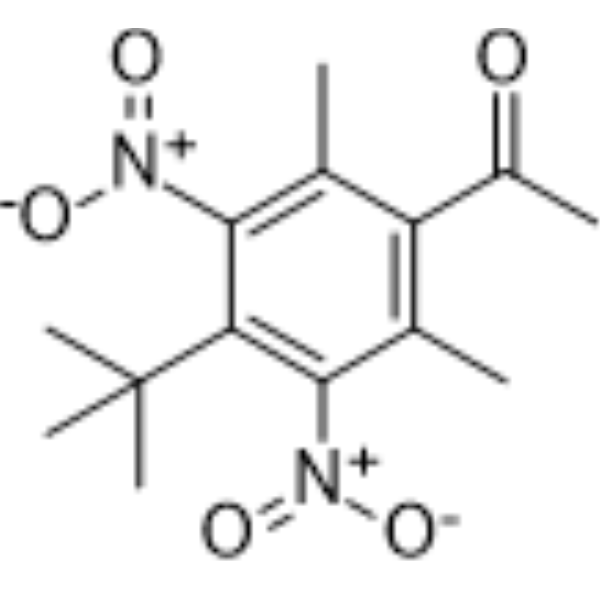
Cat. No.: HY-N2045
CAS No.: 81-14-1
Musk ketone is a widely used artificial fragrance. Musk ketone is also a cytochrome P450 enzyme inducer. Musk ketone shows mutagenic and comutagenic effects in Hep G2 cells and induces neural stem cell proliferation and differentiation in cerebral ischemia via activation of the PI3K/Akt signaling pathway. In the brain, musk ketone is neuroprotective against stroke injury through inhibition of cell apoptosis .
loading...
    loading...
1
1 Cited Publications
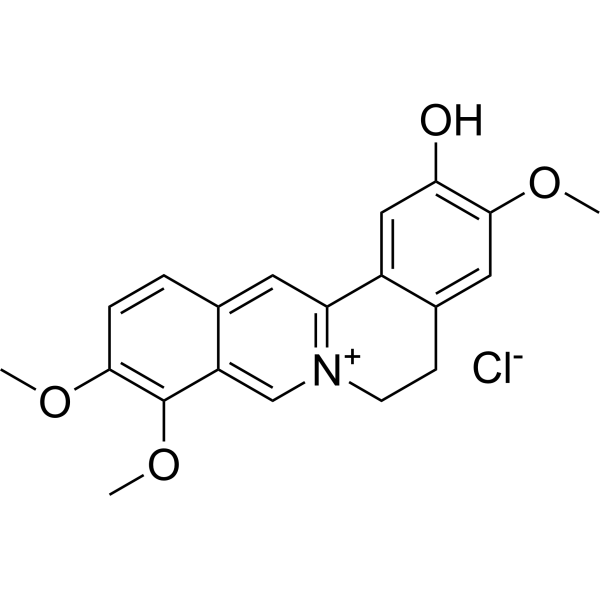
Cat. No.: HY-N0926A
CAS No.: 1916-10-5
Synonyms: Columbamin chloride; Dehydroisocorypalmine chloride
Columbamine (Columbamin; Dehydroisocorypalmine) chloride is an organic heterotetracyclic alkaloid extracted from plants. Columbamine chloride is a metabolite of Berberine (HY-N0716). Columbamine chloride inhibits the cytochrome P450 (CYP) isoform CYP3A4 (IC50 = 30.6 µM). Columbamine chloride induces apoptosis in cancer cells. Columbamine chloride can be used for antioxidant, anti-inflammatory, antitumor, antifungal, antiparasite, hepatoprotective, neuroprotective, hypolipidemic and hypoglycemic study .
loading...
    loading...
1
1 Cited Publications
Cat. No.: HY-122812
CAS No.: 5989-16-2
Purity:  99.66%
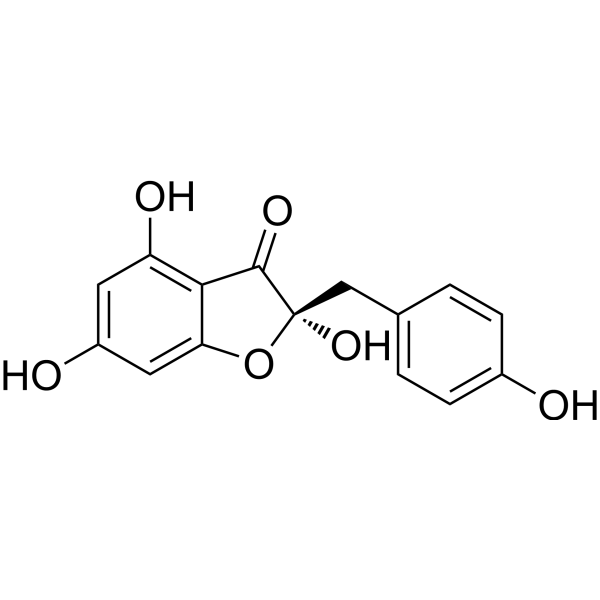
Maesopsin is a phenolic compound, that can be isolated from Hoveniae Lignum .
loading...
    loading...
Cat. No.: HY-N7103
CAS No.: 111-62-6
Research Areas:  

Others

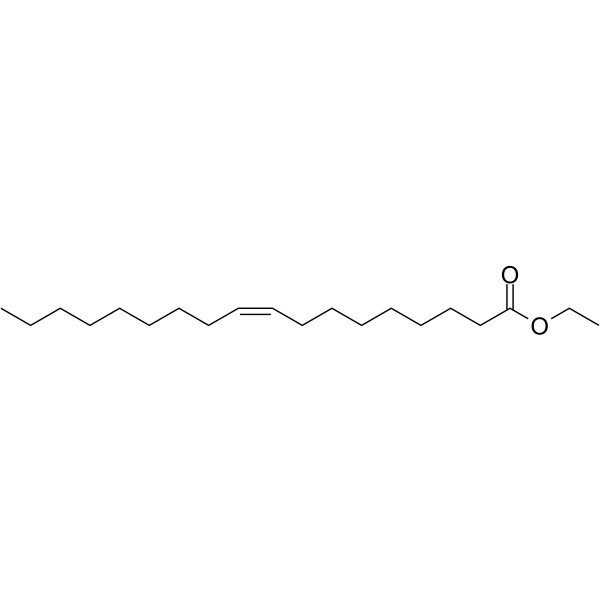
Ethyl oleate is an orally active fatty acid ester formed from the condensation of oleic acid and ethanol. Ethyl oleate is the main fatty acid ethyl ester in the blood after alcohol ingestion. Ethyl oleate has no obvious toxicity to rats and its absorption, distribution and excretionare similar to triacylglycerol. Ethyl oleate can accelerate the drying process of certain foods and can also be used as a liquid lipid component in nanostructured lipid carriers .
loading...
    loading...
Cat. No.: HY-N6642
CAS No.: 50980-32-0
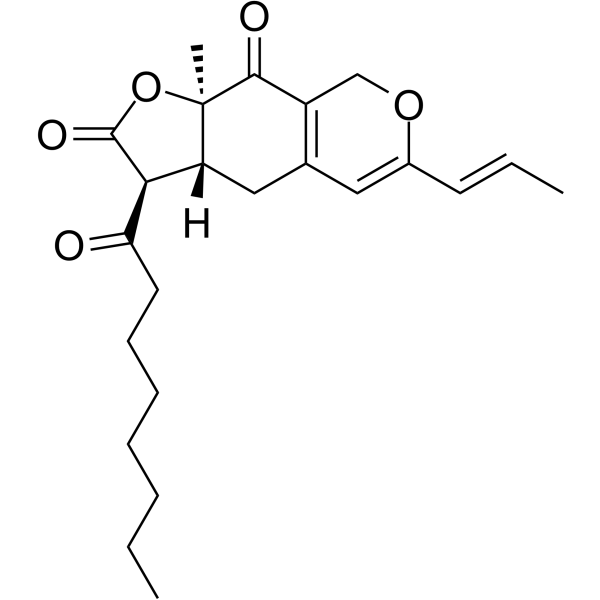
Ankaflavin, isolated from Monascus-Fermented red rice, is an orally active PPARγ agonist. Ankaflavin exhibits selective cytotoxic effect and induces cell death through apoptosis on cancer cells. Ankaflavin has anti-inflammatory, anti-cancer, antiatherosclerotic, and hypolipidemic effects .
loading...
    loading...
Cat. No.: HY-B0390
CAS No.: 72-33-3
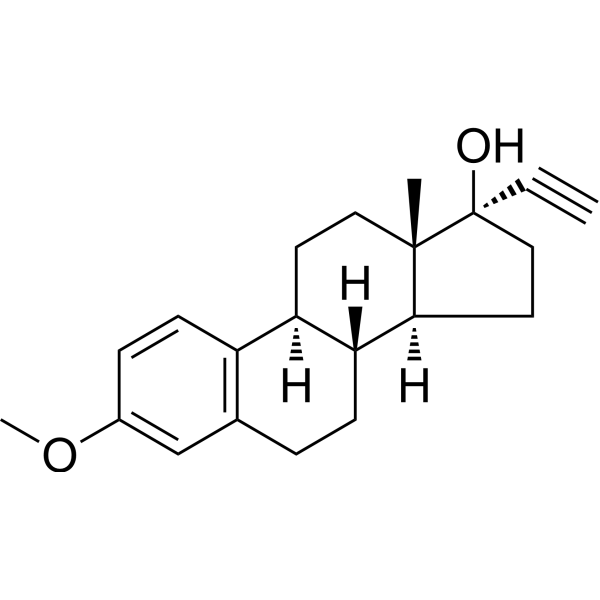
Mestranol is an inactive proagent and becomes biologically active on conversion to ethinyl estradiol (EE). Mestranol acts as an estrogen receptor agonist. Mestranol combines with a progestin in vivo and can be used for the research of menopausal hormone or menstrual disorders. Mestranol is a click chemistry reagent, it contains an Alkyne group and can undergo copper-catalyzed azide-alkyne cycloaddition (CuAAc) with molecules containing Azide groups.
loading...
    loading...
Cat. No.: HY-W073128
CAS No.: 376-06-7
Synonyms: PFTeDA
Perfluorotetradecanoic acid (PFTeDA) is an orally active perfluoroalkyl substance. Perfluorotetradecanoic acid directly binds to the ligand-binding domain of purified hPPARγ, with a Kd value of 157.8 μM. Perfluorotetradecanoic acid significantly reduces the activity of the SIRT1/PGC1α and AMPK signaling pathways while stimulating the activity of the AKT1/mTOR signaling pathway. Perfluorotetradecanoic acid significantly upregulates the expression of corticosterone biosynthesis genes. Perfluorotetradecanoic acid increases ROS levels and promotes Apoptosis. Perfluorotetradecanoic acid impairs Leydig cell function and male reproductive endocrine function in adult male rats .
loading...
    loading...
Cat. No.: HY-N7152
CAS No.: 76060-35-0
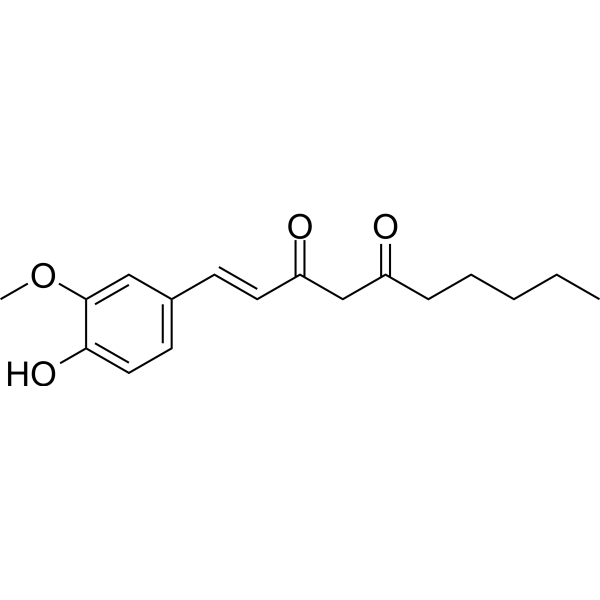
6-Dehydrogingerdione sensitizes human hepatoblastoma Hep G2 cells to TRAIL-induced apoptosis via reactive oxygen species-mediated increase of DR5 .
loading...
    loading...
Cat. No.: HY-144666
Purity:  99.64%
Target:  

Glutaminase

Research Areas:  

Cancer

GLS-1-IN-1 (compound 1d) is a GLS-1 inhibitor. GLS-1-IN-1 shows inhibitory effect against Hep G2, MCF 7, and MCF 10A cells .
loading...
    loading...
Cat. No.: HY-W654334
9-cis-Retinol-d5 is deuterium labeled 9-cis Retinol (HY-W587806). 9-cis Retinol is a precursor of 9-cis-Retinal (HY-W009310). 9-cis Retinol can inhibit 9-cis-Retinoic acid (HY-15128) synthesis in Hep G2 cells .
loading...
    loading...
Cat. No.: HY-134008
CAS No.: 862884-32-0
Purity:  99.84%
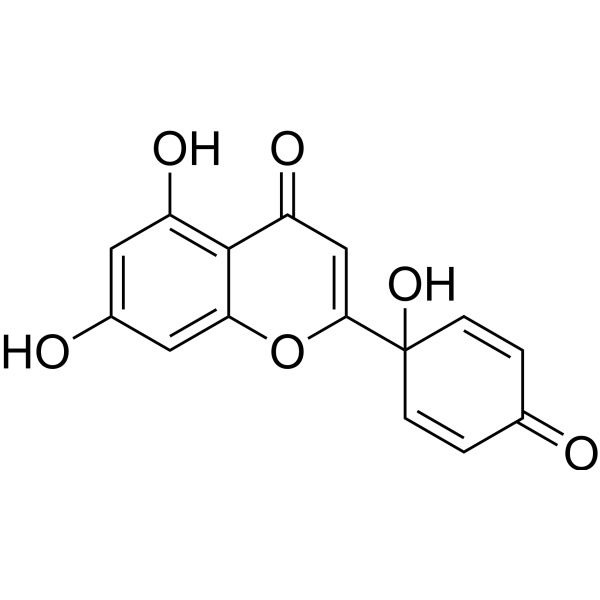
Protoapigenone is an antineoplastic agent isolated from ferns. Protoapigenone has significant inhibitory activity against Hep G2, Hep 3B, MCF-7, A549 and MDAMB-231, with IC50s values of 1.60, 0.23, 0.78, 3.88 and 0.27 μg/mL respectively .
loading...
    loading...
Cat. No.: HY-177291
CAS No.: 256397-11-2
LAB687 is a microsomal triglyceride transfer protein (MTP) inhibitor with an IC50 of 0.9 nM for apolipoprotein B (apoB) secretion in HepG2 cells. LAB687 also acts as a Smoothened (Smo) antagonist, with IC50 values of 2.48 μM and 3.42 μM against mouse and human Smo receptors, respectively. LAB687 reduces triglyceride and low-density lipoprotein cholesterol (LDL-C) levels, and inhibits the Hedgehog signaling pathway. LAB687 can be used in studies related to Hedgehog-dependent cancers .
loading...
    loading...
Cat. No.: HY-W587806
CAS No.: 22737-97-9
Target:  

Endogenous Metabolite

Research Areas:  

Inflammation/Immunology

9-cis Retinol is a precursor of 9-cis-Retinal (HY-W009310). 9-cis Retinol can inhibit 9-cis-Retinoic acid (HY-15128) synthesis in Hep G2 cells .
loading...
    loading...
Cat. No.: HY-N8954
CAS No.: 17353-03-6
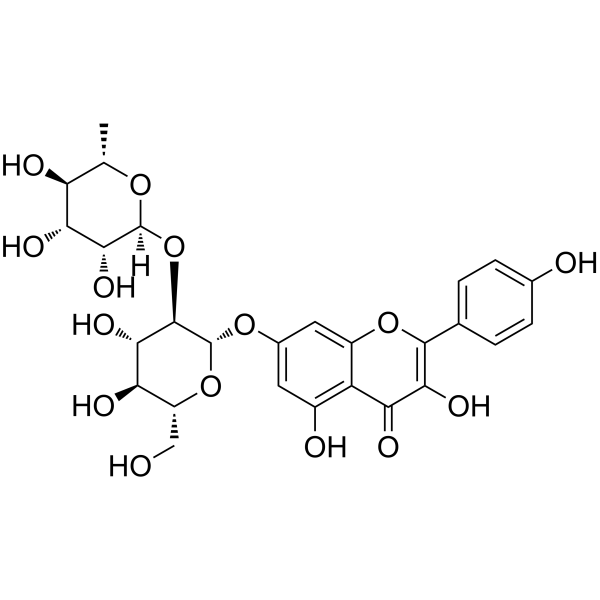
Kaempferol 7-O-neohesperidoside is a ?avonoid glycoside that can be isolated from Litchi chinensis. Kaempferol 7-O-neohesperidoside exhibits significant cytotoxic activity against A549, LAC, Hep-G2, and HeLa cell lines with IC50s of 0.53, 7.93, 0.020, and 0.051 μM, respectively .
loading...
    loading...
Cat. No.: HY-20808
CAS No.: 596-38-3
Target:  

COX

Research Areas:  

Cancer

Antioxidant agent-15 (Compound 4) is a potent antioxidant inhibition activity, with the IC50 of 15.44 nM. Antioxidant agent-15 inhibits tumor cell growth in Hela, Hep G2 and Caco-2 cells, with the IC50 of 395.26, 400.4 and 24.6 nM, respectively .
loading...
    loading...
Cat. No.: HY-N10023
CAS No.: 120849-18-5
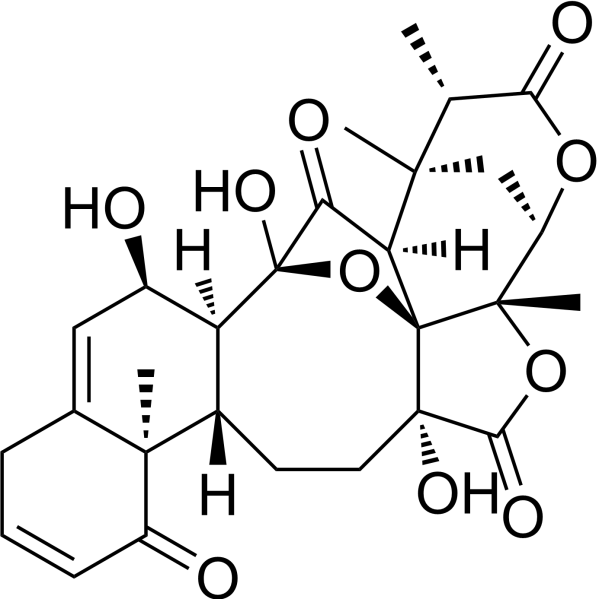
Physalin O is a physalin that can be isolated from Physalis angulata. Physalin O shows cytotoxicity to Hep G2 and MCF-7 cancer cells with IC50 values of 31.1 and 11.4 µM, respectively. Physalin O inhibits the production of nitric oxide (NO) and shows anti-inflammatory activities .
loading...
    loading...
Cat. No.: HY-N8882
CAS No.: 60539-23-3
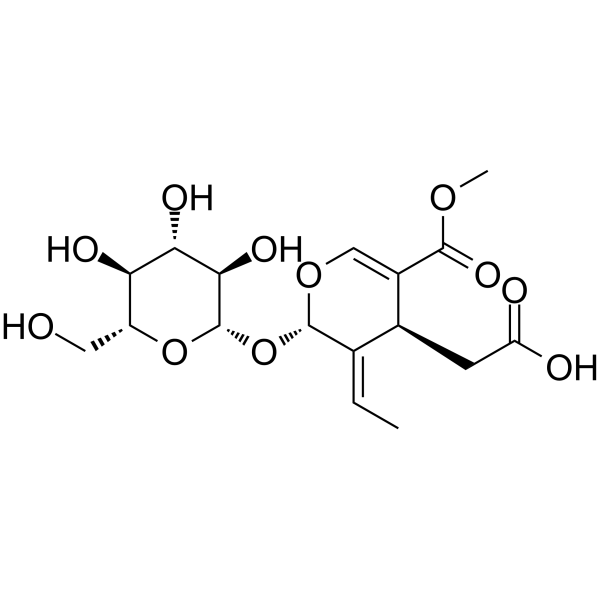
Oleoside 11-methyl ester is a secoiridoid glucoside and possesses a strong cytotoxic activity against Hep-G2 cells .
loading...
    loading...
Cat. No.: HY-N7273
CAS No.: 55304-02-4
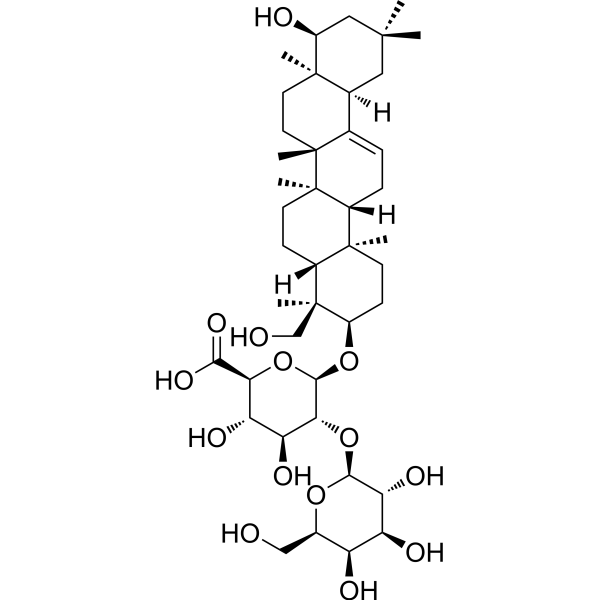
Soyasaponin III, a monodesmodic oleanane triterpenoid, is one of the main potentially bioactive saponins found in soy (Glycine max) and related products. Soyasaponin III can induce apoptosis in Hep-G2 cells .
loading...
    loading...

