

Search Result
Results for "
IBDs
" in MedChemExpress (MCE) Product Catalog:
1
Biochemical Assay Reagents
7
Isotope-Labeled Compounds
| Cat. No. |
Product Name |
Target |
Research Areas |
Chemical Structure |
-
- HY-W028393
-
-
-
- HY-151435
-
|
|
CCR
|
Inflammation/Immunology
|
|
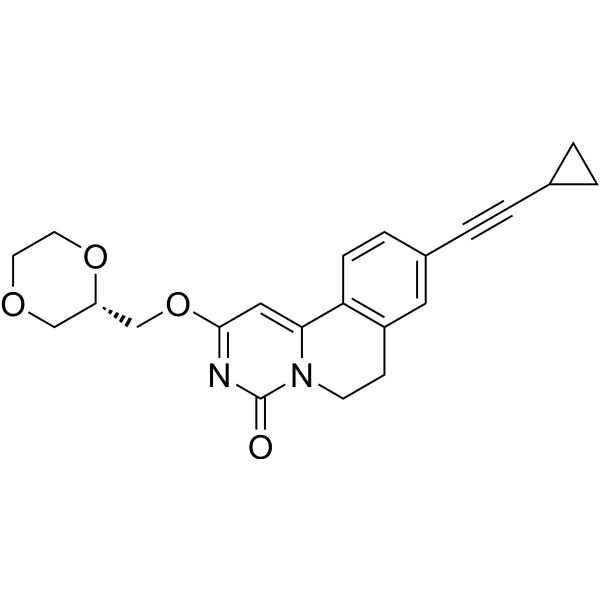
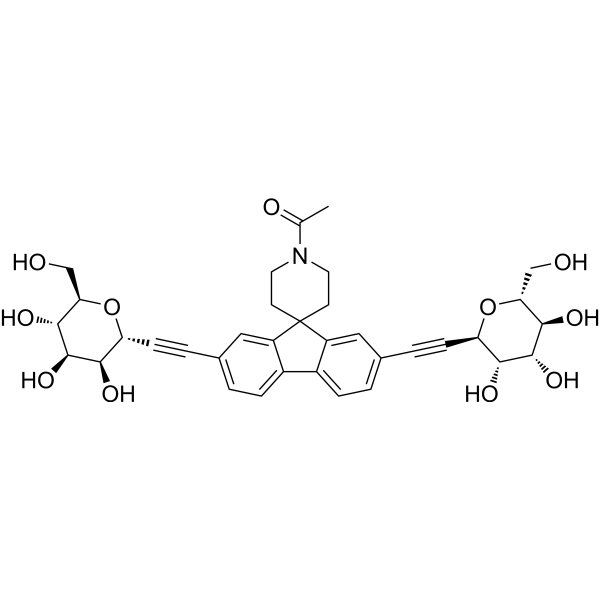
CCR6 antagonist 1 is a CCR6 antagonist that inhibits the CCL20/CCR6 axis. CCR6 antagonist 1 can be used in the research of autoimmune-mediated inflammatory diseases, such as inflammatory bowel diseases (IBDs) .
|
-
-
- HY-I0447
-
|
|
Antibiotic
Bacterial
|
Infection
Inflammation/Immunology
|
|
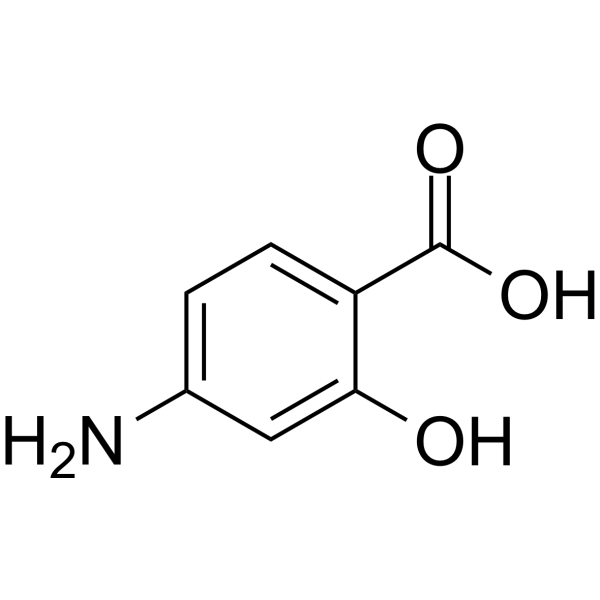
4-Aminosalicylic acid is an inhibitor for dihydrofolate reductase (DHFR) and an antituberculous agent. 4-Aminosalicylic acid exhibits anti-inflammatory activity and can be used in research of inflammatory bowel disease (IBD). 4-Aminosalicylic acid is orally active .
|
-
-
- HY-174990
-
|
|
15-PGDH
|
Metabolic Disease
Inflammation/Immunology
|
|
HW201877 is a potent and orally active 15-prostaglandin dehydrogenase (15-PGDH) inhibitor with an IC50 of 3.6 nM. HW201877 demonstrates robust cellular efficacy in elevating PGE2 levels in A549 cells and exhibits remarkable efficacy in animal models of tissue injury and fibrosis. HW201877 can be used for the study of inflammatory bowel disease (IBD), idiopathic pulmonary fibrosis (IPF) and Crohn’s disease (CD) .
|
-
-
- HY-P9984
-
|
rhuMAb Beta7; RG7413; PRO145223
|
Integrin
|
Cancer
|
|
Etrolizumab (rhuMAb Beta7) is a gut-selective, anti-β7 integrin monoclonal antibody. Etrolizumab is specific targeting of the β7 subunit of α4β7 and αEβ7 integrins with Ki values of 18 nM and 1800 pM for Human α4β7 and Human αEβ7-293, respectively. Etrolizumab can be used in research of inflammatory bowel disease (IBD) .
|
-
-
- HY-123630
-
|
FD&C RED NO. 40; CI 16035
|
Environmental Pollutants
Fluorescent Dye
5-HT Receptor
Interleukin Related
Reactive Oxygen Species (ROS)
IFNAR
|
Inflammation/Immunology
|
|
Allura Red AC is a food colorant, appearing as a deep red water-soluble powder or granules, used in various applications such as beverages, syrups, candies, and cereals. Allura Red AC can statically quench the intrinsic fluorescence of HSA. Additionally, Allura Red AC is a 5-hydroxytryptamine (5-HT) pathway-associated pro-inflammatory agent, capable of exacerbating experimental colitis. Allura Red AC holds potential for research in inflammatory bowel disease (IBD), intestinal barrier function, and food additive safety .
|
-
-
- HY-14908
-
|
4sc-101; SC12267
|
Dihydroorotate Dehydrogenase
Interleukin Related
FXR
|
Infection
Inflammation/Immunology
|
|
Vidofludimus is an orally active inhibitor for dihydroorotate dehydrogenase (DHODH) and also is a novel modulator for farnesoid X receptor (FXR). Vidofludimus, as an immunomodulatory agent, can be used for the research of autoimmune disorders such as inflammatory bowel disease (IBD). Vidofludimus also can be used for the research of fatty liver by targeting FXR .
|
-
-
- HY-115497
-
BRD5529
4 Publications Verification
|
E1/E2/E3 Enzyme
|
Infection
Inflammation/Immunology
|
|
BRD5529 is an effective dose-dependent CARD9-TRIM62 protein–protein interaction (PPI) inhibitor with an IC50 value of 8.6 μM. BRD5529 has potency and complete inhibition of CARD9 ubiquitinylation in vitro, also has favorable solubility. BRD5529 can be used for the research of inflammatory bowel disease (IBD) such as Crohn’s disease (CD) and ulcerative colitis (UC) .
|
-
-
- HY-12820
-
|
Antibiotic-202
|
Bacterial
Antibiotic
|
Infection
|
|
Sibofimloc (Antibiotic-202) is a first-in-class, gut-restricted, orally active FimH adhesion inhibitor extracted from patent WO2014100158A1, Compound Example 202. Sibofimloc has anti-bacterial infective activity. Sibofimloc is developed for inflammatory bowel disease (IBD) .
|
-
-
- HY-B0174
-
|
|
Apoptosis
|
Metabolic Disease
Inflammation/Immunology
Cancer
|
|
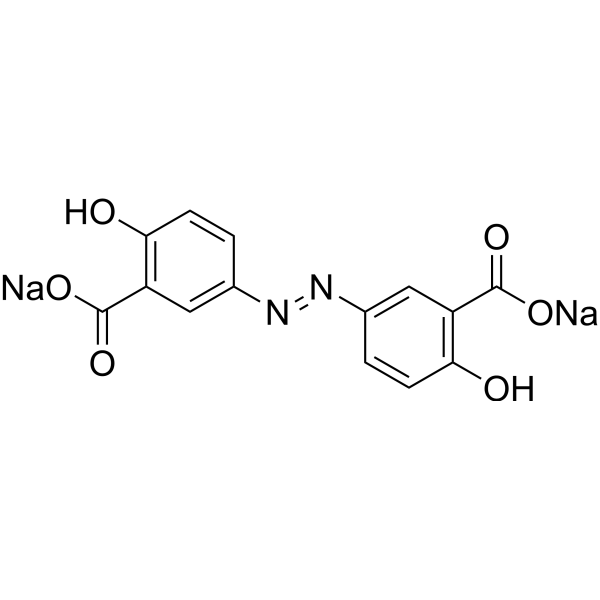
Olsalazine Disodium is an orally active prodrug of 5-ASA (HY-15027). Olsalazine Disodium can inhibit cells proliferation and induce apoptosis. Olsalazine Disodium can reduce DAI and MPO activity and inhibit inflammatory cytokines levels. Olsalazine Disodium can be used for the researches of cancer, inflammation and metabolic disease, such as colorectal cancer, inflammatory bowel disease (IBD) and hyperuricemic .
|
-
-
- HY-108017
-
-
-
- HY-163102
-
|
|
TNF Receptor
NF-κB
|
Inflammation/Immunology
|
|
IA-14069 is an orally active tumor necrosis factor-α (TNF-α) inhibitor. IA-14069 binds directly to TNF-α and TNF-α-triggered signaling (p-IκBα and NF-κB p65) activities. Additionally, IA-14069 exerts a suppressive effect on Dextran sodium sulfate (HY-116282C) (DSS)-induced colitis. IA-14069 can be used for the research of Rheumatoid arthritis (RA) and inflammatory bowel disease (IBD) .
|
-
-
- HY-16640
-
|
|
JAK
|
Inflammation/Immunology
|
|
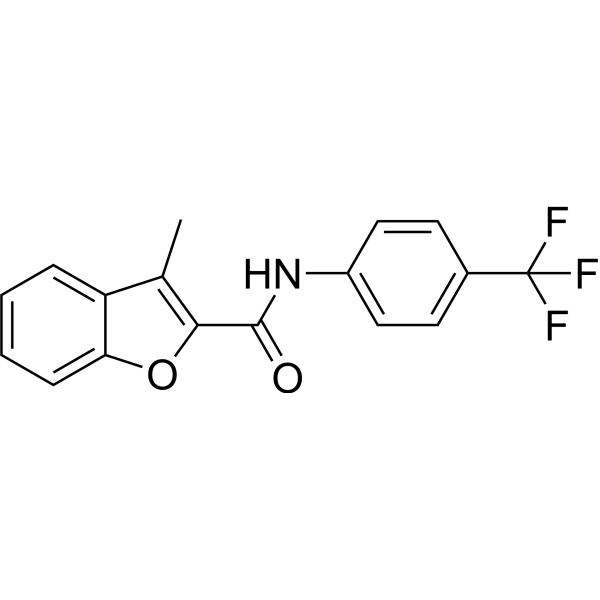
TCJL37 is a potent, selective, and orally bioavailable TYK2 inhibitor with a Ki of 1.6 nM. TCJL37 can be used for the research of inflammatory bowel diseases (IBD) .
|
-
-
- HY-P2221
-
|
ZP1848
|
GCGR
|
Inflammation/Immunology
|
|
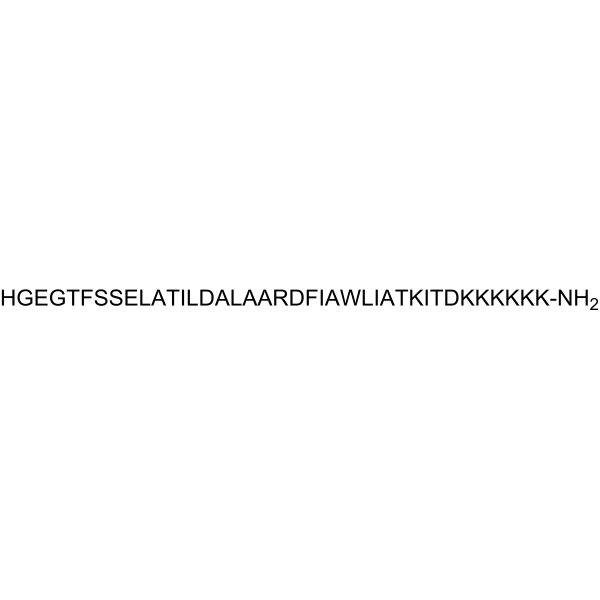
Glepaglutide (ZP1848), a long-acting GLP-2 analogue, is a potent GLP-2R agonist. Glepaglutide reduces faecal output and increases intestinal absorption. Glepaglutide alleviates small intestinal inflammation. Glepaglutide can be used in the research of inflammatory bowel disease (IBD) and Crohn’s disease .
|
-
-
- HY-B0174A
-
|
|
Apoptosis
|
Metabolic Disease
Inflammation/Immunology
Cancer
|
|
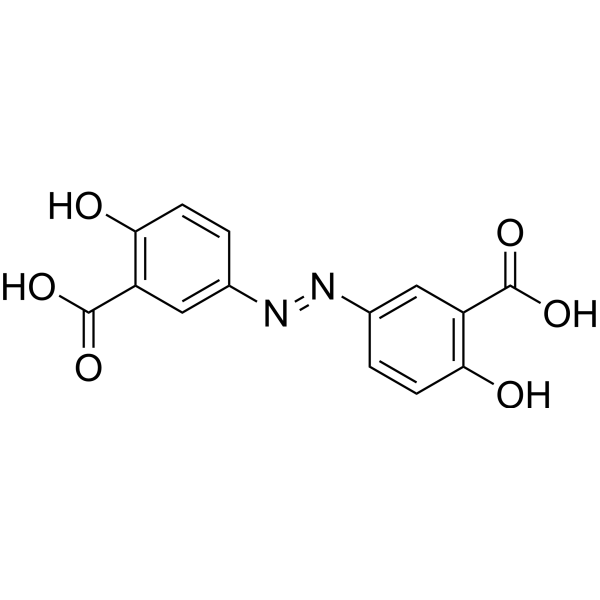
Olsalazine is an orally active prodrug of 5-ASA (HY-15027). Olsalazine can inhibit cells proliferation and induce apoptosis. Olsalazine can reduce DAI and MPO activity and inhibit inflammatory cytokines levels. Olsalazine can be used for the researches of cancer, inflammation and metabolic disease, such as colorectal cancer, inflammatory bowel disease (IBD) and hyperuricemic .
|
-
-
- HY-150608
-
|
|
PROTACs
STING
|
Inflammation/Immunology
Cancer
|
|
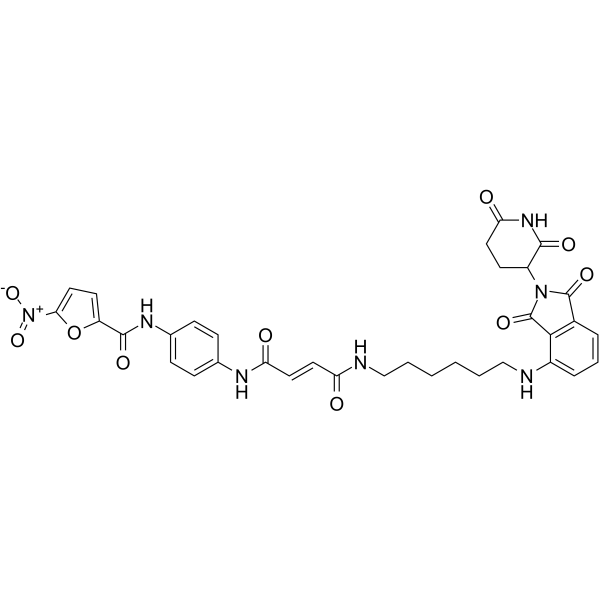
PROTAC STING Degrader-1 is a PROTAC degrader targeting the STING pathway with a DC50 of 3.2 μM. PROTAC STING Degrader-1 exerts high anti-inflammatory efficacy. PROTAC STING Degrader-1 can be used to study diseases such as acute kidney injury and inflammatory bowel diseases (IBDs). (Pink: STING ligand (HY-138682); Blue: CRBN ligand (HY-10984); Black: linker (HY-W015883)) .
|
-
-
- HY-P990297
-
|
|
CCR
HIV
|
Infection
Inflammation/Immunology
Cancer
|
|
Anti-Mouse/Rat/Human CCL2/MCP-1 Antibody (2H5) is an anti-mouse/rat/human CCL2/MCP-1 IgG monoclonal antibody. Anti-Mouse/Rat/Human CCL2/MCP-1 Antibody (2H5) can reverse the immunosuppressive microenvironment by blocking the CCL2 signaling pathway. Anti-Mouse/Rat/Human CCL2/MCP-1 Antibody (2H5) can reduce the secretion of IFN-γ and the infiltration of macrophages. CCL2/MCP-1 Antibody (2H5) can reduce the amount of HIV virus by increasing the proportion of T cells. Anti-Mouse/Rat/Human CCL2/MCP-1 Antibody (2H5) can be used for researches on inflammation conditions, virus infection and cancer such as inflammatory bowel disease (IBD), hepatocellular carcinoma (HCC) and HIV .
|
-
-
- HY-102013
-
|
BT-11
|
ABA Receptor
|
Neurological Disease
Inflammation/Immunology
|
|
Omilancor (BT-11) is an orally active lanthionine synthetase cyclase-like receptor 2 (LANCL2) activator. Omilancor can be used for the study of psoriasis, inflammatory bowel disease (IBD), and Crohn's disease (CD) .
|
-
-
- HY-I0447A
-
|
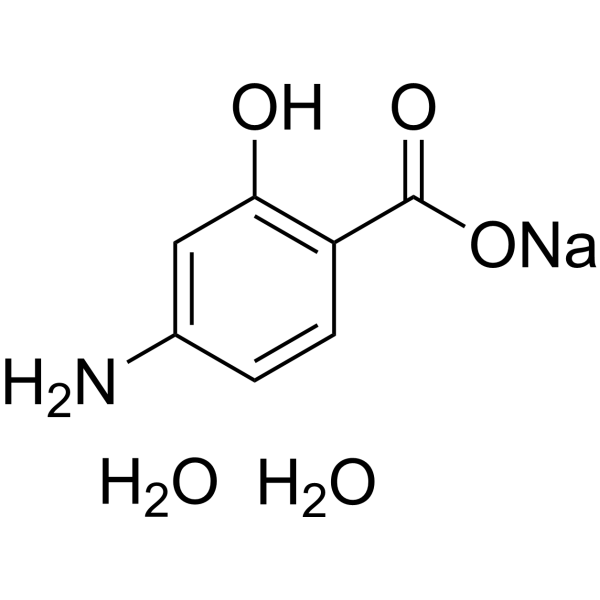
4-Aminosalicylic acid sodium salt dihydrate
|
Antibiotic
Bacterial
|
Infection
Inflammation/Immunology
|
|
Sodium 4-aminosalicylate dihydrate (4-Aminosalicylic acid sodium salt dihydrate) is an inhibitor for dihydrofolate reductase (DHFR) and an antituberculous agent. Sodium 4-aminosalicylate dihydrate exhibits anti-inflammatory activity and can be used in research of inflammatory bowel disease (IBD). Sodium 4-aminosalicylate dihydrate is orally active .
|
-
-
- HY-131064
-
|
|
RIP kinase
|
Inflammation/Immunology
|
|
RIPK3-IN-1 is a RIPK3 type II DFG-out inhibitor with an IC50 of 9.1 nM. RIPK3-IN-1 inhibits RIPK1 and RIPK2 with IC50s of 5.5 and >10 μM. RIPK3-IN-1 is also a c-Met kinase inhibitor with an IC50 of 1.1 μM .
|
-
-
- HY-120469
-
|
|
JAK
|
Inflammation/Immunology
|
|
GDC-046 is a potent, selective, and orally bioavailable TYK2 inhibitor with Kis of 4.8, 0.7, 0.7, and 0.4 nM for TYK2, JAK1, JAK2, and JAK3, respectively .
|
-
-
- HY-P2221B
-
|
ZP1848 acetate
|
GCGR
|
Inflammation/Immunology
|
|
Glepaglutide (ZP1848) acetate, a long-acting GLP-2 analogue, is a potent GLP-2R agonist. Glepaglutide acetate reduces faecal output and increases intestinal absorption. Glepaglutide acetate alleviates small intestinal inflammation. Glepaglutide acetate can be used in the research of inflammatory bowel disease (IBD) and Crohn’s disease .
|
-
-
- HY-13545
-
ABT-510
1 Publications Verification
|
Apoptosis
|
Inflammation/Immunology
Cancer
|
|
ABT-510 is an anti-angiogenic TSP peptide (Thrombospondin-1 analogue) that induces apoptosis and inhibits ovarian tumour growth in an orthotopic, syngeneic model of epithelial ovarian cancer. ABT-510 also reduces angiogenesis and inflammatory responses in a murine model of inflammatory bowel disease. ABT-510 can be used in studies of cancer (particularly epithelial ovarian cancer) and inflammatory bowel disease (IBD) .
|
-
-
- HY-105092
-
-
-
- HY-W028393R
-
-
-
- HY-109148
-
|
TD-1473; JNJ-8398
|
JAK
|
Inflammation/Immunology
|
|
Izencitinib (TD-1473) is an orally active, non-selective and gut-restricted JAK inhibitor. Izencitinib (TD-1473) can be used in the study for ulcerative colitis .
|
-
-
- HY-155782
-
|
|
RIP kinase
|
Inflammation/Immunology
|
|
Zharp2-1 is an oral effective RIPK2 inhibitor, highly associated with inflammatory bowel disease (IBD). Zharp2-1 blocker muramyl dipeptide (MDP) induces growth of mononuclear cells and induces inflammatory cell factor infection. Zharp2-1 attenuates MDP-induced small inguinal peritonitis, or ameliorates by DNBS-induced large inguinal conjunctivitis .
|
-
-
- HY-13545B
-
|
|
Apoptosis
|
Inflammation/Immunology
Cancer
|
|
ABT-510 acetate is an anti-angiogenic TSP peptide (Thrombospondin-1 analogue) that induces apoptosis and inhibits ovarian tumour growth in an orthotopic, syngeneic model of epithelial ovarian cancer. ABT-510 acetate also reduces angiogenesis and inflammatory responses in a murine model of inflammatory bowel disease. ABT-510 acetate can be used in studies of cancer (particularly epithelial ovarian cancer) and inflammatory bowel disease (IBD) .
|
-
-
- HY-178761
-
|
|
Phosphoglycerate Kinase (PGK)
Keap1-Nrf2
Heme Oxygenase (HO)
Interleukin Related
|
Inflammation/Immunology
|
|
PGK1-IN-1 (Compound 6e) is a potent and selective PGK1 inhibitor (IC50: 33 nM). PGK1-IN-1 inhibits PGK1-mediated glycolytic metabolism and reduces glucose consumption/lactate production. PGK1-IN-1 enhances Nrf2 accumulation and HO-1 expression, and suppresses the transcription and protein levels of the inflammatory cytokines IL-1β and IL-6. PGK1-IN-1 ameliorates Dextran sulfate sodium (DSS) (HY-116282C)-induced experimental colitis in mice. PGK1-IN-1 can be used for research of inflammatory bowel disease (IBD) .
|
-
-
- HY-160477
-
|
|
PIKfyve
NF-κB
IKK
|
Inflammation/Immunology
|
|
DC-SX029 is a potent SNX10 protein-protein interaction (PPI) inhibitor with oral activity with an estimated KD constant of ~0.935 μM by surface plasmon resonance (SPR). DC-SX029 blocks the SNX10-PIKfyve interaction, thereby decreased the TBK1/c-Rel signaling activation. DC-SX029 does not affect the protein level of SNX10. DC-SX029 has the potential for inflammatory bowel disease (IBD) research .
|
-
-
- HY-123763
-
|
|
CCR
|
Inflammation/Immunology
|
|
MLN3126 is an orally active and potent CCR9 antagonist. MLN3126 inhibits CCL25-induced calcium mobilization and chemotaxis of mouse primary thymocytes, wiht an IC50 value of 6.3 nM for calcium influx .
|
-
-
- HY-107831
-
|
|
Drug Derivative
|
Inflammation/Immunology
Cancer
|
|
5-Acetylsalicylic acid is the derivate of Aspirin (HY-14654), with anti-inflammatory property. 5-Acetylsalicylic acid is the active metabolite of Sulfasalazine (HY-14655) and its production is regulated by beneficial bacteria in the gut but is confined to the intestinal tract. 5-Acetylsalicylic acid exhibits a mild cytotoxicity effect on B16F10 cells. 5-Acetylsalicylic acid can be used for the study of inflammatory bowel disease (IBD) such as ulcerative colitis (UC) .
|
-
-
- HY-151262
-
|
|
JAK
STING
NF-κB
STAT
|
Inflammation/Immunology
|
|
JAK-IN-23 is an orally active double inhibitor of JAK/STAT and NF-κB. JAK-IN-23 can inhibit JAK1/2/3 with IC50 values of 8.9 nM, 15 nM and 46.2 nM, respectively. JAK-IN-23 has potent inhibitory activities against interferon-stimulated genes (ISG) and NF-κB pathways with IC50 values of 3.3 nM and 150.7 nM, respectively. JAK-IN-23 has great anti-inflammatory that decreases the release of various proinflammatory factors. JAK-IN-23 can be used for the research of inflammatory bowel disease (IBD) .
|
-
-
- HY-158404
-
|
|
METTL3
|
Inflammation/Immunology
|
|
METTL3-IN-8 (F039-0002) is a potent METTL3 inhibitor. METTL3-IN-8 strongly ameliorates Dextran sulfate sodium salt (DSS) (HY-116282C)-induced colitis. METTL3-IN-8 can be used Inflammatory bowel disease (IBD) research .
|
-
-
- HY-P99184
-
|
|
Integrin
|
Infection
Inflammation/Immunology
Cancer
|
|
Abrilumab is a fully human monoclonal antibody directed against α4β7. Abrilumab selectively binds the α4β7 integrin heterodimer. Abrilumab can be used for the research of inflammatory bowel disease (IBD) .
|
-
-
- HY-W718300
-
-
-
- HY-161735
-
|
|
CXCR
|
Inflammation/Immunology
|
|
CXCR4-IN-3 (compound XVI) is an orally active and potent inhibitor targeting the inflammation-related receptor CXCR4, with an IC50 of 3.2 nM. CXCR4-IN-3 exhibits potent antichemotactic activity, at 79.19±2.33% inhibition. CXCR4-IN-3 shows anti-inflammatory activity. CXCR4-IN-3 can be used for IBD (inflammatory bowel disease) research .
|
-
-
- HY-149642
-
|
|
Dihydroorotate Dehydrogenase
|
Others
|
|
hDHODH-IN-13 (compound w2) is an inhibitor of human dihydroorotate dehydrogenase (hDHODH) with an IC50 value of 173.4 nM. hDHODH-IN-13 can be used in the research of IBD .
|
-
-
- HY-142834
-
-
-
- HY-P10839
-
|
|
NF-κB
|
Inflammation/Immunology
|
|
NBD peptide inhibits NF-κB signaling pathway through inhibition of the NEMO-IKK complex combination. NBD peptide exhibits anti-inflammatory efficacy through block of pro-inflammatory cytokines production. NBD peptide exhibits immunosuppressive activity through regulation of immune cells. NBD peptide enhances its transmembrane ability by combining with cell-penetrating peptide HIV-TAT .
|
-
-
- HY-169402A
-
-
-
- HY-173450
-
-
-
- HY-175310S
-
|
|
JAK
|
Inflammation/Immunology
|
|
Voderdeucitinib (Compoudn I) is a TYK2 inhibitor with an anti-inflammatory activity. Voderdeucitinib can be used for inflammatory and autoimmune disease research, such as rheumatoid arthritis (RA), multiple sclerosis and intestinal bowel disease (IBD) .
|
-
-
- HY-151174
-
|
|
Phosphodiesterase (PDE)
|
Inflammation/Immunology
|
|
PDE4-IN-12 is a potent pan-PDE4 inhibitor, with IC50s of 3.5 and 15 nM for PDE4 and PDE7, respectively (SI=2.71 and 4.27, respectively). PDE4-IN-12 shows well tolerated, can be used in study of inflammatory bowel diseases (IBDs) .
|
-
-
- HY-P10966A
-
|
|
IKK
NF-κB
|
Inflammation/Immunology
|
|
Tat-IKIP (46-60) TFA is the trifluoroacetic acid of Tat-IKIP (46-60) (HY-P10966). Tat-IKIP (46-60) is a IκB kinase (IKK)-targeting membrane-penetrating peptide. Tat-IKIP (46-60) inhibits IKK activation and NF-κB targeted gene expression by disrupting the IKKβ/NEMO complex. Tat-IKIP (46-60) significantly reduces DSS (HY-116282)-induced acute inflammation in inflammatory bowel disease (IBD) mice model and attenuates Zymosan-induced acute arthritis in acute arthritis model (AAM). Tat-IKIP (46-60) can be used for inflammatory diseases research, such as IBD, pancreatitis and rheumatoid arthritis .
|
-
-
- HY-171804
-
|
FP-020
|
MMP
|
Inflammation/Immunology
|
|
Linvemastat (Compound FC-4) is an orally active MMP-12 inhibitor (IC50: < 10 nM) with high selectivity of MMP-1, -2, -3, -7, -9, -10 and -14. Linvemastat significantly attenuates lung fibrosis in Bleomycin (HY-108345) induced unilateral lung fibrosis mice model and potently reduces kidney damage, interstitial inflammation or fibrosis in kidney fibrosis model of unilateral ureteral occlusion. Linvemastat can be used for inflammatory diseases research, such as idiopathie pulmonary fibrosis (IPF), inflammatory bowel disease (IBD) and asthma .
|
-
-
- HY-15707
-
NS6180
1 Publications Verification
|
Potassium Channel
|
Inflammation/Immunology
|
|
NS6180 is a new orally active KCa3.1 channel inhibitor. NS6180 inhibits cloned human KCa3.1 channels with an IC50value of 9 nM. NS6180 can be used for the research of inflammatory bowel disease (IBD) .
|
-
-
- HY-153094
-
|
|
HIV
HIV Integrase
|
Infection
|
|
BDM-2 is an IN-LEDGF allosteric inhibitor (INLAI) of HIV-1 integrase (IN refers to integrase) (IC50=47 nM) with potent anti-Retroviral (ARV) activity. BDM-2 shows IN multimerization activation effect with an AC50 value of 20 nM. BDM-2 blocks the interaction between the catalytic core domain of IN (IN-CCD) and the Integrase binding domain of LEDGF/p75 (IBD), with an IC50 value of 0.15 μM. BDM-2 exhibits highly selective and favorable cytotoxicity .
|
-
-
- HY-164670
-
|
|
p38 MAPK
MyD88
|
Inflammation/Immunology
|
|
D228 is an orally active antiinflammatory agent. D228 reduces ConA induced T lymphocyte cell proliferation (IC50: 42.85 μM) and LPS induced B lymphocyte cell proliferation (IC50: 3.15 μM). D228 is effective against inflammatory bowel disease (IBD). D228 alleviates the DSS (HY-116282C)-induced inflammation response in the IBD model by downregulating the MyD88/TRAF6/p38 signaling .
|
-
-
- HY-158403
-
|
|
METTL3
|
Inflammation/Immunology
|
|
METTL3-IN-7 (7460-0250) is a potent METTL3 inhibitor. METTL3-IN-7 strongly ameliorates Dextran sulfate sodium salt (DSS) (HY-116282C)-induced colitis. METTL3-IN-7 can be used Inflammatory bowel disease (IBD) research .
|
-
- HY-P11038
-
|
|
Interleukin Related
|
Inflammation/Immunology
|
|
IL-23 cyclic peptide inhibitor 105, a cyclic peptide, is an IL-23 inhibitor. IL-23 cyclic peptide inhibitor 105 can be used for inflammatory disorders like inflammatory bowel disease (IBD) research .
|
-
- HY-P11039
-
|
|
Interleukin Related
|
Inflammation/Immunology
|
|
IL-23 cyclic peptide inhibitor 281, a cyclic peptide, is an IL-23 inhibitor. IL-23 cyclic peptide inhibitor 281 can be used for inflammatory disorders like inflammatory bowel disease (IBD) research .
|
-
- HY-P991552
-
|
|
CD3
|
Metabolic Disease
Inflammation/Immunology
|
|
AFM15 is a humanized monoclonal antibody inhibitor targeting CD3E. AFM15 can be used to study metabolic and immune system diseases, such as type 1 diabetes and inflammatory bowel disease (IBD) .
|
-
- HY-171592
-
|
|
RIP kinase
NOD-like Receptor (NLR)
TNF Receptor
|
Inflammation/Immunology
|
|
RIPK2-IN-7 (Compound 10w) is an orally active, selective RIPK2 inhibitor (IC50: 0.6 nM). RIPK2-IN-7 inhibits RIPK2 kinase activity, blocks the nucleotide-binding oligomerization domain (NOD) signaling pathway, and reduces the production of inflammatory factors (such as TNFα). RIPK2-IN-7 can be used in the study of inflammatory bowel disease (IBD) .
|
-
- HY-P11214
-
|
H-TL1
|
TNF Receptor
Integrin
NF-κB
ERK
p38 MAPK
JNK
Interleukin Related
|
Inflammation/Immunology
|
|
Hydrostatin-TL1 (H-TL1), a nine-amino-acid peptide, is a TNF-α antagonist. Hydrostatin-TL1 can be isolated from the venom gland of sea snake Hydrophis cyanocinctus. H-TL1 competitively inhibits the interaction between TNF-α/TNFR1 and attenuates the cytotoxicity and inflammation of TNF-α. Hydrostatin-TL1 can be used for TNF-α-associated inflammatory diseases, such as rheumatoid arthritis, osteoporosis and inflammatory bowel disease (IBD) research .
|
-
- HY-176535
-
|
BBC0115
|
Epigenetic Reader Domain
Interleukin Related
STAT
|
Inflammation/Immunology
|
|
KB-0118 (BBC0115) is an orally active BET bromodomain inhibitor. KB-0118 selective binds to BRD2 and BRD4 over BRD3, with Kd values of 36.7 μM for BRD2 BD1 and 47.4 μM for BRD4 BD1. KB-0118 inhibits pro-inflammatory cytokines, including TNF, IL-1β, and IL-23a and selectively suppresses Th17 cell differentiation. KB-0118 modulates Th17-driven inflammation occurs through epigenetic suppression of BRD4, confirmed by downregulation of STAT3 and BRD4 target genes. KB-0118 has immunomodulatory effects in inflammatory bowel disease (IBD) model.
|
-
- HY-14908A
-
|
4sc-101 hemicalcium; SC12267 hemicalcium
|
Dihydroorotate Dehydrogenase
Interleukin Related
FXR
|
Infection
Inflammation/Immunology
|
|
Vidofludimus (4sc-101; SC12267) hemicalcium is an orally active inhibitor for dihydroorotate dehydrogenase (DHODH) and also is a novel modulator for farnesoid X receptor (FXR). Vidofludimus hemicalcium, as an immunomodulatory agent, can be used for the research of autoimmune disorders such as inflammatory bowel disease (IBD). Vidofludimus hemicalcium also can be used for the research of fatty liver by targeting FXR .
|
-
- HY-16151
-
|
|
Autophagy
NO Synthase
|
Inflammation/Immunology
Cancer
|
|
CR-3294 is an autophagy inducer in hypoxic cells. CR-3294 is an inducible enzyme nitric oxide synthase (iNOS) inhibitor. CR-3294 inhibits both the DNA binding of HIF-1alpha and VEGF mRNA synthesis. CR-3294 can be used for the study of breast cancer and inflammatory bowel disease (IBD), such as Crohn’s disease, ulcerative colitis .
|
-
- HY-171591
-
|
|
Salt-inducible Kinase (SIK)
Interleukin Related
TNF Receptor
|
Infection
|
|
SIK2-IN-4 (Compound 4) is a highly selective SIK1/2 inhibitor (IC50s 0.143 and 0.076 μM, respectively). SIK2-IN-4 reduces the phosphorylation of transcription coactivator 3 (CRTC3) by targeting SIK1/2, thereby regulating cAMP response element binding protein (CREB)-dependent transcriptional activity. SIK2-IN-4 inhibits the production of pro-inflammatory cytokines such as TNF (IC50: 0.11 µM), IL-12/23 p40 (IC50: 0.25 µM), and IL-23 (IC50: 0.47 µM), while inducing the expression of the anti-inflammatory cytokine IL-10. SIK2-IN-4 can be used to study intestinal inflammation and other chronic inflammatory diseases .
|
-
- HY-143884
-
|
|
JAK
|
Inflammation/Immunology
|
|
JAK2/TYK2-IN-2 is a potent and selective TYK2 inhibitor with IC50 values of 9 and 157 nM for TYK2 and JAK2, respectively. JAK2/TYK2-IN-2 has anti-inflammatory activity .
|
-
- HY-161620
-
|
|
IRAK
|
Inflammation/Immunology
|
|
DW18134 is an inhibitor for interleukin receptor-associated kinase 4 (IRAK 4) with an IC50 of 11.2 nM. DW18134 inhibits phosphorylation of IRAK4 and IKK, downregulates the secretion of TNF-α and IL-6. DW18134 attenuates the Lipopolysaccharides (HY-D1056)-induced peritonitis and DSS-induced colitis in mouse models, and protects the intestinal barrier function .
|
-
- HY-P10935
-
|
5-MP
|
Amyloid-β
Interleukin Related
|
Inflammation/Immunology
|
|
Amilo-5MER (5-MP) is an orally active and selective Serum Amyloid A (SAA) inhibitor. Amilo-5MER specifically inhibits the release of pro-inflammatory cytokines IL-6 and IL-1β from SAA-activated cells. Amilo-5MER reduces chronic inflammation and relieves symptoms of diseases such as rheumatoid arthritis (RA), inflammatory bowel disease (IBD), and multiple sclerosis (MS). Amilo-5MER is promising for research of autoimmune diseases and chronic inflammatory diseases .
|
-
- HY-12820R
-
|
Antibiotic-202 (Standard)
|
Reference Standards
Bacterial
Antibiotic
|
Infection
|
|
Sibofimloc (Standard) is the analytical standard of Sibofimloc. This product is intended for research and analytical applications. Sibofimloc (Antibiotic-202) is a first-in-class, gut-restricted, orally active FimH adhesion inhibitor extracted from patent WO2014100158A1, Compound Example 202. Sibofimloc has anti-bacterial infective activity. Sibofimloc is developed for inflammatory bowel disease (IBD)[1][2].
|
-
- HY-118795
-
|
|
Aminopeptidase
|
Inflammation/Immunology
|
|
SC-22716 is a potent, competitive, reversible inhibitor of human LTA4 hydrolase, with an IC50 of 0.20 µM. SC-22716 has potential for the research of inflammatory bowel disease (IBD) and psoriasis .
|
-
- HY-155199
-
|
|
Phosphodiesterase (PDE)
|
Inflammation/Immunology
|
|
PDE1-IN-5 (Compound 10c) is a selective PDE1C inhibitor (IC50: 15 nM). PDE1-IN-5 has anti- inflammatory activity, and inhibits expression of iNOS, TNF-α, IL-1α, IL-1β, and IL-6 induced by LPS. PDE1-IN-5 has anti-inflammatory bowel disease (IBD) effects in the dextran sodium sulfate (DSS)-Induced colitis mice model. PDE1-IN-5 can be used for research of IBD .
|
-
- HY-155680
-
|
|
Epigenetic Reader Domain
|
Inflammation/Immunology
|
|
BET BD2-IN-1 (compound 45) is a potent and selective inhibitor of BET BD2 (IC50=1.6 nM). BET BD2-IN-1 inhibits the differentiation of Th17 cells by decreasing the activation of STAT3 and NF-κB. BET BD2-IN-1 is used in psoriasis and inflammatory bowel disease (IBD) research .
|
-
- HY-P10966
-
|
|
IKK
NF-κB
|
Inflammation/Immunology
|
|
Tat-IKIP (46-60) is a IκB kinase (IKK)-targeting membrane-penetrating peptide. Tat-IKIP (46-60) inhibits IKK activation and NF-κB targeted gene expression by disrupting the IKKβ/NEMO complex. Tat-IKIP (46-60) significantly reduces DSS (HY-116282)-induced acute inflammation in inflammatory bowel disease (IBD) mice model and attenuates Zymosan-induced acute arthritis in acute arthritis model (AAM). Tat-IKIP (46-60) can be used for inflammatory diseases research, such as IBD, pancreatitis and rheumatoid arthritis .
|
-
- HY-B0174AR
-
|
|
Reference Standards
Apoptosis
|
Metabolic Disease
Inflammation/Immunology
Cancer
|
|
Olsalazine (Standard) is an orally active prodrug of 5-ASA (HY-15027). Olsalazine (Standard) can inhibit cells proliferation and induce apoptosis. Olsalazine (Standard) can reduce DAI and MPO activity and inhibit inflammatory cytokines levels. Olsalazine (Standard) can be used for the researches of cancer, inflammation and metabolic disease, such as colorectal cancer, inflammatory bowel disease (IBD) and hyperuricemic .
|
-
- HY-B0174R
-
|
|
Reference Standards
Apoptosis
|
Metabolic Disease
Inflammation/Immunology
Cancer
|
|
Olsalazine Disodium (Standard) is an orally active prodrug of 5-ASA (HY-15027). Olsalazine Disodium (Standard) can inhibit cells proliferation and induce apoptosis. Olsalazine Disodium (Standard) can reduce DAI and MPO activity and inhibit inflammatory cytokines levels. Olsalazine Disodium (Standard) can be used for the researches of cancer, inflammation and metabolic disease, such as colorectal cancer, inflammatory bowel disease (IBD) and hyperuricemic .
|
-
- HY-173180
-
|
|
Lipoxygenase
Interleukin Related
TNF Receptor
IFNAR
|
Inflammation/Immunology
|
|
5-LOX-IN-8 is a 5-LOX inhibitor with anti-inflammatory activity. 5-LOX-IN-8 suppresses IL-6, IL-1β, TNF-α and IFN-γ in macrophages and reduces IL-8 secretion in SW480 cells. 5-LOX-IN-8 reduces disease activity in a DSS colitis model. 5-LOX-IN-8 can be used for research of inflammatory bowel disease (IBD) .
|
-
- HY-176273
-
|
|
ROR
Interleukin Related
|
Inflammation/Immunology
|
|
RORγt inverse agonist 35 (Compound 22) is a RORγt inverse agonist with an IC50 of 1.51 μM. RORγt inverse agonist 35 significantly inhibits Th17 differentiation and proinflammatory properties in human CD4 + T cells. RORγt inverse agonist 35 can be used for research of Th17-driven autoimmune diseases, such as psoriasis, multiple sclerosis, and inflammatory bowel disease (IBD) .
|
-
- HY-170218
-
|
|
NOD-like Receptor (NLR)
Interleukin Related
NF-κB
NO Synthase
|
Inflammation/Immunology
|
|
NLRP3-IN-76 is an orally active NLRP3 inhibitor. NLRP3-IN-76 inhibits the production of NO, and the mRNA levels of proinflammatory cytokines (iNOS, IL-6, IL-1β and TNFα). NLRP3-IN-76 shows anti-inflammatory effects by inhibiting the activation of the NLRP3 inflammasome and NF-κB signaling pathway. NLRP3-IN-76 ameliorates DSS (HY-116282C)-induced colitis and can be used for research of inflammatory bowel diseases (IBD) .
|
-
- HY-117867A
-
|
AC-7739
|
Endogenous Metabolite
|
Inflammation/Immunology
|
|
AVE-8063 (AC-7739) hydrochloride is a therapeutic agent associated with the modulation of inflammatory responses in inflammatory bowel disease (IBD), displaying mechanisms that may be relevant for precision targeting in current therapies.
|
-
- HY-174287
-
|
|
Keap1-Nrf2
|
Inflammation/Immunology
|
|
Keap1-IN-2 (Compound 164) is a KEAP1 inhibitor (IC50: 2 nM). Keap1-IN-2 indirectly activates Nrf2 by inhibiting KEAP1, thereby enhancing the antioxidant capacity of cells. Keap1-IN-2 promotes the accumulation and nuclear translocation of Nrf2 by blocking KEAP1-mediated Nrf2 degradation. Keap1-IN-2 can be used to study diseases associated with oxidative stress, such as inflammatory bowel disease, Crohn's disease, and immune diseases such as ulcerative colitis .
|
-
- HY-172537
-
|
|
DNA/RNA Synthesis
|
Inflammation/Immunology
Cancer
|
|
Indolimine-214 is a metabolite of M. morganii Indolimine-214 increases the level of γH2AX in HeLa cells. Indolimine-214 can be used in the study of inflammatory bowel disease (IBD) and colorectal cancer (CRC) .
|
-
- HY-22252
-
|
|
Antibiotic
Bacterial
|
Infection
Inflammation/Immunology
|
|
4-Aminosalicylic acid hemicalcium is an inhibitor for dihydrofolate reductase (DHFR) and an antituberculous agent. 4-Aminosalicylic acid hemicalcium exhibits anti-inflammatory activity and can be used in research of inflammatory bowel disease (IBD). 4-Aminosalicylic acid hemicalcium is orally active .
|
-
- HY-E70288
-
|
ST6GALNAC6
|
Others
|
Inflammation/Immunology
|
|
ST6 Sialyltransferase 6 (ST6GALNAC6) belongs to the salivary transferase family, which modifies proteins and ceramides on the cell surface, thereby altering intercellular or extracellular matrix interactions. ST6 Sialyltransferase 6 can be used in the study of inflammatory bowel disease (IBD) .
|
-
- HY-157211
-
|
|
NF-κB
p38 MAPK
|
Inflammation/Immunology
|
|
Anti-inflammatory agent 66 (compound 8) is a pterostilbene derivative with anti-inflammatory activity. Anti-inflammatory agent 66 inhibits pro-inflammatory cytokines by blocking the LPS-induced NF-κB/MAPK signaling pathway and effectively alleviates DSS-induced acute colitis in mice .
|
-
- HY-168846
-
|
|
CDK
|
Inflammation/Immunology
|
|
CDK8/19-IN-3 (compound 3-7) is a potent and selective CDK8 and CDK19 inhibitor. CDK8/19-IN-3 upregulates IL-10 levels. CDK8/19-IN-3 has the potential for the research of inflammatory bowel disease (IBD) .
|
-
- HY-161757
-
|
|
Drug Derivative
|
Inflammation/Immunology
|
|
Anti-inflammatory agent 86 is a Chrysin (HY-14589) derivative with anti-inflammatory effects. Anti-inflammatory agent 86 inhibits monocyte adhesion to colon epithelium induced by TNF-α, with an IC50 of 4.71 μM. Anti-inflammatory agent 86 has the potential for the inflammatory bowel disease (IBD) research .
|
-
- HY-152169
-
|
|
Interleukin Related
Apoptosis
TNF Receptor
IFNAR
NF-κB
Bcl-2 Family
|
Inflammation/Immunology
|
|
BIHC is a TNF blocker with anti-inflammatory activity. BIHC can significantly inhibit the proliferation of hepatocellular carcinoma (HCC) cells and exhibits potent cytotoxicity against the HepG2 cell line, capable of inducing cell apoptosis , while demonstrating relatively low toxicity towards normal hepatocytes. Additionally, BIHC can be used for research on inflammatory bowel disease (IBD) .
|
-
- HY-I0447R
-
|
|
Reference Standards
Antibiotic
Bacterial
|
Infection
Inflammation/Immunology
|
|
4-Aminosalicylic acid (Standard) is the analytical standard of 4-Aminosalicylic acid. This product is intended for research and analytical applications. 4-Aminosalicylic acid is an inhibitor for dihydrofolate reductase (DHFR) and an antituberculous agent. 4-Aminosalicylic acid exhibits anti-inflammatory activity and can be used in research of inflammatory bowel disease (IBD). 4-Aminosalicylic acid is orally active .
|
-
- HY-177271
-
|
|
HIF/HIF Prolyl-Hydroxylase
|
Inflammation/Immunology
|
|
PHD2-IN-6 (Example 89) is a HIF prolyl hydroxylase 2 (PHD2) inhibitor with an IC50 of 31.6 nM. PHD2-IN-6 stimulates encoding erythropoietin (EPO) production. PHD2-IN-6 can be used for inflammatory diseases like inflammatory bowel disease (IBD) and rheumatoid arthritis research .
|
-
- HY-169402
-
-
- HY-17481A
-
|
|
COX
|
Inflammation/Immunology
|
|
Bumadizone calcium is the calcium salt of Bumadizone (HY-17481). Bumadizone calcium is a non-steroidal anti-inflammatory drug, that exhibits potential in ameliorating chronic inflammatory diseases. Bumadizone calcium is irritant to the gastric lining, which leads to gastric bleeding and ulceration .
|
-
- HY-155321
-
-
- HY-176554
-
-
- HY-I0447AR
-
|
4-Aminosalicylic acid sodium salt dihydrate (Standard)
|
Reference Standards
Antibiotic
Bacterial
|
Infection
Inflammation/Immunology
|
|
Sodium 4-aminosalicylate (dihydrate) (Standard) is the analytical standard of Sodium 4-aminosalicylate (dihydrate). This product is intended for research and analytical applications. Sodium 4-aminosalicylate dihydrate (4-Aminosalicylic acid sodium salt dihydrate) is an inhibitor for dihydrofolate reductase (DHFR) and an antituberculous agent. Sodium 4-aminosalicylate dihydrate exhibits anti-inflammatory activity and can be used in research of inflammatory bowel disease (IBD). Sodium 4-aminosalicylate dihydrate is orally active .
|
-
- HY-B0174AS
-
|
|
Isotope-Labeled Compounds
Apoptosis
|
Others
Metabolic Disease
Inflammation/Immunology
Cancer
|
|
Olsalazine- 13C6 is the 13C labeled Olsalazine (HY-B0174A). Olsalazine is an orally active prodrug of 5-ASA (HY-15027). Olsalazine can inhibit cells proliferation and induce apoptosis. Olsalazine can reduce DAI and MPO activity and inhibit inflammatory cytokines levels. Olsalazine can be used for the researches of cancer, inflammation and metabolic disease, such as colorectal cancer, inflammatory bowel disease (IBD) and hyperuricemic .
|
-
- HY-168591
-
|
|
Cathepsin
|
Cancer
|
|
CTSC-IN-1 (B22) is a CTSC inhibitor. CTSC-IN-1 inhibits CTSC activity by binding to S2 pocket and S1 site. CTSC-IN-1 can be used in the study inflammatory bowel disease .
|
-
- HY-172871
-
|
|
MAP3K
p38 MAPK
NF-κB
Reactive Oxygen Species (ROS)
NO Synthase
Interleukin Related
|
Inflammation/Immunology
|
|
Anti-inflammatory agent 102 (Compound 11a) is an orally active anti-inflammatory agent. Anti-inflammatory agent 102 exerts its anti-inflammatory effect by blocking the activation of the ASK1/p38 MAPKs/NF-κB signaling pathway. Anti-inflammatory agent 102 has significant anti-inflammatory activity and can inhibit the release of NO, ROS, and inflammatory factors (such as IL-6, TNF-α, IL-1β). Anti-inflammatory agent 102 can be used in the study of inflammatory diseases such as ulcerative colitis (UC) .
|
-
- HY-B0174AS2
-
|
|
Isotope-Labeled Compounds
Apoptosis
|
Metabolic Disease
Inflammation/Immunology
Cancer
|
|
Olsalazine-d3, 15N is 15N and deuterated labeled Olsalazine (HY-B0174A). Olsalazine is an orally active prodrug of 5-ASA (HY-15027). Olsalazine can inhibit cells proliferation and induce apoptosis. Olsalazine can reduce DAI and MPO activity and inhibit inflammatory cytokines levels. Olsalazine can be used for the researches of cancer, inflammation and metabolic disease, such as colorectal cancer, inflammatory bowel disease (IBD) and hyperuricemic .
|
-
- HY-170233
-
|
|
NOD-like Receptor (NLR)
Interleukin Related
NF-κB
|
Inflammation/Immunology
|
|
NLRP3-IN-75 is an orally active NLRP3 inhibitor. NLRP3-IN-75 suppresses IL-1β secretion (IC50 = 23 nM). NLRP3-IN-75 selectively inhibits NLRP3 activation by disrupting inflammasome assembly without affecting NLRC4 or AIM2 inflammasomes. NLRP3-IN-75 exhibits superior efficacy in acute peritonitis, diabetic kidney disease and IBD models .
|
-
- HY-171837A
-
|
|
TNF Receptor
Interleukin Related
SOD
|
Inflammation/Immunology
|
|
t9,t11,c15-CLNA is a conjugated linolenic acid (CLNA) isomer produced by Lactobacillus plantarum ZS2058. t9,t11,c15-CLNA has the main activities of anti-inflammatory, antioxidant and improving intestinal barrier function. The regulatory mechanism of t9,t11,c15-CLNA includes upregulation of tight junction proteins, inhibition of pro-inflammatory cytokines (such as TNF-α, IL-6) and activation of antioxidant enzymes (such as SOD, CAT). t9,t11,c15-CLNA can be used in the study of inflammatory bowel diseases (such as colitis) .
|
-
- HY-P991593
-
|
|
Interleukin Related
|
Inflammation/Immunology
|
|
ABT-147 is a humanized IgG1 monoclonal antibody inhibitor targeting IL-12. ABT-147 can be used to study autoimmune diseases like rheumatoid arthritis (RA), inflammatory diseases like inflammatory bowel disease (IBD) and other diseases like Asthma .
|
-
- HY-176968
-
|
AspCA
|
Drug Derivative
|
Inflammation/Immunology
|
|
N-Cholyl-L-aspartic acid (AspCA) is a N-cholyl Amino Acid (HY-168761) derivative. N-Cholyl-L-aspartic acid can be used for the study of inflammatory bowel disease (IBD) .
|
-
- HY-105092R
-
|
OPC-6535 (Standard)
|
Reference Standards
Phosphodiesterase (PDE)
|
Inflammation/Immunology
|
|
Tetomilast (Standard) is the analytical standard of Tetomilast (HY-105092). This product is intended for research and analytical applications. Tetomilast (OPC-6535) is a PDE4 inhibitor with potential for the research of inflammatory bowel disease (IBD) and chronic obstructive pulmonary disease (COPD).
|
-
- HY-I0447S
-
|
|
Isotope-Labeled Compounds
Antibiotic
Bacterial
|
Infection
Inflammation/Immunology
|
|
4-Aminosalicylic acid-d6 is the deuterium labeled 4-Aminosalicylic acid (HY-I0447). 4-Aminosalicylic acid is an inhibitor for dihydrofolate reductase (DHFR) and an antituberculous agent. 4-Aminosalicylic acid exhibits anti-inflammatory activity and can be used in research of inflammatory bowel disease (IBD). 4-Aminosalicylic acid is orally active .
|
-
- HY-B0174AS3
-
|
|
Isotope-Labeled Compounds
Apoptosis
|
Metabolic Disease
Inflammation/Immunology
Cancer
|
|
Olsalazine-d6 is the deuterium labeled Olsalazine (HY-B0174A). Olsalazine is an orally active prodrug of 5-ASA (HY-15027). Olsalazine can inhibit cells proliferation and induce apoptosis. Olsalazine can reduce DAI and MPO activity and inhibit inflammatory cytokines levels. Olsalazine can be used for the researches of cancer, inflammation and metabolic disease, such as colorectal cancer, inflammatory bowel disease (IBD) and hyperuricemic.
|
-
- HY-107831R
-
|
|
Reference Standards
Others
|
Inflammation/Immunology
Cancer
|
|
5-Acetylsalicylic acid (Standard) is the analytical standard of 5-Acetylsalicylic acid (HY-107831). This product is intended for research and analytical applications. 5-Acetylsalicylic acid is the derivate of Aspirin (HY-14654), with anti-inflammatory property. 5-Acetylsalicylic acid is the active metabolite of Sulfasalazine (HY-14655) and its production is regulated by beneficial bacteria in the gut but is confined to the intestinal tract. 5-Acetylsalicylic acid exhibits a mild cytotoxicity effect on B16F10 cells. 5-Acetylsalicylic acid can be used for the study of inflammatory bowel disease (IBD) such as ulcerative colitis (UC) .
|
-
- HY-P10935A
-
|
5-MP TFA
|
Amyloid-β
Interleukin Related
|
Inflammation/Immunology
|
|
Amilo-5MER (5-MP) TFA is an orally active and selective Serum Amyloid A (SAA) inhibitor. Amilo-5MER TFA specifically inhibits the release of pro-inflammatory cytokines IL-6 and IL-1β from SAA-activated cells. Amilo-5MER TFA reduces chronic inflammation and relieves symptoms of diseases such as rheumatoid arthritis (RA), inflammatory bowel disease (IBD), and multiple sclerosis (MS). Amilo-5MER TFA is promising for research of autoimmune diseases and chronic inflammatory diseases .
|
-
- HY-N17131
-
|
|
NF-κB
ERK
|
Inflammation/Immunology
|
|
24-O-Acetyllycoclavanol (compound 1) is a triterpenoid anti-inflammatory agent that selectively targets the NF-κB and ERK1/2 signaling pathways. It exerts its anti-inflammatory activity by inhibiting lipopolysaccharide (LPS)-induced inducible nitric oxide synthase (iNOS) and COX-2 expression, reducing the production of inflammatory mediators such as nitric oxide (NO), IL-1β, and IL-8. 24-O-Acetyllycoclavanol can be used in research related to inflammatory bowel disease (IBD). 24-O-Acetyllycoclavanol can be biologically isolated from the ethyl acetate extract of Lycopodium clavatum .
|
-
- HY-135303
-
|
|
GPR84
|
Inflammation/Immunology
|
|
GLPG1205 is potent, selective and orally active GPR84 (a G-protein-coupled receptor) antagonist with a favorable PK/PD profile. GLPG1205 has anti-inflammatory activity and is used for the treatment of pulmonary fibrosis . GLPG1205 is a click chemistry reagent, it contains an Alkyne group and can undergo copper-catalyzed azide-alkyne cycloaddition (CuAAc) with molecules containing Azide groups.
|
-
- HY-124686
-
|
|
STAT
Interleukin Related
TNF Receptor
|
Inflammation/Immunology
|
|
ER-464195-01 is an orally active calreticulin (CRT) and integrin α subunits (ITGAs) binding inhibitor. ER-464195-01 inhibits leukocyte infiltration and subsequent inflammatory cascade reactions by dissociating the binding between CRT and ITGA. ER-464195-01 down-regulates the expression of pro-inflammatory genes (such as TNF-α, IL-1β, IL-6, IL-17f) induced by DSS (HY-116282C), and inhibit the phosphorylation of STAT3 and the production of serum amyloid A (SAA). ER-464195-01 can be used for the study of inflammatory bowel disease (IBD) .
|
-
- HY-123630R
-
|
FD&C RED NO. 40 (Standard); CI 16035 (Standard)
|
Fluorescent Dye
Interleukin Related
5-HT Receptor
IFNAR
Reactive Oxygen Species (ROS)
Reference Standards
|
Inflammation/Immunology
|
|
Allura Red AC (Standard) is an analytical standard of Allura Red AC. This product is intended for research and analytical applications. Allura Red AC is a food colorant, appearing as a deep red water-soluble powder or granules, used in various applications such as beverages, syrups, candies, and cereals. Allura Red AC can statically quench the intrinsic fluorescence of HSA. Additionally, Allura Red AC is a 5-hydroxytryptamine (5-HT) pathway-associated pro-inflammatory agent, capable of exacerbating experimental colitis. Allura Red AC holds potential for research in inflammatory bowel disease (IBD), intestinal barrier function, and food additive safety .
|
-
- HY-175814
-
|
|
NOD-like Receptor (NLR)
Pyroptosis
Interleukin Related
|
Inflammation/Immunology
|
|
NLRP3-IN-83 is a selective and orally active NLRP3 inflammasome activation inhibitor. NLRP3-IN-83 exhibits good inhibitory IL-1β activity with an IC50 of 1.4 μM by blocking NLRP3, independent of NF-κB signaling. NLRP3-IN-83 only slightly inhibits AIM2 inflammasome pathway, but has no effect on NLRC4 inflammasome. NLRP3-IN-83 prevent cell pyroptosis and exhibits significant anti-inflammatory efficacy in ulcerative colitis model. NLRP3-IN-83 can be used for the study of inflammatory bowel disease (IBD) .
|
-
- HY-W013636C
-
|
Alpha-Ketoglutaric acid potassium
|
Tyrosinase
Endogenous Metabolite
TNF Receptor
|
Neurological Disease
Metabolic Disease
|
|
2-Ketoglutaric acid (Alpha-Ketoglutaric acid) (potassium) is an intermediate in the production of ATP or GTP in the Krebs cycle. 2-Ketoglutaric acid potassium is a reversible and orally active inhibitor of tyrosinase with an IC50 value of 15 mM. 2-Ketoglutaric acid potassium also acts as the major carbon skeleton for nitrogen-assimilatory reactions. 2-Ketoglutaric acid potassium significantly suppresses abnormal intestinal permeability, delocalization of tight junction proteins from the intestinal cells, expression of TNFα in vitro and in vivo. 2-Ketoglutaric acid potassium directly binds to TAK1, and inhibits the TRAF6-TAK1 interaction. 2-Ketoglutaric acid potassium also alleviates inflammatory bowel disease (IBD) symptoms and gut microbiota dysbiosis, evident by the improvements in the intestine length .
|
-
- HY-179421
-
|
|
PROTACs
HDAC
NF-κB
NOD-like Receptor (NLR)
Interleukin Related
TNF Receptor
|
Inflammation/Immunology
|
|
PROTAC HDAC6 degrader 7 is an orally active, highly efficient, and selective PROTAC degrader targeting histone deacetylase 6 (HDAC6) (IC50 = 118 nM). PROTAC HDAC6 degrader 7 can eliminate both the catalytic and zinc-finger ubiquitin-binding domain. PROTAC HDAC6 degrader 7 inhibits NLRP3 inflammasome assembly and activation, as well as blocks NF-κB signaling, thereby reducing the transcription and release of key inflammatory factors. PROTAC HDAC6 degrader 7 can reduce the mRNA levels of NLRP3, pro-IL-1β, TNF-α, and IL-6. PROTAC HDAC6 degrader 7 can be used for the study of inflammatory bowel disease (IBD) .
|
-
- HY-178762S
-
|
|
RIP kinase
Necroptosis
|
Inflammation/Immunology
|
|
RIPK1-IN-35 is a selective and orally active RIPK1 inhibitor with an IC50 of 5.33 nM. RIPK1-IN-35 has a potent protective effect against necroptosis in both human and murine cells. RIPK1-IN-35 shows good therapeutic effects in both TNF-α-induced systemic inflammatory response syndrome and DSS (HY-116282C)-induced inflammatory bowel disease models. RIPK1-IN-35 can be used to the study of inflammatory diseases related to necroptosis .
|
-
- HY-170364
-
-
- HY-N7075
-
Inulin
4 Publications Verification
|
Endogenous Metabolite
|
Infection
Neurological Disease
Metabolic Disease
Cancer
|
|
Inulin is an orally active prebiotic targeting the intestinal microbiota, selectively promoting the proliferation and activity of beneficial bacteria such as bifidobacteria and lactic acid bacteria, and playing a role in regulating the intestinal microecology. The functions of Inulin include: Fermentation by probiotics in the colon to produce short-chain fatty acids (such as butyrate and propionate), lowering the intestinal pH and inhibiting the overgrowth of harmful bacteria; Enhancing the intestinal barrier function and reducing endotoxin translocation; Directly scavenging free radicals (such as superoxide free radicals, hydroxyl free radicals) and activating antioxidant enzymes (SOD, CAT) to reduce oxidative stress. Inulin can also be used in the study of intestinal diseases (constipation, IBD), metabolic syndrome (diabetes, obesity) and liver damage by regulating glucose and lipid metabolism (such as reducing triglycerides, improving insulin sensitivity) and immune response (enhancing NK cell activity, inhibiting inflammatory factors)[1][2][3][4].
|
-
- HY-N0110R
-
-
- HY-N0110
-
-
- HY-N0110B
-
-
- HY-N0110A
-
-
- HY-164102
-
|
|
TNF Receptor
NF-κB
|
Inflammation/Immunology
|
|
TNF-α-IN-18 (Compound 61) is an inhibitor for TNF-α (IC50 of 1.8 μM), that inhibits TNF signaling pathway through block of NF-kB migration from cytoplasm to nucleus. TNF-α-IN-18 exhibits slight cytotoxicity to mouse fibroblast LM cell, with a CC50 >50 μM. TNF-α-IN-18 ameliorates the TNF- or Lipopolysaccharide (HY-D1056)-induced sepsis in mouse models. TNF-α-IN-18 protects mice from rheumatoid arthritis .
|
-
- HY-101840R
-
|
L593754 (Standard); MH 12-43 (Standard); Ethylisopropylamiloride (Standard)
|
Reference Standards
TRP Channel
Prostaglandin Receptor
Autophagy
COX
Na+/H+ Exchanger (NHE)
|
Inflammation/Immunology
Cancer
|
|
EIPA (Standard) is the analytical standard of EIPA. This product is intended for research and analytical applications. EIPA (L593754) is an orally active TRPP3 channel inhibitor with an IC50 of 10.5 μM. EIPA also enhances autophagy by inhibiting Na+/H+-exchanger 3 (NHE3). EIPA inhibits macropinocytosis as well. EIPA can be used in the research of inflammation and cancers, such as gastric cancer, colon carcinoma, pancreatic carcinoma .
|
-
- HY-101840
-
EIPA
Maximum Cited Publications
98 Publications Verification
L593754; MH 12-43; Ethylisopropylamiloride
|
TRP Channel
Prostaglandin Receptor
Autophagy
COX
Na+/H+ Exchanger (NHE)
|
Inflammation/Immunology
Cancer
|
|
EIPA (L593754) is an orally active TRPP3 channel inhibitor with an IC50 of 10.5 μM. EIPA also enhances autophagy by inhibiting Na +/H +-exchanger 3 (NHE3). EIPA inhibits macropinocytosis as well. EIPA can be used in the research of inflammation and cancers, such as gastric cancer, colon carcinoma, pancreatic carcinoma .
|
-
- HY-101840A
-
|
L593754 hydrochloride; MH 12-43 hydrochloride; Ethylisopropylamiloride hydrochloride
|
TRP Channel
Autophagy
COX
Prostaglandin Receptor
Na+/H+ Exchanger (NHE)
|
Inflammation/Immunology
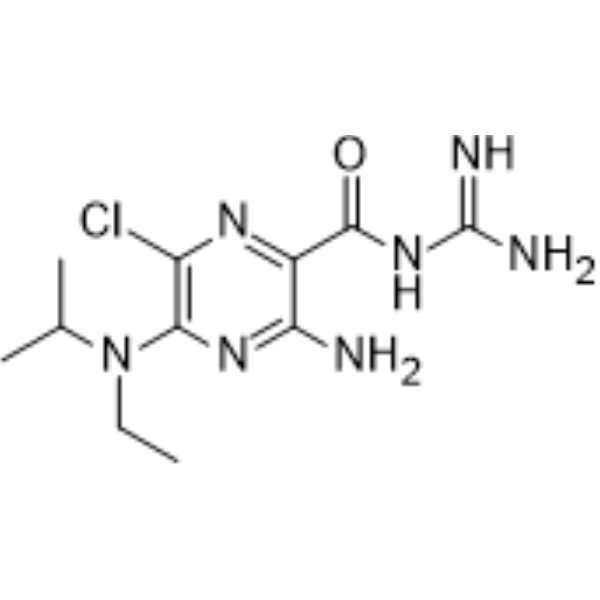
Cancer
|
|
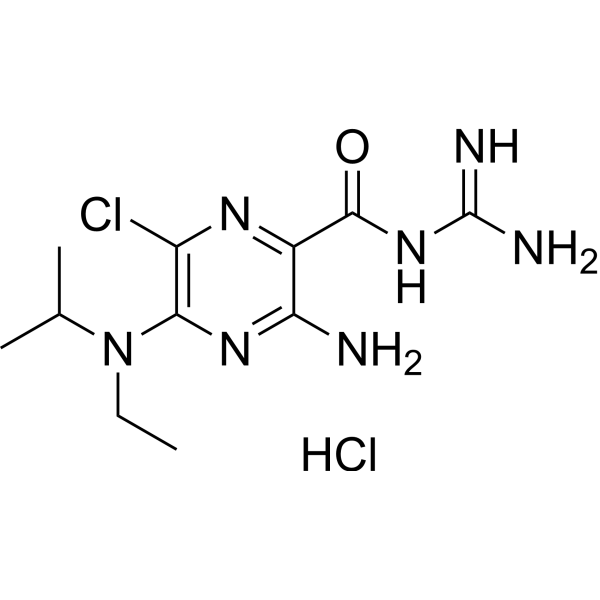
EIPA (L593754) hydrochloride is an orally active TRPP3 channel inhibitor with an IC50 of 10.5 μM. EIPA hydrochloride also enhances autophagy by inhibiting Na +/H +-exchanger 3 (NHE3). EIPA hydrochloride inhibits macropinocytosis as well. EIPA hydrochloride can be used in the research of inflammation and cancers, such as gastric cancer, colon carcinoma, pancreatic carcinoma .
|
-
- HY-101840AR
-
|
L593754 hydrochloride (Standard); MH 12-43 hydrochloride (Standard); Ethylisopropylamiloride hydrochloride (Standard)
|
Reference Standards
TRP Channel
Autophagy
COX
Prostaglandin Receptor
Na+/H+ Exchanger (NHE)
|
Inflammation/Immunology
Cancer
|
|
EIPA (hydrochloride) (Standard) is the analytical standard of EIPA (hydrochloride). This product is intended for research and analytical applications. EIPA (L593754) hydrochloride is an orally active TRPP3 channel inhibitor with an IC50 of 10.5 μM. EIPA hydrochloride also enhances autophagy by inhibiting Na+/H+-exchanger 3 (NHE3). EIPA hydrochloride inhibits macropinocytosis as well. EIPA hydrochloride can be used in the research of inflammation and cancers, such as gastric cancer, colon carcinoma, pancreatic carcinoma .
|
-
| Cat. No. |
Product Name |
Type |
-
- HY-123630
-
|
FD&C RED NO. 40; CI 16035
|
Fluorescent Dye
|
|
Allura Red AC is a food colorant, appearing as a deep red water-soluble powder or granules, used in various applications such as beverages, syrups, candies, and cereals. Allura Red AC can statically quench the intrinsic fluorescence of HSA. Additionally, Allura Red AC is a 5-hydroxytryptamine (5-HT) pathway-associated pro-inflammatory agent, capable of exacerbating experimental colitis. Allura Red AC holds potential for research in inflammatory bowel disease (IBD), intestinal barrier function, and food additive safety .
|
-
- HY-123630R
-
|
FD&C RED NO. 40 (Standard); CI 16035 (Standard)
|
Fluorescent Dye
|
|
Allura Red AC (Standard) is an analytical standard of Allura Red AC. This product is intended for research and analytical applications. Allura Red AC is a food colorant, appearing as a deep red water-soluble powder or granules, used in various applications such as beverages, syrups, candies, and cereals. Allura Red AC can statically quench the intrinsic fluorescence of HSA. Additionally, Allura Red AC is a 5-hydroxytryptamine (5-HT) pathway-associated pro-inflammatory agent, capable of exacerbating experimental colitis. Allura Red AC holds potential for research in inflammatory bowel disease (IBD), intestinal barrier function, and food additive safety .
|
| Cat. No. |
Product Name |
Type |
-
- HY-W013636C
-
|
Alpha-Ketoglutaric acid potassium
|
Biochemical Assay Reagents
|
|
2-Ketoglutaric acid (Alpha-Ketoglutaric acid) (potassium) is an intermediate in the production of ATP or GTP in the Krebs cycle. 2-Ketoglutaric acid potassium is a reversible and orally active inhibitor of tyrosinase with an IC50 value of 15 mM. 2-Ketoglutaric acid potassium also acts as the major carbon skeleton for nitrogen-assimilatory reactions. 2-Ketoglutaric acid potassium significantly suppresses abnormal intestinal permeability, delocalization of tight junction proteins from the intestinal cells, expression of TNFα in vitro and in vivo. 2-Ketoglutaric acid potassium directly binds to TAK1, and inhibits the TRAF6-TAK1 interaction. 2-Ketoglutaric acid potassium also alleviates inflammatory bowel disease (IBD) symptoms and gut microbiota dysbiosis, evident by the improvements in the intestine length .
|
| Cat. No. |
Product Name |
Target |
Research Area |
-
- HY-P2221
-
|
ZP1848
|
GCGR
|
Inflammation/Immunology
|
|
Glepaglutide (ZP1848), a long-acting GLP-2 analogue, is a potent GLP-2R agonist. Glepaglutide reduces faecal output and increases intestinal absorption. Glepaglutide alleviates small intestinal inflammation. Glepaglutide can be used in the research of inflammatory bowel disease (IBD) and Crohn’s disease .
|
-
- HY-P2221B
-
|
ZP1848 acetate
|
GCGR
|
Inflammation/Immunology
|
|
Glepaglutide (ZP1848) acetate, a long-acting GLP-2 analogue, is a potent GLP-2R agonist. Glepaglutide acetate reduces faecal output and increases intestinal absorption. Glepaglutide acetate alleviates small intestinal inflammation. Glepaglutide acetate can be used in the research of inflammatory bowel disease (IBD) and Crohn’s disease .
|
-
- HY-13545
-
ABT-510
1 Publications Verification
|
Apoptosis
|
Inflammation/Immunology
Cancer
|
|
ABT-510 is an anti-angiogenic TSP peptide (Thrombospondin-1 analogue) that induces apoptosis and inhibits ovarian tumour growth in an orthotopic, syngeneic model of epithelial ovarian cancer. ABT-510 also reduces angiogenesis and inflammatory responses in a murine model of inflammatory bowel disease. ABT-510 can be used in studies of cancer (particularly epithelial ovarian cancer) and inflammatory bowel disease (IBD) .
|
-
- HY-13545B
-
|
|
Apoptosis
|
Inflammation/Immunology
Cancer
|
|
ABT-510 acetate is an anti-angiogenic TSP peptide (Thrombospondin-1 analogue) that induces apoptosis and inhibits ovarian tumour growth in an orthotopic, syngeneic model of epithelial ovarian cancer. ABT-510 acetate also reduces angiogenesis and inflammatory responses in a murine model of inflammatory bowel disease. ABT-510 acetate can be used in studies of cancer (particularly epithelial ovarian cancer) and inflammatory bowel disease (IBD) .
|
-
- HY-P10839
-
|
|
NF-κB
|
Inflammation/Immunology
|
|
NBD peptide inhibits NF-κB signaling pathway through inhibition of the NEMO-IKK complex combination. NBD peptide exhibits anti-inflammatory efficacy through block of pro-inflammatory cytokines production. NBD peptide exhibits immunosuppressive activity through regulation of immune cells. NBD peptide enhances its transmembrane ability by combining with cell-penetrating peptide HIV-TAT .
|
-
- HY-P10935A
-
|
5-MP TFA
|
Amyloid-β
Interleukin Related
|
Inflammation/Immunology
|
|
Amilo-5MER (5-MP) TFA is an orally active and selective Serum Amyloid A (SAA) inhibitor. Amilo-5MER TFA specifically inhibits the release of pro-inflammatory cytokines IL-6 and IL-1β from SAA-activated cells. Amilo-5MER TFA reduces chronic inflammation and relieves symptoms of diseases such as rheumatoid arthritis (RA), inflammatory bowel disease (IBD), and multiple sclerosis (MS). Amilo-5MER TFA is promising for research of autoimmune diseases and chronic inflammatory diseases .
|
-
- HY-P10966A
-
|
|
IKK
NF-κB
|
Inflammation/Immunology
|
|
Tat-IKIP (46-60) TFA is the trifluoroacetic acid of Tat-IKIP (46-60) (HY-P10966). Tat-IKIP (46-60) is a IκB kinase (IKK)-targeting membrane-penetrating peptide. Tat-IKIP (46-60) inhibits IKK activation and NF-κB targeted gene expression by disrupting the IKKβ/NEMO complex. Tat-IKIP (46-60) significantly reduces DSS (HY-116282)-induced acute inflammation in inflammatory bowel disease (IBD) mice model and attenuates Zymosan-induced acute arthritis in acute arthritis model (AAM). Tat-IKIP (46-60) can be used for inflammatory diseases research, such as IBD, pancreatitis and rheumatoid arthritis .
|
-
- HY-P11038
-
|
|
Interleukin Related
|
Inflammation/Immunology
|
|
IL-23 cyclic peptide inhibitor 105, a cyclic peptide, is an IL-23 inhibitor. IL-23 cyclic peptide inhibitor 105 can be used for inflammatory disorders like inflammatory bowel disease (IBD) research .
|
-
- HY-P11039
-
|
|
Interleukin Related
|
Inflammation/Immunology
|
|
IL-23 cyclic peptide inhibitor 281, a cyclic peptide, is an IL-23 inhibitor. IL-23 cyclic peptide inhibitor 281 can be used for inflammatory disorders like inflammatory bowel disease (IBD) research .
|
-
- HY-P11214
-
|
H-TL1
|
TNF Receptor
Integrin
NF-κB
ERK
p38 MAPK
JNK
Interleukin Related
|
Inflammation/Immunology
|
|
Hydrostatin-TL1 (H-TL1), a nine-amino-acid peptide, is a TNF-α antagonist. Hydrostatin-TL1 can be isolated from the venom gland of sea snake Hydrophis cyanocinctus. H-TL1 competitively inhibits the interaction between TNF-α/TNFR1 and attenuates the cytotoxicity and inflammation of TNF-α. Hydrostatin-TL1 can be used for TNF-α-associated inflammatory diseases, such as rheumatoid arthritis, osteoporosis and inflammatory bowel disease (IBD) research .
|
-
- HY-P10935
-
|
5-MP
|
Amyloid-β
Interleukin Related
|
Inflammation/Immunology
|
|
Amilo-5MER (5-MP) is an orally active and selective Serum Amyloid A (SAA) inhibitor. Amilo-5MER specifically inhibits the release of pro-inflammatory cytokines IL-6 and IL-1β from SAA-activated cells. Amilo-5MER reduces chronic inflammation and relieves symptoms of diseases such as rheumatoid arthritis (RA), inflammatory bowel disease (IBD), and multiple sclerosis (MS). Amilo-5MER is promising for research of autoimmune diseases and chronic inflammatory diseases .
|
-
- HY-P10966
-
|
|
IKK
NF-κB
|
Inflammation/Immunology
|
|
Tat-IKIP (46-60) is a IκB kinase (IKK)-targeting membrane-penetrating peptide. Tat-IKIP (46-60) inhibits IKK activation and NF-κB targeted gene expression by disrupting the IKKβ/NEMO complex. Tat-IKIP (46-60) significantly reduces DSS (HY-116282)-induced acute inflammation in inflammatory bowel disease (IBD) mice model and attenuates Zymosan-induced acute arthritis in acute arthritis model (AAM). Tat-IKIP (46-60) can be used for inflammatory diseases research, such as IBD, pancreatitis and rheumatoid arthritis .
|
| Cat. No. |
Product Name |
Target |
Research Area |
Image |
-
- HY-P9984
-
|
rhuMAb Beta7; RG7413; PRO145223
|
Integrin
|
Cancer
|
|
Etrolizumab (rhuMAb Beta7) is a gut-selective, anti-β7 integrin monoclonal antibody. Etrolizumab is specific targeting of the β7 subunit of α4β7 and αEβ7 integrins with Ki values of 18 nM and 1800 pM for Human α4β7 and Human αEβ7-293, respectively. Etrolizumab can be used in research of inflammatory bowel disease (IBD) .
|
-
(5)
-
- HY-P990297
-
|
|
CCR
HIV
|
Infection
Inflammation/Immunology
Cancer
|
|
Anti-Mouse/Rat/Human CCL2/MCP-1 Antibody (2H5) is an anti-mouse/rat/human CCL2/MCP-1 IgG monoclonal antibody. Anti-Mouse/Rat/Human CCL2/MCP-1 Antibody (2H5) can reverse the immunosuppressive microenvironment by blocking the CCL2 signaling pathway. Anti-Mouse/Rat/Human CCL2/MCP-1 Antibody (2H5) can reduce the secretion of IFN-γ and the infiltration of macrophages. CCL2/MCP-1 Antibody (2H5) can reduce the amount of HIV virus by increasing the proportion of T cells. Anti-Mouse/Rat/Human CCL2/MCP-1 Antibody (2H5) can be used for researches on inflammation conditions, virus infection and cancer such as inflammatory bowel disease (IBD), hepatocellular carcinoma (HCC) and HIV .
|
-
(5)
-
- HY-P99184
-
|
|
Integrin
|
Infection
Inflammation/Immunology
Cancer
|
|
Abrilumab is a fully human monoclonal antibody directed against α4β7. Abrilumab selectively binds the α4β7 integrin heterodimer. Abrilumab can be used for the research of inflammatory bowel disease (IBD) .
|
-
(5)
-
- HY-P991552
-
|
|
CD3
|
Metabolic Disease
Inflammation/Immunology
|
|
AFM15 is a humanized monoclonal antibody inhibitor targeting CD3E. AFM15 can be used to study metabolic and immune system diseases, such as type 1 diabetes and inflammatory bowel disease (IBD) .
|
-
(5)
-
- HY-P991593
-
|
|
Interleukin Related
|
Inflammation/Immunology
|
|
ABT-147 is a humanized IgG1 monoclonal antibody inhibitor targeting IL-12. ABT-147 can be used to study autoimmune diseases like rheumatoid arthritis (RA), inflammatory diseases like inflammatory bowel disease (IBD) and other diseases like Asthma .
|
-
(5)
| Cat. No. |
Product Name |
Category |
Target |
Chemical Structure |
-
- HY-W028393
-
-
-
- HY-N7075
-
Inulin
4 Publications Verification
|
Structural Classification
Human Gut Microbiota Metabolites
Polysaccharides
Classification of Application Fields
Metabolic Disease
Plants
Compositae
Endogenous metabolite
Disease Research Fields
Saccharides
Sophora tomentosa L.
Source Classification
|
Endogenous Metabolite
|
|
Inulin is an orally active prebiotic targeting the intestinal microbiota, selectively promoting the proliferation and activity of beneficial bacteria such as bifidobacteria and lactic acid bacteria, and playing a role in regulating the intestinal microecology. The functions of Inulin include: Fermentation by probiotics in the colon to produce short-chain fatty acids (such as butyrate and propionate), lowering the intestinal pH and inhibiting the overgrowth of harmful bacteria; Enhancing the intestinal barrier function and reducing endotoxin translocation; Directly scavenging free radicals (such as superoxide free radicals, hydroxyl free radicals) and activating antioxidant enzymes (SOD, CAT) to reduce oxidative stress. Inulin can also be used in the study of intestinal diseases (constipation, IBD), metabolic syndrome (diabetes, obesity) and liver damage by regulating glucose and lipid metabolism (such as reducing triglycerides, improving insulin sensitivity) and immune response (enhancing NK cell activity, inhibiting inflammatory factors)[1][2][3][4].
|
-
-
- HY-N0110
-
-
-
- HY-N0110A
-
-
-
- HY-W028393R
-
-
-
- HY-N0110B
-
-
-
- HY-N0110R
-
-
-
- HY-N17131
-
|
|
Lycopodiaceae
Triterpenes
Structural Classification
Ketones, Aldehydes, Acids
Terpenoids
Plants
Source Classification
|
NF-κB
ERK
|
|
24-O-Acetyllycoclavanol (compound 1) is a triterpenoid anti-inflammatory agent that selectively targets the NF-κB and ERK1/2 signaling pathways. It exerts its anti-inflammatory activity by inhibiting lipopolysaccharide (LPS)-induced inducible nitric oxide synthase (iNOS) and COX-2 expression, reducing the production of inflammatory mediators such as nitric oxide (NO), IL-1β, and IL-8. 24-O-Acetyllycoclavanol can be used in research related to inflammatory bowel disease (IBD). 24-O-Acetyllycoclavanol can be biologically isolated from the ethyl acetate extract of Lycopodium clavatum .
|
-
| Cat. No. |
Product Name |
Chemical Structure |
-
- HY-W718300
-
|
|
|
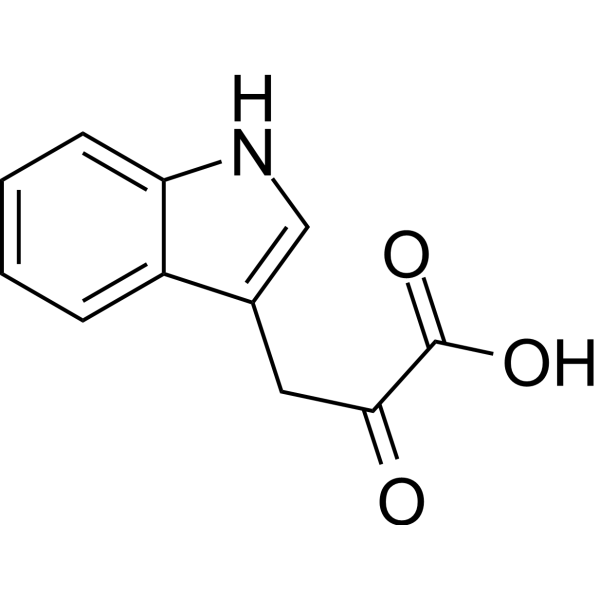
Indole-3-pyruvic acid-d5 is deuterated labeled Indole-3-pyruvic acid. Indole-3-pyruvic acid, a keto analogue of tryptophan, is an orally active AHR agonist. Indole-3-pyruvic acid has antioxidant properties, and can be used in the research of inflammation, anxiety .
|
-
-
- HY-175310S
-
|
|
|
Voderdeucitinib (Compoudn I) is a TYK2 inhibitor with an anti-inflammatory activity. Voderdeucitinib can be used for inflammatory and autoimmune disease research, such as rheumatoid arthritis (RA), multiple sclerosis and intestinal bowel disease (IBD) .
|
-
-
- HY-178762S
-
|
|
|
RIPK1-IN-35 is a selective and orally active RIPK1 inhibitor with an IC50 of 5.33 nM. RIPK1-IN-35 has a potent protective effect against necroptosis in both human and murine cells. RIPK1-IN-35 shows good therapeutic effects in both TNF-α-induced systemic inflammatory response syndrome and DSS (HY-116282C)-induced inflammatory bowel disease models. RIPK1-IN-35 can be used to the study of inflammatory diseases related to necroptosis .
|
-
-
- HY-B0174AS
-
|
|
|
Olsalazine- 13C6 is the 13C labeled Olsalazine (HY-B0174A). Olsalazine is an orally active prodrug of 5-ASA (HY-15027). Olsalazine can inhibit cells proliferation and induce apoptosis. Olsalazine can reduce DAI and MPO activity and inhibit inflammatory cytokines levels. Olsalazine can be used for the researches of cancer, inflammation and metabolic disease, such as colorectal cancer, inflammatory bowel disease (IBD) and hyperuricemic .
|
-
-
- HY-B0174AS2
-
|
|
|
Olsalazine-d3, 15N is 15N and deuterated labeled Olsalazine (HY-B0174A). Olsalazine is an orally active prodrug of 5-ASA (HY-15027). Olsalazine can inhibit cells proliferation and induce apoptosis. Olsalazine can reduce DAI and MPO activity and inhibit inflammatory cytokines levels. Olsalazine can be used for the researches of cancer, inflammation and metabolic disease, such as colorectal cancer, inflammatory bowel disease (IBD) and hyperuricemic .
|
-
-
- HY-I0447S
-
|
|
|
4-Aminosalicylic acid-d6 is the deuterium labeled 4-Aminosalicylic acid (HY-I0447). 4-Aminosalicylic acid is an inhibitor for dihydrofolate reductase (DHFR) and an antituberculous agent. 4-Aminosalicylic acid exhibits anti-inflammatory activity and can be used in research of inflammatory bowel disease (IBD). 4-Aminosalicylic acid is orally active .
|
-
-
- HY-B0174AS3
-
|
|
|
Olsalazine-d6 is the deuterium labeled Olsalazine (HY-B0174A). Olsalazine is an orally active prodrug of 5-ASA (HY-15027). Olsalazine can inhibit cells proliferation and induce apoptosis. Olsalazine can reduce DAI and MPO activity and inhibit inflammatory cytokines levels. Olsalazine can be used for the researches of cancer, inflammation and metabolic disease, such as colorectal cancer, inflammatory bowel disease (IBD) and hyperuricemic.
|
-
Your information is safe with us. * Required Fields.
Inquiry Information
- Product Name:
- Cat. No.:
- Quantity:
- MCE Japan Authorized Agent:

