

1. Search Result
Search Result
Pathways Recommended: PI3K/Akt/mTOR
Results for "

K. p.

" in MedChemExpress (MCE) Product Catalog:

492

Inhibitors & Agonists

3

Screening Libraries

1

Fluorescent Dyes

1

Biochemical Assay Reagents

44

Peptides

15

Inhibitory Antibodies

97

Natural
Products

51

Recombinant Proteins

24

Isotope-Labeled Compounds

79

Antibodies

10

Oligonucleotides

Cat. No. Product Name Target Research Areas Chemical Structure
  • HY-13595
    Chrysophanol
    5+ Cited Publications

    Chrysophanic acid

    EGFR Cancer
    Chrysophanol (Chrysophanic acid) is a natural anthraquinone, which inhibits EGF-induced phosphorylation of EGFR and suppresses activation of AKT and mTOR/p70S6K.
    Chrysophanol
  • HY-148013
    K284-6111
    1 Publications Verification

    Glycosidase Amyloid-β NF-κB COX ERK NO Synthase Interleukin Related Neurological Disease Inflammation/Immunology
    K284-6111 is a high-affinity and orally active CHI3L1 inhibitor, and inhibits CHI3L1 expression. K284-6111 inhibits ERK and NF-κB pathway. K284-6111 suppresses nuclear translocation of p50 and p65, and phosphorylation of IκB. K284-6111 improves memory dysfunction by alleviating amyloidogenesis and neuroinflammation, with the reduction of inflammatory proteins (eg: iNOS, COX-2, GFAP, and Iba-1). K284-6111 reduces atopic-like skin inflammation and inhibits LPS (HY-D1056) -induced liver injury. K284-6111 can be used for the study of Alzheimer's diseases and sepsis like hepatic injury .
    K284-6111
  • HY-N3584
    Paris saponin VII
    4 Publications Verification

    Chonglou Saponin VII

    Akt p38 MAPK P-glycoprotein Bcl-2 Family Caspase PARP Autophagy Apoptosis Cancer
    Paris saponin VII (Chonglou Saponin VII) is a steroidal saponin isolated from the roots and rhizomes of Trillium tschonoskii. Paris saponin VII-induced apoptosis in K562/ADR cells is associated with Akt/MAPK and the inhibition of P-gp. Paris saponin VII attenuates mitochondrial membrane potential, increases the expression of apoptosis-related proteins, such as Bax and cytochrome c, and decreases the protein expression levels of Bcl-2, caspase-9, caspase-3, PARP-1, and p-Akt. Paris saponin VII induces a robust autophagy in K562/ADR cells and provides a biochemical basis in the treatment of leukemia .
    Paris saponin VII
  • HY-111126
    K67
    1 Publications Verification

    p62 Keap1-Nrf2 Cancer
    K67 is a selective the interaction between Keap1 and S349 phosphorylated p62 inhibitor, with an IC50 of 1.5 μM. K67 has a weaker inhibitory effect on the interaction between Keap1 and Nrf2 (IC50 is 6.2 μM). K67 competitively binds to the binding site of Keap1 with p-p62, blocking the abnormal activation of the p62-dependent Nrf2 pathway. K67 inhibits tumor cell proliferation and enhances the sensitivity of hepatocellular carcinoma (HCC) to chemotherapeutic drugs by restoring Keap1-mediated ubiquitination and degradation of Nrf2 .
    K67
  • HY-12493A
    LY-2584702 tosylate salt
    5 Publications Verification

    Ribosomal S6 Kinase (RSK) Cancer
    LY-2584702 tosylate salt is a selective ATP competitive inhibitor of p70S6K with an IC50 of 4 nM. In S6K1 enzyme assay, the IC50 of LY-2584702 is 2 nM.
    LY-2584702 tosylate salt
  • HY-14290
    Pinacidil
    4 Publications Verification

    P-1134

    Potassium Channel Cardiovascular Disease
    Pinacidil (P-1134) is a potent activator of ATP-sensitive potassium channel. Pinacidil is an antihypertensive agent hyperpolarizes vascular smooth muscle by opening K + channels. Pinacidil enhances K +-efflux in smooth muscle. Pinacidil has vasorelaxant properties. Pinacidil is able to inhibit spontaneous tone and of reducing agonist induced contractions. Pinacidil can be studied in research area such as cardiovascular diseases .
    Pinacidil
  • HY-N0777
    Isorhamnetin-3-O-glucoside
    3 Publications Verification

    Others PERK ERK Akt PI3K Lipase Metabolic Disease
    Isorhamnetin-3-O-glucoside is an orally active natural compound. Isorhamnetin 3-O-glucoside increases P-ERK, ERK, P-Akt (Ser473), P-PI3K, and PDX-1. Isorhamnetin 3-O-glucoside downregulates C/EBPα and inhibits lipase. Isorhamnetin 3-O-glucoside reduces lipids and inhibits obesity .
    Isorhamnetin-3-O-glucoside
  • HY-104027
    ML402
    1 Publications Verification

    Potassium Channel Neurological Disease
    ML402, a thiophene-carboxamide, is a selective K2P2.1(TREK-1) and K2P10.1(TREK-2) activator. ML402 is inactive against K2P4.1(TRAAK) .
    ML402
  • HY-115675

    PI4K Others
    NC03 is a PI4K2A inhibitor and reducing agent. NC03 inhibits the activity of PI4K2A, thereby reducing the production of PI4P in the cellular compartments where PI4K2A functions. NC03 rapidly induces a decrease in PI4P pools in the Golgi and endosomal compartments. NC03 reduces PI4P production in Rab7-positive late endosomes .
    NC03
  • HY-100501
    M2698
    1 Publications Verification

    MSC2363318A

    Ribosomal S6 Kinase (RSK) Akt Cancer
    M2698 (MSC2363318A) is an orally active, ATP competitive, selective p70S6K and Akt dual-inhibitor with IC50s of 1 nM for p70S6K, Akt1 and Akt3. M2698 can cross the blood-brain barrier and has anti-cancer activity .
    M2698
  • HY-108596

    Potassium Channel Inflammation/Immunology
    BL-1249 is a nonsteroidal anti-inflammatory agent (NSAID) and a potassium channel activator. BL-1249 potently activates K2P2.1 (TREK-1) and K2P10.1 (TREK-2) with EC50 values of 5.5 μM and 8.0 μM, respectively. BL-1249 extracellular application activates all TREK subfamily members but has no effect on other K2P subfamilies. BL-1249 exhibits more selective for the bladder (EC50 of 1.26 μM) than vascular tissue (EC50 of 21.0 μM) .
    BL-1249
  • HY-176811

    Ras PI3K Akt Cancer
    VVD-442 is an inhibitor targeting PI3Kα. VVD-442 covalently binds to Cys242 in the RAS-binding domain of PI3K p110α, induces conformational changes, and disrupts the interaction between PI3K p110α and RAS proteins. VVD-442 also blocks RAS-mediated PI3K activation. VVD-442 can be used in research related to RAS-mutant cancers and HER2-overexpressing cancers .
    VVD-442
  • HY-N10303
    Withangulatin A
    1 Publications Verification

    COX Parasite Reactive Oxygen Species (ROS) Apoptosis p38 MAPK NF-κB Akt mTOR TGF-beta/Smad Inflammation/Immunology Cancer
    Withangulatin A is the inhibitor for COX-2. Withangulatin A inhibits MAPK, NF-κB, Akt/mTOR/p70S6K pathway, exhibits antitumor, anti-inflammatory and trypanocidal activities .
    Withangulatin A
  • HY-14290A
    Pinacidil monohydrate
    4 Publications Verification

    P-1134 monohydrate

    Potassium Channel Cardiovascular Disease
    Pinacidil (P-1134) monohydrate is a potent activator of ATP-sensitive potassium channel. Pinacidil monohydrate is an antihypertensive agent hyperpolarizes vascular smooth muscle by opening K + channels. Pinacidil monohydrate enhances K +-efflux in smooth muscle. Pinacidil monohydrate has vasorelaxant properties. Pinacidil monohydrate is able to inhibit spontaneous tone and of reducing agonist induced contractions. Pinacidil monohydrate can be studied in research area such as cardiovascular diseases .
    Pinacidil monohydrate
  • HY-139188

    PI5P4K Metabolic Disease Cancer
    CC260 is a selective PI5P4Kα and PI5P4Kβ inhibitor with Kis of 40 nM and 30 nM, respectively. CC260 does not inhibit or weakly inhibits other protein kinases, such as Plk1 and RSK2. CC260 can be used for cell energy metabolism, diabetes and cancer research .
    CC260
  • HY-153526

    PI5P4K Others
    PI5P4Ks-IN-2 is a inhibitor of phosphatidylinositol 5-phosphate 4-kinase γ (PI5P4Kγ). PI5P4Ks-IN-2 targets to PI5P4K isoforms with pIC50 values of <4.3 (PI5P4Kα), <4.6 (PI5P4Kβ), 6.2 (PI5P4Kγ), 0.32 (PI5P4Kγ+), respectively .
    PI5P4Ks-IN-2
  • HY-153789

    PI5P4K mTOR Cancer
    PI5P4Kγ-IN-1 is an ATP-competitive, highly selective chemical probe for PI5P4Kγ, with a Kd of 19 nM and an IC50 of 67 nM. PI5P4Kγ-IN-1 effectively inhibits PI5P4Kγ function and activates the mTORC1 signaling pathway in cells. PI5P4Kγ-IN-1 can be used in studies related to diseases such as breast cancer .
    PI5P4Kγ-IN-1
  • HY-136351
    THZ-P1-2
    2 Publications Verification

    Autophagy Cancer
    THZ-P1-2 is a first-in-class and selective PI5P4K inhibitor, with an IC50 of 190 nM for PI5P4Kα. THZ-P1-2 covalently targets cysteines on a disordered loop in PI5P4Kα/β/γ. THZ-P1-2 causes autophagy disruption and upregulates TFEB signaling. THZ-P1-2 displays anticancer activity in leukemia cell lines .
    THZ-P1-2
  • HY-117709

    HDAC Neurological Disease
    BRD6688 is a selective HDAC2 inhibitor. BRD6688 increases H4K12 and H3K9 histone acetylation in primary mouse neuronal cells. BRD6688 crosses the blood brain barrier and rescues the memory defects associated with p25 induced neurodegeneration in contextual fear conditioning in a CK-p25 mouse model .
    BRD6688
  • HY-P1853

    Angiotensin-converting Enzyme (ACE) Cardiovascular Disease
    Abz-FR-K(Dnp)-P-OH is an angiotensin I-converting enzyme (ACE) substrate and an internally quenched fluorogenic substrate for real time fluorescent assay .
    Abz-FR-K(Dnp)-P-OH
  • HY-162959

    Bacterial Topoisomerase DNA/RNA Synthesis Infection
    BWC0977 is an antibacterial agent that inhibits bacterial DNA replication via inhibition of DNA gyrase and topoisomerase IV. BWC0977 exhibits a minimum inhibitory concentration (MIC90) of 0.03-2 µg/mL against MDR (Multi-Drug Resistant) Gram-negative bacteria .
    BWC0977
  • HY-149659

    PI5P4K Cancer
    ARUK2007145 is potent, cell-active dual inhibitor of the PI5P4Kα and PI5P4Kγ isoforms (pIC50: 7.3 and 8.1, respectively) .
    ARUK2007145
  • HY-110184

    Potassium Channel Neurological Disease
    PK-THPP is a potent and brain-penetrant TWIK-related acid-sensitive K + ion channel (K2P9.1 or TASK-3) blocker with IC50s of 35 nM and 300 nM for TASK-3 and TASK-1, respectively. PK-THPP shows no or less activity against other K + channels. PK-THPP is an effective breathing stimulant and can be used for the study of breathing disorders .
    PK-THPP
  • HY-152944

    Ribosomal S6 Kinase (RSK) Cancer
    S6K1-IN-DG2 (Compound 66) is a p70S6K inhibitor (IC50: < 100 nM) .
    S6K1-IN-DG2
  • HY-112400

    BIM V

    Ribosomal S6 Kinase (RSK) Cancer
    Bisindolylmaleimide V is a cell-permeable negative control for protein kinase C inhibition studies with an IC50 value over 100 µM . Bisindolylmaleimide V blocks the activation of mitogen-stimulated protein kinase p70 s6k/p85 s6k (S6K) in vivo with an IC50 of 8 µM .
    Bisindolylmaleimide V
  • HY-P10042

    Ribosomal S6 Kinase (RSK) Others
    S6K Substrate is a substrate for active protein kinases, including CLK2, MRCKalpha, MRCKbeta, p70S6K, ROCK1, ROCK2, RSK1, RSK3, PIM1 .
    S6K Substrate
  • HY-139064

    Potassium Channel Neurological Disease Inflammation/Immunology
    NPBA, a potassium K2P channel TASK-3 (KCNK9) agonist, is a tandem pore domain weak inward rectifying K + channel (TWIK2) channel blocker. NPBA suppresses NLRP3 inflammasome activation in macrophages .
    NPBA
  • HY-169265

    Bcl-2 Family Others
    BRD-K20733377 is an inhibitor for Bcl-2, and exhibits selective cytotoxicity against senescent cells, that inhibits the viability of Etoposide (HY-13629)-induced IMR-90 senescent cell with an IC50 of 10.7 μM. BRD-K20733377 reduces the mRNA expression of aging-related genes p16, p21 and KI67 in aged mouse model .
    BRD-K20733377
  • HY-153531

    PI5P4Kα-IN-1

    PI5P4K Metabolic Disease Inflammation/Immunology Cancer
    PI5P4Kα-IN-1 (Compound 13) is a PI5P4Kinhibitor (IC50: 2 and 9.4 μM for PI5P4Kα and PI5P4Kβ). PI5P4Kα-IN-1 can be used for research of cancer, metabolic and immunological disorders .
    TM-04-176-01
  • HY-112435

    PI4K Parasite Infection
    UCT943 is a next-generation Plasmodium falciparum PI4K inhibitor. UCT943 inhibits the P. vivax PI4K (PvPI4K) enzyme with an IC50 of 23 nM .
    UCT943
  • HY-12493

    Ribosomal S6 Kinase (RSK) Cancer
    LY-2584702 free base is a selective ATP competitive inhibitor of p70S6K with an IC50 of 4 nM. In S6K1 enzyme assay, the IC50 of LY-2584702 is 2 nM.
    LY-2584702 free base
  • HY-124535

    PI3K Metabolic Disease
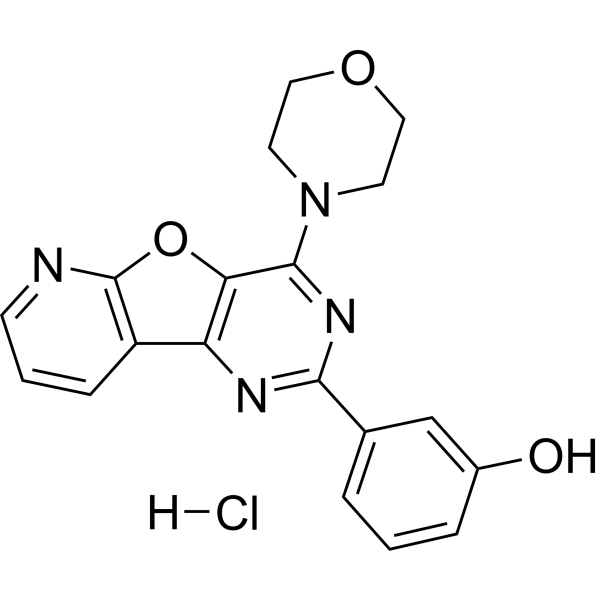
    TGX-115 is a p110β/p110δ-selective, PI3-K inhibitor. TGX-115 blocks p110β-mediated Akt phosphorylation induced by lysophosphatidic acid (LPA) in L6 myotubes, reduces insulin-stimulated PI(3,4)P2 and PIP3 levels in 3T3-L1 adipocytes. TGX-115 can be used for the study of diabetes mellitus .
    TGX-115
  • HY-135809

    Potassium Channel Neurological Disease
    A2764 dihydrochloride is a highly selective inhibitor of TRESK (TWIK-related spinal cord K + channel, K2P18.1), which has moderate inhibitory effects on TREK-1 and TALK-1. A2764 dihydrochloride is more sensitive to the activated mTRESK channels (IC50=6.8 μM) than the basal current. A2764 dihydrochloride can lead to cell depolarization and increased excitability in native cells, it has the potential for probing the role of TRESK channel in migraine and nociception .
    A2764 dihydrochloride
  • HY-145689

    PI5P4K Others
    PI5P4Ks-IN-1 (compound 7) is an active compound with no detectable inhibition of the PI5P4K α or β isoforms .
    PI5P4Ks-IN-1
  • HY-130723A

    AMPK Cancer
    AMPK activator 2 (compound 7a) hydrochloride, a fluorine-containing proguanil derivative, up-regulates AMPK signal pathway and downregulates mTOR/4EBP1/p70S6K. AMPK activator 2 hydrochloride inhibits proliferation and migration of human cancer cell lines (UMUC3, T24, A549) .
    AMPK activator 2 hydrochloride
  • HY-13787

    Akt Ribosomal S6 Kinase (RSK) GSK-3 Cancer
    XL-418 is an orally active dual Akt and p70S6K inhibitor with IC50s of 1 nM for Akt1 and 2 nM for p70S6K. XL-418 inhibits the phosphorylation of ribosomal protein S6 and GSK3β. XL-418 can be used for the study of prostate carcinoma and breast cancer .
    XL-418
  • HY-111510

    PI3K Inflammation/Immunology
    IPI-3063 is a potent and selective PI3K p110δ inhibitor with an IC50 of 2.5 ± 1.2 nM.
    IPI-3063
  • HY-N2433

    Potassium Channel Neurological Disease
    Paederosidic acid methyl ester is a ATP‐sensitive K + channel activator, isolated from P. scandens. Paederosidic acid methyl ester exhibits significant central analgesic activity, and enhances the threshold of pain by activating ATP‐sensitive K + channel in the brain and spinal cord level .
    Paederosidic acid methyl ester
  • HY-174984

    p97 Caspase p62 Cancer
    VCP/p97 IN-3 is a VCP/p97 allosteric inhibitor. VCP/p97 IN-3 shows the inhibitory activity against the VCP proteins with an IC50 of 9 nM and the mutant VCP proteins with IC50 of 12 nM (N660K) and 19 nM (V474A/D649A). VCP/p97 IN-3 increases K48-linked ubiquitination and the level of cleaved caspase-3. VCP/p97 IN-3 activates ER-stress and the UPR. VCP/p97 IN-3 inhibits tumor growth in RPMI-8226 cell subcutaneous xenograft mouse models. VCP/p97 IN-3 can be used for the study of multiple myeloma .
    VCP/p97 IN-3
  • HY-124348

    3,5-Dimethyl PIT-1

    PI3K Cancer
    DM-PIT-1 is a PIP3/PH (phosphatidylinositol-3,4,5-triphosphate/Pleckstrin) interaction inhibitor. DM-PIT-1 decreases he expression of P-Akt, P-GSK-3-β, P-p70S6K, P-S6, P-4E-BP1. DM-PIT-1 induces apoptosis and shows anticancer activity. DM-PIT-1 has the potential for the research of ovarian cancer .
    DM-PIT-1
  • HY-13595R

    Chrysophanic acid (Standard)

    Reference Standards EGFR Cancer
    Chrysophanol (Standard) is the analytical standard of Chrysophanol. This product is intended for research and analytical applications. Chrysophanol (Chrysophanic acid) is a natural anthraquinone, which inhibits EGF-induced phosphorylation of EGFR and suppresses activation of AKT and mTOR/p70S6K.
    Chrysophanol (Standard)
  • HY-E70842

    MEK Cancer
    MAP2K1 (also known as MEK1) is downstream of the RAF family and activation results in ERK1/2 activation. Activating mutations in MAP2K1 have been reported almost exclusively in exons 1 and 2 in both hematologic malignancies. MAP2K1 L115P is a mutant of MAP2K1. MAP2K1 L115P Recombinant Human Active Protein Kinase is a recombinant MAP2K1 L115P protein that can be used to study MAP2K1 L115P-related functions .
    MAP2K1 L115P Recombinant Human Active Protein Kinase
  • HY-125789

    Bacterial Infection
    PF-04753299 is a potent and selective UDP-3-O-(R-3-hydroxymyristol)-N-acetylglucosamine deacetylase (LpxC) inhibitor. PF-04753299 is bactericidal for the gonococcal isolates. PF-04753299 inhibits E. coli, P. aeruginosa and K. pneumoniae strains with MIC90 values of 2 μg/ml, 4 μg/ml and 16 μg/ml, respectively. PF-04753299 is used for the study of gram-negative bacteria infection .
    PF-04753299
  • HY-P3346

    Apelin Receptor (APJ) Cardiovascular Disease
    NH2-c[X-R-L-S-X]-K-G-P-(D-1Nal) (compound 39) is a potent APJ agonist, with a Ki of 0.6 nM. NH2-c[X-R-L-S-X]-K-G-P-(D-1Nal) can activate Gαi1 (EC50=0.8 nM) and recruit β-arrestin2 (EC50=31 nM). NH2-c[X-R-L-S-X]-K-G-P-(D-1Nal) exhibits prolonged cardiac effects .
    NH2-c[X-R-L-S-X]-K-G-P-(D-1Nal)
  • HY-P3347

    Apelin Receptor (APJ) Cardiovascular Disease
    NH2-c[X-R-L-S-X]-K-G-P-(D-2Nal) (compound 40), a macrocyclic analogue of Ape13, is a potent APJ agonist (Ki=5.7 nM). NH2-c[X-R-L-S-X]-K-G-P-(D-2Nal) exhibits a favorable Gα12-biased signaling and an increased in vivo half-life .
    NH2-c[X-R-L-S-X]-K-G-P-(D-2Nal)
  • HY-153532

    PI5P4K Cancer
    CVM-05-002 is a PI5P4K inhibitor, with IC50 values of 0.27 μM and 1.7 μM for PI5P4Kα and PI5P4Kβ, respectively .
    CVM-05-002
  • HY-150309

    PI3K Cancer
    PI3K-IN-54 (compound 10w) is a pan-PI3K inhibitor. The IC50 values of PI3K-IN-54 for p110α, p110β, and p110δ are 0.22 nM, 1.4 nM, and 0.38 nM, respectively. PI3K-IN-54 can be used in cancer research .
    PI3K-IN-54
  • HY-153529

    PI5P4K Cancer
    PI5P4Ks-IN-3 (compound 30) is a covalent inhibitor of PI5P4K with IC50s of 1.34 μM (PI5P4Kα),and 9.9 μM (PI5P4Kβ),respectively. PI5P4Ks-IN-3 shows weak cellular activity .
    PI5P4Ks-IN-3
  • HY-165569

    Potassium Channel Neurological Disease
    AU-1421 is a potassium ion (K⁺) site-directed regulator that specifically acts on various cation transport ATPases. AU-1421 can distinguish between two different K⁺-sensitive phosphorylation intermediate (E2P) states: for non-K⁺ transport type ATPases (such as the sarcoplasmic reticulum Ca²⁺-ATPase), after binding to AU-1421, it mimics the agonistic effect of K⁺, significantly accelerating the hydrolysis (dephosphorylation) of E2P. For K⁺ transport type ATPases (such as the gastric mucosa H⁺/K⁺-ATPase and the renal Na⁺/K⁺-ATPase), after binding to AU-1421, it inhibits the hydrolysis of E2P, stabilizing the phosphorylated intermediate, thereby blocking the ion transport cycle. AU-1421 can be used to study the mechanism of the potassium ion pump .
    AU-1421
  • HY-12493B

    Ribosomal S6 Kinase (RSK) Cancer
    LY-2584702 hydrochloride is a selective ATP competitive inhibitor of p70S6K with an IC50 of 4 nM. In S6K1 enzyme assay, the IC50 of LY-2584702 is 2 nM.
    LY-2584702 hydrochloride

Inquiry Online

Your information is safe with us. * Required Fields.

Salutation


Country or Region *

Applicant Name *


Organization Name *

Department *


Email Address *


Product Name *

Cat. No.


Requested quantity *

Phone Number *


Remarks

Inquiry Online

Inquiry Information

Product Name:
Cat. No.:
Quantity:
MCE Japan Authorized Agent:

