7 Results for "

Kawasaki disease

" in MedChemExpress (MCE) Product Catalog:
Products (7)

7 Results for "Kawasaki disease" in MCE Product Catalog:

3
3 Cited Publications
Cat. No.: HY-103435
CAS No.: 858134-23-3
Purity:  99.90%
Synonyms: Terrestrin A
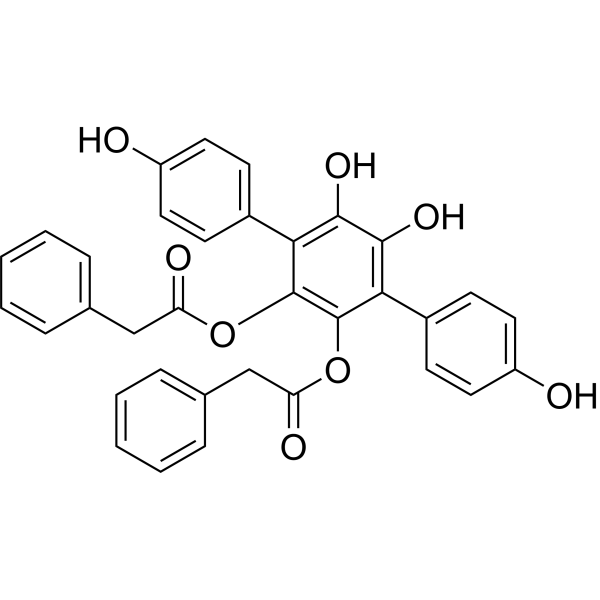
Vialinin A (Terrestrin A) is a p-terphenyl compound that can be derived from a Chinese edible mushroom. Vialinin A is an inhibitor of ubiquitin-specific peptidase 4 (USP4) and has anti-inflammatory and antioxidant properties. Vialinin A can alleviate cerebral ischaemia-reperfusion injury-induced neurological deficits and neuronal apoptosis. Vialinin A promotes activation of Keap1-Nrf2-ARE signaling pathway and increases the protein degradation of Keap1. Vialinin A possesses various pharmacological activities in cancer, Kawasaki disease, asthma, and pathological scarring. Vialinin A is a potent inhibitor of TNF-α, USP4, USP5, and sentrin/SUMO-specific protease 1 (SENP1). Vialinin A can be studied in reseach for autoimmune diseases, cancer and ischaemic stroke .
loading...
    loading...
Cat. No.: HY-W746708
CAS No.: 79335-75-4
FK-565 is a synthetic immunomodulatory peptide with a nucleotide oligomerization domain-1 (NOD1) ligand. FK-565 can activate macrophages, NK cells, and peritoneal exudative cells, enhancing the innate immune response. FK-565 has antiviral activity against a variety of viruses in vivo, and its effect is achieved through immunomodulation rather than direct viral inhibition. FK-565 can induce mouse models of arteritis and coronary arteritis (Kawasaki disease-like disease) through a NOD1-mediated mechanism. FK-565 can be used for research on viral infections and inflammatory vascular diseases .
loading...
    loading...
Cat. No.: HY-142117S
Purity:  99.25%
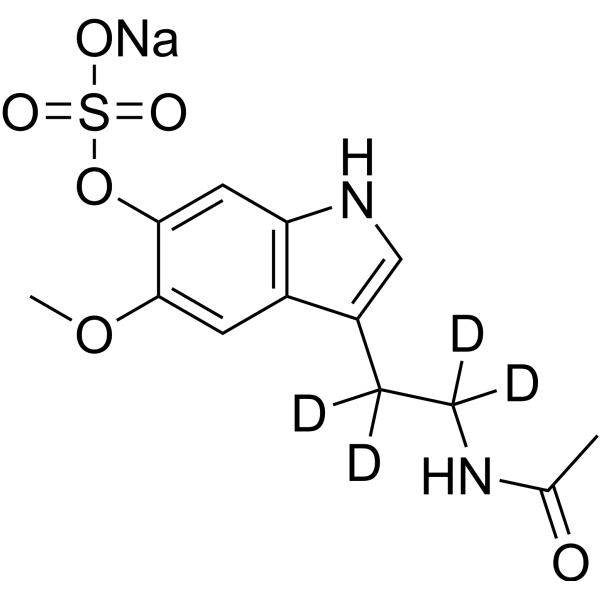
6-Sulfatoxymelatonin-d4 sodium is the deuterated-labeled 6-Sulfatoxymelatonin sodium (HY-W587817). 6-Sulfatoxymelatonin sodium is a metabolite of Melatonin (HY-B0075) and serves as a detection marker for Melatonin. 6-Sulfatoxymelatonin sodium shows a decreasing trend with increasing age, and its urinary excretion is closely correlated with plasma Melatonin levels, which can reflect changes in the secretion phase of melatonin. 6-Sulfatoxymelatonin sodium is associated with reduced risks of diabetic retinopathy and coronary heart disease, and can act as a biomarker for microvascular and macrovascular complications of type 2 diabetes mellitus. 6-Sulfatoxymelatonin sodium can be used in studies related to type 2 diabetes mellitus and coronary heart disease .
loading...
    loading...
Cat. No.: HY-142117S1
CAS No.: 1309935-98-5
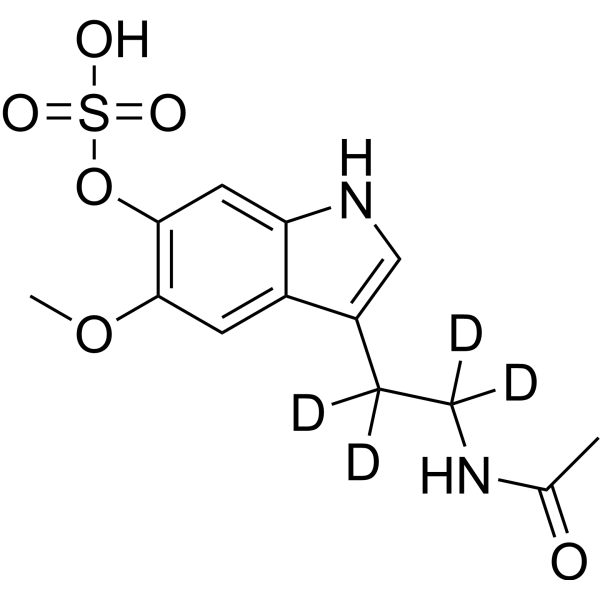
6-Sulfatoxymelatonin-d4 is the deuterated-labeled 6-Sulfatoxymelatonin. 6-Sulfatoxymelatonin is a metabolite of Melatonin (HY-B0075) and serves as a detection marker for Melatonin. 6-Sulfatoxymelatonin shows a decreasing trend with increasing age, and its urinary excretion is closely correlated with plasma Melatonin levels, which can reflect changes in the secretion phase of melatonin. 6-Sulfatoxymelatonin is associated with reduced risks of diabetic retinopathy and coronary heart disease, and can act as a biomarker for microvascular and macrovascular complications of type 2 diabetes mellitus. 6-Sulfatoxymelatonin can be used in studies related to type 2 diabetes mellitus and coronary heart disease .
loading...
    loading...
Cat. No.: HY-W587817
CAS No.: 76290-78-3
Target:  

Drug Metabolite

Research Areas:  

Metabolic Disease

6-Sulfatoxymelatonin sodium is a metabolite of Melatonin (HY-B0075) and serves as a detection marker for Melatonin. 6-Sulfatoxymelatonin sodium shows a decreasing trend with increasing age, and its urinary excretion is closely correlated with plasma Melatonin levels, which can reflect changes in the secretion phase of melatonin. 6-Sulfatoxymelatonin sodium is associated with reduced risks of diabetic retinopathy and coronary heart disease, and can act as a biomarker for microvascular and macrovascular complications of type 2 diabetes mellitus. 6-Sulfatoxymelatonin sodium can be used in studies related to type 2 diabetes mellitus and coronary heart disease .
loading...
    loading...
Cat. No.: HY-N11875S
6-Sulfatoxymelatonin-d4 ammonium hydrate is the deuterated-labeled 6-Sulfatoxymelatonin ammonium hydrate. 6-Sulfatoxymelatonin ammonium hydrate is a metabolite of Melatonin (HY-B0075) and serves as a detection marker for Melatonin. 6-Sulfatoxymelatonin ammonium hydrate shows a decreasing trend with increasing age, and its urinary excretion is closely correlated with plasma Melatonin levels, which can reflect changes in the secretion phase of melatonin. 6-Sulfatoxymelatonin ammonium hydrate is associated with reduced risks of diabetic retinopathy and coronary heart disease, and can act as a biomarker for microvascular and macrovascular complications of type 2 diabetes mellitus. 6-Sulfatoxymelatonin ammonium hydrate can be used in studies related to type 2 diabetes mellitus and coronary heart disease .
loading...
    loading...
Cat. No.: HY-184502
CAS No.: 3034295-80-9
Target:  

STING

DDO-88109 is a STING inhibitor with a Kd value of 317 nM for hSTING and 0.625 μM for mSTING. DDO-88109 competitively occupies the CDN-binding pocket of STING, thereby maintaining STING in an inactive state. It inhibits cGAS-STING signaling—including STING translocation from the endoplasmic reticulum to the Golgi apparatus, STING oligomerization, and the phosphorylation of IRF3, p65, TBK1, and STING—and attenuates the production of inflammatory cytokines and tissue inflammation in mouse models of TREX1-deficiency-driven autoinflammation and cisplatin (HY-17394)-induced acute kidney injury. DDO-88109 is suitable for research on inflammatory diseases, autoimmune disorders, and acute kidney injury driven by the cGAS-STING pathway .
loading...
    loading...

