
34 Results for "

L929 fibroblast cells

" in MedChemExpress (MCE) Product Catalog:
Products (34)

34 Results for "L929 fibroblast cells" in MCE Product Catalog:

3
3 Cited Publications
Cat. No.: HY-Y0850
CAS No.: 9002-89-5
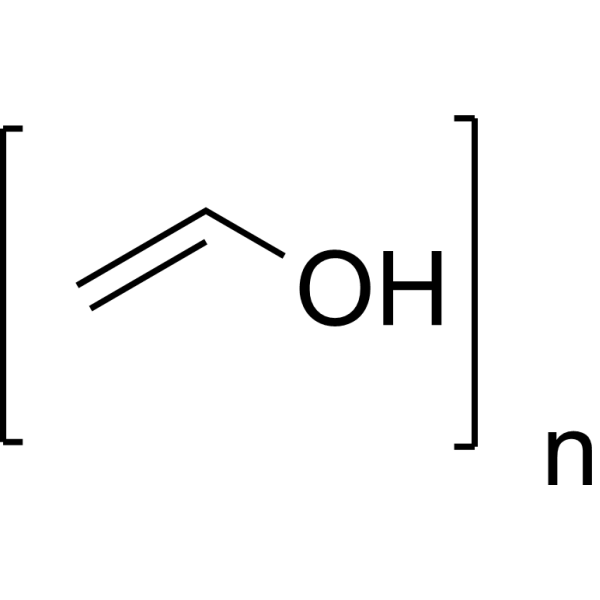
Polyvinyl alcohol (Mw 146000-186000, 99+% hydrolyzed) is a non-biodegradable, hydrophilic, odorless biomedical polymer with cell adhesion/proliferation inhibition, peripheral nerve regeneration induction, dissolution enhancement, and non-toxic, biocompatible properties .
loading...
    loading...
2
2 Cited Publications
Cat. No.: HY-148983
CAS No.: 7803-49-8
Hydroxylamine (50% w/w in water) is an inorganic highly reactive compound and antibacterial agent. Hydroxylamine (50% w/w in water) acutely activates the transport activity of GLUT1, inhibits Monoamine oxidase activity. Hydroxylamine (50% w/w in water) inhibits nitrite oxidizing bacteria. Hydroxylamine (50% w/w in water) activates glucose uptake. Hydroxylamine (50% w/w in water) can be used in the research of inflammatory diseases and allergies[1][2][3][4] .
loading...
    loading...
Cat. No.: HY-N3266
CAS No.: 99353-00-1
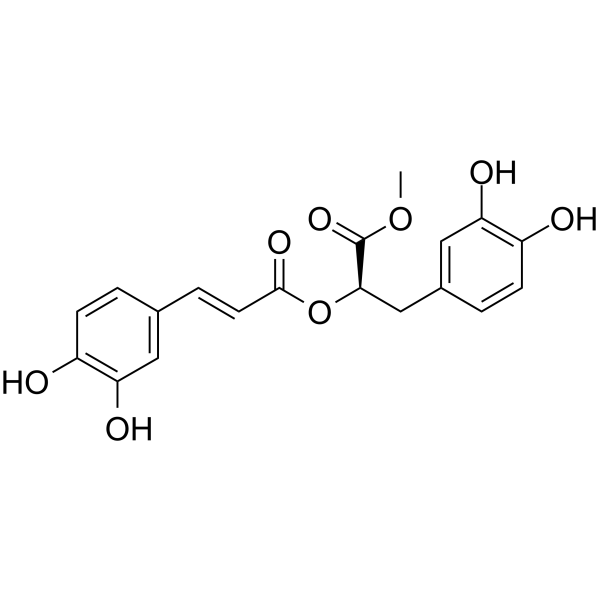
Methyl rosmarinate is an orally active hydroxycinnamic acid. Methyl rosmarinate exhibits an IC50 of 24.70 μM and a Ki of 15.29 μM against PTP1B, an IC50 of 41.46 μg/mL against BChE, a Ki of 0.61 mM against mushroom tyrosinase, and an IC50 of 2.50 μM against SARS-CoV-2 3CLpro. Methyl rosmarinate downregulates the phosphorylation levels of ERK, JNK, p38, Smad2 and Smad3. Methyl rosmarinate activates erythrocyte BPGM and promotes the production of 2,3-BPG. Methyl rosmarinate induces apoptosis of fibroblasts. Methyl rosmarinate prolongs the survival time of hypoxic mice. Methyl rosmarinate improves insulin sensitivity. Methyl rosmarinate binds to SARS-CoV-2 3CLpro and inhibits viral replication. Methyl rosmarinate induces glioblastoma cell death. Methyl rosmarinate activates the TGR5/AMPK axis and reduces the levels of ROS and MDA. Methyl rosmarinate shows inhibitory activity against MMP-1. Methyl rosmarinate can be used in research related to pulmonary fibrosis, hypoxia-induced injury, type 2 diabetes, Alzheimer's disease, hyperpigmentation disorders, COVID-19, glioblastoma and myocardial ischemia-reperfusion injury .
loading...
    loading...
Cat. No.: HY-W250121
CAS No.: 9000-65-1
Tragacanth gum is an orally active anionic composite polysaccharide and multifunctional biomaterial. Tragacanth gum exhibits biocompatibility, mucoadhesion and renoprotective effects, and effectively promotes wound closure and tissue healing. Tragacanth gum can be isolated from Astragalus gummifer. Tragacanth gum acts as an emulsifier and drug delivery carrier, and is also widely used in fields such as 3D scaffolds, tissue engineering and green nanoparticle preparation. High doses of Tragacanth gum may induce reversible forestomach squamous epithelial hyperplasia in mice, but show no mutagenic or carcinogenic activity. Tragacanth gum is commonly used in studies related to diseases including systemic candidiasis, rheumatoid arthritis and osteosarcoma .
loading...
    loading...
Cat. No.: HY-W196368
CAS No.: 2217-60-9
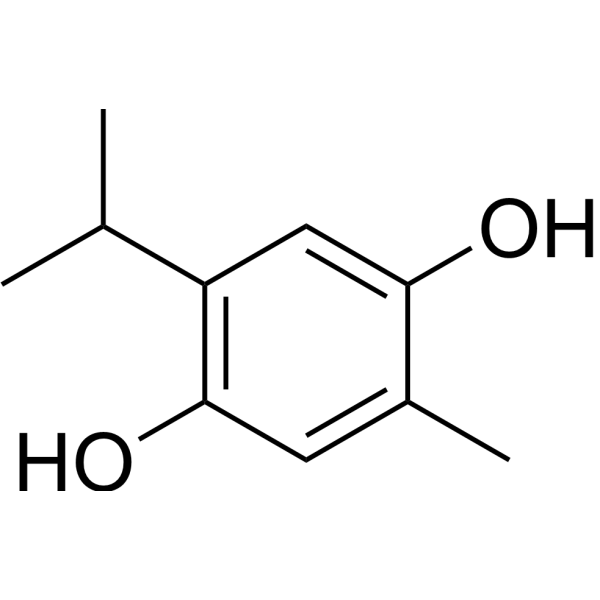
Thymohydroquinone is a COX-2 inhibitor and anti-SARS-CoV-2 agent that induces cytotoxicity, antiproliferative effects and inhibits tumor growth. Thymohydroquinone cannot scavenge superoxide radicals via σ (hydrogen atom transfer) and π-π attacks with superoxide anions. Thymohydroquinone can be used in research related to squamous cell carcinoma, fibrosarcoma and coronavirus disease 2019 (SARS-CoV-2 infection) .
loading...
    loading...
Cat. No.: HY-W001939
CAS No.: 586-89-0
4-Acetylbenzoic acid is a Zn(II) complex. 4-Acetylbenzoic acid is a derivative of benzoic acid that is commonly used in chemical synthesis. 4-Acetylbenzoic acid has an IC50 of 331.3 μM in murine L929 fibroblasts and an IC50 of 176 μM in metastatic melanoma B16 F10 cell lines .
loading...
    loading...
Cat. No.: HY-134467
CAS No.: 98570-83-3
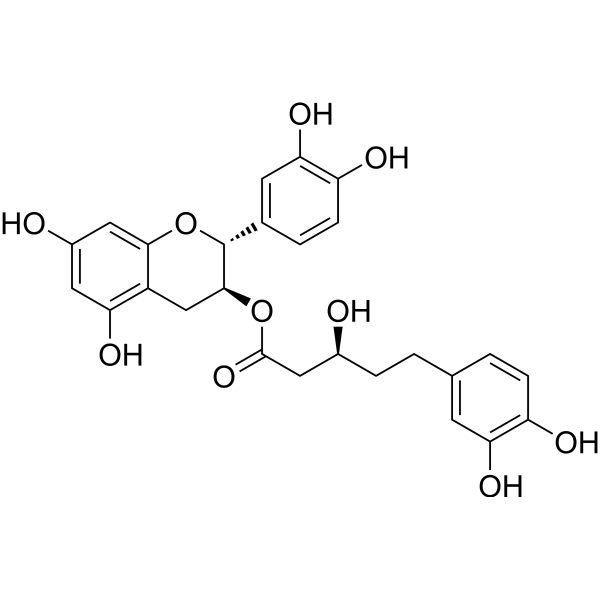
Phylloflavan is an antileishmanial (Antileishmanial) agent with an EC50 of 3.2 nM against intracellular amastigotes of Leishmania donovani. Phylloflavan is isolated from Phyllocldus plants. Phylloflavan induces moderate levels of NO release. Phylloflavan also inhibits the cytopathic effect of encephalomyocarditis virus on L929 fibroblasts (38 U/mL) .
loading...
    loading...
Cat. No.: HY-W763546A
CAS No.: 26403-72-5
Poly (ethylene glycol) diglycidyl ether (MW 500) is a crosslinker with epoxy functional groups at both ends . Poly (ethylene glycol) diglycidyl ether (MW 500) undergoes epoxy ring-opening reactions with the amino groups of ε-polylysine and the hydroxyl groups of hyaluronic acid to form a crosslinked network. Poly (ethylene glycol) diglycidyl ether (MW 500) helps endow materials with procoagulant, antibacterial and wound-healing properties .
loading...
    loading...
Cat. No.: HY-162418
CAS No.: 3034304-89-4
Target:  

Bacterial Fungal

Research Areas:  

Infection

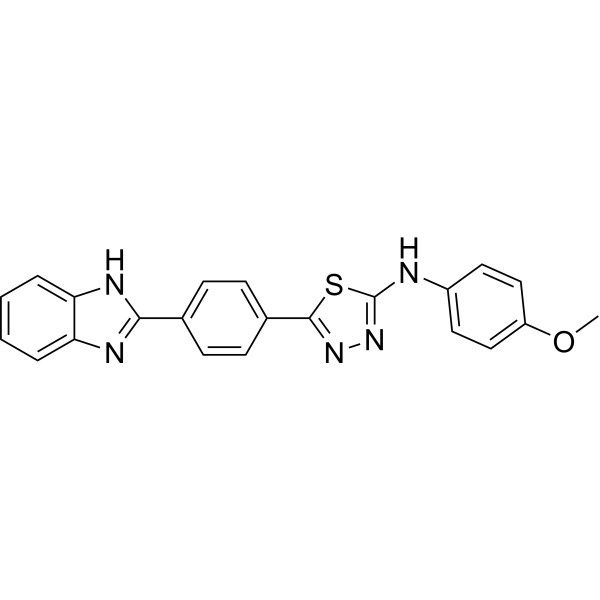
Antibacterial agent 203 (Compound 5h) has antibacterial and antifungal activity. Antibacterial agent 203 has potent antifungal activity against C. albicans, with a MIC of 3.90 μg/mL. Antibacterial agent 203 has antimicrobial activity on healthy mouse fibroblast cells (L929), with an IC50 of 75.96 μM .
loading...
    loading...
Cat. No.: HY-167835A
CAS No.: 2824-94-4
Tembetarine chloride is a alkaloid that can be isolated from Tinospora cordifolia that exhibits antibacterial activity. Tembetarine chloride exhibits weak cytotoxicity against mouse fibroblasts (L929) and human embryonic kidney cells (HEK293) with IC50 of 1245.33 μg/mL and 1642.81 μg/mL, respectively .
loading...
    loading...
Cat. No.: HY-178773
CAS No.: 858032-59-4
Target:  

Sirtuin Apoptosis

Research Areas:  

Infection

SIRT2-IN-18 (Compound 8) is a SIRT2 inhibitor with IC50s of 5.3  and 12.3 μM for SmSIRT2 and hSIRT2, respectively. SIRT2-IN-18 shows potent antischistosomal activities against both Liberian and Puerto Rican strains of Schistosoma mansoni and reduces schistosomula and adult worm pair viability, pairing, and egg production, with low cytotoxicity in mammalian cells. SIRT2-IN-18 increases histone H3 hyperacetylation and induces cytochrome c-mediated apoptosis .
loading...
    loading...
Cat. No.: HY-N15343
CAS No.: 2222286-14-6
Albiducin A is an antibiotic found in Hymenoscyphus albidus, exhibiting antibacterial and anticancer activities. The MIC range of Albiducin A against bacteria and fungi is 16.7-66.7 mg/mL. Its IC50 values for mouse fibroblast cell line (L929) and human cervical carcinoma cell line (KB3-1) are 6.1 and 2.7 μg/mL, respectively. Albiducin A holds promise for research in the fields of infection and cancer diseases .
loading...
    loading...
Cat. No.: HY-W001939R
CAS No.: 586-89-0
4-Acetylbenzoic acid (Standard) is the analytical standard of 4-Acetylbenzoic acid. This product is intended for research and analytical applications. 4-Acetylbenzoic acid is a Zn(II) complex. 4-Acetylbenzoic acid is a derivative of benzoic acid that is commonly used in chemical synthesis. 4-Acetylbenzoic acid has an IC50 of 331.3 μM in murine L929 fibroblasts and an IC50 of 176 μM in metastatic melanoma B16 F10 cell lines .
loading...
    loading...
Cat. No.: HY-N14734
CAS No.: 158181-47-6
Disorazol A1 is an tubulin inhibitor with antifungal activity. Disorazol A1 functions by inhibiting tubulin polymerization, interfering with microtubule formation, blocking mitosis, thus arresting the cell cycle at the G2/M phase and inducing apoptosis. Disorazol A1 also exhibits an inhibitory effect against L929 mouse fibroblasts with an IC50 value of 3 pM. Disorazol A1 causes the accumulation of p53 protein in the cell nucleus. Disorazol A1 is promising for research of cancers .
loading...
    loading...
Cat. No.: HY-130743
CAS No.: 4433-08-3
Synonyms: Bis-eugenol; Dehydrodieugenol
Target:  

Parasite

Research Areas:  

Infection

Dieugenol is a neolignan that has been found in N. leucantha and has antioxidative and antiprotozoal activities. It inhibits the formation of thiobarbituric acid reactive substances (TBARS) and scavenges superoxide anions, but not hydroxyl radicals, in cell-free assays. It has anti-trypanosomal activity against T. cruzi amastigotes and trypomastigotes (IC50s=15.1 and 11.5 μM, respectively) but is cytotoxic to NCTC L-929 fibroblasts with a 50% cytotoxic concentration (CC50) value of 58.2 μM.2 Dieugenol (15 μM) disrupts the integrity of the T. cruzi trypomastigote plasma membrane but does not induce the production of reactive oxygen species (ROS) in trypomastigotes or LPS-stimulated and unstimulated isolated mouse peritoneal macrophages.
loading...
    loading...
Cat. No.: HY-NP0192
Synonyms: WGA (Biotinylated)
Wheat Germ Agglutinin (WGA) (Biotinylated), a type of plant lectin that binds to biotin, is a hevein class N-acetylglucosamine-binding protein found in wheat. Wheat germ agglutinin induces apoptosis in leukemic Jurkat cells via loss of transmembrane potential, mitochondrial membrane disruption, cytochrome c release, and caspase-9 activation . Wheat Germ Agglutinin undergoes surface functionalization with nanoparticles, liposomes, and other carriers for biomedical applications. Wheat Germ Agglutinin can be used as a nanoparticle stabilizer, antifungal agent, and cytotoxic agent .
loading...
    loading...
Cat. No.: HY-184330
Research Areas:  

Metabolic Disease

ALR2/α-Glucosidase-IN-2 is an inhibitor of α-glucosidase and aldose reductase ALR2. ALR2/α-Glucosidase-IN-2 has a Ki value of 11.68 nM against yeast α-glucosidase and a Ki value of 72.64 nM against ovine ALR2. ALR2/α-Glucosidase-IN-2 inhibits intestinal carbohydrate digestion regulatory enzymes and key enzymes in the polyol pathway. ALR2/α-Glucosidase-IN-2 can be used in diabetes-related research .
loading...
    loading...
Cat. No.: HY-W674387
CAS No.: 2212541-00-7
Research Areas:  

Others

Nec-34i is an inactive analog structurally similar to Nec-34 (HY-132203). Nec-34i has no effect on RIPK1 kinase activity and cannot inhibit necroptosis .
loading...
    loading...
Cat. No.: HY-N19872
CAS No.: 103001-34-9
Mukurozioside IIb is a sesquiterpene glycoside found in S. mukorossi and Sapindus rarak. Mukurozioside IIb can be used for the research of breast cancer .
loading...
    loading...
Cat. No.: HY-183789
Target:  

CDK Apoptosis

Research Areas:  

Cancer

CDK2-IN-59 is a CDK2 inhibitor with a IC50 of 66.33 μM. CDK2-IN-59 stably interacts within the CDK2 active site and induces apoptosis in breast cancer cells. CDK2-IN-59 can be used for the research of breast cancer .
loading...
    loading...

