12 Results for "

MAPK-IN-2

" in MedChemExpress (MCE) Product Catalog:
Products (12)

12 Results for "MAPK-IN-2" in MCE Product Catalog:

Cat. No.: HY-155736
CAS No.: 3052814-46-4
Purity:  98.54%
Research Areas:  

Cancer

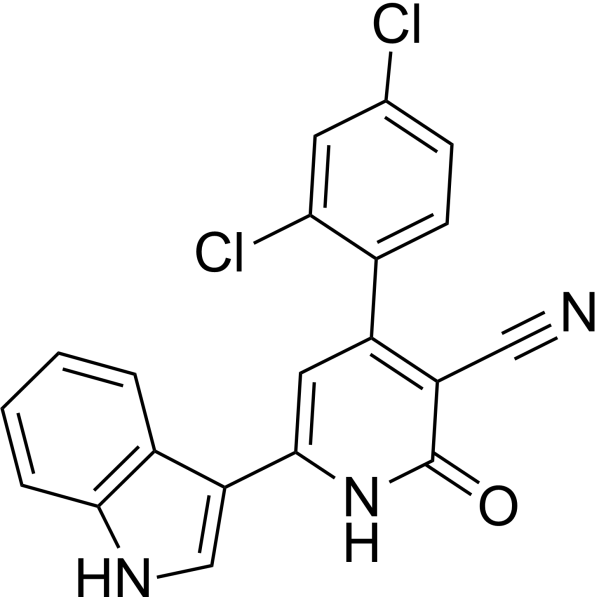
MAPK-IN-2 (compound 3h) is a potent MAPK inhibitor with antineoplastic activity. MAPK-IN-2 inhibits cancer cell proliferation among serval cancer cell lines, and suppresses MAPK pathway with potant efficacy (EGFR WT IC50=281 nM, c-MET IC50=205 nM, B-RAF WT IC50=112 nM, and CDK4/6 IC50=95 and 184 nM, respectively). MAPK-IN-2 even shows a remarkable potency against mutated EGFR and B-RAF (EGFR T790M IC50=69 nM and B-RAF V600E IC50=83 nM) .
loading...
    loading...
11
11 Cited Publications
Cat. No.: HY-13285
CAS No.: 355025-24-0
Purity:  98.88%
Synonyms: Debio 0719
Target:  

LPL Receptor YAP

Research Areas:  

Neurological Disease Cancer

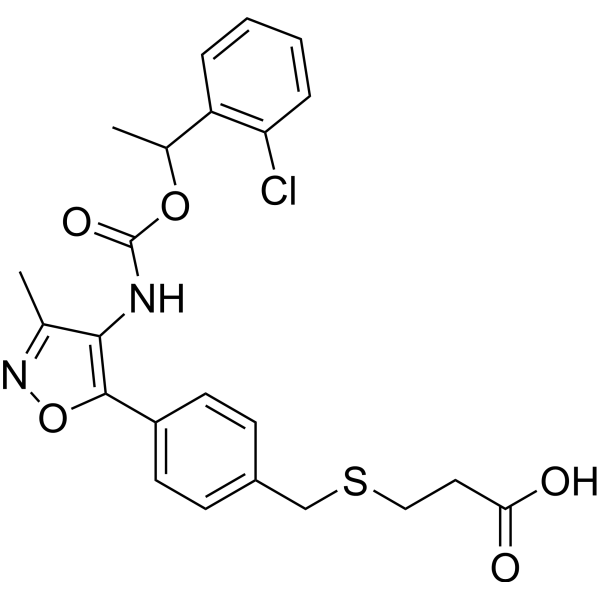
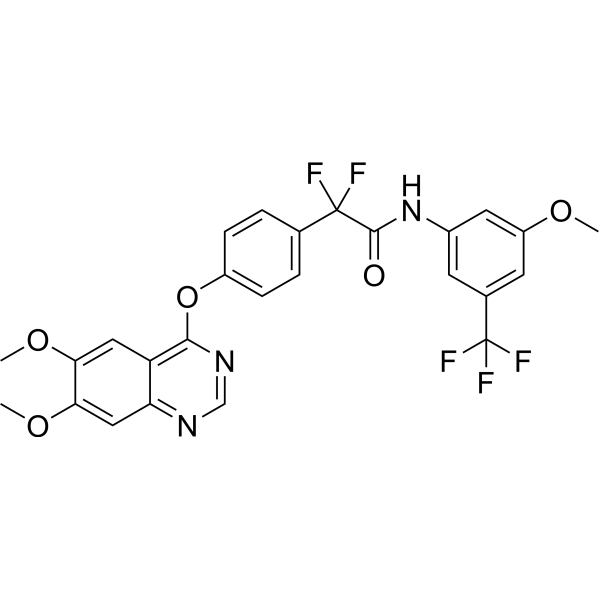
Ki16425 (Debio 0719) is a subtype-selective, competitive antagonist of the EDG-family receptors, LPA1 and LPA3 with Kis of 0.34 μM and 0.93 μM, respectively. Ki16425 (Debio 0719) reduces the LPA-induced activation of p42/p44 MAPK . Ki16425 can also inhibit LPA-induced dephosphorylation of Yes-associated protein (YAP)/TAZ in HEK293A cells .
loading...
    loading...
Cat. No.: HY-121811
CAS No.: 484-33-3
Purity:  99.81%
Synonyms: LanceolatIN C
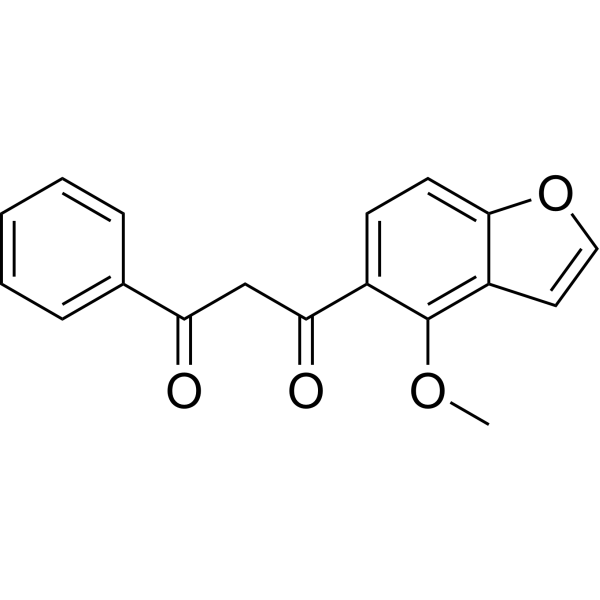
Pongamol (Lanceolatin C) is an orally active flavonoid with an IC50 of 75 μM and a Ki of 58 μM against PTPase-1B, and an IC50 of 103.5 μM against intestinal α-Glycosidase. Pongamol reduces the release of IL‑1β, TNF‑α, COX‑2 and iNOS in cells, reverses the nuclear translocation of NF‑κB, and upregulates the levels of Beclin 1 and LC3 Ⅱ/LC3 Ⅰ. Pongamol promotes glucose uptake by increasing the level of GLUT4 on the surface of skeletal muscle cells. Pongamol inhibits epithelial-mesenchymal transition by suppressing the FAK/Akt-mTOR signaling pathway. Pongamol inhibits neuronal cytotoxicity, suppresses cell apoptosis and extends the lifespan of Caenorhabditis elegans by activating the MAPKs/Nrf2 signaling pathway. Pongamol exerts hypoglycemic effects in diabetic mouse models. Pongamol exhibits antibacterial activity. Pongamol alleviates oxidative stress, neuroinflammation, deposition and excessive phosphorylation of Tau Protein, and restores autophagy function in Alzheimer's disease mouse models by inhibiting the Akt/mTOR signaling pathway. Pongamol is applicable to research related to Alzheimer's disease, type 2 diabetes, non-small cell lung cancer and postprandial hyperglycemia [2] .
loading...
    loading...
Cat. No.: HY-178433
Research Areas:  

Neurological Disease

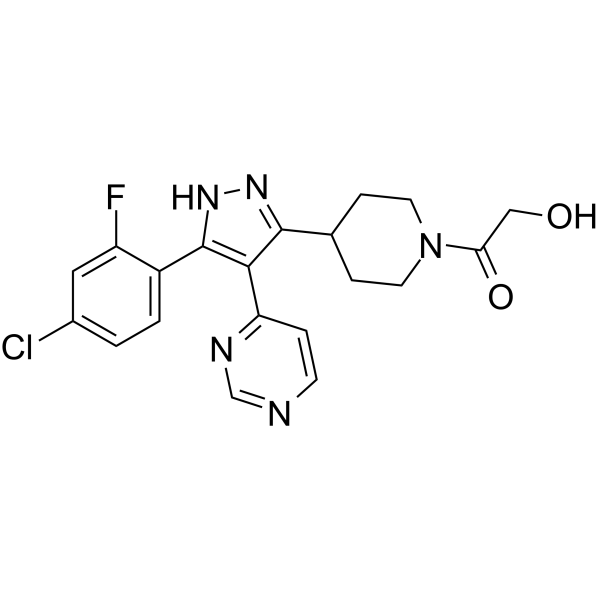
BChE/p38-α MAPK-IN-2 is a BChE and p38-α MAPK dual inhibitor. BChE/p38-α MAPK-IN-2 inhibits hBChE with an IC50 of 5.1 nM, showing 1000-fold selectivity over hAChE. BChE/p38-α MAPK-IN-2 inhibits p38α MAPK with an IC50 of 8.12 μM. BChE/p38-α MAPK-IN-2 exhibits neuroprotective effect and can be used for the research of neurological disease, such as Alzheimer’s disease .
loading...
    loading...
Cat. No.: HY-U00324
CAS No.: 635725-16-5
Target:  

p38 MAPK Autophagy

Research Areas:  

Cancer

p38 MAPK-IN-2 is an inhibitor of p38 kinase.
loading...
    loading...
Cat. No.: HY-N1965
CAS No.: 490-67-5
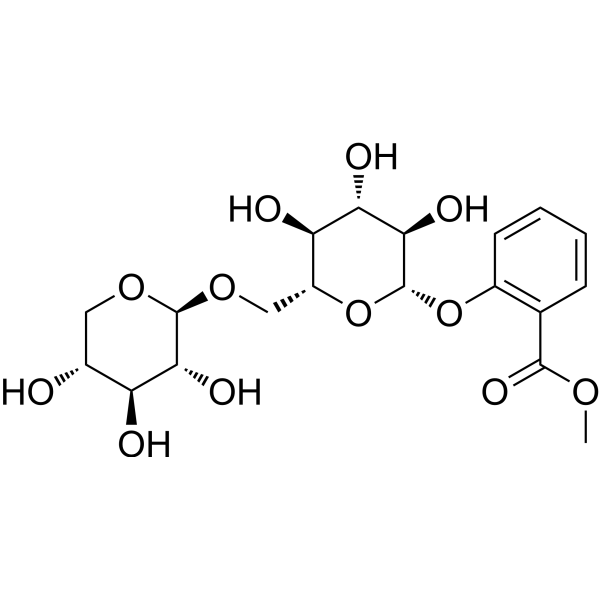
Gaultherin is an orally active non-steroidal anti-inflammatory agent. Gaultherin selectively inhibits NF-κB, MAPK, COX-2 (IC50 = 0.35 mg/mL), LOX (IC50 = 0.56 mg/mL) and HYAL (IC50 = 28.58 μg/mL) to exert anti-inflammatory, antipyretic and analgesic effects. Gaultherin exhibits modest direct antioxidant capacity, greater in cell-based models. Gaultherin does not affect COX-1 so that avoids the common gastrointestinal side effects of Aspirin (HY-14654) [2].
loading...
    loading...
Cat. No.: HY-168482
CAS No.: 3070509-60-0
Target:  

NF-κB p38 MAPK

Research Areas:  

Cancer

NF-κB/MAPK-IN-2 (compound 14) is a potent NF-κB and MAPK Inhibitor. NF-κB/MAPK-IN-2 decreases the protein expression of p-p65, p-IκB, p-p38, p-JNK, and p-ERK. NF-κB/MAPK-IN-2 reduces the LPS-induced release of TNF-α and IL-6. NF-κB/MAPK-IN-2 inhibits nuclear translocation of p65 and c-Fos. NF-κB/MAPK-IN-2 has the potential for the research of sepsis .
loading...
    loading...
Cat. No.: HY-152087
CAS No.: 2789629-84-9
Target:  

ERK p38 MAPK

Research Areas:  

Cardiovascular Disease

DCZ19931 is a potent multi-targeting kinase inhibitor. DCZ19931 has anti-angiogenic effects on ocular neovascularization. DCZ19931 also inhibits ERK1/2-MAPK and p38-MAPK signaling .
loading...
    loading...
Cat. No.: HY-162228
CAS No.: 3050874-42-2
Target:  

COX Phospholipase

Research Areas:  

Inflammation/Immunology

VI-60 is a dual, orally active inhibitor of cPLA2 and COX-2, which reveals an anti-inflammtory efficacy through the inhibition of p38 MAPK/cPLA2/COX-2/PGE2 pathway .
loading...
    loading...
Cat. No.: HY-13285R
CAS No.: 355025-24-0
Synonyms: Debio 0719 (Standard)
Ki16425 (Standard) is the analytical standard of Ki16425. This product is intended for research and analytical applications. Ki16425 (Debio 0719) is a subtype-selective, competitive antagonist of the EDG-family receptors, LPA1 and LPA3 with Kis of 0.34 μM and 0.93 μM, respectively. Ki16425 (Debio 0719) reduces the LPA-induced activation of p42/p44 MAPK . Ki16425 can also inhibit LPA-induced dephosphorylation of Yes-associated protein (YAP)/TAZ in HEK293A cells .
loading...
    loading...
Cat. No.: HY-N1965R
CAS No.: 490-67-5
Gaultherin (Standard) is the analytical standard for Gaultherin (HY-N1965). Gaultherin is an orally active non-steroidal anti-inflammatory agent. Gaultherin selectively inhibits NF-κB, MAPK, COX-2 (IC50 = 0.35 mg/mL), LOX (IC50 = 0.56 mg/mL) and HYAL (IC50 = 28.58 μg/mL) to exert anti-inflammatory, antipyretic and analgesic effects. Gaultherin exhibits modest direct antioxidant capacity, greater in cell-based models. Gaultherin does not affect COX-1 so that avoids the common gastrointestinal side effects of Aspirin (HY-14654) [2].
loading...
    loading...
Cat. No.: HY-N9972
CAS No.: 63180-02-9
Panaxcerol C (1,2-Di-O-α-linolenoyl-3-O-β-galactopyranosyl-sn-glycerol) is a plant galactolipidwith anti-inflammatory activity. It protects animals from septic shock by regulating the dynamic of oxidized lipid mediators through the MAPK-cPLA2 signaling pathway.
loading...
    loading...
  • 1

