1. Search Result
Search Result
Results for "

MCA-o

" in MedChemExpress (MCE) Product Catalog:

20

Inhibitors & Agonists

3

Natural
Products

Cat. No. Product Name Target Research Areas Chemical Structure
  • HY-N3847

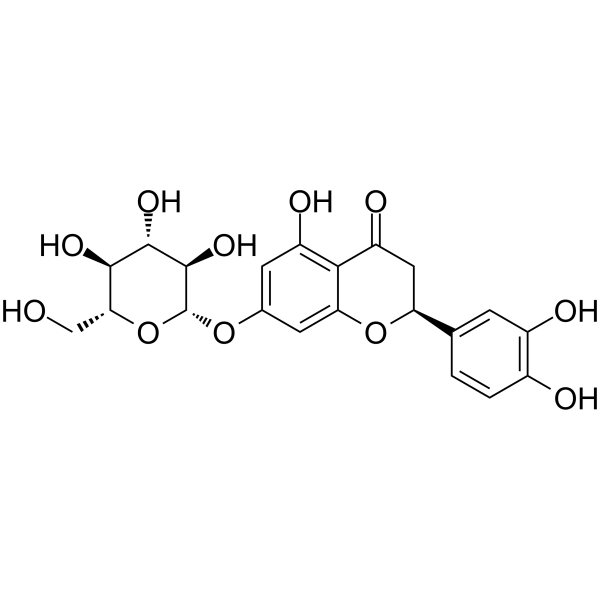
    Eriodictyol 7-O-β-D-glucoside

    Keap1-Nrf2 Neurological Disease
    Eriodictyol-7-O-glucoside (Eriodictyol 7-O-β-D-glucoside), a flavonoid, is an Nrf2 activator. Eriodictyol-7-O-glucoside exhibits significant scavenging effects on both hydroxyl radicals and superoxide anions, with IC50 values of 0.28 mM and 0.30 mM, respectively. Eriodictyol-7-O-glucoside increases the nuclear localization of Nrf2 and induces the expression of the Nrf2/ARE-dependent genes. Eriodictyol-7-O-glucoside provides protection against oxygen and glucose deprivation (OGD)-induced oxidative insult. Eriodictyol-7-O-glucoside demonstrates neuroprotective efficacy in a rat model of focal cerebral ischemia (MCAO). Eriodictyol-7-O-glucoside can be used for the study of stroke .
    Eriodictyol-7-O-glucoside
  • HY-N2255
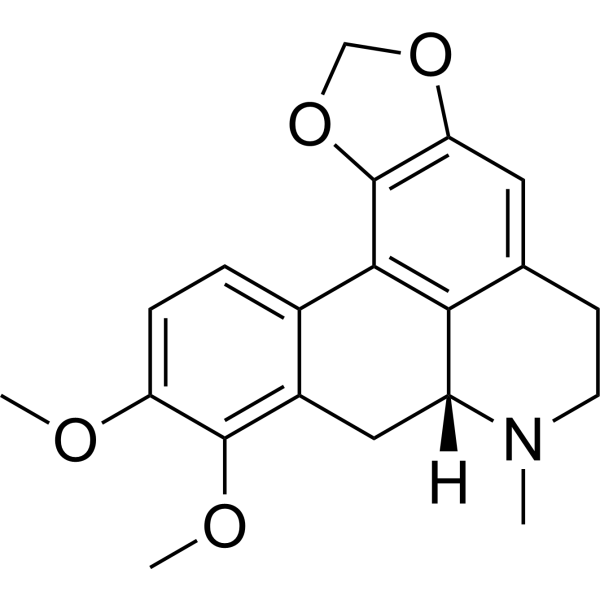
    Crebanine
    4 Publications Verification

    Akt Apoptosis NF-κB Reactive Oxygen Species (ROS) p38 MAPK ERK Interleukin Related TNF Receptor NO Synthase nAChR Bacterial Cancer
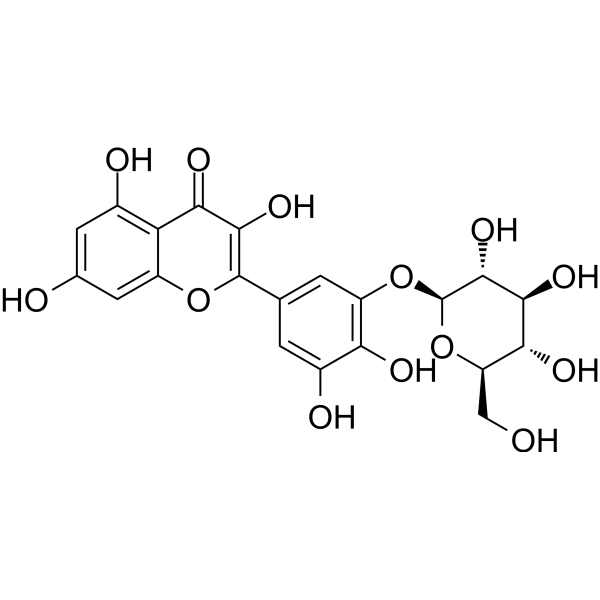
    Crebanine is an isoquinoline-like alkaloid that can be derived from Stephania. Crebanine is an antagonist of the α7-nAChR with an IC50 of 19.1 μM. Crebanine suppresses the proliferation, migration, and invasion of cancer cells, triggers reactive oxygen species (ROS) burst, and promotes apoptosis. Crebanine inhibits the AKT/FoxO3a, NF-κB and MAPK signaling pathways. Crebanine attenuates NOX2 hyperactivation, exhibits antioxidant properties by reducing reactive oxygen species and peroxidation in microglia cells. Crebanine inhibits voltage-dependent Na + current in guinea-pig ventricular myocytes. Crebanine has high inhibitory activity against gram-positive animal pathogenic bacteria. Crebanine ameliorates ischemia-reperfusion brain damage in middle cerebral artery occlusion and reperfusion (MCAO/R) rats. Crebanine significantly improves Scopolamine (HY-N0296)-induced cognitive deficits in ICR mice. Crebanine can be used for the study of hepatocellular carcinoma (HCC), cerebral ischemia and Alzheimer's disease .
    Crebanine
  • HY-139192
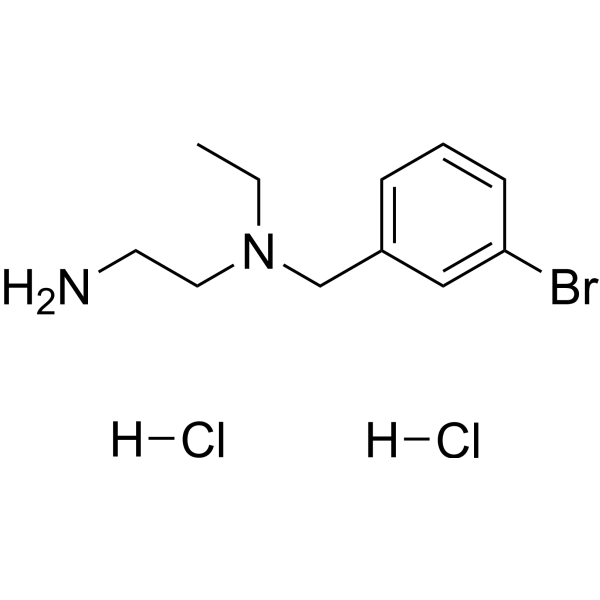
    Brophenexin
    3 Publications Verification

    NMDAR/TRPM4-IN-2

    iGluR TRP Channel ERK Neurological Disease
    Brophenexin (compound 8) is a potent NMDAR/TRPM4 interaction interface inhibitor. Brophenexin shows neuroprotective activity. Brophenexin prevents NMDA-induced cell death and mitochondrial dysfunction in hippocampal neurons, with an IC50 of 2.1 μM. Brophenexin protects mice from MCAO-induced brain damage and NMDA-induced retinal ganglion cell loss .
    Brophenexin
  • HY-139192A
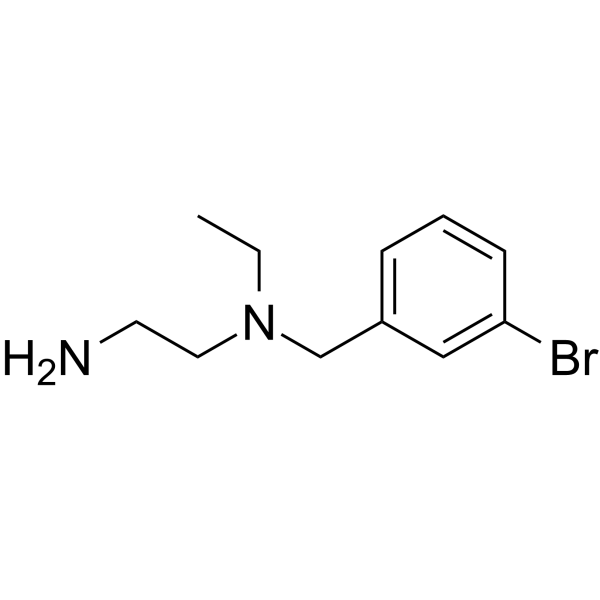
    Brophenexin free base
    3 Publications Verification

    NMDAR/TRPM4-IN-2 free base

    iGluR TRP Channel ERK Neurological Disease
    Brophenexin free base (compound 8) is a potent NMDAR/TRPM4 interaction interface inhibitor. Brophenexin free base shows neuroprotective activity. Brophenexin free base prevents NMDA-induced cell death and mitochondrial dysfunction in hippocampal neurons, with an IC50 of 2.1 μM. Brophenexin free base protects mice from MCAO-induced brain damage and NMDA-induced retinal ganglion cell loss .
    Brophenexin free base
  • HY-162359

    IRAK Neurological Disease Inflammation/Immunology
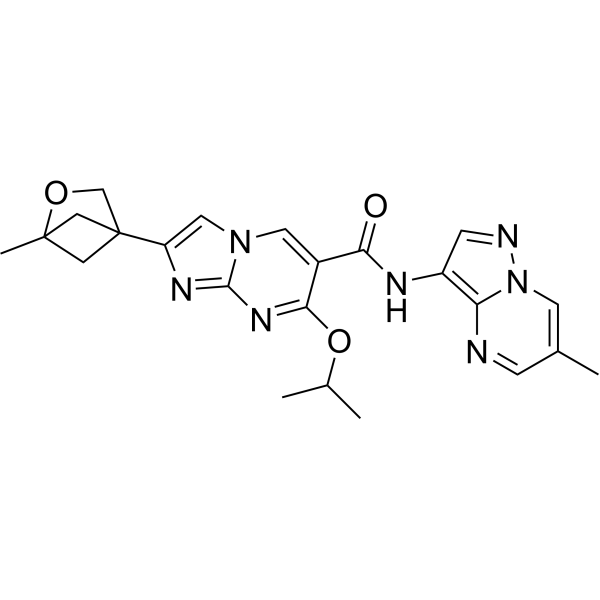
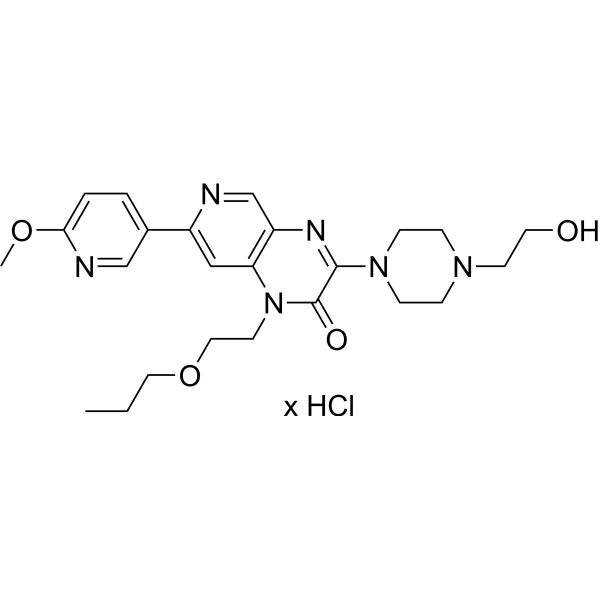
    BIO-7488 is an orally active, selective and blood-brain barrier permeable IRAK4 inhibitor, with an IC50 value of 0.5 nM. BIO-7488 inhibits the production of pro-inflammatory cytokines (IL-1β, TNFα, IL-6) and demonstrates anti-inflammatory effects in both LPS (HY-D1056) and distal hypoxic-middle cerebral artery occlusion (DH-MCAO) ischemic stroke model. BIO-7488 can be used for the study of neuroinflammatory-related diseases, particularly ischemic stroke .
    BIO-7488
  • HY-161104
    Kv2.1-IN-1
    1 Publications Verification

    Potassium Channel Apoptosis Cardiovascular Disease Neurological Disease
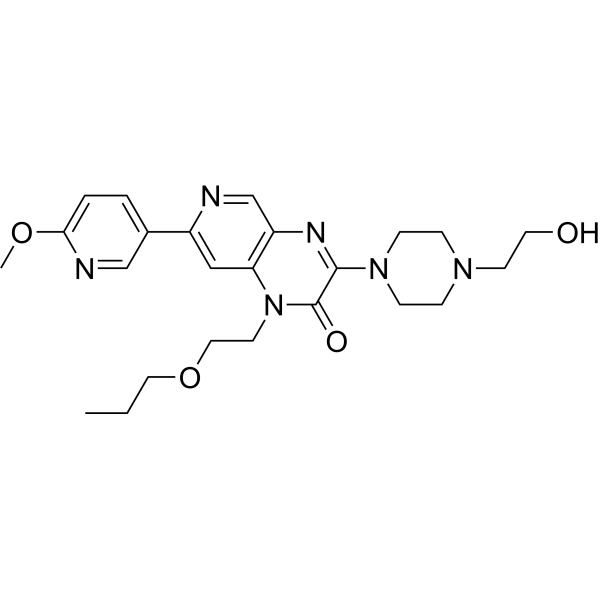
    Kv2.1-IN-1 is an orally active and blood-brain barrier penetrant Kv2.1 inhibitor with an IC50 of 0.07 μM. Kv2.1-IN-1 exhibits a selectivity >130 fold over other K +, Na +, and Ca 2+ ion channels. Kv2.1-IN-1 decreases the apoptosis of HEK293 cells induced by H2O2. Kv2.1-IN-1 produces significant neuroprotection efficacy in middle cerebral artery occlusion (MCAO) rat. Kv2.1-IN-1 can be used for the study of ischemic stroke .
    Kv2.1-IN-1
  • HY-10679

    Phosphodiesterase (PDE) Neurological Disease
    PF-03049423 (Compound PF-5) free base is a potent and highly selective phosphodiesterase-5A inhibitor with an IC50 of about 0.2 nM for rat and human platelet enzyme. PF-03049423 free base can be used for the research of acute ischaemic stroke .
    PF-03049423 free base
  • HY-126049

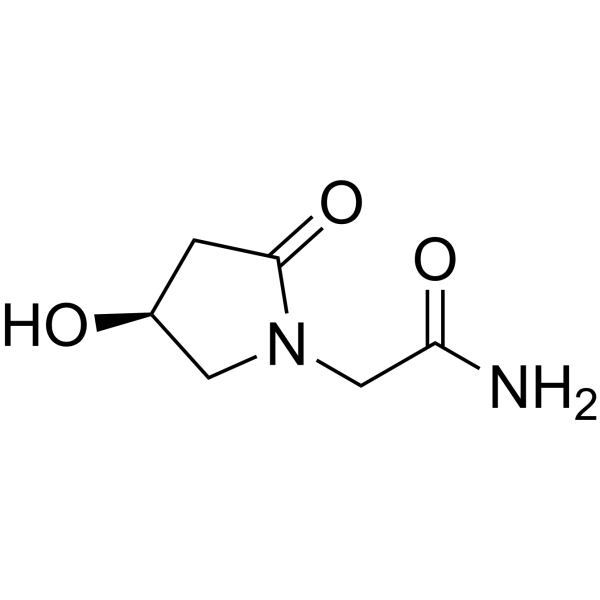
    (S)-(-)-Oxiracetam; (S)-ISF2522

    Apoptosis Neurological Disease
    (S)-oxiracetam (S-ORC) is an inhibitor targeting apoptosis. S-ORC reduces brain infarct size and lessens neurological dysfunction in middle cerebral artery occlusion/reperfusion (MCAO/R) models. S-ORC prevents neuronal apoptosis via activating PI3K/Akt/GSK3β signaling pathway via α7 nAChR after ischemic stroke. S-ORC can prevent neuronal death after ischemic stroke .
    (S)-Oxiracetam
  • HY-N8931

    Lithospermic acid monomethyl ester

    Akt Neurological Disease
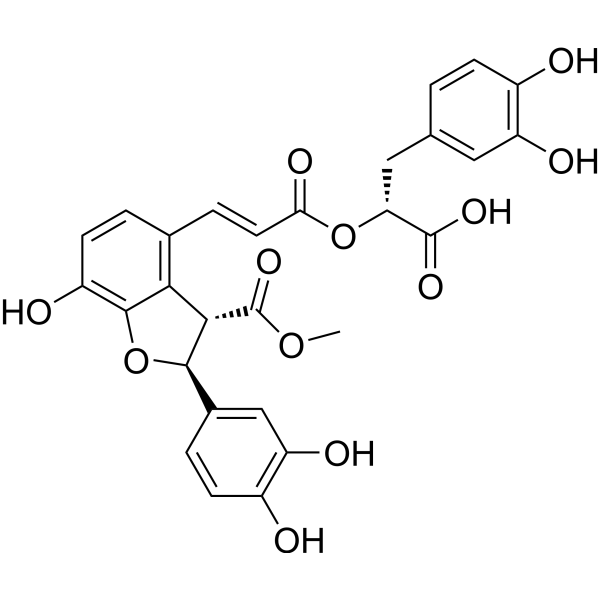
    Monomethyl lithospermate activates the PI3K/AKT pathway, which plays a protective role in nerve injury. Monomethyl lithospermate can improve the survival ability of SHSY-5Y cells, inhibit the breakdown of mitochondrial membrane potential (MMOP) and inhibit cell apoptosis. Monomethyl lithospermate also reduced the level of oxidative stress in the brain tissue of rats with middle artery occlusion (MCAO) and improved nerve damage in rats with ischemic stroke (IS) .
    Monomethyl lithospermate
  • HY-178464

    RIP kinase Mixed Lineage Kinase Necroptosis Neurological Disease Inflammation/Immunology
    RIPK1-IN-34 is a selective, brain-penetrant RIPK1 inhibitor (IC50 = 126.70 nM) with almost no inhibitory effect on RIPK3 (IC50 > 10, 000 nM). RIPK1-IN-34 offers substantial neuroprotection by inhibiting the phosphorylation of RIPK1, RIPK3, and mixed lineage kinase domain-like pseudokinase (MLKL) within the necroptosis pathway. RIPK1-IN-34 shows the neuroprotective effect in a rat middle cerebral artery occlusion (MCAO) model. RIPK1-IN-34 can be used for the study of anti-acute ischemic stroke (AIS) .
    RIPK1-IN-34
  • HY-10679A

    Phosphodiesterase (PDE) Neurological Disease
    PF-03049423 (Compound PF-5) is a potent and highly selective phosphodiesterase-5A inhibitor with an IC50 of about 0.2 nM for rat and human platelet enzyme. PF-03049423 can be used for the research of acute ischaemic stroke .
    PF-03049423
  • HY-159928

    Reactive Oxygen Species (ROS) PGC-1α NOD-like Receptor (NLR) Neurological Disease
    Neuroprotective agent 8 (compound AA-9) is an oral active neuroprotective agent by anti-oxidative stress and anti-inflammation. Neuroprotective agent 8 activates PGC-1α and inhibits NLRP3 in the rat MCAO ischemic stroke model .
    Neuroprotective agent 8
  • HY-174127

    P2Y Receptor Neurological Disease
    P2Y1 antagonist 3 (compound 36b) is a blood-brain barrier (BBB)-penetrant P2Y1 antagonist with an IC50 of 0.50 μM. P2Y1 antagonist 3 exhibits protective effects in a rat middle cerebral artery occlusion (MCAO) model and demonstrates neuroprotective activity against oxidative stress by upregulating nuclear Nrf2 protein levels .
    P2Y1 antagonist 3
  • HY-172455

    Potassium Channel Neurological Disease
    TREK inhibitor-3 (Cpd8l) is a selective and BBB-permeable TREK-1 inhibitor with an IC50 of 0.81 μM. TREK inhibitor-3 has neuroprotective effects, which can significantly reduce the death of cortical neurons induced by oxygen-glucose deprivation/reoxygenation (OGD/R) and improve brain injury in mice models of middle cerebral artery occlusion/reperfusion (MCAO/R). TREK inhibitor-3 can be used in the research of ischemic stroke .
    TREK inhibitor-3
  • HY-168770

    RIP kinase TNF Receptor Apoptosis Cardiovascular Disease
    Cl-Necrostatin-1 is a RIPK1 inhibitor. Cl-Necrostatin-1 can also inhibit TNF-α-induced necroptosis in Jurkat cells deficient in Fas-associated death domain protein (FADD; EC50 = 180 nM), a modification that prevents caspase activation in response to death-domain receptor signaling. Cl-Necrostatin-1 can also reduce infarct size in a mouse model of middle cerebral artery occlusion (MCAO). Cl-Necrostatin-1 is used for research in cardiovascular and cerebrovascular diseases .
    Cl-Necrostatin-1
  • HY-100458

    NO Synthase Neurological Disease
    SCR-4026 is a neuroprotective agent with blood-brain barrier penetration ability. SCR-4026 exerts neuroprotective effects by disrupting the interaction between neuronal nNOS and PSD9, with an IC50 of 6.3 μM. SCR-4026 alleviates N-methyl-D-aspartate (NMDA)-induced excitotoxic damage in primary cortical neurons, and also protects neurons in the oxygen-glucose deprivation (OGD) model. SCR-4026 can reduce the cerebral infarct volume in the rat middle cerebral artery occlusion (MCAO) reperfusion model. SCR-4026 can be used for the study of stroke .
    SCR-4026
  • HY-173142

    Drug Derivative Neurological Disease
    Neuroprotective agent 7 (Compound 13) is a BBB-penetrable neuroprotective agent. Neuroprotective agent 7 has a powerful neuroprotective effect and can reduce the cerebral infarct area in the MCAO rat model. Neuroprotective agent 7 can be used in the research of diseases such as cerebral ischemia .
    Neuroprotective agent 7
  • HY-181549

    Phosphodiesterase (PDE) Cardiovascular Disease Neurological Disease
    PDE4-IN-32 (Compound B05) is a selective, blood-brain barrier permeable PDE4B and PDE4D inhibitor with IC50 values of 13.7 nM and 23.8 nM, respectively. PDE4-IN-32 promotes the recovery of motor and cognitive function in MCAO/R mouse models. PDE4-IN-32 reduces cerebral edema. PDE4-IN-32 can be used for the research of ischemic stroke .
    PDE4-IN-32
  • HY-180806

    RIP kinase Apoptosis Cardiovascular Disease Neurological Disease
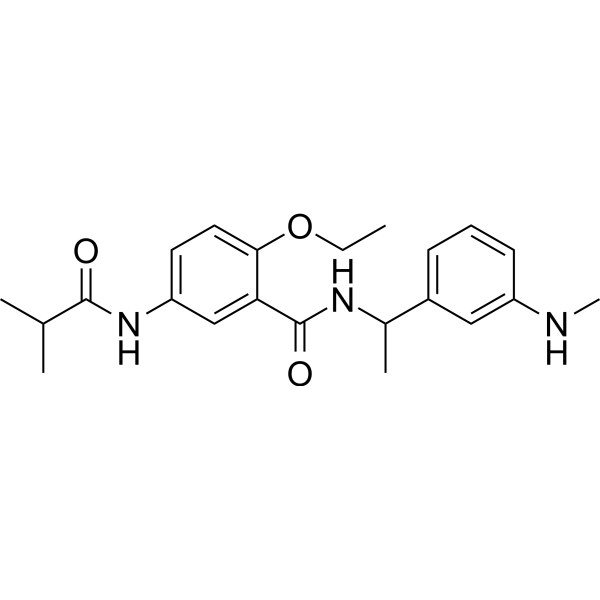
    RIPK1-IN-39 (compound 2) is a potent and selective RIPK1 inhibitor (IC50 = 69.40 nM) exhibiting >100-fold selectivity over RIPK3 (IC50 = 6946 nM). RIPK1-IN-39 protects HT-22 and HT-29 cells from necroptosis by inhibiting the phosphorylation and activation of the RIPK1-RIPK3-MLKL pathway. RIPK1-IN-39 demonstrates neuroprotective effects in a rat model of middle cerebral artery occlusion (MCAO). RIPK1-IN-39 can be used for acute ischemic stroke (AIS) research .
    RIPK1-IN-39
  • HY-182068

    iGluR Cardiovascular Disease Neurological Disease
    NFI23 is a GluN2B-NMDAR inhibitor with an IC50 of 1.31 μM and a Ki of 5.98 nM against GluN2B-NMDAR. NFI23 can cross the blood-brain barrier. NFI23 binds to the ifenprodil binding site of GluN2B-NMDAR, reduces NMDA-induced Ca 2+ influx and reactive oxygen species (ROS) production, maintains mitochondrial membrane potential, inhibits neuronal apoptosis, and restores the expression of p-ERK1/2. NFI23 exerts neuroprotective effects against NMDA-induced cytotoxicity and in the rat middle cerebral artery occlusion (MCAO) model. NFI23 can be used for the research of ischemic stroke .
    NFI23

Inquiry Online

Your information is safe with us. * Required Fields.

Salutation


Country or Region *

Applicant Name *


Organization Name *

Department *


Email Address *


Product Name *

Cat. No.


Requested quantity *

Phone Number *


Remarks

Inquiry Online

Inquiry Information

Product Name:
Cat. No.:
Quantity:
MCE Japan Authorized Agent:

