13 Results for "

MCT4 inhibitor

" in MedChemExpress (MCE) Product Catalog:
Products (13)

13 Results for "MCT4 inhibitor" in MCE Product Catalog:

16
16 Publications Verification
Cat. No.: HY-N4115
CAS No.: 84-36-6
Synonyms: Su 3118
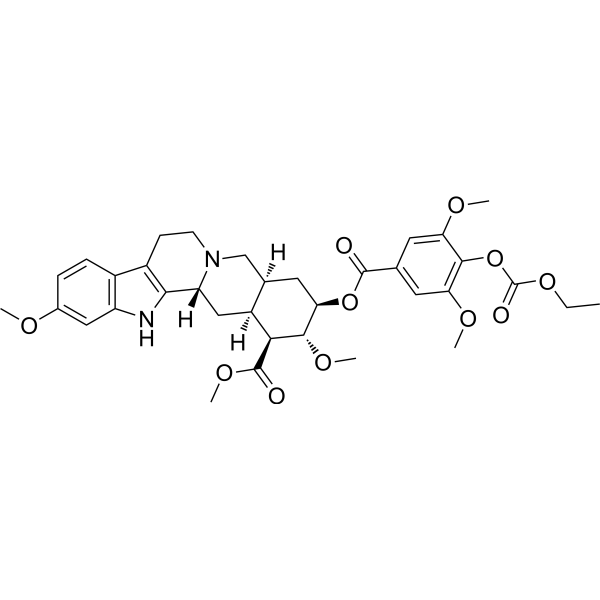
Syrosingopine (Su 3118) is an orally active lactate transporters (MCT1/MCT4) dual inhibitor, which can reduce glycolysis and induce synthetic lethality in cancer cells when combine with metformin. Syrosingopine shows anti-hypertensive activity by depleting peripheral stores of norepinephrine .
loading...
    loading...
8
8 Cited Publications
Cat. No.: HY-139665
CAS No.: 2230186-18-0
Purity:  98.91%
Research Areas:  

Cardiovascular Disease

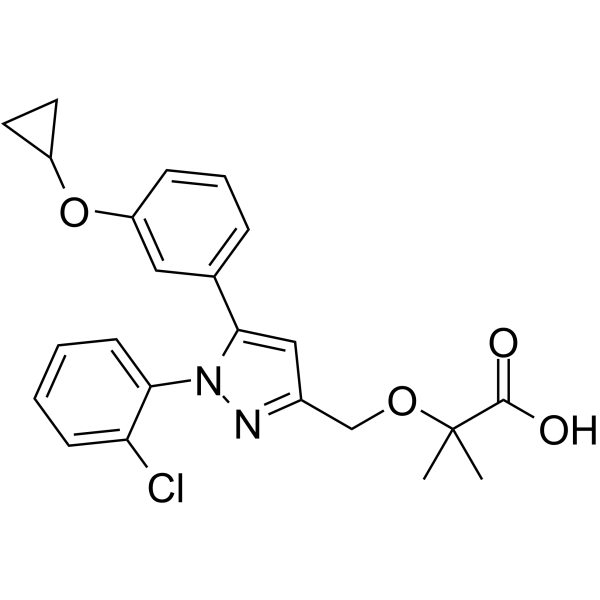
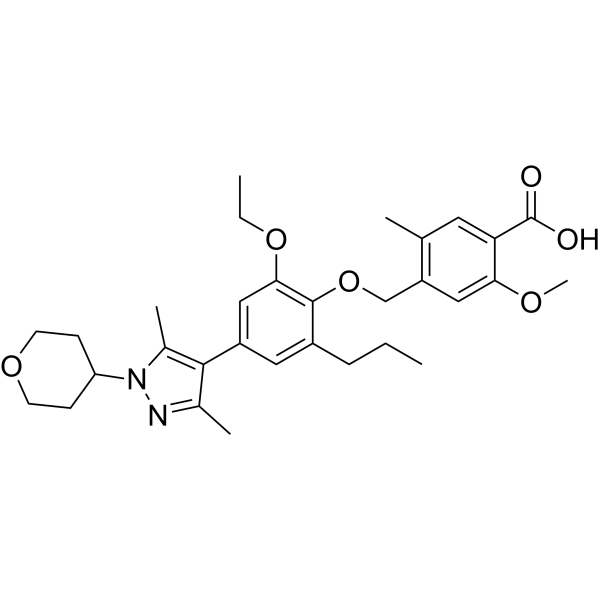
VB124 is an orally active, potent, and selective MCT4 inhibitor. VB124 can specifically inhibit lactate efflux with IC50s of 8.6 nM and 19 nM for lactate import and export in MDA-MB-231 cells, respectively. VB124 is highly selective for MCT4 over MCT1. VB124 can be used for the research of cardiac hypertrophy, heart failure, and metabolism .
loading...
    loading...
7
7 Cited Publications
Cat. No.: HY-100575
CAS No.: 8048-52-0
Purity:  ≥98.0%
Synonyms: Acriflavinium chloride 3,6-Acridinediamine mix
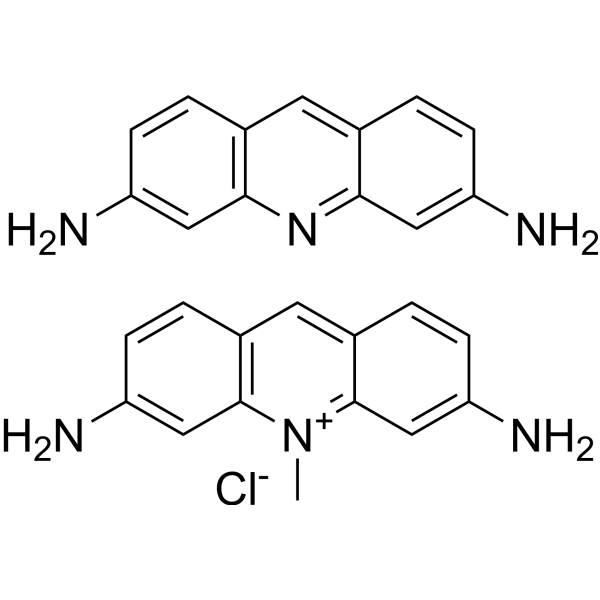
Acriflavine (Acriflavinium chloride) is a fluorescent acridine dye that can be used to label nucleic acid. Acriflavine is an antiseptic agent. Acriflavine is a potent HIF-1 inhibitor that prevents the dimerization of HIF-1α and HIF-1β subunits. Acriflavine inhibits the interaction between monocarboxylate transporter 4 (MCT4) and Basigin. Acriflavine is used in cancer research, such as breast cancer, brain tumor and chronic myeloid leukemia. Acriflavine is a potent papain-like protease (PLpro) inhibitor, which inhibits SARS-CoV-2 .
loading...
    loading...
7
7 Cited Publications
Cat. No.: HY-W088075
CAS No.: 69235-50-3
Synonyms: Acriflavinium chloride hydrochloride
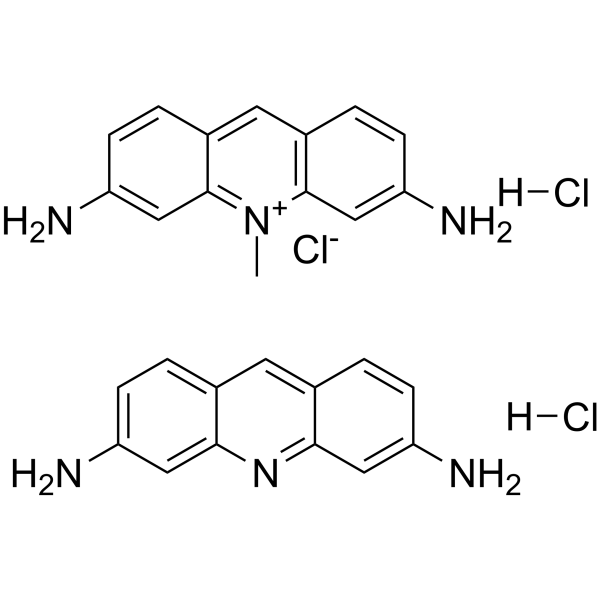
Acriflavine (Acriflavinium chloride) hydrochloride is a fluorescent acridine dye that can be used to label nucleic acid. Acriflavine hydrochloride is an antiseptic agent. Acriflavine hydrochloride is a potent HIF-1 inhibitor that prevents the dimerization of HIF-1α and HIF-1β subunits. Acriflavine hydrochloride inhibits the interaction between monocarboxylate transporter 4 (MCT4) and Basigin. Acriflavine hydrochloride is used in cancer research, such as breast cancer, brain tumor and chronic myeloid leukemia. Acriflavine hydrochloride is a potent papain-like protease (PLpro) inhibitor, which inhibits SARS-CoV-2 .
loading...
    loading...
5
5 Cited Publications
Cat. No.: HY-122312
CAS No.: 724440-27-1
Purity:  98.39%
Research Areas:  

Cancer

BAY-8002 is a potent, selective, orally active inhibitor of monocarboxylate transporter 1 (MCT1), with an IC50 of 85 nM in the MCT1-expressing DLD-1 cells, displays excellent selectivity against MCT4. Anti-tumor activity .
loading...
    loading...
4
4 Cited Publications
Cat. No.: HY-148517
CAS No.: 2750001-23-9
Purity:  99.42%
Research Areas:  

Cancer

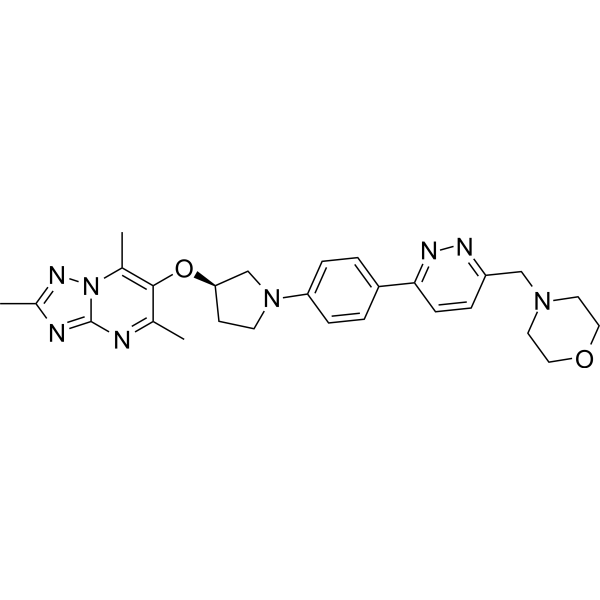
AZD0095 is a selective and orally active MCT4 inhibitor (IC50: 1.3 nM). AZD0095 effectively inhibits the tumor growth in NCI-H358 xenograft in combination with Cediranib (HY-10205) .
loading...
    loading...
Cat. No.: HY-132301
CAS No.: 2445185-57-7
Purity:  98.89%
Synonyms: MCT4-IN-1
Research Areas:  

Cancer

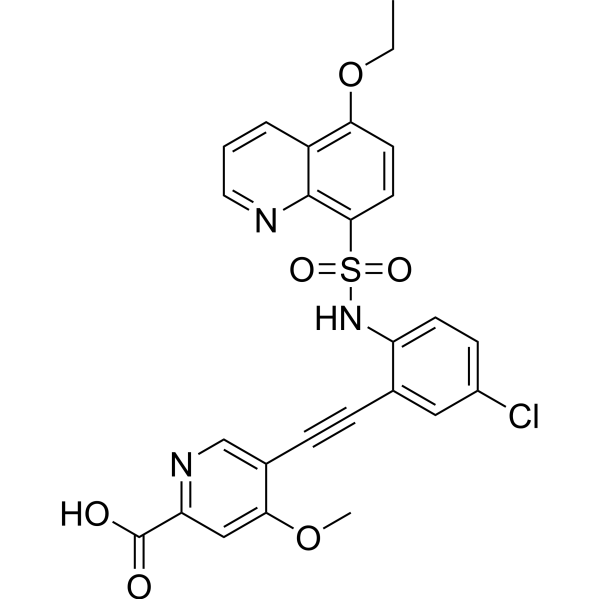
MSC-4381 (MCT4-IN-1), a chemical probe, is an orally active and selective monocarboxylate transporter 4 (MCT4/SLC16A3) inhibitor with an IC50 of 77 nM and a Ki of 11 nM. MSC-4381 targets to the cytosolic domain of MCT4. MSC-4381 results in lactate efflux inhibition and reduction of cellular viability in MCT4 high expressing cells. MSC-4381 has the potential for MCT4 transporter inhibition research . MSC-4381 is a click chemistry reagent, it contains an Alkyne group and can undergo copper-catalyzed azide-alkyne cycloaddition (CuAAc) with molecules containing Azide groups.
loading...
    loading...
Cat. No.: HY-150314
CAS No.: 1685273-57-7
Purity:  99.74%
Research Areas:  

Cancer

MCT-IN-1 (Compound 2) is a potent MCT inhibitor, with IC50 values of 9 nM and 14 nM against MCT1 and MCT4, respectively. MCT-IN-1 can be used in research related to solid tumors .
loading...
    loading...
Cat. No.: HY-75625
CAS No.: 2237-36-7
Synonyms: 4-Methoxysalicylic Acid
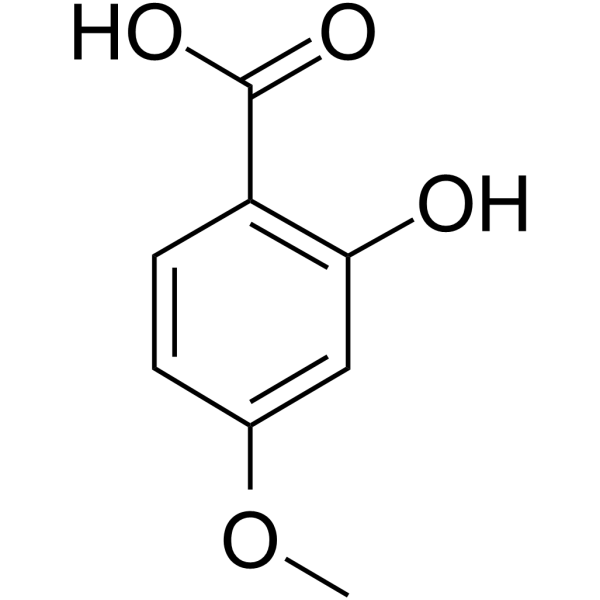
2-Hydroxy-4-methoxybenzoic acid is an orally active inhibitor of MCT-1 and MCT-4, as well as a plant biomarker. 2-Hydroxy-4-methoxybenzoic acid can be isolated from roots. 2-Hydroxy-4-methoxybenzoic acid induces Apoptosis and loss of mitochondrial membrane potential. 2-Hydroxy-4-methoxybenzoic acid exhibits anticancer activity against breast cancer. 2-Hydroxy-4-methoxybenzoic acid normalizes lactic acid levels. 2-Hydroxy-4-methoxybenzoic acid neutralizes viper venom and attenuates its lethal, hemorrhagic, coagulant and anticoagulant activities in male albino mice. 2-Hydroxy-4-methoxybenzoic acid possesses antihyperlipidemic, antidiabetic and hepatoprotective activities .
loading...
    loading...
Cat. No.: HY-160107
Research Areas:  

Neurological Disease

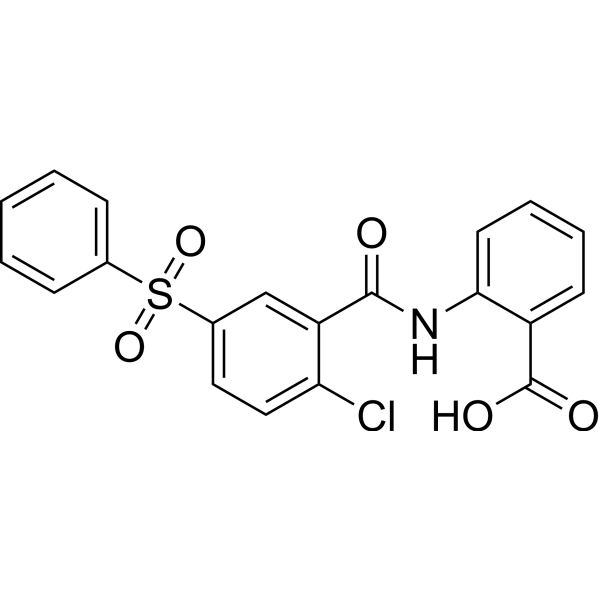
AZ1422 is a selective MCT4 inhibitor that can be used in cancer research .
loading...
    loading...
Cat. No.: HY-N4115R
CAS No.: 84-36-6
Synonyms: Su 3118 (Standard)
Syrosingopine (Su 3118) is an orally active lactate transporters (MCT1/MCT4) dual inhibitor, which can reduce glycolysis and induce synthetic lethality in cancer cells when combine with metformin. Syrosingopine shows anti-hypertensive activity by depleting peripheral stores of norepinephrine .
loading...
    loading...
Cat. No.: HY-182416
CAS No.: 949973-22-2
slCeMM1 is a selective SLC16A3 (MCT4) inhibitor. slCeMM1 inhibits lactate transport, induces intracellular lactate accumulation, reduces viability of SLC16A3-dependent cells, and inhibits growth of SLC16A3-dependent cells. slCeMM1 can be used for the research of rheumatoid arthritis and cancer .
loading...
    loading...
Cat. No.: HY-184926
PEG9MA10-PAB10-GalMA10 is a CD147 LYTAC degrader. PEG9MA10-PAB10-GalMA10 binds to the asialoglycoprotein receptor (ASGPR) via its galactose methacrylate domain, mediating its uptake by hepatoma cells. PEG9MA10-PAB10-GalMA10 induces lysosome-dependent degradation of CD147, resulting in concurrent loss of associated MCT1 and MCT4. PEG9MA10-PAB10-GalMA10 reduces extracellular lactate levels, increases intracellular lactate accumulation, inhibits glycolytic activity, and enhances mitochondrial respiratory capacity. PEG9MA10-PAB10-GalMA10 decreases the secretion of MMP-2 and MMP-9, and upregulates the expression of E-cadherin. PEG9MA10-PAB10-GalMA10 exhibits anti-tumor efficacy in hepatoma models. PEG9MA10-PAB10-GalMA10 can be used for research on liver cancer (hepatocellular carcinoma) .
loading...
    loading...
  • 1

