10 Results for "

Metabolic complications

" in MedChemExpress (MCE) Product Catalog:
Products (10)

10 Results for "Metabolic complications" in MCE Product Catalog:

1
1 Cited Publications
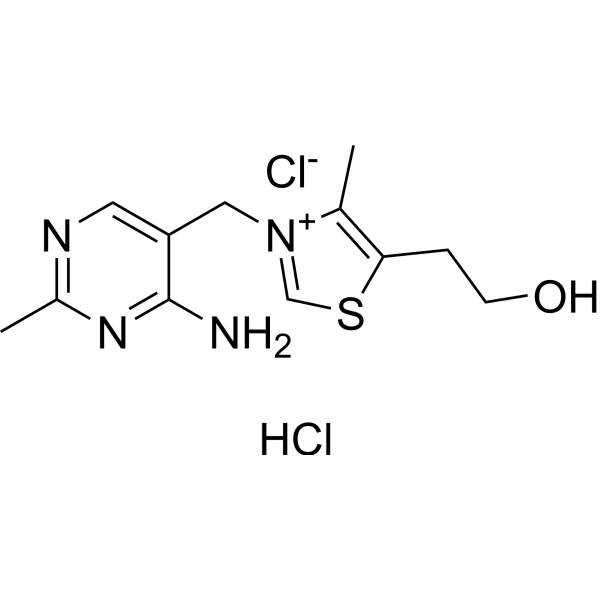
Cat. No.: HY-N0680
CAS No.: 67-03-8
Synonyms: Thiamine chloride hydrochloride; Vitamin B1 hydrochloride
Thiamine hydrochloride (Thiamine chloride hydrochloride) is an essential micronutrient needed as a cofactor for many central metabolic enzymes.Thiamine hydrochloride activates NrF-2/HO-1 and inhibits TLR4, NF-κB. Thiamine hydrochloride has neuroprotective and anti-inflammatory effects. Thiamine hydrochloride can be used in the studys of diabetic complications, neurological diseases, cancers, and colitis .
loading...
    loading...
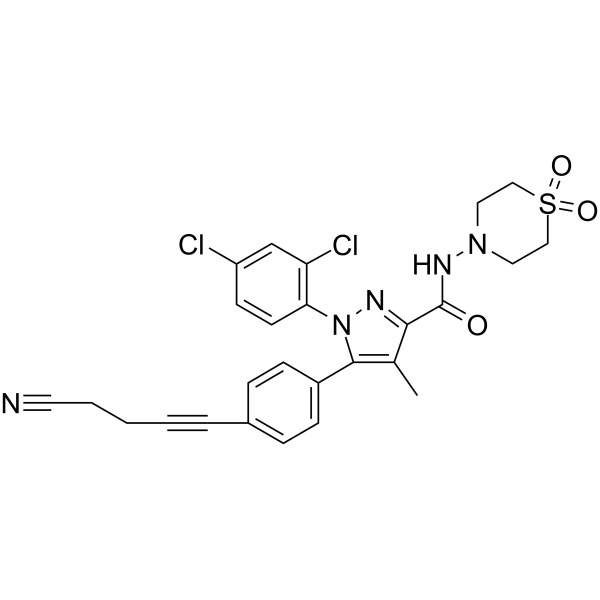
Cat. No.: HY-110206
CAS No.: 1245626-05-4
Purity:  99.32%
Target:  

Cannabinoid Receptor

Research Areas:  

Metabolic Disease

AM6545 is a highly selective, brain-free (peripherally active) CB1 receptor antagonist (Ki=1.7 nM). AM6545 inhibits endocannabinoid signaling by competitively antagonizing CB1 receptors, inhibiting CB1-mediated appetite stimulation and inflammatory responses without affecting cAMP levels. AM6545 significantly reduces food intake and body weight in mice, while improving metabolic syndrome-related renal impairment (such as proteinuria, fibrosis) and insulin resistance. AM6545 can be used in the study of obesity and its complications .
loading...
    loading...
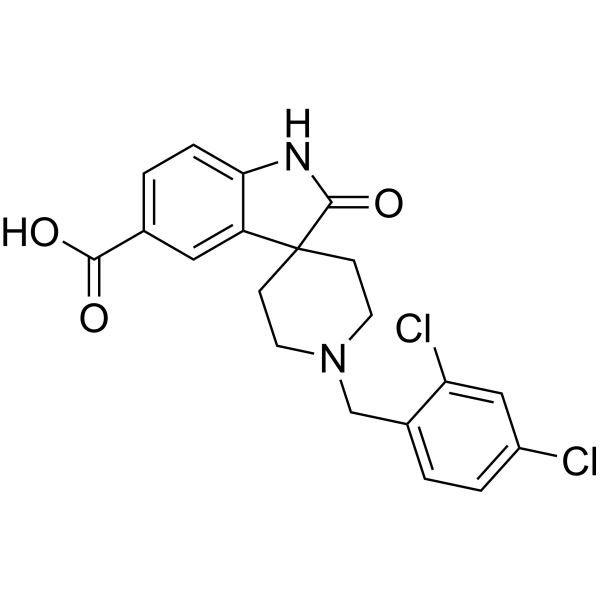
Cat. No.: HY-153530
CAS No.: 2762762-17-2
Purity:  98.95%
Target:  

IPK Superfamily

LI-2242 is an inositol hexakisphosphate kinase (IP6K) inhibitor. LI-2242 has inhibition effect for IP6K1, IP6K2, IP6K3 and IPMK with IC50 values of 31 nM, 42 nM, 8.7 nM and 1944 nM, respectively. LI-2242 can be used for thew research of type II diabetes, obesity, metabolic complications, venous thrombosis, and psychiatric disorders .
loading...
    loading...
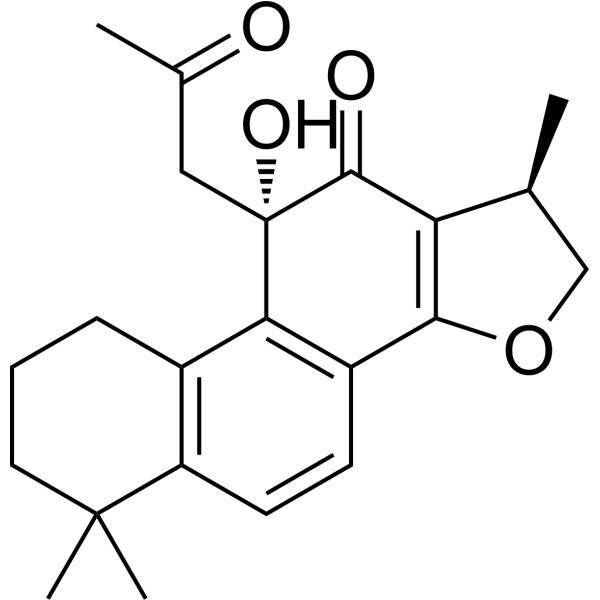
Cat. No.: HY-122963
CAS No.: 189308-09-6
Danshenol B is a diterpenoid. Danshenol B has strong aldose reductase (AR) inhibitory activity with IC50 value of 0.042μM. Danshenol B can be used for the research of diabetic related complication resulted by metabolic abnormality, such as cataracts, retinopathy, neuropathy, and nephropathy .
loading...
    loading...
Cat. No.: HY-124557
CAS No.: 21104-28-9
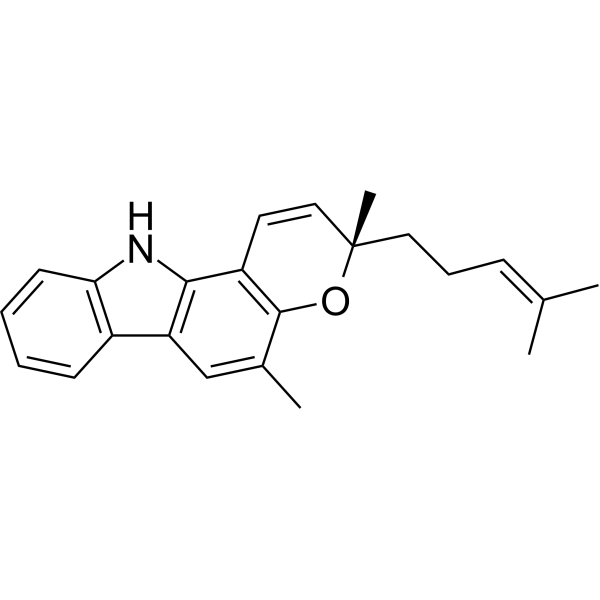
Mahanimbine is an orally active alkaloid from Murraya koenigii. Mahanimbine inhibits progression of high-fat diet (HFD)-induced metabolic complications in mice .
loading...
    loading...
Cat. No.: HY-172808
CAS No.: 2836313-12-1
Research Areas:  

Metabolic Disease

BNS808 is an orally active and selective cannabinoid-1 receptor (CB1R) antagonist (IC50 = 0.8 nM) with notable CB2R selectivity and minimal brain penetration. BNS808 is studied in research on obesity and its associated metabolic complications, such as metabolic dysfunctional-associated steatotic liver disease (MASLD). BNS808 has reduced free drug availability for CNS entry, enhancing safety and minimizing drug-drug interactions through high plasma binding .
loading...
    loading...
Cat. No.: HY-P11578
CAS No.: 729612-73-1
Target:  

Peptides

Research Areas:  

Metabolic Disease

CKGGRAKDC (linear) is an adipose tissue homing peptide. CKGGRAKDC (linear) binds to vasculature-enriched prohibitin in adipose tissue to enable selective tissue targeting. CKGGRAKDC (linear) can be used to selective delivery of cargos to adipose tissues .
loading...
    loading...
Cat. No.: HY-128613
CAS No.: 2423919-77-9
Synonyms: TZ-md
Terazosin-md (compound TZ-md), a derivative of both Alfuzosin (HY-B0192) and Terazosin (HY-B0371), is an orally active α1-adrenergic receptor antagonist. Terazosin-md has the functions of improving mitochondrial metabolism, degrading various pathological protein accumulations and improving the function of vascular endothelial cells. Terazosin-md shows effect in a mouse model with Alzheimer's disease. Terazosin-md can be used for research in Alzheimer's disease and related complications, and diseases associated with protein accumulation and metabolic disorders .
loading...
    loading...
Cat. No.: HY-110206R
CAS No.: 1245626-05-4
AM6545 (Standard) is the analytical standard of AM6545 (HY-110206). This product is intended for research and analytical applications. AM6545 is a highly selective, brain-free (peripherally active) CB1 receptor antagonist (Ki=1.7 nM). AM6545 inhibits endocannabinoid signaling by competitively antagonizing CB1 receptors, inhibiting CB1-mediated appetite stimulation and inflammatory responses without affecting cAMP levels. AM6545 significantly reduces food intake and body weight in mice, while improving metabolic syndrome-related renal impairment (such as proteinuria, fibrosis) and insulin resistance. AM6545 can be used in the study of obesity and its complications .
loading...
    loading...
Cat. No.: HY-L040
1,167 compounds

Diabetes mellitus, usually called diabetes, is a group of metabolic disorders characterized by a high blood sugar level over a prolonged period of time. The most common types are Type I and Type II. Type I diabetes (T1D), also called juvenile onset diabetes mellitus or insulin-dependent diabetes mellitus, is characterized by destruction of the β-cells of the pancreas and insulin is not produced, whereas type II diabetes (T2D), also called non-insulin-dependent diabetes mellitus, is characterized by a progressive impairment of insulin secretion and relative decreased sensitivity of target tissues to the action of this hormone. Type 2 diabetes accounts for the vast majority of all diabetes mellitus. Diabetes of all types can lead to complications in many parts of the body and can increase the overall risk of dying prematurely. Possible complications include kidney failure, leg amputation, vision loss and nerve damage.

The pathogenesis of diabetes is complicated, and development of the safe and effective drugs against diabetes is full of challenge. Increasing studies have confirmed that the pathogenesis of diabetes is related to various signaling pathways, such as insulin signaling pathway, AMPK pathway, PPAR regulation and chromatin modification pathways. These signaling pathways have thus become the major source of the promising novel drug targets to treat metabolic diseases and diabetes.

MCE Anti-diabetic Compound Library owns a unique collection of 1,167 compounds, which mainly target SGLT, PPAR, DPP-4, AMPK, Dipeptidyl Peptidase, Glucagon Receptor, etc. This library is a useful tool for discovery anti-diabetes drugs.

