




1. Search Result
Search Result
Results for "

Metastatic

" in MedChemExpress (MCE) Product Catalog:

372

Inhibitors & Agonists

1

Screening Libraries

11

Fluorescent Dye

7

Biochemical Assay Reagents

31

Peptides

81

Inhibitory Antibodies

37

Natural
Products

10

Recombinant Proteins

12

Isotope-Labeled Compounds

15

Antibodies

2

Click Chemistry

5

Oligonucleotides

1

GMP Molecules

Cat. No. Product Name Target Research Areas Chemical Structure
  • HY-P9903
    Nivolumab
    20+ Cited Publications

    BMS-936558; ONO-4538; MDX-1106

    PD-1/PD-L1 Infection Cancer
    Nivolumab is a programmed death receptor-1 (PD-1) blocking human IgG4 antibody to treat advanced (metastatic) non-small cell lung cancer.
    Nivolumab
  • HY-13442
    Eribulin
    5+ Cited Publications

    B1939; E7389; ER-086526

    Microtubule/Tubulin Apoptosis ADC Payload Cancer
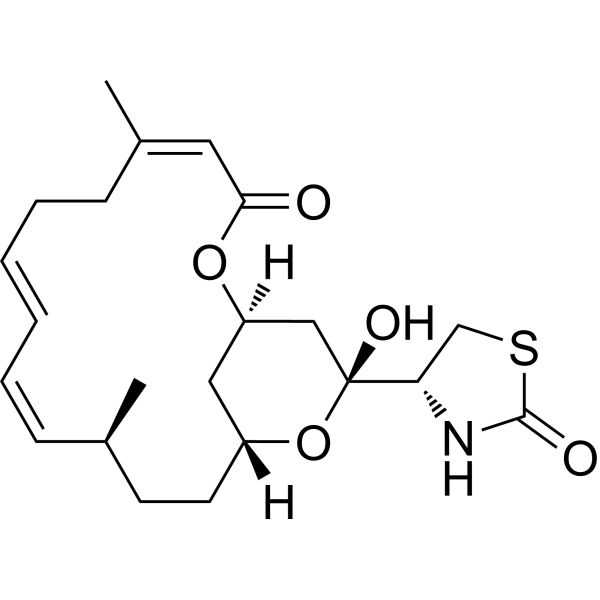
    Eribulin (E7389) is a microtubule targeting agent that is used for the research of metastatic breast cancer. Eribulin inhibits the proliferation of cancer cells by binding microtubule proteins and microtubules.
    Eribulin
  • HY-P9901
    Ipilimumab
    4 Publications Verification

    MDX-010; BMS-734016

    CTLA-4 Cancer
    Ipilimumab is a fully human monoclonal antibody IgG1κ that blocks the inhibitory receptor cytotoxic T lymphocyte antigen 4 (CTLA-4) on T cells. Ipilimumab can be used in unresectable or metastatic melanoma (MM) studies .
    Ipilimumab
  • HY-164789

    SKB264; MK-2870

    Antibody-Drug Conjugates (ADCs) TROP2 Cancer
    Sacituzumab tirumotecan is an antibody-drug conjugate and TROP2-directed, topoisomerase I inhibitor payload-delivering agent, with a TROP2 EC50 of 2.787 ng/ml, TROP2 Ka of 0.3083 nM, and topoisomerase I IC50 of 0.7 μmol/L. Sacituzumab tirumotecan can be used for the research of metastatic triple-negative breast cancer, and metastatic non-small cell lung cancer .
    Sacituzumab tirumotecan
  • HY-P9912
    Pertuzumab
    5+ Cited Publications

    EGFR Cancer
    Pertuzumab, a humanized IgG1 monoclonal antibody, is a HER2 dimerization inhibitor for the treatment of metastatic HER2-positive breast cancer.
    Pertuzumab
  • HY-P99016B
    Enfortumab vedotin-ejfv (solution)
    1 Publications Verification

    Antibody-Drug Conjugates (ADCs) Nectin-4 Cancer
    Enfortumab vedotin-ejfv (solution) is an anti-Nectin-4 antibody-drug conjugate (ADC). Enfortumab vedotin-ejfv (solution) is a fully humanized IgG1 antibody conjugated to the microtubule disrupting agent MMAE (HY-15162) via a protease-cleavable Val-Cit linker. The antibody portion is Enfortumab (HY-P99016), and the drug-linker conjugate for ADC is VcMMAE (HY-15575). Nectin-4 is an adhesion protein involved in cellular processes and tumorigenesis, and Enfortumab vedotin-ejfv (solution) is indicated for the inhibition of locally advanced or metastatic urothelial carcinoma .
    Enfortumab vedotin-ejfv (solution)
  • HY-13442A
    Eribulin mesylate
    5+ Cited Publications

    B1939 mesylate; E7389 mesylate; ER-086526 mesylate

    Microtubule/Tubulin Apoptosis Cancer
    Eribulin mesylate is an inhibitor for microtubule. Eribulin mesylate inhibits the proliferation of cancer cell LM8 and Dunn, inhibits the cell migration of LM8, arrests the cell cycle at G2/M phase, and induces apoptosis in LM8. Eribulin mesylate exhibits antitumor efficacy in mouse model .
    Eribulin mesylate
  • HY-156628

    MK-5684; ODM-208

    Cytochrome P450 Cancer
    Opevesostat (MK-5684; ODM-208) is an orally active and selective CYP11A1 inhibitor. Opevesostat has the potential for the research of metastatic castration-resistant prostate cancer (mCRPC) .
    Opevesostat
  • HY-A0061
    Trifluridine
    3 Publications Verification

    Trifluorothymidine; 5-Trifluorothymidine; TFT

    Thymidylate Synthase HSV Nucleoside Antimetabolite/Analog Orthopoxvirus DNA/RNA Synthesis Apoptosis Autophagy Cancer
    Trifluridine (Trifluorothymidine) is an irreversible and orally active thymidylate synthase inhibitor, and thereby suppressing DNA synthesis. Trifluridine is an antiviral molecule used for research of HSV, rhabdovirus and orthopoxvirus infection. Trifluridine induces cell apoptosis and autophagy. Trifluridine is also an anticancer agent used in studies of metastatic colorectal cancer, gastrointestinal tumors .
    Trifluridine
  • HY-136174
    RBN-2397
    15+ Cited Publications

    PARP Cancer
    RBN-2397 is a potent, accross species and orally active NAD + competitive inhibitor of PARP7 (IC50<3 nM). RBN-2397 selectively binds to PARP7 (Kd=0.001 μM) and restores IFN signaling. RBN-2397 has the potential for the study of advanced or metastatic solid tumors .
    RBN-2397
  • HY-158102
    Rinzimetostat
    1 Publications Verification

    ORIC-944

    Histone Methyltransferase Cancer
    Rinzimetostat (ORIC-944) is a selective, orally active, allosteric inhibitor targeting the EED subunit of polycomb repressive complex 2 (PRC2). Rinzimetostat is synergistic with androgen receptor pathway inhibitors (ARPIs) for the study of metastatic prostate cancer.
    Rinzimetostat
  • HY-P991015

    JNJ-78278343; KLCB-245

    CD3 Cancer
    Pasritamig (JNJ-78278343; KLCB-245) is a bispecific T-cell engager (BiTE) that targets the complex of human kallikrein KLK2 and CD3 receptor. Pasritamig redirects the cytotoxicity of T cells to KLK2-expressing tumor cells and induces T cell-mediated lysis of KLK2-expressing prostate cancer cells. Administered via subcutaneous injection, subcutaneous infusion or intravenous infusion, Pasritamig exhibits antitumor activity against metastatic castration-resistant prostate cancer. Pasritamig has a safety profile with an extremely low incidence of cytokine release syndrome and can be safely administered in an outpatient setting. Pasritamig is applicable to the research of metastatic castration-resistant prostate cancer .
    Pasritamig
  • HY-P990673

    DSTP-3086S Antibody; RG-7450 Antibody

    ADC Antibody Transmembrane Glycoprotein Mitosis Cancer
    Vandortuzumab (DSTP-3086S Antibody; RG-7450 Antibody) is a humanized anti-STEAP1 IgG1 antibody and antimitotic agent that can be conjugated with MMAE (HY-15162) to form the antibody-drug conjugate (ADC) Vandortuzumab vedotin. Vandortuzumab vedotin specifically binds to STEAP1 and drives internalization of the complex, releasing the MMAE (HY-15162) payload intracellularly. After binding to tubulin, MMAE inhibits cell division and induces cell death. Vandortuzumab exhibits antitumor activity in preclinical xenograft models of prostate cancer and can be used for research related to metastatic castration-resistant prostate cancer (mCRPC) .
    Vandortuzumab
  • HY-P99117
    Cadonilimab
    1 Publications Verification

    AK104

    PD-1/PD-L1 CTLA-4 Inflammation/Immunology Cancer
    Cadonilimab (AK104) is a humanized tetravalent IgG1 bispecific antibody targeting PD1/CTLA4. Cadonilimab blocks both PD-1 and CTLA-4 pathways, thereby relieving their corresponding immunosuppressive effects and reversing tumor specific T cell exhaustion. Cadonilimab significantly downregulates Fc-mediated effector functions, including antibody-dependent cell-mediated cytotoxicity (ADCC), antibody-dependent cellular phagocytosis (ADCP), complement dependent cytotoxicity (CDC). Cadonilimab can be used for research of metastatic cervical cancer, as well as other malignancies such as gastric cancer, GEJ adenocarcinoma and non-small cell lung cancer (NSCLC) .
    Cadonilimab
  • HY-136244
    PF-06952229
    4 Publications Verification

    TGF-β Receptor Cancer
    PF-06952229 is a potent, selective and orally active TGFbR1 inhibitor. PF-06952229 specifically binds to TGFbR1 and prevents TGFbR1-mediated signal transduction.?PF-06952229 is a promising antineoplastic?agent for the study solid tumors, especifically metastatic breast cancer .
    PF-06952229
  • HY-159642

    TYRA-300

    FGFR ERK Metabolic Disease Cancer
    Dabogratinib (TYRA-300) is an orally active, selective FGFR3 inhibitor with an IC50 of 11 nM. Dabogratinib exhibits antitumor activity against urothelial carcinoma and solid tumors. Dabogratinib downregulates the FGFR3 and ERK1/2 signaling pathways, and induces tumor growth inhibition and regression in FGFR3-altered xenograft models. Dabogratinib promotes chondrocyte proliferation and differentiation, drives endochondral bone formation and overall body growth, partially restores long bone proportions, and improves craniofacial and spinal morphology. Dabogratinib can be used for the research of metastatic urothelial carcinoma, achondroplasia and hypochondroplasia .
    Dabogratinib
  • HY-P99384

    B-701; MFGR-1877S; RG-7444

    FGFR Cancer
    Vofatamab (B-701) is an anti-FGFR3 monoclonal antibody (mAb). Vofatamab blocks activation of both the wildtype and genetically activated receptor. Vofatamab can be used in the research of metastatic urothelial carcinoma (mUC). Recommend Isotype Controls: Human IgG1 kappa, Isotype Control (HY-P99001) .
    Vofatamab
  • HY-P99049

    APX005M; APX005M; EPI-0050

    TNF Receptor Inflammation/Immunology
    Sotigalimab, a CD40 agonistic monoclonal antibody. Sotigalimab binds CD40 with high affinity and activates antigen-presenting cells, thereby stimulating cancer-specific T cell responses. Sotigalimab is mainly used in the study of metastatic pancreatic cancer and metastatic melanoma .
    Sotigalimab
  • HY-P9918

    Ticilimumab; CP-675206

    CTLA-4 Inflammation/Immunology Cancer
    Tremelimumab (Ticilimumab) is a fully human monoclonal antibody specific for cytotoxic T-lymphocyte antigen-4 (CTLA-4) and can be used for metastatic melanoma research .
    Tremelimumab
  • HY-P99758

    CS1003

    PD-1/PD-L1 Cancer
    Nofazinlimab (CS1003) is a humanised IgG4 anti-PD-1 monoclonal antibody. Nofazinlimab shows antitumor activity and can be used for the research of unresectable or metastatic hepatocellular carcinoma .
    Nofazinlimab
  • HY-120118

    ML246

    DNA/RNA Synthesis Cancer
    Metarrestin (ML246) is an orally active, first-in-class and specific perinucleolar compartment inhibitor. Metarrestin disrupts the nucleolar structure and inhibits RNA polymerase (Pol) I transcription, at least in part by interacting with the translation elongation factor eEF1A2. Metarrestin blocks metastatic development and extends survival in mouse cancer models .
    Metarrestin
  • HY-P9992

    BAY-2315497; PSMA-TTC

    PSMA Apoptosis Cancer
    Peligifatamab is a PSMA-targeted α-radioimmunoconjugate with an EC50 of 1.2 nM against human targets. Peligifatamab induces DNA damage, DNA double-strand breaks, cell cycle arrest and apoptosis (Apoptosis) in PSMA-positive prostate cancer cells. Peligifatamab reduces cell viability in a manner dependent on cellular PSMA expression levels. Peligifatamab inhibits tumor growth and tumor-induced abnormal bone growth in prostate cancer bone metastasis models. Peligifatamab exhibits antitumor efficacy in subcutaneous prostate cancer models and xenograft models. Peligifatamab can be used for the research of metastatic castration-resistant prostate cancer .
    Pelgifatamab
  • HY-P99437
    Anbenitamab
    1 Publications Verification

    KN-026

    EGFR Cancer
    Anbenitamab (KN-026) is a bispecific antibody simultaneously targeting extracellular domains II and IV of human HER2. Anbenitamab blocks both ligand-dependent and ligand-independent HER2 signaling pathways. Anbenitamab mediates antibody-dependent cellular cytotoxicity (ADCC) via FcγIIIa binding. Ambrinitumab can be used in research for lung cancer, HER2-positive metastatic breast cancer (MBC), gastric cancer, and gastroesophageal junction cancer .
    Anbenitamab
  • HY-P9974
    Vantictumab
    1 Publications Verification

    OMP-18R5

    Wnt Cancer
    Vantictumab (OMP-18R5) is a fully human IgG2 monoclonal antibody. Vantictumab inhibits Wnt pathway signaling by binding to FZD1/2/5/7/8 receptors. Vantictumab can be studied against cancers through direct actions on tumor cells, including CSCs, and effects on the stroma, such as metastatic HER2-negative breast cancer and metastatic pancreatic adenocarcinoma .
    Vantictumab
  • HY-P9912A

    EGFR Cancer
    Pertuzumab (anti-HER2), a humanized monoclonal antibody, is a HER2 dimerization inhibitor for the treatment of metastatic HER2-positive breast cancer.
    Pertuzumab (anti-HER2)
  • HY-75954
    2-Hydroxyhexanoic acid
    2 Publications Verification

    Endogenous Metabolite Cancer
    2-Hydroxyhexanoic acid is a metabolite. 2-Hydroxyhexanoic acid is elevated in metastatic pancreatic neuroendocrine tumors. 2-Hydroxyhexanoic acid does not promote the proliferation, migration or invasion of pancreatic neuroendocrine tumor cells. 2-Hydroxyhexanoic acid can be used in the research of metastatic pancreatic neuroendocrine tumors .
    2-Hydroxyhexanoic acid
  • HY-P99030

    MGAH-22

    EGFR Cancer
    Margetuximab (MGAH22) is a chimeric anti-HER2 monoclonal antibody optimized Fc domain, with an EC50 value of 39.33 ng/mL. Margetuximab can be used for researching metastatic HER2-positive breast cancer .
    Margetuximab
  • HY-45661

    NUV-422

    CDK Neurological Disease Cancer
    Inixaciclib (NUV-422) is a blood-brain barrier-penetrant inhibitor of CDK2, CDK4 and CDK6. Inixaciclib inhibits cancer cell growth. Inixaciclib induces anti-tumor activity in xenograft models of glioblastoma, CDK4/CDK6 inhibitor-resistant HR + HER2 - metastatic breast cancer, and anti-androgen-resistant prostate cancer. Inixaciclib can be used for the research of relapsed or metastatic castration-resistant prostate cancer .
    Inixaciclib
  • HY-P99852

    ABT165; PR1283233

    VEGFR Notch Cancer
    Dilpacimab (ABT165) is a bispecific variable domain immunoglobulin. Dilpacimab binds to and inhibits DLL4 and VEGF and acts as a tumor growth inhibitor. Dilpacimab can be used in research related to metastatic colorectal cancer and advanced solid tumors .
    Dilpacimab
  • HY-W008951

    EDTMP

    Radionuclide-Drug Conjugates (RDCs) Neurological Disease Cancer
    Ethylenediaminetetramethylenephosphonic acid (EDTMP) is a bone-targeted chelating agent. Ethylenediaminetetramethylenephosphonic acid sodium‘s phosphonic acid groups possess a unique ability to bind with high affinity to hydroxyapatite in bone, and can form radioactive compounds with 153Sm and 177Lu. Ethylenediaminetetramethylenephosphonic acid is used to study palliative therapy for pain associated with multiple bone metastatic cancers .
    Ethylenediaminetetra(methylenephosphonic acid)
  • HY-16215

    G-202

    Peptide-Drug Conjugates (PDCs) PSMA Calcium Channel Cancer
    Mipsagargin (G-202) is a novel thapsigargin-based targeted proagent consisting of a prostate-specific membrane antigen (PSMA)-specific peptide coupled to an analog of the potent sarcoplasmic/endoplasmic reticulum calcium adenosine triphosphatase (SERCA) pump inhibitor Thapsigargin (HY-13433). Mipsagargin is activated by PSMA-mediated cleavage of an inert masking peptide. Mipsagargin has the potential for refractory, advanced or metastatic solid tumours research .
    Mipsagargin
  • HY-111578
    BDP-13176
    1 Publications Verification

    Arp2/3 Complex Cancer
    BDP-13176 is a potent fascin 1 inhibitor, with a Kd of 90 nM and an IC50 of 240 nM. BDP-13176 has potential as an anti-metastatic agent .
    BDP-13176
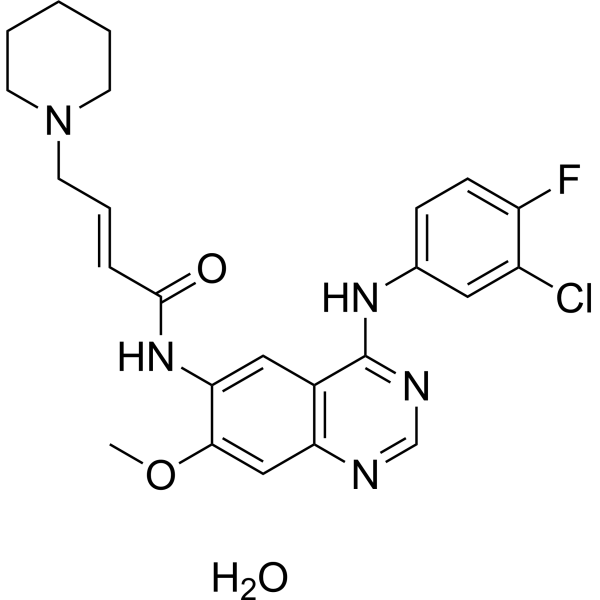
  • HY-118263
    Dacomitinib hydrate
    25+ Cited Publications

    PF-00299804 hydrate; PF-299804 hydrate

    EGFR Cancer
    Dacomitinib (PF-00299804) hydrate is an orally active, irreversible pan-ErbB inhibitor. Dacomitinib hydrate can be used in the research of cancers such as metastatic non-small cell lung cancer (NSCLC) .
    Dacomitinib hydrate
  • HY-N15388

    Drug Derivative Cancer
    Hericenone A is an isoindolinone found in the fruiting bodies of Hericium erinaceus. Hericenone A exerts cytotoxic activity against cancer cells. Hericenone A can be used for the research of cancer, such as metastatic human hepatocellular carcinoma .
    Hericenone A
  • HY-118762

    Cathepsin Cancer
    KGP94 is a selective inhibitor of cathepsin L with an IC50 of 189 nM . KGP94 inhibits migration and invasion of metastatic carcinoma and shows low cytotoxicity (GI50=26.9 µM) against various human cell lines .
    KGP94
  • HY-126899

    Microtubule/Tubulin Cancer
    TPI-287, a blood-brain barrier-permeable microtubule stabilizer, can significantly reduce metastatic colonization of breast cancer in the brain .
    TPI-287
  • HY-118134

    Ser/Thr Protease Cancer
    Hepln-13 is a potent and orally active Hepsin inhibitor with an IC50 of 0.33 μM. Hepln-13 can be used for the research of metastatic prostate cancer .
    Hepln-13
  • HY-P99318

    LT 1009; Anti-Human S1P Recombinant Antibody

    LPL Receptor Cancer
    Sonepcizumab (LT 1009) is a fully human anti-S1P monoclonal antibody. Sonepcizumab has the potential for the research of metastatic renal cell carcinoma (mRCC) .
    Sonepcizumab
  • HY-122714

    PAI-1 Cancer
    SK-216 is a plasminogen activator inhibitor-1 (PAI-1) inhibitor that acts as an anti-metastatic agent for human osteosarcoma and inhibits lung metastasis of human osteosarcoma .
    SK-216
  • HY-176296

    SR-8541A

    Phosphodiesterase (PDE) STING Cancer
    Vizenpistat is an orally active ENPP1 inhibitor. Vizenpistat increases cGAMP levels, blocks 2′3′-cGAMP hydrolysis, inhibits adenosine production, regulates innate immune signaling mediated by the STING pathway, and modulates anti-tumor immune responses. Vizenpistat is applicable to research related to breast cancer and metastatic microsatellite-stable colorectal cancer .
    Vizenpistat
  • HY-158102A
    Rinzimetostat TFA
    1 Publications Verification

    ORIC-944 TFA

    Histone Methyltransferase Cancer
    Rinzimetostat (ORIC-944) TFA is the TFA salt form of ORIC (HY-158102). Rinzimetostat TFA is a selective, orally active, allosteric inhibitor targeting the EED subunit of polycomb repressive complex 2 (PRC2). Rinzimetostat TFA is synergistic with androgen receptor pathway inhibitors (ARPIs) for the study of metastatic prostate cancer .
    Rinzimetostat TFA
  • HY-P10740

    Peptide-Drug Conjugates (PDCs) PSMA Folate Receptor (FR) Cancer
    CBP-1018 is a PDC (peptide-drug conjugate) formed by conjugating Monomethyl auristatin E (HY-15162) to a dual-targeting ligand of FLOR1/PSMA (prostate-specific membrane antigen) via a linker (HY-78738). CBP-1018 binds to FLOR1 and prostate-specific membrane antigen (PSMA). CBP-1018 is applicable to the research of solid tumors and metastatic castration-resistant prostate cancer .
    CBP-1018
  • HY-P991190

    AV-380

    TGF-beta/Smad Cancer
    Rilogrotug (AV-380) is a humanized IgG1 monoclonal antibody targeting GDF15 .
    Rilogrotug
  • HY-19833

    CFG920

    Cytochrome P450 Cancer
    Lapiteronel (CFG920) is an orally active, nonsteroidal, reversible dual CYP17 and CYP11B2 inhibitor. Lapiteronel has the potential for metastatic castration-resistant prostate cancer research .
    Lapiteronel
  • HY-143230

    OGX-011

    Apoptosis Cancer
    Custirsen (OGX-011) is an antisense oligonucleotide that targets clusterin mRNA. Custirsen induces apoptosis by activating Bax, triggering mitochondrial translocation and cytochrome c release. Custirsen acts as a chemosensitizer, radiosensitizer and hormone sensitizer. Custirsen can be used in research related to prostate cancer, non-small cell lung cancer and metastatic breast cancer .
    Custirsen
  • HY-158118

    DNA-PK Cancer
    Lys(CO-C3-p-I-Ph)-OMe is a pharmacokinetic modifier (PK modifier) that can improve the PK properties of PSMA ligand molecules (such as Ac-PSMA-trillium). Lys(CO-C3-p-I-Ph)-OMe can increase the residence time of Ac-PSMA-trillium in plasma by increasing its binding capacity to albumin. Lys(CO-C3-p-I-Ph)-OMe also reduces salivary gland absorption of Ac-PSMA-trillium, potentially extending its half-life. Ac-PSMA-trillium is a suitable PSMA-targeting compound that has different biological applications after modification with different radioactive isotopes. If labeled with 111In, it can be used as DOTA chelating agent and imaging agent. Or labeled with 225Ac as a Macropa chelator for targeted radionuclide therapy (TRT) in the study of metastatic castration-resistant prostate cancer (mCRPC) .
    Lys(CO-C3-p-I-Ph)-OMe
  • HY-163668

    STING Cancer
    MK-2118 is a GMP-synthesized STING agonist with the potential to inhibit advanced/metastatic solid tumors or lymphomas. .
    MK-2118
  • HY-19118

    FFC14A

    Apoptosis Cancer
    KP1019 (FFC14A) is a Ru(III)-based anti-metastatic and cytotoxic anti-cancer agent. KP1019 induces DNA damage and apoptosis in cancer cells .
    KP1019
  • HY-170818

    HSP Cancer
    Grp94 Inhibitor-3 (Compound C6) is a selective glucose regulated protein 94 (Grp94) inhibitor with an affinity of 5.52 μM. Grp94 Inhibitor-3 is promising for research of primary open-angle glaucoma and metastatic cancer .
    Grp94 Inhibitor-3
  • HY-P99476

    VEGFR Cancer
    ABP 215 (Bevacizumab-awwb), a Bevacizumab (HY-P9906) biosimilar, is a humanized IgG1 monoclonal antibody targeting VEGFA. ABP 215 has anticancer effects, and can be used metastatic colorectal cancer (mCRC) research .
    ABP 215

Inquiry Online

Your information is safe with us. * Required Fields.

Salutation


Country or Region *

Applicant Name *


Organization Name *

Department *


Email Address *


Product Name *

Cat. No.


Requested quantity *

Phone Number *


Remarks

Inquiry Online

Inquiry Information

Product Name:
Cat. No.:
Quantity:
MCE Japan Authorized Agent:

