1. Search Result
Search Result
Results for "

Mouse primary cortical neurons

" in MedChemExpress (MCE) Product Catalog:

10

Inhibitors & Agonists

1

Biochemical Assay Reagents

1

Peptides

1

Oligonucleotides

Cat. No. Product Name Target Research Areas Chemical Structure
  • HY-148907

    CaMK MEK Mixed Lineage Kinase RIP kinase Tau Protein Neurological Disease
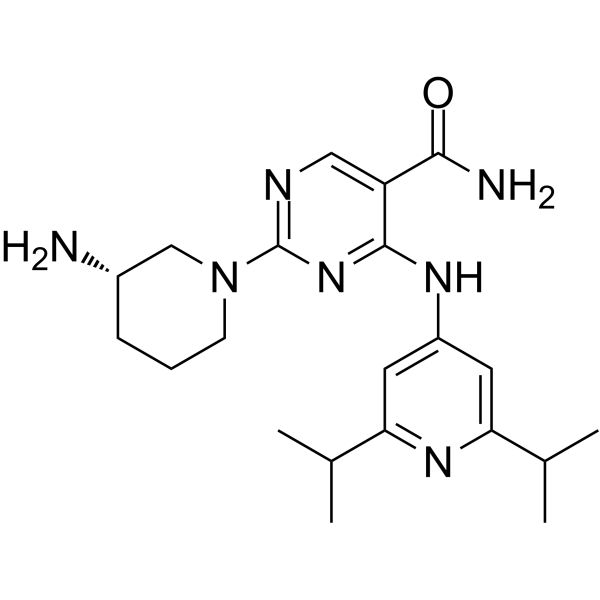
    CS640 (Compound 19) is a chemical probe and a calmodulin-dependent kinase inhibitor. CS640 inhibits CaMK1D, CaMK1B, CaMK1A, CaMK1G, MEK5, RIPK4, mLK3 and PIP5K1, with IC50 values of 8, 3, 1, 1, 25 nM, 5.69, 2.75 and 11.2 μM, respectively. CS640 blocks Aβ-induced hyperphosphorylation of tau protein at the Thr181 site, but fails to protect primary mouse cortical neurons from Aβ-induced toxic damage. CS640 is applicable to research related to Alzheimer's disease .
    CS640
  • HY-160229

    R-1075 sodium

    Toll-like Receptor (TLR) MyD88 Caspase Reactive Oxygen Species (ROS) Autophagy Pyroptosis HIV Infection Neurological Disease
    ssRNA40 sodium (R-1075 sodium) is a single-stranded RNA40 derived from HIV-1. ssRNA40 sodium activates the TLR7, TLR8, TLR2, RIG-I, MDA5, MyD88, Caspase-3, IRE1α, NLRP3 inflammasome and IRF7 signaling pathways. ssRNA40 sodium alters mRNA expression in neutrophils, induces pro-inflammatory cytokines, ROS, autophagy (autophagy), pyroptosis (pyroptosis), neuronal death, neurodegeneration, aggregate formation and NK cell activation. ssRNA40 sodium activates the expression of CD62L, CD11b, CD69, MX1, OAS1, ATG7, LC3B and XBP1 in immune cell and neuronal populations. ssRNA40 sodium causes cortical neuron loss and axonal damage in mice in a TLR7-dependent manner. ssRNA40 sodium can be used in research on HIV-1 infection, neurodegeneration, COVID-19 and HIV-associated neurological disorders .
    ssRNA40 sodium
  • HY-Y1269D

    Salmiac, for molecular biology

    TGF-beta/Smad Apoptosis Chloride Channel Neurological Disease Cancer
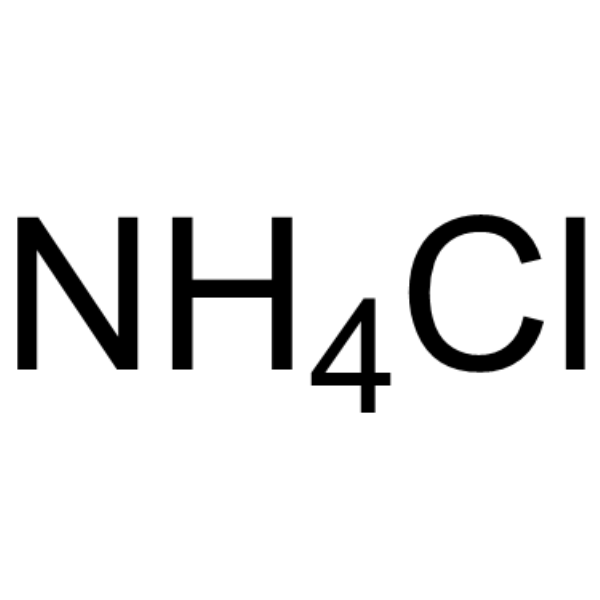
    Ammonium chloride (Salmiac), for molecular biology is an inhibitor of Slc26a4 and SMAD2. Ammonium chloride, for molecular biology reduces the protein expression level of Slc26a4 in lung tissue, and attenuates ozone-induced increases in proinflammatory cytokines, inflammatory cells, pulmonary resistance, goblet cell hyperplasia, peribronchial inflammation and thiocyanate levels in mouse tissues and bronchoalveolar lavage fluid. Ammonium chloride, for molecular biology decreases the level of phosphorylated SMAD2, inhibits autophagy by reducing autophagy-related proteins, and enhances Cisplatin (HY-17394)-induced cancer cell apoptosis and DNA double-strand breaks. Ammonium chloride, for molecular biology also inhibits the TCA cycle, reduces ATP production, increases glucose utilization, regulates the levels of lactic acid, glutamic acid and ATP, and induces morphological degeneration of neuroblastoma cells. Ammonium chloride, for molecular biology can be used in studies related to ozone-induced airway injury, hepatocellular carcinoma, human cervical cancer, hepatic encephalopathy, Reye syndrome, epilepsy and neurodegenerative diseases .
    Ammonium chloride, for molecular biology
  • HY-139008

    Glutathione Peroxidase Others
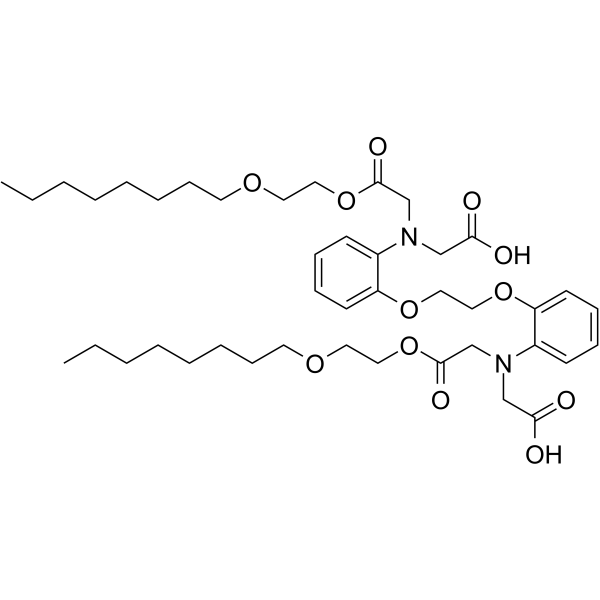
    RC363 is a novel probucol analog with the activity to protect mouse hippocampal cells and primary cortical neurons from glutamate-induced oxidative cell death (ferroptosis) and increase glutathione peroxidase (GPx) 1 levels and activity.
    RC363
  • HY-P10360

    α-synuclein Neurological Disease
    Tat-βsyn-degron is an α-synuclein knockdown peptide that effectively degrades α-synuclein protein via the proteasome pathway. Tat-βsyn-degron effectively reduces α-synuclein protein levels in primary rat cortical neuron cultures. In a Parkinson's mouse toxicity model, Tat-βsyn-degron can alleviate parkinsonian toxin-induced neuronal damage and movement disorders .
    Tat-βsyn-degron
  • HY-139012

    Ferroptosis Glutathione Peroxidase Others
    RC574 is a novel probucol analog with the activity to protect mouse hippocampal cells and primary cortical neurons from glutamate-induced oxidative cell death (ferroptosis) and increase glutathione peroxidase (GPx) 1 levels and activity.
    RC574
  • HY-182600

    Kallikrein Plasminogen/Plasmin Neurological Disease Inflammation/Immunology
    KLK6-IN-1 is a reversible small‑molecule inhibitor of KLK6, KLK1, and plasmin. KLK6-IN-1 shows IC50 values of 1.57 μM (KLK6), 5.1 μM (KLK1), 7.4 μM (plasmin), and Ki values of 0.8 μM (KLK6), 2.4 μM (KLK1), 1.3 μM (plasmin). KLK6-IN-1 is highly selective for KLK6 and its proteolytic network. KLK6-IN-1 induces oligodendrocyte differentiation by promoting oligodendrocyte precursor cell maturation. KLK6-IN-1 can be used for the research of multiple sclerosis .
    KLK6-IN-1
  • HY-182025

    Endogenous Metabolite Neurological Disease
    NAD+ potentiator-1 (Compound R-4b) is a NAD potentiator. NAD+ potentiator-1 increases NAD levels in primary cortical neurons. NAD+ potentiator-1 is used for the research of neurodegenerative diseases .
    NAD+ potentiator-1
  • HY-182321

    HDAC Neurological Disease
    HDAC2-IN-3 is a selective, orally active, blood-brain barrier permeable HDAC2 inhibitor with an IC50 of 14 nM. HDAC2-IN-3 upregulates histone acetylation levels in cells and in vivo, and enhances long-term potentiation (LTP) in the hippocampus. HDAC2-IN-3 can be used for the research of Alzheimer's disease .
    HDAC2-IN-3
  • HY-186073

    HDAC Neurological Disease
    HDAC1 activator-1 is a specific HDAC1 activator with orally activity, exerting no significant effects on other HDAC family members. HDAC1 activator-1 exhibits neuroprotective activity, ameliorates cognitive and motor function deficits by reducing neuronal loss and gliosis. HDAC1 activator-1 specifically activates HDAC1 in SH-SY5Y cells and exerts regulatory effects on aberrant cell cycle and DNA damage. HDAC1 activator-1 can be used for the research of TDP-43 proteinopat1-related neurodegenerative diseases including Amyotrophic Lateral Sclerosis (ALS) and cerebral ischemia-related neurological injury .
    HDAC1 activator-1

Inquiry Online

Your information is safe with us. * Required Fields.

Salutation


Country or Region *

Applicant Name *


Organization Name *

Department *


Email Address *


Product Name *

Cat. No.


Requested quantity *

Phone Number *


Remarks

Inquiry Online

Inquiry Information

Product Name:
Cat. No.:
Quantity:
MCE Japan Authorized Agent:

