







359 Results for "

Neuropeptide

" in MedChemExpress (MCE) Product Catalog:
Products (359)

359 Results for "Neuropeptide" in MCE Product Catalog:

33
33 Publications Verification
Cat. No.: HY-P0201
CAS No.: 33507-63-0
Synonyms: Neurokinin P
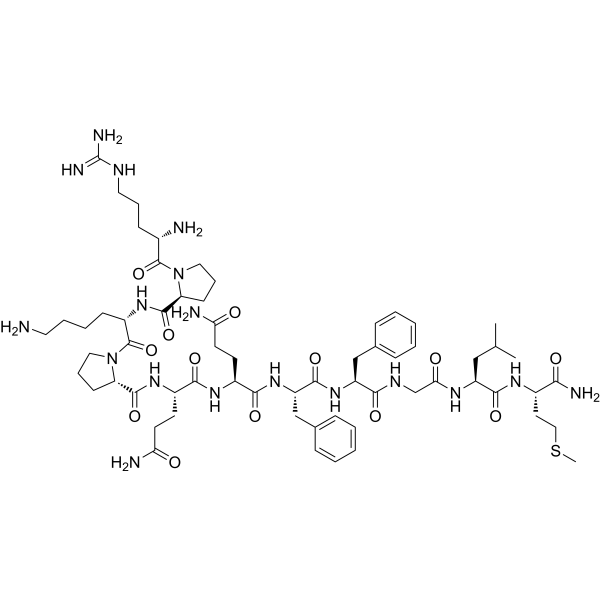
Substance P (Neurokinin P) is a CNS-penetrant neuropeptide, acting as a neurotransmitter and as a neuromodulator in the CNS. The endogenous receptor for substance P is neurokinin 1 receptor (NK1-receptor, NK1R).
loading...
    loading...
33
33 Publications Verification
Cat. No.: HY-P0201A
CAS No.: 148470-19-3
Synonyms: Neurokinin P TFA
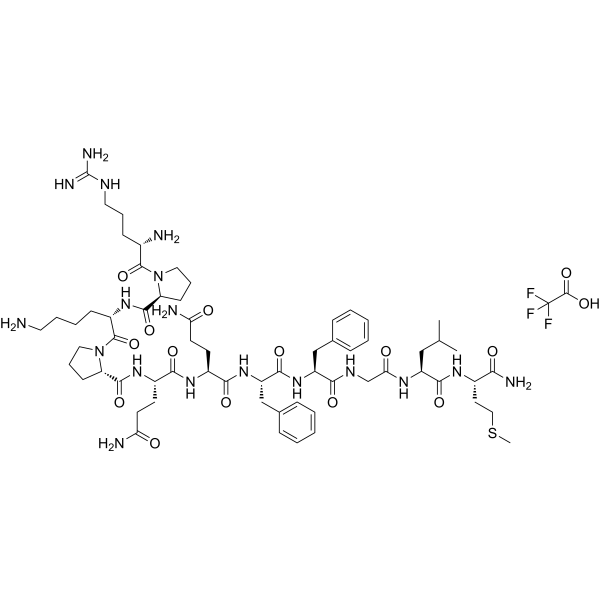
Substance P TFA (Neurokinin P TFA) is a CNS-penetrant neuropeptide, acting as a neurotransmitter and as a neuromodulator in the CNS. The endogenous receptor for substance P is neurokinin 1 receptor (NK1-receptor, NK1R) .
loading...
    loading...
24
24 Cited Publications
Cat. No.: HY-P0252A
CAS No.: 171869-93-5
Synonyms: α-Melanocyte-Stimulating Hormone TFA
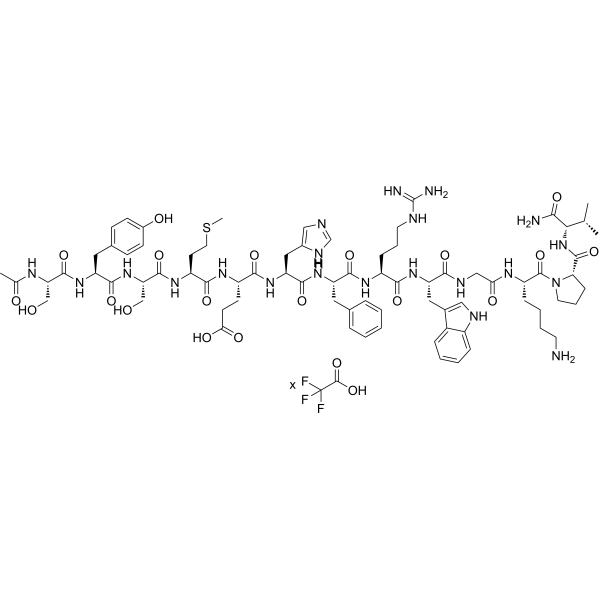
α-MSH (α-Melanocyte-Stimulating Hormone) TFA, an endogenous neuropeptide, is an endogenous melanocortin receptor 4 (MC4R) agonist with anti-inflammatory and antipyretic activities. α-MSH TFA is a post-translational derivative of pro-opiomelanocortin (POMC) .
loading...
    loading...
24
24 Cited Publications
Cat. No.: HY-P0252
CAS No.: 581-05-5
Synonyms: α-Melanocyte-Stimulating Hormone
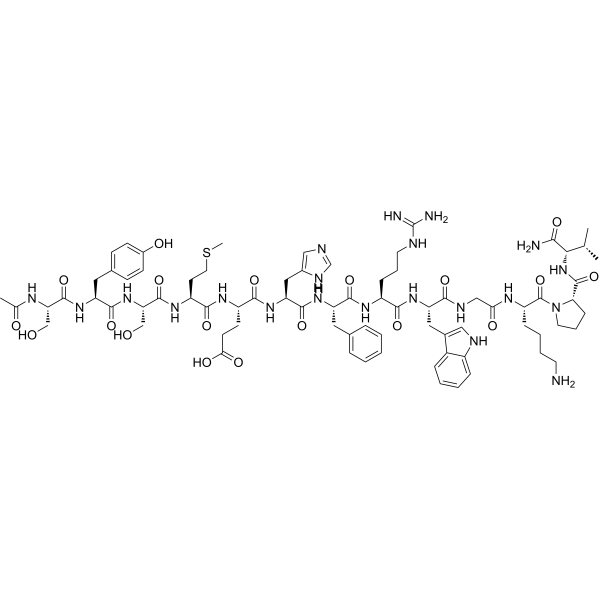
α-MSH (α-Melanocyte-Stimulating Hormone), an endogenous neuropeptide, is an endogenous melanocortin receptor 4 (MC4R) agonist with anti-inflammatory and antipyretic activities. α-MSH is a post-translational derivative of pro-opiomelanocortin (POMC) .
loading...
    loading...
12
12 Cited Publications
Cat. No.: HY-106224B
Purity:  99.93%
Synonyms: Hypocretin-1 (human, rat, mouse) acetate
Research Areas:  

Neurological Disease

Orexin A (Hypocretin-1) (human, rat, mouse) acetate is a hypothalamic neuropeptide with analgesic properties (crosses the blood-brain barrier). Orexin A (human, rat, mouse) acetate binds and activates two types of G protein-coupled receptors, the orexin-1 receptor (OX1R) and the orexin-2 receptor (OX2R). Orexin A (human, rat, mouse) acetate can be used in studies of appetite regulation, neurodegenerative diseases and modulation of injurious messaging .
loading...
    loading...
12
12 Cited Publications
Cat. No.: HY-106224
CAS No.: 205640-90-0
Purity:  99.93%
Synonyms: Hypocretin-1 (human, rat, mouse)
Research Areas:  

Neurological Disease

Orexin A (human, rat, mouse) (Hypocretin-1 (human, rat, mouse)), a 33 amino acid excitatory neuropeptide, orchestrates diverse central and peripheral processes. Orexin A (human, rat, mouse) binds and activates two types of G protein-coupled receptors, the orexin-1 receptor (OX1R) and the orexin-2 receptor (OX2R). Orexin A (human, rat, mouse) has a role in the regulation of feeding behavior. Orexin A (human, rat, mouse) is an effective anti-nociceptive and anti-hyperalgesic agent in mice and rats .
loading...
    loading...
12
12 Cited Publications
Cat. No.: HY-106224A
Purity:  97.13%
Synonyms: Hypocretin-1 (human, rat, mouse) TFA
Research Areas:  

Neurological Disease

Orexin A (human, rat, mouse) (Hypocretin-1 (human, rat, mouse)) TFA, a 33 amino acid excitatory neuropeptide, orchestrates diverse central and peripheral processes. Orexin A (human, rat, mouse) TFA binds and activates two types of G protein-coupled receptors, the orexin-1 receptor (OX1R) and the orexin-2 receptor (OX2R). Orexin A (human, rat, mouse) TFA has a role in the regulation of feeding behavior. Orexin A (human, rat, mouse) TFA is an effective anti-nociceptive and anti-hyperalgesic agent in mice and rats .
loading...
    loading...
9
9 Cited Publications
Cat. No.: HY-P0203
CAS No.: 83651-90-5
Synonyms: CGRP (83-119), mouse, rat
α-CGRP (mouse, rat), a neuropeptide (calcitonin gene-related peptide (CGRP)) mainly expressed in neuromuscular junction, is a potent vasodilator. α-CGRP (mouse, rat) can lead to a fall in blood pressure and an increase in heart rate by peripheral administration, also relax colonie smooth muscle. α-CGRP (mouse, rat) has the potential in cardiovascular, pro-inflammatory, migraine and metabolic studies .
loading...
    loading...
9
9 Cited Publications
Cat. No.: HY-P0203A
Synonyms: CGRP (83-119), mouse, rat TFA
α-CGRP (mouse, rat) TFA, a neuropeptide (calcitonin gene-related peptide (CGRP)) mainly expressed in neuromuscular junction, is a potent vasodilator. α-CGRP (mouse, rat) TFA can lead to a fall in blood pressure and an increase in heart rate by peripheral administration, also relax colonie smooth muscle. α-CGRP (mouse, rat) TFA has the potential in cardiovascular, pro-inflammatory, migraine and metabolic studies .
loading...
    loading...
6
6 Cited Publications
Cat. No.: HY-P1071A
Synonyms: Calcitonin gene-related peptide TFA
Target:  

CGRP Receptor

Research Areas:  

Cardiovascular Disease

α-CGRP (human) (TFA) is a regulatory neuropeptide of 37 amino acids. α-CGRP (human) (TFA) is widely distributed in the central and peripheral nervous system. α-CGRP (human) (TFA) is a potent vasodilator and has inotropic and chronotropic effects .
loading...
    loading...
6
6 Cited Publications
Cat. No.: HY-P1071
CAS No.: 90954-53-3
Synonyms: Calcitonin gene-related peptide
Target:  

CGRP Receptor

Research Areas:  

Cardiovascular Disease

α-CGRP (human) (Calcitonin gene-related peptide) is a regulatory neuropeptide of 37 amino acids. α-CGRP (human) is widely distributed in the central and peripheral nervous system. α-CGRP (human) is a potent vasodilator and has inotropic and chronotropic effects .
loading...
    loading...
4
4 Cited Publications
Cat. No.: HY-P0002
CAS No.: 24305-27-9
Synonyms: Thyrotropin-releasing-hormone; TRH
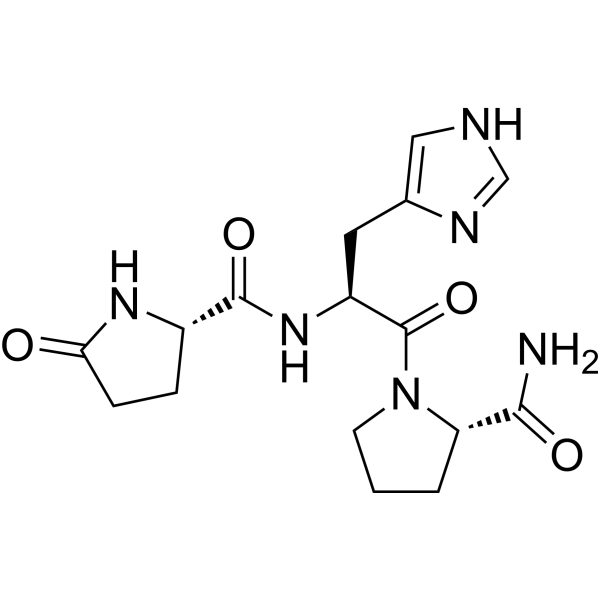
Protirelin is a highly conserved neuropeptide that exerts the hormonal control of thyroid-stimulating hormone (TSH) levels as well as neuromodulatory functions.
loading...
    loading...
4
4 Cited Publications
Cat. No.: HY-P0002A
CAS No.: 120876-23-5
Synonyms: Thyrotropin-releasing-hormone acetate; TRH acetate
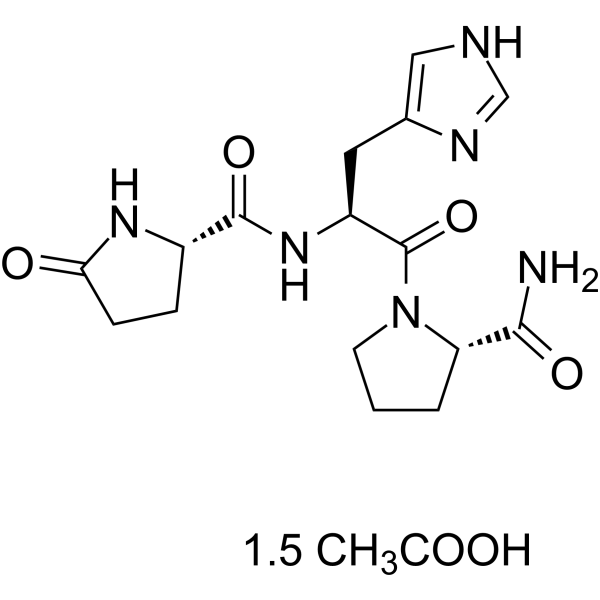
Protirelin Acetate is a highly conserved neuropeptide that exerts the hormonal control of thyroid-stimulating hormone (TSH) levels as well as neuromodulatory functions.
loading...
    loading...
4
4 Cited Publications
Cat. No.: HY-107725
CAS No.: 191868-14-1
Purity:  99.81%
Research Areas:  

Metabolic Disease

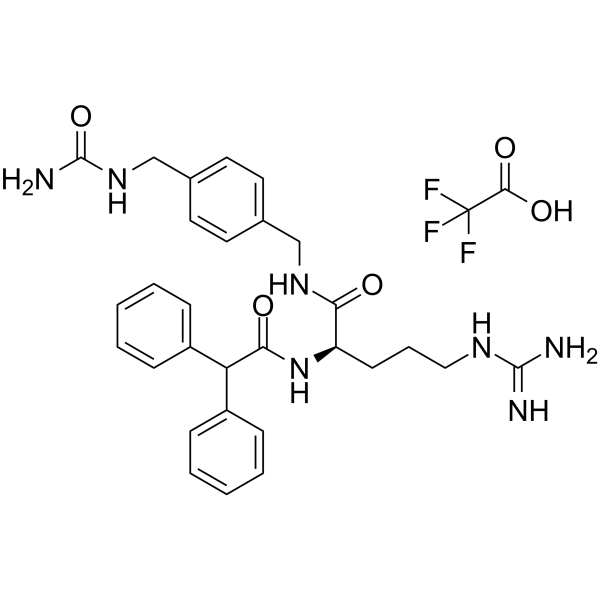
BIBO3304, a chemical probe, is a potent, orally active, and selective neuropeptide Y (NPY) Y1 receptor antagonist, with subnanomolar affinity for both the human and the rat Y1 receptor (IC50=0.38 and 0.72 nM, respectively) .
loading...
    loading...
4
4 Cited Publications
Cat. No.: HY-14407A
CAS No.: 265121-04-8
Purity:  98.02%
Synonyms: MK-0517; L785298
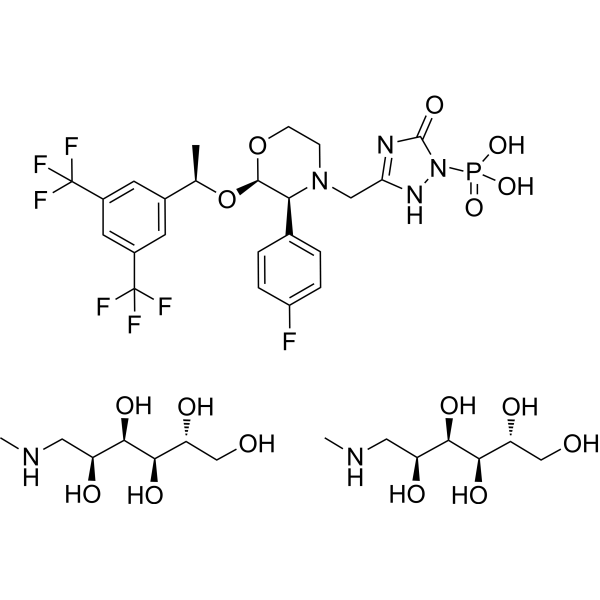
Fosaprepitant dimeglumine (MK-0517) is a proagent of Aprepitant (HY-10052). Fosaprepitant dimeglumine is a neurokinin-1 receptor antagonist, which is development for the prevention of chemotherapy-induced nausea and vomiting (CINV) .
loading...
    loading...
3
3 Cited Publications
Cat. No.: HY-P0198
CAS No.: 90880-35-6
Synonyms: Neuropeptide Y (29-64), amide
Neuropeptide Y (human,rat,mouse) is involved in Alzheimer's disease (AD) and protects rat cortical neurons against β-Amyloid toxicity.
loading...
    loading...
3
3 Cited Publications
Cat. No.: HY-P0198A
Neuropeptide Y (human) TFA is involved in Alzheimer's disease (AD) and protects rat cortical neurons against β-Amyloid toxicity.
loading...
    loading...
3
3 Cited Publications
Cat. No.: HY-P3467
CAS No.: 60786-59-6
Research Areas:  

Neurological Disease

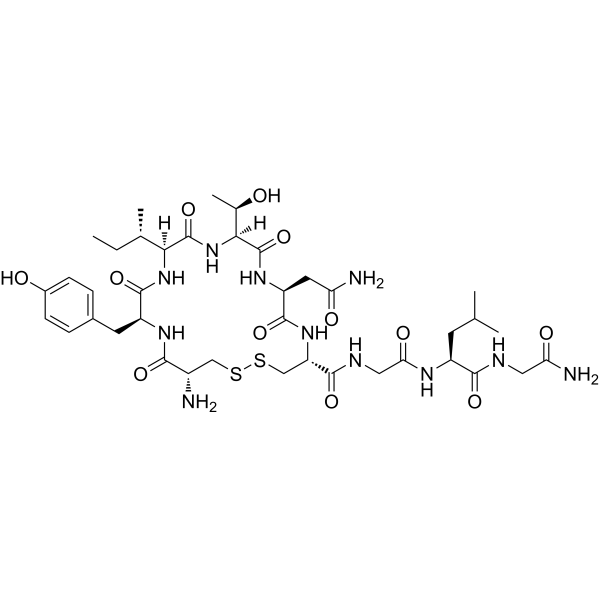
(Thr4,Gly7)-Oxytocin, an Oxytocin analogue, is a specific OT receptor agonist. (Thr4,Gly7)-Oxytocin also excites subicular neurons via activation of TRPV1 channels, and depression of K + channels. .
loading...
    loading...
3
3 Cited Publications
Cat. No.: HY-110220
CAS No.: 1031496-06-6
Purity:  99.94%
Target:  

TRP Channel

Research Areas:  

Neurological Disease

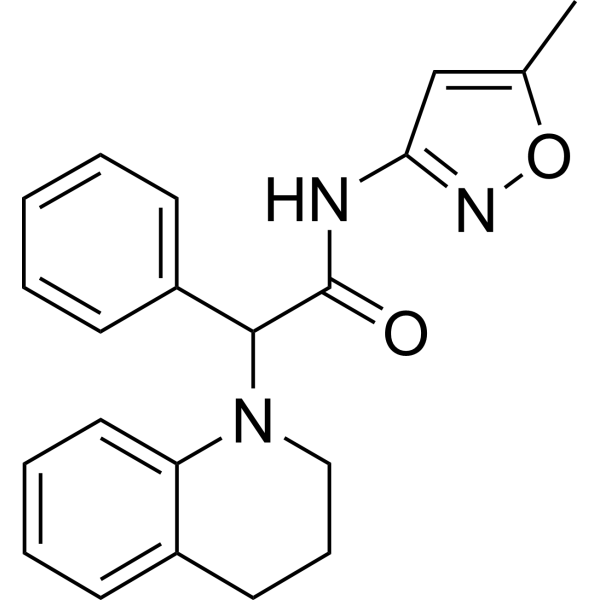
CIM0216, a synthetic TRPM3 ligand, acts as a potent and selective agonist of TRPM3. CIM0216 exhibits selectivity for TRPM3 over TRPM1, TRPM2 and TRPM4-8. CIM0216 acts in a TRPM3-dependent manner to induce pain and evoke neuropeptide release from sensory nerve terminals in vitro. CIM0216 is a powerful tool for studies of the physiological functions of TRPM3, and can be used for neurogenic inflammation research .
loading...
    loading...
3
3 Cited Publications
Cat. No.: HY-W013375
CAS No.: 76721-89-6
Target:  

Neprilysin

Research Areas:  

Neurological Disease

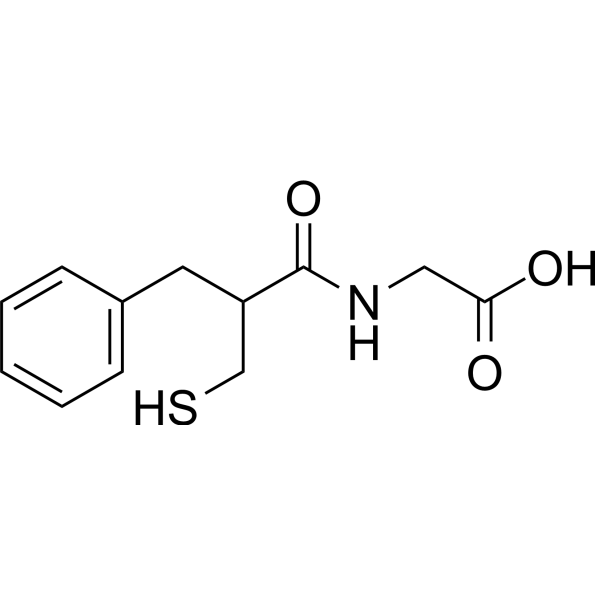
Thiorphan is a selective neprilysin (NEP) inhibitor with an IC50 of 6.9 nM. Thiorphan competitively binds to NEP and blocks its activity, preventing the degradation of neuropeptides such as substance P (SP) and neurokinin NKA. In the field of neonatal brain injury research, Thiorphan can increase the levels of SP and NKA, activate NK1 and NK2 receptors and downstream transduction pathways, and inhibit excessive activation of NMDA receptors. Thus, Thiorphan can protect neocortical neurons from excitotoxic cell death. Thiorphan may also inhibit NEP from enhancing bronchoconstriction and can be used in the study of respiratory diseases .
loading...
    loading...

