1. Search Result
Search Result
Results for "

P-gp

" in MedChemExpress (MCE) Product Catalog:

263

Inhibitors & Agonists

2

Screening Libraries

6

Biochemical Assay Reagents

2

Peptides

49

Natural
Products

8

Recombinant Proteins

21

Isotope-Labeled Compounds

20

Antibodies

1

Click Chemistry

6

Oligonucleotides

Targets Recommended:
Cat. No. Product Name Target Research Areas Chemical Structure
  • HY-14275
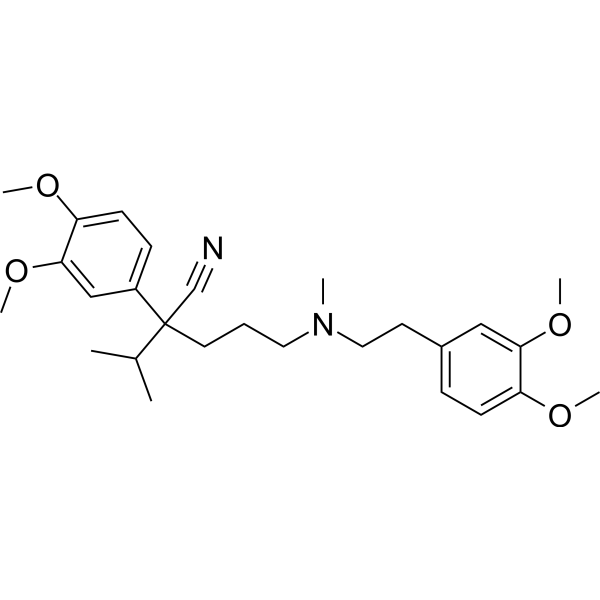
    Verapamil
    Maximum Cited Publications
    86 Publications Verification

    (±)-Verapamil; CP-16533-1

    Calcium Channel P-glycoprotein Cytochrome P450 Cardiovascular Disease Metabolic Disease Cancer
    Verapamil ((±)-Verapamil) is a calcium channel blocker and a potent and orally active first-generation P-glycoprotein (P-gp) inhibitor. Verapamil also inhibits CYP3A4. Verapamil has the potential for high blood pressure, heart arrhythmias and angina research .
    Verapamil
  • HY-A0064
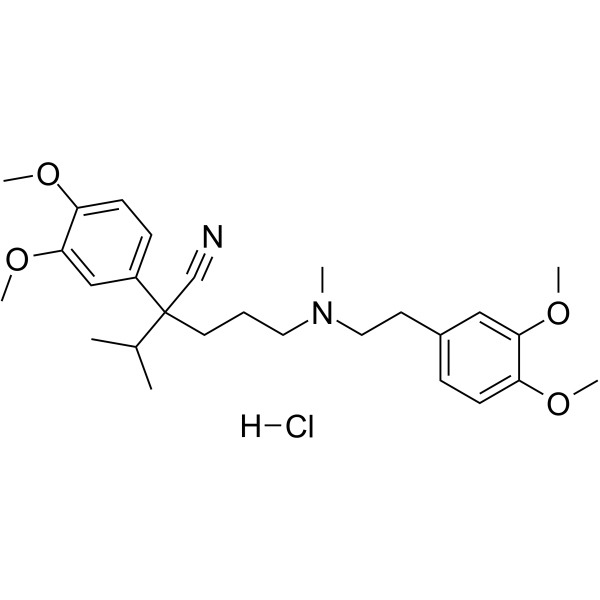
    Verapamil hydrochloride
    Maximum Cited Publications
    86 Publications Verification

    (±)-Verapamil hydrochloride; CP-16533-1 hydrochloride

    Calcium Channel P-glycoprotein Cytochrome P450 Cardiovascular Disease Cancer
    Verapamil hydrochloride ((±)-Verapamil hydrochloride) is a calcium channel blocker and a potent and orally active first-generation P-glycoprotein (P-gp) inhibitor. Verapamil hydrochloride also inhibits CYP3A4. Verapamil hydrochloride has the potential for high blood pressure, heart arrhythmias and angina research .
    Verapamil hydrochloride
  • HY-10550
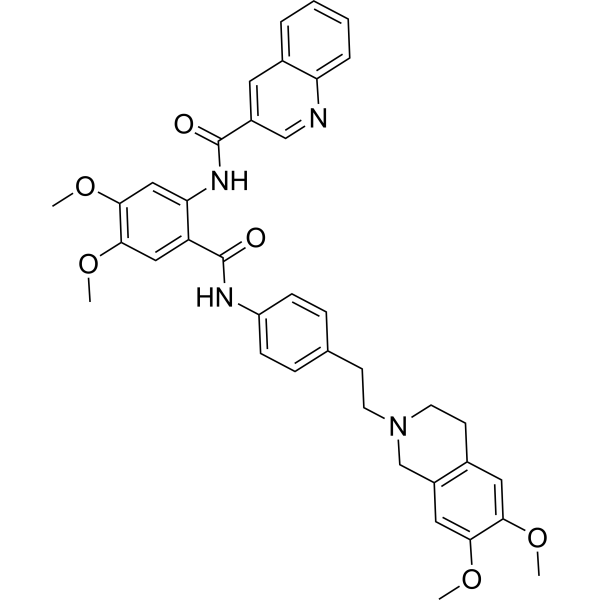
    Tariquidar
    55+ Cited Publications

    XR9576

    P-glycoprotein Cancer
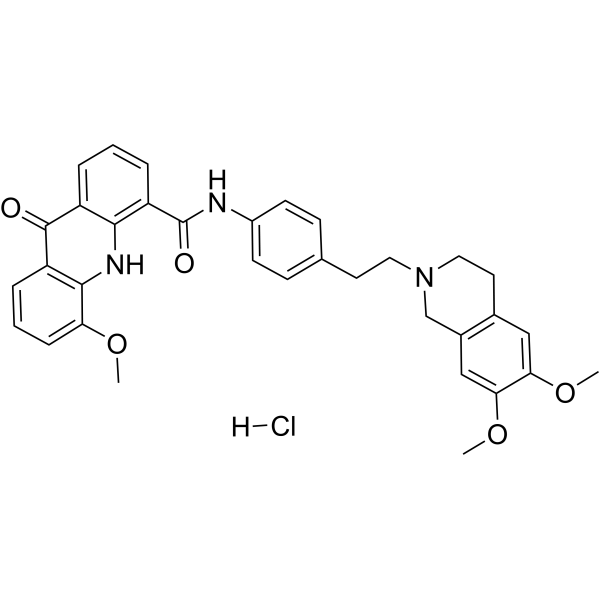
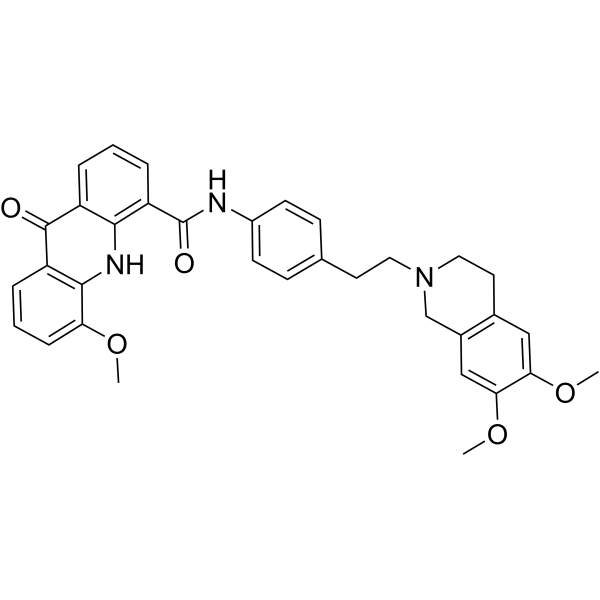
    Tariquidar (XR9576) is a potent and specific inhibitor of P-glycoprotein (P-gp) with the high affinity (Kd=5.1 nM) .
    Tariquidar
  • HY-B0777
    Moxidectin
    1 Publications Verification

    CL301423

    Antibiotic BCRP P-glycoprotein Parasite Infection Neurological Disease
    Moxidectin (CL301423) is an orally active and brain-penetrant macrolide (ML) anthelmintic for the prevention and control of heartworms and roundworms. Moxidectin is also a substrate of BCRP and P-glycoprotein (P-gp) in vivo, and is secreted into breast milk and effluxed from the host and parasite mediated by Bcrp1 and P-gp. This may be related to the presence of chemical residues in milk .
    Moxidectin
  • HY-10550A

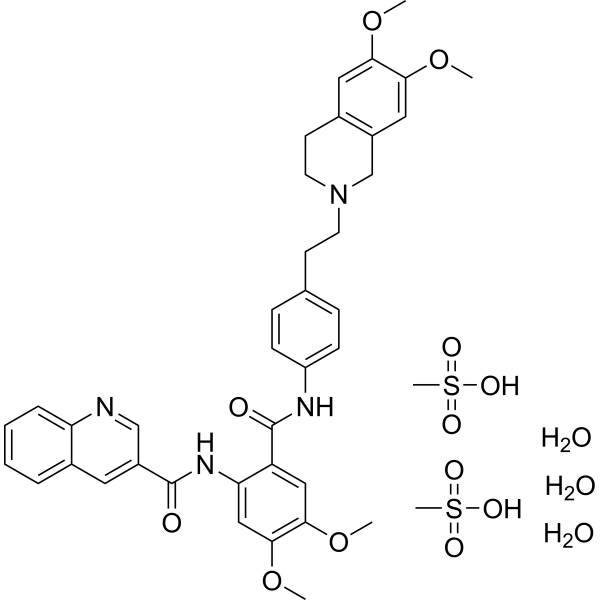
    XR9576 methanesulfonate, hydrate

    P-glycoprotein Cancer
    Tariquidar methanesulfonate, hydrate (XR9576 methanesulfonate, hydrate) is a potent and specific inhibitor of P-glycoprotein (P-gp) with a Kd of 5.1 nM.
    Tariquidar methanesulfonate, hydrate
  • HY-B1302
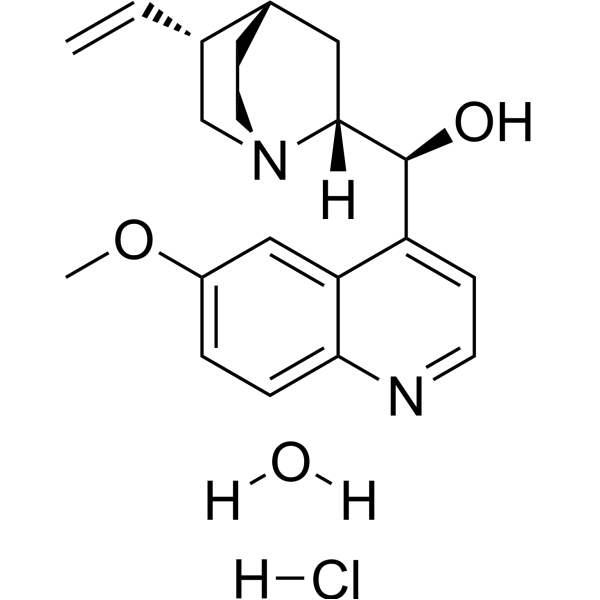
    Quinidine hydrochloride monohydrate
    Maximum Cited Publications
    25 Publications Verification

    P-glycoprotein PARP Caspase Apoptosis Potassium Channel Cardiovascular Disease Neurological Disease
    Quinidine hydrochloride monohydrate is an orally active antiarrhythmic agent. Quinidine hydrochloride monohydrate reduces the expression level of P-gp, inhibits P-gp-mediated efflux, increases the intracellular accumulation of P-gp substrates, induces PARP cleavage and Caspase-3 activation, and elevates the proportion of Apoptotic cells at the sub-G1 phase. Quinidine hydrochloride monohydrate exerts sustained block and open-channel block effects on IK(f). Quinidine hydrochloride monohydrate alters the urinary metabolic ratio of Amphetamine, modulates the Pentylenetetrazol-induced seizure threshold, and regulates the anticonvulsant effect of Dextromethorphan. Quinidine hydrochloride monohydrate can be used in studies related to uterine sarcoma and seizures .
    Quinidine hydrochloride monohydrate
  • HY-108286

    Cordanum

    Adrenergic Receptor Cardiovascular Disease
    Talinolol (Cordanum) is a long-acting, cardioselective β1-adrenergic receptor blocker. Talinolol exhibits cardioprotective and antihypertensive activities. Talinolol is also a well-known and frequently used probe substrate for P-glycoprotein (P-gp) activity .
    Talinolol
  • HY-W009141

    Glyceryl palmitate

    P-glycoprotein IAP PI3K Akt Caspase Apoptosis Cancer
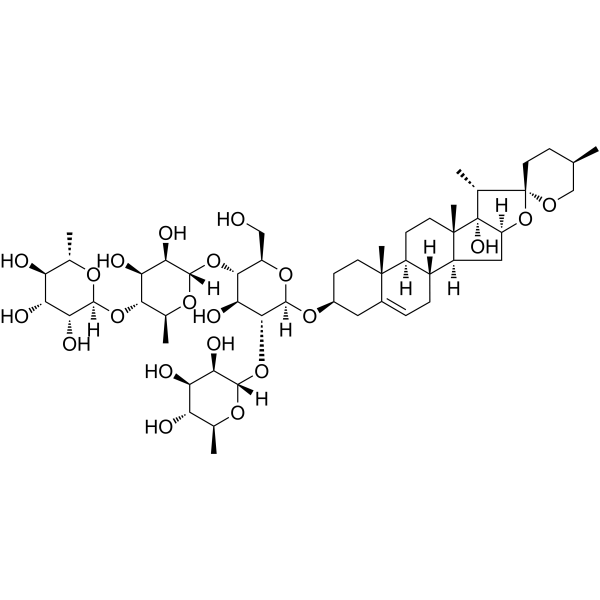
    1-Monopalmitin (Glyceryl palmitate) is an activator of the PI3K/Akt pathway and an inhibitor of P-glycoprotein (P-gp). 1-Monopalmitin can induce G2/M arrest and caspase-dependent apoptosis in cancer cells, while inhibiting IAPs protein expression. 1-Monopalmitin can increase drug accumulation by inhibiting P-gp activity in intestinal Caco-2 cells. 1-Monopalmitin has the ability to induce protective autophagy and apoptosis of lung cancer cells (IC50=50-58 μg/mL), with low toxicity to normal cells .
    1-Monopalmitin
  • HY-N2453
    Convallatoxin
    1 Publications Verification

    PPAR NF-κB P-glycoprotein Inflammation/Immunology Cancer
    Convallatoxin is a cardiac glycoside isolated from Adonis amurensis Regel et Radde. Convallatoxin ameliorates colitic inflammation via activation of PPARγ and suppression of NF-κB. Convallatoxin is a P-glycoprotein (P-gp) substrate and recognized Val982 as an important amino acid involved in its transport. Convallatoxin is an enhancer of ligand-induced MOR endocytosis with high potency and efficacy. Anti-inflammatory and anti-proliferative properties .
    Convallatoxin
  • HY-108694
    γ-Tocotrienol
    4 Publications Verification

    Endogenous Metabolite NF-κB Metabolic Disease Inflammation/Immunology
    γ-Tocotrienol is an active form of vitamin E. γ-tocotrienol reverses the multidrug resistance (MDR) of breast cancer cells through the signaling pathway of NF-κB and P-gp. γ-Tocotrienol is also a radioprotector agent, can mitigate bone marrow radiation damage during targeted radionuclide treatment .
    γ-Tocotrienol
  • HY-132189

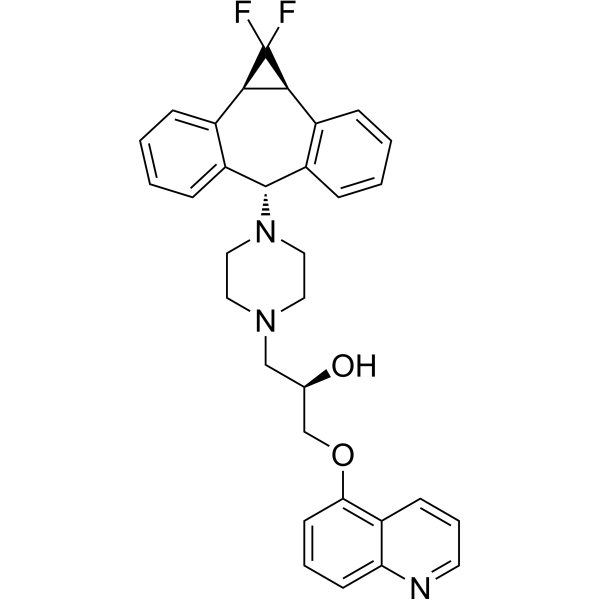
    P-glycoprotein Neurological Disease
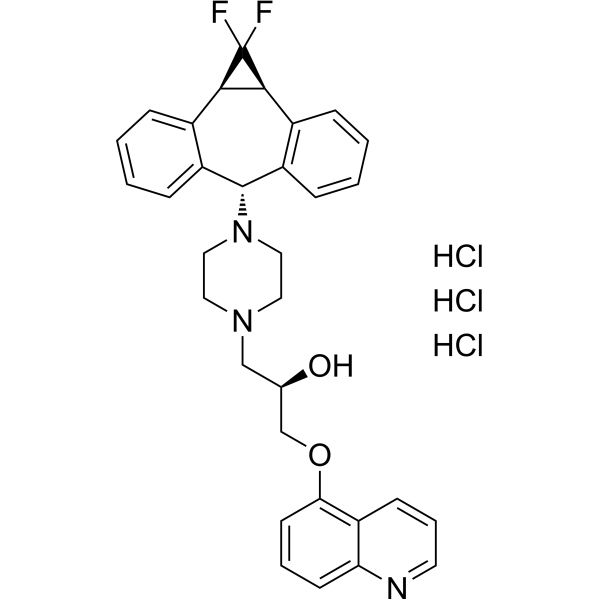
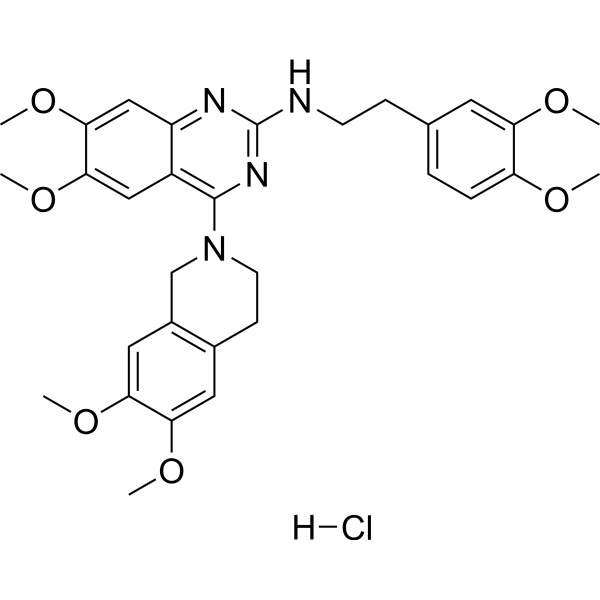
    Laniquidar is a non-competitive P-gp inhibitor with an IC50 of 0.51 μM. Laniquidar binds to the P-gp transporter with high affinity and exhibits low activity as a substrate. Laniquidar is applicable to epilepsy-related research .
    Laniquidar
  • HY-19642A
    Glesatinib hydrochloride
    2 Publications Verification

    MGCD265 hydrochloride

    TAM Receptor c-Met/HGFR Cancer
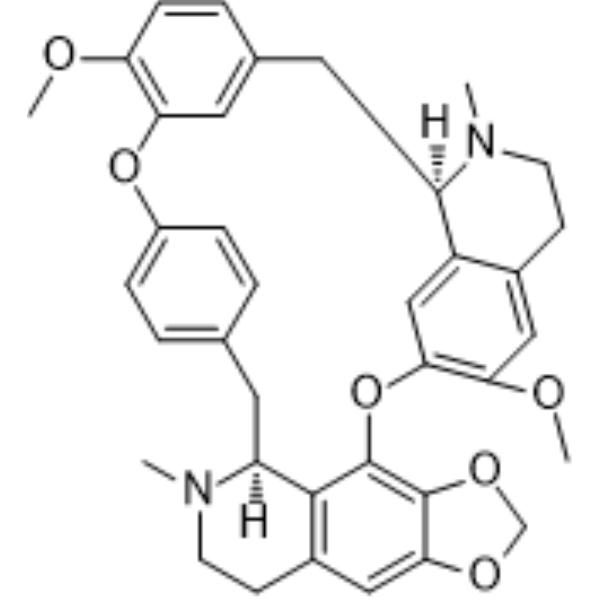
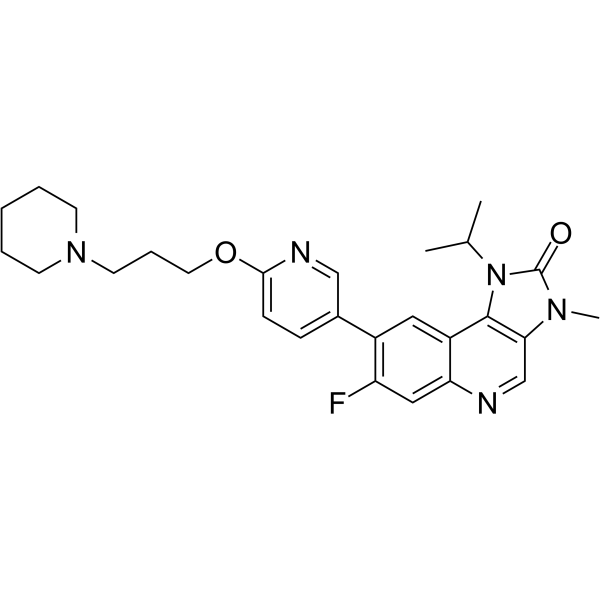
    Glesatinib hydrochloride (MGCD265 hydrochloride) is an orally active, potent MET/SMO dual inhibitor. Glesatinib hydrochloride, a tyrosine kinase inhibitor, antagonizes P-glycoprotein (P-gp) mediated multidrug resistance (MDR) in non-small cell lung cancer (NSCLC) .
    Glesatinib hydrochloride
  • HY-100750
    Norverapamil hydrochloride
    1 Publications Verification

    (±)-Norverapamil hydrochloride; D591 hydrochloride

    Calcium Channel P-glycoprotein Drug Metabolite Cardiovascular Disease
    Norverapamil hydrochloride ((±)-Norverapamil hydrochloride), an N-demethylated metabolite of Verapamil, is a L-type calcium channel blocker and a P-glycoprotein (P-gp) function inhibitor .
    Norverapamil hydrochloride
  • HY-119229

    CFTR Inflammation/Immunology
    VRT-325 is a CFTR modulator. VRT-325 inhibits disulfide cross-linking between cysteines in transmembrane segments 6 and 7 of CFTR and P-gp. VRT-325 promotes maturation of CFTR and P-gp processing mutants, rescues ΔF508-CFTR folding at the endoplasmic reticulum. VRT-325 binds ΔF508-CFTR nucleotide-binding domain 1, and increases mature ΔF508-CFTR cell surface expression and chloride conductance. VRT-325 can be used for the research of cystic fibrosis [1] [3].
    VRT-325
  • HY-W035709

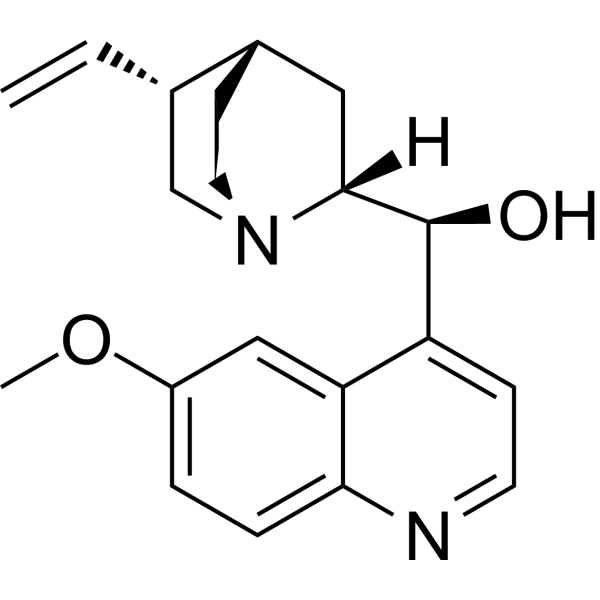
    Dihydrocinchonine

    P-glycoprotein Apoptosis Cancer
    Hydrocinchonine (Dihydrocinchonine) is a multidrug resistance (MDR)-reversal agent. Hydrocinchonine directly inhibits the function and expression of P-gp, which is the mechanism by which it reverses MDR. Hydrocinchonine exerts synergistic apoptotic effect with Paclitaxel (HY-B0015) in MES-SA/DX5 cells. Hydrocinchonine can be used for the study of gynecological malignant tumors (such as uterine sarcoma) with drug resistance caused by excessive expression of P-gp .
    Hydrocinchonine
  • HY-N7120

    Pgp hydrate

    Bacterial Antibiotic Infection
    Penicillin G Procaine hydrate (PGP hydrate) is a β-lactam antibiotic and sustained-release formulation. Penicillin G procaine (hydrate) hydrolyzes in vivo to release penicillin G and Procaine (HY-B0546), thereby delaying the absorption of penicillin G .
    Penicillin G procaine hydrate
  • HY-173162

    P-glycoprotein Potassium Channel Cardiovascular Disease Cancer
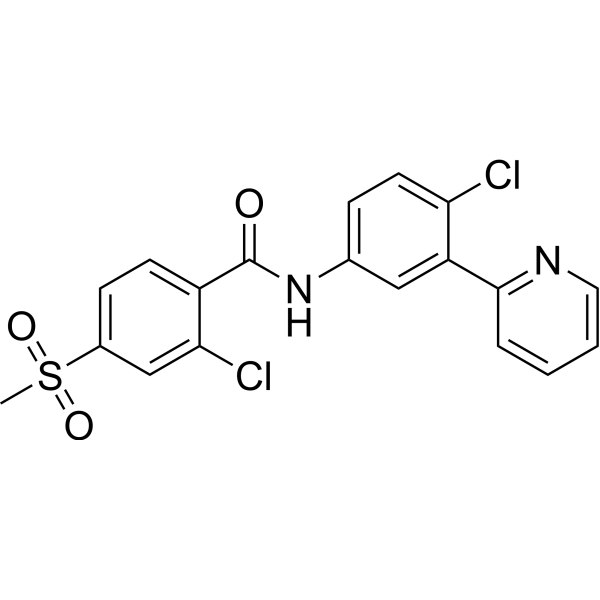
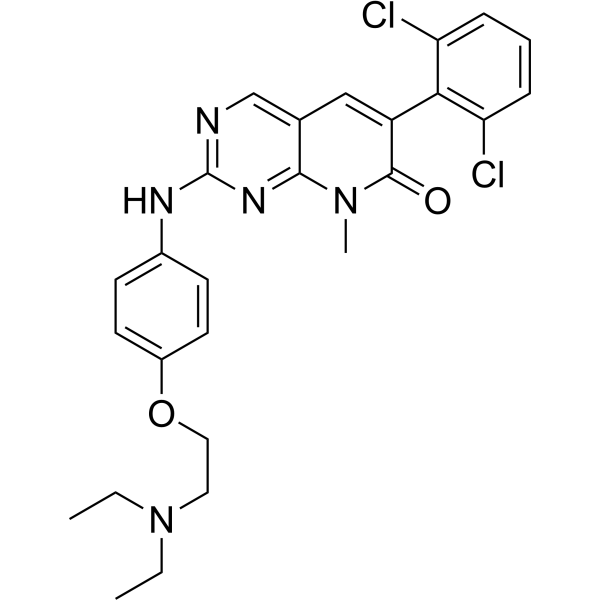
    GPV0057 (Compound 5d) is a selective and potent P-glycoprotein (P-gp) inhibitor. GPV0057 is also a selective potassium channel Kir2.1 activator. GPV0057 competitively binds to the substrate-binding site of P-gp, inhibiting ATP-dependent drug efflux to reverse multidrug resistance in tumor cells. GPV0057 can also stabilizes the open state of Kir2.1 and promotes potassium ion influx. GPV0057 is promising for research of tumors with high P-gp expression, Kir2.1-deficient diseases such as heart failure and Andersen-Tawil Syndrome .
    GPV0057
  • HY-119823

    P-glycoprotein Cancer
    PGP-4008 is a specific P-glycoprotein (Pgp) inhibitor. PGP-4008 inhibits tumor growth in a murine syngeneic Pgp-mediated multiple agent resistance (MDR) solid tumor model when given in combination with Doxorubicin .
    PGP-4008
  • HY-101791

    P-glycoprotein Cancer
    P-gp inhibitor 1 is a novel inhibitor reversing P-glycoprotein-mediated multidrug resistance.
    P-gp inhibitor 1
  • HY-19642

    MGCD265

    TAM Receptor c-Met/HGFR Cancer
    Glesatinib (MGCD265) is an orally active, potent MET/SMO dual inhibitor. Glesatinib, a tyrosine kinase inhibitor, antagonizes P-glycoprotein (P-gp) mediated multidrug resistance (MDR) in non-small cell lung cancer (NSCLC) .
    Glesatinib
  • HY-178349

    P-glycoprotein Apoptosis Autophagy Cancer
    P-gp inhibitor 30 is a potent P-gp inhibitor that reverses multidrug resistance in breast cancer by sensitizing resistant cells to Doxorubicin (ADM) (HY-15142). P-gp inhibitor 30 promotes apoptosis, induces autophagy, and suppresses proliferation, migration, and invasion of drug-resistant breast cancer cells when combined with ADM. P-gp inhibitor 30 inhibits breast tumor growth both in vitro and in vivo. P-gp inhibitor 30 can be used for drug-resistant breast cancer research .
    P-gp inhibitor 30
  • HY-144366

    P-glycoprotein Cancer
    P-gp inhibitor 3 is an effective P-glycoprotein (P-gp) inhibitor. P-gp inhibitor 3 inhibits the efflux function of P-gp by activating P-gp ATPase. P-gp inhibitor 3 has relatively stronger multidrug resistance (MDR) reversal ability and enhances the anti-tumor activity of Paclitaxel .
    P-gp inhibitor 3
  • HY-175838

    P-glycoprotein Cancer
    P-gp-IN-32 is a P-glycoprotein (P-gp) inhibitor. P-gp-IN-32 exhibits low cytotoxicity and potent multidrug resistance (MDR) reversal activity against Doxorubicin (HY-15142A) in MCF7/ADR cells (IC50 = 0.11 μM, reversal fold (RF) = 215.9). P-gp-IN-32 can bind to P-gp directly, induce a conformation change of P-gp and inhibit the efflux function. P-gp-IN-32 can be used for the research of cancer, such as breast cancer .
    P-gp-IN-32
  • HY-146391

    P-glycoprotein Cancer
    P-gp inhibitor 4 (Compound 8b) is a selective P-glycoprotein modulator with an EC50 of 94 nM. P-gp inhibitor 4 increases agent transport across gastro-intestinal barrier and recovers doxorubicin toxicity in multidrug resistant cancer cells .
    P-gp inhibitor 4
  • HY-176193

    P-glycoprotein Cancer
    P-gp modulator-7 (Compound 9e) is a P-glycoprotein (P-gp) inhibitor. P-gp modulator-7 occupies the channel entrance of P-gp with a unique T-shaped configuration, hindering the peristaltic extrusion mechanism of transmembrane domains TM12 and TM9, thereby inhibiting P-gp from pumping drugs out of cells and reversing the multidrug resistance (MDR) of tumor cells. P-gp modulator-7 is promising for research of cancers .
    P-gp modulator-7
  • HY-157483

    P-glycoprotein Cancer
    P-gp inhibitor 18 (compound 6G) is a potent inhibitor of P-gp. P-gp inhibitor 18 inhibits rhodamine 123 efflux in the P-gp overexpressed leukemia cells, K562/Dox .
    P-gp inhibitor 18
  • HY-149981

    P-glycoprotein Cancer
    P-gp inhibitor 13 is a P-gp inhibitor. P-gp inhibitor 13 can reverse P-glycoprotein-mediated paclitaxel resistance in A2780/T cell. P-gp inhibitor 13 can be used for the research of advanced acute myeloid leukemia .
    P-gp inhibitor 13
  • HY-14275R

    (±)-Verapamil (Standard); CP-16533-1 (Standard)

    Calcium Channel P-glycoprotein Cytochrome P450 Reference Standards Cardiovascular Disease Metabolic Disease Cancer
    Verapamil (Standard) is the analytical standard of Verapamil. This product is intended for research and analytical applications. Verapamil ((±)-Verapamil) is a calcium channel blocker and a potent and orally active first-generation P-glycoprotein (P-gp) inhibitor. Verapamil also inhibits CYP3A4. Verapamil has the potential for high blood pressure, heart arrhythmias and angina research .
    Verapamil (Standard)
  • HY-149277

    P-glycoprotein Cancer
    FM04 is a potent P-glycoprotein (P-gp) inhibitor (EC50=83 nM). FM04 inhibits P-gp in 2 mechanism: (1)FM04 binds to Q1193, followed by interacting with the functionally critical residues H1195 and T1226; or (2)FM04 binds to I1115 (a functionally critical residue itself), disrupting the R262-Q1081-Q1118 interaction pocket and uncoupling ICL2-NBD2 interaction and thereby inhibiting P-gp .
    FM04
  • HY-W001601

    iGluR Neurological Disease
    Budipine is an anti-parkinson agent. Budipine also is a substrate of P-glycoprotein (P-gp), is mediated the uptake into the brain by P-gp. Budipine also is N-methyl-d-aspartate (NMDA) antagonist, and has indirect dopaminergic effects through an improved dopamine release, the inhibition of monoamine oxidase type B (MAO-B). Budipine can be used for the research of CNS disorders include Parkinson disease .
    Budipine
  • HY-110377

    XR9576 dihydrochloride

    P-glycoprotein Cancer
    Tariquidar dihydrochloride (XR9576 dihydrochloride) is a potent and specific inhibitor of P-glycoprotein (P-gp) with the high affinity (Kd=5.1 nM) .
    Tariquidar dihydrochloride
  • HY-178466

    Microtubule/Tubulin P-glycoprotein Apoptosis Cancer
    Tubulin polymerization/P-gp-IN-1 is a Tubulin polymerization/P-gp dual inhibitor. Tubulin polymerization/P-gp-IN-1 inhibits tubulin polymerization and induces G2/M arrest and apoptosis. Tubulin polymerization/P-gp-IN-1 reverses MDR by inhibiting P-gp efflux function. Tubulin polymerization/P-gp-IN-1 has dual functions: direct antitumor activity and reversal of P-gp-mediated Cisplatin (HY-17394) resistance. Tubulin polymerization/P-gp-IN-1 stable binds to the tubulin CBS (ΔG = −12.4 kcal/mol) and the P-gp hydrophobic lumen (ΔG = −10.8 kcal/mol). Tubulin polymerization/P-gp-IN-1 can be used for the study of drug-resistant cervical cancer .
    Tubulin polymerization/P-gp-IN-1
  • HY-162040

    P-glycoprotein Cancer
    P-gp inhibitor 17 (compound 2g) is a P-gp inhibitor directly interacted with the transmembrane domain of P-gp. P-gp inhibitor 17 can be used for P-gp-mediated multidrug-resistant in tumor cells study .
    P-gp inhibitor 17
  • HY-162822

    P-glycoprotein Cancer
    P-gp modulator-5 (compound 25) is a modulator of P-gp and can inhibit the proliferation of multidrug resistant (MDR) tumors. P-gp modulator-5 inhibits the activity of drug efflux pumps in MDR cells, leading to a large accumulation of ROS and altered cell cycle profiles .
    P-gp modulator-5
  • HY-161260

    P-glycoprotein Cancer
    P-gp inhibitor 20 (compound H27) is a low cytotoxicity P-glycoprotein (P-gp) inhibitor. P-gp inhibitor 20 inhibits the efflux function of P-gp in a dose-dependent manner (without affecting the expression of P-gp), thereby reversing the multidrug resistance (MDR) of MCF-7/ADR cells, with an IC50 value of 46.6 nM. P-gp inhibitor 20 can be used for cancer research .
    P-gp inhibitor 20
  • HY-168008

    P-glycoprotein Cancer
    P-gp inhibitor 25 (compound 16c) is a P-gp inhibitor. P-gp inhibitor 25 can enhance the oral absorption of paclitaxel (HY-B0015). P-gp inhibitor 25 can be used in anti-cancer research .
    P-gp inhibitor 25
  • HY-149813

    P-glycoprotein Cancer
    P-gp inhibitor 14 (Compound 8a) is a high affinity P-gp inhibitor. P-gp inhibitor 14 reverses P-gp-mediated multidrug resistance (EC50=48.74 nM). P-gp inhibitor 14 has a weak inhibitory effect on CYP3A4 activity .
    P-gp inhibitor 14
  • HY-161645

    P-glycoprotein Cancer
    P-gp modulator-4 (compound 4c) inhibits the efflux function of P-glycoprotein (P-gp). P-gp modulator-4 shows multidrug resistance (MDR) in cancer reversal activity (IC50 of Paclitaxel (HY-B0015) = 8.80, reversal fold = 211.8) .
    P-gp modulator-4
  • HY-N144114

    P-glycoprotein Cancer
    P-gp inhibitor 2 is a potent P-gp inhibitor. P-gp inhibitor 2 shows reverse Doxorubicin resistance (IC50=0.22 µM) in P-gp overexpressing human colorectal carcinoma cells (SW600 Ad300) .
    P-gp inhibitor 2
  • HY-168186

    P-glycoprotein Cancer
    P-gp inhibitor 26 (Compound 7i) is a potent P-gp inhibitor. P-gp inhibitor 26 potently reverses P-gp-mediated multidrug resistance in K562/A02 cells .
    P-gp inhibitor 26
  • HY-159085

    P-glycoprotein Cancer
    P-gp inhibitor 24 (Compound 10) is an inhibitor for P-glycoprotein (P-gp)), that inhibits the P-gp mediated fluorescent dye efflux. P-gp inhibitor 24 exhibits multidrug resistance (MDR) reversal effect, enhances the cytotoxicity of Vincristine (HY-N0488) and Etoposide (HY-13629) in cancer cells .
    P-gp inhibitor 24
  • HY-146117

    P-glycoprotein Cancer
    P-gp modulator 2 (Compound 27) is a potent, competitive, allosteric P-glycoprotein (P-gp) modulator .
    P-gp modulator 2
  • HY-146118

    P-glycoprotein Cancer
    P-gp modulator 3 (Compound 37) is a potent, competitive, allosteric P-glycoprotein (P-gp) modulator .
    P-gp modulator 3
  • HY-173401

    P-glycoprotein Cancer
    P-gp inhibitor 29 (41) is a highly potent P-gp inhibitor and apoptosis inducer, with an IC50 of 8.9 nM in Eca109/VCR cells. P-gp inhibitor 29 (41) can be used in the research for Esophageal Cancer .
    P-gp inhibitor 29
  • HY-162447

    P-glycoprotein Apoptosis Cancer
    P-gp inhibitor 22 is a P-glycoprotein (P-gp) inhibitor that effectively inhibits P-pg and efflux function. P-gp inhibitor 22 induces apoptosis and accumulation of MCF-7/ADR cells processed in the S phase .
    P-gp inhibitor 22
  • HY-157484

    P-glycoprotein Cancer
    P-gp inhibitor 19 (Compound 6i) is a P-gp inhibitor. P-gp inhibitor 19 can inhibit the efflux of rhodamine 123 (HY-D0816) in P-gp-overexpressing leukemia cells K562/Dox and also restore the sensitivity of DOX-resistant cells .
    P-gp inhibitor 19
  • HY-155032

    P-glycoprotein Cancer
    P-gp inhibitor 15 (compound 7a) is a nonsubstrate inhibitor of P-glycoprotein (Pgp). P-gp inhibitor 15 inhibits Pgp-ATPase activity,and interfers Pgp-mediated Rhodamine123 efflux. P-gp inhibitor 15 also enhances the inhibitory efficacy of Paclitaxel (HY-B0015),inhibits tumor progress in nude mice KBV xenograft tumors model .
    P-gp inhibitor 15
  • HY-162396

    P-glycoprotein Cancer
    P-gp inhibitor 21 (Compound 56) is an inhibitor for P-glycoprotein (P-gp) transport, which reverses P-gp-mediated multidrug resistance (MDR) and exhibits antitumor efficacy in mice without significant cytotoxicity .
    P-gp inhibitor 21
  • HY-150565

    P-glycoprotein Cancer
    P-gp inhibitor 5 is a potent P-glycoprotein (P-gp) inhibitor. P-gp inhibitor 5 has antiproliferative activity against certain cancer cell lines. P-gp inhibitor 5 is effective in reversing the multidrug resistance (MDR) phenotype in ABCB1/Flp-In TM-293 and KBvin cells by restoring their sensitivity to Vincristine (HY-N0488A) and Paclitaxel (HY-B0015) .
    P-gp inhibitor 5
  • HY-158435

    P-glycoprotein Cytochrome P450 Cancer
    P-gp inhibitor 23 (compound 14F) is a potent inhibitor of P-gp and CYP3A4, with the EC50 and IC50 of 28 nM and 223 nM, respectively .
    P-gp inhibitor 23

Inquiry Online

Your information is safe with us. * Required Fields.

Salutation


Country or Region *

Applicant Name *


Organization Name *

Department *


Email Address *


Product Name *

Cat. No.


Requested quantity *

Phone Number *


Remarks

Inquiry Online

Inquiry Information

Product Name:
Cat. No.:
Quantity:
MCE Japan Authorized Agent:

