Search Result
Results for "
PNA
" in MedChemExpress (MCE) Product Catalog:
11
Biochemical Assay Reagents
| Cat. No. |
Product Name |
Target |
Research Areas |
Chemical Structure |
-
- HY-119244
-
|
|
Dipeptidyl Peptidase
|
Metabolic Disease
|
|
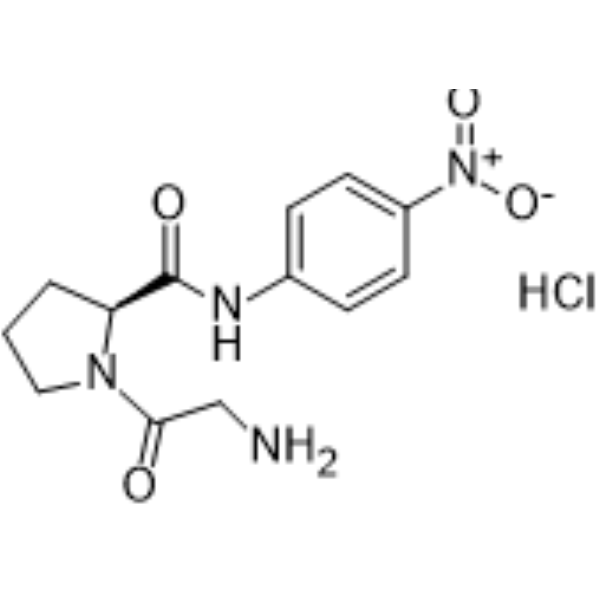
Gly-Pro-pNA hydrochloride is a chromogenic peptide substrate that can be cleaved by the circulating enzyme dipeptidyl peptidase IV (DPP IV). Gly-Pro-pNA hydrochloride is mainly used to detect the activity of aminopeptidases such as DPP IV. Gly-Pro-pNA hydrochloride can be investigated as an experimental antidiabetic agent .
|
-
-
- HY-P1006
-
|
|
Caspase
|
Others
|
|
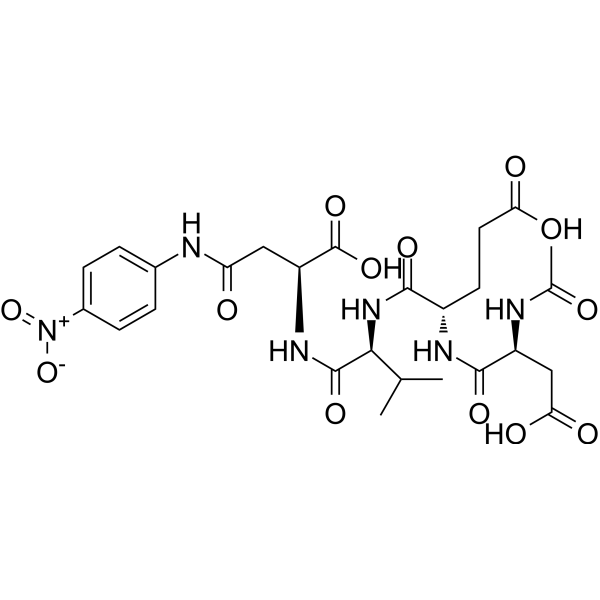
Ac-DEVD-pNA is a ligand for caspase-3/-7 and related cysteine proteases .
|
-
-
- HY-131409
-
|
D-Val-Leu-Lys-p-itoailide dihydrochloride; D-VLK-PNA dihydrochloride; S 2251 dihydrochloride
|
Fluorescent Dye
|
Others
|
|
D-Val-Leu-Lys-pNA (D-Val-Leu-Lys-p-nitroanilide) dihydrochloride is a chromogenic peptide substrate that serves as a characteristic substrate for plasmin and plasminogen. D-Val-Leu-Lys-pNA dihydrochloride acts as a sensitive substrate for the DFE27 serine protease derived from Bacillus subtilis DC27. Catalyzed by plasmin, D-Val-Leu-Lys-pNA dihydrochloride binds and hydrolyzes to release p-nitroaniline (pNA), which can be detected colorimetrically at 405 nm as a measure of fibrinolytic activity .
|
-
-
- HY-P4202
-
|
Suc-AEPF-PNA
|
Biochemical Assay Reagents
|
Others
|
|
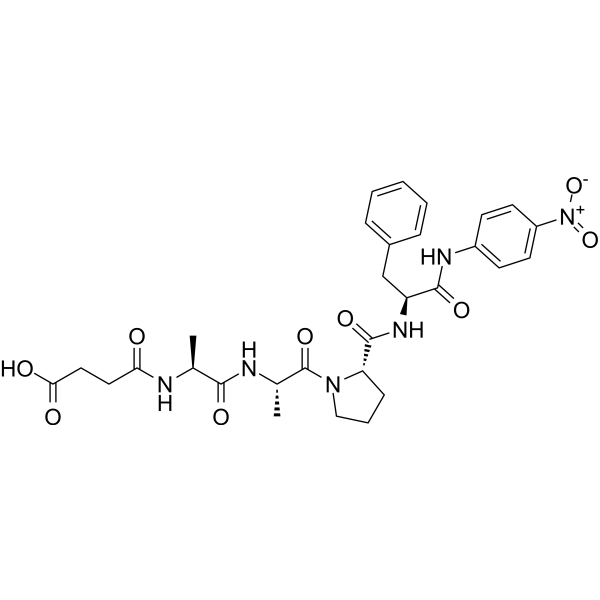
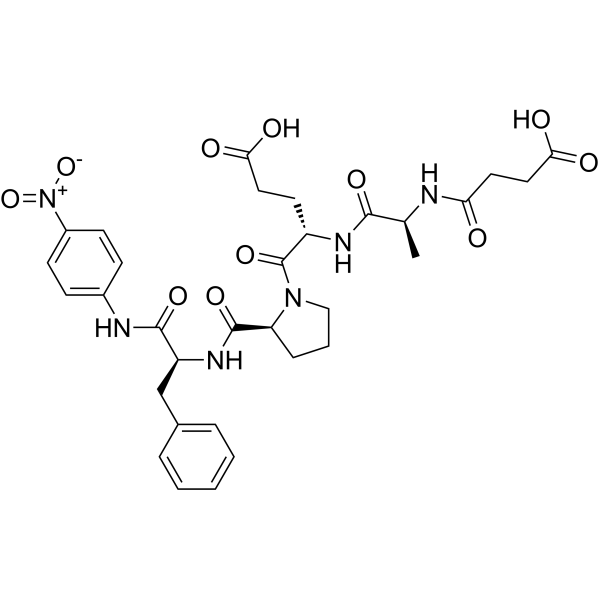
Suc-Ala-Glu-Pro-Phe-pNA (Suc-AEPF-pNA) is a chromogenic substrate for the peptidyl-prolyl isomerase Pin1. Suc-Ala-Glu-Pro-Phe-pNA is used to evaluate the inhibitory effect of target compounds on Pin1, the catalytic activity of Pin1, and other related assays .
|
-
-
- HY-P4581
-
|
Suc-ALPF-PNA
|
FKBP
|
Others
|
|
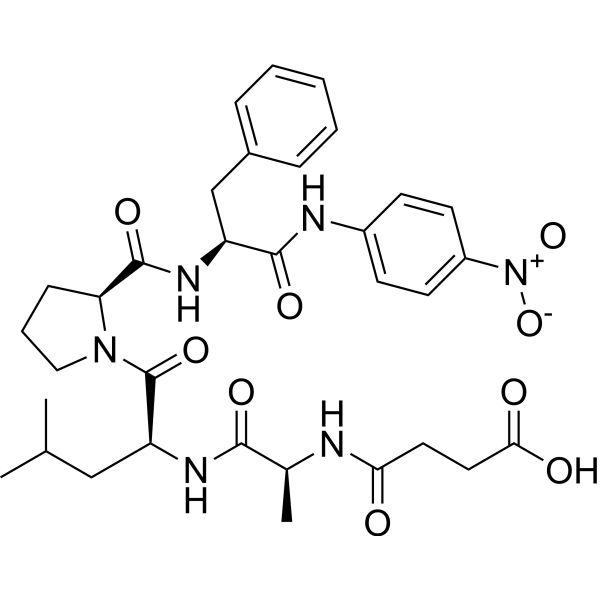
Suc-Ala-Leu-Pro-Phe-pNA (Suc-ALPF-pNA) is a synthetic polypeptide substrate that targets FK506-binding protein (FKBP). Suc-Ala-Leu-Pro-Phe-pNA can be used to determine peptidyl-prolyl cis-trans isomerase activity via the chymotrypsin-coupled assay. Suc-Ala-Leu-Pro-Phe-pNA serves as a substrate for human FK506-binding protein hFKBP-12 in the chymotrypsin-FKBP coupled PPIase assay. Suc-Ala-Leu-Pro-Phe-pNA is applicable for the detection and research of PPIase activity .
|
-
-
- HY-P4476
-
|
|
Ser/Thr Protease
|
Others
|
|
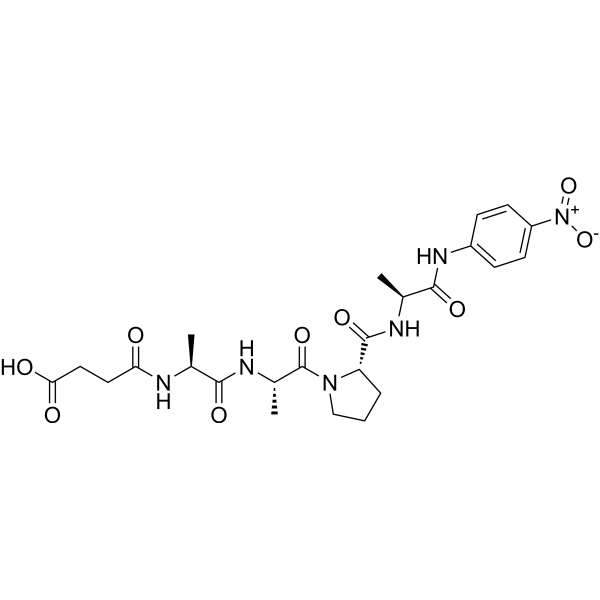
Suc-AAPA-pNA is a substrate for chymotrypsin A and elastase. Suc-AAPA-pNA can be used for enzyme activity assay .
|
-
-
- HY-P3443
-
|
PNA
|
Biochemical Assay Reagents
|
Cancer
|
|
Peanut agglutinin (PNA) is a carbohydrate-recognition protein that binds competitively and irreversibly to cell-surface β-D-Gal (1-3)-GalNAc, and this binding can be inhibited by D-galactose and asialofetuin. Peanut agglutinin recognizes exposed glycoepitopes and reflects the glycosylation status of cells. Peanut agglutinin can label glycoconjugates at neuromuscular junctions to safely visualize synaptic structures. Peanut agglutinin can be used to synthesize dyes to distinguish between normal and tumor tissues. Peanut agglutinin provides support for research on leukemia, Burkitt's tumors, and cutaneous squamous lesions .
|
-
-
- HY-114150D
-
|
|
Kallikrein
|
Others
|
|
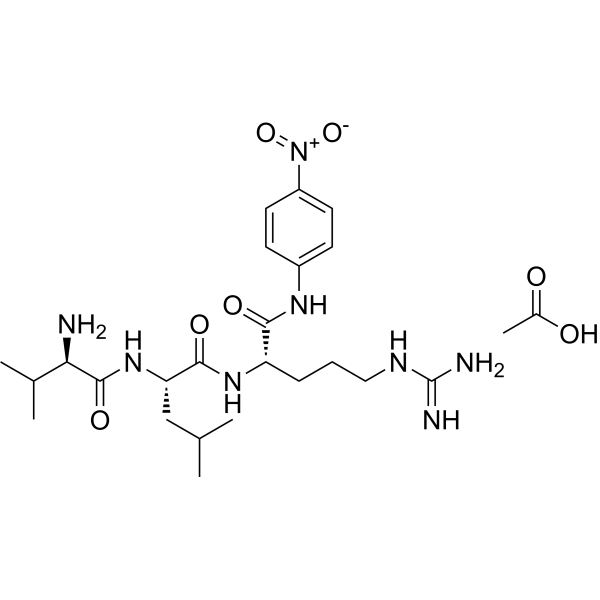
D-Val-Leu-Arg-pNA (acetate) is the acetate form of D-Pro-Phe-Arg-p-nitroanilide (pNa). D-Pro-Phe-Arg-p-nitroanilide (pNa) is the substrate for kallikrein and can be used to assay the activity of kallikrein .
|
-
-
- HY-NP0182
-
|
PNA (Biotinylated)
|
Fluorescent Dye
|
Others
|
|
Peanut Agglutinin (PNA) Biotinylated is a plant lectin that can be used as a probe to specifically bind biomolecules (such as polysaccharides, peptides, etc.).Peanut Agglutinin (PNA) Biotinylated is a biological material or organic compound that can be used in life science research .
|
-
-
- HY-137220
-
-
-
- HY-P4460
-
|
|
Ser/Thr Protease
|
Cancer
|
|
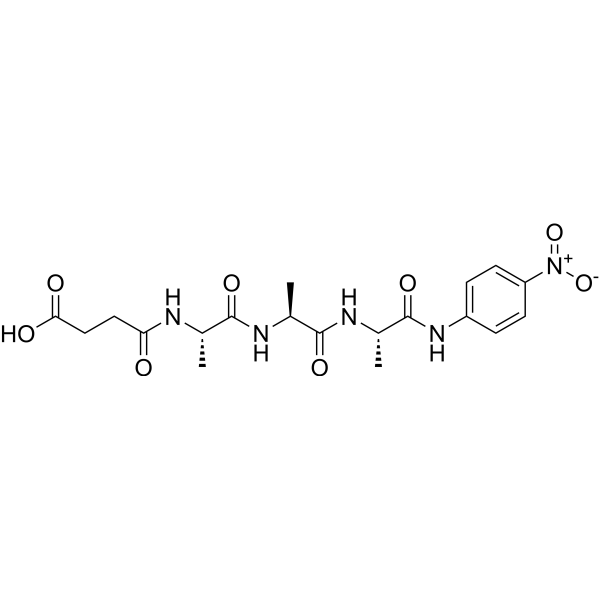
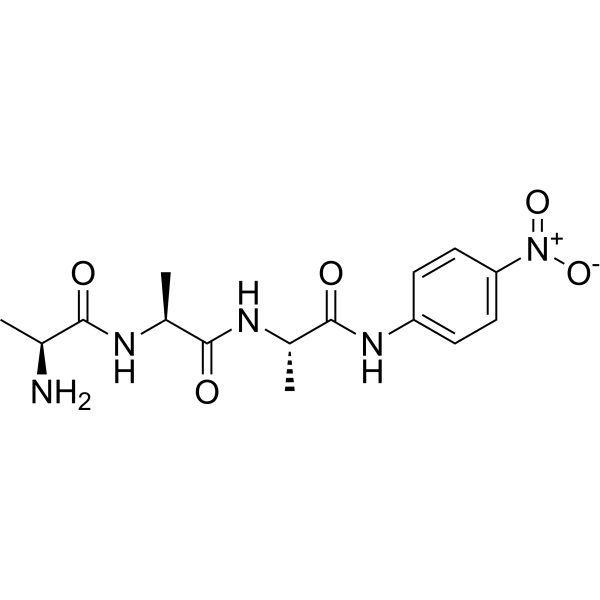
AAA-pNA is a chromogenic substrate of Tripeptidyl-peptidase II. AAA-pNA can be used to test Tripeptidyl-peptidase II activity .
|
-
-
- HY-P2091
-
|
|
Caspase
|
Inflammation/Immunology
|
|
Ac-YVAD-pNA is a specific Caspase-1 substrate. Ac-YVAD-pNA can be used to detect Caspase-1 activity. Caspase-1 is a key mediator of inflammatory processes .
|
-
-
- HY-P10094
-
|
|
Fluorescent Dye
|
Others
|
|
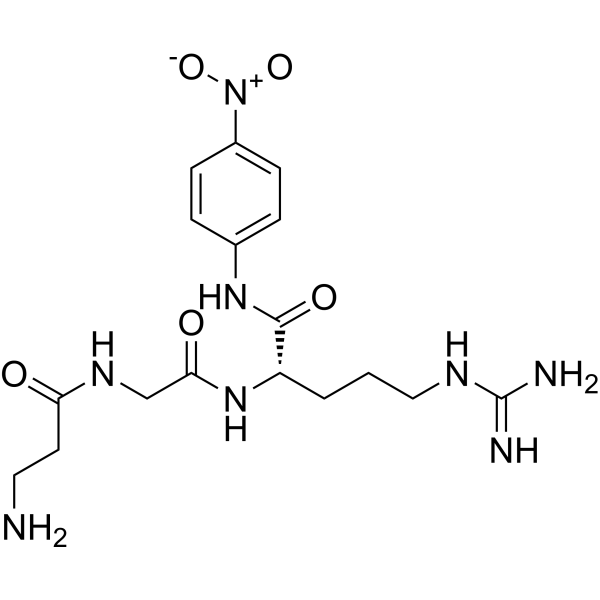
β-Ala-Gly-Arg-pNA is a chromogenic substrate of thrombin with pNA a strong absorbance at 405 nm .
|
-
-
- HY-P4518
-
|
|
Ser/Thr Protease
|
Others
|
|
Z-Val-Gly-Arg-pNA is a chromogenic substrate for urokinase. Z-Val-Gly-Arg-pNA can be used for determination of urokinase activity .
|
-
-
- HY-P4453
-
|
|
Caspase
|
Cancer
|
|
Boc-Ala-Ala-Asp-pNA is a chromogenic substrate of granzyme B. Boc-Ala-Ala-Asp-pNA can be used to test functional activity of granzyme B .
|
-
-
- HY-P4515
-
-
-
- HY-122142A
-
|
S-2366 hydrochloride
|
APC
Factor XI
Biochemical Assay Reagents
|
Others
|
|
Pyr-Pro-Arg-pNA (S2366) hydrochloride is a chromogenic peptide substrate for Factor XI and Activated protein C (APC). Pyr-Pro-Arg-pNA hydrochloride can induce noncompetitive inhibition of factor XI activation through occupancy of the active site of the factor XIa-light chain. Pyr-Pro-Arg-pNA hydrochloride can be used for measurement of APC amidolytic activity .
|
-
-
- HY-P4582
-
|
Suc-FAAF-PNA
|
Ser/Thr Protease
|
Others
|
|
Suc-Phe-Ala-Ala-Phe-pNA (Suc-FAAF-pNA) is a chromogenic polypeptide substrate that can be used for the quantitative activity assay of intracellular subtilisin (ISP) and neutral metalloprotease (NPS) derived from Saccharomonospora canescens. Suc-Phe-Ala-Ala-Phe-pNA is hydrolyzed by the catalytic triad of mature proteases to release the chromophore pNA. Suc-Phe-Ala-Ala-Phe-pNA is applicable to enzymological studies .
|
-
-
- HY-P4254
-
|
|
PAI-1
Ser/Thr Protease
|
Others
|
|
H-Gly-Glu-pNA is a chromogenic peptide substrate that can be widely used in enzymatic analysis, including trypsin and urokinase-type plasminogen activator (uPA) .
|
-
-
- HY-P4455
-
|
|
Bacterial
|
Infection
|
|
Boc-AAG-pNA is a glycine endopeptidase substrate. Boc-AAG-pNA can be used to test the amidase activity glycine endopeptidase .
|
-
-
- HY-134113
-
|
CBZ-Chromozym TH
|
Biochemical Assay Reagents
|
Others
|
|
Z-Gly-Pro-Arg-pNA (z-GPR-pNA) is a photometric substrate in Prostate-Specific Antigen (PSA) activation protease assays. Z-Gly-Pro-Arg-pNA (z-GPR-pNA) can be used for the test of trypsin activity .
|
-
-
- HY-P4468
-
-
-
- HY-P4484
-
|
|
Biochemical Assay Reagents
|
Others
|
|
Suc-AAPK-pNA is a chromogenic substrate for the determination of serine/threonine kinase activity and enzyme kinetic parameters .
|
-
-
- HY-NP0138
-
|
PNA (Fluorescein)
|
Fluorescent Dye
|
Others
|
|
Peanut Agglutinin (PNA) Fluorescein is a plant lectin that can be used as a probe to specifically bind biomolecules (such as polysaccharides, peptides, etc.).Peanut Agglutinin (PNA) Fluorescein is a biological material or organic compound that can be used in life science research .
|
-
-
- HY-P10145
-
-
-
- HY-P4658
-
|
|
Dipeptidyl Peptidase
|
Others
|
|
H-Val-Ala-pNA is a substrate for the dipeptide aminopeptidase (DPAPase) of Streptococcus bovis. H-Val-Ala-pNA can be used to measure the activity of the protease .
|
-
-
- HY-P5027
-
-
-
- HY-P10236
-
|
|
Caspase
|
Others
|
|
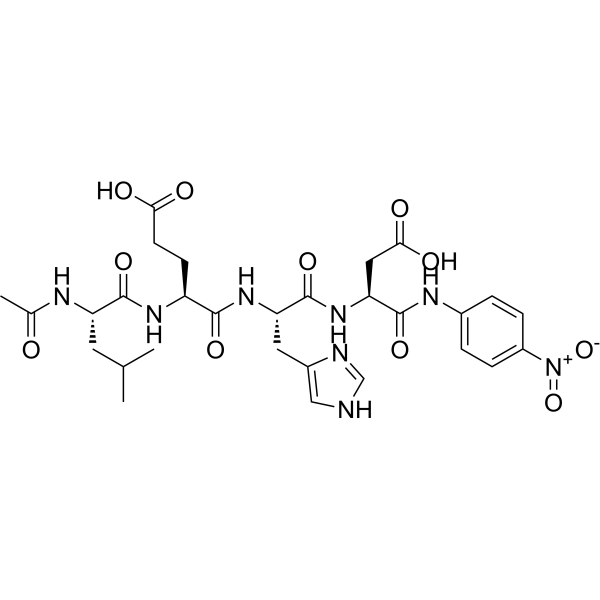
Ac-WEHD-pNA is a colorimetric substrate for caspase 1, 4, 5 and 14, which is utilized to measure the caspase activity .
|
-
-
- HY-126809A
-
|
Bz-PFR-PNA hydrochloride
|
Factor Xa
|
Others
|
|
Bz-Pro-Phe-Arg-pNA (Bz-PFR-pNA) hydrochloride is a chromogenic peptide substrate for plasma and glandular Kallikrein, cysteine proteinase (Cruzipain) and Trypsin. Bz-Pro-Phe-Arg-pNA hydrochloride can be used in Factor XII assay .
|
-
-
- HY-P4458
-
|
|
Ser/Thr Protease
|
Cancer
|
|
Boc-QAR-pNA is a chromogenic substrate of trypsin. Boc-QAR-pNA can be used to test trypsin activity .
|
-
-
- HY-P4482
-
|
|
Bacterial
|
Infection
|
|
Suc-AAPE-pNA is a chromogenic substrate of glutamyl endopeptidase. Suc-AAPE-pNA can be used to test glutamyl endopeptidase activity .
|
-
-
- HY-P4470
-
|
|
Ser/Thr Protease
|
Cancer
|
|
Phe-Pro-Ala-pNA is a chromogenic substrate of tripeptidyl peptidase. Phe-Pro-Ala-pNA can be used to test tripeptidyl peptidase activity .
|
-
-
- HY-P4464
-
|
|
Ser/Thr Protease
|
Cancer
|
|
Ala-Phe-Pro-pNA is a chromogenic substrate of tripeptidyl peptidase. Ala-Phe-Pro-pNA can be used to test tripeptidyl peptidase activity .
|
-
-
- HY-W011701
-
-
-
- HY-P6027A
-
|
|
Fluorescent Dye
|
Others
|
|
H-D-CHA-Ala-Arg-pNA diacetate is the diacetate form of H-D-CHA-Ala-Arg-pNA (HY-P6027). H-D-CHA-Ala-Arg-pNA diacetate is a chromogenic substrate for the amidolytic assay .
|
-
-
- HY-P4464A
-
|
|
Ser/Thr Protease
|
Cancer
|
|
Ala-Phe-Pro-pNA TFA is a chromogenic substrate of tripeptidyl peptidase. Ala-Phe-Pro-pNA TFA can be used to test tripeptidyl peptidase activity .
|
-
-
- HY-NP0156
-
|
PNA (Rhodamine)
|
Fluorescent Dye
|
Others
|
|
Peanut Agglutinin (PNA) Rhodamine is a plant lectin that can be used as a probe to specifically bind biomolecules (such as polysaccharides, peptides, etc.).Peanut Agglutinin (PNA) Rhodamine is a biological material or organic compound that can be used in life science research .
|
-
-
- HY-NP093
-
|
PNA (CY3)
|
Fluorescent Dye
|
Others
|
|
Peanut Agglutinin (PNA) CY3 is a plant lectin that can be used as a probe to specifically bind biomolecules (such as polysaccharides, peptides, etc.).Peanut Agglutinin (PNA) CY3 is a biological material or organic compound that can be used in life science research .
|
-
-
- HY-P11392
-
-
-
- HY-137858
-
|
Gly-Arg-4-NA hydrochloride; GR-PNA hydrochloride; GR p-itoailide hydrochloride
|
Fluorescent Dye
|
Others
|
|
H-Gly-Arg-pNA hydrochloride (GR-pNA hydrochloride) is a colorimetric substrate for thrombin. H-Gly-Arg-pNA is preferentially bound by thrombin and cleaves the Gly-Arg (GR) peptide sequence, releasing p-nitroaniline (pNA) that can be detected colorimetrically at 405 nm. H-Gly-Arg-pNA hydrochloride is used as a fluorescent dye to measure thrombin activity .
|
-
-
- HY-P10448
-
-
-
- HY-P10001
-
|
Z-Ile-Glu-Thr-Asp-PNA
|
Caspase
|
Cancer
|
|
Z-IETD-pNA (Z-Ile-Glu-Thr-Asp-pNA) is a colorimetric caspase-8 and granzyme B substrate. Z-IETD-pNA is hydrlyzed by caspase 8 to generate pNA .
|
-
-
- HY-122142
-
|
S-2366
|
APC
Factor XI
Biochemical Assay Reagents
|
Others
|
|
Pyr-Pro-Arg-pNA (S2366) is a chromogenic peptide substrate for Factor XI and Activated protein C (APC). Pyr-Pro-Arg-pNA can induce noncompetitive inhibition of factor XI activation through occupancy of the active site of the factor XIa-light chain. Pyr-Pro-Arg-pNA can be used for measurement of APC amidolytic activity .
|
-
-
- HY-P10084
-
|
|
Caspase
|
Others
|
|
Ac-VAD-pNA is a caspase-1 substrate. Ac-VAD-pNA can be used to detect caspase-1 activity .
|
-
-
- HY-W713878
-
|
|
Caspase
|
Others
|
|
Ac-VDVAD-pNA is a caspase-2 substrate. Ac-VDVAD-pNA can be used to test the activity of caspase-2 .
|
-
-
- HY-P2610
-
|
|
Caspase
|
Others
|
|
Ac-VEID-pNA is an artificially synthesized peptide. Ac-VEID-pNA is utilized as substrate for caspase 6, that cleaves the lamin A at the cleavage site of VEID .
|
-
-
- HY-P10083
-
-
-
- HY-P10005
-
-
-
- HY-P4576
-
|
|
Factor Xa
|
Others
|
|
Methoxycarbonyl-D-Nle-Gly-Arg-pNA is a synthetic trypsin that can serve as a substrate for coagulation factors IXa (FIXa) and Xa (FXa) .
|
-
-
- HY-P2630
-
|
|
Interleukin Related
|
Inflammation/Immunology
|
|
Suc-YVAD-pNA is a substrate of ICE. Interleukin-1β-converting enzyme (ICE) is a cysteine protease responsible for the cleavage of pre-interleukin-1β (pre-IL-1β) to the mature cytokine and a member of a family of related proteases (the caspases) .
|
-
- HY-P0021
-
|
Chromozym Pca
|
Fluorescent Dye
|
Others
|
|
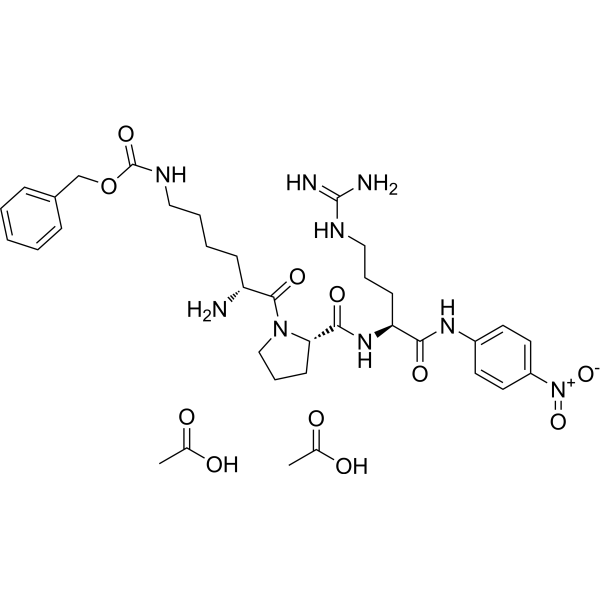
D-Lys(Z)-Pro-Arg-pNA (Chromozym Pca) is a chromogenic peptide substrate of activated protein C (APC) .
|
-
- HY-126809
-
|
Bz-PFR-PNA
|
Kallikrein
Ser/Thr Protease
Parasite
Factor Xa
|
Others
|
|
Bz-Pro-Phe-Arg-pNA (Bz-PFR-pNA) is a chromogenic peptide substrate for plasma and glandular Kallikrein, cysteine proteinase (Cruzipain) and Trypsin. Bz-Pro-Phe-Arg-pNA can be used in Factor XII assay .
|
-
- HY-P5974
-
|
Z-Tyr-Val-Ala-Asp-PNA
|
Caspase
|
Others
|
|
Z-YVAD-pNA (Z-Tyr-Val-Ala-Asp-pNA) is a caspase-1 substrate .
|
-
- HY-P10666
-
|
|
Caspase
|
Others
|
|
Ac-VDQQD-pNA is a substrate of Caspase 2 and can be cleaved to produce yellow pNA (p-nitroaniline) .
|
-
- HY-P4477
-
|
|
Ser/Thr Protease
|
Others
|
|
Suc-AAPR-pNA is a substrate of trypsin acyl-enzymes. Suc-AAPR-pNA can be used to test trypsin acyl-enzymes activity .
|
-
- HY-P10161
-
|
|
Biochemical Assay Reagents
|
Others
|
|
Ac-DMQD-pNA is a peptide substrate. Both of the recombinant CgCaspase-1 (rCgCaspase-1) and the C-terminus of CgCaspase-1 (rCgCaspase-1-C) exhibits similar caspase activity towards proteolytic substrate Ac-DMQD-pNA and Ac-DEVD-pNA (HY-P1006) .
|
-
- HY-P4202A
-
|
Suc-AEPF-PNA TFA
|
Biochemical Assay Reagents
|
Others
|
|
Suc-Ala-Glu-Pro-Phe-pNA (Suc-AEPF-pNA ) TFA is a chromogenic substrate for the peptidylprolyl isomerase Pin1. Suc-Ala-Glu-Pro-Phe-pNA TFA can be used to evaluate the inhibitory effect of the target compound on Pin1, and catalytic activity of Pin1, etc .
|
-
- HY-P4475
-
-
- HY-P4465
-
|
|
Fluorescent Dye
|
Others
|
|
Gly-Arg-pNA is a fluorogenic substrate for the measurement of protease activity. Gly-Arg-pNA undergoes hydrolysis and releases the fluorescent product p-nitroaniline. p-nitroaniline is in a fluorescent state under ultraviolet light irradiation and can emit a fluorescent signal .
|
-
- HY-W747366
-
-
- HY-P4706
-
-
- HY-147167
-
-
- HY-148415
-
-
- HY-W010783
-
-
- HY-138152
-
|
Benzyl-D-Arg-Gly-Arg-PNA dihydrochloride
|
Fluorescent Dye
|
Others
|
|
Z-D-Arg-Gly-Arg-pNA dihydrochloride is a hydrolytic chromogenic plasmin substrate .
|
-
- HY-168378
-
|
S-2251
|
Fluorescent Dye
|
Others
|
|
D-Val-Leu-Lys-pNA (S-2251) is a chromogenic peptide substrate that serves as a characteristic substrate for plasmin and plasminogen. D-Val-Leu-Lys-pNA acts as a sensitive substrate for the DFE27 serine protease derived from Bacillus subtilis DC27. Catalyzed by plasmin, D-Val-Leu-Lys-pNA binds and hydrolyzes to release p-nitroaniline (pNA), which can be detected colorimetrically at 405 nm as a measure of fibrinolytic activity .
|
-
- HY-P3118
-
-
- HY-P11732
-
|
|
Bacterial
|
Infection
|
|
acpP PNA is a 10-mer peptide nucleic acid targeting the bacterial essential gene acpP. acpP PNA can inhibit bacterial growth and reduce the level of target transcripts, and still retains activity with double terminal mismatches. acpP PNA may also cause off-target effects .
|
-
- HY-P11734
-
|
|
Ser/Thr Protease
|
Others
|
|
Suc-AAPY-pNA is an oligptide compound and protease substrate. Suc-AAPY-pNA undergoes hydrolysis by proteases at the peptide bond between tyrosine and p-nitroaniline, releasing p-nitroaniline with an absorption peak at OD410. Suc-AAPY-pNA functions as a substrate in preclinical assays for measuring activity of acidic, neutral, and alkaline proteases .
|
-
- HY-403689
-
|
|
Biochemical Assay Reagents
|
Others
|
|
Fmoc-PNA-J(Boc)-OH is a nucleobase-modified PNA monomer (2-aminopyridine PNA monomer M) with Fmoc and Boc protecting groups, used for solid-phase synthesis of PNAs that form stable Hoogsteen triple helices with double-stranded RNA at physiologically relevant conditions .
|
-
- HY-W784625
-
|
|
Drug Intermediate
|
Others
|
|
Boc-PNA-G(Z)-OH is a peptide nucleic acid (PNA) monomer that is used for the synthesis of peptide nucleic acid oligomers .
|
-
- HY-P10005A
-
-
- HY-168378A
-
|
S-2251 acetate
|
Fluorescent Dye
|
Others
|
|
D-Val-Leu-Lys-pNA acetate (S-2251 acetate) is a chromogenic peptide substrate that serves as a characteristic substrate for plasmin and plasminogen. D-Val-Leu-Lys-pNA acetate acts as a sensitive substrate for the DFE27 serine protease derived from Bacillus subtilis DC27. Catalyzed by plasmin, D-Val-Leu-Lys-pNA acetate binds and hydrolyzes to release p-nitroaniline (pNA), which can be detected colorimetrically at 405 nm as a measure of fibrinolytic activity .
|
-
- HY-P11691
-
|
|
Biochemical Assay Reagents
|
Others
|
|
Fmoc-PNA-D (tetraBoc)-OH is an Fmoc/Boc-protected diaminopurine peptide nucleic acid (PNA) monomer suitable for standard Fmoc solid-phase synthesis. Fmoc-PNA-D (tetraBoc)-OH carries Boc-protected exocyclic amino groups and can be incorporated into pseudo-complementary PNA oligomers for applications in antigenic peptide nucleic acid and DNA nanotechnology research .
|
-
- HY-P11688
-
|
|
Biochemical Assay Reagents
|
Others
|
Fmoc-PNA-M (Bhoc)-OH is a standard peptide nucleic acid (PNA) monomer building block. Fmoc-PNA-M (Bhoc)-OH carries two protecting groups, Fmoc and Bhoc, and is specifically designed for solid-phase and automated PNA synthesis. Fmoc-PNA-M (Bhoc)-OH efficiently participates in the construction of sequence-specific PNA probes. Through its protecting group strategy, Fmoc-PNA-M (Bhoc)-OH ensures the accuracy and efficiency of PNA synthesis, and is one of the important raw materials for PNA synthesis at present .
|
-
- HY-W402665
-
|
Fmoc-C(Bhoc)-Aeg-OH
|
Drug Intermediate
|
Metabolic Disease
|
|
Fmoc-PNA-T-OH (Fmoc-C (Bhoc)-Aeg-OH) is a Bhoc-protected peptide nucleic acid (PNA) monomer. Fmoc-PNA-T-OH is used in the research of type 2 diabetes (t2d) .
|
-
- HY-P11689
-
|
|
Biochemical Assay Reagents
|
Others
|
|
Fmoc-PNA-J (Bhoc)-OH is a protected peptide nucleic acid (PNA) monomer building block used for solid-phase synthesis of PNA oligomers. Fmoc-PNA-J (Bhoc)-OH carries Fmoc/Bhoc protecting groups and functions as a standard Fmoc-protected PNA monomer .
|
-
- HY-W540123
-
|
|
Biochemical Assay Reagents
|
Cancer
|
Fmoc-PNA-A(Bhoc)-OH is a protected peptide nucleic acid (PNA) monomer carrying an adenine base. Fmoc-PNA-A(Bhoc)-OH contains Fmoc and benzhydryloxycarbonyl (Bhoc) protecting groups, and serves as a standard building block designed specifically for solid-phase PNA synthesis. Fmoc-PNA-A(Bhoc)-OH can be efficiently used to synthesize PNA-based sequence-specific hybridization probes. These probes have broad applications in molecular biology research; for example, they can be used in HER2-expressing tumor-related studies, providing tools for disease diagnosis and mechanism exploration .
|
-
- HY-W784623
-
|
|
Drug Intermediate
|
Others
|
|
Boc-PNA-A(Z)-OH is a Boc-protected peptide nucleic acid monomer with a benzyloxycarbonyl protecting group on the adenine base .
|
-
- HY-W784626
-
|
|
Drug Intermediate
|
Others
|
|
Boc-PNA-T-OH is a thymine-containing peptide nucleic acid monomer and solid-phase synthesis building block .
|
-
- HY-167153
-
-
- HY-W612175
-
|
|
Leukotriene Receptor
|
Others
|
|
H-Ala-pNA is an L-amino acid p-nitroaniline (pNA) derivative and a specific substrate for leukotriene A4 hydrolase. The D-enantiomer of H-Ala-pNA shows no activity toward leukotriene A4 hydrolase. H-Ala-pNA can be catalytically hydrolyzed by leukotriene A4 hydrolase, and the p-nitroaniline produced during the reaction is monitored spectrophotometrically at 405 nm to enable quantitative detection of enzyme activity. H-Ala-pNA is used to evaluate the potency of inhibitors targeting the amidase activity of leukotriene A4 hydrolase .
|
-
- HY-P11679
-
|
|
DNA/RNA Synthesis
|
Others
|
|
Boc-PNA-U-OH is a protected peptide nucleic acid (PNA) monomer containing a uracil base, designed for solid-phase peptide synthesis (SPPS) using the Boc/Z protection strategy. Boc-PNA-U-OH acts as a building block in creating PNA oligomers that are neutral, stable, and used for antisense/antigene applications.
|
-
- HY-W665456
-
|
|
Drug Intermediate
|
Others
|
|
Fmoc‑PNA‑U‑OH is a peptide nucleic acid monomer that can be used for the synthesis of peptide nucleic acids (PNAs). Fmoc‑PNA‑U‑OH exhibits specific binding to adenine, resistance to enzymatic degradation, and strong hybridization properties. Fmoc‑PNA‑U‑OH can be applied in research fields such as gene diagnosis, molecular biology, and antisense therapy.
|
-
- HY-P11697
-
|
|
Drug Intermediate
|
Others
|
|
Fmoc-PNA-maleimide-OH is a Fmoc-protected functionalized peptide nucleic acid monomer featuring a maleimide group for thiol-reactive conjugation. Fmoc-PNA-maleimide-OH can be used in constructing PNA conjugates for molecular assembly applications.
|
-
- HY-P11681
-
|
|
DNA/RNA Synthesis
|
Others
|
|
Boc-PNA-J(Z)-OH is a protected peptide nucleic acid (PNA) monomer used in solid-phase synthesis. Boc-PNA-J(Z)-OH features a 2,6-diaminopurine (J) base, protected by a carboxybenzyl (Z) group, attached to a Boc-protected aminoethylglycinate backbone. Boc-PNA-J(Z)-OH allows for the synthesis of PNA sequences with enhanced binding affinity and stability.
|
-
- HY-P11682
-
|
|
DNA/RNA Synthesis
|
Others
|
|
Boc-PNA-M(Z)-OH is a protected peptide nucleic acid (PNA) monomer used in solid-phase peptide synthesis (SPPS). Boc-PNA-M(Z)-OH consists of an adenyl base protected with a benzyloxycarbonyl (Z) group and a backbone protected with a tert-butyloxycarbonyl (Boc) group, typically used for creating PNA oligomers.
|
-
- HY-125128
-
-
- HY-P11685
-
|
|
DNA/RNA Synthesis
|
Others
|
|
Fmoc-PNA-thioU(PMB)-OH is a nucleobase-modified peptide nucleic acid (PNA) monomer used in solid-phase synthesis. Fmoc-PNA-thioU(PMB)-OH features a thiouracil base protected with a p-methoxybenzyl (PMB) group on an Fmoc-protected backbone, designed for incorporating modified PNA bases into oligonucleotides to study binding properties.
|
-
- HY-P11683
-
|
|
DNA/RNA Synthesis
|
Others
|
|
Boc-PNA-D(tetraZ)-OH is a specialized Peptide Nucleic Acid (PNA) monomer used in solid-phase peptide synthesis, featuring a N-tert-butoxycarbonyl (Boc) protected backbone and a 2,6-diaminopurine nucleobase. Boc-PNA-D(tetraZ)-OH helps increase PNA solubility and binding affinity, often used in molecular diagnostics.
|
-
- HY-P11684
-
|
|
DNA/RNA Synthesis
|
Others
|
|
Fmoc-PNA-C(Boc)-OH is a protected peptide nucleic acid (PNA) monomer for solid-phase synthesis. Fmoc-PNA-C(Boc)-OH possesses Fmoc-protected skeletal amino groups and Boc-protected cytosine bases, designed to construct stable synthetic DNA analogs. Fmoc-PNA-C(Boc)-OH can be used to prepare highly specific, enzyme-stable antisense probes and diagnostic probes.
|
-
- HY-114150B
-
|
|
PAI-1
|
Others
|
|
D-Val-Leu-Arg-pNA hydrochloride is a substrate for glandular kinin-releasing enzymes. D-Val-Leu-Arg-pNA hydrochloride can be used to determine the activities of plasminogen activator and plasmin. D-Val-Leu-Arg-pNA hydrochloride is also used to study the fibrinolytic activity of various organisms, such as bacteria and worms .
|
-
- HY-160513
-
|
|
DNA/RNA Synthesis
|
Others
|
|
Fmoc‑PNA‑Abasic(Boc)‑OH is a synthetic peptide nucleic acid modified with Fmoc and Boc protecting groups. Fmoc‑PNA‑Abasic(Boc)‑OH can be used in molecular biology research.
|
-
- HY-P11687
-
|
|
Drug Intermediate
|
Others
|
|
Fmoc-PNA-M(Boc)-OH is a peptide nucleic acid monomer with Fmoc and Boc protecting groups. Fmoc-PNA-M(Boc)-OH can be used for synthesis of peptide nucleic acid .
|
-
- HY-P11686
-
|
|
DNA/RNA Synthesis
|
Others
|
|
Fmoc-PNA-G(Boc)-OH is a synthetic peptide nucleic acid (PNA) modified with Fmoc and Boc protecting groups, designed for precise synthesis and targeted binding to complementary DNA or RNA sequences. Fmoc-PNA-G(Boc)-OH serves as a versatile tool in molecular biology, offering robustness, specificity, and applicability across various research and diagnostic fields.
|
-
- HY-P11690
-
|
|
Biochemical Assay Reagents
|
Cancer
|
|
Fmoc-Aeg-OBn is a benzyl-protected N-(2-aminoethyl)-glycine PNA backbone derivative. Fmoc-Aeg-OBn serves as a key intermediate for the synthesis of Fmoc-protected PNA monomers with modified nucleobases. Fmoc-Aeg-OBn can be used to prepare PNA with unique physicochemical properties, which is suitable for antisense and gene diagnostic applications. Fmoc-Aeg-OBn is applicable to cancer-related research .
|
-
- HY-P11680
-
|
|
DNA/RNA Synthesis
|
Others
|
|
BOC-PNA-thioU(PMB)-OH is a peptide nucleic acid (PNA) monomer characterized by a PMB protecting group on its thiouracil, which enhances its binding affinity to adenine. BOC-PNA-thioU(PMB)-OH exhibits excellent resistance to enzymatic degradation and strong hybridization properties, making it valuable for applications in gene diagnosis, antisense therapy, and other molecular biology fields requiring higher binding strength and greater functionalization.
|
-
- HY-W025936
-
|
|
Drug Intermediate
|
Others
|
|
Fmoc‑PNA‑G (Bhoc)‑OH is a guanine-containing peptide nucleic acid monomer, in which both Bhoc on the nucleobase and Fmoc on the backbone serve as protecting groups. Fmoc‑PNA‑G (Bhoc)‑OH is applicable for the synthesis of peptide nucleic acids .
|
-
- HY-P11698
-
|
|
DNA Alkylator/Crosslinker
Transthyretin (TTR)
|
Cancer
|
Guanidino-G-Clamp-PNA is a highly efficient sequence-specific RNA binder and gene silencer. Guanidino-G-Clamp-PNA precisely targets such targets as miR-155 or transthyretin (TTR) mRNA through base pairing: the former regulates tumor-related signaling pathways by reducing microRNA activity, while the latter inhibits the translation of harmful proteins via steric hindrance. Guanidino-G-Clamp-PNA effectively stabilizes DNA/RNA duplexes, induces cancer cell apoptosis, and suppresses tumor growth. In addition, Guanidino-G-Clamp-PNA can be conjugated with targeting ligands to improve tissue-specific delivery and reduce in vivo adverse reactions, and it can also enhance the splicing regulation efficacy of other oligonucleotide platforms (such as PMO) when integrated into them. Guanidino-G-Clamp-PNA is applicable to the research of various diseases including diffuse large B-cell lymphoma and hereditary transthyretin-related amyloidosis .
|
-
- HY-W574398
-
|
|
Biochemical Assay Reagents
|
Others
|
|
Fmoc-Aeg-OH is a peptide nucleic acid (PNA) backbone intermediate and an Fmoc-protected carboxylic acid. Fmoc-Aeg-OH can be coupled with base acetic acids to synthesize Fmoc-protected PNA monomers, including those with modified bases .
|
-
- HY-W784624
-
|
|
Drug Intermediate
|
Others
|
|
Boc‑PNA‑C (Z)‑OH is a cytosine-containing peptide nucleic acid monomer, in which the amino group and cytosine are protected by tert-butoxycarbonyl (Boc) and benzyloxycarbonyl groups, respectively. Boc‑PNA‑C (Z)‑OH can be used for the synthesis of peptide nucleic acids .
|
-
- HY-148372
-
-
- HY-P4500
-
|
|
Cathepsin
|
Others
|
|
Z-Arg-Arg-pNA is a substrate for cathepsin B and can be used to detect this enzyme activity .
|
-
- HY-W274294
-
|
|
Biochemical Assay Reagents
|
Others
|
|
H-Pro-Pna is a chromogenic substrate of peptidase and can be used to determine enzyme activity, such as leukotriene A4 hydrolase .
|
-
- HY-P10668
-
|
|
Dengue Virus
Flavivirus
|
Infection
|
|
Ac-EVKKQR-pNA is a competitive chromogenic para-nitroanilide substrate corresponding to the P6-P1 segment amino-terminal to the NS2B-NS3 cleavage site but with a more reactive, hydrolytically cleavable, para-nitroanilide at the P1’ position. Ac-EVKKQR-pNA is promising for research of dengue 2 virus and flavivirus virus infection .
|
-
- HY-P4490
-
-
- HY-137186
-
|
|
Proteasome
|
Others
|
|
Suc-Gly-Gly-Phe-pNA is the chymotrypsin substrate with an Km value of 1.6 mM .
|
-
- HY-P4494
-
|
|
Cathepsin
|
Others
|
|
Suc-Val-Pro-Phe-pNA is a substrate for cathepsin G and can be used to detect the activity of this enzyme .
|
-
- HY-P6027
-
|
|
Thrombin
|
Others
|
|
H-D-CHA-Ala-Arg-pNA is a chromogenic substrate for the amidolytic assay .
|
-
- HY-W540122
-
-
- HY-P4496
-
|
|
Phosphatase
|
Others
|
|
Tos-Gly-Pro-Lys-pNA is a substrate for the serine protease ALP and can be used to measure the activity of this enzyme .
|
-
- HY-W338079
-
|
|
Caspase
|
Others
|
|
Ac-Asp-Glu-Val-Asp-pNA is a peptidic substrate of caspase-3/7 .
|
-
- HY-123275A
-
|
S-2238 hydrochloride
|
Fluorescent Dye
|
Others
|
|
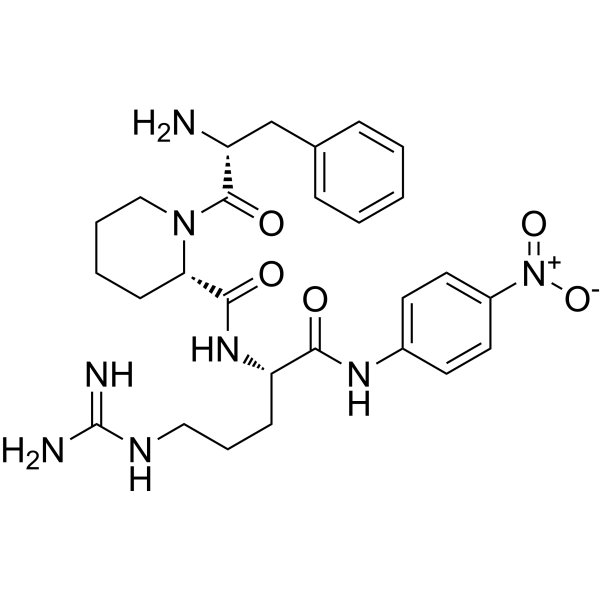
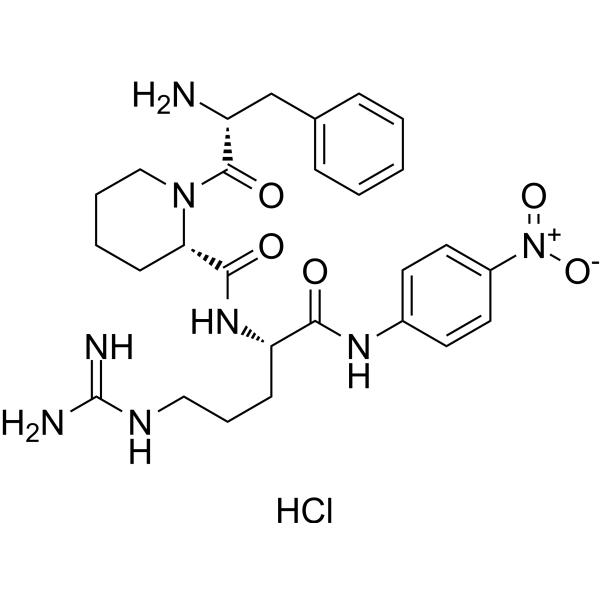
H-D-Phe-Pip-Arg-pNA (S-2238) hydrochloride, a chromogenic substrate, is patterned after the N-terminal portion of the A alpha chain of fibrinogen, which is the natural substrate of thrombin. H-D-Phe-Pip-Arg-pNA hydrochloride is specific for thrombin and is used to measure antithrombin-heparin cofactor (AT-III). The AT-III assay using H-D-Phe-Pip-Arg-pNA hydrochloride is sensitive, accurate, and easy to perform .
|
-
- HY-123275B
-
|
S-2238 acetate
|
Fluorescent Dye
|
Others
|
|
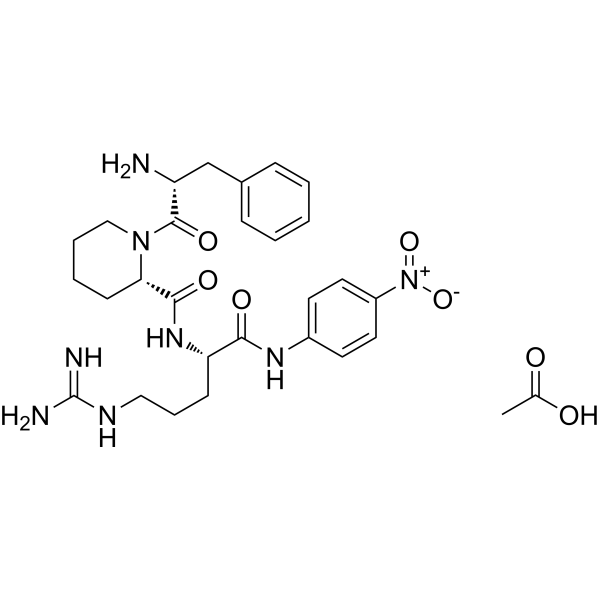
H-D-Phe-Pip-Arg-pNA (S-2238) acetate, a chromogenic substrate, is patterned after the N-terminal portion of the A alpha chain of fibrinogen, which is the natural substrate of thrombin. H-D-Phe-Pip-Arg-pNA acetate is specific for thrombin and is used to measure antithrombin-heparin cofactor (AT-III). The AT-III assay using H-D-Phe-Pip-Arg-pNA acetate is sensitive, accurate, and easy to perform .
|
-
- HY-123275
-
|
S-2238
|
Fluorescent Dye
|
Others
|
|
H-D-Phe-Pip-Arg-pNA (S-2238), a chromogenic substrate, is patterned after the N-terminal portion of the A alpha chain of fibrinogen, which is the natural substrate of thrombin. H-D-Phe-Pip-Arg-pNA is specific for thrombin and is used to measure antithrombin-heparin cofactor (AT-III). The AT-III assay using H-D-Phe-Pip-Arg-pNA is sensitive, accurate, and easy to perform .
|
-
- HY-123275C
-
|
S-2238 dihydrochloride
|
Fluorescent Dye
|
Others
|
|
H-D-Phe-Pip-Arg-pNA (S-2238) dihydrochloride, a chromogenic substrate, is patterned after the N-terminal portion of the A alpha chain of fibrinogen, which is the natural substrate of thrombin. H-D-Phe-Pip-Arg-pNA dihydrochloride is specific for thrombin and is used to measure antithrombin-heparin cofactor (AT-III). The AT-III assay using H-D-Phe-Pip-Arg-pNA dihydrochloride is sensitive, accurate, and easy to perform .
|
-
- HY-P4039
-
|
|
HCV Protease
|
Infection
|
|
Ac-EEVVAC-pNA is a chromogenic substrate for a continuous spectrophotometric assay of HCV NS3 protease. The sequence EEVVAC is derived from the 5A-5B cleavage junction of the HCV polyprotein .
|
-
- HY-W011155
-
-
- HY-P4772
-
-
- HY-P2685
-
|
|
Fluorescent Dye
|
Others
|
|
MeOSuc-Ala-Ala-Pro-Val-pNA is a sensitive chromogenic substrate for human leukocyte and porcine pancreatic elastase .
|
-
- HY-P3794
-
-
- HY-P4462
-
|
|
Ser/Thr Protease
|
Others
|
|
D-Leu-Thr-Arg-pNA is a substrate for γ-Tryptase, and can be used to measure the effects of small molecule inhibitors on γ-Tryptase activity .
|
-
- HY-114150
-
|
|
PAI-1
|
Others
|
|
D-Val-Leu-Arg-pNA is a glandular kininoreleasing enzyme substrate that also acts as a substrate for tissue-type plasminogen activator (t-PA) with no apparent affinity for fibrin .
|
-
- HY-P5376
-
|
S-2586
|
Ser/Thr Protease
|
Others
|
|
MeOSuc-Arg-Pro-Tyr-pNA (S-2586) is a biological active peptide. (chymotrypsin substrate)
|
-
- HY-P3126
-
|
|
Factor Xa
|
Others
|
|
Suc-Ile-Glu(γ-pip)-Gly-Arg-pNA hydrochloride is a factor Xa specific chromogenic substrate .
|
-
- HY-126785
-
|
Colorimetric Elastase Substrate
|
Elastase
|
Others
|
|
Suc-AAP-Abu-pNA (Colorimetric Elastase Substrate) is a specific substrate for pancreatic elastase (Km = 100 μM; Kcat/Km = 35,300 s -1 M -1 for rat pancreatic elastase; Km = 30 μM; Kcat/Km = 351,000 s -1 M -1 for porcine pancreatic elastase). Suc-AAP-Abu-pNA also promotes OPC migration .
|
-
- HY-P11729
-
|
|
Biochemical Assay Reagents
|
Others
|
|
Mitochondria rRNA blocker is a PCR blocker based on peptide nucleic acid (PNA). Mitochondria rRNA blocker targets the conserved 16S rRNA sequence of mitochondria and can be used in research involving PCR, sequencing, and gene detection.
|
-
- HY-P11730
-
|
|
Biochemical Assay Reagents
|
Others
|
|
Chloroplast rRNA blocker is a chloroplast rRNA-specific peptide nucleic acid (PNA) blocker. Chloroplast rRNA blocker targets the conserved 16S rRNA sequence in plants and can be used in research involving PCR, sequencing, and gene detection.
|
-
- HY-153829
-
-
- HY-138143
-
|
Chromozym-TH
|
Fluorescent Dye
|
Others
|
|
N-(p-Tosyl)-GPR-pNA acetate (Chromozym-TH) is a chromogenic substrate targeting the synthetic peptides Hirunorm IV and Hirunorm V and can be used to detect the dissociation constants (KI) of both peptides. Hirunorm IV and Hirunorm V are reversible inhibitors of amidolytic thrombin activity. By varying the peptide concentration at a fixed concentration of the chromogenic substrate N-(p-Tosyl)-GPR-pNA acetate, the dissociation constants determined were 0.134 nM (Hirunorm IV) and 0.245 nM (Hirunorm V) .
|
-
- HY-P0021A
-
|
Spectrozyme PCa; Chromozym Pca diacetate
|
Fluorescent Dye
|
Others
|
|
D-Lys(Z)-Pro-Arg-pNA diacetate is a chromogenic peptide substrate of activated protein C (APC) .
|
-
- HY-137895
-
|
H-Arg-PNA 2HCl, 98%
|
Biochemical Assay Reagents
|
Others
|
|
L-Arginine p-nitroanilide dihydrochloride, 98% (H-Arg-pNA 2HCl, 98%) is a chromogenic substrate for cathepsin H and aminopeptidases.
|
-
- HY-P2648
-
|
N-Succinyl-AAPL-p-nitroanilide
|
Aminopeptidase
|
Endocrinology
|
|
Suc-Ala-Ala-Pro-Leu-pNA (N-Succinyl-AAPL-p-nitroanilide) is a tripeptidyl p-nitroanilide substrate that can be catalytically hydrolyzed by acyl amidase-like leucine aminopeptidase in seminal plasma. Amastatin (HY-129298) and Actinonin (HY-113952) exert potent inhibitory effects on this hydrolytic activity. Suc-Ala-Ala-Pro-Leu-pNA can be used for the research of diseases such as azoospermia .
|
-
- HY-120833
-
|
|
Caspase
|
Others
|
|
Ac-Ile-Glu-Thr-Asp-pNA is a substrate for caspase-8. Caspase-8 binds to and cleaves the Ile-Glu-Thr-Asp (IETD) peptide sequence to release p-nitroalinide, which can be quantified by colorimetric detection at 405 nm as a measure of enzyme activity .
|
-
- HY-P3236
-
|
Ac-IEPD-PNA
|
Ser/Thr Protease
|
Cancer
|
|
N-Acetyl-Ile-Glu-Pro-Asp-p-nitroanilide (Ac-IEPD-pNA) is a colorimetric peptide substrate of granzyme B that allows accurate measurement of granzyme B activity .
|
-
- HY-151778
-
|
|
ADC Linker
|
Others
|
|
Fmoc-Abg(N3)-OH is a click chemistry reagent containing an azide group. Fmoc-Abg(N3)-OH has the potential to synthesize peptide nucleic acids (PNA) and peptoids. It contains an azide group and can undergo copper-catalyzed azide-alkyne cycloaddition (CuAAc) with molecules containing alkyne groups. It can also undergo ring strain-promoted alkyne-azide cycloaddition (SPAAC) with molecules containing DBCO or BCN groups.
|
-
- HY-P3480
-
|
|
Fluorescent Dye
|
Others
|
|
H-Trp-Phe-Tyr-Ser(PO3H2)-Pro-Arg-pNA is a chromogenic substrate for Pin1. Pin1 is an essential and conserved mitotic peptidyl-prolyl isomerase, and can recognize the phosphoserine-proline bonds present in mitotic phosphoproteins .
|
-
- HY-P11731
-
|
|
Biochemical Assay Reagents
|
Infection
|
|
Internal Transcribed Spacers (ITS) rRNA blocker is a peptide nucleic acid (PNA) blocker. Internal Transcribed Spacers (ITS) rRNA blocker binds and suppresses the amplification of the ITS2 rRNA region, a commonly overrepresented target sequence in fungal PCR. Internal Transcribed Spacers (ITS) rRNA blocker can be used in research involving PCR, sequencing, and gene detection.
|
-
- HY-108409
-
|
Etienic acid; Testosterone-17β-carboxylic acid; 3-Oxoandrost-4-ene-17β-carboxylic acid
|
Drug Derivative
|
Metabolic Disease
Cancer
|
|
Progesterone carboxylic acid (Testosterone-17β-carboxylic acid) is an androstenedione analogue. Progesterone carboxylic acid can conjugate with 20-mer peptide nucleic acid (PNA) and the conjugate has superior binding capacity on complementary DNA. Progesterone carboxylic acid can be used for cancers and type 2 diabetes (T2D) research .
|
-
- HY-W008129
-
|
|
Drug Intermediate
Bacterial
|
Infection
|
|
H-D-cis-Hyp-OH is a proline derivative and also a substrate of cis-4-hydroxy-D-proline dehydrogenase from Sinorhizobium meliloti. H-D-cis-Hyp-OH serves as a starting material for the synthesis of conformationally constrained pyrrolidine PNA adenine monomers .
|
-
- HY-108409R
-
|
Etienic acid (Standard); Testosterone-17β-carboxylic acid (Standard); 3-Oxoandrost-4-ene-17β-carboxylic acid (Standard)
|
Reference Standards
Drug Derivative
|
Metabolic Disease
Cancer
|
|
Progesterone carboxylic acid (Standard) is the analytical standard of Progesterone carboxylic acid (HY-108409). This product is intended for research and analytical applications. Progesterone carboxylic acid (Testosterone-17β-carboxylic acid) is an androstenedione analogue. Progesterone carboxylic acid can conjugate with 20-mer peptide nucleic acid (PNA) and the conjugate has superior binding capacity on complementary DNA. Progesterone carboxylic acid can be used for cancers and type 2 diabetes (T2D) research .
|
-
- HY-151738
-
|
|
ADC Linker
|
Others
|
|
Fmoc-Aeg(N3)-OH is a click chemistry reagent containing an Azide. Alkylating the Nitrogen of an amide bond results in peptoid structures, which leads to conformational restrains, like N-methylation and allows backbone derivatisation. Altering cytotoxicity, bacterial cell selectivity and receptor pharmacology through formation of peptoid derivatives have been published for Cilengitide, Piscidin 1, and MC3, MC4 and MC5 receptor agonist. This building block enables design of macrocycles through intermolecular crosslinking or backbone stabilization through intermolecular ring-closure. This compound is a potential building block for the construction of (customized) peptide nucleic acids (PNAs) and for peptoid synthesis . Fmoc-Aeg(N3)-OH is a click chemistry reagent, it contains an Azide group and can undergo copper-catalyzed azide-alkyne cycloaddition reaction (CuAAc) with molecules containing Alkyne groups. It can also undergo strain-promoted alkyne-azide cycloaddition (SPAAC) reactions with molecules containing DBCO or BCN groups.
|
-
- HY-P3936
-
|
|
Fluorescent Dye
|
Others
|
|
Endotoxin Substrate (Boc-LGR-pNA) is a chromogenic substrate can be used in quantitative assays of endotoxin .
|
-
- HY-P1347
-
-
- HY-P2664
-
|
Cathepsin G substrate
|
Biochemical Assay Reagents
|
Others
|
|
Cathepsin G substrate is a biochemical reagent that can be used as a biological material or organic compound for life science related research.
|
-
- HY-118959A
-
|
Bz-Phe-Val-Arg-PNA hydrochloride
|
Cathepsin
|
Others
|
|
S2160 hydrochloride is a substrate of Cathepsin B that can be utilized in the calorimetric assay for the measurement of cathepsin B .
|
-
- HY-118959
-
|
Bz-Phe-Val-Arg-PNA
|
Cathepsin
|
Others
|
|
S2160 is a substrate of Cathepsin B that can be utilized in the calorimetric assay for the measurement of cathepsin B .
|
-
- HY-134445
-
-
- HY-137798
-
|
|
Fluorescent Dye
|
Others
|
|
Chromozym PL is a chromogenic substrate for plasmin, and the enzymatic reaction can be carried out in 0.1mL Tris-HCl buffer (50 mM, pH 7.8). 100 μM Chromozym PL was dissolved and prepared. After adding the hydrolase, the generation of p-nitroaniline (pNA) at 405 nm was continuously observed, and the hydrolysis products were calculated .
|
-
- HY-P11695
-
|
|
Biochemical Assay Reagents
|
Others
|
|
Fmoc-Aeg (Dde) is a protected aminoethylglycine (AEG) monomer used for solid-phase synthesis of peptide nucleic acids (PNAs). Fmoc-Aeg (Dde) contains the fluorenylmethoxycarbonyl (Fmoc) and 1-(4,4-dimethyl-2,6-dioxocyclohex-1-ylidene) ethyl (Dde) protecting groups .
|
-
- HY-W718136
-
|
GlcN6P-Na
|
Biochemical Assay Reagents
|
Others
|
|
D-Glucosamine 6-phosphate (sodium) (GlcN6P-Na) is a class of biochemical reagents used in glycobiology research. Glycobiology studies the structure, synthesis, biology, and evolution of sugars. It involves carbohydrate chemistry, enzymology of glycan formation and degradation, protein-glycan recognition, and the role of glycans in biological systems. This field is closely related to basic research, biomedicine, and biotechnology .
|
-
- HY-120482
-
|
|
Microtubule/Tubulin
|
Others
|
|
CHM-1-P-Na is a sodium monophosphate salt of 2-(2-fluorophenyl)-6,7-methylenedioxyquinolin-4-one, which can be converted into CHM-1, a compound with a unique anti-tumor mechanism, in vitro and in vivo, and has excellent anti-tumor activity in tumor models and clear pharmacological effects on related enzymes.
|
-
- HY-137901
-
|
Ala-4-nitroanilide, 99%; H-Ala-PNA, 99%
|
Biochemical Assay Reagents
|
Others
|
|
L-Alanine 4-nitroanilide hydrochloride, 99% is a detection substrate for L-alanine aminopeptidase.
|
-
- HY-P11420
-
|
|
Dengue Virus
|
Infection
|
|
2A/2B Dengue protease substrate (Ac-RTSKKR-pNA) is a peptide substrate for Dengue NS2B-NS3 protease. 2A/2B Dengue protease substrate is used for Dengue NS2B-NS3 protease substrate peptide selective inhibitor development .
|
-
- HY-P11694
-
|
|
Biochemical Assay Reagents
|
Neurological Disease
|
|
Alloc-Aeg (Fmoc)-OH is a protected serine triphosphate building block and an Nα-Fmoc protected amino acid. Alloc-Aeg (Fmoc)-OH contains serine protected by α-N-allyloxycarbonyl (Alloc) and bis (allyl) phosphate groups, and it can be used in the synthesis of peptide nucleic acids (PNAs). Alloc-Aeg (Fmoc)-OH is applicable to research related to Alzheimer's disease .
|
-
- HY-151828
-
|
|
ADC Linker
|
Others
|
|
N3-Gly-Aeg(Fmoc)-OH is a click chemistry reagent containing an azide group. PNA building-block that can be further modified using Click-chemistry . It contains an azide group and can undergo copper-catalyzed azide-alkyne cycloaddition (CuAAc) with molecules containing alkyne groups. It can also undergo ring strain-promoted alkyne-azide cycloaddition (SPAAC) with molecules containing DBCO or BCN groups.
|
-
- HY-W008129R
-
|
|
Reference Standards
Drug Intermediate
Bacterial
|
Infection
|
|
H-D-cis-Hyp-OH (Standard) is the analytical standard of H-D-cis-Hyp-OH. This product is used for research and analytical applications. H-D-cis-Hyp-OH is a proline derivative and also a substrate of the cis-4-hydroxy-D-proline dehydrogenase from the alfalfa rhizobium (Sinorhizobium meliloti). H-D-cis-Hyp-OH can be used as an initial raw material for the synthesis of conformationally restricted pyrrolidine PNA adenine monomers.
|
-
- HY-P1732
-
|
|
Biochemical Assay Reagents
|
Cancer
|
|
Transportan is an amphipathic cell-penetrating peptide containing 12 functional amino acids from the amino terminus of the neuropeptide galanin and mastoparan in the carboxyl terminus, connected via a lysine. Transportan interacts with galanin receptors and G-proteins, modulates GTPase activity, enters cells via direct translocation and endocytic pathways, accumulates in cytoplasmic, nuclear, and membranous structures, and delivers cargo including peptides, PNAs, proteins, siRNA, and liposomes [12].
|
-
- HY-W016288
-
|
2,3-Naphthalenedicarboxaldehyde; Naphthalene-2,3-dialdehyde
|
Fungal
|
Infection
|
|
Naphthalene-2,3-dicarboxaldehyde (NDA) is an effective inhibitor of Candida albicans aspartate semialdehyde dehydrogenase (ASADH), with a Ki value of 45 μM. Naphthalene-2,3-dicarboxaldehyde targets ASADH in the aspartate biosynthetic pathway of Candida albicans. Naphthalene-2,3-dicarboxaldehyde reacts with primary amines to generate highly fluorescent and stable derivatives. Naphthalene-2,3-dicarboxaldehyde serves as a fungistatic agent and a fluorogenic derivatization reagent. Naphthalene-2,3-Dicarboxaldehyde can be used for the research of candidiasis .
|
-
| Cat. No. |
Product Name |
Type |
-
- HY-P2685
-
|
|
Fluorescent Dye
|
|
MeOSuc-Ala-Ala-Pro-Val-pNA is a sensitive chromogenic substrate for human leukocyte and porcine pancreatic elastase .
|
-
- HY-131409
-
|
D-Val-Leu-Lys-p-itoailide dihydrochloride; D-VLK-PNA dihydrochloride; S 2251 dihydrochloride
|
Fluorescent Dye
|
|
D-Val-Leu-Lys-pNA (D-Val-Leu-Lys-p-nitroanilide) dihydrochloride is a chromogenic peptide substrate that serves as a characteristic substrate for plasmin and plasminogen. D-Val-Leu-Lys-pNA dihydrochloride acts as a sensitive substrate for the DFE27 serine protease derived from Bacillus subtilis DC27. Catalyzed by plasmin, D-Val-Leu-Lys-pNA dihydrochloride binds and hydrolyzes to release p-nitroaniline (pNA), which can be detected colorimetrically at 405 nm as a measure of fibrinolytic activity .
|
-
- HY-P4202
-
|
Suc-AEPF-PNA
|
Fluorescent Dye
|
|
Suc-Ala-Glu-Pro-Phe-pNA (Suc-AEPF-pNA) is a chromogenic substrate for the peptidyl-prolyl isomerase Pin1. Suc-Ala-Glu-Pro-Phe-pNA is used to evaluate the inhibitory effect of target compounds on Pin1, the catalytic activity of Pin1, and other related assays .
|
-
- HY-P3236
-
|
Ac-IEPD-PNA
|
Fluorescent Dye
|
|
N-Acetyl-Ile-Glu-Pro-Asp-p-nitroanilide (Ac-IEPD-pNA) is a colorimetric peptide substrate of granzyme B that allows accurate measurement of granzyme B activity .
|
-
- HY-P0021A
-
|
Spectrozyme PCa; Chromozym Pca diacetate
|
Fluorescent Dye
|
|
D-Lys(Z)-Pro-Arg-pNA diacetate is a chromogenic peptide substrate of activated protein C (APC) .
|
-
- HY-P4039
-
|
|
Fluorescent Dye
|
|
Ac-EEVVAC-pNA is a chromogenic substrate for a continuous spectrophotometric assay of HCV NS3 protease. The sequence EEVVAC is derived from the 5A-5B cleavage junction of the HCV polyprotein .
|
-
- HY-137858
-
|
Gly-Arg-4-NA hydrochloride; GR-PNA hydrochloride; GR p-itoailide hydrochloride
|
Fluorescent Dye
|
|
H-Gly-Arg-pNA hydrochloride (GR-pNA hydrochloride) is a colorimetric substrate for thrombin. H-Gly-Arg-pNA is preferentially bound by thrombin and cleaves the Gly-Arg (GR) peptide sequence, releasing p-nitroaniline (pNA) that can be detected colorimetrically at 405 nm. H-Gly-Arg-pNA hydrochloride is used as a fluorescent dye to measure thrombin activity .
|
-
- HY-P0021
-
|
Chromozym Pca
|
Fluorescent Dye
|
|
D-Lys(Z)-Pro-Arg-pNA (Chromozym Pca) is a chromogenic peptide substrate of activated protein C (APC) .
|
-
- HY-P4202A
-
|
Suc-AEPF-PNA TFA
|
Fluorescent Dye
|
|
Suc-Ala-Glu-Pro-Phe-pNA (Suc-AEPF-pNA ) TFA is a chromogenic substrate for the peptidylprolyl isomerase Pin1. Suc-Ala-Glu-Pro-Phe-pNA TFA can be used to evaluate the inhibitory effect of the target compound on Pin1, and catalytic activity of Pin1, etc .
|
-
- HY-W338079
-
|
|
Fluorescent Dye
|
|
Ac-Asp-Glu-Val-Asp-pNA is a peptidic substrate of caspase-3/7 .
|
| Cat. No. |
Product Name |
Type |
-
- HY-P3443
-
|
PNA
|
Biochemical Assay Reagents
|
|
Peanut agglutinin (PNA) is a carbohydrate-recognition protein that binds competitively and irreversibly to cell-surface β-D-Gal (1-3)-GalNAc, and this binding can be inhibited by D-galactose and asialofetuin. Peanut agglutinin recognizes exposed glycoepitopes and reflects the glycosylation status of cells. Peanut agglutinin can label glycoconjugates at neuromuscular junctions to safely visualize synaptic structures. Peanut agglutinin can be used to synthesize dyes to distinguish between normal and tumor tissues. Peanut agglutinin provides support for research on leukemia, Burkitt's tumors, and cutaneous squamous lesions .
|
-
- HY-NP0182
-
|
PNA (Biotinylated)
|
Biochemical Assay Reagents
|
|
Peanut Agglutinin (PNA) Biotinylated is a plant lectin that can be used as a probe to specifically bind biomolecules (such as polysaccharides, peptides, etc.).Peanut Agglutinin (PNA) Biotinylated is a biological material or organic compound that can be used in life science research .
|
-
- HY-W718136
-
|
GlcN6P-Na
|
Biochemical Assay Reagents
|
|
D-Glucosamine 6-phosphate (sodium) (GlcN6P-Na) is a class of biochemical reagents used in glycobiology research. Glycobiology studies the structure, synthesis, biology, and evolution of sugars. It involves carbohydrate chemistry, enzymology of glycan formation and degradation, protein-glycan recognition, and the role of glycans in biological systems. This field is closely related to basic research, biomedicine, and biotechnology .
|
-
- HY-NP0138
-
|
PNA (Fluorescein)
|
Biochemical Assay Reagents
|
|
Peanut Agglutinin (PNA) Fluorescein is a plant lectin that can be used as a probe to specifically bind biomolecules (such as polysaccharides, peptides, etc.).Peanut Agglutinin (PNA) Fluorescein is a biological material or organic compound that can be used in life science research .
|
-
- HY-P2664
-
|
Cathepsin G substrate
|
Biochemical Assay Reagents
|
|
Cathepsin G substrate is a biochemical reagent that can be used as a biological material or organic compound for life science related research.
|
-
- HY-NP0156
-
|
PNA (Rhodamine)
|
Biochemical Assay Reagents
|
|
Peanut Agglutinin (PNA) Rhodamine is a plant lectin that can be used as a probe to specifically bind biomolecules (such as polysaccharides, peptides, etc.).Peanut Agglutinin (PNA) Rhodamine is a biological material or organic compound that can be used in life science research .
|
-
- HY-NP093
-
|
PNA (CY3)
|
Biochemical Assay Reagents
|
|
Peanut Agglutinin (PNA) CY3 is a plant lectin that can be used as a probe to specifically bind biomolecules (such as polysaccharides, peptides, etc.).Peanut Agglutinin (PNA) CY3 is a biological material or organic compound that can be used in life science research .
|
-
- HY-137895
-
|
H-Arg-PNA 2HCl, 98%
|
Biochemical Assay Reagents
|
|
L-Arginine p-nitroanilide dihydrochloride, 98% (H-Arg-pNA 2HCl, 98%) is a chromogenic substrate for cathepsin H and aminopeptidases.
|
-
- HY-W747366
-
-
- HY-W010783
-
-
- HY-137901
-
|
Ala-4-nitroanilide, 99%; H-Ala-PNA, 99%
|
Biochemical Assay Reagents
|
|
L-Alanine 4-nitroanilide hydrochloride, 99% is a detection substrate for L-alanine aminopeptidase.
|
| Cat. No. |
Product Name |
Target |
Research Area |
-
- HY-P2573
-
|
Suc-Ala-Ala-Pro-Phe-PNA
|
Peptides
|
Others
|
|
Suc-AAPF-pNA (Suc-Ala-Ala-Pro-Phe-pNA) is a chromogenic p-nitroanilide (pNA) substrate with the Km of 1.7 mM. Cleavage of Suc-AAPF-pNA releases 4-nitroaniline, which is yellow in colour and can be measured spectrophotometrically. Suc-AAPF-pNA can be used for the measurement of free and membrane-bound cathepsin G in human neutrophils .
|
-
- HY-P1006
-
|
|
Caspase
|
Others
|
|
Ac-DEVD-pNA is a ligand for caspase-3/-7 and related cysteine proteases .
|
-
- HY-131409
-
|
D-Val-Leu-Lys-p-itoailide dihydrochloride; D-VLK-PNA dihydrochloride; S 2251 dihydrochloride
|
Fluorescent Dye
|
Others
|
|
D-Val-Leu-Lys-pNA (D-Val-Leu-Lys-p-nitroanilide) dihydrochloride is a chromogenic peptide substrate that serves as a characteristic substrate for plasmin and plasminogen. D-Val-Leu-Lys-pNA dihydrochloride acts as a sensitive substrate for the DFE27 serine protease derived from Bacillus subtilis DC27. Catalyzed by plasmin, D-Val-Leu-Lys-pNA dihydrochloride binds and hydrolyzes to release p-nitroaniline (pNA), which can be detected colorimetrically at 405 nm as a measure of fibrinolytic activity .
|
-
- HY-P4202
-
|
Suc-AEPF-PNA
|
Biochemical Assay Reagents
|
Others
|
|
Suc-Ala-Glu-Pro-Phe-pNA (Suc-AEPF-pNA) is a chromogenic substrate for the peptidyl-prolyl isomerase Pin1. Suc-Ala-Glu-Pro-Phe-pNA is used to evaluate the inhibitory effect of target compounds on Pin1, the catalytic activity of Pin1, and other related assays .
|
-
- HY-P4581
-
|
Suc-ALPF-PNA
|
FKBP
|
Others
|
|
Suc-Ala-Leu-Pro-Phe-pNA (Suc-ALPF-pNA) is a synthetic polypeptide substrate that targets FK506-binding protein (FKBP). Suc-Ala-Leu-Pro-Phe-pNA can be used to determine peptidyl-prolyl cis-trans isomerase activity via the chymotrypsin-coupled assay. Suc-Ala-Leu-Pro-Phe-pNA serves as a substrate for human FK506-binding protein hFKBP-12 in the chymotrypsin-FKBP coupled PPIase assay. Suc-Ala-Leu-Pro-Phe-pNA is applicable for the detection and research of PPIase activity .
|
-
- HY-P4476
-
|
|
Ser/Thr Protease
|
Others
|
|
Suc-AAPA-pNA is a substrate for chymotrypsin A and elastase. Suc-AAPA-pNA can be used for enzyme activity assay .
|
-
- HY-P4490
-
-
- HY-114150D
-
|
|
Kallikrein
|
Others
|
|
D-Val-Leu-Arg-pNA (acetate) is the acetate form of D-Pro-Phe-Arg-p-nitroanilide (pNa). D-Pro-Phe-Arg-p-nitroanilide (pNa) is the substrate for kallikrein and can be used to assay the activity of kallikrein .
|
-
- HY-137409
-
|
|
Peptides
|
Others
|
|
Suc-AAA-pNA is a hydrolyzable peptide substrate. Suc-AAA-pNA serves as a chromogenic substrate for porcine pancreatic elastase, and undergoes hydrolysis via a virtual transition state with a minor physical step and a dominant chemical step, thereby forming a stable reactant state .
|
-
- HY-P5348
-
|
|
Peptides
|
Others
|
|
Ac-LEHD-pNA is a biological active peptide. (Caspase-9 substrate; pNA (4-nitroaniline)-derived caspase substrates are widely used for the colorimetric detection of various caspase activities. Cleavage of pNA peptides by caspases generates pNA that is monitored colorimetrically at ~405 nm. pNA has maximum absorption around 408 nm.)
|
-
- HY-P4460
-
|
|
Ser/Thr Protease
|
Cancer
|
|
AAA-pNA is a chromogenic substrate of Tripeptidyl-peptidase II. AAA-pNA can be used to test Tripeptidyl-peptidase II activity .
|
-
- HY-P2091
-
|
|
Caspase
|
Inflammation/Immunology
|
|
Ac-YVAD-pNA is a specific Caspase-1 substrate. Ac-YVAD-pNA can be used to detect Caspase-1 activity. Caspase-1 is a key mediator of inflammatory processes .
|
-
- HY-P10094
-
|
|
Fluorescent Dye
|
Others
|
|
β-Ala-Gly-Arg-pNA is a chromogenic substrate of thrombin with pNA a strong absorbance at 405 nm .
|
-
- HY-P4518
-
|
|
Ser/Thr Protease
|
Others
|
|
Z-Val-Gly-Arg-pNA is a chromogenic substrate for urokinase. Z-Val-Gly-Arg-pNA can be used for determination of urokinase activity .
|
-
- HY-P4517
-
|
|
Peptides
|
Others
|
|
Z-Tyr-Lys-Arg-pNA is a chromogenic substrate. Z-Tyr-Lys-Arg-pNA can be used to detect the activity of subtilisin-type and yapsin-like proteases .
|
-
- HY-P4453
-
|
|
Caspase
|
Cancer
|
|
Boc-Ala-Ala-Asp-pNA is a chromogenic substrate of granzyme B. Boc-Ala-Ala-Asp-pNA can be used to test functional activity of granzyme B .
|
-
- HY-P4515
-
-
- HY-P4516
-
|
|
Peptides
|
Cancer
|
|
Z-Phe-Leu-Glu-pNA is a chromogenic substrate for glutamyl endopeptidases. Z-Phe-Leu-Glu-pNA has been used as a synthetic substrate in the study of proteolytic enzymes, including trypsin treatment, subtilisin and chymotrypsin. Z-Phe-Leu-Glu-pNA plays an important role in hormone disorders such as prostate cancer and breast cancer .
|
-
- HY-P4500
-
|
|
Cathepsin
|
Others
|
|
Z-Arg-Arg-pNA is a substrate for cathepsin B and can be used to detect this enzyme activity .
|
-
- HY-P4582
-
|
Suc-FAAF-PNA
|
Ser/Thr Protease
|
Others
|
|
Suc-Phe-Ala-Ala-Phe-pNA (Suc-FAAF-pNA) is a chromogenic polypeptide substrate that can be used for the quantitative activity assay of intracellular subtilisin (ISP) and neutral metalloprotease (NPS) derived from Saccharomonospora canescens. Suc-Phe-Ala-Ala-Phe-pNA is hydrolyzed by the catalytic triad of mature proteases to release the chromophore pNA. Suc-Phe-Ala-Ala-Phe-pNA is applicable to enzymological studies .
|
-
- HY-P4254
-
|
|
PAI-1
Ser/Thr Protease
|
Others
|
|
H-Gly-Glu-pNA is a chromogenic peptide substrate that can be widely used in enzymatic analysis, including trypsin and urokinase-type plasminogen activator (uPA) .
|
-
- HY-P4455
-
|
|
Bacterial
|
Infection
|
|
Boc-AAG-pNA is a glycine endopeptidase substrate. Boc-AAG-pNA can be used to test the amidase activity glycine endopeptidase .
|
-
- HY-134113
-
|
CBZ-Chromozym TH
|
Biochemical Assay Reagents
|
Others
|
|
Z-Gly-Pro-Arg-pNA (z-GPR-pNA) is a photometric substrate in Prostate-Specific Antigen (PSA) activation protease assays. Z-Gly-Pro-Arg-pNA (z-GPR-pNA) can be used for the test of trypsin activity .
|
-
- HY-P4468
-
-
- HY-P4484
-
|
|
Biochemical Assay Reagents
|
Others
|
|
Suc-AAPK-pNA is a chromogenic substrate for the determination of serine/threonine kinase activity and enzyme kinetic parameters .
|
-
- HY-P10145
-
-
- HY-P4343
-
|
|
Peptides
|
Others
|
|
Lys(Abz)-Pro-Pro-pNA is a fluorescent peptide substrate of PepP .
|
-
- HY-P4658
-
|
|
Dipeptidyl Peptidase
|
Others
|
|
H-Val-Ala-pNA is a substrate for the dipeptide aminopeptidase (DPAPase) of Streptococcus bovis. H-Val-Ala-pNA can be used to measure the activity of the protease .
|
-
- HY-P5027
-
-
- HY-P10236
-
|
|
Caspase
|
Others
|
|
Ac-WEHD-pNA is a colorimetric substrate for caspase 1, 4, 5 and 14, which is utilized to measure the caspase activity .
|
-
- HY-126809A
-
|
Bz-PFR-PNA hydrochloride
|
Factor Xa
|
Others
|
|
Bz-Pro-Phe-Arg-pNA (Bz-PFR-pNA) hydrochloride is a chromogenic peptide substrate for plasma and glandular Kallikrein, cysteine proteinase (Cruzipain) and Trypsin. Bz-Pro-Phe-Arg-pNA hydrochloride can be used in Factor XII assay .
|
-
- HY-P4458
-
|
|
Ser/Thr Protease
|
Cancer
|
|
Boc-QAR-pNA is a chromogenic substrate of trypsin. Boc-QAR-pNA can be used to test trypsin activity .
|
-
- HY-P4482
-
|
|
Bacterial
|
Infection
|
|
Suc-AAPE-pNA is a chromogenic substrate of glutamyl endopeptidase. Suc-AAPE-pNA can be used to test glutamyl endopeptidase activity .
|
-
- HY-P4470
-
|
|
Ser/Thr Protease
|
Cancer
|
|
Phe-Pro-Ala-pNA is a chromogenic substrate of tripeptidyl peptidase. Phe-Pro-Ala-pNA can be used to test tripeptidyl peptidase activity .
|
-
- HY-P4464
-
|
|
Ser/Thr Protease
|
Cancer
|
|
Ala-Phe-Pro-pNA is a chromogenic substrate of tripeptidyl peptidase. Ala-Phe-Pro-pNA can be used to test tripeptidyl peptidase activity .
|
-
- HY-W011701
-
-
- HY-P6027A
-
|
|
Fluorescent Dye
|
Others
|
|
H-D-CHA-Ala-Arg-pNA diacetate is the diacetate form of H-D-CHA-Ala-Arg-pNA (HY-P6027). H-D-CHA-Ala-Arg-pNA diacetate is a chromogenic substrate for the amidolytic assay .
|
-
- HY-P4464A
-
|
|
Ser/Thr Protease
|
Cancer
|
|
Ala-Phe-Pro-pNA TFA is a chromogenic substrate of tripeptidyl peptidase. Ala-Phe-Pro-pNA TFA can be used to test tripeptidyl peptidase activity .
|
-
- HY-P11392
-
-
- HY-P11418
-
|
|
Peptides
|
Others
|
|
Pyr-Gly-Arg-pNA is a substrate for both guinea pig and human lung tryptase .
|
-
- HY-P10448
-
-
- HY-P10001
-
|
Z-Ile-Glu-Thr-Asp-PNA
|
Caspase
|
Cancer
|
|
Z-IETD-pNA (Z-Ile-Glu-Thr-Asp-pNA) is a colorimetric caspase-8 and granzyme B substrate. Z-IETD-pNA is hydrlyzed by caspase 8 to generate pNA .
|
-
- HY-P3938
-
|
|
Peptides
|
Others
|
|
Suc-Ala-Ala-Pro-Gly-Pna is a peptide. Suc-Ala-Ala-Pro-Gly-pNA can be used for the research of various biochemical .
|
-
- HY-P10084
-
|
|
Caspase
|
Others
|
|
Ac-VAD-pNA is a caspase-1 substrate. Ac-VAD-pNA can be used to detect caspase-1 activity .
|
-
- HY-W713878
-
|
|
Caspase
|
Others
|
|
Ac-VDVAD-pNA is a caspase-2 substrate. Ac-VDVAD-pNA can be used to test the activity of caspase-2 .
|
-
- HY-P2610
-
|
|
Caspase
|
Others
|
|
Ac-VEID-pNA is an artificially synthesized peptide. Ac-VEID-pNA is utilized as substrate for caspase 6, that cleaves the lamin A at the cleavage site of VEID .
|
-
- HY-P10083
-
-
- HY-P10005
-
-
- HY-P4576
-
|
|
Factor Xa
|
Others
|
|
Methoxycarbonyl-D-Nle-Gly-Arg-pNA is a synthetic trypsin that can serve as a substrate for coagulation factors IXa (FIXa) and Xa (FXa) .
|
-
- HY-P2630
-
|
|
Interleukin Related
|
Inflammation/Immunology
|
|
Suc-YVAD-pNA is a substrate of ICE. Interleukin-1β-converting enzyme (ICE) is a cysteine protease responsible for the cleavage of pre-interleukin-1β (pre-IL-1β) to the mature cytokine and a member of a family of related proteases (the caspases) .
|
- HY-P0021
-
|
Chromozym Pca
|
Fluorescent Dye
|
Others
|
|
D-Lys(Z)-Pro-Arg-pNA (Chromozym Pca) is a chromogenic peptide substrate of activated protein C (APC) .
|
- HY-126809
-
|
Bz-PFR-PNA
|
Kallikrein
Ser/Thr Protease
Parasite
Factor Xa
|
Others
|
|
Bz-Pro-Phe-Arg-pNA (Bz-PFR-pNA) is a chromogenic peptide substrate for plasma and glandular Kallikrein, cysteine proteinase (Cruzipain) and Trypsin. Bz-Pro-Phe-Arg-pNA can be used in Factor XII assay .
|
- HY-P5974
-
|
Z-Tyr-Val-Ala-Asp-PNA
|
Caspase
|
Others
|
|
Z-YVAD-pNA (Z-Tyr-Val-Ala-Asp-pNA) is a caspase-1 substrate .
|
- HY-P10666
-
|
|
Caspase
|
Others
|
|
Ac-VDQQD-pNA is a substrate of Caspase 2 and can be cleaved to produce yellow pNA (p-nitroaniline) .
|
- HY-P4461
-
|
|
Peptides
|
Others
|
|
Ala-Ala-Pro-pNA is a tripeptide, including chromophoric amino acids Pro-pNA. Ala-Ala-Pro-pNA is targeted by tripeptidyl aminopeptidase (SM-TAP) .
|
- HY-P4477
-
|
|
Ser/Thr Protease
|
Others
|
|
Suc-AAPR-pNA is a substrate of trypsin acyl-enzymes. Suc-AAPR-pNA can be used to test trypsin acyl-enzymes activity .
|
- HY-P10161
-
|
|
Biochemical Assay Reagents
|
Others
|
|
Ac-DMQD-pNA is a peptide substrate. Both of the recombinant CgCaspase-1 (rCgCaspase-1) and the C-terminus of CgCaspase-1 (rCgCaspase-1-C) exhibits similar caspase activity towards proteolytic substrate Ac-DMQD-pNA and Ac-DEVD-pNA (HY-P1006) .
|
- HY-P4202A
-
|
Suc-AEPF-PNA TFA
|
Biochemical Assay Reagents
|
Others
|
|
Suc-Ala-Glu-Pro-Phe-pNA (Suc-AEPF-pNA ) TFA is a chromogenic substrate for the peptidylprolyl isomerase Pin1. Suc-Ala-Glu-Pro-Phe-pNA TFA can be used to evaluate the inhibitory effect of the target compound on Pin1, and catalytic activity of Pin1, etc .
|
- HY-P4475
-
- HY-P4465
-
|
|
Fluorescent Dye
|
Others
|
|
Gly-Arg-pNA is a fluorogenic substrate for the measurement of protease activity. Gly-Arg-pNA undergoes hydrolysis and releases the fluorescent product p-nitroaniline. p-nitroaniline is in a fluorescent state under ultraviolet light irradiation and can emit a fluorescent signal .
|
- HY-P4706
-
- HY-P4489
-
|
|
Peptides
|
Others
|
|
Suc-AAPM-pNA is a sensitive substrate for the determination of human pancreatic elastase activity .
|
- HY-138152
-
|
Benzyl-D-Arg-Gly-Arg-PNA dihydrochloride
|
Fluorescent Dye
|
Others
|
|
Z-D-Arg-Gly-Arg-pNA dihydrochloride is a hydrolytic chromogenic plasmin substrate .
|
- HY-P3118
-
- HY-P4498
-
|
|
Peptides
|
Others
|
|
Z-Ala-Pro-pNA is an endopeptidase substrate and can be used to detect the activity of this enzyme .
|
- HY-P10668
-
|
|
Dengue Virus
Flavivirus
|
Infection
|
|
Ac-EVKKQR-pNA is a competitive chromogenic para-nitroanilide substrate corresponding to the P6-P1 segment amino-terminal to the NS2B-NS3 cleavage site but with a more reactive, hydrolytically cleavable, para-nitroanilide at the P1’ position. Ac-EVKKQR-pNA is promising for research of dengue 2 virus and flavivirus virus infection .
|
- HY-P11732
-
|
|
Bacterial
|
Infection
|
|
acpP PNA is a 10-mer peptide nucleic acid targeting the bacterial essential gene acpP. acpP PNA can inhibit bacterial growth and reduce the level of target transcripts, and still retains activity with double terminal mismatches. acpP PNA may also cause off-target effects .
|
- HY-P11735
-
|
|
Peptides
|
Others
|
|
Suc-AAPP-pNA is a protease substrate. (Sequence: Suc-Ala-Ala-Pro-Pro-pNA) .
|
- HY-P11734
-
|
|
Ser/Thr Protease
|
Others
|
|
Suc-AAPY-pNA is an oligptide compound and protease substrate. Suc-AAPY-pNA undergoes hydrolysis by proteases at the peptide bond between tyrosine and p-nitroaniline, releasing p-nitroaniline with an absorption peak at OD410. Suc-AAPY-pNA functions as a substrate in preclinical assays for measuring activity of acidic, neutral, and alkaline proteases .
|
- HY-403689
-
|
|
Biochemical Assay Reagents
|
Others
|
|
Fmoc-PNA-J(Boc)-OH is a nucleobase-modified PNA monomer (2-aminopyridine PNA monomer M) with Fmoc and Boc protecting groups, used for solid-phase synthesis of PNAs that form stable Hoogsteen triple helices with double-stranded RNA at physiologically relevant conditions .
|
- HY-W784625
-
|
|
Drug Intermediate
|
Others
|
|
Boc-PNA-G(Z)-OH is a peptide nucleic acid (PNA) monomer that is used for the synthesis of peptide nucleic acid oligomers .
|
- HY-P10005A
-
- HY-168378A
-
|
S-2251 acetate
|
Fluorescent Dye
|
Others
|
|
D-Val-Leu-Lys-pNA acetate (S-2251 acetate) is a chromogenic peptide substrate that serves as a characteristic substrate for plasmin and plasminogen. D-Val-Leu-Lys-pNA acetate acts as a sensitive substrate for the DFE27 serine protease derived from Bacillus subtilis DC27. Catalyzed by plasmin, D-Val-Leu-Lys-pNA acetate binds and hydrolyzes to release p-nitroaniline (pNA), which can be detected colorimetrically at 405 nm as a measure of fibrinolytic activity .
|
- HY-P11691
-
|
|
Biochemical Assay Reagents
|
Others
|
|
Fmoc-PNA-D (tetraBoc)-OH is an Fmoc/Boc-protected diaminopurine peptide nucleic acid (PNA) monomer suitable for standard Fmoc solid-phase synthesis. Fmoc-PNA-D (tetraBoc)-OH carries Boc-protected exocyclic amino groups and can be incorporated into pseudo-complementary PNA oligomers for applications in antigenic peptide nucleic acid and DNA nanotechnology research .
|
- HY-P11688
-
|
|
Biochemical Assay Reagents
|
Others
|
Fmoc-PNA-M (Bhoc)-OH is a standard peptide nucleic acid (PNA) monomer building block. Fmoc-PNA-M (Bhoc)-OH carries two protecting groups, Fmoc and Bhoc, and is specifically designed for solid-phase and automated PNA synthesis. Fmoc-PNA-M (Bhoc)-OH efficiently participates in the construction of sequence-specific PNA probes. Through its protecting group strategy, Fmoc-PNA-M (Bhoc)-OH ensures the accuracy and efficiency of PNA synthesis, and is one of the important raw materials for PNA synthesis at present .
|
- HY-W402665
-
|
Fmoc-C(Bhoc)-Aeg-OH
|
Drug Intermediate
|
Metabolic Disease
|
|
Fmoc-PNA-T-OH (Fmoc-C (Bhoc)-Aeg-OH) is a Bhoc-protected peptide nucleic acid (PNA) monomer. Fmoc-PNA-T-OH is used in the research of type 2 diabetes (t2d) .
|
- HY-P11689
-
|
|
Biochemical Assay Reagents
|
Others
|
|
Fmoc-PNA-J (Bhoc)-OH is a protected peptide nucleic acid (PNA) monomer building block used for solid-phase synthesis of PNA oligomers. Fmoc-PNA-J (Bhoc)-OH carries Fmoc/Bhoc protecting groups and functions as a standard Fmoc-protected PNA monomer .
|
- HY-W540123
-
|
|
Biochemical Assay Reagents
|
Cancer
|
Fmoc-PNA-A(Bhoc)-OH is a protected peptide nucleic acid (PNA) monomer carrying an adenine base. Fmoc-PNA-A(Bhoc)-OH contains Fmoc and benzhydryloxycarbonyl (Bhoc) protecting groups, and serves as a standard building block designed specifically for solid-phase PNA synthesis. Fmoc-PNA-A(Bhoc)-OH can be efficiently used to synthesize PNA-based sequence-specific hybridization probes. These probes have broad applications in molecular biology research; for example, they can be used in HER2-expressing tumor-related studies, providing tools for disease diagnosis and mechanism exploration .
|
- HY-W784623
-
|
|
Drug Intermediate
|
Others
|
|
Boc-PNA-A(Z)-OH is a Boc-protected peptide nucleic acid monomer with a benzyloxycarbonyl protecting group on the adenine base .
|
- HY-W784626
-
|
|
Drug Intermediate
|
Others
|
|
Boc-PNA-T-OH is a thymine-containing peptide nucleic acid monomer and solid-phase synthesis building block .
|
- HY-167153
-
- HY-P11679
-
|
|
DNA/RNA Synthesis
|
Others
|
|
Boc-PNA-U-OH is a protected peptide nucleic acid (PNA) monomer containing a uracil base, designed for solid-phase peptide synthesis (SPPS) using the Boc/Z protection strategy. Boc-PNA-U-OH acts as a building block in creating PNA oligomers that are neutral, stable, and used for antisense/antigene applications.
|
- HY-W665456
-
|
|
Drug Intermediate
|
Others
|
|
Fmoc‑PNA‑U‑OH is a peptide nucleic acid monomer that can be used for the synthesis of peptide nucleic acids (PNAs). Fmoc‑PNA‑U‑OH exhibits specific binding to adenine, resistance to enzymatic degradation, and strong hybridization properties. Fmoc‑PNA‑U‑OH can be applied in research fields such as gene diagnosis, molecular biology, and antisense therapy.
|
- HY-P11697
-
|
|
Drug Intermediate
|
Others
|
|
Fmoc-PNA-maleimide-OH is a Fmoc-protected functionalized peptide nucleic acid monomer featuring a maleimide group for thiol-reactive conjugation. Fmoc-PNA-maleimide-OH can be used in constructing PNA conjugates for molecular assembly applications.
|
- HY-P11681
-
|
|
DNA/RNA Synthesis
|
Others
|
|
Boc-PNA-J(Z)-OH is a protected peptide nucleic acid (PNA) monomer used in solid-phase synthesis. Boc-PNA-J(Z)-OH features a 2,6-diaminopurine (J) base, protected by a carboxybenzyl (Z) group, attached to a Boc-protected aminoethylglycinate backbone. Boc-PNA-J(Z)-OH allows for the synthesis of PNA sequences with enhanced binding affinity and stability.
|
- HY-P11682
-
|
|
DNA/RNA Synthesis
|
Others
|
|
Boc-PNA-M(Z)-OH is a protected peptide nucleic acid (PNA) monomer used in solid-phase peptide synthesis (SPPS). Boc-PNA-M(Z)-OH consists of an adenyl base protected with a benzyloxycarbonyl (Z) group and a backbone protected with a tert-butyloxycarbonyl (Boc) group, typically used for creating PNA oligomers.
|
- HY-125128
-
- HY-P11685
-
|
|
DNA/RNA Synthesis
|
Others
|
|
Fmoc-PNA-thioU(PMB)-OH is a nucleobase-modified peptide nucleic acid (PNA) monomer used in solid-phase synthesis. Fmoc-PNA-thioU(PMB)-OH features a thiouracil base protected with a p-methoxybenzyl (PMB) group on an Fmoc-protected backbone, designed for incorporating modified PNA bases into oligonucleotides to study binding properties.
|
- HY-P11683
-
|
|
DNA/RNA Synthesis
|
Others
|
|
Boc-PNA-D(tetraZ)-OH is a specialized Peptide Nucleic Acid (PNA) monomer used in solid-phase peptide synthesis, featuring a N-tert-butoxycarbonyl (Boc) protected backbone and a 2,6-diaminopurine nucleobase. Boc-PNA-D(tetraZ)-OH helps increase PNA solubility and binding affinity, often used in molecular diagnostics.
|
- HY-P11684
-
|
|
DNA/RNA Synthesis
|
Others
|
|
Fmoc-PNA-C(Boc)-OH is a protected peptide nucleic acid (PNA) monomer for solid-phase synthesis. Fmoc-PNA-C(Boc)-OH possesses Fmoc-protected skeletal amino groups and Boc-protected cytosine bases, designed to construct stable synthetic DNA analogs. Fmoc-PNA-C(Boc)-OH can be used to prepare highly specific, enzyme-stable antisense probes and diagnostic probes.
|
- HY-P3939
-
|
|
Peptides
|
Others
|
|
Suc-Ala-Ala-Pro-Trp-Pna is a peptide. Suc-Ala-Ala-Pro-Trp-pNA can be used for the research of various biochemical.
|
- HY-160513
-
|
|
DNA/RNA Synthesis
|
Others
|
|
Fmoc‑PNA‑Abasic(Boc)‑OH is a synthetic peptide nucleic acid modified with Fmoc and Boc protecting groups. Fmoc‑PNA‑Abasic(Boc)‑OH can be used in molecular biology research.
|
- HY-P11687
-
|
|
Drug Intermediate
|
Others
|
|
Fmoc-PNA-M(Boc)-OH is a peptide nucleic acid monomer with Fmoc and Boc protecting groups. Fmoc-PNA-M(Boc)-OH can be used for synthesis of peptide nucleic acid .
|
- HY-P11686
-
|
|
DNA/RNA Synthesis
|
Others
|
|
Fmoc-PNA-G(Boc)-OH is a synthetic peptide nucleic acid (PNA) modified with Fmoc and Boc protecting groups, designed for precise synthesis and targeted binding to complementary DNA or RNA sequences. Fmoc-PNA-G(Boc)-OH serves as a versatile tool in molecular biology, offering robustness, specificity, and applicability across various research and diagnostic fields.
|
- HY-P11690
-
|
|
Biochemical Assay Reagents
|
Cancer
|
|
Fmoc-Aeg-OBn is a benzyl-protected N-(2-aminoethyl)-glycine PNA backbone derivative. Fmoc-Aeg-OBn serves as a key intermediate for the synthesis of Fmoc-protected PNA monomers with modified nucleobases. Fmoc-Aeg-OBn can be used to prepare PNA with unique physicochemical properties, which is suitable for antisense and gene diagnostic applications. Fmoc-Aeg-OBn is applicable to cancer-related research .
|
- HY-P11680
-
|
|
DNA/RNA Synthesis
|
Others
|
|
BOC-PNA-thioU(PMB)-OH is a peptide nucleic acid (PNA) monomer characterized by a PMB protecting group on its thiouracil, which enhances its binding affinity to adenine. BOC-PNA-thioU(PMB)-OH exhibits excellent resistance to enzymatic degradation and strong hybridization properties, making it valuable for applications in gene diagnosis, antisense therapy, and other molecular biology fields requiring higher binding strength and greater functionalization.
|
- HY-W025936
-
|
|
Drug Intermediate
|
Others
|
|
Fmoc‑PNA‑G (Bhoc)‑OH is a guanine-containing peptide nucleic acid monomer, in which both Bhoc on the nucleobase and Fmoc on the backbone serve as protecting groups. Fmoc‑PNA‑G (Bhoc)‑OH is applicable for the synthesis of peptide nucleic acids .
|
- HY-P11698
-
|
|
DNA Alkylator/Crosslinker
Transthyretin (TTR)
|
Cancer
|
Guanidino-G-Clamp-PNA is a highly efficient sequence-specific RNA binder and gene silencer. Guanidino-G-Clamp-PNA precisely targets such targets as miR-155 or transthyretin (TTR) mRNA through base pairing: the former regulates tumor-related signaling pathways by reducing microRNA activity, while the latter inhibits the translation of harmful proteins via steric hindrance. Guanidino-G-Clamp-PNA effectively stabilizes DNA/RNA duplexes, induces cancer cell apoptosis, and suppresses tumor growth. In addition, Guanidino-G-Clamp-PNA can be conjugated with targeting ligands to improve tissue-specific delivery and reduce in vivo adverse reactions, and it can also enhance the splicing regulation efficacy of other oligonucleotide platforms (such as PMO) when integrated into them. Guanidino-G-Clamp-PNA is applicable to the research of various diseases including diffuse large B-cell lymphoma and hereditary transthyretin-related amyloidosis .
|
- HY-W574398
-
|
|
Biochemical Assay Reagents
|
Others
|
|
Fmoc-Aeg-OH is a peptide nucleic acid (PNA) backbone intermediate and an Fmoc-protected carboxylic acid. Fmoc-Aeg-OH can be coupled with base acetic acids to synthesize Fmoc-protected PNA monomers, including those with modified bases .
|
- HY-W784624
-
|
|
Drug Intermediate
|
Others
|
|
Boc‑PNA‑C (Z)‑OH is a cytosine-containing peptide nucleic acid monomer, in which the amino group and cytosine are protected by tert-butoxycarbonyl (Boc) and benzyloxycarbonyl groups, respectively. Boc‑PNA‑C (Z)‑OH can be used for the synthesis of peptide nucleic acids .
|
- HY-P4361
-
- HY-P4402
-
|
|
Peptides
|
Others
|
|
D-Ile-Phe-Lys-pNA is a highly specific substrate for human plasmin .
|
- HY-137186
-
|
|
Proteasome
|
Others
|
|
Suc-Gly-Gly-Phe-pNA is the chymotrypsin substrate with an Km value of 1.6 mM .
|
- HY-138109
-
|
|
Peptides
|
Others
|
|
D-Pro-Phe-Arg-pNA hydrochloride is the substrate for thrombin-like enzyme, with Km of 50.7 μM .
|
- HY-P4494
-
|
|
Cathepsin
|
Others
|
|
Suc-Val-Pro-Phe-pNA is a substrate for cathepsin G and can be used to detect the activity of this enzyme .
|
- HY-P6027
-
|
|
Thrombin
|
Others
|
|
H-D-CHA-Ala-Arg-pNA is a chromogenic substrate for the amidolytic assay .
|
- HY-P4496
-
|
|
Phosphatase
|
Others
|
|
Tos-Gly-Pro-Lys-pNA is a substrate for the serine protease ALP and can be used to measure the activity of this enzyme .
|
- HY-123275A
-
|
S-2238 hydrochloride
|
Fluorescent Dye
|
Others
|
|
H-D-Phe-Pip-Arg-pNA (S-2238) hydrochloride, a chromogenic substrate, is patterned after the N-terminal portion of the A alpha chain of fibrinogen, which is the natural substrate of thrombin. H-D-Phe-Pip-Arg-pNA hydrochloride is specific for thrombin and is used to measure antithrombin-heparin cofactor (AT-III). The AT-III assay using H-D-Phe-Pip-Arg-pNA hydrochloride is sensitive, accurate, and easy to perform .
|
- HY-123275B
-
|
S-2238 acetate
|
Fluorescent Dye
|
Others
|
|
H-D-Phe-Pip-Arg-pNA (S-2238) acetate, a chromogenic substrate, is patterned after the N-terminal portion of the A alpha chain of fibrinogen, which is the natural substrate of thrombin. H-D-Phe-Pip-Arg-pNA acetate is specific for thrombin and is used to measure antithrombin-heparin cofactor (AT-III). The AT-III assay using H-D-Phe-Pip-Arg-pNA acetate is sensitive, accurate, and easy to perform .
|
- HY-123275
-
|
S-2238
|
Fluorescent Dye
|
Others
|
|
H-D-Phe-Pip-Arg-pNA (S-2238), a chromogenic substrate, is patterned after the N-terminal portion of the A alpha chain of fibrinogen, which is the natural substrate of thrombin. H-D-Phe-Pip-Arg-pNA is specific for thrombin and is used to measure antithrombin-heparin cofactor (AT-III). The AT-III assay using H-D-Phe-Pip-Arg-pNA is sensitive, accurate, and easy to perform .
|
- HY-123275C
-
|
S-2238 dihydrochloride
|
Fluorescent Dye
|
Others
|
|
H-D-Phe-Pip-Arg-pNA (S-2238) dihydrochloride, a chromogenic substrate, is patterned after the N-terminal portion of the A alpha chain of fibrinogen, which is the natural substrate of thrombin. H-D-Phe-Pip-Arg-pNA dihydrochloride is specific for thrombin and is used to measure antithrombin-heparin cofactor (AT-III). The AT-III assay using H-D-Phe-Pip-Arg-pNA dihydrochloride is sensitive, accurate, and easy to perform .
|
- HY-P4039
-
|
|
HCV Protease
|
Infection
|
|
Ac-EEVVAC-pNA is a chromogenic substrate for a continuous spectrophotometric assay of HCV NS3 protease. The sequence EEVVAC is derived from the 5A-5B cleavage junction of the HCV polyprotein .
|
- HY-W011155
-
- HY-P4772
-
- HY-P2685
-
|
|
Fluorescent Dye
|
Others
|
|
MeOSuc-Ala-Ala-Pro-Val-pNA is a sensitive chromogenic substrate for human leukocyte and porcine pancreatic elastase .
|
- HY-P3794
-
- HY-P4491
-
|
|
Peptides
|
Others
|
|
Suc-Leu-Leu-Val-Tyr-pNA is a chymotrypsin-like chromogenic substrate that can be used to detect chymotrypsin enzymatic activity .
|
- HY-P4462
-
|
|
Ser/Thr Protease
|
Others
|
|
D-Leu-Thr-Arg-pNA is a substrate for γ-Tryptase, and can be used to measure the effects of small molecule inhibitors on γ-Tryptase activity .
|
- HY-114150
-
|
|
PAI-1
|
Others
|
|
D-Val-Leu-Arg-pNA is a glandular kininoreleasing enzyme substrate that also acts as a substrate for tissue-type plasminogen activator (t-PA) with no apparent affinity for fibrin .
|
- HY-P5376
-
|
S-2586
|
Ser/Thr Protease
|
Others
|
|
MeOSuc-Arg-Pro-Tyr-pNA (S-2586) is a biological active peptide. (chymotrypsin substrate)
|
- HY-P3126
-
|
|
Factor Xa
|
Others
|
|
Suc-Ile-Glu(γ-pip)-Gly-Arg-pNA hydrochloride is a factor Xa specific chromogenic substrate .
|
- HY-126785
-
|
Colorimetric Elastase Substrate
|
Elastase
|
Others
|
|
Suc-AAP-Abu-pNA (Colorimetric Elastase Substrate) is a specific substrate for pancreatic elastase (Km = 100 μM; Kcat/Km = 35,300 s -1 M -1 for rat pancreatic elastase; Km = 30 μM; Kcat/Km = 351,000 s -1 M -1 for porcine pancreatic elastase). Suc-AAP-Abu-pNA also promotes OPC migration .
|
- HY-P11729
-
|
|
Biochemical Assay Reagents
|
Others
|
|
Mitochondria rRNA blocker is a PCR blocker based on peptide nucleic acid (PNA). Mitochondria rRNA blocker targets the conserved 16S rRNA sequence of mitochondria and can be used in research involving PCR, sequencing, and gene detection.
|
- HY-P11730
-
|
|
Biochemical Assay Reagents
|
Others
|
|
Chloroplast rRNA blocker is a chloroplast rRNA-specific peptide nucleic acid (PNA) blocker. Chloroplast rRNA blocker targets the conserved 16S rRNA sequence in plants and can be used in research involving PCR, sequencing, and gene detection.
|
- HY-P4921
-
|
|
Peptides
|
Others
|
|
Suc-Gly-Pro-pNA is a polypeptide that can be found by peptide screening. Peptide screening is a research tool that pools active peptides primarily by immunoassay. Peptide screening can be used for protein interaction, functional analysis, epitope screening, especially in the field of agent research and development .
|
- HY-P0021A
-
|
Spectrozyme PCa; Chromozym Pca diacetate
|
Fluorescent Dye
|
Others
|
|
D-Lys(Z)-Pro-Arg-pNA diacetate is a chromogenic peptide substrate of activated protein C (APC) .
|
- HY-P2648
-
|
N-Succinyl-AAPL-p-nitroanilide
|
Aminopeptidase
|
Endocrinology
|
|
Suc-Ala-Ala-Pro-Leu-pNA (N-Succinyl-AAPL-p-nitroanilide) is a tripeptidyl p-nitroanilide substrate that can be catalytically hydrolyzed by acyl amidase-like leucine aminopeptidase in seminal plasma. Amastatin (HY-129298) and Actinonin (HY-113952) exert potent inhibitory effects on this hydrolytic activity. Suc-Ala-Ala-Pro-Leu-pNA can be used for the research of diseases such as azoospermia .
|
- HY-120833
-
|
|
Caspase
|
Others
|
|
Ac-Ile-Glu-Thr-Asp-pNA is a substrate for caspase-8. Caspase-8 binds to and cleaves the Ile-Glu-Thr-Asp (IETD) peptide sequence to release p-nitroalinide, which can be quantified by colorimetric detection at 405 nm as a measure of enzyme activity .
|
- HY-P3236
-
|
Ac-IEPD-PNA
|
Ser/Thr Protease
|
Cancer
|
|
N-Acetyl-Ile-Glu-Pro-Asp-p-nitroanilide (Ac-IEPD-pNA) is a colorimetric peptide substrate of granzyme B that allows accurate measurement of granzyme B activity .
|
- HY-P3480
-
|
|
Fluorescent Dye
|
Others
|
|
H-Trp-Phe-Tyr-Ser(PO3H2)-Pro-Arg-pNA is a chromogenic substrate for Pin1. Pin1 is an essential and conserved mitotic peptidyl-prolyl isomerase, and can recognize the phosphoserine-proline bonds present in mitotic phosphoproteins .
|
- HY-P11731
-
|
|
Biochemical Assay Reagents
|
Infection
|
|
Internal Transcribed Spacers (ITS) rRNA blocker is a peptide nucleic acid (PNA) blocker. Internal Transcribed Spacers (ITS) rRNA blocker binds and suppresses the amplification of the ITS2 rRNA region, a commonly overrepresented target sequence in fungal PCR. Internal Transcribed Spacers (ITS) rRNA blocker can be used in research involving PCR, sequencing, and gene detection.
|
- HY-P3936
-
|
|
Fluorescent Dye
|
Others
|
|
Endotoxin Substrate (Boc-LGR-pNA) is a chromogenic substrate can be used in quantitative assays of endotoxin .
|
- HY-P4670
-
|
|
Peptides
|
Others
|
|
L-Valine p-nitroanilide is a polypeptide that can be found by peptide screening. Peptide screening is a research tool that pools active peptides primarily by immunoassay. Peptide screening can be used for protein interaction, functional analysis, epitope screening, especially in the field of agent research and development .
|
- HY-P5992
-
|
|
Peptides
|
Others
|
|
Factor VIIa substrate is a colorimetric substrate for Factor VIIa, that can be measured by absorbance at 405 nm .
|
- HY-P1347
-
- HY-P1347A
-
|
|
Peptides
|
Metabolic Disease
|
|
RETF-4NA TFA, a chymase-specific substrate, is a sensitive and selective substrate for chymase when free or bound to α2M .
|
- HY-P2664
-
|
Cathepsin G substrate
|
Biochemical Assay Reagents
|
Others
|
|
Cathepsin G substrate is a biochemical reagent that can be used as a biological material or organic compound for life science related research.
|
- HY-134445
-
- HY-P4084A
-
|
|
Peptides
|
Others
|
|
KLA seq acetate is a cell membrane-penetrating α-helical amphipathic model peptide. KLA seq acetate conjugates peptide nucleic acids (PNAs) for delivery to mammalian cells. KLA seq acetate covalently links targeted mRNA and fluorescein to form a delivery system that has low re-export and is less resistant to serum effects .
|
- HY-137798
-
|
|
Fluorescent Dye
|
Others
|
|
Chromozym PL is a chromogenic substrate for plasmin, and the enzymatic reaction can be carried out in 0.1mL Tris-HCl buffer (50 mM, pH 7.8). 100 μM Chromozym PL was dissolved and prepared. After adding the hydrolase, the generation of p-nitroaniline (pNA) at 405 nm was continuously observed, and the hydrolysis products were calculated .
|
- HY-P11695
-
|
|
Biochemical Assay Reagents
|
Others
|
|
Fmoc-Aeg (Dde) is a protected aminoethylglycine (AEG) monomer used for solid-phase synthesis of peptide nucleic acids (PNAs). Fmoc-Aeg (Dde) contains the fluorenylmethoxycarbonyl (Fmoc) and 1-(4,4-dimethyl-2,6-dioxocyclohex-1-ylidene) ethyl (Dde) protecting groups .
|
- HY-P11420
-
|
|
Dengue Virus
|
Infection
|
|
2A/2B Dengue protease substrate (Ac-RTSKKR-pNA) is a peptide substrate for Dengue NS2B-NS3 protease. 2A/2B Dengue protease substrate is used for Dengue NS2B-NS3 protease substrate peptide selective inhibitor development .
|
- HY-P11694
-
|
|
Biochemical Assay Reagents
|
Neurological Disease
|
|
Alloc-Aeg (Fmoc)-OH is a protected serine triphosphate building block and an Nα-Fmoc protected amino acid. Alloc-Aeg (Fmoc)-OH contains serine protected by α-N-allyloxycarbonyl (Alloc) and bis (allyl) phosphate groups, and it can be used in the synthesis of peptide nucleic acids (PNAs). Alloc-Aeg (Fmoc)-OH is applicable to research related to Alzheimer's disease .
|
- HY-P1732
-
|
|
Biochemical Assay Reagents
|
Cancer
|
|
Transportan is an amphipathic cell-penetrating peptide containing 12 functional amino acids from the amino terminus of the neuropeptide galanin and mastoparan in the carboxyl terminus, connected via a lysine. Transportan interacts with galanin receptors and G-proteins, modulates GTPase activity, enters cells via direct translocation and endocytic pathways, accumulates in cytoplasmic, nuclear, and membranous structures, and delivers cargo including peptides, PNAs, proteins, siRNA, and liposomes [12].
|
| Cat. No. |
Product Name |
Category |
Target |
Chemical Structure |
| Cat. No. |
Product Name |
|
Classification |
-
- HY-151738
-
|
|
|
Azide
|
|
Fmoc-Aeg(N3)-OH is a click chemistry reagent containing an Azide. Alkylating the Nitrogen of an amide bond results in peptoid structures, which leads to conformational restrains, like N-methylation and allows backbone derivatisation. Altering cytotoxicity, bacterial cell selectivity and receptor pharmacology through formation of peptoid derivatives have been published for Cilengitide, Piscidin 1, and MC3, MC4 and MC5 receptor agonist. This building block enables design of macrocycles through intermolecular crosslinking or backbone stabilization through intermolecular ring-closure. This compound is a potential building block for the construction of (customized) peptide nucleic acids (PNAs) and for peptoid synthesis . Fmoc-Aeg(N3)-OH is a click chemistry reagent, it contains an Azide group and can undergo copper-catalyzed azide-alkyne cycloaddition reaction (CuAAc) with molecules containing Alkyne groups. It can also undergo strain-promoted alkyne-azide cycloaddition (SPAAC) reactions with molecules containing DBCO or BCN groups.
|
-
- HY-151828
-
|
|
|
Azide
|
|
N3-Gly-Aeg(Fmoc)-OH is a click chemistry reagent containing an azide group. PNA building-block that can be further modified using Click-chemistry . It contains an azide group and can undergo copper-catalyzed azide-alkyne cycloaddition (CuAAc) with molecules containing alkyne groups. It can also undergo ring strain-promoted alkyne-azide cycloaddition (SPAAC) with molecules containing DBCO or BCN groups.
|
-
- HY-151778
-
|
|
|
Azide
|
|
Fmoc-Abg(N3)-OH is a click chemistry reagent containing an azide group. Fmoc-Abg(N3)-OH has the potential to synthesize peptide nucleic acids (PNA) and peptoids. It contains an azide group and can undergo copper-catalyzed azide-alkyne cycloaddition (CuAAc) with molecules containing alkyne groups. It can also undergo ring strain-promoted alkyne-azide cycloaddition (SPAAC) with molecules containing DBCO or BCN groups.
|
Your information is safe with us. * Required Fields.
Inquiry Information
- Product Name:
- Cat. No.:
- Quantity:
- MCE Japan Authorized Agent:

