1. Search Result
Search Result
Pathways Recommended: PROTAC
Results for "

Proteolysis targeting chimeras (PROTACs)

" in MedChemExpress (MCE) Product Catalog:

27

Inhibitors & Agonists

3

Screening Libraries

1

Peptides

Cat. No. Product Name Target Research Areas Chemical Structure
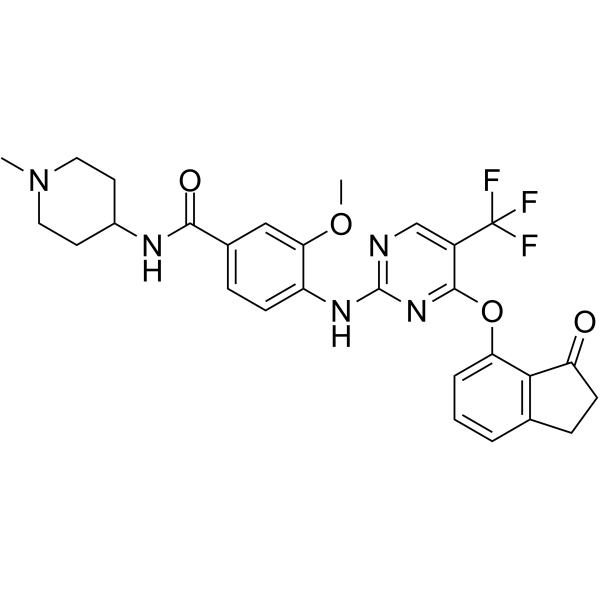
  • HY-145388
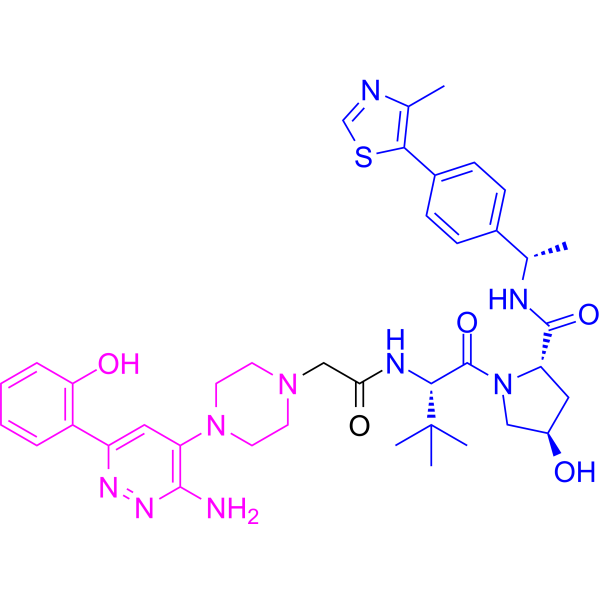
    AU-15330
    Maximum Cited Publications
    11 Publications Verification

    PROTACs SWI/SNF Complex Cancer
    AU-15330 is a proteolysis-targeting chimera (PROTAC) degrader of the SWI/SNF ATPase subunits, SMARCA2 and SMARCA4. AU-15330 induces potent inhibition of tumour growth in xenograft models of prostate cancer and synergizes with the AR antagonist enzalutamide. AU-15330 induces disease remission in castration-resistant prostate cancer (CRPC) models without toxicity .
    AU-15330
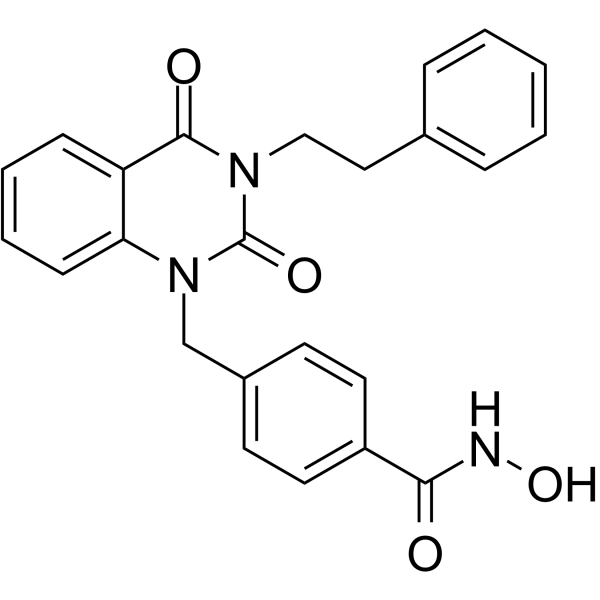
  • HY-139156
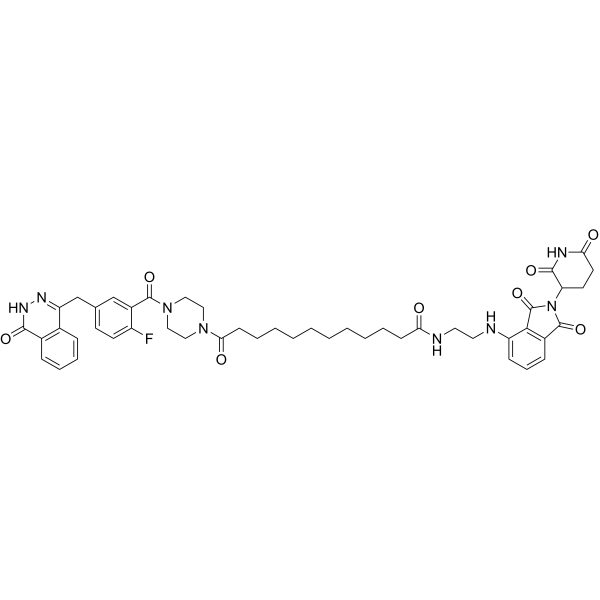
    SK-575
    5 Publications Verification

    PROTACs PARP Cancer
    SK-575 is a highly potent and specific proteolysis-targeting chimera (PROTAC) degrader of PARP1, with an IC50 of 2.30 nM. SK-575 potently inhibits the growth of cancer cells bearing BRCA1/2 mutations .
    SK-575
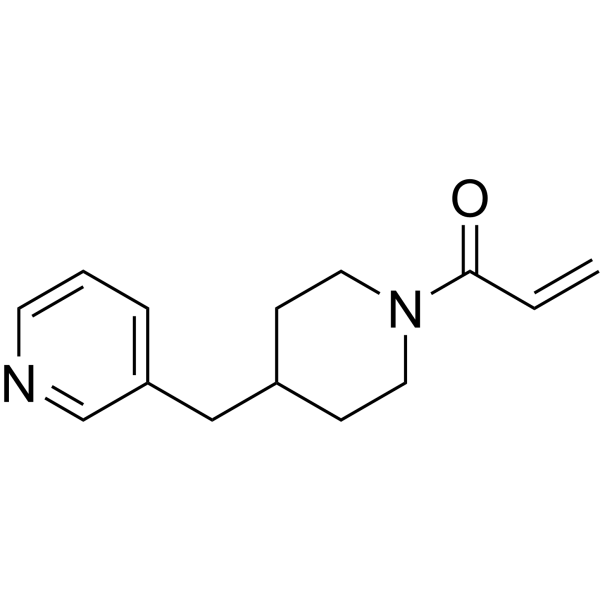
  • HY-125877
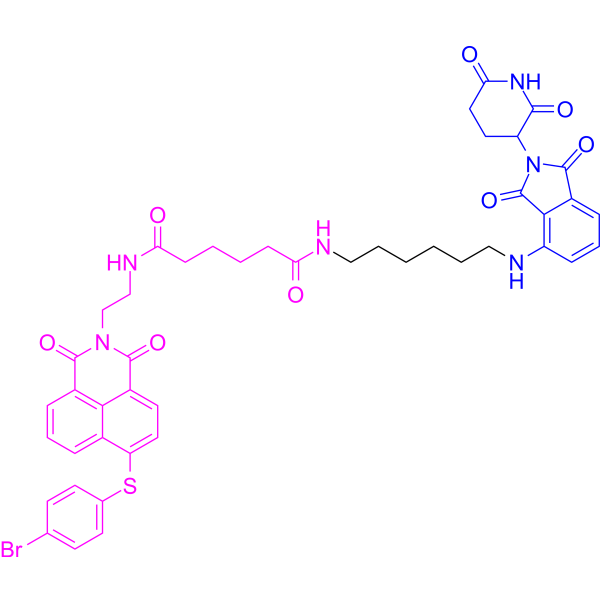
    PROTAC Mcl1 degrader-1
    1 Publications Verification

    PROTACs Bcl-2 Family Cancer
    PROTAC Mcl1 degrader-1 (compound C3), a proteolysis targeting chimera (PROTAC) based on Cereblon ligand, is a potently and selectively Mcl-1 (Bcl-2 family member) inhibitor with an IC50 of 0.78 μM. PROTAC Mcl1 degrader-1 inhibits Bcl-2 with an IC50 of 0.54 μM .
    PROTAC Mcl1 degrader-1
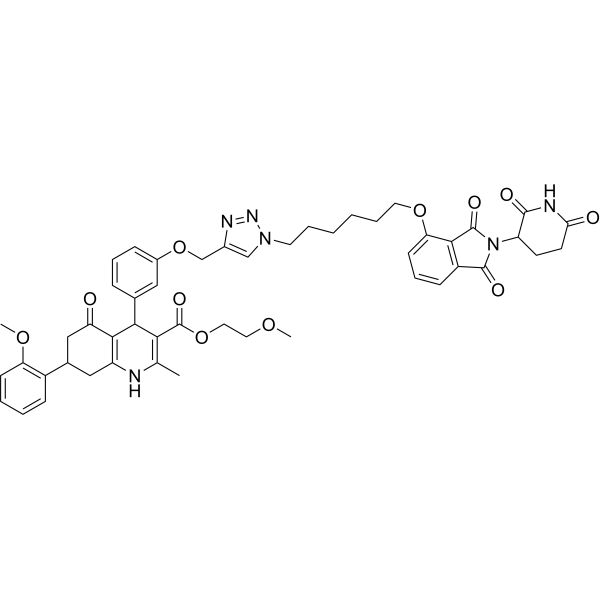
  • HY-124625

    FAK Target Protein Ligand-Linker Conjugates Infection Cancer
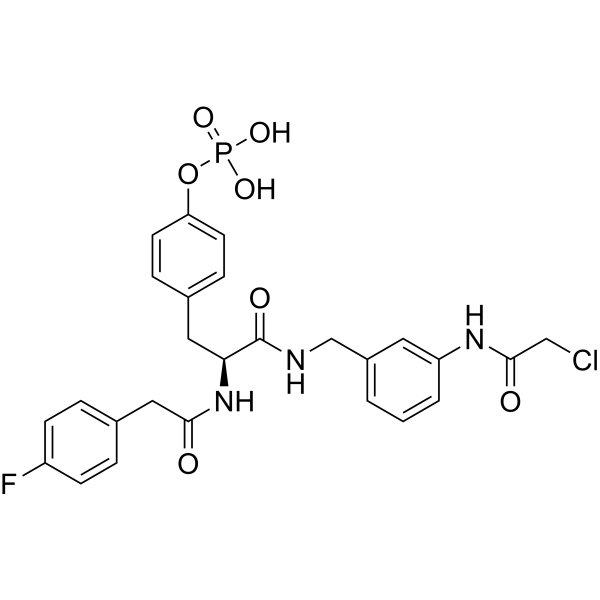
    BI-4464 is a highly selective, ATP competitive PTK2/FAK protein kinase inhibitor with an IC50 value of 17 nM. BI-4464 is a FAK (HY-43760) ligand and linker conjugate. BI-4464 can be used to construct proteolysis targeting chimeras (PROTACs), such as PROTAC FAK degrader 4 (HY-178467). PROTAC FAK degrader 4 is a highly potent and selective FAK PROTAC degrader .
    BI-4464
  • HY-148381

    Epigenetic Reader Domain PROTACs Apoptosis Cancer
    A947 is a potent and selective SMARCA2 proteolysis-targeting chimera molecule (PROTAC). A947 also is a potent and moderately selective SMARCA2 degrader. A947 has binding affinity to the SMARCA2 bromodomain with a Kd value of 93 nM. A947 can be used for the research of cancer .
    A947
  • HY-126147

    HDAC Cancer
    J22352 is a PROTAC (proteolysis-targeting chimeras)-like and highly selective HDAC6 inhibitor with an IC50 value of 4.7 nM. J22352 promotes HDAC6 degradation and induces anticancer effects by inhibiting autophagy and eliciting the antitumor immune response in glioblastoma cancers, and leading to the restoration of host antitumor activity by reducing the immunosuppressive activity of PD-L1 .
    J22352
  • HY-111758
    PROTAC B-Raf degrader 1
    1 Publications Verification

    PROTACs Raf Cancer
    PROTAC B-Raf degrader 1 (compound 2) is a proteolysis targeting chimera (PROTAC) for the degradation of B-Raf based on Cereblon ligand with anti-cancer activity .
    PROTAC B-Raf degrader 1
  • HY-156395
    MN551
    1 Publications Verification

    E1/E2/E3 Enzyme Cancer
    MN551 is a potent inhibitor of cysteine-directed electrophilic covalent that plays important roles in the biology of SOCS2 and its CRL5 complex, and as E3 ligase handles in proteolysis targeting chimera (PROTACs) to induce targeted protein degradation .
    MN551
  • HY-P10446

    Epigenetic Reader Domain PROTACs Cancer
    TAT-PiET-PROTAC is a proteolysis-targeting chimera (PROTAC)-modified TAT-PiET (HY-P10445), which is a cell-penetrating peptide targeting the extra-terminal (ET) domain of BRD4. TAT-PiET-PROTAC can reduce BRD4 and JMJD6 levels and inhibit cell proliferation. TAT-PiET-PROTAC also resists the endocrine resistance of ERα-positive breast cancer cells. TAT-PiET-PROTAC can be used for the research of cancer, such as breast cancer .
    TAT-PiET-PROTAC
  • HY-145819

    HDAC PROTACs Cancer
    JPS036 is a benzamide-based Von Hippel-Lindau (VHL) E3-ligase proteolysis targeting chimeras (PROTAC). JPS036 degrades class I histone deacetylase (HDAC). JPS036 is potent HDAC1/2 degrader correlated with greater total differentially expressed genes and enhanced apoptosis in HCT116 cells .
    JPS036
  • HY-178161

    HDAC Apoptosis Cancer
    HDAC degrader-2 is a selective HDAC degrader with a DC50 values of 2.55 μM against HDAC1. HDAC degrader-2 effectively induces the degradation of HDAC1 and HDAC2, but has no significant effect on the degradation of HDAC3, 4, 6 and 8. HDAC degrader-2 exerts potent antiproliferative effects against MM.1S and MCF-7 cells. HDAC degrader-2 induces apoptosis in myeloma cells. HDAC degrader-2 can be used for the study of myeloma .
    HDAC degrader-2
  • HY-145815A

    PROTACs HDAC Apoptosis Cancer
    JPS014 TFA is a benzamide-based Von Hippel-Lindau (VHL) E3-ligase proteolysis targeting chimeras (PROTAC). JPS014 TFA degrades class I histone deacetylase (HDAC). JPS014 TFA is potent HDAC1/2 degrader correlated with greater total differentially expressed genes and enhanced apoptosis in HCT116 cells .
    JPS014 TFA
  • HY-155356

    PROTACs Ras Cancer
    YN14 is a KRASG12C proteolysis targeting chimera (PROTAC). YN14 is highly potent and selective KRASG12C degrader and induces a stable KRASG12C: YN14: VHL ternary complex with low binding free energy (ΔG). YN14 has antiproliferative effects and significantly inhibits KRASG12C-mutant cancer cell growth. YN14 leads to tumor regression with tumor growth inhibition (TGI%) rates more than 100 % in the MIA PaCa-2 xenograft model.
    YN14
  • HY-163445

    NAMPT Cancer
    NAMPT activator-6 is a NAMPT activator, a regulatory molecule for the optical control system of NAMPT and NAD+. NAMPT activator-6 can be used to design efficient photoswitchable proteolysis-targeting chimeras (PS-PROTACs) to achieve up-down reversible regulation of NAMPT and NAD+ in a light-dependent manner and reduce the toxicity associated with inhibitor-based PS-PROTACs. PS-PROTAC can be used to achieve antitumor activity, NAMPT, and NAD+ modulation in vivo via optical manipulation .
    NAMPT activator-6
  • HY-163019

    Target Protein Ligand-Linker Conjugates Epigenetic Reader Domain Metabolic Disease
    EN884 is a BRD4 degrader via a SKP1- and proteasome-dependent manner. EN884 can be used in synthetic proteolysis targeting chimeras (PROTACs) .
    EN884
  • HY-176261

    PROTACs Cancer
    DDD2 is a selective and potent VHL-mediated PROTAC NUDT5 degrader. DDD2 induces robust NUDT5 degradation. DDD2 can be used in cancer research, such as lymphocytic leukemia and osteosarcoma . (Structure Note: Pink: NUDT5 inhibitor (HY-176262); Blue: E3 (HY-125845); Black: linker (HY-W001958))
    DDD2
  • HY-145818

    HDAC PROTACs Cancer
    JPS035 is a benzamide-based Von Hippel-Lindau (VHL) E3-ligase proteolysis targeting chimeras (PROTAC). JPS035 degrades class I histone deacetylase (HDAC). JPS035 is potent HDAC1/2 degrader correlated with greater total differentially expressed genes and enhanced apoptosis in HCT116 cells .
    JPS035
  • HY-145815

    HDAC PROTACs Cancer
    JPS014 is a benzamide-based Von Hippel-Lindau (VHL) E3-ligase proteolysis targeting chimeras (PROTAC). JPS014 degrades class I histone deacetylase (HDAC). JPS014 is potent HDAC1/2 degrader correlated with greater total differentially expressed genes and enhanced apoptosis in HCT116 cells .
    JPS014
  • HY-156814

    Hedgehog Cancer
    HPP-9 is a Proteolysis-Targeting Chimeras PROTACs based on Hedgehog Pathway Inhibitor-1 (HPI-1), with the pIC50 of 6.71, that can degrade BET bromodomains. HPP-9 has antitumor activity [1[.
    HPP-9
  • HY-162106

    Ferroptosis PROTACs Glutathione Peroxidase Cancer
    PROTAC GPX4 degrader-2 (compound 18a) is a proteolysis targeting chimeras (PROTACs) that can degrade glutathione peroxidase 4 (GPX4), with the DC50, 48h value of 1.68 μM. PROTAC GPX4 degrader-2 induces the accumulation of lipid peroxides and mitochondrial depolarization, subsequently triggering ferroptosis. PROTAC GPX4 degrader-2 has anti-proliferative effect .
    PROTAC GPX4 degrader-2
  • HY-175179

    Epigenetic Reader Domain E1/E2/E3 Enzyme Cancer
    LO-3-61, a JQ-1 (HY-13030) analog bearing a truncated fumaramide handle, is a PROTAC (proteolysis-targeting chimeras)-like BRD4 degrader. LO-3-61 degrades both the long and short isoforms of BRD4 CUL4DcAr16-dependently in cells. LO-3-61 shows selectivity for BRD3 and BRD4 degradation in MDA-MB-231 cells .
    LO-3-61
  • HY-155356A

    PROTACs Cancer
    YN14 mixture of diastereomers is the diastereomers of YN14 (HY-155356). YN14 is a KRASG12C proteolysis targeting chimera (PROTAC). YN14 is highly potent and selective KRASG12C degrader and induces a stable KRASG12C: YN14: VHL ternary complex with low binding free energy (ΔG). YN14 has antiproliferative effects and significantly inhibits KRASG12C-mutant cancer cell growth .
    YN14 (mixture of diastereomers)
  • HY-149328

    PROTACs Cancer
    phoBET1 is a photocaged-PROTAC. phoBET1 can achieve BRD4 degradation and effectively suppress tumor growth .
    phoBET1
  • HY-162241

    PROTACs Others
    SJH1-62B is a proteolysis targeting chimera (PROTAC) that can target the androgen receptor (AR) .
    SJH1-62B
  • HY-173378

    Ligands for E3 Ligase Cancer
    E3 ligase Ligand 59 (Compound 20e) is the E3 ubiquitin ligase ligand of FDU73 (HY-173125). E3 ligase Ligand 59 can be used to synthesize PROTACs .
    E3 ligase Ligand 59
  • HY-W947273

    Ligands for E3 Ligase Cancer
    CRBN ligand-898 is a CRBN ligand with a Kd of 216 nM. CRBN ligand-898 binds to CRBN, and when incorporated into proteolysis targeting chimeras (PROTACs), mediates degradation of intended target proteins. CRBN ligand-898 does not induce degradation of IMiD-associated neosubstrates Ikaros (IKZF1) and Aiolos (IKZF3). CRBN ligand-898 can be used to synthesize PROTACs .
    CRBN ligand-898
  • HY-130646

    PROTACs PARP Cancer
    iVeliparib-AP6 is a proteolysis-targeting chimera (PROTAC) molecule designed based on Veliparib (HY-10129), which targets PARP1/2. The DC50s of iVeliparib-AP6 for inducing the degradation of PARP1 and PARP2 are 36 nM and 63 nM, respectively, and its IC50s are 69 nM and 21 nM, respectively. iVeliparib-AP6 contains a Veliparib-based PARP inhibitor warhead linked to a CRBN E3 ligase binder; it uses Thalidomide (HY-14658) as a ligand to recruit CRBN E3 ubiquitin ligase and exerts the PARP2 degradation mechanism .
    iVeliparib-AP6

Inquiry Online

Your information is safe with us. * Required Fields.

Salutation


Country or Region *

Applicant Name *


Organization Name *

Department *


Email Address *


Product Name *

Cat. No.


Requested quantity *

Phone Number *


Remarks

Inquiry Online

Inquiry Information

Product Name:
Cat. No.:
Quantity:
MCE Japan Authorized Agent:

