16 Results for "

Pt(IV)

" in MedChemExpress (MCE) Product Catalog:
Products (16)

16 Results for "Pt(IV)" in MCE Product Catalog:

Cat. No.: HY-W017831
CAS No.: 25021-08-3
Research Areas:  

Others

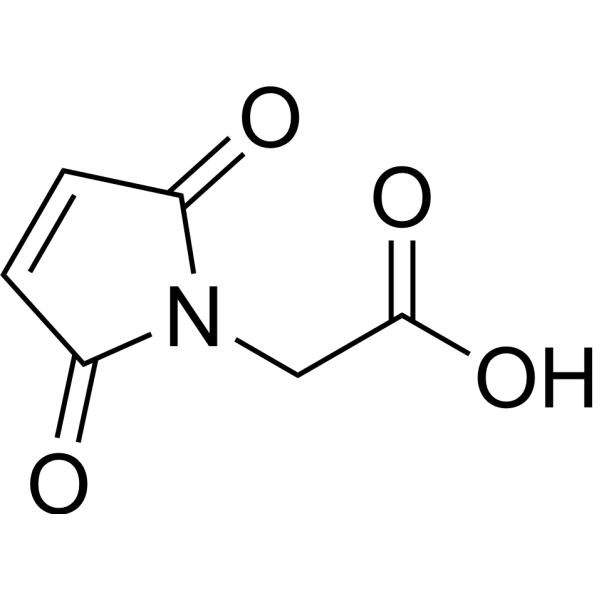
2-Maleimido acetic acid is a maleimide-containing carboxylic acid ligand used to prepare Pt(IV) complexes capable of undergoing Diels-Alder reaction with furan derivatives for drug targeting and delivery applications .
loading...
    loading...
Cat. No.: HY-151883
CAS No.: 2923433-95-6
Purity:  98.28%
Target:  

Apoptosis MDM-2/p53

Research Areas:  

Cancer

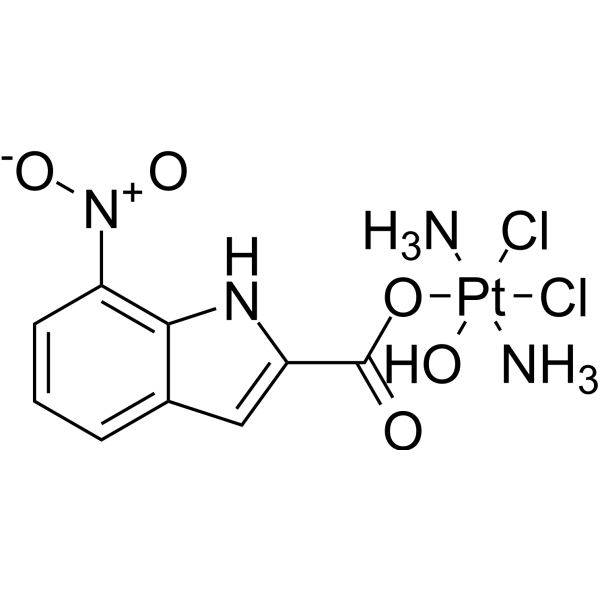
APE1-IN-2 (compound AP1) is a Pt(IV) proagent, targeting a critical BER protein, apurinic/apyrimidinic endonuclease 1 (APE1). APE1-IN-2 shows anticancer activity. APE1-IN-2 induces intracellular accumulation of platinum and activates DNA damage response and apoptosis signals .
loading...
    loading...
Cat. No.: HY-179392
Research Areas:  

Cancer

Sunitinib-platinum(IV) prodrug-1 (Complex A) is a Pt(IV) prodrug based on Cisplatin (HY-17394), and this design aims to enable Pt(IV) to be reduced to active Pt(II) under intracellular reducing conditions, while simultaneously releasing a derivative of Sunitinib (HY-10255A) with tyrosine kinase inhibitor (TKI) activity. Sunitinib-platinum(IV) prodrug-1 exhibits excellent cytotoxicity against renal cell carcinoma (RCC), causing DNA crosslinking and apoptosis. Sunitinib-platinum(IV) prodrug-1 inhibits the VEGFR/PDGFR signaling pathway, suppressing tumor growth and angiogenesis. Sunitinib-platinum(IV) prodrug-1 can be used for research on renal cell carcinoma .
loading...
    loading...
Cat. No.: HY-W004588
CAS No.: 72914-19-3
Research Areas:  

Others Cancer

tBu2bpy is a bidentate nitrogen ligand that coordinates with Pt (II) and Pt (IV) to form functional complexes. The tBu2bpy Pt (II) bis-crown ether complex selectively recognizes Mg 2+ and Zn 2+; both ions significantly enhance the fluorescence of the complex and cause a blue shift of the absorption peak. Its six-coordinate Pt (IV) complex [Pt (X)2Me2 ( tBu2bpy)] inhibits the proliferation of tumor cells. tBu2bpy Pt (IV) complexes bind to DNA through multiple interactions including partial intercalation, groove binding, and electrostatic interaction, and can competitively displace ethidium bromide and covalently bind to purine nucleotides. tBu2bpy can be used in relevant research in fields such as organic synthesis .
loading...
    loading...
Cat. No.: HY-W778423
CAS No.: 111321-67-6
Synonyms: Dihydroxy Oxaliplatin-Pt(IV)
Target:  

Drug Intermediate

Research Areas:  

Cancer

[Pt(DACH)(OH)2(ox)] is a Pt(IV) derivative of Oxaliplatin (HY-17371) with two axial hydroxido ligands, used as a precursor for synthesizing Pt(IV)-HDAC inhibitor prodrugs. [Pt(DACH)(OH)2(ox)] exerts cytotoxic activity against human cancer cells and accumulates in cancer cells for nuclear internalization and nuclear DNA platination. [Pt(DACH)(OH)2(ox)] can be used for the research of lung carcinoma, breast carcinoma, pancreatic carcinoma, colon carcinoma .
loading...
    loading...
Cat. No.: HY-P10782
Research Areas:  

Cancer

Pt(IV)-M13 is a BBB-penetrable Platinum (IV) prodrug-perfluoroaryl macrocyclic peptide conjugate. Pt(IV)-M13 is cytotoxic to glioma stem cells and increases uptake of platinum in the brain. Pt(IV)-M13 can be used in the study of glioblastoma .
loading...
    loading...
Cat. No.: HY-173023
IDOi-Pt(IV) prodrug-1 (Compound 10) is an IDOi-Pt(IV) prodrug. IDOi-Pt(IV) prodrug-1 inhibits IDO expression. IDOi-Pt(IV) prodrug-1 induces apoptosis, decreases the mitochondrial membrane potential, inhibits tumor cell migration and invasion. IDOi-Pt(IV) prodrug-1 induces reactive oxygen species-mediated endoplasmic reticulum stress and secretion of damage-associated molecular patterns (DAMPs), thereby presenting immunogenic cell death (ICD) effects. IDOi-Pt(IV) prodrug-1 has high-efficiency and low-toxicity antitumor effects compared to Cisplatin (HY-17394) .
loading...
    loading...
Cat. No.: HY-178152
RuOPt is a photoactivatable Ru(II)-Pt(IV) complex with reduced dark toxicity. Under irradiation, RuOPt induces apoptosis, generates ROS, and inhibits tumor spheroid growth, demonstrating comparable phototoxicity .
loading...
    loading...
Cat. No.: HY-158156
Target:  

NF-κB Apoptosis

Research Areas:  

Cancer

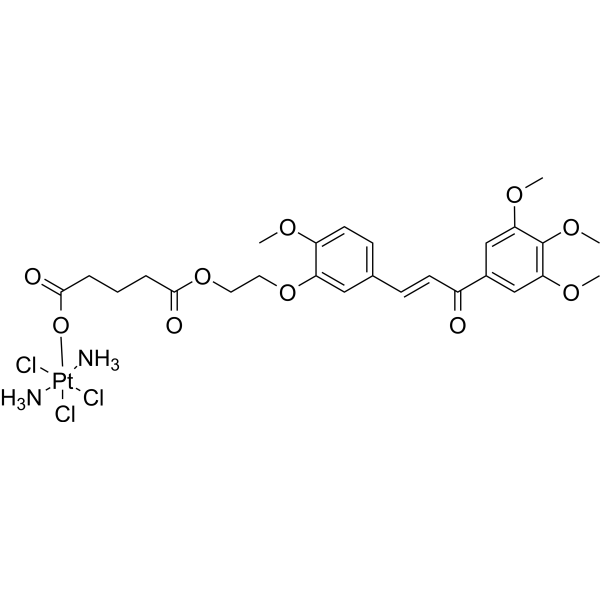
NF-κB-IN-16 (compound 9) is a complex (Pt(IV) complex) of NF-κB inhibitor and Cisplatin (HY-17394), which has high efficacy and low toxicity in anti-tumor activity. active. NF-κB-IN-16 can cause DNA damage, induce mitochondrial dysfunction, produce reactive oxygen species, and induce apoptosis through the mitochondrial pathway and endoplasmic reticulum stress. NF-κB-IN-16 potently inhibits the NF-κB/MAPK signaling pathway and disrupts PI3K/AKT signaling. NF-κB-IN-16 also exhibits excellent in vivo antitumor efficiency and low toxicity in A549 or A549/CDDP xenograft models .
loading...
    loading...
Cat. No.: HY-162092
Target:  

NF-κB IKK

Research Areas:  

Cancer

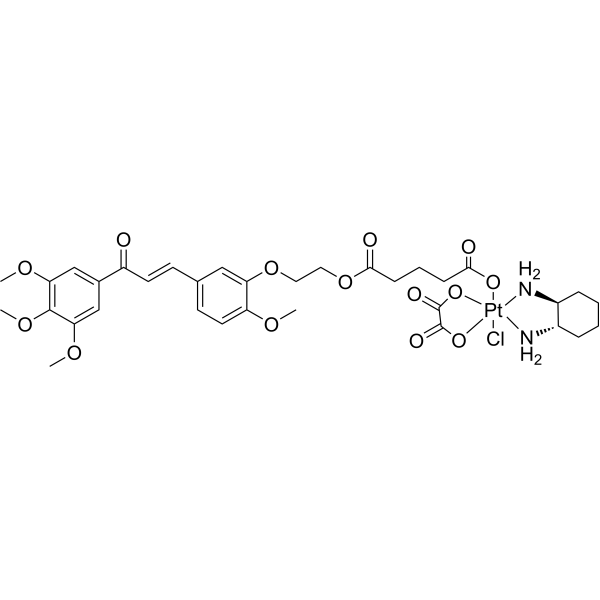
Multi-target Pt (IV), an antitumor agent, suppresses the IKKβ phosphorylation, IκBα phosphorylation and NF-κB p65 phosphorylation and nuclear translocation, leading to blocked the NF-kB signal pathway .
loading...
    loading...
Cat. No.: HY-P11218
Target:  

Peptides

Research Areas:  

Cancer

Lipo-PtIV-R8K is a nuclear targeting peptide containing R8K. Lipo-PtIV-R8K is a lipid PtIV prodrug amphiphilic molecule that can self assemble to form nanoparticles. Lipo-PtIV-R8K can be used in the research of cancer such as breast cancer .
loading...
    loading...
Cat. No.: HY-178962
Target:  

Drug Metabolite

Research Areas:  

Cancer

Antitumor agent-207 (compound 10K) is a Pt(IV)-NO prodrug with high lipid solubility, good stability, and excellent tumor targeted release ability. Antitumor agent-207 has significant anti proliferative activity in various cells such as TE-1 (IC50 = 1.79 μM), TE-10 (IC50 = 1.95 μM), KYSE-30 IC50 = 5.99 μM), KYSE-520 (IC50 = 5.53 μM) cells. Antitumor agent-207 can significantly enhance intracellular Pt accumulation and DNA platformization levels, and effectively release NO. Antitumor agent-207 can be used for research on cancers such as esophageal cancer .
loading...
    loading...
Cat. No.: HY-D3436
Target:  

Fluorescent Dye

Research Areas:  

Cancer

Pt-Luc is a bioluminescent probe used for real-time, non-invasive monitoring of Pt (IV) prodrug reduction in living cells and animal models. The detection mechanism of Pt-Luc relies on the intracellular reduction mediated by active cysteine residues in proteins. Pt-Luc can penetrate the membrane of living cells; after entering cells, active cysteine thiolates in high-molecular-weight protein components reduce the Pt (IV) complex, thereby cleaving the caged aminoluciferin substrate. The released free aminoluciferin is then oxidized by luciferase in the presence of ATP to generate a bioluminescent signal, whose intensity is directly correlated with the reduction degree of Pt (IV) .
loading...
    loading...
Cat. No.: HY-184446
CDC25A/NF-κB-IN-1 is an effective dual-target inhibitor of CDC25A and NF-κB, and is a prodrug of Pt(IV). CDC25A/NF-κB-IN-1 has anticancer activity and low cytotoxicity to normal cells. CDC25A/NF-κB-IN-1 can trigger a variety of anticancer mechanisms, including S phase cell cycle arrest, mitochondrial endogenous apoptosis, endoplasmic reticulum stress, autophagy-dependent ferroptosis. CDC25A/NF-κB-IN-1 has good safety and can be used for ovarian cancer research .
loading...
    loading...
Cat. No.: HY-182360
Cytisine-Platinum(IV) Prodrug-1 is a Pt(IV) prodrug incorporating the natural compound Cytisine (HY-N0175) with antiproliferative activity against tumor cells. Cytisine-Platinum(IV) Prodrug-1 promotes calcium transfer across the IP3R1-GRP75-VDAC1 axis to drive mitochondrial calcium overload. Cytisine-Platinum(IV) Prodrug-1 initiates unfolded protein response via PERK, eIF2α, ATF4, and CHOP to modulate Bcl-2 and Bax, triggering apoptosis. Cytisine-Platinum(IV) Prodrug-1 induces mitochondrial dysfunction, ROS production, reduced ATP synthesis, DNA damage, and S-phase cell cycle arrest. Cytisine-Platinum(IV) Prodrug-1 activates the cGAS-STING pathway, reduces PD-L1 expression, drives immunogenic cell death. Cytisine-Platinum(IV) Prodrug-1 exhibits high physiological stability, efficient cellular accumulation, and enhanced platinum-DNA binding, and inhibits tumor growth in mouse models with reduced systemic toxicity. Cytisine-Platinum(IV) Prodrug-1 can be used for the research of lung cancer .
loading...
    loading...
Cat. No.: HY-183544
Platinum (IV) Prodrug-1 is a Pt (IV) prodrug and selective TrxR1 inhibitor. Platinum (IV) Prodrug-1 induces ferroptosis (Ferroptosis) by depleting glutathione, accumulating intracellular lipid peroxides, and inactivating Glutathione peroxidase 4. Platinum (IV) Prodrug-1 triggers endoplasmic reticulum stress and immunogenic cell death via excessive accumulation of intracellular ROS. Platinum (IV) Prodrug-1 exhibits anticancer activity against both Cisplatin (HY-17394)-sensitive and Cisplatin-resistant triple-negative breast cancer cells. Platinum (IV) Prodrug-1 can be used for the research of triple-negative breast cancer .
loading...
    loading...
  • 1