1. Search Result
Search Result
Results for "

Succinate

" in MedChemExpress (MCE) Product Catalog:

259

Inhibitors & Agonists

2

Fluorescent Dye

17

Biochemical Assay Reagents

1

Inhibitory Antibodies

35

Natural
Products

2

Recombinant Proteins

22

Isotope-Labeled Compounds

4

Antibodies

2

Click Chemistry

3

Oligonucleotides

Cat. No. Product Name Target Research Areas Chemical Structure
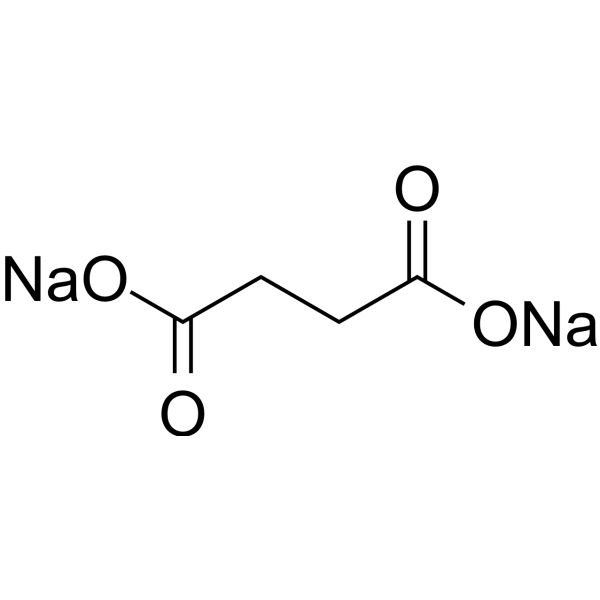
  • HY-W015410
    Disodium succinate
    Maximum Cited Publications
    10 Publications Verification

    Endogenous Metabolite Inflammation/Immunology
    Disodium succinate is an anti-anxiety agent with oral activity. Disodium succinate is the salt form of Succinic acid. Disodium succinate is an intermediate product of the tricarboxylic acid cycle. Disodium succinate is an important platform chemical. Disodium succinate can be used as surfactant, additive, ion chelating agent, flavoring agent and other applications in chemical, pharmaceutical and food fields .
    Disodium succinate
  • HY-B1060
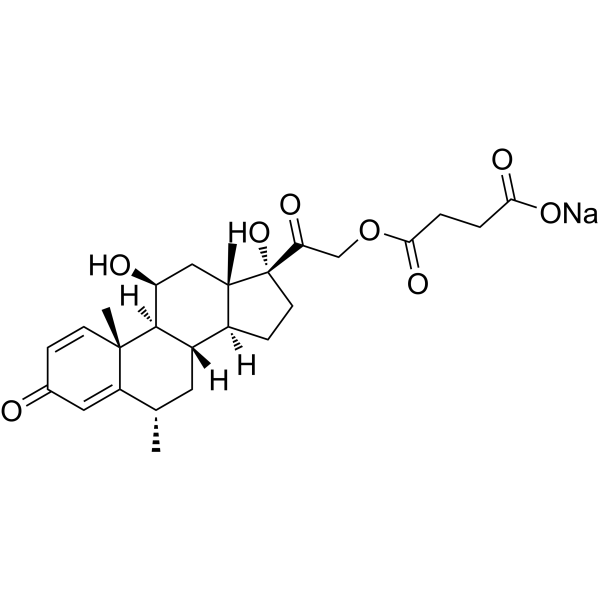
    Methylprednisolone succinate sodium
    2 Publications Verification

    Methylprednisolone hydrogen Succinate sodium

    Glucocorticoid Receptor Infection Neurological Disease Inflammation/Immunology Cancer
    Methylprednisolone succinate (Methylprednisolone hydrogen succinate) sodium is a prodrug of Methylprednisolone (HY-B0260) and glucocorticoid with immunosuppressant and anti-inflammatory activity. Methylprednisolone succinate sodium binds cytosolic glucocorticoid receptors, translocates to nuclei, and modulates target gene transcription. Methylprednisolone succinate sodium alters Bax, Bcl-2, occludin, and ZO-1 expression; attenuates TLR4/NF-κB signaling; suppresses proinflammatory cytokine production and immune cell activation. Methylprednisolone succinate sodium can be used for the research of intracranial haemorrhage, rheumatoid arthritis, multiple sclerosis, preterminal cancer, inflammatory conditions, shock, immediate-type hypersensitivity, acute myocardial ischemia, hypoxic heart muscle damage, and traumatic spinal cord injury .
    Methylprednisolone succinate sodium
  • HY-Y0836
    Diethyl succinate
    3 Publications Verification

    Diethyl Butanedioate

    Environmental Pollutants Biochemical Assay Reagents Reactive Oxygen Species (ROS) Metabolic Disease Inflammation/Immunology
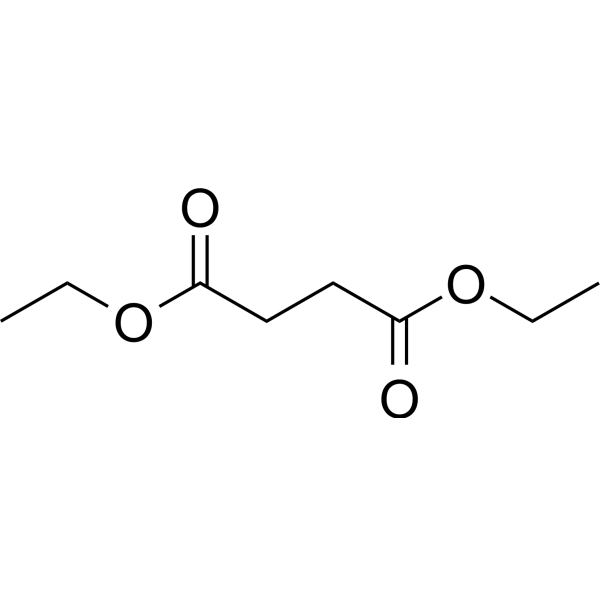
    Diethyl succinate (Diethyl Butanedioate) can be utilized at physiological pH, allowing it to penetrate biological membranes and integrate into the cells of tissue cultures, where it is metabolized via the tricarboxylic acid cycle. Diethyl succinate modulates the polarization and activation of microglial cells by reducing mitochondrial fission and the levels of reactive oxygen species (ROS), thereby exerting an inflammatory protective effect in primary microglial cells. Furthermore, Diethyl succinate is non-toxic and can be used in flavorings and seasonings .
    Diethyl succinate
  • HY-Y0808
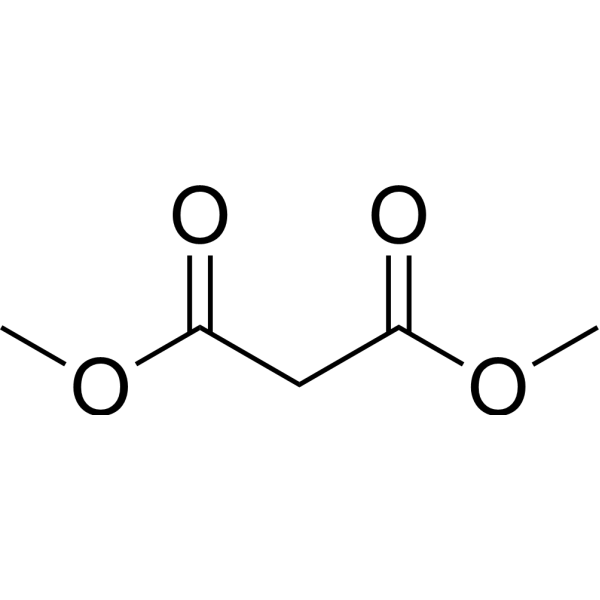
    Dimethyl succinate
    1 Publications Verification

    Environmental Pollutants Apoptosis Neurological Disease Metabolic Disease
    Dimethyl succinate is an orally active cell permeable succinate analogue. Dimethyl succinate can disrupt the TCA cycle by elevating intracellular succinate levels, leading to reduced protein synthesis and impairs myogenic differentiation. Dimethyl succinate can induce apoptosis. Dimethyl succinate can decrease maximal cellular respiration and reserve capacity. Dimethyl succinate can rescue synapse loss in AD. Dimethyl succinate can be used for the researches of metabolic and neurological disease [1][2].
    Dimethyl succinate
  • HY-131553
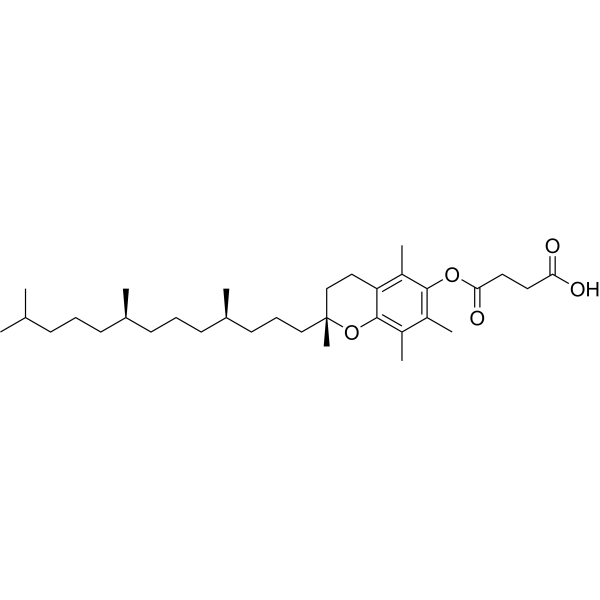
    D-α-Tocopherol Succinate
    3 Publications Verification

    Vitamin E Succinate

    Apoptosis Cancer
    D-α-Tocopherol Succinate (Vitamin E succinate) is an antioxidant tocopherol and a salt form of vitamin E. D-α-Tocopherol Succinate inhibits Cisplatin (HY-17394)-induced cytotoxicity. D-α-Tocopherol Succinate can be used for the research of cancer .
    D-α-Tocopherol Succinate
  • HY-12694
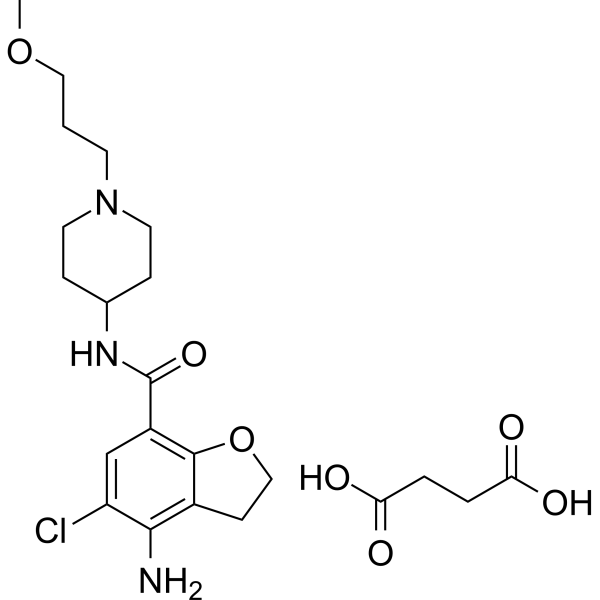
    Prucalopride succinate
    4 Publications Verification

    R-108512

    5-HT Receptor Apoptosis Autophagy Metabolic Disease Cancer
    Prucalopride succinate is an orally active, selective and specific 5-HT 4 receptor agonist (high affinity), with pKis of 8.6 and 8.1 for human 5-HT4a/4b receptors, respectively. Prucalopride succinate improves intestinal motility by promoting regeneration of the intestinal nervous system in rats. Prucalopride succinate also shows anticancer activity by blocking of the PI3K/AKT/mTor signaling pathway. Prucalopride succinate can be used in studies of chronic constipation, pseudo-intestinal obstruction and cancer .
    Prucalopride succinate
  • HY-B1900
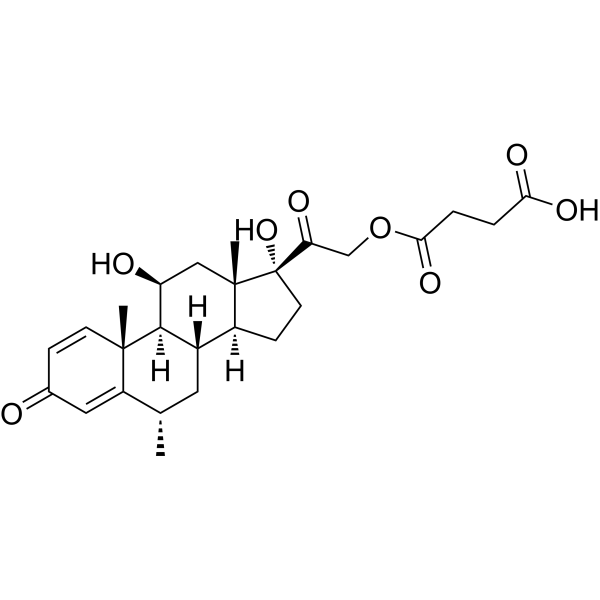
    Methylprednisolone succinate
    2 Publications Verification

    Methylprednisolone hydrogen Succinate

    Glucocorticoid Receptor Bacterial Toll-like Receptor (TLR) NF-κB Infection Neurological Disease Metabolic Disease Inflammation/Immunology Cancer
    Methylprednisolone succinate (Methylprednisolone hydrogen succinate) is a prodrug of Methylprednisolone (HY-B0260) and glucocorticoid with immunosuppressant and anti-inflammatory activity. Methylprednisolone succinate binds cytosolic glucocorticoid receptors, translocates to nuclei, and modulates target gene transcription. Methylprednisolone succinate alters Bax, Bcl-2, occludin, and ZO-1 expression; attenuates TLR4/NF-κB signaling; suppresses proinflammatory cytokine production and immune cell activation. Methylprednisolone succinate can be used for the research of intracranial haemorrhage, rheumatoid arthritis, multiple sclerosis, preterminal cancer, inflammatory conditions, shock, immediate-type hypersensitivity, acute myocardial ischemia, hypoxic heart muscle damage, and traumatic spinal cord injury .
    Methylprednisolone succinate
  • HY-17503A
    Metoprolol succinate
    10+ Cited Publications

    Adrenergic Receptor Apoptosis Cardiovascular Disease Endocrinology Cancer
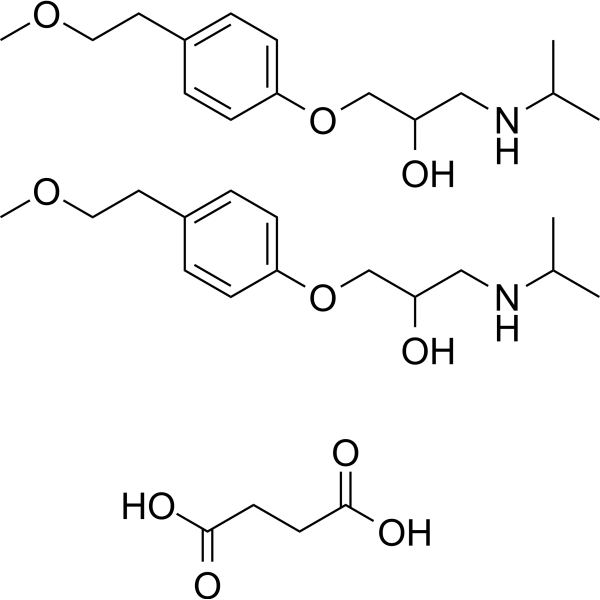
    Metoprolol succinate is an orally active, selective β1-adrenoceptor antagonist. Metoprolol succinate shows anti-inflammation, antitumor and anti-angiogenic properties .
    Metoprolol succinate
  • HY-B0121
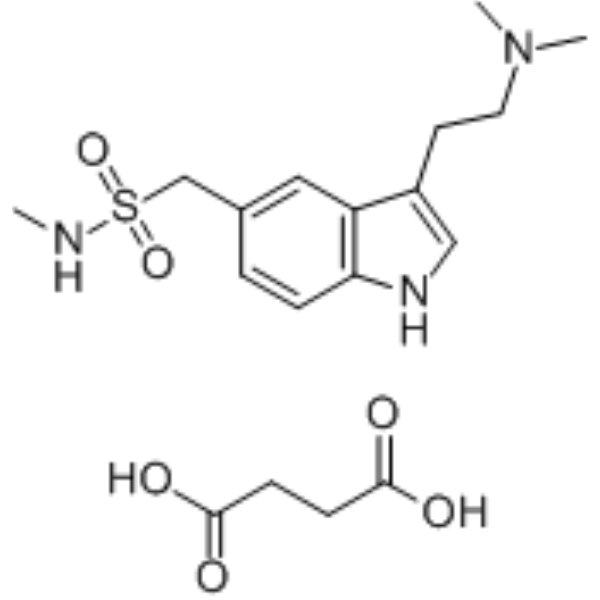
    Sumatriptan succinate
    5+ Cited Publications

    GR 43175 Succinate

    5-HT Receptor Neurological Disease
    Sumatriptan succinate (GR 43175) is an orally active 5-HT1 receptor agonist with IC50s of 7.3 nm, 9.3nm and 17.8 nm for 5-HT1D, 5-HT1B and 5-HT1F receptors, respectively. Sumatriptan succinate can be used for migraine headache research .
    Sumatriptan succinate
  • HY-114362

    TPGS-750-M

    Biochemical Assay Reagents Others
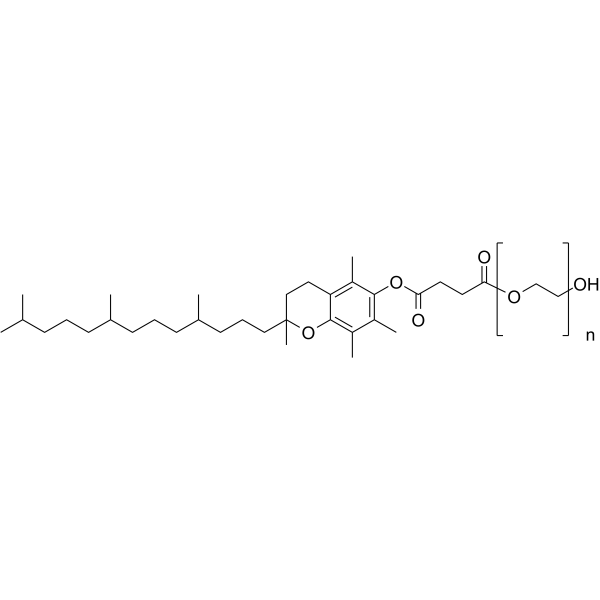
    DL-alpha-Tocopherol methoxypolyethylene glycol succinate (TPGS-750-M) is an amphiphile, acts as a surfactant. DL-alpha-Tocopherol methoxypolyethylene glycol succinate has a positive effect on Suzuki-Miyaura cross coupling. DL-alpha-Tocopherol methoxypolyethylene glycol succinate increases the styrene titer. DL-alpha-Tocopherol methoxypolyethylene glycol succinate is used in the stability test of NPYM-modified drugs in biological fluids .
    DL-alpha-Tocopherol methoxypolyethylene glycol succinate
  • HY-N7114A
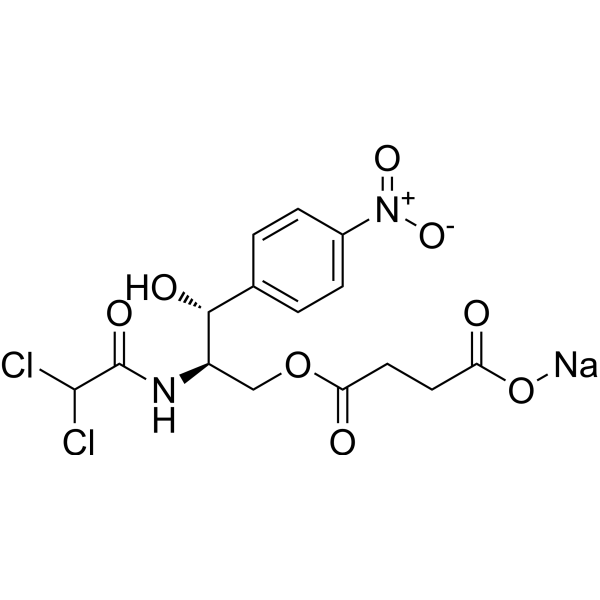
    Chloramphenicol succinate sodium
    3 Publications Verification

    Bacterial P2Y Receptor Succinate Dehydrogenase Drug Intermediate Infection Inflammation/Immunology
    Chloramphenicol succinate sodium is a prodrug of Chloramphenicol (HY-B0239), acting as a P2Y14R inhibitor with an IC50 of 1.585 nM. Chloramphenicol succinate sodium serves as a competitive substrate and inhibitor of succinate dehydrogenase (SDH), which may account for its toxicity. Chloramphenicol succinate sodium exerts a significant inhibitory effect on colitis. Chloramphenicol succinate sodium can be used in research related to myelosuppression, gray baby syndrome, aplastic anemia, bacterial meningitis and inflammatory bowel disease .
    Chloramphenicol succinate sodium
  • HY-150205

    Succinate Receptor 1 Inflammation/Immunology
    Succinate/succinate receptor antagonist 1 is an antagonist of the succinate/succinate receptor. Succinate/succinate receptor antagonist 1 can inhibit the activation of succinate receptor 1 (SUCNR1). Succinate/succinate receptor antagonist 1 can block succinate signaling. Succinate/succinate receptor antagonist 1 can be used for the study of periodontal disease .
    Succinate/succinate receptor antagonist 1
  • HY-111529A
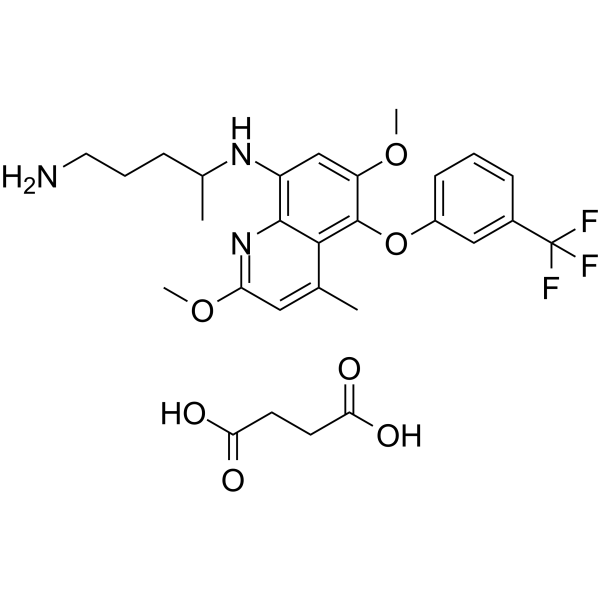
    Tafenoquine Succinate
    4 Publications Verification

    WR 238605 Succinate

    Parasite Infection
    Tafenoquine Succinate (WR 238605 Succinate) is an 8-aminoquinoline. Tafenoquine is an anti-malarial prophylactic agent .
    Tafenoquine Succinate
  • HY-W002620A

    2-Ethyl-3-hydroxy-6-methylpyridine Succinate

    Reactive Oxygen Species (ROS) Infection Inflammation/Immunology
    Emoxypine succinate is an antioxidant. Emoxypine succinate can be used for the research of post-traumatic .
    Emoxypine succinate
  • HY-B0602A

    O-Desmethylvenlafaxine Succinate hydrate

    Serotonin Transporter Neurological Disease
    Desvenlafaxine succinate hydrate, the succinate salt form of the isolated major active metabolite of Venlafaxine (HY-B0196), is an orally active and BBB penetrated 5-HT and norepinephrine reuptake inhibitor, with IC50 values of 47.3 nM and 531.3 nM for hSERT and hNET, respectively. Desvenlafaxine succinate hydrate shows weak binding affinity (62% inhibition at 100 μM) at the human dopamine (DA) transporter .
    Desvenlafaxine succinate hydrate
  • HY-109091B
    Lanraplenib succinate
    2 Publications Verification

    GS-9876 Succinate

    Syk Inflammation/Immunology Cancer
    Lanraplenib succinate (GS-9876 succinate) is a highly selective and orally active SYK inhibitor (IC50=9.5 nM) in development for the treatment of inflammatory diseases. Lanraplenib succinate (GS-9876 succinate) inhibits SYK activity in platelets via the glycoprotein VI (GPVI) receptor without prolonging bleeding time (BT) in monkeys or humans .
    Lanraplenib succinate
  • HY-A0069

    Histamine Receptor Cytochrome P450 Neurological Disease Metabolic Disease
    Doxylamine succinate is a first-generation antihistamine and acts as a histamine H1 receptor antagonist. Doxylamine succinate is orally active, possessing analgesic and hypnotic activities. Doxylamine succinate enhances the activities of CYP2B, CYP2A, CYP3A and thyroxine-glucuronosyltransferase via promoting substrate hydroxylation and thyroxine metabolic pathways. Doxylamine succinate decreases serum thyroxine (T4) level and elevates serum thyroid-stimulating hormone (TSH) level. Doxylamine succinate induces liver enlargement and increases the activities of hepatic microsomal cytochrome P450, cytochrome b5 and NADPH-cytochrome c reductase. Doxylamine succinate can be used for the research of nausea, allergy, insomnia .
    Doxylamine succinate
  • HY-15408A
    Trelagliptin succinate
    1 Publications Verification

    SYR-472 Succinate

    Dipeptidyl Peptidase Metabolic Disease
    Trelagliptin (SYR-472) succinate is a potent, orally active and highly selective DPP-4 inhibitor with an IC50 of 4 nM. Trelagliptin succinate improves glycemic control in vivo and can be used for the study of type 2 diabetes mellitus (T2DM) .
    Trelagliptin succinate
  • HY-B1658A

    (R)-Frovatriptan Succinate hydrate; SB 209509 Succinate hydrate; VML 251 Succinate hydrate

    5-HT Receptor Neurological Disease
    Frovatriptan succinate hydrate ((R)-Frovatriptan succinate hydrate) is a potent, high affinity, selective and orally active 5-HT1B (pK50 of 8.2) and 5-HT1D receptor agonist. Frovatriptan succinate hydrate exhibits >10-fold selectivity for 5-HT1B and 5-HT1D over 5-HT1A, 5-HT1F, and 5-HT7 and >1000-fold selectivity over other 5-HT, dopamine, histamine H1, and α1-adrenoceptor. Frovatriptan succinate hydrate has the potential for migraine research .
    Frovatriptan succinate hydrate
  • HY-N0677
    Dehydroandrographolide succinate
    1 Publications Verification

    Influenza Virus Prostaglandin Receptor Akt GSK-3 Infection Inflammation/Immunology Cancer
    Dehydroandrographolide succinate can be extracted from herbal medicine Andrographis paniculata (Burm f) Nees, is widely used in research for viral pneumonia and viral upper respiratory tract infections because of its immunostimulatory, anti-infective and anti-inflammatory effect. Dehydroandrographolide succinate exerts antithrombotic effect. Dehydroandrographolide succinate significantly inhibits the platelet aggregation rate (ED50 = 386.9 mg/kg) by decreasing TXB2 levels. Dehydroandrographolide succinate mitigates muscle astrophy via the Akt/GSK3β and MuRF-1 pathways .
    Dehydroandrographolide succinate
  • HY-50669A
    MK-0812 Succinate
    1 Publications Verification

    CCR Inflammation/Immunology Endocrinology
    MK-0812 Succinate is a potent and selective CCR2 antagonist with high affinity at CCR2.
    MK-0812 Succinate
  • HY-135815A
    Mobocertinib succinate
    10+ Cited Publications

    TAK-788 Succinate; AP32788 Succinate

    EGFR Cancer
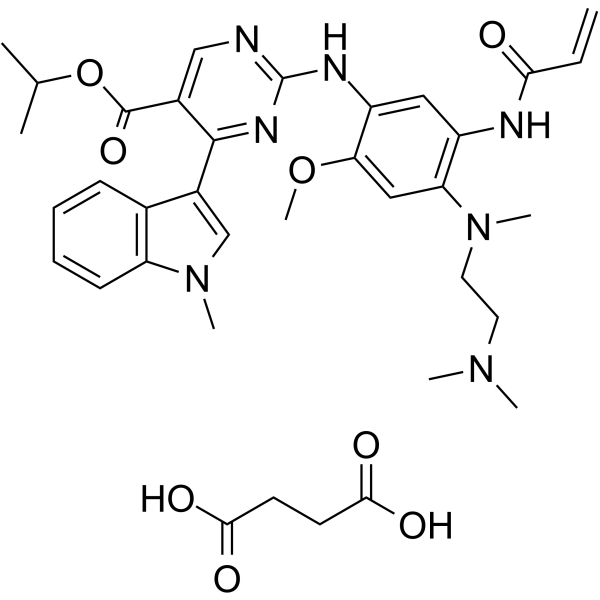
    Mobocertinib (TAK-788) succinate is an orally active and irreversible EGFR/HER2 inhibitor. Mobocertinib succinate potently inhibits oncogenic variants containing activating EGFRex20ins mutations with selectivity over wild-type EGFR. Mobocertinib succinate can be used in NSCLC research .
    Mobocertinib succinate
  • HY-15777C
    Ribociclib succinate hydrate
    Maximum Cited Publications
    80 Publications Verification

    LEE011 Succinate hydrate

    CDK Cancer
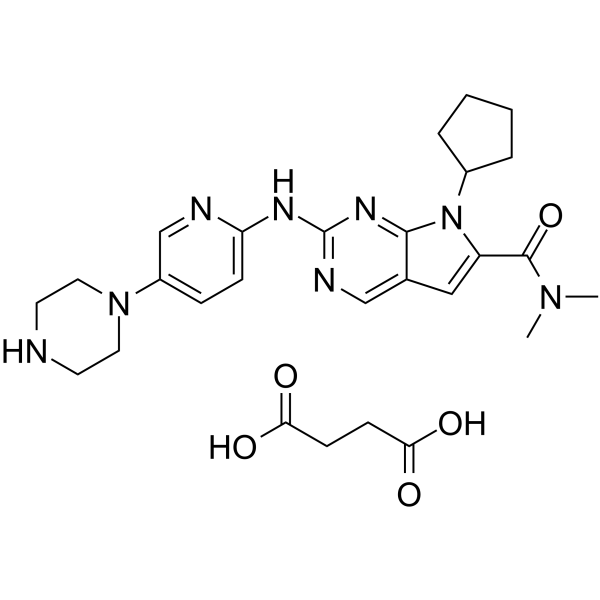
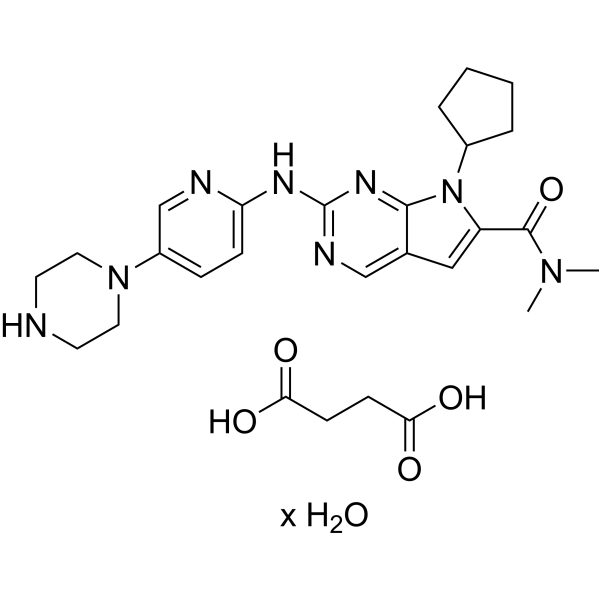
    RRibociclib (LEE011) succinate hydrate is an ATP-competitive and orally active CDK4/6 inhibitor that crosses the blood-brain barrier with IC50 values of 10 nM and 39 nM, respectively, and is over 1,000-fold less potent against the cyclin B/CDK1 complex .
    Ribociclib succinate hydrate
  • HY-164165

    Microtubule/Tubulin Drug Derivative Cancer
    Paclitaxel-2′-succinate NHS ester is a paclitaxel derivative with a succinic acid linker, in which the carboxyl group is activated by the NHS ester. The NHS ester group is highly reactive toward amino or hydroxyl groups and can be used to conjugate with other molecules such as peptides, proteins, antibodies, enzymes or polymers. Paclitaxel-2′-succinate NHS ester can be used in the development of nanomedicines and in the study of cancer therapy .
    Paclitaxel-2′-succinate NHS ester
  • HY-W010380

    AMPK Apoptosis Metabolic Disease
    Methyl succinate is a mitochondrial complex II substrate. Methyl succinate can bypass the inhibition of complex I by Metformin (HY-B0627), restore mitochondrial electron transfer, and reduce AMPK phosphorylation. Methyl succinate is capable of protecting MIN6 β-cells and primary rat β-cells from biguanide-induced toxicity and apoptosis in vitro. Methyl succinate can be used in the research of diseases such as diabetes mellitus .
    Methyl succinate
  • HY-W094516
    Disodium succinate hexahydrate
    4 Publications Verification

    Wormwood acid disodium hexahydrate

    Endogenous Metabolite Neurological Disease Inflammation/Immunology
    Disodium succinate hexahydrate (Wormwood acid disodium hexahydrate) is an anti-anxiety agent with oral activity. Disodium succinate hexahydrate is an intermediate product of the tricarboxylic acid cycle. Disodium succinate hexahydrate is an important platform chemical. Disodium succinate hexahydrate can be used as surfactant, additive, ion chelating agent, flavoring agent and other applications in chemical, pharmaceutical and food fields .
    Disodium succinate hexahydrate
  • HY-W105775

    Ammonium Succinate

    Environmental Pollutants Biochemical Assay Reagents Others
    Diammonium succinate (Ammonium succinate) is a hydrophobic hydrocarbon compound that can be used to study its interaction with microbial cells, especially the mechanisms of degradation and bioavailability. Diammonium succinate is a biomaterial or organic compound that can be used as a biomaterial or organic compound related to life science research.
    Diammonium succinate
  • HY-16743B
    Ibiglustat succinate
    3 Publications Verification

    Venglustat Succinate; SAR402671 Succinate; GZ402671 Succinate

    Glucosylceramide Synthase (GCS) Neurological Disease
    Ibiglustat (Venglustat) succinate is an orally active, brain-penetrant glucosylceramide synthase (GCS) inhibitor. Ibiglustat succinate can be used for the research of Gaucher disease type 3, Parkinson's disease associated with GBA mutations, Fabry disease, GM2 gangliosidosis, and autosomal dominant polycystic kidney disease .
    Ibiglustat succinate
  • HY-B1900R
    Methylprednisolone succinate (Standard)
    1 Publications Verification

    Methylprednisolone hydrogen Succinate (Standard)

    Reference Standards Glucocorticoid Receptor Bacterial Toll-like Receptor (TLR) NF-κB Metabolic Disease Inflammation/Immunology Cancer
    Methylprednisolone succinate (Standard) is the analytical standard of Methylprednisolone succinate (HY-B1900). This product is intended for research and analytical applications. Methylprednisolone succinate (Methylprednisolone hydrogen succinate) is a prodrug of Methylprednisolone (HY-B0260) and glucocorticoid with immunosuppressant and anti-inflammatory activity. Methylprednisolone succinate binds cytosolic glucocorticoid receptors, translocates to nuclei, and modulates target gene transcription. Methylprednisolone succinate alters Bax, Bcl-2, occludin, and ZO-1 expression; attenuates TLR4/NF-κB signaling; suppresses proinflammatory cytokine production and immune cell activation. Methylprednisolone succinate can be used for the research of intracranial haemorrhage, rheumatoid arthritis, multiple sclerosis, preterminal cancer, inflammatory conditions, shock, immediate-type hypersensitivity, acute myocardial ischemia, hypoxic heart muscle damage, and traumatic spinal cord injury .
    Methylprednisolone succinate (Standard)
  • HY-17503AR

    Reference Standards Adrenergic Receptor Apoptosis Cardiovascular Disease Endocrinology Cancer
    Metoprolol (succinate) (Standard) is the analytical standard of Metoprolol (succinate). This product is intended for research and analytical applications. Metoprolol succinate is an orally active, selective β1-adrenoceptor antagonist. Metoprolol succinate shows anti-inflammation, antitumor and anti-angiogenic properties .
    Metoprolol succinate (Standard)
  • HY-W015410S2

    Endogenous Metabolite Metabolic Disease
    Disodium succinate-d4 is the deuterium labeled Disodium succinate . Disodium succinate is the disodium salt of Succinic acid. Succinic acid is an intermediate product of the tricarboxylic acid cycle, as well as one of fermentation products of anaerobic metabolism .
    Disodium succinate-d4
  • HY-117684A
    Cabamiquine succinate
    1 Publications Verification

    DDD107498 Succinate; DDD-498 Succinate; M5717 Succinate

    Parasite CaMK Infection
    Cabamiquine (DDD107498) succinate is a potent and orally active antimalarial agent, inhibits multiple life-cycle stages of the parasite, with an EC50 of 1 nM against P. falciparum 3D7. Cabamiquine succinate inhibits protein synthesis by targeting eEF2/CaMKIII, with an EC50 of 2 nM for WT-PfeEF2 .
    Cabamiquine succinate
  • HY-117621A

    CCR Metabolic Disease
    PF-0463481 succinate is a potent and orally active dual CCR2/CCR5 antagonist with comparable human and rodent CCR2 potency (rat IC50=20.8 nM), and displays 10-20 fold less rodent CCR5 potency (rat IC50=470 nM). PF-0463481 succinate is safe and well-tolerated and has the potential for the study of diabetic nephropathy .
    PF-04634817 succinate
  • HY-W581820

    Ferrous Succinate

    Biochemical Assay Reagents Cardiovascular Disease
    Iron(II) succinate (Ferrous succinate) is an orally active and organic acid iron supplement (ferrous salt). Iron(II) succinate improves hematological parameters in iron-deficiency anemia rats, including hemoglobin, red blood cells, hematocrit, mean corpuscular volume, mean corpuscular hemoglobin, and mean corpuscular hemoglobin concentration. Iron(II) succinate increases serum ferritin, serum iron levels, and transferrin saturation, while decreasing total iron-binding capacity in iron-deficiency anemia rats. Iron(II) succinate reduces the elevated heart, spleen, and kidney coefficients, and increases the decreased liver coefficient in iron-deficiency anemia rats. Iron(II) succinate replenishes the depleted iron content in the liver and spleen of iron-deficiency anemia rats. Iron(II) succinate can be used for the research of iron-deficiency anemia .
    Iron(II) succinate
  • HY-W424539

    Glucocorticoid Receptor Inflammation/Immunology
    Prednisolone (sodium succinate) is an anti-inflammatory corticosteroid and a prodrug of the glucocorticoid prednisolone. Prednisolone (sodium succinate) is used as an immunosuppressant .
    Prednisolone sodium succinate
  • HY-139300A

    HMPL-813 Succinate

    EGFR Cancer
    Epitinib succinate is an orally active and selective epidermal growth factor receptor tyrosine kinase inhibitor (EGFR-TKI) designed for optimal brain penetration. Epitinib succinate can be used for the research of cancer . Epitinib (succinate) is a click chemistry reagent, it contains an Alkyne group and can undergo copper-catalyzed azide-alkyne cycloaddition (CuAAc) with molecules containing Azide groups.
    Epitinib succinate
  • HY-169972

    Succinate Dehydrogenase Infection
    Succinate dehydrogenase-IN-5 (Compound M8) is the inhibitor for succinate dehydrogenase. Succinate dehydrogenase-IN-5 interfers with the energy metabolism and growth of fungi, inhibits Rhizoctonia solani, Sclerotinia sclerotiorum, Botrytis cinerea and Fusarium graminearum with EC50 < 0.3 μg/mL .
    Succinate dehydrogenase-IN-5
  • HY-W015410S

    Endogenous Metabolite Metabolic Disease
    Disodium succinate- 13C2 is the 13C labeled Disodium succinate . Disodium succinate is the disodium salt of Succinic acid. Succinic acid is an intermediate product of the tricarboxylic acid cycle, as well as one of fermentation products of anaerobic metabolism .
    Disodium succinate-13C2
  • HY-17390AR

    Reference Standards 5-HT Receptor Dopamine Receptor Infection Neurological Disease
    Loxapine (succinate) (Standard) is the analytical standard of Loxapine (succinate). This product is intended for research and analytical applications. Loxapine succinate is an orally active dopamine inhibitor, 5-HT receptor antagonist and also a dibenzoxazepine anti-psychotic agent. Loxapine can also suppresses bacterial efflux pump activity and inhibit intracellular multiple-antibiotic-resistant Salmonella enterica serovar Typhimurium in macrophages .
    Loxapine succinate (Standard)
  • HY-15777BR

    LEE011 Succinate (Standard)

    CDK Reference Standards Cancer
    Ribociclib succinate (Standard) is the analytical standard of Ribociclib succinate. This product is intended for research and analytical applications. Ribociclib succinate (LEE011 succinate) is a highly specific CDK4/6 inhibitor with IC50 values of 10 nM and 39 nM, respectively, and is over 1,000-fold less potent against the cyclin B/CDK1 complex.
    Ribociclib succinate (Standard)
  • HY-N7114

    Bacterial Drug Intermediate P2Y Receptor Succinate Dehydrogenase Infection Inflammation/Immunology
    Chloramphenicol succinate is a prodrug of Chloramphenicol (HY-B0239), acting as a P2Y14R inhibitor with an IC50 of 1.585 nM. Chloramphenicol succinate serves as a competitive substrate and inhibitor of succinate dehydrogenase (SDH), which may account for its toxicity. Chloramphenicol succinate exerts a significant inhibitory effect on colitis. Chloramphenicol succinate can be used in research related to myelosuppression, gray baby syndrome, aplastic anemia, bacterial meningitis and inflammatory bowel disease .
    Chloramphenicol succinate
  • HY-A0069R

    Reference Standards Histamine Receptor Cytochrome P450 Neurological Disease Metabolic Disease
    Doxylamine succinate (Standard) is the analytical standard of Doxylamine succinate (HY-A0069). This product is intended for research and analytical applications. Doxylamine succinate is a first-generation antihistamine and acts as a histamine H1 receptor antagonist. Doxylamine succinate is orally active, possessing analgesic and hypnotic activities. Doxylamine succinate enhances the activities of CYP2B, CYP2A, CYP3A and thyroxine-glucuronosyltransferase via promoting substrate hydroxylation and thyroxine metabolic pathways. Doxylamine succinate decreases serum thyroxine (T4) level and elevates serum thyroid-stimulating hormone (TSH) level. Doxylamine succinate induces liver enlargement and increases the activities of hepatic microsomal cytochrome P450, cytochrome b5 and NADPH-cytochrome c reductase. Doxylamine succinate can be used for the research of nausea, allergy, insomnia .
    Doxylamine succinate (Standard)
  • HY-B0121R

    GR 43175 Succinate (Standard)

    5-HT Receptor Reference Standards Neurological Disease
    Sumatriptan (succinate) (Standard) is the analytical standard of Sumatriptan (succinate). This product is intended for research and analytical applications. Sumatriptan succinate (GR 43175) is an orally active 5-HT1 receptor agonist with Kis of 17 nM, 27 nM and 100 nM for 5-HT1D, 5-HT1B and 5-HT1A receptors, respectively. Sumatriptan succinate can be used for migraine headache research .
    Sumatriptan succinate (Standard)
  • HY-B1658B

    (R)-Frovatriptan Succinate; SB 209509 Succinate; VML 251 Succinate

    5-HT Receptor Neurological Disease
    Frovatriptan succinate ((R)-Frovatriptan succinate) is a potent, high affinity, selective and orally active 5-HT1B (pK50 of 8.2) and 5-HT1D receptor agonist. Frovatriptan succinate exhibits >10-fold selectivity for 5-HT1B and 5-HT1D over 5-HT1A, 5-HT1F, and 5-HT7 and >1000-fold selectivity over other 5-HT, dopamine, histamine H1, and α1-adrenoceptor. Frovatriptan succinate has the potential for migraine research .
    Frovatriptan succinate
  • HY-13640A

    GS-9219 Succinate; VDC-1101 Succinate

    Nucleoside Antimetabolite/Analog Cancer
    Rabacfosadine (GS-9219) succinate, a novel proagent of the nucleotide analogue PMEG, is designed as a cytotoxic agent that preferentially targets lymphoid cells .
    Rabacfosadine succinate
  • HY-W106710

    PROTAC Linkers Cancer
    Potassium succinate trihydrate is a PROTAC linker that can be used in the synthesis of PROTACs.
    Potassium succinate trihydrate
  • HY-114458

    Biochemical Assay Reagents Others
    Monooctyl succinate is a monoester, which can be used as a surfactants and a potential fragrance releaser .
    Monooctyl succinate
  • HY-12694R

    R-108512 (Standard)

    5-HT Receptor Apoptosis Autophagy Reference Standards Metabolic Disease Cancer
    Prucalopride (succinate) (Standard) is the analytical standard of Prucalopride (succinate). This product is intended for research and analytical applications. Prucalopride succinate is an orally active, selective and specific 5-HT 4 receptor agonist (high affinity), with pKis of 8.6 and 8.1 for human 5-HT4a/4b receptors, respectively. Prucalopride succinate improves intestinal motility by promoting regeneration of the intestinal nervous system in rats. Prucalopride succinate also shows anticancer activity by blocking of the PI3K/AKT/mTor signaling pathway. Prucalopride succinate can be used in studies of chronic constipation, pseudo-intestinal obstruction and cancer .
    Prucalopride succinate (Standard)
  • HY-110272

    PTK787 Succinate; ZK-222584 Succinate; CGP-79787 Succinate

    VEGFR Cancer
    Vatalanib (PTK787) succinate is a potent and orally active VEGFR inhibitor with IC50s of 37 nM, 77 nM, 270 nM, 660 nM, 730 nM, 1400 nM, and 580 nM for KDR, Flt-1, Flk, Flt-4, c-Kit, c-Fms, and PDGFR-β, respectively .
    Vatalanib succinate
  • HY-W106738

    PROTAC Linkers Cancer
    Di-tert-butyl succinate is a PROTAC linker that can be used in the synthesis of PROTACs.
    Di-tert-butyl succinate

Inquiry Online

Your information is safe with us. * Required Fields.

Salutation


Country or Region *

Applicant Name *


Organization Name *

Department *


Email Address *


Product Name *

Cat. No.


Requested quantity *

Phone Number *


Remarks

Inquiry Online

Inquiry Information

Product Name:
Cat. No.:
Quantity:
MCE Japan Authorized Agent:

