Search Result
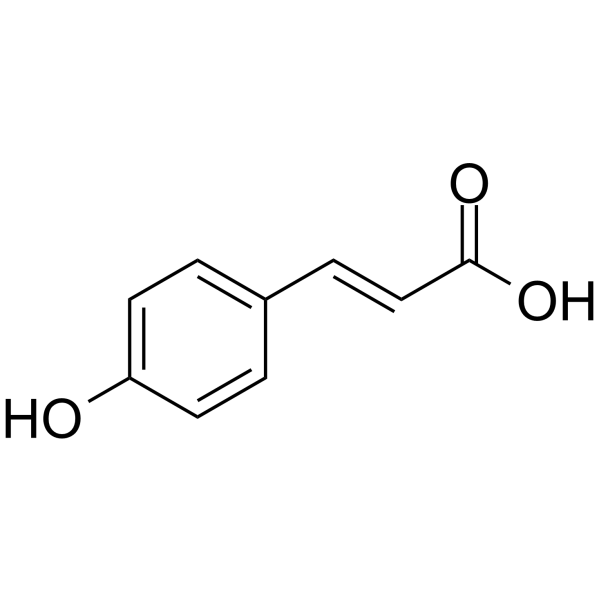
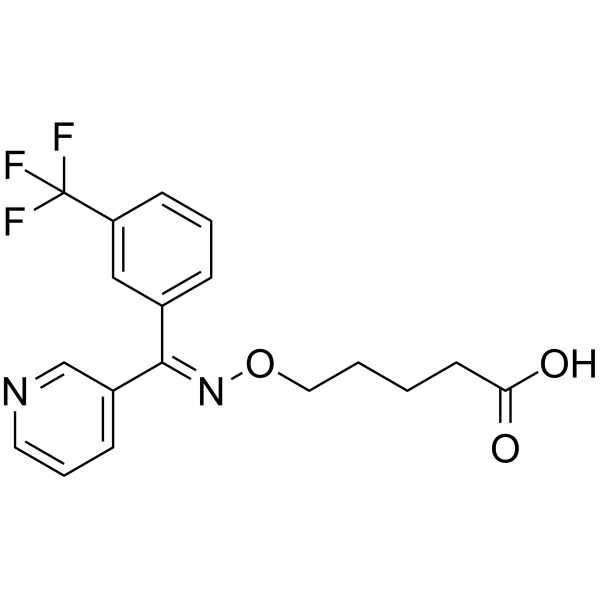
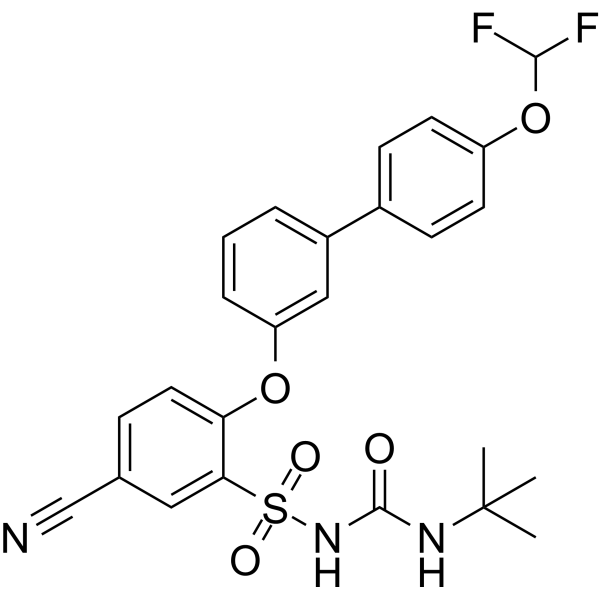
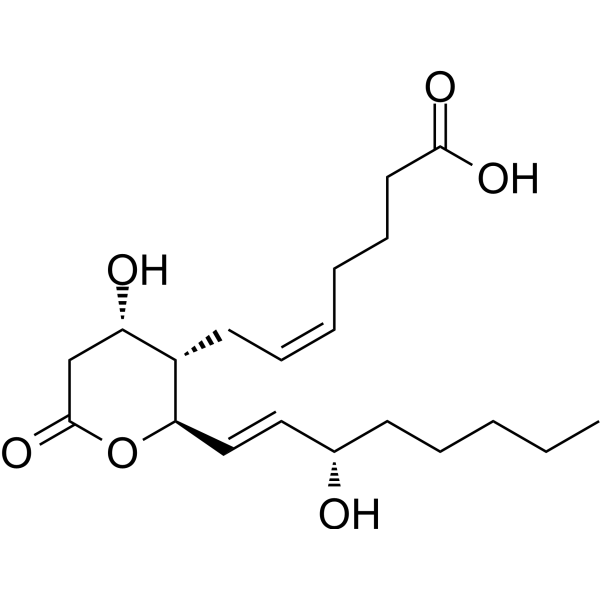
Results for "
Thromboxane-A2
" in MedChemExpress (MCE) Product Catalog:
3
Biochemical Assay Reagents
9
Isotope-Labeled Compounds
| Cat. No. |
Product Name |
Target |
Research Areas |
Chemical Structure |
-
- HY-N0652
-
|
2,3,4',5-Tetrahydroxystilbene 2-O-D-glucoside
|
ERK
NF-κB
|
Cardiovascular Disease
Neurological Disease
|
|
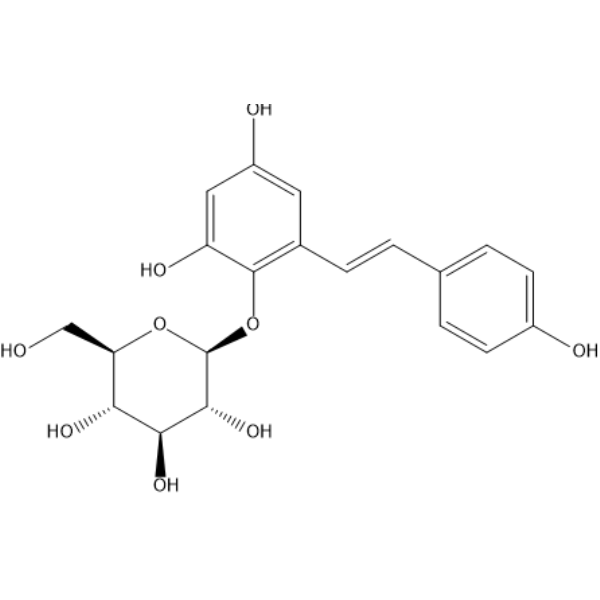
2,3,5,4'-Tetrahydroxystilbene 2-O-β-D-glucoside isolats from the roots of Polygonaceae species, inhibits the formation of 5-HETE, HHT and thromboxane B2. 2,3,5,4'-Tetrahydroxystilbene 2-O-β-D-glucoside has hypotensive, anti-ageing, anti-inflammatory, hypolipidemic, cardioprotective, and neuroprotective actions [2].
|
-
-
- HY-108566
-
|
9,11-Methanoepoxy PGH2
|
Prostaglandin Receptor
|
Cardiovascular Disease
|
|
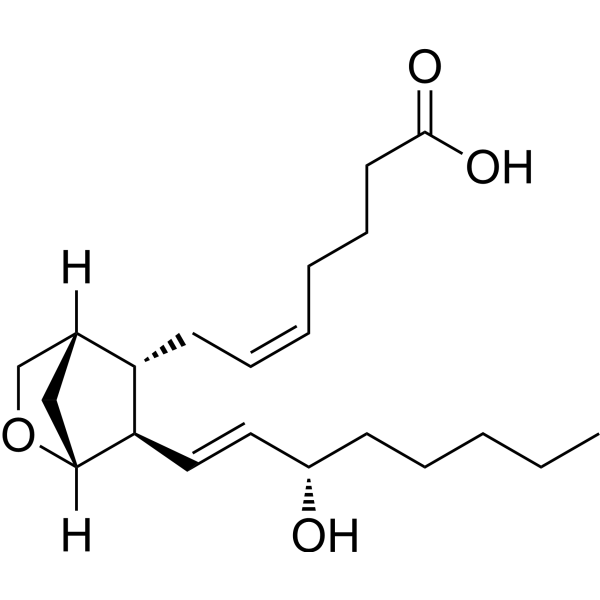
U-46619 (9,11-Methanoepoxy PGH2) is a stable analogue of Thromboxane A2 (HY-113350) (TXA2) and acts as a potent TXA2 (TP) agonist. U-46619 also is a RhoA agonist. U-46619 stimulates the activation of RhoA through TXA2 receptor activation .
|
-
-
- HY-N3617
-
-
-
- HY-18763
-
|
Ibustrin
|
COX
|
Cardiovascular Disease
|
|
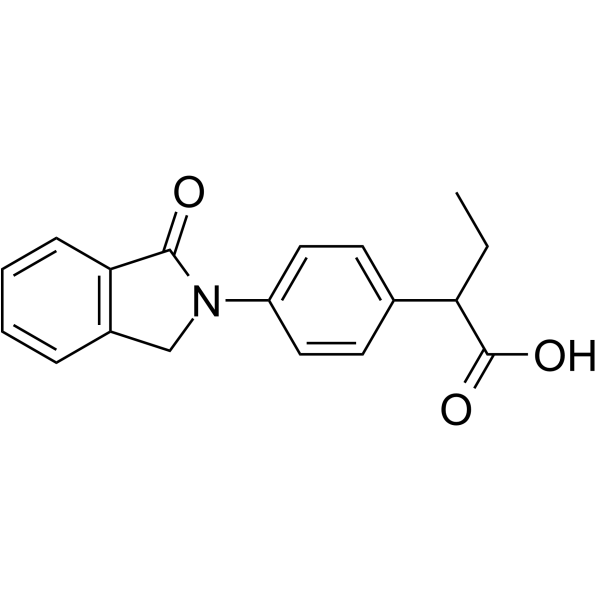
Indobufen is a platelet aggregation inhibitor. Indobufen is a reversible platelet cyclooxygenase (Cox) activity inhibitor. Indobufen suppresses thromboxane A2 (TxA2) synthesis. Indobufen down-regulates tissue factor (TF) in monocytes .
|
-
-
- HY-B0774
-
-
-
- HY-B1263
-
|
|
Environmental Pollutants
Bacterial
Fungal
|
Infection
Neurological Disease
|
|
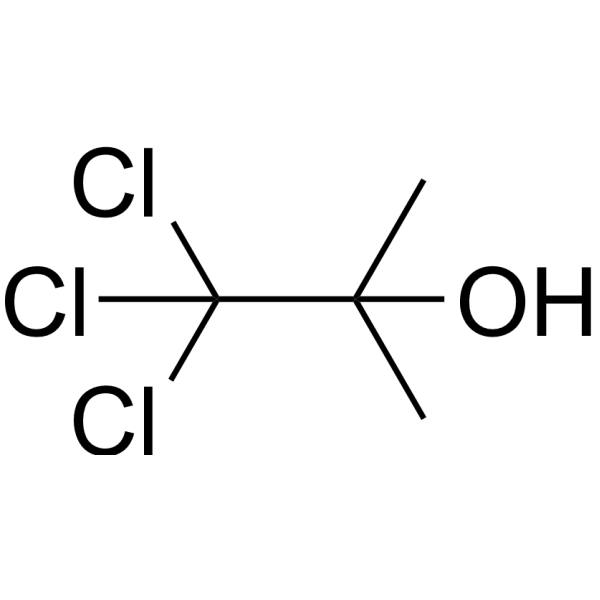
Chlorobutanol is an orally active and potent inhibitor of platelet aggregation and release and a pharmaceutical preservative with antibacterial activity. Chlorobutanol inhibits thromboxane B2 formation, ATP release, and elevation of cytosolic free calcium caused by collagen, ADP, epinephrine, arachidonic acid and thrombin. Chlorobutanol is active against a wide variety of Gram-positive and Gram-negative bacteria, and several mold spores and fungi. Chlorobutanol is widely used in food and cosmetic industry [2] .
|
-
-
- HY-B0428
-
Ozagrel
1 Publications Verification
OKY-046
|
Prostaglandin Receptor
|
Cardiovascular Disease
Neurological Disease
Inflammation/Immunology
|
|
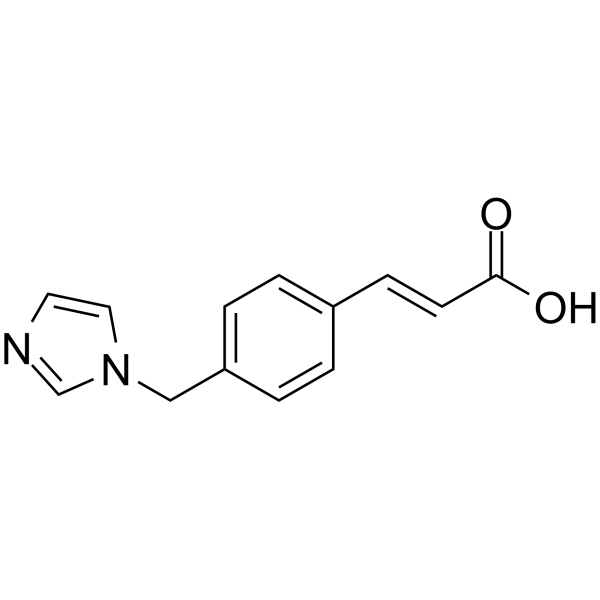
Ozagrel (OKY-046) is a high selective and orally active thromboxane A2 (TXA2) synthase inhibitor with an IC50 of 11 nM. Ozagrel exerts anti-platelet aggregation, vasodilation and anti-inflammatory effects by inhibiting the production of TXA2 and increasing the production of prostacyclin (PGI2). Ozagrel can be used for the study of ischemic stroke, asthma and thromboembolic diseases [2] .
|
-
-
- HY-B0745
-
-
-
- HY-N2391
-
-
-
- HY-B0428B
-
|
OKY-046 hydrochloride
|
Prostaglandin Receptor
|
Cardiovascular Disease
Neurological Disease
Inflammation/Immunology
|
|
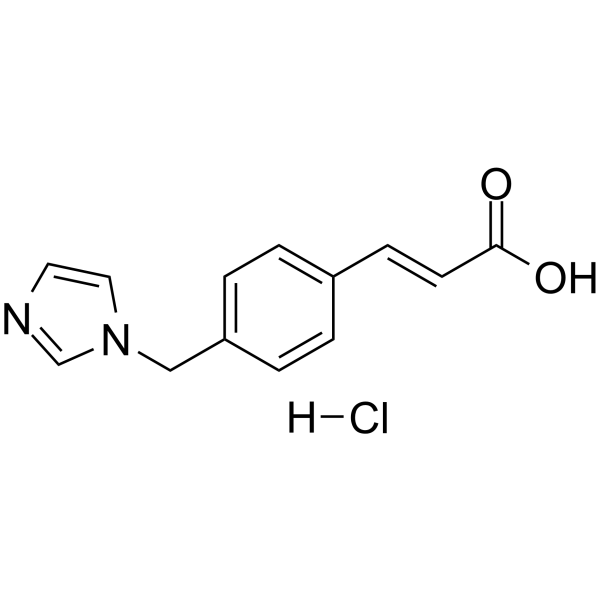
Ozagrel hydrochloride (OKY-046 hydrochloride) is a high selective and orally active thromboxane A2 (TXA2) synthase inhibitor with an IC50 of 11 nM. Ozagrel hydrochloride exerts anti-platelet aggregation, vasodilation and anti-inflammatory effects by inhibiting the production of TXA2 and increasing the production of prostacyclin (PGI2). Ozagrel hydrochloride can be used for the study of ischemic stroke, asthma and thromboembolic diseases [2] .
|
-
-
- HY-113331
-
|
|
Prostaglandin Receptor
|
Cardiovascular Disease
Inflammation/Immunology
|
|
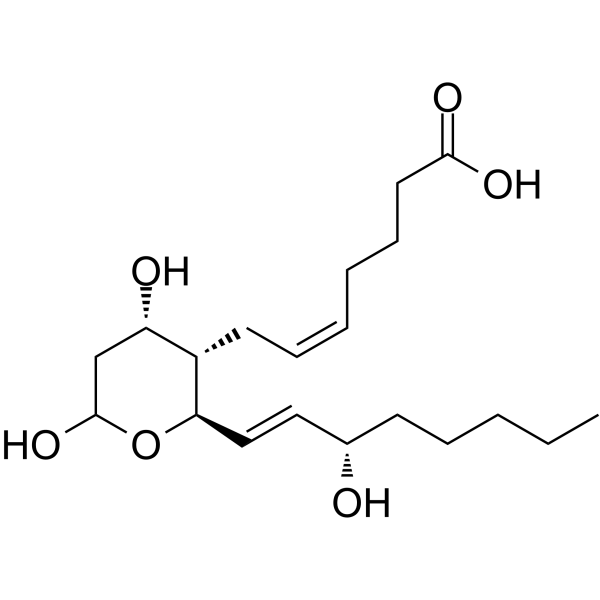
Thromboxane B2 is a prostaglandin derivative that is released during anaphylaxis. Thromboxane B2 induces arterial contraction and platelet aggregation. Thromboxane B2 is a biological inactive product and circulating catabolite of thromboxane A2. Thromboxane B2 levels in peripheral venous blood and coronary sinus blood can be used as a diagnostic marker for angina. Thromboxane B2 level in serum is also associated with inhibition of COX-1 activity inhibition in platelets. Thromboxane B2 is a major product of prostaglandin endoperoxide metabolism. Thromboxane B2 produces dose-related decreases in airflow rate, tidal volume and dynamic lung compliance, whilst simultaneously increasing pulmonary airway resistance in dog model. Thromboxane B2 appears to be a naturally occurring bronchoactive metabolite in the bioconversion of arachidonic acid [2] .
|
-
-
- HY-A0221
-
|
R 68070
|
Prostaglandin Receptor
|
Inflammation/Immunology
|
|
Ridogrel (R 68070) is an orally active combined thromboxane A2 synthetase inhibitor and thromboxane A2/prostaglandin endoperoxide receptor blocker. Ridogrel is potent antiplatelet agent. Anti-inflammatory activities [2] .
|
-
-
- HY-129851
-
|
|
Prostaglandin Receptor
|
Cardiovascular Disease
|
|
NTP42 is a thromboxane A2 (TXA2) receptor antagonist with an IC50 of 3.278 nM for antagonizing T prostanoid receptor (TP)- mediated [Ca 2+] mobilization following stimulation of cells with the alternative TP agonist U46619 . NTP42 can be used for the treatment of pulmonary arterial hypertension (PAH) [2].
|
-
-
- HY-113420
-
|
|
Endogenous Metabolite
|
Metabolic Disease
|
|
11-Dehydro-thromboxane B2 is a platelet hemagglutinin. Thromboxane inhibition was assessed by urinary excretion levels of 11-Dehydro-thromboxane B2. 11-Dehydro-thromboxane B2 can be used in the study of atherosclerotic thrombosis [2].
|
-
-
- HY-121018
-
|
BM-13505; SKF 96148
|
Prostaglandin Receptor
|
Cardiovascular Disease
|
|
Daltroban (BM-13505) is a selective and specific thromboxane A2 (TXA2) receptor antagonist. Daltroban increase intracellular calcium in vascular smooth muscle cells. Daltroban shows protective effect in reperfusion injury [2].
|
-
-
- HY-105218A
-
|
BMS-180291 sodium
|
Prostaglandin Receptor
|
Cardiovascular Disease
Endocrinology
Cancer
|
|
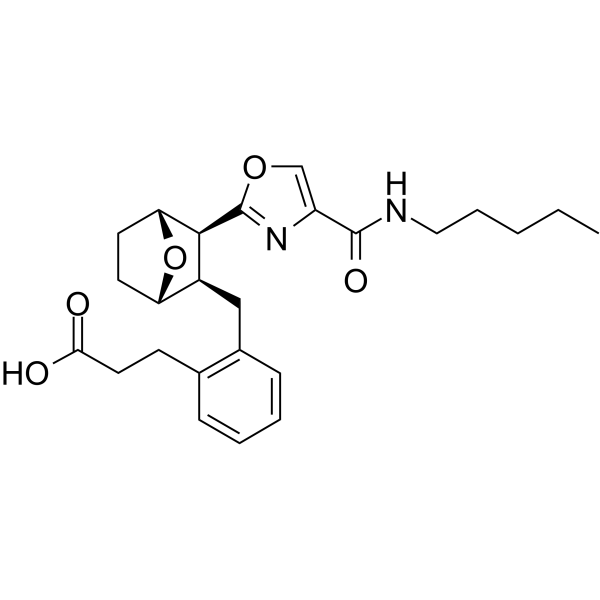
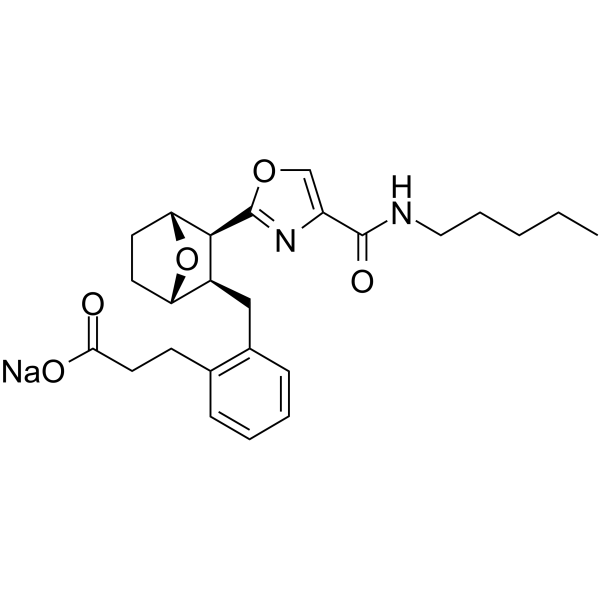
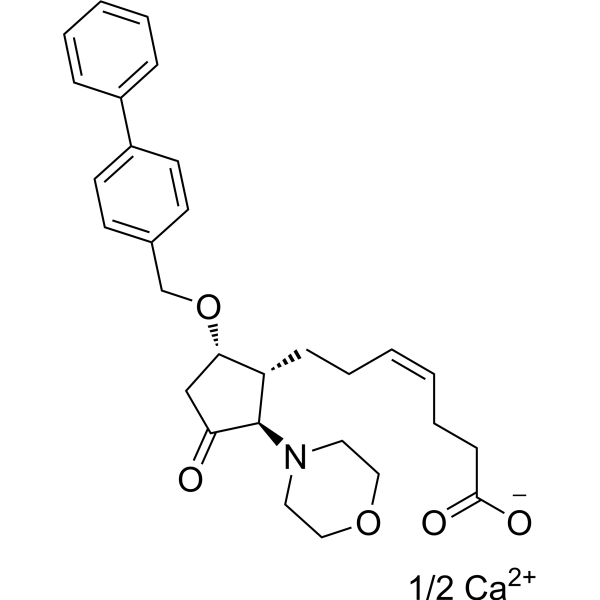
Ifetroban (BMS-180291) sodium is an orally active antagonist of thromboxane A2 (TXA2) or prostaglandin H2 (PGH2) receptor. Ifetroban sodium shows antiplatelet activity, and inhibits tumor cell migration without affecting cell proliferation. Ifetroban sodium can be used for myocardial ischemia, hypertension, stroke, thrombosis, cardiomyopathy research [2] .
|
-
-
- HY-105218
-
|
BMS-180291
|
Prostaglandin Receptor
|
Cardiovascular Disease
Endocrinology
Cancer
|
|
Ifetroban (BMS-180291) is an orally active antagonist of thromboxane A2 (TXA2) or prostaglandin H2 (PGH2) receptor. Ifetroban shows antiplatelet activity, and inhibits tumor cell migration without affecting cell proliferation. Ifetroban can be used for myocardial ischemia, hypertension, stroke, thrombosis, cardiomyopathy research [2] .
|
-
-
- HY-B0428A
-
|
OKY-046 sodium
|
Prostaglandin Receptor
|
Cardiovascular Disease
Neurological Disease
Inflammation/Immunology
|
|
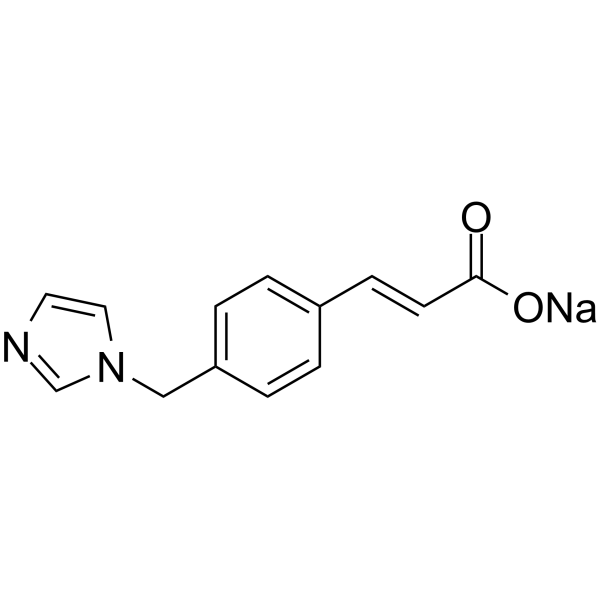
Ozagrel sodium (OKY-046 sodium) is a high selective and orally active thromboxane A2 (TXA2) synthase inhibitor with an IC50 of 11 nM. Ozagrel sodium exerts anti-platelet aggregation, vasodilation and anti-inflammatory effects by inhibiting the production of TXA2 and increasing the production of prostacyclin (PGI2). Ozagrel sodium can be used for the study of ischemic stroke, asthma and thromboembolic diseases [2] .
|
-
-
- HY-N5031
-
|
|
Others
|
Inflammation/Immunology
|
|
Mulberrofuran Q inhibits the formation of 12-hydroxy-5,8,10-heptadecatrienoic acid (HHT) and thromboxane B2 (cyclooxygenase products) .
|
-
-
- HY-B1735
-
|
|
Prostaglandin Receptor
|
Cardiovascular Disease
|
|
Picotamide is a combined inhibitor of thromboxane A2 (TxA2) synthase and receptor. Picotamide has antiplatelet activity. Picotamide promotes the reduction of microalbuminuria and the inhibition of growth of carotid plaques in diabetes. Picotamide can be used for researching acute or chronic cardiovascular diseases .
|
-
-
- HY-111271A
-
-
-
- HY-123613
-
-
-
- HY-176990
-
-
-
- HY-179561
-
|
|
Drug Derivative
|
Cardiovascular Disease
|
|
ACS14 is a derivative of Aspirin (HY-14654). ACS14 reduces Buthionine Sulfoximine (BSO) (HY-106376)-induced hypertension, plasma levels of thromboxane B2, 8-isoprostane, and insulin in rats, while GSH remained in the control range. ACS14 can be used for hypertension research .
|
-
-
- HY-130304
-
|
iPE2-III
|
Prostaglandin Receptor
|
Cardiovascular Disease
|
|
8-Isoprostaglandin E2 (iPE2-III) is a member of the isoprostane class of prostanoids. 8-Isoprostaglandin E2 acts at the receptor for thromboxane A2 (the TP) in vivo to induce vasoconstriction and platelet aggregation. 8-Isoprostaglandin E2 enhances receptor-activated NFkappa B ligand (RANKL)-dependent osteoclastic potential of marrow hematopoietic precursors via the cAMP pathway [2].
|
-
-
- HY-B0774R
-
-
-
- HY-113331S1
-
-
-
- HY-113331S
-
|
|
Isotope-Labeled Compounds
|
Inflammation/Immunology
|
|
Thromboxane B2-D4 is the deuterium labeled Thromboxane B2. Thromboxane B2 is a prostaglandin derivative that is released during anaphylaxis. Thromboxane B2 induces arterial contraction and platelet aggregation [2].
|
-
-
- HY-130444
-
|
PinaneThromboxane A2
|
Biochemical Assay Reagents
|
Others
|
|
PTA2 (Pinane thromboxane A2) is a biochemical reagent that can be used as a biological material or organic compound for life science related research.
|
-
-
- HY-129496
-
|
|
Thrombin
|
Cardiovascular Disease
|
|
NP-313 is a potent antithrombotic agent that inhibits platelet aggregation and activation. NP-313 has dual inhibition of thromboxane A 2 synthesis and selective inhibition of SOCC-mediated Ca 2+ inward flow .
|
-
-
- HY-13706
-
|
TM30089 Racemate
|
Prostaglandin Receptor
|
Endocrinology
Cancer
|
|
CAY10471 Racemate (TM30089 Racemate) is a potent and highly selective prostaglandin D2 receptor CRTH2 antagonist, with a Ki of 0.6 nM for hCRTH2, selective over human thromboxane A2 receptor TP (Ki, >10000 nM) or PGD2 receptor DP (Ki, 1200 nM). CAY10471 Racemate also has effect on mouse and rat orthologs of CRTH2 .
|
-
-
- HY-137555
-
|
11-dehydro-2,3-dinor TXB2
|
Endogenous Metabolite
|
Metabolic Disease
|
|
11-dehydro-2,3-dinor Thromboxane B2 (11-dehydro-2,3-dinor TXB2) is a metabolite of the TXA2 inactive metabolite TXB2 (Item No. 19030). It is formed from TXB2 by cytosolic aldehyde dehydrogenase (ALDH) and β-oxidation. Levels of 11-dehydro-2,3-dinor TXB2 are increased 5.2-fold in a surgery-induced rat model of tendon overuse.
|
-
-
- HY-114564
-
|
E5510
|
Prostaglandin Receptor
|
Cardiovascular Disease
|
|
Satigrel (E5510) is a potent inhibitor of platelet aggregation. Satigrel inhibits collagen- and arachidonic acid-induced platelet aggregation through preventing thromboxane A2 synthesis by selective inhibition of the target enzyme, PGHS1, which exists in platelets. Satigrel inhibits PGHS1 (IC50: 0.081 μM) and PGHS2 (IC50: 5.9 μM). Satigrel is against Type III PDE, Type V and Type II (IC50: 15.7 μM, 39.8 μM and 62.4 μM, respectively) .
|
-
-
- HY-19189
-
-
-
- HY-19132
-
|
|
Prostaglandin Receptor
|
Cardiovascular Disease
|
|
CGS 22652 is a potent thromboxane A2 receptor antagonist. CGS 22652 has selective thromboxane A2 synthase inhibitory properties. CGS 22652 can be used in the research of coronary artery thrombosis [2].
|
-
-
- HY-U00253
-
-
-
- HY-U00072
-
-
-
- HY-10419
-
|
|
Thrombopoietin Receptor
|
Cardiovascular Disease
|
|
AH23848 (compound 6) is a competitive blocker of the thromboxane A2 receptor and an orally effective agent, with an IC50 value of 50 nM against human targets and a long duration of action.
|
-
-
- HY-100283
-
-
-
- HY-101692
-
-
-
- HY-111304
-
-
-
- HY-14654B
-
|
Acetylsalicylic acid DL-lysine; ASA DL-lysine
|
COX
NF-κB
p38 MAPK
|
Cardiovascular Disease
Others
Inflammation/Immunology
|
|
Aspirin DL-lysine (ASA DL-lysine) is a lysine-containing aspirin derivative. Aspirin DL-lysine inhibits cyclooxygenase (COX) in platelets, blocks the synthesis of thromboxane A2 (TXA2), and thus inhibits platelet aggregation and activation. Aspirin DL-lysine can be used to study thrombin generation in patients with unstable angina pectoris .
|
-
-
- HY-U00364
-
-
-
- HY-124852
-
|
PF 5212372
|
Phospholipase
Prostaglandin Receptor
Leukotriene Receptor
|
Inflammation/Immunology
|
|
ZPL-5212372 (PF 5212372) is a cPLA2α inhibitor (IC50 = 7 nM). ZPL-5212372 inhibits the release of prostaglandin D2 (PGD2), cysteyl leukotrienes, leukotriene B4, thromboxane A2, and PGD2 from human lung cells. ZPL-5212372 inhibits delayed bronchoconstriction and airway hyperresponsiveness in a sheep allergic inflammation model. ZPL-5212372 may be used in asthma research .
|
-
-
- HY-101235
-
|
|
Prostaglandin Receptor
|
Cardiovascular Disease
Inflammation/Immunology
|
|
ICI 185282 is a potent, selective, orally active thromboxane A2 (TXA₂) receptor antagonist. ICI 185282 causes dose-dependent inhibition of U-46619 (HY-108566)-induced platelet aggregation ex-vivo in guinea-pig. ICI 185,282 inhibits bronchospasm induced by U-46619, PGD2 (HY-101988), PGF2α (HY-12956), arachidonic acid (HY-109590), LTD4 and PAF (HY-108635) in vivo. ICI 185282 can be used for bronchial asthma research .
|
-
-
- HY-B0428BR
-
|
OKY-046 hydrochloride (Standard)
|
Reference Standards
Prostaglandin Receptor
|
Cardiovascular Disease
Neurological Disease
Inflammation/Immunology
|
|
Ozagrel hydrochloride (Standard) is the analytical reference standard of Ozagrel hydrochloride (HY-B0428B). Ozagrel hydrochloride (OKY-046 hydrochloride) is a high selective and orally active thromboxane A2 (TXA2) synthase inhibitor with an IC50 of 11 nM. Ozagrel hydrochloride exerts anti-platelet aggregation, vasodilation and anti-inflammatory effects by inhibiting the production of TXA2 and increasing the production of prostacyclin (PGI2). Ozagrel hydrochloride can be used for the study of ischemic stroke, asthma and thromboembolic diseases [2] .
|
-
-
- HY-177362
-
|
TXB2-EA
|
Endogenous Metabolite
|
Others
|
|
Thromboxane B2 ethanolamide (TXB2-EA) is a metabolite of thromboxane A2 ethanolamide. Thromboxane B2 ethanolamide is formed from thromboxane A2 ethanolamide by hydrolysis .
|
-
-
- HY-113420S2
-
|
|
Endogenous Metabolite
Isotope-Labeled Compounds
|
Metabolic Disease
|
|
11-Dehydro-thromboxane B2- 13C5 is 13C labeled 11-Dehydro-thromboxane B2 (HY-113420). 11-Dehydro-thromboxane B2 is a platelet hemagglutinin. Thromboxane inhibition was assessed by urinary excretion levels of 11-Dehydro-thromboxane B2. 11-Dehydro-thromboxane B2 can be used in the study of atherosclerotic thrombosis [2].
|
-
-
- HY-113420S
-
-
-
- HY-116281
-
|
|
Prostaglandin Receptor
|
Cardiovascular Disease
|
|
ICI D1542 is a selective and potent inhibitor of thromboxane A2 (TXA2) synthase and the thromboxane A2 receptor (TP-receptor). ICI D1542 is effective at preventing thrombus formation by redirection of arachidonic acid metabolism .
|
-
- HY-124150
-
|
|
Prostaglandin Receptor
|
Cardiovascular Disease
|
|
BM567 is a sulfonylurea compound (compound 1), which exhibits antithrombogenic efficacy as thromboxane A2 receptor (TXR) antagonists and thromboxane A2 synthase (TXS) inhibitors, with IC50s of 1.1 and 12 nM, respectively .
|
-
- HY-158332
-
|
SKF-95587; BM-13177
|
Prostaglandin Receptor
|
Cardiovascular Disease
|
|
Sulotroban (SKF-95587; BM-13177) is a selective antagonist for thromboxane A2 receptor (TXA2 Receptor). Sulotroban exhibits inhibitory activity against carbocyclic thromboxane A2- and endoperoxide-induced vasoconstrictor. Sulotroban inhibits platelets aggregation .
|
-
- HY-101606
-
-
- HY-126923
-
|
2,3-Dinor-TXB2
|
Endogenous Metabolite
|
Cardiovascular Disease
Metabolic Disease
|
|
2,3-Dinor thromboxane B2 (2,3-Dinor-TXB2), a metabolite of urine, serves as an indicator of the production of thromboxane A2 (TxA2) in the body, and can be used as a tool to study the role of thromboxane in various pathophysiological processes in the human body .
|
-
- HY-101700
-
-
- HY-123328
-
|
|
Prostaglandin Receptor
|
Cardiovascular Disease
|
|
AGN 191976 is a potent and selective thromboxane A2-sensitive (TP) receptor agonist with EC50 values of 0.23 nM and 24 nM in rat aorta and human platelets, respectively. AGN 191976 has potent IOP-lowering effects in dogs and monkeys. AGN 191976 can be used to study vascular biology and the role of thromboxane A2 in vascular function .
|
-
- HY-U00231
-
-
- HY-121720
-
-
- HY-106891
-
|
|
Prostaglandin Receptor
|
Cardiovascular Disease
|
|
Domitroban is a thromboxane A2 receptor (TBXA2R) antagonist. Domitroban can inhibit platelet aggregation. Domitroban can be used for the research of cardiovascular disease, such as thrombosis .
|
-
- HY-116560
-
-
- HY-19249
-
-
- HY-106066
-
|
UK38485
|
Prostaglandin Receptor
|
Cardiovascular Disease
|
|
Dazmegrel (UK-38485) is a thromboxane synthetase inhibitor which inhibits Thromboxane A2 (TXA2) synthesis and exhibits antiplatelet vasodilator effects. Dazmegrel can be utilized in thrombosis research .
|
-
- HY-18763A
-
|
Ibustrin sodium
|
COX
|
Cardiovascular Disease
|
|
Indobufen sodium is a platelet aggregation inhibitor. Indobufen sodium is a reversible platelet cyclooxygenase (Cox) activity inhibitor. Indobufen sodium suppresses thromboxane A2 (TxA2) synthesis. Indobufen sodium down-regulates tissue factor (TF) in monocytes .
|
-
- HY-N2391R
-
-
- HY-119890
-
-
- HY-101236
-
|
|
Prostaglandin Receptor
|
Endocrinology
|
|
ICI 192605 is a potent TXA2R (thromboxane A2 receptor) antagonist as cell signaling prostaglandin. ICI 192605 blocks contraction of isolated guinea pig trachea induced by U-46619 .
|
-
- HY-105120A
-
|
GR 32191 hydrochloride
|
Prostaglandin Receptor
|
Others
|
|
Vapiprost hydrochloride (GR 32191 hydrochloride) is a thromboxane A2 receptor antagonist. Vapiprost hydrochloride (GR 32191 hydrochloride) inhibits the aggregation and ATP release stimulated with U-46619, collagen or arachidonic acid (AA) at an IC50 of less than 2.1×10 -8 M .
|
-
- HY-106080A
-
|
U-63557A
|
Prostaglandin Receptor
|
Cardiovascular Disease
|
|
Furegrelate Sodium (U-63557A) is a potent, orally available, and selective thromboxane synthase inhibitor. Furegrelate Sodium inhibits human platelet microsomal thromboxane A2 (TxA2) synthase with an IC50 of 15 nM. Furegrelate Sodium is being developed as an antiplatelet agent [2].
|
-
- HY-B0745S
-
-
- HY-106080
-
|
U-63557A free acid
|
Prostaglandin Receptor
|
Cardiovascular Disease
|
|
Furegrelate (U-63557A free acid) is a potent, orally available, and selective thromboxane synthase inhibitor. Furegrelate inhibits human platelet microsomal thromboxane A2 (TxA2) synthase with an IC50 of 15 nM. Furegrelate is being developed as an antiplatelet agent [2].
|
-
- HY-18763S
-
|
Ibustrin-d5
|
Isotope-Labeled Compounds
COX
|
Cardiovascular Disease
|
|
Indobufen-d5 is deuterium labeled Indobufen. Indobufen is a platelet aggregation inhibitor. Indobufen is a reversible platelet cyclooxygenase (Cox) activity inhibitor. Indobufen suppresses thromboxane A2 (TxA2) synthesis. Indobufen down-regulates tissue factor (TF) in monocytes .
|
-
- HY-105120
-
|
GR 32191
|
Prostaglandin Receptor
|
Others
|
|
Vapiprost (GR 32191) is a thromboxane A2 receptor (TXA2 Receptor) antagonist. Vapiprost hydrochloride (GR 32191 hydrochloride) inhibits the aggregation and ATP release stimulated with U-46619, collagen or arachidonic acid (AA) at an IC50 of less than 2.1×10 -8 M .
|
-
- HY-160664
-
|
|
Prostaglandin Receptor
|
Cardiovascular Disease
|
|
TP receptor antagonist-2 (example 7n) is a thromboxane A2 receptor (TP receptor) antagonist, with IC50 values of 5.64 and 5.27 μM for TPα and TPβ, respectively. TP receptor antagonist-2 inhibits platelet aggregation .
|
-
- HY-N3617R
-
|
Laricin (Standard)
|
Reference Standards
Fungal
|
Infection
|
|
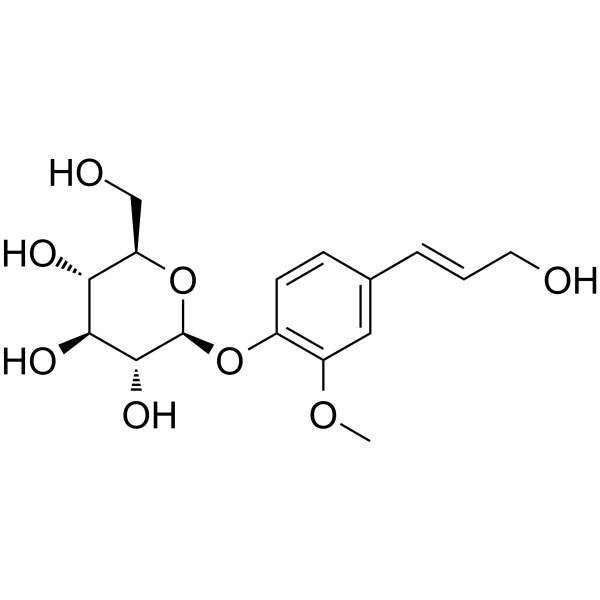
Coniferin (Standard) is an analytical standard for Coniferin. This product is intended for research and analytical applications. Coniferin (Laricin) is a glucoside of coniferyl alcohol. Coniferin inhibits fungal melanization. Coniferin inhibits the release of certain hormones from cells, including Prostaglandin E2 and Thromboxane B2 [2] .
|
-
- HY-18763R
-
|
Ibustrin (Standard)
|
Reference Standards
COX
|
Cardiovascular Disease
|
|
Indobufen (Standard) is the analytical standard of Indobufen. This product is intended for research and analytical applications. Indobufen is a platelet aggregation inhibitor. Indobufen is a reversible platelet cyclooxygenase (Cox) activity inhibitor. Indobufen suppresses thromboxane A2 (TxA2) synthesis. Indobufen down-regulates tissue factor (TF) in monocytes .
|
-
- HY-160615
-
-
- HY-116431
-
|
|
Prostaglandin Receptor
|
Cardiovascular Disease
Neurological Disease
|
|
I-BOP is an agonist for thromboxane A2 receptor (TP) with a KD of 0.61 nM. I-BOP promotes proliferation through activation of PI3K pathway in vascular smooth muscle . I-BOP dose-dependently biphasicly affects the excitatory postsynaptic potential (e.p.s.p.) in hippocampal neurons [2].
|
-
- HY-117842
-
|
|
Histamine Receptor
|
Inflammation/Immunology
|
|
KY 234 is an orally effective inhibitor that targets thromboxane A2 production, with an IC50 of 5 μM. KY 234 significantly inhibits leukotriene D4 (LTD4), histamine, and antigen-induced bronchoconstriction in guinea pigs, with IC50 values of 6.0 mg/kg, 2.5 mg/kg, and 6.3 mg/kg, respectively .
|
-
- HY-106080AR
-
|
U-63557A (Standard)
|
Prostaglandin Receptor
Reference Standards
|
Cardiovascular Disease
|
|
Furegrelate (sodium) (Standard) is the analytical standard of Furegrelate (sodium). This product is intended for research and analytical applications. Furegrelate Sodium (U-63557A) is a potent, orally available, and selective thromboxane synthase inhibitor. Furegrelate Sodium inhibits human platelet microsomal thromboxane A2 (TxA2) synthase with an IC50 of 15 nM. Furegrelate Sodium is being developed as an antiplatelet agent [2].
|
-
- HY-176022
-
|
|
Prostaglandin Receptor
|
Cardiovascular Disease
|
|
U-46619 serinol amide is a derivative of U-46619 (HY-108566). U-46619 serinol amide is a stable analog of Thromboxane A2 (HY-113350) (TXA2). U-46619 serinol amide is a potent TXA2 agonist that can induce platelet shape change and aggregation .
|
-
- HY-100484
-
|
|
Prostaglandin Receptor
|
Neurological Disease
|
|
KC-764 is an orally active, reversible cyclooxygenase inhibitor with relative selectivity for platelet cyclooxygenase. KC-764 inhibits platelet thromboxane A2 (TXA2) production and platelet aggregation, with IC50s of 0.23 μM and 26 nM, respectively. KC-764 can be used for the research on antiplatelet and recurrence prevention in ischemic stroke .
|
-
- HY-19078
-
|
|
Prostaglandin Receptor
|
Cardiovascular Disease
|
|
SQ-30741 is a thromboxane A2 receptor antagonist. SQ-30741 reduces vasoconstriction in a feline pulmonary vascular bed model. SQ-30741 increases relaxation of aortic endothelium and vascular smooth muscle in adult rats in a spontaneously hypertensive rat model. SQ-30741 can be used in research on cardiovascular diseases such as hypertension [2].
|
-
- HY-125122
-
|
|
Others
|
Inflammation/Immunology
|
|
Mulberrofuran A is a natural product, that can be isolated from the root bark of mulberry tree. Mulberrofuran A inhibits the formations of 12-hydroxy-,8,10-heptadecatrienoic acid (HHT) and thromboxane B2 (cyclooxygenase products), but it increases the formation of 12-hydroxy-5,8,10,14-eicosatetraenoic acid (12-HETE) (12-lipoxygenase product) .
|
-
- HY-123400A
-
|
iso-DTTX30; iso-DT-TX 30 SE
|
Prostaglandin Receptor
|
Cardiovascular Disease
|
|
Iso-Samixogrel (iso-DTTX30) is a combined thromboxane A2 receptor blocker and thromboxane synthetase inhibitor that exhibits potent antithrombotic activity. Iso-Samixogrel effectively eliminates recurrent arterial thrombus formation and inhibits collagen-induced platelet aggregation ex vivo. Iso-Samixogrel also prolongs sublingual bleeding time, demonstrating its biological efficacy in managing thrombosis.
|
-
- HY-116778
-
|
|
Reactive Oxygen Species (ROS)
|
Cardiovascular Disease
Neurological Disease
Inflammation/Immunology
|
|
Prostaglandin G2 is a prostaglandin peroxide. Prostaglandin G2 acts as a precursor for thromboxane A2 production, inducing platelet aggregation and serotonin release. Prostaglandin G2 also induces cerebral arteriole injury in anesthetized cats via the generation of reactive oxygen free radicals, triggering persistent vasodilation, reduced reactivity to hypocapnia, and endothelial damage. Prostaglandin G2 can be used in studies related to cerebral arteriole injury [2].
|
-
- HY-19129
-
|
|
Prostaglandin Receptor
|
Cardiovascular Disease
|
|
KT2-962 is a thromboxane A2 (TXA2) receptor antagonist and potent hydroxyl radical scavenger (IC50=500 nM). KT2-962 reduces myocardial infarct size and ventricular fibrillation. KT2-962 demonstrates cardioprotective effect in a canine ischemia/reperfusion model. KT2-962 is promising for research of myocardial ischemia-reperfusion injury and TXA2-mediated vascular diseases .
|
-
- HY-169803
-
|
|
Prostaglandin Receptor
|
Cardiovascular Disease
|
|
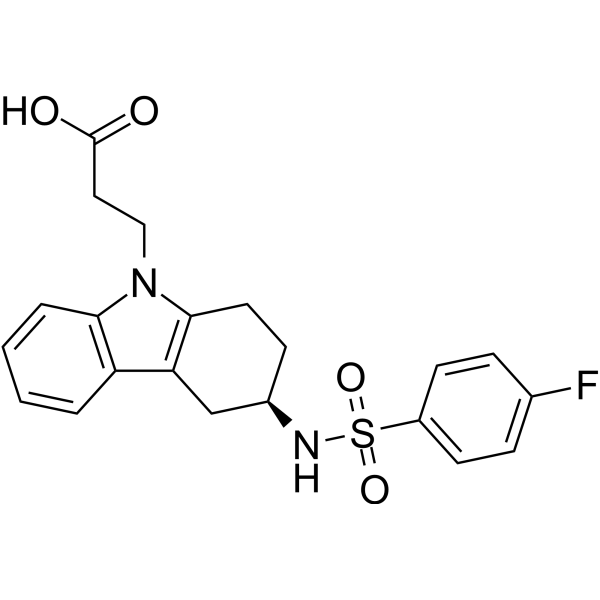
L-657926 is a stereoselective antagonist of the thromboxane A2 (TxA2) receptor, composed of (-)-9-chlorobenzyl-6-fluoro-1,2,3,4-tetrahydrocarbazol-1-yl acetic acid and (+)-9-chlorobenzyl-6-fluoro-1,2,3,4-tetrahydrocarbazol-l-yl acetic acid. The IC50s of (-) and (+) configurations for TxA2 are 0.27 nM and 124 nM, respectively.
|
-
- HY-B0428D
-
|
(E/Z)-OKY-046 sodium
|
Prostaglandin Receptor
|
Cardiovascular Disease
Neurological Disease
Inflammation/Immunology
|
|
(E/Z)-Ozagrel sodium [(E/Z)-OKY-046 sodium] is an EZ configuration mixture of Ozagrel sodium (HY-B0428A). Ozagrel sodium (OKY-046 sodium) is a high selective and orally active thromboxane A2 (TXA2) synthase inhibitor with an IC50 of 11 nM. Ozagrel sodium exerts anti-platelet aggregation, vasodilation and anti-inflammatory effects by inhibiting the production of TXA2 and increasing the production of prostacyclin (PGI2). Ozagrel sodium can be used for the study of ischemic stroke, asthma and thromboembolic diseases [2] .
|
-
- HY-113331F
-
|
|
Biochemical Assay Reagents
|
Others
|
|
Thromboxane B2-biotin is an affinity probe that allows detection of thromboxane B2 through an interaction with the biotin ligand. Thromboxane B2-biotin is designed to allow thromboxane B2 to be detected in complexes with protein binding partners [2] .
|
-
- HY-123400
-
-
- HY-A0221R
-
|
R 68070 (Standard)
|
Prostaglandin Receptor
Reference Standards
|
Inflammation/Immunology
|
|
Ridogrel (Standard) is the analytical standard of Ridogrel. This product is intended for research and analytical applications. Ridogrel (R 68070) is an orally active combined thromboxane A2 synthetase inhibitor and thromboxane A2/prostaglandin endoperoxide receptor blocker. Ridogrel is potent antiplatelet agent. Anti-inflammatory activities [2] .
|
-
- HY-165674S
-
|
11-dehydo-2,3-dio TXB2-d9
|
Isotope-Labeled Compounds
|
Others
|
|
11-dehydro-2,3-dinor Thromboxane B2-d9 (11-dehydo-2,3-dio TXB2-d9) is deuterium labeled 11-dehydro-2,3-dinor Thromboxane B2 .
|
-
- HY-120975
-
-
- HY-106111A
-
|
|
Prostaglandin Receptor
|
Cardiovascular Disease
|
|
Nafagrel hydrochloride is a thromboxane A2 synthetase inhibitor. Nafagrel hydrochloride can prevent the accumulation of thrombus material in a rat model of acute arterial thrombosis [2].
|
-
- HY-106398
-
|
|
Prostaglandin Receptor
|
Cardiovascular Disease
|
|
MED 27 is an inhibitor of thromboxane synthase and thromboxane A2 receptors. MED 27 can inhibit rat platelet aggregation at doses much lower than that of Acetylsalicylic acid (HY-14654) .
|
-
- HY-108282
-
-
- HY-B1735A
-
|
|
Prostaglandin Receptor
|
Cardiovascular Disease
Metabolic Disease
|
|
Picotamide monohydrate is a combined inhibitor of thromboxane A2 (TxA2) synthase and receptor. Picotamide monohydrate has antiplatelet activity. Picotamide monohydrate promotes the reduction of microalbuminuria and the inhibition of growth of carotid plaques in diabetes. Picotamide monohydrate can be used for researching acute or chronic cardiovascular diseases .
|
-
- HY-129230
-
|
|
Endogenous Metabolite
|
Cardiovascular Disease
|
|
Triletide is a thromboxane A2 antagonist with good oral absorption activity. The biotransformation of Triletide mainly includes the formation of demethyl, deacetyl, demethyl-deacetyl and hydroxy derivatives. The distribution half-life of Triletide is about 1 hour, and the elimination half-life is about 5 hours .
|
-
- HY-101700A
-
|
|
Prostaglandin Receptor
|
Cardiovascular Disease
|
|
LCB 2853 sodium is a potent thromboxane A2/prostaglandin H2 (TXA2/PGH2) receptor antagonist. LCB 2853 sodium exhibits anti-aggregant and anti-vasospastic effects. LCB 2853 sodium can be used for the research of cardiovascular disease, such as hypertension .
|
-
- HY-105218AR
-
|
BMS-180291 sodium (Standard)
|
Reference Standards
Prostaglandin Receptor
|
Cardiovascular Disease
Endocrinology
Cancer
|
|
Ifetroban sodium (Standard) is the analytical standard of Ifetroban sodium (HY-105218A). This product is intended for research and analytical applications. Ifetroban (BMS-180291) sodium is an orally active antagonist of thromboxane A2 (TXA2) or prostaglandin H2 (PGH2) receptor. Ifetroban sodium shows antiplatelet activity, and inhibits tumor cell migration without affecting cell proliferation. Ifetroban sodium can be used for myocardial ischemia, hypertension, stroke, thrombosis, cardiomyopathy research [2] .
|
-
- HY-179246
-
|
|
COX
Prostaglandin Receptor
|
Cardiovascular Disease
Neurological Disease
Inflammation/Immunology
|
|
CXT29 is an orally active COX-2 inhibitor and a thromboxane A2 receptor (TP) antagonist. CXT29 exhibits COX inhibitory activity and selectivity, with IC50 values of 13 and 722 nM for COX-2 and COX-1 respectively. CXT29 inhibits platelet aggregation induced by U-46619 (HY-108566) (a TP agonist), with an IC50 of 96 nM. CXT29 effectively inhibits the production of TXB₂ and PGE₂, significantly reducing platelet aggregation and inflammatory pain in mice. CXT29 can be used for research on inflammatory pain and cardiovascular diseases .
|
-
- HY-12463A
-
|
|
Adrenergic Receptor
|
Inflammation/Immunology
|
|
Carmoterol is a highly potent and selective long-acting β2-adrenergic receptor agonist with a pEC50 of 10.19. Carmoterol shows 53-fold higher affinity for β2-adrenergic receptors than for β1-adrenergic receptors. Carmoterol stimulates cyclic adenosine monophosphate accumulation, induces airway smooth muscle relaxation, inhibits bronchoconstriction, reduces thromboxane B2 release, and prolongs survival time. Carmoterol can be used in research related to asthma and chronic obstructive pulmonary disease (COPD) [2] .
|
-
- HY-130304S
-
|
iPE2-III-d4
|
Isotope-Labeled Compounds
Prostaglandin Receptor
|
Cardiovascular Disease
|
|
8-Isoprostaglandin E2-d4 (iPE2-III-d4) is deuterium labeled 8-Isoprostaglandin E2. 8-Isoprostaglandin E2 (iPE2-III) is a member of the isoprostane class of prostanoids. 8-Isoprostaglandin E2 acts at the receptor for thromboxane A2 (the TP) in vivo to induce vasoconstriction and platelet aggregation. 8-Isoprostaglandin E2 enhances receptor-activated NFkappa B ligand (RANKL)-dependent osteoclastic potential of marrow hematopoietic precursors via the cAMP pathway [2].
|
-
- HY-P0216A
-
|
|
Angiotensin Receptor
|
Cardiovascular Disease
|
|
A-779 TFA is a selective angiotensin-(1-7) (Ang-(1-7)) antagonist. A-779 TFA blocks Arachidonic acid release, bradykinin potentiation effects and hypotensive action. A-779 TFA exerts diuretic effects in non-pregnant rats, antidiuretic effects in late-pregnant rats, and also inhibits feed intake and water consumption in late-pregnant rats. A-779 TFA attenuates the regulatory effects of prostacyclin, nitric oxide and thromboxane A2 associated with angiotensin-(1-7). A-779 TFA can be used in studies related to hypertension [2] .
|
-
- HY-N0652R
-
|
2,3,4',5-Tetrahydroxystilbene 2-O-D-glucoside (Standard)
|
Reference Standards
ERK
NF-κB
|
Cardiovascular Disease
Neurological Disease
|
|
2,3,5,4'-Tetrahydroxystilbene 2-O-β-D-glucoside (Standard) is the analytical standard of 2,3,5,4'-Tetrahydroxystilbene 2-O-β-D-glucoside. This product is intended for research and analytical applications. 2,3,5,4'-Tetrahydroxystilbene 2-O-β-D-glucoside isolats from the roots of Polygonaceae species, inhibits the formation of 5-HETE, HHT and thromboxane B2. 2,3,5,4'-Tetrahydroxystilbene 2-O-β-D-glucoside has hypotensive, anti-ageing, anti-inflammatory, hypolipidemic, cardioprotective, and neuroprotective actions [2].
|
-
- HY-D0837
-
|
Glyoxaline; 1,3-Diaza-2,4-cyclopentadiene
|
MOFs
Ser/Thr Protease
Thrombopoietin Receptor
|
Neurological Disease
Inflammation/Immunology
|
|
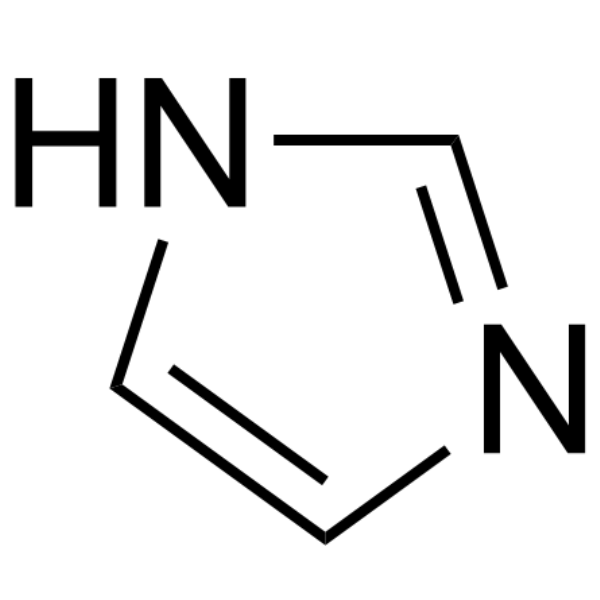
Imidazole (Glyoxaline; 1,3-Diaza-2,4-cyclopentadiene) is a heterocyclic aromatic compound. Imidazole bearing molecules have been used as corrosion, acetylcholinesterase (AChEI) and xanthine oxidase (XO) inhibitors, performing biological activities such as antifungal, antituberculosis, anti-inflammatory, antioxidant, and analgesic, amongst many others. Imidazole inhibits the enzymatic conversion of the endoperoxides (PGG2 and PGH2) to thromboxane A2 by platelet microsomes. Imidazole derivatives exhibits inhibition on SARS-CoV-2 3CL Pro enzyme, which is promising for research in the field of Alzheimer’s disease, gout, COVID-19 and thrombo-embolic disease [2] .
|
-
- HY-B1016
-
|
AR-12008
|
PDGFR
Phosphodiesterase (PDE)
Prostaglandin Receptor
|
Cardiovascular Disease
Neurological Disease
|
|
Trapidil (AR-12008) is an orally active vasodilator and antiplatelet agent. Trapidil antagonizes platelet-derived growth factor (PDGF), inhibits phosphodiesterase, thromboxane A2 synthesis and pro-inflammatory cytokine production. Trapidil promotes prostacyclin biosynthesis, reduces lipid peroxidation, regulates nitric oxide metabolism, and inhibits cell proliferation and migration. Trapidil exerts tissue-protective effects, regulates bone turnover, and inhibits pyroptosis via the GPX3/Nrf2 pathway. Trapidil is applicable to research related to renal ischemia-reperfusion injury, chronic stable angina, restenosis, meningioma, diabetic cardiomyopathy and peripheral nerve crush injury [2] .
|
-
- HY-W699983
-
|
Glyoxaline-15N2; 1,3-Diaza-2,4-cyclopentadiene-15N2
|
Isotope-Labeled Compounds
Thrombopoietin Receptor
Ser/Thr Protease
Xanthine Oxidase
|
Neurological Disease
Inflammation/Immunology
|
|
Imidazole- 15N2 (Glyoxaline- 15N2) is 15N labeled Imidazole. Imidazole (Glyoxaline; 1,3-Diaza-2,4-cyclopentadiene) is a heterocyclic aromatic compound. Imidazole bearing molecules have been used as corrosion, acetylcholinesterase (AChEI) and xanthine oxidase (XO) inhibitors, performing biological activities such as antifungal, antituberculosis, anti-inflammatory, antioxidant, and analgesic, amongst many others. Imidazole inhibits the enzymatic conversion of the endoperoxides (PGG2 and PGH2) to thromboxane A2 by platelet microsomes. Imidazole derivatives exhibits inhibition on SARS-CoV-2 3CL Pro enzyme, which is promising for research in the field of Alzheimer’s disease, gout, COVID-19 and thrombo-embolic disease [2] .
|
-
- HY-D0837R
-
|
Glyoxaline (Standard); 1,3-Diaza-2,4-cyclopentadiene (Standard)
|
Xanthine Oxidase
Reference Standards
Ser/Thr Protease
Thrombopoietin Receptor
|
Neurological Disease
Inflammation/Immunology
|
|
Imidazole (Standard) is the analytical standard of Imidazole. This product is intended for research and analytical applications. Imidazole (Glyoxaline; 1,3-Diaza-2,4-cyclopentadiene) is a heterocyclic aromatic compound. Imidazole bearing molecules have been used as corrosion, acetylcholinesterase (AChEI) and xanthine oxidase (XO) inhibitors, performing biological activities such as antifungal, antituberculosis, anti-inflammatory, antioxidant, and analgesic, amongst many others. Imidazole inhibits the enzymatic conversion of the endoperoxides (PGG2 and PGH2) to thromboxane A2 by platelet microsomes. Imidazole derivatives exhibits inhibition on SARS-CoV-2 3CLPro enzyme, which is promising for research in the field of Alzheimer’s disease, gout, COVID-19 and thrombo-embolic disease [2] .
|
-
- HY-B1016R
-
|
AR-12008 (Standard)
|
Reference Standards
PDGFR
Phosphodiesterase (PDE)
Prostaglandin Receptor
|
Cardiovascular Disease
Cancer
|
|
Trapidil (Standard) (AR-12008 (Standard)) is the analytical standard of Trapidil (HY-B1016R). This product is intended for research and analytical applications. Trapidil (AR-12008) is an orally active vasodilator and antiplatelet agent. Trapidil antagonizes platelet-derived growth factor (PDGF), inhibits phosphodiesterase, thromboxane A2 synthesis and pro-inflammatory cytokine production. Trapidil promotes prostacyclin biosynthesis, reduces lipid peroxidation, regulates nitric oxide metabolism, and inhibits cell proliferation and migration. Trapidil exerts tissue-protective effects, regulates bone turnover, and inhibits pyroptosis via the GPX3/Nrf2 pathway. Trapidil is applicable to research related to renal ischemia-reperfusion injury, chronic stable angina, restenosis, meningioma, diabetic cardiomyopathy and peripheral nerve crush injury.
|
-
- HY-13219
-
|
|
COX
Lipoxygenase
Reactive Oxygen Species (ROS)
NF-κB
|
Neurological Disease
Inflammation/Immunology
|
|
Tepoxalin is an orally active dual inhibitor of Cyclooxygenase/Lipoxygenase, with IC50 values of 4.6 μM (sheep cyclooxygenase), 2.85 μM (rat cyclooxygenase), 0.15 μM (rat 5-lipoxygenase), and 3.0 μM (h12-lipoxygenase), respectively. Tepoxalin inhibits ROS production and NF-κB activation. Tepoxalin suppresses the production of thromboxane B2, leukotriene B4, prostaglandins and cytokines, and blocks platelet aggregation. Tepoxalin exhibits potent anti-inflammatory activity in rats with adjuvant-induced arthritis. Tepoxalin possesses analgesic activity. Tepoxalin shows no ulcerogenic activity within the anti-inflammatory dose range. Tepoxalin can be used in studies related to adjuvant-induced arthritis, skin inflammation and Alzheimer's disease [2] .
|
-
- HY-100516
-
|
UR-8880
|
COX
Cytochrome P450
|
Inflammation/Immunology
|
|
Cimicoxib (UR-8880) is an orally active, blood-brain barrier-permeable COX-2 inhibitor that also exerts targeted inhibition on CYP2D15. It has an IC50 of 66 nM against hCOX-2, an IC50 of 1.6 μM against canine CYP2D15, and an IC50 of 0.056 μM against feline CYP2D15. By inhibiting the COX-2 pathway to reduce the production of thromboxane B2 and prostaglandin E2, Cimicoxib exerts antipyretic, anti-inflammatory and analgesic effects. Cimicoxib is metabolized by CYP2D15 to form demethyl-cimicoxib, undergoes glucuronidation via UDP-glucuronosyltransferases, and exhibits biphasic elimination kinetics in beagle dogs. Cimicoxib is widely used in studies of inflammatory diseases, osteoarthritis, and perioperative pain associated with orthopedic or soft tissue surgeries [2] .
|
-
- HY-100516R
-
|
UR-8880 (Standard)
|
Reference Standards
Cytochrome P450
COX
|
Inflammation/Immunology
|
|
Cimicoxib (Standard) is the analytical standard of Cimicoxib. This product is intended for research and analytical applications. Cimicoxib (UR-8880) is an orally active, blood-brain barrier-permeable COX-2 inhibitor that also exerts targeted inhibition on CYP2D15. It has an IC50 of 66 nM against hCOX-2, an IC50 of 1.6 μM against canine CYP2D15, and an IC50 of 0.056 μM against feline CYP2D15. By inhibiting the COX-2 pathway to reduce the production of thromboxane B2 and prostaglandin E2, Cimicoxib exerts antipyretic, anti-inflammatory and analgesic effects. Cimicoxib is metabolized by CYP2D15 to form demethyl-cimicoxib, undergoes glucuronidation via UDP-glucuronosyltransferases, and exhibits biphasic elimination kinetics in beagle dogs. Cimicoxib is widely used in studies of inflammatory diseases, osteoarthritis, and perioperative pain associated with orthopedic or soft tissue surgeries [2] .
|
-
| Cat. No. |
Product Name |
Type |
-
- HY-D0837
-
|
Glyoxaline; 1,3-Diaza-2,4-cyclopentadiene
|
Biochemical Assay Reagents
|
|
Imidazole (Glyoxaline; 1,3-Diaza-2,4-cyclopentadiene) is a heterocyclic aromatic compound. Imidazole bearing molecules have been used as corrosion, acetylcholinesterase (AChEI) and xanthine oxidase (XO) inhibitors, performing biological activities such as antifungal, antituberculosis, anti-inflammatory, antioxidant, and analgesic, amongst many others. Imidazole inhibits the enzymatic conversion of the endoperoxides (PGG2 and PGH2) to thromboxane A2 by platelet microsomes. Imidazole derivatives exhibits inhibition on SARS-CoV-2 3CL Pro enzyme, which is promising for research in the field of Alzheimer’s disease, gout, COVID-19 and thrombo-embolic disease [2] .
|
-
- HY-130444
-
|
PinaneThromboxane A2
|
Biochemical Assay Reagents
|
|
PTA2 (Pinane thromboxane A2) is a biochemical reagent that can be used as a biological material or organic compound for life science related research.
|
-
- HY-D0837R
-
|
Glyoxaline (Standard); 1,3-Diaza-2,4-cyclopentadiene (Standard)
|
Biochemical Assay Reagents
|
|
Imidazole (Standard) is the analytical standard of Imidazole. This product is intended for research and analytical applications. Imidazole (Glyoxaline; 1,3-Diaza-2,4-cyclopentadiene) is a heterocyclic aromatic compound. Imidazole bearing molecules have been used as corrosion, acetylcholinesterase (AChEI) and xanthine oxidase (XO) inhibitors, performing biological activities such as antifungal, antituberculosis, anti-inflammatory, antioxidant, and analgesic, amongst many others. Imidazole inhibits the enzymatic conversion of the endoperoxides (PGG2 and PGH2) to thromboxane A2 by platelet microsomes. Imidazole derivatives exhibits inhibition on SARS-CoV-2 3CLPro enzyme, which is promising for research in the field of Alzheimer’s disease, gout, COVID-19 and thrombo-embolic disease [2] .
|
| Cat. No. |
Product Name |
Target |
Research Area |
-
- HY-P0216A
-
|
|
Angiotensin Receptor
|
Cardiovascular Disease
|
|
A-779 TFA is a selective angiotensin-(1-7) (Ang-(1-7)) antagonist. A-779 TFA blocks Arachidonic acid release, bradykinin potentiation effects and hypotensive action. A-779 TFA exerts diuretic effects in non-pregnant rats, antidiuretic effects in late-pregnant rats, and also inhibits feed intake and water consumption in late-pregnant rats. A-779 TFA attenuates the regulatory effects of prostacyclin, nitric oxide and thromboxane A2 associated with angiotensin-(1-7). A-779 TFA can be used in studies related to hypertension [2] .
|
| Cat. No. |
Product Name |
Category |
Target |
Chemical Structure |
-
- HY-N0652
-
|
2,3,4',5-Tetrahydroxystilbene 2-O-D-glucoside
|
Stilbenes
Classification of Application Fields
Polygonaceae
Other Diseases
Phenols
Polyphenols
Fallopia multiflora (Thunb.) Harald.
Plants
Disease Research Fields
Source Classification
|
ERK
NF-κB
|
|
2,3,5,4'-Tetrahydroxystilbene 2-O-β-D-glucoside isolats from the roots of Polygonaceae species, inhibits the formation of 5-HETE, HHT and thromboxane B2. 2,3,5,4'-Tetrahydroxystilbene 2-O-β-D-glucoside has hypotensive, anti-ageing, anti-inflammatory, hypolipidemic, cardioprotective, and neuroprotective actions [2].
|
-
-
- HY-N3617
-
-
-
- HY-N2391
-
-
-
- HY-113420
-
-
-
- HY-N5031
-
-
-
- HY-N0652R
-
|
2,3,4',5-Tetrahydroxystilbene 2-O-D-glucoside (Standard)
|
Structural Classification
Stilbenes
Polygonaceae
Phenols
Polyphenols
Fallopia multiflora (Thunb.) Harald.
Plants
Source Classification
|
Reference Standards
ERK
NF-κB
|
|
2,3,5,4'-Tetrahydroxystilbene 2-O-β-D-glucoside (Standard) is the analytical standard of 2,3,5,4'-Tetrahydroxystilbene 2-O-β-D-glucoside. This product is intended for research and analytical applications. 2,3,5,4'-Tetrahydroxystilbene 2-O-β-D-glucoside isolats from the roots of Polygonaceae species, inhibits the formation of 5-HETE, HHT and thromboxane B2. 2,3,5,4'-Tetrahydroxystilbene 2-O-β-D-glucoside has hypotensive, anti-ageing, anti-inflammatory, hypolipidemic, cardioprotective, and neuroprotective actions [2].
|
-
-
- HY-N2391R
-
-
-
- HY-N3617R
-
-
-
- HY-125122
-
|
|
Monophenols
Phenols
Morus alba L.
Plants
Moraceae
Source Classification
|
Others
|
|
Mulberrofuran A is a natural product, that can be isolated from the root bark of mulberry tree. Mulberrofuran A inhibits the formations of 12-hydroxy-,8,10-heptadecatrienoic acid (HHT) and thromboxane B2 (cyclooxygenase products), but it increases the formation of 12-hydroxy-5,8,10,14-eicosatetraenoic acid (12-HETE) (12-lipoxygenase product) .
|
-
-
- HY-116778
-
|
|
Source Classification
|
Reactive Oxygen Species (ROS)
|
|
Prostaglandin G2 is a prostaglandin peroxide. Prostaglandin G2 acts as a precursor for thromboxane A2 production, inducing platelet aggregation and serotonin release. Prostaglandin G2 also induces cerebral arteriole injury in anesthetized cats via the generation of reactive oxygen free radicals, triggering persistent vasodilation, reduced reactivity to hypocapnia, and endothelial damage. Prostaglandin G2 can be used in studies related to cerebral arteriole injury [2].
|
-
| Cat. No. |
Product Name |
Chemical Structure |
-
- HY-113331S1
-
|
|
|
Thromboxane B2-d9 is deuterium labeled Thromboxane B2. Thromboxane B2 is a prostaglandin derivative that is released during anaphylaxis. Thromboxane B2 induces arterial contraction and platelet aggregation .
|
-
-
- HY-113331S
-
|
|
|
Thromboxane B2-D4 is the deuterium labeled Thromboxane B2. Thromboxane B2 is a prostaglandin derivative that is released during anaphylaxis. Thromboxane B2 induces arterial contraction and platelet aggregation [2].
|
-
-
- HY-113420S2
-
|
|
|
11-Dehydro-thromboxane B2- 13C5 is 13C labeled 11-Dehydro-thromboxane B2 (HY-113420). 11-Dehydro-thromboxane B2 is a platelet hemagglutinin. Thromboxane inhibition was assessed by urinary excretion levels of 11-Dehydro-thromboxane B2. 11-Dehydro-thromboxane B2 can be used in the study of atherosclerotic thrombosis [2].
|
-
-
- HY-113420S
-
|
|
|
11-Dehydro-thromboxane B2-d4 is the deuterium labeled 11-Dehydro-thromboxane B2 .
|
-
-
- HY-B0745S
-
|
|
|
Ramatroban-d4 is deuterium labeled Ramatroban. Ramatroban is a selective thromboxane A2 (TxA2, IC50=14 nM) antagonist, which also antagonizes CRTH2 (IC50=113 nM) by inhibiting PGD2 binding.
|
-
-
- HY-18763S
-
|
|
|
Indobufen-d5 is deuterium labeled Indobufen. Indobufen is a platelet aggregation inhibitor. Indobufen is a reversible platelet cyclooxygenase (Cox) activity inhibitor. Indobufen suppresses thromboxane A2 (TxA2) synthesis. Indobufen down-regulates tissue factor (TF) in monocytes .
|
-
-
- HY-130304S
-
|
|
|
8-Isoprostaglandin E2-d4 (iPE2-III-d4) is deuterium labeled 8-Isoprostaglandin E2. 8-Isoprostaglandin E2 (iPE2-III) is a member of the isoprostane class of prostanoids. 8-Isoprostaglandin E2 acts at the receptor for thromboxane A2 (the TP) in vivo to induce vasoconstriction and platelet aggregation. 8-Isoprostaglandin E2 enhances receptor-activated NFkappa B ligand (RANKL)-dependent osteoclastic potential of marrow hematopoietic precursors via the cAMP pathway [2].
|
-
-
- HY-W699983
-
|
|
|
Imidazole- 15N2 (Glyoxaline- 15N2) is 15N labeled Imidazole. Imidazole (Glyoxaline; 1,3-Diaza-2,4-cyclopentadiene) is a heterocyclic aromatic compound. Imidazole bearing molecules have been used as corrosion, acetylcholinesterase (AChEI) and xanthine oxidase (XO) inhibitors, performing biological activities such as antifungal, antituberculosis, anti-inflammatory, antioxidant, and analgesic, amongst many others. Imidazole inhibits the enzymatic conversion of the endoperoxides (PGG2 and PGH2) to thromboxane A2 by platelet microsomes. Imidazole derivatives exhibits inhibition on SARS-CoV-2 3CL Pro enzyme, which is promising for research in the field of Alzheimer’s disease, gout, COVID-19 and thrombo-embolic disease [2] .
|
-
-
- HY-165674S
-
|
|
|
11-dehydro-2,3-dinor Thromboxane B2-d9 (11-dehydo-2,3-dio TXB2-d9) is deuterium labeled 11-dehydro-2,3-dinor Thromboxane B2 .
|
-
Your information is safe with us. * Required Fields.
Inquiry Information
- Product Name:
- Cat. No.:
- Quantity:
- MCE Japan Authorized Agent:

