



Ozagrel hydrochloride
Based on 1 publication(s) in Google Scholar
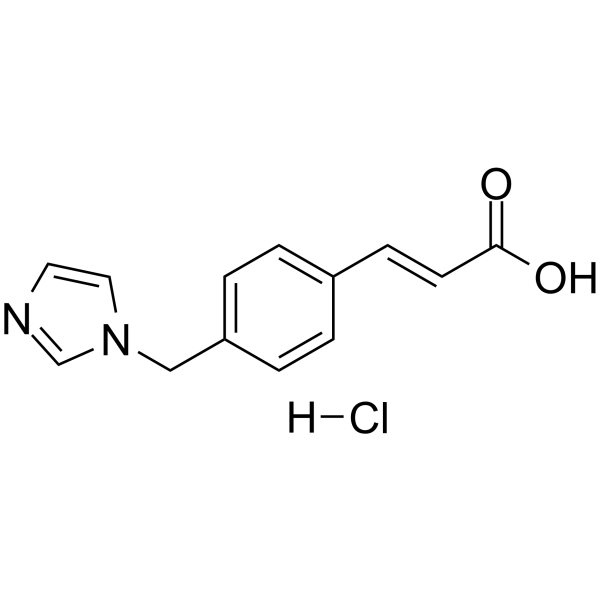
Ozagrel hydrochloride (OKY-046 hydrochloride) is a high selective and orally active thromboxane A2 (TXA2) synthase inhibitor with an IC50 of 11 nM. Ozagrel hydrochloride exerts anti-platelet aggregation, vasodilation and anti-inflammatory effects by inhibiting the production of TXA2 and increasing the production of prostacyclin (PGI2). Ozagrel hydrochloride can be used for the study of ischemic stroke, asthma and thromboembolic diseases.
For research use only. We do not sell to patients.
- Purity : 99.86%
- CAS No.: 78712-43-3
- Formula: C13H13ClN2O2
- Molecular Weight:264.71
-
Storage:
4°C, sealed storage, away from moisture
* In solvent : -80°C, 6 months; -20°C, 1 month (sealed storage, away from moisture)

To place orders, for customer services and technical support, please contact: MedChemExpress USA
Tel: 609-228-6898 E-mail: [email protected] [email protected]


-
 Biological Activity
-
Chemical Information
-
Solvent & Solubility
- Protocols
- Purity & Documentation
- References
-
 Help & FAQs


-
HY-17473
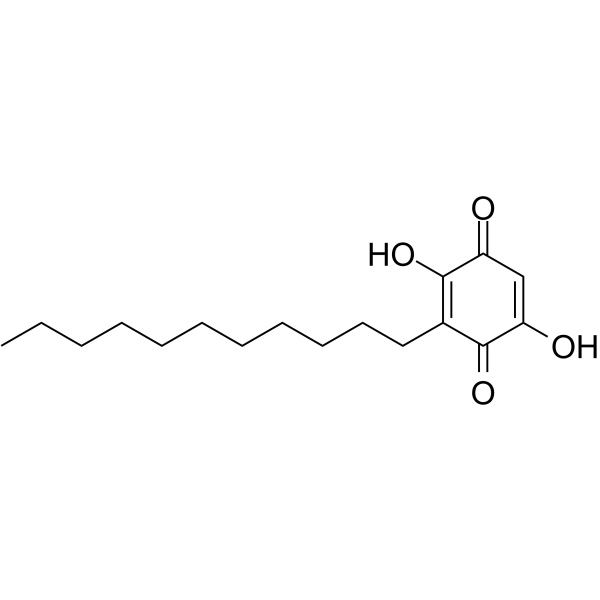
EmbelinXIAP Inhibitor -
HY-106067A
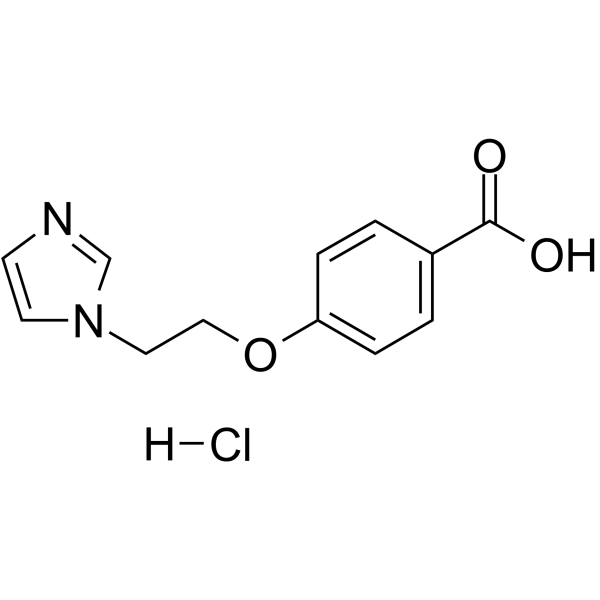
Dazoxiben hydrochlorideThromboxane Synthase Inhibitor -
HY-70013
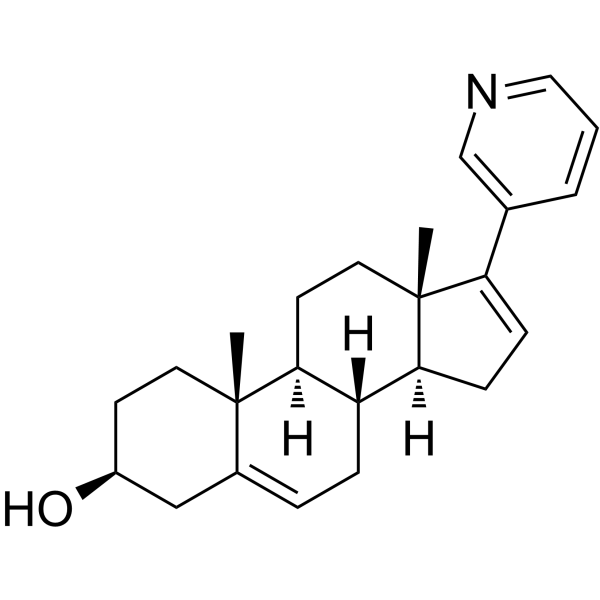
AbirateroneCYP17A1 Inhibitor -
HY-101952
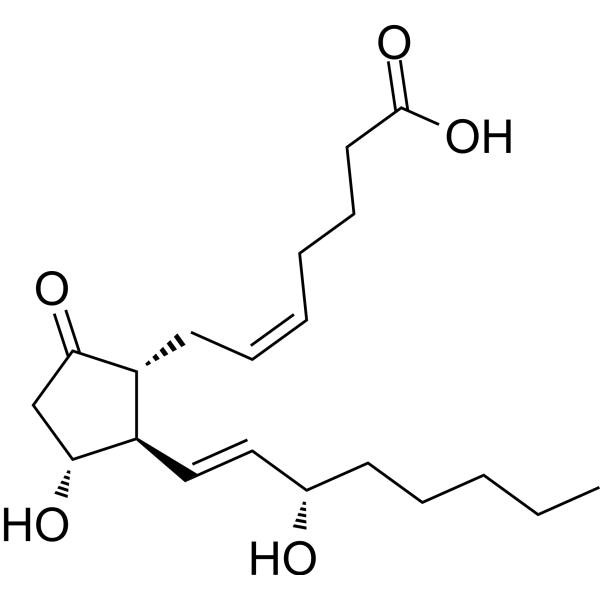
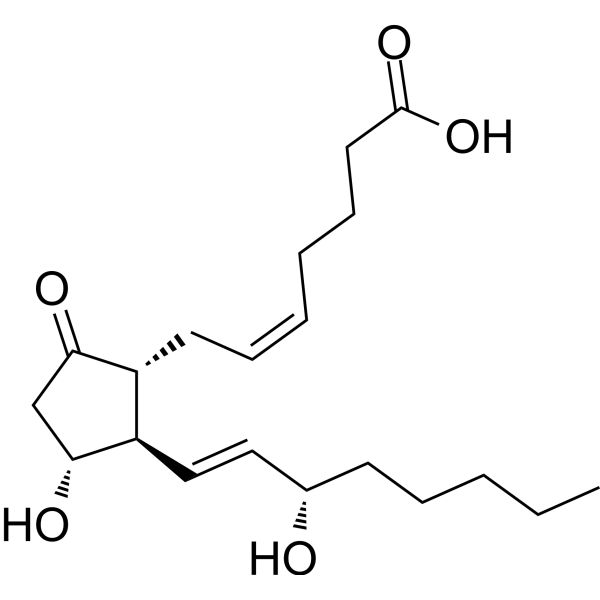
Prostaglandin E2Prostaglandin Receptor Agonist -
HY-75054
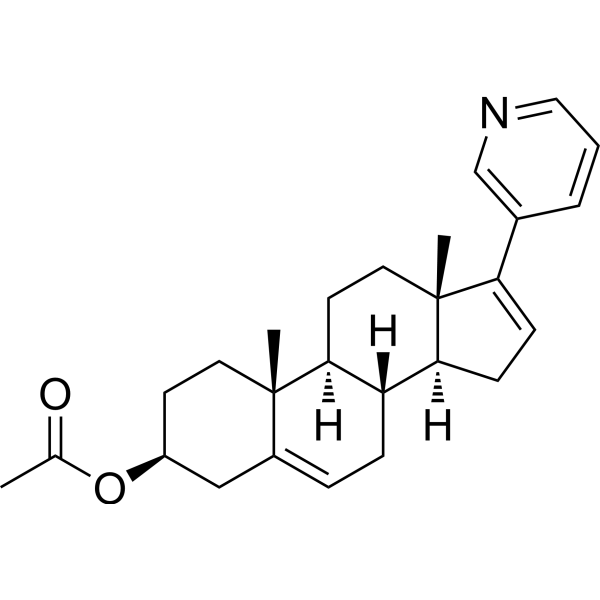
Abiraterone acetateCYP17A1 Inhibitor -

HY-B0428BR
Ozagrel hydrochloride (Standard)Standard of Ozagrel hydrochloride -
HY-B0131
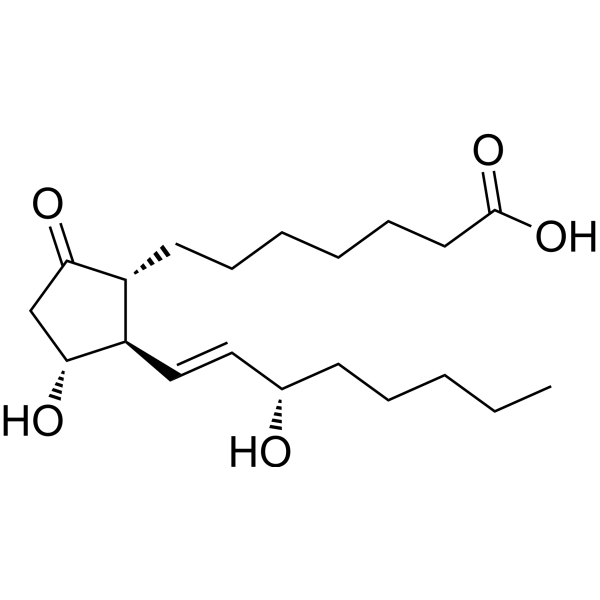
Prostaglandin E1Vasodilator -
HY-101952R
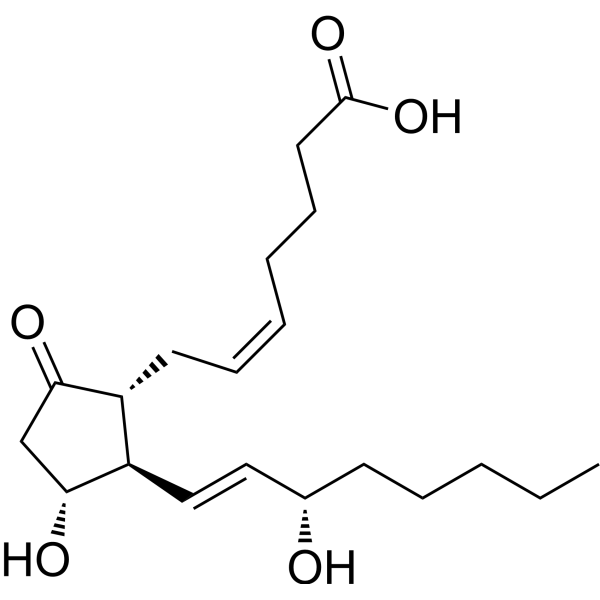
Prostaglandin E2 (Standard) -
HY-101952G
Prostaglandin E2 (GMP)Inflammatory Mediator (GMP) -
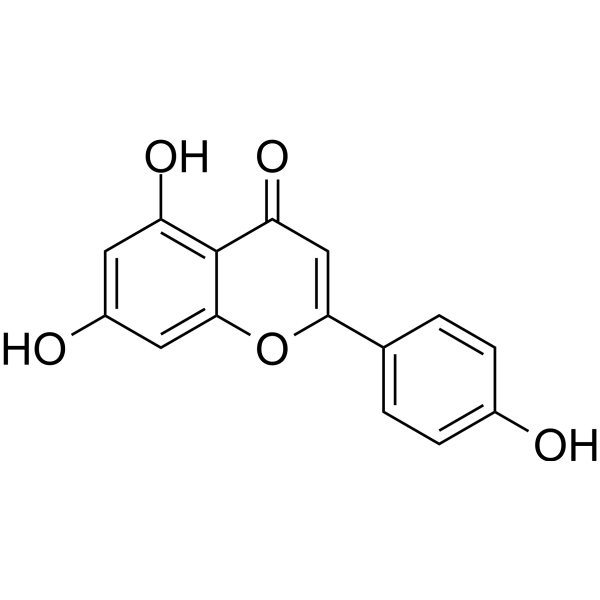
HY-N1201
ApigeninCytochrome P450 Inhibitor -
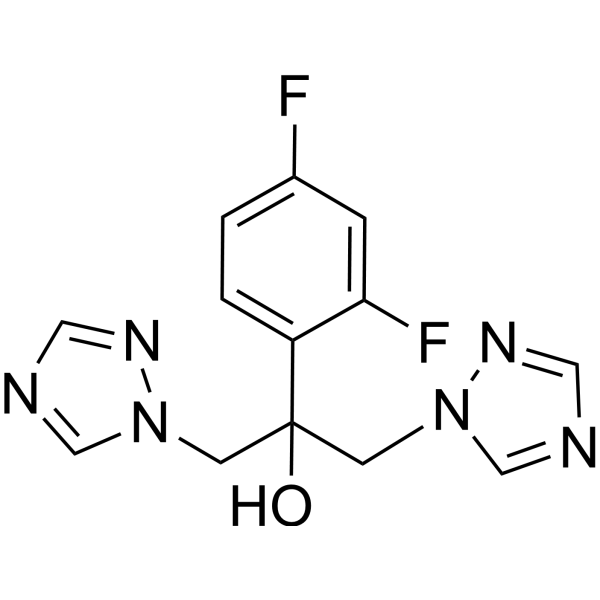
HY-B0101
FluconazoleAntifungal Agent -
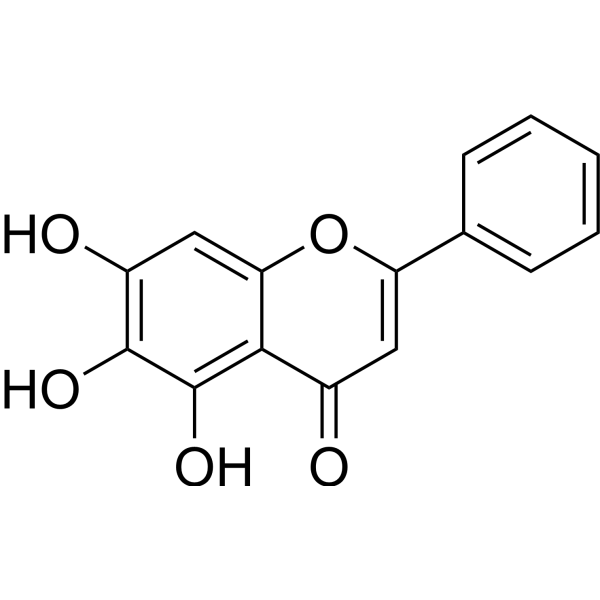
HY-N0196
BaicaleinXanthine Oxidase Inhibitor
Publications Citing Use of MedChemExpress (MCE) Ozagrel hydrochloride
More

Biological Activity
Description
IC50 & Target
[1][5]|
TXA2/TP 11 nM () |
TXB2 |
In Vitro
Ozagrel hydrochloride significantly inhibits platelet aggregation induced by Arachidonic acid (HY-109590) with an IC50 of 53.12 μM[1].
Ozagrel hydrochloride (100 μM) exhibits the inhibitory rate on plasma TXB2 of 99.6% but has no inhibitory effect on PGH2[1].
MedChemExpress (MCE) has not independently confirmed the accuracy of these methods. They are for reference only.
In Vivo
Ozagrel (80 mg/kg, i.v., single dose) hydrochloride attenuates lung injury and decreases monocyte chemoattractant protein-1 and interleukin-8 mRNA expression in Oleic acid (OA) (HY-N1446)-induced lung injury in guinea pigs[4].
MedChemExpress (MCE) has not independently confirmed the accuracy of these methods. They are for reference only.
-
Animal Model:VI-L-Methionine-induced vascular cognitive impairment and dementia (VCID) model established in Wistar rats of both sex and weighing 200 g[2]
-
Dosage:10 and 20 mg/kg
-
Administration:Oral administration (p.o.), once daily for 21 days
-
Result:Improved the endothelial dysfunction caused by L-methionine-induced impairment.
Shortened the latency period of evasion, increased the duration of stay in target quadrants and reduced the length of swimming path.
Significantly reduced cerebral TBARS levels, increased cerebral GSH content, inhibited cerebral AChE activity, and decreased cerebral MPO activity and levels of TNF-α and IL-6.
Reduced leukocyte infiltration, neuronal degeneration and necrosis, increased pyramidal neuron density.
-
Animal Model:BCCAo induced vascular dementia (VaD) model established in Wistar rats of both sex and weighing 200 g[3]
-
Dosage:10 and 20 mg/kg
-
Administration:Oral administration (p.o.), once daily for 6 days
-
Result:Improved the endothelial dysfunction caused by L-methionine-induced impairment.
Shortened the latency period of evasion, increased the duration of stay in target quadrants and reduced the length of swimming path.
Significantly reduced cerebral TBARS levels, increased cerebral GSH content, inhibited cerebral AChE activity, and decreased cerebral MPO activity and levels of TNF-α and IL-6.
Reduced neutrophil infiltration, alleviated neuronal degeneration and nuclear pyknosis, and improved vascular congestion state.
-
Animal Model:OA-induced lung Injury model established in male Hartley guinea pigs (420-500 g) [4]
-
Dosage:80 mg/kg
-
Administration:Intravenous injection (i.v.), single dose, 3 h after OA injection
-
Result:Significantly reduced the levels of TXB2 in BALF and plasma.
Reduced the expression of MCP-1 and IL-8 mRNA and the infiltration of macrophages and neutrophils.
Significantly reduced the total protein concentration in BALF.
Clinical Trial
| NCT Number | Sponsor | Condition | Start Date |
Phase

|
|---|---|---|---|---|
| NCT01329991 | Plexxikon| | 2011-05 | PHASE1 |


Chemical Information
-
CAS No. 78712-43-3
-
Appearance Solid
-
Molecular Weight 264.71
-
Formula C13H13ClN2O2
-
Color White to off-white
-
SMILES
[H]Cl.O=C(O)/C=C/C1=CC=C(CN2C=CN=C2)C=C1
-
Synonyms
OKY-046 hydrochloride
-
Shipping
Room temperature in continental US; may vary elsewhere.
-
Storage
4°C, sealed storage, away from moisture
* In solvent : -80°C, 6 months; -20°C, 1 month (sealed storage, away from moisture)


Publications (1)
-
Journal Impact Factor
-
Most Recent
-
Nat Commun
Selective inhibition of cancer cell self-renewal through a Quisinostat-histone H1.0 axis. [Abstract]2020 Apr 14;11(1):1792. PMID: 32286289


Solvent & Solubility
In Vitro:
DMSO : 250 mg/mL (944.43 mM; Need ultrasonic; Hygroscopic DMSO has a significant impact on the solubility of product, please use newly opened DMSO)
H2O : 100 mg/mL (377.77 mM; Need ultrasonic)
Please refer to the solubility information to select the appropriate solvent. Once prepared, please aliquot and store the solution to prevent product inactivation from repeated freeze-thaw cycles.
Storage method and period of stock solution: -80°C, 6 months; -20°C, 1 month (sealed storage, away from moisture). When stored at -80°C, please use it within 6 months. When stored at -20°C, please use it within 1 month.
* Note: If you choose water as the stock solution, please dilute it to the working solution, then filter and sterilize it with a 0.22 μm filter before use.
Please refer to the solubility information to select the appropriate solvent. Once prepared, please aliquot and store the solution to prevent product inactivation from repeated freeze-thaw cycles.
Storage method and period of stock solution: -80°C, 6 months; -20°C, 1 month (sealed storage, away from moisture). When stored at -80°C, please use it within 6 months. When stored at -20°C, please use it within 1 month.
* Note: If you choose water as the stock solution, please dilute it to the working solution, then filter and sterilize it with a 0.22 μm filter before use.
Concentration (start) × Volume (start) = Concentration (final) × Volume (final)
In Vivo:
Select the appropriate dissolution method based on your experimental animal and administration route.
- For the following dissolution methods, please ensure to first prepare a clear stock solution using an In Vitro approach and then sequentially add co-solvents:
- To ensure reliable experimental results, the clarified stock solution can be appropriately stored based on storage conditions. As for the working solution for In Vivo experiments, it is recommended to prepare freshly and use it on the same day.
- The percentages shown for the solvents indicate their volumetric ratio in the final prepared solution. If precipitation or phase separation occurs during preparation, heat and/or sonication can be used to aid dissolution.
Add each solvent one by one: 10% DMSO 40% PEG300 5% Tween-80 45% Saline
Solubility: ≥ 2.08 mg/mL (7.86 mM); Clear solution
This protocol yields a clear solution of ≥ 2.08 mg/mL (saturation unknown).
Taking 1 mL working solution as an example, add 100 μL DMSO stock solution (20.8 mg/mL) to 400 μL PEG300, and mix evenly; then add 50 μL Tween-80 and mix evenly; then add 450 μL Saline to adjust the volume to 1 mL.
Preparation of Saline: Dissolve 0.9 g sodium chloride in ddH₂O and dilute to 100 mL to obtain a clear Saline solution.
Add each solvent one by one: 10% DMSO 90% (20% SBE-β-CD in Saline)
Solubility: ≥ 2.08 mg/mL (7.86 mM); Clear solution
This protocol yields a clear solution of ≥ 2.08 mg/mL (saturation unknown).
Taking 1 mL working solution as an example, add 100 μL DMSO stock solution (20.8 mg/mL) to 900 μL 20% SBE-β-CD in Saline, and mix evenly.
Preparation of 20% SBE-β-CD in Saline (4°C, storage for one week): 2 g SBE-β-CD powder is dissolved in 10 mL Saline, completely dissolve until clear.
For the following dissolution methods, please prepare the working solution directly:
It is recommended to prepare fresh solutions and use them promptly within a short period of time.
The percentages shown for the solvents indicate their volumetric ratio in the final prepared solution. If precipitation or phase separation occurs during preparation, heat and/or sonication can be used to aid dissolution.
Add each solvent one by one: PBS
Solubility: 25 mg/mL (94.44 mM); Clear solution; Need ultrasonic
In Vivo Dissolution Calculator
Please enter the basic information of animal experiments:
-
-
-
-
Recommended: Prepare an additional quantity of animals to account for potential losses during experiments.
Working solution concentration: 0.22 mg/mL
This product has good water solubility, please refer to the measured solubility data in water/PBS/Saline for details.


Purity & Documentation
-
Data Sheet (286 KB)
-
SDS (393 KB)
- English - EN (393 KB)
- Français - FR (393 KB)
- Deutsch - DE (393 KB)
- Norwegian - NO (393 KB)
- Español - ES (393 KB)
- Swedish - SV (393 KB)
- Italian - IT (393 KB)
- Korean - KR (393 KB)
- Portuguese - PT (393 KB)
-
Handling Instructions (2659 KB)
References
[1]. Saito MS, et al. Antiplatelet pyrazolopyridines derivatives: pharmacological, biochemical and toxicological characterization. J Enzyme Inhib Med Chem. 2016 Dec;31(6):1591-601. [Content Brief]
[2]. Bhatia P, Singh N. Ameliorative effect of ozagrel, a thromboxane A2 synthase inhibitor, in hyperhomocysteinemia-induced experimental vascular cognitive impairment and dementia. Fundam Clin Pharmacol. 2021 Aug;35(4):650-666. [Content Brief]
[3]. Bhatia P, Kaur G, Singh N. Ozagrel a thromboxane A2 synthase inhibitor extenuates endothelial dysfunction, oxidative stress and neuroinflammation in rat model of bilateral common carotid artery occlusion induced vascular dementia. Vascul Pharmacol. 2021 Apr;137:106827. [Content Brief]
[4]. Ishitsuka Y, et al. A selective thromboxane A2 (TXA2) synthase inhibitor, ozagrel, attenuates lung injury and decreases monocyte chemoattractant protein-1 and interleukin-8 mRNA expression in oleic acid-induced lung injury in guinea pigs. J Pharmacol Sci. 2009 Oct;111(2):211-5. [Content Brief]


Complete Stock Solution Preparation Table
Please refer to the solubility information to select the appropriate solvent. Once prepared, please aliquot and store the solution to prevent product inactivation from repeated freeze-thaw cycles.
Storage method and period of stock solution: -80°C, 6 months; -20°C, 1 month (sealed storage, away from moisture). When stored at -80°C, please use it within 6 months. When stored at -20°C, please use it within 1 month.
| Optional Solvent | Concentration Solvent Mass | 1 mg | 5 mg | 10 mg | 25 mg |
|---|---|---|---|---|---|
| H2O / DMSO | 1 mM | 3.7777 mL | 18.8886 mL | 37.7772 mL | 94.4430 mL |
| 5 mM | 0.7555 mL | 3.7777 mL | 7.5554 mL | 18.8886 mL | |
| 10 mM | 0.3778 mL | 1.8889 mL | 3.7777 mL | 9.4443 mL | |
| 15 mM | 0.2518 mL | 1.2592 mL | 2.5185 mL | 6.2962 mL | |
| 20 mM | 0.1889 mL | 0.9444 mL | 1.8889 mL | 4.7221 mL | |
| 25 mM | 0.1511 mL | 0.7555 mL | 1.5111 mL | 3.7777 mL | |
| 30 mM | 0.1259 mL | 0.6296 mL | 1.2592 mL | 3.1481 mL | |
| 40 mM | 0.0944 mL | 0.4722 mL | 0.9444 mL | 2.3611 mL | |
| 50 mM | 0.0756 mL | 0.3778 mL | 0.7555 mL | 1.8889 mL | |
| 60 mM | 0.0630 mL | 0.3148 mL | 0.6296 mL | 1.5740 mL | |
| 80 mM | 0.0472 mL | 0.2361 mL | 0.4722 mL | 1.1805 mL | |
| 100 mM | 0.0378 mL | 0.1889 mL | 0.3778 mL | 0.9444 mL |
* Note: If you choose water as the stock solution, please dilute it to the working solution, then filter and sterilize it with a 0.22 μm filter before use.


Ozagrel hydrochloride Related Classifications
HY-B0428B Related Classifications
 Powered by Bioz