1. Search Result
Search Result
Results for "

Tubulin

" in MedChemExpress (MCE) Product Catalog:

820

Inhibitors & Agonists

1

Screening-Bibliotheken

19

Fluorescent Dyes

14

Biochemical Assay Reagents

8

Peptides

1

MCE-Kits

9

Inhibitory Antibodies

61

Natural
Products

8

Recombinant Proteins

22

Isotope-Labeled Compounds

38

Antibodies

16

Click Chemistry

2

Oligonucleotides

9

GMP Molecules

Targets Recommended:
Art. -Nr. Produktname Target Forschungsgebiete Chemical Structure
  • HY-175713

    Microtubule/Tubulin Apoptosis Reactive Oxygen Species (ROS) Cancer
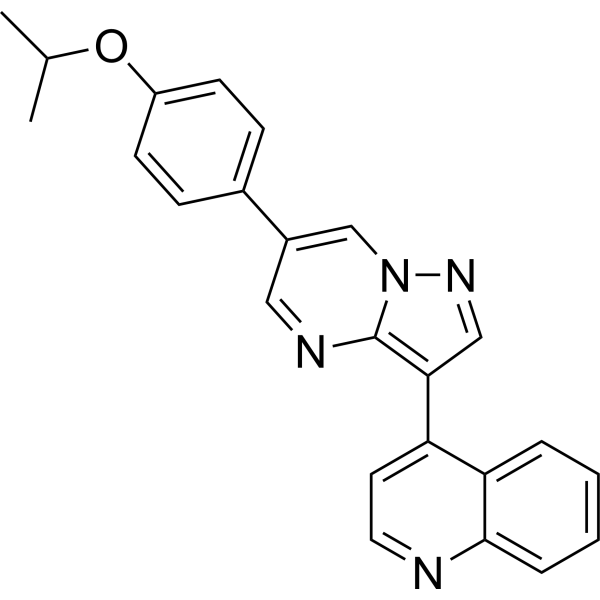
    Tubulin/CDC5L-IN-1 is a Tubulin/CDC5L dual inhibitor. Tubulin/CDC5L-IN-1 targets to CDCL5 with a KD of 103.7 μM. Tubulin/CDC5L-IN-1 can inhibit multiple cancer cell proliferation and induce G2/M phase arrest. Tubulin/CDC5L-IN-1 induce cell apoptosis and ROS production. Tubulin/CDC5L-IN-1 exhibits antiangiogenic effects. Tubulin/CDC5L-IN-1 can be used for the research of cancer, such as colon carcinoma .
    Tubulin/CDC5L-IN-1
  • HY-178357

    Microtubule/Tubulin Cancer
    Tubulin-IN-58 (Compound 26) is a tubulin inhibitor. Tubulin-IN-58 can be used for the study of cancer .
    Tubulin-IN-58
  • HY-177138

    Microtubule/Tubulin Cancer
    Tubulin-IN-52 is a tubulin inhibitor. Tubulin-IN-52 demonstrates significant cytotoxicity toward a variety of cancer cell types including prostate, lung, and ovarian cancers with strong activity toward highly aggressive cancer lines (IC50 = 0.9-3.8 mM). Tubulin-IN-52 significantly inhibits the growth of established tumors without noticeable toxicity. Tubulin-IN-52 can be used for the study of cancer .
    Tubulin-IN-52
  • HY-175874

    Microtubule/Tubulin PI3K Akt Apoptosis Cancer
    Tubulin-IN-55 is a tubulin inhibitor. Tubulin-IN-55 disrupts the PI3K/Akt signaling pathway in cancer cells. Tubulin-IN-55 exerts broad-spectrum anti-proliferative activity against multiple tumor cells (HeLa, HCT116, 4T1, A549, H1299, MDA-MB231). Tubulin-IN-55 induces G2/M phase arrest and apoptosis, and inhibits tumor cell migration/invasion in cancer cells. Tubulin-IN-55 demonstrates potent antitumor efficacy in orthotopic autologous transplantation mice. Tubulin-IN-55 can be used for the study of cancer .
    Tubulin-IN-55
  • HY-136121

    Microtubule/Tubulin Cancer
    Tubulin inhibitor 6 (Compound 14b) is a tubulin inhibitor and a potent inhibitor of multiple cancer cell lines. Tubulin inhibitor 6 inhibits tubulin polymerization with an IC50 of 0.87 μM. Tubulin inhibitor 6 inhibits K562 cell growth with an IC50 of 840 nM .
    Tubulin inhibitor 6
  • HY-152156

    Microtubule/Tubulin Apoptosis Cancer
    Tubulin inhibitor 11 is a potent and orally active tubulin inhibitor. Tubulin inhibitor 11 targets the Colchicine binding site on tubulin, inhibits tubulin polymerization, promotes mitotic blockade and apoptosis .
    Tubulin inhibitor 11
  • HY-175555

    Microtubule/Tubulin Apoptosis Cancer
    Tubulin-IN-54 is a tubulin inhibitor. Tubulin-IN-54 exhibits anti-proliferative activity against various cancer cells. Tubulin-IN-54 inhibits tubulin polymerization, disrupts microtubule networks, induces G2/M cell cycle arrest, and promotes cancer cell apoptosis. Tubulin-IN-54 demonstrates significant anti-tumor efficacy in mice bearing PC-3/TxR xenografts. Tubulin-IN-54 can be used for the study of taxane-resistant cancers (prostate cancer, melanoma) .
    Tubulin-IN-54
  • HY-147896

    Microtubule/Tubulin Cancer
    Tubulin polymerization-IN-29 (compound 6g) is a potent tubulin polymerization inhibitor. Tubulin polymerization-IN-29 exhibits potent antiproliferative activity. Tubulin polymerization-IN-29 can induce HeLa cells arrest in G2/M phase .
    Tubulin polymerization-IN-29
  • HY-157165

    Microtubule/Tubulin PARP Cancer
    Tubulin/PARP-IN-1 (compound 14) is a dual PARP-tubulin inhibitor with activity against endometrial cancer. Tubulin/PARP-IN-1 inhibits PARP and tubulin with IC50s of 74 nM (PARP1), 109 nM (PARP2), and 1.4 μM (Microtubule/Tubulin), respectively. Tubulin/PARP-IN-1 can induce apoptosis and autophagy and cause cell cycle arrest in the G2/M phase .
    Tubulin/PARP-IN-1
  • HY-149016

    Microtubule/Tubulin Farnesyl Transferase Cancer
    Tubulin polymerization-IN-25 (compound 17f) is a dual inhibitor of tubulin polymerization and farnesyl transferase (FTase) with IC50s of 1.11 μM and 0.39 μM, respectively. Tubulin polymerization-IN-25 displays cytotoxicity and excellent antitumor activity .
    Tubulin polymerization-IN-25
  • HY-152030

    Microtubule/Tubulin MMP Apoptosis Cancer
    Tubulin/MMP-IN-2 is dual inhibitor of tubulin and matrix metalloproteinases. Tubulin/MMP-IN-2 can strongly inhibit tubulin polymerization and induces cell apoptosis. Tubulin/MMP-IN-2 has inhibitory activities against MMP-2, MMP-3 and MMP-9 with IC50 values of 24.95 μM, 31.60 μM and 22.37 μM, respectively. Tubulin/MMP-IN-2 can be used for the research of cancer .
    Tubulin/MMP-IN-2
  • HY-178466

    Microtubule/Tubulin P-glycoprotein Apoptosis Cancer
    Tubulin polymerization/P-gp-IN-1 is a Tubulin polymerization/P-gp dual inhibitor. Tubulin polymerization/P-gp-IN-1 inhibits tubulin polymerization and induces G2/M arrest and apoptosis. Tubulin polymerization/P-gp-IN-1 reverses MDR by inhibiting P-gp efflux function. Tubulin polymerization/P-gp-IN-1 has dual functions: direct antitumor activity and reversal of P-gp-mediated Cisplatin (HY-17394) resistance. Tubulin polymerization/P-gp-IN-1 stable binds to the tubulin CBS (ΔG = −12.4 kcal/mol) and the P-gp hydrophobic lumen (ΔG = −10.8 kcal/mol). Tubulin polymerization/P-gp-IN-1 can be used for the study of drug-resistant cervical cancer .
    Tubulin polymerization/P-gp-IN-1
  • HY-176283

    Microtubule/Tubulin Histone Demethylase Apoptosis Wee1 Bcl-2 Family Caspase Cancer
    Tubulin/LSD1-IN-1 is an effective dual inhibitor of Tubulin polymerization and LSD1 (IC50 = 1.72 μM). Tubulin/LSD1-IN-1 has broad-spectrum antiproliferative activity against cancer cell lines. Tubulin/LSD1-IN-1 inhibits tubulin polymerization by targeting colchicine binding sites, thereby disrupting the microtubule network in gastric cancer cells. Tubulin/LSD1-IN-1 increases the methylation levels of H3K4me1/2 and H3K9me2/3, thereby achieving epigenetic regulation. Tubulin/LSD1-IN-1 induces G2/M arrest, promotes apoptosis, and effectively inhibits colony formation of gastric cancer cells .
    Tubulin/LSD1-IN-1
  • HY-177021

    Microtubule/Tubulin Apoptosis Cancer
    Tubulin-IN-51 is an orally available, potent tubulin inhibitor (IC50 = 31 nM). Tubulin-IN-51 promotes tubulin polymerization in vitro and does not compete with Paclitaxel (HY-B0015) for binding. Tubulin-IN-51 inhibits the binding of Vinblastine (HY-13780) to tubulin. Tubulin-IN-51 downregulates the proportion of cells in the G1 phase and induces apoptosis. Tubulin-IN-51 inhibits tumor growth in multiple nude mouse xenograft models .
    Tubulin-IN-51
  • HY-115956

    Microtubule/Tubulin Cancer
    Tubulin inhibitor 18 (compound 5j) is a potent inhibitor of tubulin. Tubulin inhibitor 18 is a chalcone compound. Tubulin inhibitor 18 has the potential for the research of cancer diseases .
    Tubulin inhibitor 18
  • HY-143446

    Microtubule/Tubulin Cancer
    Tubulin polymerization-IN-7 (compound 5) is a potent inhibitor of tubulin polymerization. Tubulin polymerization-IN-7 has the potential for the research of cancer diseases .
    Tubulin polymerization-IN-7
  • HY-175512

    Microtubule/Tubulin Apoptosis Reactive Oxygen Species (ROS) Cancer
    Tubulin-IN-53 is a potent Tubulin inhibitor with an IC50 of 6.06 μM. Tubulin-IN-53 inhibits the polymerization of tubulin by targeting the colchicine binding site of tubulin and destroys the microtubule network. Tubulin-IN-53 induces MCF-7 cell cycle arrest in the G2/M phase and apoptosis, and inhibits cell migration accompanied by the decrease of mitochondrial membrane potential and increase the accumulation of ROS. Tubulin-IN-53 destroys the angiogenesis of human umbilical vein endothelial cells.Tubulin-IN-53 can used for the study of cancers such as breast cancer and lung cancer .
    Tubulin-IN-53
  • HY-115957

    Microtubule/Tubulin Cancer
    Tubulin inhibitor 19 (compound 9b) is a potent inhibitor of tubulin. Tubulin inhibitor 19 is an indole chalcone compound. Tubulin inhibitor 19 has the potential for the research of cancer diseases .
    Tubulin inhibitor 19
  • HY-146362

    Microtubule/Tubulin Apoptosis Cancer
    Tubulin polymerization-IN-17 (compound 23g) is a potent inhibitor of tubulin polymerization. Tubulin polymerization-IN-17 exhibits tubulin depolymerization and induced cell apoptosis and inhibits migration. Tubulin polymerization-IN-17 has the potential for the research of cancer diseases .
    Tubulin polymerization-IN-17
  • HY-145868

    Microtubule/Tubulin Apoptosis Cancer
    Tubulin polymerization-IN-3 (compound 4c) is a potent tubulin polymerization inhibitor, with an IC50 of 3.84 µM. Tubulin polymerization-IN-3 can induce apoptosis in colon cancer cells .
    Tubulin polymerization-IN-3
  • HY-168721

    Microtubule/Tubulin Cancer
    Tubulin inhibitor 48 (compound 16) is an anti-cancer agent targeting tubulin. Tubulin inhibitor 48 has an IC50 of 0.1 and 0.07 μM for LN-229 and Capan-1 cell, respectively .
    Tubulin inhibitor 48
  • HY-178038

    Microtubule/Tubulin Reactive Oxygen Species (ROS) Cancer
    Tubulin-IN-56 is a tubulin inhibitor. Tubulin-IN-56 exerts cytotoxic effects against colon cancer cell lines (LS180, HCT116, SW620, LoVo). Tubulin-IN-56 downregulates βIII-tubulin and upregulates βIVa-tubulin in colon cancer cell lines. Tubulin-IN-56 inhibits cell invasiveness and elevates intracellular ROS levels in colon cancer cell lines. Tubulin-IN-56 can be used for the study of colon cancer .
    Tubulin-IN-56
  • HY-146006

    Microtubule/Tubulin MMP Cancer
    Tubulin/MMP-IN-1 (compound 15g) is a potent inhibitor of tubulin and MMP. Tubulin/MMP-IN-1 has the potential for the research of cancer diseases. Tubulin/MMP-IN-1 suppresses tubulin polymerization, induces cell cycle arrest at the G2/M phase, leads to reactive oxidative stress (ROS) generation of HepG2 cells, and results in apoptosis by the mitochondrial-dependent apoptotic pathway .
    Tubulin/MMP-IN-1
  • HY-176201

    Microtubule/Tubulin Apoptosis Cancer
    Tubulin polymerization-IN-80 (Compound 32) is a potent tubulin polymerization inhibitor with antiproliferative activity. Tubulin polymerization-IN-80 disrupts microtubule formation and leads to cell cycle arrest and apoptosis. Tubulin polymerization-IN-80 is promising for research of cancers .
    Tubulin polymerization-IN-80
  • HY-146378

    Microtubule/Tubulin Cancer
    Tubulin polymerization-IN-20 (compound 11) is a potent inhibitor of tubulin polymerization. Tubulin polymerization-IN-20 has the potential for the research of breast cancers and chemoresistant colon cancers .
    Tubulin polymerization-IN-20
  • HY-146377

    Microtubule/Tubulin Cancer
    Tubulin polymerization-IN-19 (compound 4) is a potent inhibitor of tubulin polymerization. Tubulin polymerization-IN-20 has the potential for the research of breast cancers and chemoresistant colon cancers .
    Tubulin polymerization-IN-19
  • HY-146376

    Microtubule/Tubulin Cancer
    Tubulin polymerization-IN-18 (compound 8) is a potent inhibitor of tubulin polymerization. Tubulin polymerization-IN-18 has the potential for the research of breast cancers and chemoresistant colon cancers .
    Tubulin polymerization-IN-18
  • HY-146310

    Microtubule/Tubulin Cancer
    Tubulin polymerization-IN-15 (compound 4) is a potent inhibitor of tubulin polymerization. Tubulin polymerization-IN-15 has the potential for the research of cancer diseases .
    Tubulin polymerization-IN-15
  • HY-146211

    Microtubule/Tubulin Apoptosis Cancer
    Tubulin polymerization-IN-14 (Compound 20a) is a tubulin polymerization inhibitor with an IC50 of 3.15 μM. Tubulin polymerization-IN-14 shows potent anti-vascular and anticancer activities, induces cancer cell apoptosis .
    Tubulin polymerization-IN-14
  • HY-163105

    Microtubule/Tubulin Cancer
    Tubulin/NEDDylation-IN-1 (compound C11) is a dual inhibitor of tubulin (Microtubule/Tubulin)-NEDDylation (IC50 for tubulin=2.40 μM), which has strong anti-proliferative activity. Neddylation is a protein post-translational modification that covalently tags the ubiquitin-like protein NEDD8 to target proteins. Tubulin/NEDDylation-IN-1 forms hydrogen bonds with residues of tubulin and E1 NEDD8 activating enzyme (NAE) through methoxy and dithiocarbamate groups and inhibits NEDDylation and microtubulin in an ATP-dependent manner. tube polymerization .
    Tubulin/NEDDylation-IN-1
  • HY-151982

    Microtubule/Tubulin Cardiovascular Disease Cancer
    Tubulin polymerization-IN-39 is a tubulin polymerization inhibitor (IC50: 4.9 μM). Tubulin polymerization-IN-39 occupies the colchicine-binding site. Tubulin polymerization-IN-39 inhibits cancer cell proliferation .
    Tubulin polymerization-IN-39
  • HY-162126

    Microtubule/Tubulin YAP Cancer
    Tubulin polymerization-IN-58 (Compound K18) is a tubulin polymerization inhibitor with an IC50 of 0.446 μM. Tubulin polymerization-IN-58 also induces the degradation of oncogenic protein YAP via the UPS pathway, thus can be used for cancer research .
    Tubulin polymerization-IN-58
  • HY-155315

    Microtubule/Tubulin Cancer
    Tubulin polymerization-IN-51(compound 7u) is a tubulin polymerization inhibitor with IC50 value of 2.55 - 17.89μM for SK-Mel-28 cells. Tubulin polymerization-IN-51 can be used for cancer research .
    Tubulin polymerization-IN-51
  • HY-146311

    Microtubule/Tubulin Cancer
    Tubulin polymerization-IN-16 (compound 5g) is a potent inhibitor of tubulin polymerization. Tubulin polymerization-IN-16 shows most potent against cancer cells, with IC50 values of 0.084-0.221 μM. Tubulin polymerization-IN-16 potently disrupts microtubule/tubulin dynamics, induces cell cycle arrest at G2/M phase in SGC-7901 cells .
    Tubulin polymerization-IN-16
  • HY-156737

    Microtubule/Tubulin Cancer
    Tubulin polymerization-IN-49 (compound 12d) is a potent tubulin polymerization inhibitor. Tubulin polymerization-IN-49 bound to colchicine site on tubulin and inhibited tubulin polymerization. Tubulin polymerization-IN-49 induces cell cycle arrest at G2/M phase and apoptosis. Tubulin polymerization-IN-49 has anticancer active and prevents tumor generation, inhibits tumor proliferation and angiogenesis .
    Tubulin polymerization-IN-49
  • HY-178325

    Microtubule/Tubulin Apoptosis Cancer
    Tubulin-IN-57 is a Tubulin inhibitor. Tubulin-IN-57 is a potent antiproliferative agent that inhibits clonogenic formation, migration, and invasion of ovarian cancer cells. Tubulin-IN-57 inhibits tubulin polymerization, which in turn induces G2/M arrest and apoptosis in SKOV3 cells. Tubulin-IN-57 demonstrates potent antitumor activity without observable toxicity in an SKOV3 xenograft model. Y60S can be used for the study of ovarian cancer .
    Tubulin-IN-57
  • HY-148193

    ADC Payload Microtubule/Tubulin Cancer
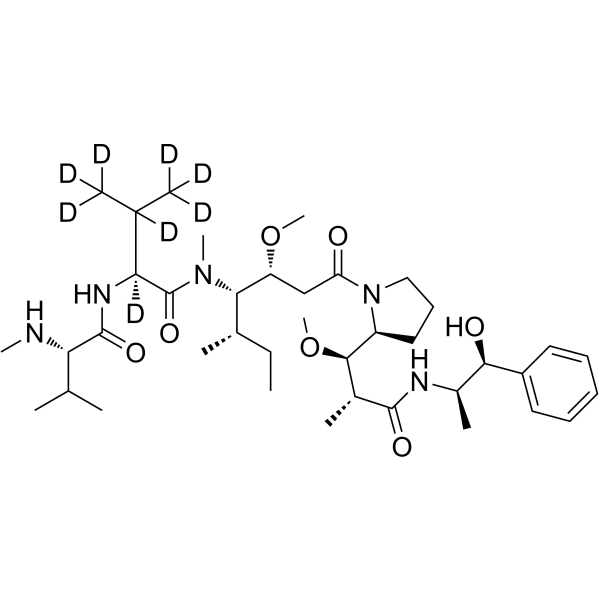
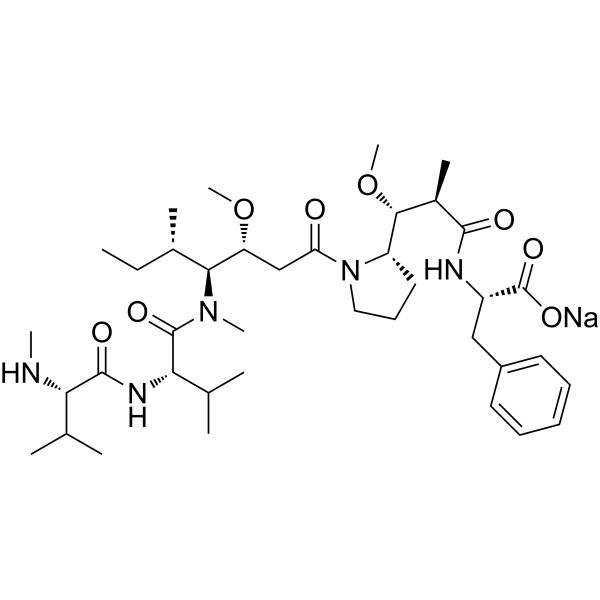
    Tubulin polymerization-IN-38 is an analogue of Tubulysin (HY-128914), a potent anticancer agent. Tubulin polymerization-IN-38 inhibits tubulin polymerization (tubulin polymerisation), thereby inducing apoptosis (apoptosis). Tubulysin series products are potent anti-microtubule toxins (anti-microtubule toxins) and can be used as ADC cytotoxins (ADC Cytotoxin) to synthesize ADCs .
    Tubulin polymerization-IN-38
  • HY-155139

    Microtubule/Tubulin Apoptosis Cancer
    Tubulin polymerization-IN-45, a tubulin-targeting agent, is a tubulin polymerization inhibitor. Tubulin polymerization-IN-45 binds to the colchicine site of tubulin. Tubulin polymerization-IN-45 induces apoptotic cell death in hepatocellular cancer (HCC) cells .
    Tubulin polymerization-IN-45
  • HY-143447

    Microtubule/Tubulin Cancer
    Tubulin polymerization-IN-8 (compound IIc) is a potent inhibitor of tubulin polymerization. Tubulin polymerization-IN-8 concentration-dependently causes cell cycle arrest at the G2/M phase in HCT116 tumor cells, and displays a significant inhibition of tubulin polymerization with an IC50 value of 12.7 μM. Tubulin polymerization-IN-8 has the potential for the research of cancer diseases [ 1].
    Tubulin polymerization-IN-8
  • HY-146164

    Microtubule/Tubulin Metabolic Disease Cancer
    Tubulin polymerization-IN-21 (compound 9a) is a tubulin polymerization inhibitor. Tubulin polymerization-IN-21 exhibits anti-cancer activity through disrupting cellular integrity and affecting glucose metabolism .
    Tubulin polymerization-IN-21
  • HY-175565

    Microtubule/Tubulin VEGFR Reactive Oxygen Species (ROS) Apoptosis Cancer
    Tubulin/VEGFR-2-IN-1 is a dual inhibitor of tubulin and VEGFR-2 (IC50 = 1.52 μM) with anti-angiogenic activity. Tubulin/VEGFR-2-IN-1 exhibits potent cytotoxicity against the cancer cells. Tubulin/VEGFR-2-IN-1 elevates ROS production, induces apoptosis and causes G0/G1 phase arrest in HepG-2 cells. Tubulin/VEGFR-2-IN-1 inhibits the migratory ability and the clonogenic ability in HepG-2 cells. Tubulin/VEGFR-2-IN-1 can be used for the study of cancer .
    Tubulin/VEGFR-2-IN-1
  • HY-176743

    Microtubule/Tubulin Apoptosis Cancer
    Tubulin polymerization-IN-81 is a selective Tubulin inhibitor with an IC50 of 5.41 μM. Tubulin polymerization-IN-81 possesses a significant anti-proliferative activity, unique ROS-mediated apoptotic mechanism and potent anti-microtubule activity. Tubulin polymerization-IN-81 can be used in anti-tumor research .
    Tubulin polymerization-IN-81
  • HY-149363

    Microtubule/Tubulin Apoptosis Cancer
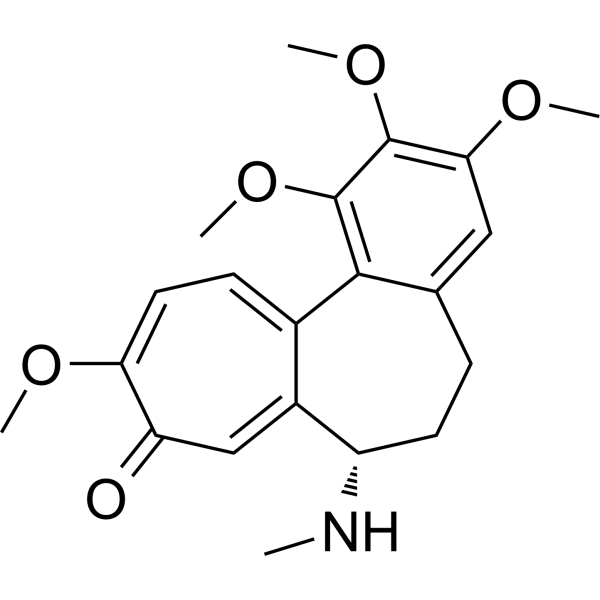
    Tubulin polymerization-IN-43 (compound 15h) is a tubulin polymerization inhibitor. Tubulin polymerization-IN-43 disrupts cellular microtubule networks by targeting the Colchicine (HY-16569) site, and promots cell cycle arrest of leukemia cells at G2/M phase and cell apoptosis, as well as inhibiting angiogenesis .
    Tubulin polymerization-IN-43
  • HY-147824

    Microtubule/Tubulin Apoptosis Cancer
    Tubulin polymerization-IN-22 is a tubulin polymerization inhibitor with an IC50 of 8.1 μM. Tubulin polymerization-IN-22 arrests cell cycle at G2/M phase and induces apoptosis .
    Tubulin polymerization-IN-22
  • HY-162593

    Microtubule/Tubulin Cancer
    Tubulin inhibitor 45 (compound 5) is an inhibitor of tubulin protein active sites. Tubulin inhibitor 45 against MCF7 and HePG2 cancer cells with IC50 values of 11 μM and 13 μM .
    Tubulin inhibitor 45
  • HY-162625

    Microtubule/Tubulin Apoptosis Cancer
    Tubulin inhibitor 47 (compound C11) is a potent tubulin inhibitor. Tubulin inhibitor 47 induces apoptosis and cell cycle arrest at the M phase. Tubulin inhibitor 47 shows anti-tumor activity .
    Tubulin inhibitor 47
  • HY-146778

    Microtubule/Tubulin Cancer
    Tubulin inhibitor 25 is a potent tubulin inhibitor with an IC50 value of 0.98 μM. Tubulin inhibitor 25 exhibits remarkable activity against cancer cell line HT29. Tubulin inhibitor 25 displays the potent inhibition on cell migration and tube formation that contributes to the anti-angiogenesis .
    Tubulin inhibitor 25
  • HY-155314

    Microtubule/Tubulin Cancer
    Tubulin polymerization-IN-50 (compound 7n) is a inhibitor of tubulin polymerization, with the IC50 of 5.05 μM in SK-Mel-28 cells. Tubulin polymerization-IN-50 induces the cell cycle arrest in the G2/M phase .
    Tubulin polymerization-IN-50
  • HY-149364

    Microtubule/Tubulin Apoptosis Cancer
    Tubulin inhibitor 34 (compound b5) is a potent anticancer agent. Tubulin inhibitor 34 can inhibit tubulin polymerization and induce G2/M arrest and apoptosis. Tubulin inhibitor 34 exhibits significant antivascular and antitumor activity .
    Tubulin inhibitor 34
  • HY-163195

    Microtubule/Tubulin Cancer
    Tubulin inhibitor 40 (compound 45) is a tubulin inhibitor with IC50 of 1.2 μM. Tubulin inhibitor 40 shows selective cytotoxicity towards cancer cells. Tubulin inhibitor 40 processes antitumor activity .
    Tubulin inhibitor 40

Online-Anfrage

Your information is safe with us. * Required Fields.

Anrede


Country or Region *

Name des Antragstellers *


Name der Organisation *

Department *


E-Mail-Addresse *


Produktname *

Art. -Nr.


Requested quantity *

Telefonnummer *


Bemerkungen

Online-Anfrage

Inquiry Information

Produktname:
Art. -Nr.:
Menge:
MCE Japan Authorized Agent:

