Search Result
Results for "
VERO
" in MedChemExpress (MCE) Product Catalog:
3
Biochemical Assay Reagents
3
Isotope-Labeled Compounds
| Cat. No. |
Product Name |
Target |
Research Areas |
Chemical Structure |
-
- HY-B0497
-
|
BAY2353
|
Environmental Pollutants
Antibiotic
Parasite
STAT
|
Infection
Cancer
|
|
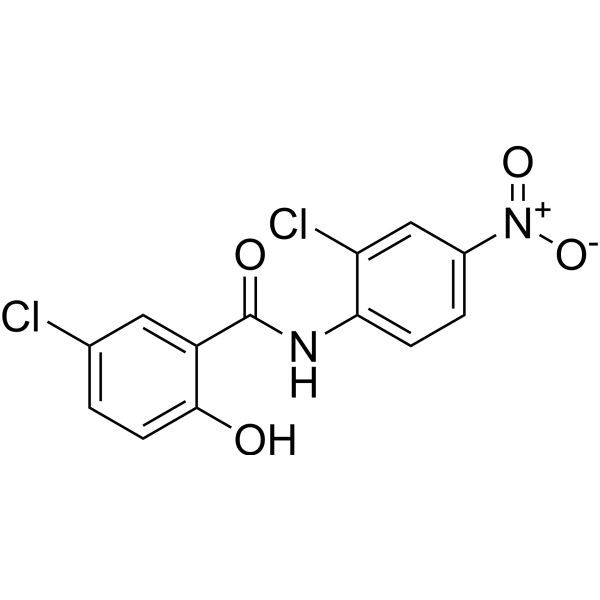
Niclosamide (BAY2353) is an orally active antihelminthic agent used in parasitic infection research . Niclosamide is a STAT3 inhibitor with an IC50 of 0.25 μM in HeLa cells . Niclosamide has biological activities against cancer, inhibits DNA replication in Vero E6 cells .
|
-
-
- HY-B1123
-
-
-
- HY-W017522
-
-
-
- HY-W011100
-
-
-
- HY-B0497C
-
|
BAY2353 olamine
|
Environmental Pollutants
Antibiotic
STAT
Parasite
|
Infection
Cancer
|
|
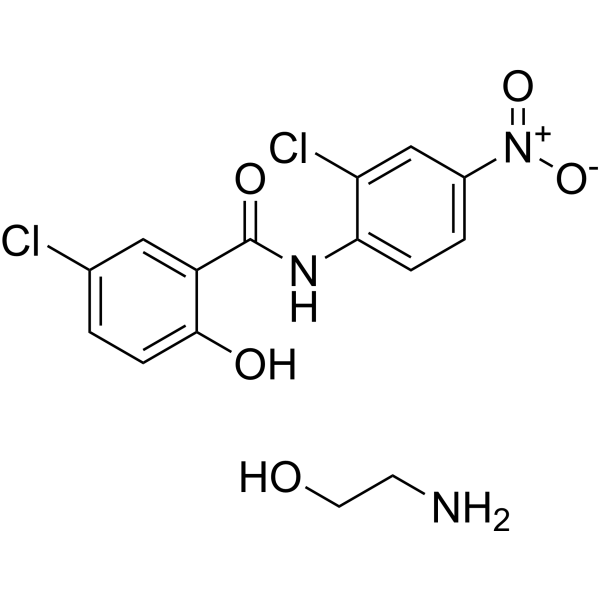
Niclosamide (BAY2353) olamine is an orally active antihelminthic agent used in parasitic infection research . Niclosamide olamin is a STAT3 inhibitor with an IC50 of 0.25 μM in HeLa cells . Niclosamide olamin has biological activities against cancer, and inhibits DNA replication in Vero E6 cells .
|
-
-
- HY-107789
-
|
|
HSV
|
Infection
Inflammation/Immunology
|
|
Sodium lauryl sulfoacetate is a solid anionic surfactant of plant origin. Sodium lauryl sulfoacetate is an immunoadjuvant with antiimmunosuppressive effects. Sodium lauryl sulfoacetate has antiviral activity .
|
-
-
- HY-B0222
-
|
Behenyl alcohol
|
Environmental Pollutants
HSV
|
Infection
|
|
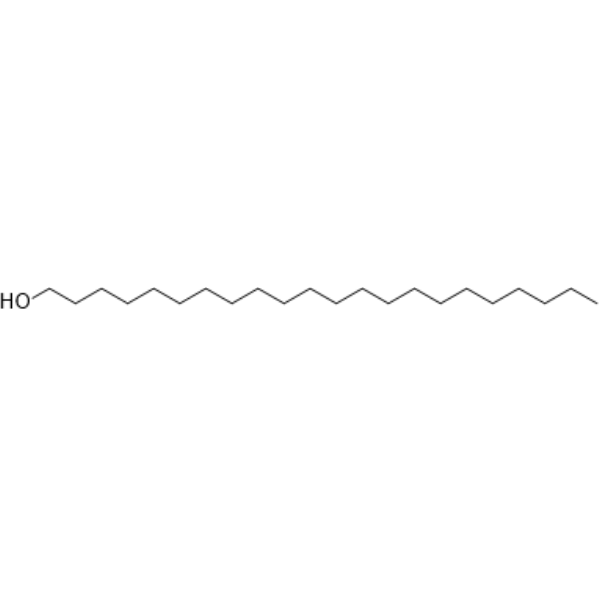
1-Docosanol (Behenyl alcohol) is a saturated fatty alcohol with reported inhibitory activity against lipid-enveloped viruses, including herpes simplex virus (HSV) .
|
-
-
- HY-150306
-
|
IM-250
|
DNA/RNA Synthesis
HSV
|
Infection
|
|
Adibelivir (IM-250) is an orally active helicase-primase inhibitor. Adibelivir is effective against HSV infection and reduces reactivation of latent HSV. Adibelivir inhibits HSV-1 infection in Vero cells (IC50: ~20 nM). Adibelivir can be used for the study of recurrent herpes disease[1][2].
|
-
-
- HY-113135
-
-
-
- HY-161247
-
|
|
5-HT Receptor
|
Metabolic Disease
|
|
5HT2A antagonist 2 is an orally active, selective antagonist for 5HT2A with IC50 of 14 nM. 5-HT2A antagonist 2 exhibits good chemical, hepatocyte, and plasma stability, without significant cytotoxicity in cell lines VERO, HFL-1, L929, NIH3T3, CHO-K1 .
|
-
-
- HY-16952
-
|
(±)-Bepridil; Org 5730
|
Calcium Channel
Sodium Channel
SARS-CoV
|
Infection
Cardiovascular Disease
|
|
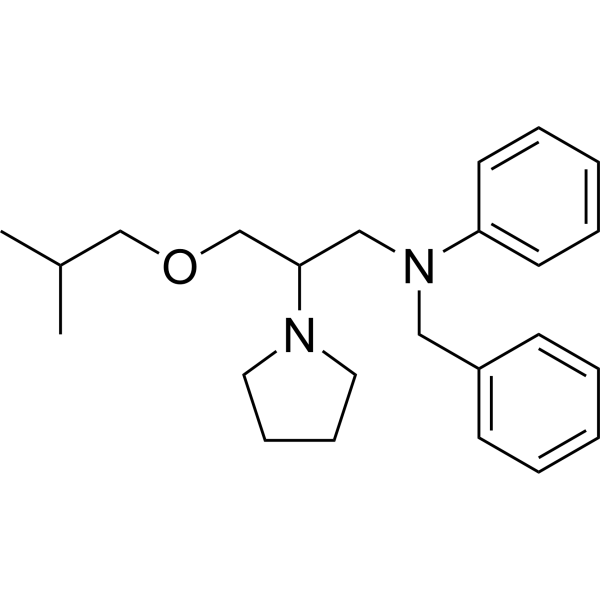
Bepridil ((±)-Bepridil) is a calcium channel blocking agent used as antiarrhythmic agent. Bepridil inhibits both calcium and sodium currents, has research potential in certain ischemia-induced ventricular arrhythmias. Bepridil also has strong inhibition of SARS-CoV-2 from entry and replication inside Vero E6 and A549 cells .
|
-
-
- HY-B0497R
-
|
BAY2353 (Standard)
|
Reference Standards
STAT
Parasite
Antibiotic
|
Infection
Cancer
|
|
Niclosamide (Standard) is the analytical standard of Niclosamide. This product is intended for research and analytical applications. Niclosamide (BAY2353) is an orally active antihelminthic agent used in parasitic infection research . Niclosamide is a STAT3 inhibitor with an IC50 of 0.25 μM in HeLa cells . Niclosamide has biological activities against cancer, inhibits DNA replication in Vero E6 cells .
|
-
-
- HY-W009245
-
|
|
HIV
|
Infection
Cancer
|
|
Bz-RS-iSer(3-Ph)-OMe (compound 2), a Taxol derivative, inhibits HSV replication cycle at low cytotoxicity, blocks mitotic divisions of Vero cells, influences M-MSV induced tumor size and affects immune response by inhibiting PHA-induced T lymphocyte proliferation .
|
-
-
- HY-N9351
-
|
Diphyllin O-glucoside
|
SARS-CoV
|
Infection
Cardiovascular Disease
Metabolic Disease
Cancer
|
|
Cleistanthin B (Diphyllin O-glucoside) is an orally active arylnaphthalene lignan lactone glycoside. Cleistanthin B exhibits anti-SARS-CoV-2 effects in Vero cells, with EC50 of 6.51 µM. Cleistanthin B also exhibits antitumor, diuretic and antihypertensive effects in vivo .
|
-
-
- HY-138102
-
|
|
SARS-CoV
|
Infection
|
|
SSAA09E3 is a SARS-CoV entry inhibitor that inhibits SARS/HIV pseudotyped virus entry with an EC50 of 9.7 μM in 293T cells and inhibits SARS-CoV infection of Vero cells with an EC50 of 0.15 μM .
|
-
-
- HY-B0497B
-
|
BAY2353 monohydrate
|
STAT
Antibiotic
Parasite
|
Infection
Cancer
|
|
Niclosamide (BAY2353) monohydrate is an orally active antihelminthic agent used in parasitic infection research . Niclosamide monohydrate is a STAT3 inhibitor with an IC50 of 0.25 μM in HeLa cells . Niclosamide monohydrate has biological activities against cancer, and inhibits DNA replication in Vero E6 cells .
|
-
-
- HY-146388
-
|
|
Bacterial
ATP Synthase
|
Infection
|
|
Mtb ATP synthase-IN-1 (compound 6ab) is a potent Mycobacterium tuberculosis (Mtb) ATP synthase inhibitor, with MIC of 0.452-0.499 μg/mL against Mtb. Mtb ATP synthase-IN-1 has good metabolic stability, low cytotoxicity (Vero IC50 > 64 μg/mL), and acceptable oral bioavailability. Mtb ATP synthase-IN-1 can be used for researching anti-mycobacterium .
|
-
-
- HY-B1123R
-
|
SKF-39162 (Standard)
|
Bacterial
SARS-CoV
Reference Standards
|
Infection
Inflammation/Immunology
Cancer
|
|
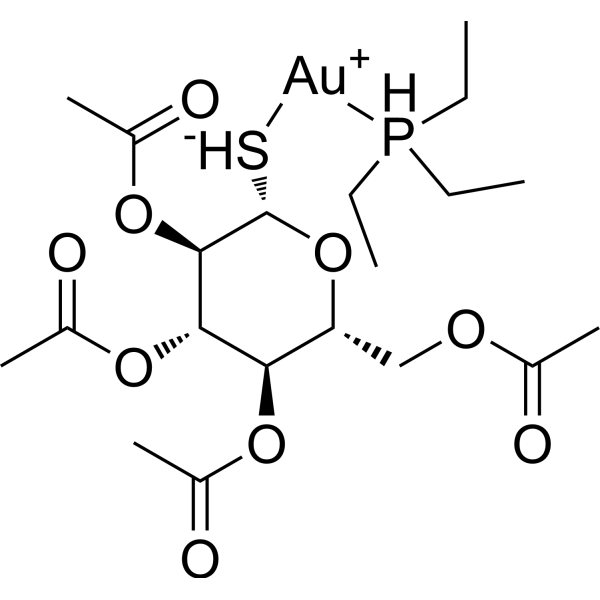
Auranofin (Standard) is the analytical standard of Auranofin. This product is intended for research and analytical applications. Auranofin (SKF-39162) is a thioredoxin reductase (TrxR) inhibitor with an IC50 of 0.2 μM. Auranofin exhibits antiviral activity against SARS-CoV21, with a CC50 of 4.2 μM for monkey kidney Vero E6 cells.
|
-
-
- HY-N15414
-
-
-
- HY-B0497A
-
|
BAY2353 sodium
|
Antibiotic
STAT
Parasite
|
Infection
Cancer
|
|
Niclosamide (BAY2353) sodium is an orally active antihelminthic agent used in parasitic infection research . Niclosamide sodium is a STAT3 inhibitor with an IC50 of 0.25 μM in HeLa cells . Niclosamide sodium has biological activities against cancer, and inhibits DNA replication in Vero E6 cells .
|
-
-
- HY-126640
-
|
|
Parasite
|
Infection
Cancer
|
|
Phomoxanthone A is a xanthone dimer, which can be isolated from Phomopsis. Phomoxanthone A exhibits antimalarial and antitubercular activities against Plasmodium falciparum (K1, multidrug-resistant strain, IC50 is 0.11 µg/mL) and Mycobacterium tuberculosis (H37Ra strain, MIC is 0.50 µg/mL). Phomoxanthone A exhibits cytotoxicity in cells KB, BC-1 and Vero, IC50 is 0.99, 0.51 and 1.4 µg/mL, respectively .
|
-
-
- HY-176282
-
|
|
CDK
PI3K
|
Cancer
|
|
CDK8-IN-19 (Compound 3d) is a CDK8 inhibitor with an IC50 of 25.08 nM. CDK8-IN-19 has a broad-spectrum anticancer activity, such as leukemia, melanoma and breast cancer, without significant cytotoxic effect on the normal Vero cells (mean IC50s of 2.87, 3.65, 3.79 and 45.48 μM, respectively) .
|
-
-
- HY-176281
-
|
|
PI3K
CDK
|
Cancer
|
|
PI3Kα-IN-26 (Compound 11e) is a PI3Kα inhibitor with an IC50 of 75.31 nM. PI3Kα-IN-26 has a broad-spectrum anticancer activity, such as leukemia, colon and breast cancer, without significant cytotoxic effect on the normal Vero cells (mean IC50s of 2.74, 3.50, 3.34 and 85.29 μM, respectively) .
|
-
-
- HY-174373
-
|
|
SARS-CoV
Angiotensin-converting Enzyme (ACE)
|
Infection
|
|
SARS-CoV-2-IN-113 (Compound 24) is a sulfonohydrazide derivative against SARS-CoV-2 infection with an IC50 of 8.320 μM. SARS-CoV-2-IN-113 exerts potent antiviral effects by inhibiting the entry and replication of SARS-CoV-2, and downregulating the expression of genes and proteins such as Spike, ACE-2, and RdRp. SARS-CoV-2-IN-113 has high selectivity and low cytotoxicity, and can be used in the research of SARS-CoV-2 .
|
-
-
- HY-172223
-
|
C3Guo
|
SARS-CoV
|
Infection
|
|
3-Deazaguanosine (C3Guo) has potent antiviral activity against SARS-CoV-2 (EC50: 1.14 μM, CC50: >200 μM for Vero E6 cells). 3-Deazaguanosine prevents COVID-19 pneumonia .
|
-
-
- HY-N10850
-
|
|
Bacterial
|
Cancer
|
|
Blepharotriol is a phenolic triterpene that can be found in Maytenus blepharodes. Blepharotriol shows antimicrobial activity with a MIC value of 8-4 µg/ml for Bacillus subtilis. Blepharotriol shows cytotoxic activity with IC50s of 12.2, >20, >20 µM for HeLa, Hep-2, Vero cells, respectively .
|
-
-
- HY-179251
-
|
|
CHIKV
|
Infection
|
|
BDGR-651 is an efficient and selective inhibitor of the Chikungunya virus (CHIKV) with an EC50 in NHDF cells of 0.86 μM, and the therapeutic index (SI) of 22.1. BDGR-651 exhibits dose-dependent protective effects when infecting Vero E6 cells, with its EC50 being 6 μM. BDGR-651 can be used for research on CHIKV infection .
|
-
-
- HY-175024
-
|
|
SARS-CoV
Virus Protease
|
Infection
|
|
MC12 is a thiazole-based derivative and a SARS-CoV-2 main protease inhibitor (IC50: 77.7 nM). MC12 exhibits inhibitory effects on both SARS-CoV and SARS-CoV-2 main proteases, with low cytotoxicity and good stability. MC12 can be used in the research of anti-COVID-19 drugs .
|
-
-
- HY-N15215
-
|
|
Enterovirus
Influenza Virus
RSV
HSV
|
Infection
Cancer
|
|
Antiviral agent 64 (Compound 12) is a diarylheptanoid that can be isolated from Alpinia officinarum. Antiviral agent 64 exhibits cytotoxicity in human neuroblastoma cell IMR-32 with an IC50 of 0.23 μM. Antiviral agent 64 exhibits antiviral efficacy, that inhibits RSV, poliovirus, measles virus, HSV-1, and influenza virus H1N1, with EC50 of 13.3, 3.7, 6.3, 5.7, and <10 μg/mL, respectively .
|
-
-
- HY-149958
-
|
|
Parasite
|
Infection
|
|
Antileishmanial agent-17 is a coumarin hybrid compound with antileishmanial effects (IC50 <0.78 μM). Antileishmanial agent-17 is safe to normal VERO cells. Antileishmanial agent-17 binds to folate pathway enzymes pteridine reductase and DHFR-TS. And Antileishmanial agent-17 shows the most potent with IC50 value of 0.40 μM against promastigote and 0.68 μM against amastigote, respectivley.
|
-
-
- HY-B0497S2
-
|
BAY2353-d3
|
Isotope-Labeled Compounds
Antibiotic
STAT
Parasite
|
Infection
Cancer
|
|
Niclosamide-d3 (BAY2353-d3) is deuterium labeled Niclosamide. Niclosamide (BAY2353) is an orally active antihelminthic agent used in parasitic infection research . Niclosamide is a STAT3 inhibitor with an IC50 of 0.25 μM in HeLa cells . Niclosamide has biological activities against cancer, inhibits DNA replication in Vero E6 cells .
|
-
-
- HY-169977
-
|
|
SARS-CoV
|
Infection
|
|
CKP-25 is an inhibitor for the interaction between Spike RBD-ACE2, that prevents the virus from entering the host cell, thereby reducing the replication and virus infection. CKP-25 inhibits SARS-CoV-2 with IC50 of 3.5 μM in Vero E6 cell .
|
-
-
- HY-N1716
-
|
|
Parasite
|
Infection
|
|
2’’-Acetylastragalin (Compound 2) is a compound isolated from the aerial parts of Delphinium staphisagria, with an IC50 value of 6.5 μM for Vero cells. 2’’-Acetylastragalin has trypanoidal activity .
|
-
-
- HY-155121
-
|
|
SARS-CoV
|
Infection
|
|
SARS-CoV-2-IN-56 (Compound 63) is a SARS-CoV-2 inhibitor. SARS-CoV-2-IN-56 has antiviral activity. SARS-CoV-2-IN-56 inhibits SARS-CoV-2 in Vero E6 cells, with an IC50 of 0.7 μM .
|
-
-
- HY-155119
-
|
|
SARS-CoV
|
Infection
|
|
SARS-CoV-2-IN-54 (Compound 2) is a SARS-CoV-2 inhibitor. SARS-CoV-2-IN-54 has antiviral activity. SARS-CoV-2-IN-54 inhibits SARS-CoV-2 in Vero E6 cells, with an IC50 of 21.4 μM .
|
-
-
- HY-172397
-
|
|
Bacterial
|
Infection
|
|
Mycobacterium Tuberculosis-IN-7 (Compound 4c) inhibits M. tuberculosis H37Ra with MIC of 5.34 μg/mL. Mycobacterium Tuberculosis-IN-7 exhibits slight cytotoxicity in cancer cell Vero, A549, and HepG2 (IC50s >50 μM) .
|
-
-
- HY-146374
-
|
|
Bacterial
|
Infection
|
|
Antibacterial agent 96 (compound 4k) is a potent antibacterial agent. Antibacterial agent 96 shows antitubercular activity against agent-susceptible and multidrug-resistantMycobacterium tuberculosis (M. tuberculosis) strains. Antibacterial agent 96 shows toxicity to HepG2 and Vero cells .
|
-
-
- HY-146104
-
|
|
Bacterial
|
Infection
|
|
Antimycobacterial agent-1 (compound 33) has selectively antimycobacterial activity against Mycobacterium tuberculosis (M. tuberculosis) H37Ra with a MIC value of 1 μg/ml. Antimycobacterial agent-1 has relatively low cytotoxicity in normal cells (Vero cells IC50 = 143.2 μg/ml) .
|
-
-
- HY-149957
-
|
|
Parasite
|
Infection
|
|
Antileishmanial agent-16 (compound 14c) is an anti-Leishmania agent. Antileishmanial agent-16 has superior anti-Leishmania major promastigotes activity (IC50 = 0.59 µM) and anti-Leishmania major amastigotes activity (IC50 = 0.81 µM). Antileishmanial agent-16 has good safety to mammalian cells (VERO cells) .
|
-
-
- HY-159961
-
|
|
SARS-CoV
Virus Protease
|
Infection
|
|
SARS-CoV-2 Mpro-IN-34 (Compound 26) is an inhibitor for SARS-CoV-2 Mpro with an IC50 of 6 nM. SARS-CoV-2 Mpro-IN-34 exhibits inhibitory efficacy against OC43 Mpro with an IC50 of 33 nM. SARS-CoV-2 Mpro-IN-34 exhibits antiviral activity in SARS-CoV-2 infected Vero E6 cell with an EC50 of 0.103 μM .
|
-
-
- HY-121763
-
|
|
HSV
|
Infection
|
|
SCH-43478 is a non-nucleoside antiviral agent. SCH-43478 shows potent and selective activity against herpes simplex virus type 2 (HSV-2) with an IC50 of 1.8 μg/mL using Vero cells. SCH-43478 demonstrates significant efficacy in the guinea pig genital model of HSV infection .
|
-
-
- HY-P10872
-
|
|
SARS-CoV
|
Infection
|
|
P315V3 is an pan inhibitor for coronavirus, that inhibits SARS-CoV-2 prototypePT, Delta, BA.1 and BA.4 strain with IC50s of 10.9, 8.9, 8.6, and 2.7 nM. P315V3 exhibits cytotoxicity in Vero cell with CC50 of 4.3 μM. P315V3 exhibits anti-infectious efficacy in mouse models .
|
-
-
- HY-135855
-
|
|
SARS-CoV
Parasite
|
Infection
|
|
SARS-CoV-IN-1 is an effective inhibitor of SARS-CoV replication. SARS-CoV-IN-1 shows anti-Coronavirus activity with an EC50 of 4.9 μM in Vero cells. SARS-CoV-IN-1 inhibits the 3D7 and W2 strains of P. falciparum with IC50s of 15.4 and 133.2 nM; and IC90s of 25.7 and 459.1 nM; respectively. Antimalarial and antiviral activities .
|
-
-
- HY-170483
-
|
|
HSV
HIV
|
Infection
Cancer
|
|
Antitumor agent-191 (Compound 7) exhibits antiviral activity against HSV-1 and HIV with EC50 of 0.03 μM and 0.81 μM. Antitumor agent-191 exhibits potential antitumor efficacy, that inhibits cancer cell HepG2, WI-38, Vero and MCF-7, with IC50s of 19.6, 39.3, 18.3 and 28 μM, respectively .
|
-
-
- HY-150554
-
|
|
Bacterial
|
Infection
|
|
Antitubercular agent-29 (compound 6xa) is a potent agent resistant (DR) Mycobacterium tuberculosis (Mtb) inhibitor with MIC of 0.03 μg/mL against agent-susceptible (DS)-Mtb strains, MIC of 0.03-0.06 μg/mL against DR-Mtb strains, and favourable selectivity (SI>40) against Vero cells .
|
-
-
- HY-149058
-
|
|
Influenza Virus
|
Infection
|
|
Neuraminidase-IN-13 (Compound 10) is a neuraminidase inhibitor with antiviral activity and low cytotoxicity. Neuraminidase-IN-13 significantly inhibits NDV infection of Vero cells by preventing the release of viral particles from infected cells . Neuraminidase-IN-13 is a click chemistry reagent, it contains an Azide group and can undergo copper-catalyzed azide-alkyne cycloaddition reaction (CuAAc) with molecules containing Alkyne groups. It can also undergo strain-promoted alkyne-azide cycloaddition (SPAAC) reactions with molecules containing DBCO or BCN groups.
|
-
-
- HY-N12232
-
|
|
Parasite
Bacterial
|
Infection
Cancer
|
|
Carbazomycin D exhibits antituberculosis and antimalarial activities, that inhibits Plasmodium falciparum with an IC50 > 10 μg/mL, inhibits Mycobacterium tuberculosis with MIC of 25 μg/mL. Carbazomycin D exhibits cytotoxicity in cell MCF-7, KB, NCI-H187 and Vero, with IC50s of 21.3, 33.2, 12.9, and 34.3 μg/mL, respectively .
|
-
-
- HY-146078
-
|
|
Bacterial
|
Infection
|
|
Antimicrobial agent-1 (compound 6C) possesses potent activity against TolC mutant E. coli with an MIC value of 2 μg/mL. Antimicrobial agent-1 and Colistin exhibit synergistic activity against Gram-negative bacteria. Antimicrobial agent-1 has no cytotoxicity on mammalian cell lines, with MICs > 128 μg/mL in Caco-2 and Vero cell lines .
|
-
-
- HY-P11232
-
|
|
Toll-like Receptor (TLR)
Bacterial
|
Infection
|
|
NAB815 is a specific inhibitor of the Stx2a (Kd = 0.01 μM)/TLR4 interaction. NAB815 inhibits the neutrophil/Stx2a interaction (IC50 = 0.057 μg/mL). NAB815 inhibits the formation of Stx2-containing extracellular vesicles (EVs) produced by leukocytes and platelets and reduces their toxic effects in cellular (Vero cells) and animal models (CD-1 mice). NAB815 reduces bacterial loads in the kidneys, urine, and bladders of Escherichia coli-infected mice. NAB815 is useful in the study of hemolytic uremic syndrome (HUS) .
|
-
-
- HY-172621
-
|
|
EGFR
|
Cancer
|
|
EGFR-IN-159 (compound 12), a dihydropyrimidine, is a potent EGFR inhibitor with an IC50 value of 29.00 nM. EGFR-IN-159 exhibits dose-dependent inhibition against EGFR and HER2. EGFR-IN-159 shows cytotoxicity against MCF-7 breast cancer cells and Vero cells with IC50 values of 16.07 μg/mL and 35.98 μg/mL, respectively. EGFR-IN-159 has no BBB permeation. EGFR-IN-159 shows appreciable anti-cancer activity .
|
-
- HY-135858
-
|
|
SARS-CoV
Parasite
HIV
|
Infection
|
|
SARS-CoV-IN-3 is an effective inhibitor of SARS-CoV replication. SARS-CoV-IN-3 shows anti-Coronavirus activity with an EC50 of 3.6 μM in Vero cells. SARS-CoV-IN-3 inhibits the 3D7 and W2 strains of P. falciparum with IC50s of 11.7 and 20.4 nM; and IC90s of 29.19 and 56 nM; respectively. SARS-CoV-IN-3 reduces HIV-1-induced cytopathic effect with an EC50 of 10 μM in MT-4 cells .
|
-
- HY-135856
-
|
|
SARS-CoV
Parasite
HIV
|
Infection
|
|
SARS-CoV-IN-2 is an effective inhibitor of SARS-CoV replication. SARS-CoV-IN-2 shows anti-Coronavirus activity with an EC50 of 1.9 μM in Vero cells. SARS-CoV-IN-2 inhibits the 3D7 and W2 strains of P. falciparum with IC50s of 21.5 and 30 nM; and IC90s of 51.0 and 99.9 nM; respectively. SARS-CoV-IN-2 reduces HIV-1-induced cytopathic effect with an EC50 of 2.9 μM in MT-4 cells. Antimalarial and Antiviral Activities .
|
-
- HY-B0497G
-
|
BAY2353
|
Antibiotic
Parasite
STAT
|
Cancer
|
|
Niclosamide (GMP) is Niclosamide (HY-B0497) produced by using GMP guidelines. GMP small molecules work appropriately as an auxiliary reagent for cell therapy manufacture. Niclosamide (BAY2353) is an orally active antihelminthic agent used in parasitic infection research . Niclosamide is a STAT3 inhibitor with an IC50 of 0.25 μM in HeLa cells . Niclosamide has biological activities against cancer, inhibits DNA replication in Vero E6 cells .
|
-
- HY-118362
-
|
|
Bacterial
|
Infection
|
|
Netzahualcoyonol is a quinone methyl triterpene isolated from the roots of Salacia multiflora (Lam.) DC. Netzahualcoyonol exhibits antibacterial and anti-biofilm activities. Netzahualcoyonol inhibits Gram-positive bacteria (MIC=3.26–52 μM). Additionally, Netzahualcoyonol demonstrates cytotoxicity against Hep G2 cells (IC50 = 1.95 μM) but exhibits low toxicity towards Vero cells .
|
-
- HY-N9394
-
|
|
Others
|
Others
|
|
(+)-Norlirioferine is an alkaloid compound. (+)-Norlirioferine inhibits the cell growth of macrophages and VERO cells .
|
-
- HY-141841
-
|
|
SARS-CoV
|
Infection
|
|
SARS-CoV-2-IN-7 inhibits viral replication with a nanomolar IC50 value (844 nM) in SARS-CoV-2-infected Vero E6 cells.
|
-
- HY-N14309
-
|
|
Parasite
|
Infection
|
|
Astechrome is a natural product with a strong antimalarial activity with an IC50 value of 0.94 μM. Astechrome exhibits cytotoxicity against Vero cells with IC50 value of 7.9 μM .
|
-
- HY-169246
-
|
|
CDK
Apoptosis
|
Cancer
|
|
CDK2-IN-32 (Compound 5g) is a selective CDK2 inhibitor with an IC50 of 0.21 μM. CDK2-IN-32 shows cytotoxicity against Vero cells with an IC50 of 28.52 μM .
|
-
- HY-117105
-
|
|
HIV
|
Infection
|
|
DAPD-NHc-pr (compound 12) is an HIV inhibitor with EC50/EC90 values of 0.85 μM and 13 μM, respectively. DAPD-NHc-pr shows no toxicity to normal cells (PBM, CEM, VERO) .
|
-
- HY-174385
-
|
|
SARS-CoV
|
Infection
|
|
SARS-CoV-2-IN-114 (Compound 36) is an antiviral agent. SARS-CoV-2-IN-114 exhibits significant antiviral activity against both the SARS-CoV-2 original strain and the Delta variant. SARS-CoV-2-IN-114 has an EC50 of 0.29 μM for inhibiting CPE of the SARS-CoV-2 original strain, and that for the Delta variant is 5.77 μM. SARS-CoV-2-IN-114 has low cytotoxicity and can be used in coronavirus research .
|
-
- HY-B0222R
-
|
Behenyl alcohol (Standard)
|
Reference Standards
HSV
|
Infection
|
|
1-Docosanol (Standard) is the analytical standard of 1-Docosanol. This product is intended for research and analytical applications. 1-Docosanol (Behenyl alcohol) is a saturated fatty alcohol with reported inhibitory activity against lipid-enveloped viruses, including herpes simplex virus (HSV) .
|
-
- HY-N3445
-
|
|
SARS-CoV
|
Infection
|
|
Jaceidin triacetate(compound 54) is a natural compound isolated formmarulabark.Jaceidin triacetatecan inhibitSARS-CoV-2 Mpro, with theIC50of 11.9μM.Jaceidin triacetateinhibits the replication of Sars-Cov-2 Viral in Vero-E6 cells .
|
-
- HY-N10351
-
|
|
Apoptosis
|
Cancer
|
|
27-O-(tert-Butyldimethylsilyl)withaferin A (compound 9a), a natural withanolide, is an apoptosis inducer. 27-O-(tert-Butyldimethylsilyl)withaferin A shows antiproliferative activity against HeLa, A-549 and MCF-7 human cancer cell lines, and against normal Vero cells .
|
-
- HY-W011100R
-
|
|
Dengue Virus
Reference Standards
Estrogen Receptor/ERR
Flavivirus
|
Infection
Endocrinology
|
|
Cyclofenil (Standard) is the analytical standard of Cyclofenil. This product is intended for research and analytical applications. Cyclofenil is a selective estrogen receptor modulator and an ovulation-inducing agent. Cyclofenil shows an inhibitory effect on dengue virus replication in Vero cells with an EC50 of 1.62 μM. Cyclofenil has anti-dengue-virus activity .
|
-
- HY-145379
-
|
|
Parasite
Endogenous Metabolite
|
Infection
|
|
Miaosporone A, an angucyclic quinone, exhibits antimalarial activity against Plasmodium falciparum K1 and antibacterial activity against Mycobacterium tuberculosis with respective IC50 values of 2.5 and 2.4 μM and displays cytotoxic activities against both cancerous (MCF-7 and NCI-H187) and nonmalignant (Vero) cells .
|
-
- HY-161793
-
|
|
E3 Ligase Ligand-Linker Conjugates
|
Infection
|
|
(S,R,S)-AHPC-NHCO-C-O-C5-N3 is a conjugate of ligand for E3 ligase (HY-125845) and linker (HY-161792). (S,R,S)-AHPC-NHCO-C-O-C5-N3 can be utilized for synthesis of PROTAC SARS-CoV-2 Mpro degrader-3 (HY-161789) .
|
-
- HY-161789
-
|
|
PROTACs
SARS-CoV
Virus Protease
|
Infection
|
|
PROTAC SARS-CoV-2 Mpro degrader-3 (Compound P2) exhibits antiviral activity through the degradation of the main protease (Mpro) of human coronaviruses (HCoVs) (DC50=27 μM). PROTAC SARS-CoV-2 Mpro degrader-3 inhibits the viral replication, with EC50 of 4.6 μM, 4.6 μM, and 0.71 μM, for human coronaviruses HCoV-229E, HCoV-OC43 and SARS-CoV-2, respectively. (Pink: ligand for target protein Mpro ligand 2 (HY-161791); Black: linker (HY-161792); Blue: ligand for E3 ligase (S,R,S)-AHPC (HY-125845)) .
|
-
- HY-161792
-
|
|
PROTAC Linkers
|
Infection
|
|
N3-C5-O-C-Boc is a linker, which can be utilized for the synthesis of PROTAC SARS-CoV-2 Mpro degrader-3 (HY-161789) .
|
-
- HY-161790
-
-
- HY-161791
-
-
- HY-170886
-
|
|
SARS-CoV
Virus Protease
|
Infection
|
|
SARS-CoV-2 Mpro-IN-36 (Compound 6d) is an inhibitor of SARS-CoV-2 M pro with an IC50 of 110 nM. SARS-CoV-2 Mpro-IN-36 exhibits antiviral activity with an EC50 of 1.6 μM .
|
-
- HY-N15652
-
|
|
Biochemical Assay Reagents
|
Cancer
|
|
Versimide (Compound 15) can be isolated from the insect pathogenic fungus Gibellula sp. BCC36964. Versimide exhibits cytotoxicity in cell lines including MCF-7, KB, NCI-H187, and Vero with IC50s of 3.59, 4.83, 1.89, and 3.49 μg/mL, respectively, demonstrating its anticancer activity .
|
-
- HY-156325
-
|
|
SARS-CoV
|
Infection
|
|
SARS-CoV-2-IN-62 (Compound R3b) is an inhibitor of SARS-CoV-2 replication and has low cytotoxicity. SARS-CoV-2-IN-62 inhibits viral replication in Vero E6 cells and Calu-3 cells, with EC50 values of 2.97 μM and 3.82 μM, respectively .
|
-
- HY-156337
-
|
|
SARS-CoV
|
Infection
|
|
SARS-CoV-2-IN-63 (Compound R3e) is an inhibitor of SARS-CoV-2 replication and has low cytotoxicity. SARS-CoV-2-IN-63 inhibits viral replication in Vero E6 cells and Calu-3 cells, with EC50 values of 1.99 μM and 1.92 μM, respectively .
|
-
- HY-115929
-
|
|
DNA/RNA Synthesis
|
Infection
|
|
DENV-IN-4 is a potent DENV inhibitor (DENV EC50=4.79 μM, Vero CC50>100 μM, SI>20.9). DENV-IN-4 can inhibit the expression level of DENV2 with concentration-dependence and reduce RNA-dependent RNA polymerase (RdRp) enzymatic activity. DENV-IN-4 has antiviral effect .
|
-
- HY-B0497BS
-
|
BAY2353-13C6 monohydrate
|
STAT
Parasite
Antibiotic
|
Cancer
|
|
Niclosamide- 13C6 (monohydrate) is the 13C labeled Niclosamide monohydrate . Niclosamide (BAY2353) monohydrate is an orally active antihelminthic agent used in parasitic infection research . Niclosamide monohydrate is a STAT3 inhibitor with an IC50 of 0.25 μM in HeLa cells . Niclosamide monohydrate has biological activities against cancer, and inhibits DNA replication in Vero E6 cells .
|
-
- HY-151448
-
|
|
Virus Protease
|
Infection
|
|
ZIKV-IN-5 (compound 5c) is a low-cytotoxicity and acid-stable anti-ZIKV agent (EC50=0.71 μM). ZIKV-IN-5 effectively inhibits the activity of ZIKV NS5 MTase .
|
-
- HY-158751
-
|
|
SARS-CoV
|
Infection
|
|
Jun9-72-2 is a papain (Plpro) inhibitor of SARS-CoV-2 with an IC50 value of 0.67 μM. Jun9-72-2 has antiviral activity .
|
-
- HY-159932
-
|
|
SARS-CoV
|
Infection
|
|
SARS-CoV-2 Mpro-IN-30 (compound L2) is a SARS-CoV-2 Mpro with the IC50 of 9.1 nM .
|
-
- HY-168342
-
|
|
Parasite
|
Infection
|
|
Anti-Trypanosoma cruzi agent-6 (Compound 8) exhibits inhibitory activity against Trypanosoma cruzi, that inhibits the epimastigote, trypomastigote and amastigote form of T. cruzi with IC50s of 24.7 µM, 1.8 µM and 1.6 µM, respectively .
|
-
- HY-170662
-
|
|
Apoptosis
Bcl-2 Family
VEGFR
|
Cancer
|
|
VEGFR-2-IN-62 (Compound 3f) is an effective VEGFR-2 inhibitor with an IC50 value of 0.0557 μM. VEGFR-2-IN-62 can inhibit cell proliferation and induce apoptosis, and can be used in cancer research .
|
-
- HY-151447
-
|
|
Virus Protease
|
Infection
|
|
ZIKV-IN-4 (compound 5b) is a low-cytotoxicity and acid-stable anti-ZIKV agent (EC50=3.49 μM). ZIKV-IN-4 effectively inhibits the activity of ZIKV NS5 MTase .
|
-
- HY-151988
-
|
|
SARS-CoV
|
Infection
|
|
SARS-CoV-2-IN-36 is a potent SARS-CoV-2 Mpro (SARS-CoV) inhibitor with an IC50 of 2.37 μM and a Kd of 1.19 μM in enzymatic assays. SARS-CoV-2-IN-36 shows antiviral activity against UC-1074, RG2674, and NVDBB-2220 SARS-CoV-2 variants in Vero cells .
|
-
- HY-155540
-
|
|
SARS-CoV
|
Infection
|
|
SARS-CoV-2 3CLpro-IN-14 (compound 11j) is an orally active SARS-CoV-2 3CLpro inhibitor. SARS-CoV-2 3CLpro-IN-14 shows significant anti-SARS-CoV-2 activity (EC50 = 0.18 μM) and low cytotoxicity (CC50 > 50 μM) in Vero E6 cells .
|
-
- HY-N9475
-
|
|
Parasite
|
Infection
Inflammation/Immunology
Cancer
|
|
Betulonaldehyde is a pentacyclic triterpenoid that can be isolated from Diospyros filipendula. Betulonaldehyde has antiplasmodial activity (IC50: 3.36 µg/mL). Betulonaldehyde has cytotoxic to NCI H187 lung cancer cells and non-cancerous Vero cells (IC50s: 19.23 and 17.09 µg/mL, respectively). Betulonaldehyde inhibits Phorbol 12-myristate 13-acetate (HY-18739) induced inflammation in mice .
|
-
- HY-155981
-
|
|
SARS-CoV
|
Infection
|
|
SARS-CoV-2 3CLpro-IN-18 (Compound 3C) is a covalent SARS-CoV-2 3CLpro inhibitor (IC50s: 0.478 μM). SARS-CoV-2 3CLpro-IN-18 inhibits SARS-CoV-2 in Vero E6 cells (EC50= 2.499 μM) with low cytotoxicity (CC50 > 200 μM) .
|
-
- HY-168152
-
|
|
SARS-CoV
Virus Protease
|
Infection
|
|
SARS-CoV-2 3CLpro-IN-26 (Compound (S,R)-4y) is an allosteric inhibitor for SARS-CoV-2 3CLpro with an IC50 of 0.43 μM. SARS-CoV-2 3CLpro-IN-26 exhibits good cell permeability and is able to effectively cross the cell membrane, after co-incubation with Vero-E6 cells .
|
-
- HY-173362
-
|
|
SARS-CoV
Virus Protease
|
Infection
|
|
SARS-CoV-2 Mpro-IN-39 (Compound 9d) is an inhibitor of the main protease (Mpro) of SARS-CoV-2, with an IC50 value of 5.94 µM, an EC50 value of 9.33 µM for inhibiting the replication of SARS-CoV-2 in Vero cells, and a cytotoxicity CC50 value of 289.63 µM. SARS-CoV-2 Mpro-IN-39 can be used in the research of the anti-COVID-19 field .
|
-
- HY-169166
-
|
|
HIV Protease
|
Infection
|
|
HIV-1 protease-IN-14 (compound 5ae) is a potent HIV-1 protease inhibitor with Ki values of 0.28, 56.9 nM for WT HIV-1 PR, R41T HIV-1 PR, respectively. HIV-1 protease-IN-14 shows low cytotoxicity .
|
-
- HY-162069
-
|
|
HSV
|
Infection
|
|
Antiviral agent 47 (Compound 26) is an antiviral agent, which inhibits HSV-1 with ID50 of 16 μM, through suppression of herpes virus replication .
|
-
- HY-143273
-
|
|
HIV
DNA/RNA Synthesis
|
Infection
|
|
DENV-IN-6 is a potent DENV (I-IV) inhibitor with EC50s of 17.5, 13.20, 6.8 and 11.41 μM for the inhibition of DENV (I-IV) replication, respectively. DENV-IN-6 also exhibits activity of anti-HIV-1IIIB (EC50=0.0181 µM; CC50=64.92 µM) .
|
-
- HY-170399
-
|
|
SARS-CoV
Virus Protease
|
Infection
Cancer
|
|
SARS-CoV-2 PLpro-IN-1 (Compound 85) is a non-covalent and competitive inhibitor of SARS-CoV-2 PLpro with an IC50 of 15.06 μM and a Ki of 22.93 μM. SARS-CoV-2 PLpro-IN-1 inhibits the proliferation of Vero cell with an IC50 of 7.47 μM .
|
-
- HY-176414
-
|
|
SARS-CoV
|
Infection
|
|
SARS-CoV-2-IN-111 (compound 77) is a potent SARS-CoV-2 inhibitor with an IC50 of 0.67 μM. SARS-CoV-2-IN-111 significantly reduces SARS-CoV-2 within Vero cells .
|
-
- HY-172206
-
|
|
Parasite
|
Infection
|
|
TSO-13 is the inhibitor for the main cysteine protease of Trypanosoma cruzi Cruzipain with an IC50 of 2.2 μM. TSO-13 inhibits T. cruzi in Vero cell with an IC50 of 1.9 μM .
|
-
- HY-N7302
-
|
|
Others
|
Cancer
|
|
Anthracophyllone is an aristolane sesquiterpene that can be isolated from the mushroom Anthracophyllum. Anthracophyllone has cytotoxicity against MCF-7, KB, NCI-H187, Vero cells (IC50: 32.97, 18.02, 15.17, 18.06 μM) .
|
-
- HY-W035144
-
|
|
HSV
Drug Intermediate
|
Infection
|
|
5-(4-Carboxyphenyl)-10,15,20-triphenylporphyrin is a porphyrin compound. 5-(4-Carboxyphenyl)-10,15,20-triphenylporphyrin exhibits virucidal effects of 85% and 60% against HSV-1 and HSV-2, respectively. 5-(4-Carboxyphenyl)-10,15,20-triphenylporphyrin has a maximum noncytotoxic studied concentration of 5 μg/mL on Vero cells. 5-(4-Carboxyphenyl)-10,15,20-triphenylporphyrin can be used for the synthesis of compounds with stronger antiviral activity .
|
-
- HY-180881
-
|
|
HSV
Tau Protein
Akt
GSK-3
|
Neurological Disease
|
|
PAV-174 is a potent antiviral agent that targets a host protein. PAV-174 prevents Herpes simplex virus (HSV-1) infection in cells (IC50 of 0.02 μM in Vero cells) and human brain organoids. PAV-174 inhibits oxidized macrophage migration inhibitory factor (oxMIF)-induced tau phosphorylation in vitro and in vivo independent of infection. PAV-174 reduces HSV-1-induced tau phosphorylation via the Akt/GSK3β signaling pathway. PAV-174 can be used for Alzheimer’s disease research .
|
-
- HY-179638
-
|
|
Orthopoxvirus
DNA/RNA Synthesis
|
Infection
|
|
Antiviral agent 74 is an antiviral agent consisting of Cidofovir (HY-17438) prodrug and lipid chain. Antiviral agent 74 can inhibit the activity of viral DNA polymerase by transforming into Cidofovir.Antiviral agent 74 demonstrates potent antiviral activity against vacciniavirus (VACV) (EC50 = 0.156 μM) comparable to Brincidofovir (HY-14532). Antiviral agent 74 shows superior potency against monkeypox virus (MPXV) with an EC50 vales of 0.202 μM. Antiviral agent 74 can be used for the research of virus infection .
|
-
- HY-P991771
-
|
|
Flavivirus
|
Infection
|
|
Anti-WNV E protein DI-DII Antibody (E53) reacts with an epitope in domain I and II of the envelope (E) protein. Anti-WNV E protein DI-DII Antibody (E53) blocks Vero cell infection with WNV in vitro. Recommend Isotype Controls: Mouse IgG2a kappa, Isotype Control (HY-P99978) .
|
-
- HY-N15054
-
|
|
Drug Derivative
|
Cancer
|
|
17-O-Demethylgeldanamycin is a secondary metabolite that can be isolated from Streptomyces. 17-O-Demethylgeldanamycin exhibits cytotoxicity against a variety of tumor cells and has anti-tumor activity .
|
-
- HY-162719
-
|
|
DNA/RNA Synthesis
SARS-CoV
|
Infection
|
|
RH12 is a dual inhibitor for SARS-CoV-2 related RNA-dependent RNA polymerase (RdRp, IC50 is 4.42 nM) and human transmembrane serine protease 2 (TMPRSS2, IC50 is 4.2 nM). RH12 exhibits antiviral efficacy. RH12 inhibits viral replication and absorption, and exhibits a 90.5% virucidal effects on Vero-E6 cells. RH12 inhibits cell viability of Calu-3 with an IC50 of 17.5 nM .
|
-
- HY-172214
-
|
|
SARS-CoV
Virus Protease
|
Infection
|
|
AB-343 is a selective covalent inhibitor of SARS-CoV-2 Mpro, with an IC50 of 8 nM and a Ki of 2.8 nM. AB-343 can effectively inhibit the main proteases of SARS-CoV-2 and many other coronaviruses, and is also active against some resistant variants. AB-343 can be used in the research of treating coronavirus infection-related diseases .
|
-
- HY-162167
-
|
|
COX
|
Cardiovascular Disease
Neurological Disease
|
|
COX-1-IN-1 (compound 15a) is a selective inhibitor for cyclooxygenase (COX), with IC50s of 0.23 μM (COX-1) and >50 μM (COX-2), selective index (COX-2 IC50/COX-1 IC50) is 217. COX-1-IN-1 inhibits platelet aggregation .
|
-
- HY-16680
-
|
Helioxanthin analogue 8-1
|
HBV
|
Infection
|
|
Helioxanthin 8-1(Helioxanthin analogue 8-1) is an anti-HBV agent. Helioxanthin 8-1 exhibits anti-hepatitis B virus activity in both in vitro human hepatitis B virus models and animal models. Helioxanthin 8-1 inhibits the synthesis of duck hepatitis B virus (DHBV) DNA, covalently closed circular DNA, RNA and proteins, thereby blocking DHBV replication. Helioxanthin 8-1 shows higher cytotoxicity in virus-induced cells than in non-induced cells. Helioxanthin 8-1 can be used in studies related to hepatitis B virus infection .
|
-
- HY-172456
-
|
|
Bacterial
|
Infection
|
|
JSF-4898 is an orally active inhibitor of the MenG enzyme in Mycobacterium tuberculosis. JSF-4898 has MIC of 0.78 μM against Mycobacterium tuberculosis H37Rv. JSF-4898 can enhance the efficacy of Rifampicin (HY-B0272) in a subacute model of Mycobacterium tuberculosis infection in mice .
|
-
- HY-119283
-
-
- HY-168004
-
|
|
Bacterial
|
Infection
|
|
FolB-IN-1 (Compound 3e) is an inhibitor of FolB that can suppress the activity of FolB enzyme from Mycobacterium tuberculosis (MtFolB). FolB-IN-1 exhibits antimycobacterial activity with an MIC value of 40 µg/mL (108 µM) .
|
-
- HY-151482
-
|
|
SARS-CoV
|
Infection
|
|
SARS-CoV-2 Mpro-IN-2 (compound GC-14) is a selective, low cytotoxic and non-covalent M pro inhibitor (IC50=0.40 μM) with good anti-SARS-CoV-2 activity (EC50=1.1 μM). SARS-CoV-2 Mpro-IN-2 can be used in COVID-19 studies .
|
-
- HY-106268AR
-
|
|
Reference Standards
Gap Junction Protein
|
Inflammation/Immunology
|
|
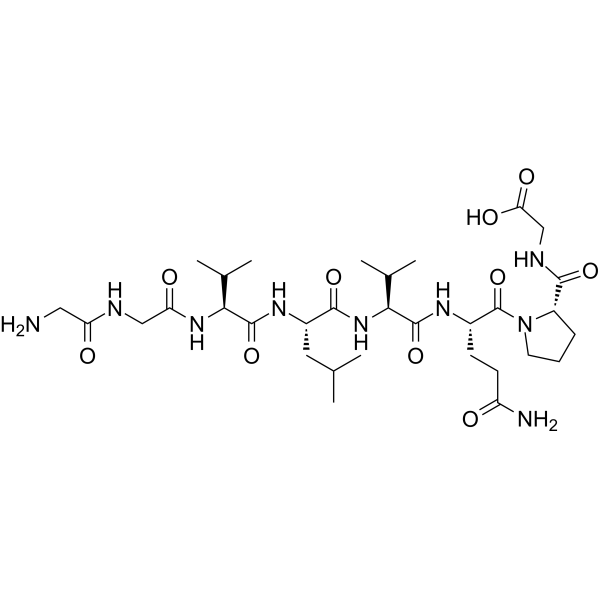
Larazotide acetate (Standard) is the analytical standard of Larazotide acetate (HY-106268A). This product is intended for research and analytical applications. Larazotide acetate is a peptide which is an orally active zonulin antagonist. Larazotide acetate shows antiviral activity to varicella-zoster virus (VZV) with EC50s of 44.14 and 59.06 μM for strain OKA and 07-1, respectively. Larazotide acetate can be used for the research of celiac disease and infection.
|
-
- HY-106268
-
|
|
VZV
Gap Junction Protein
|
Infection
Inflammation/Immunology
|
|
Larazotideis a peptide which is an orally active zonulin antagonist. Larazotide shows antiviral activity to varicella-zoster virus (VZV) with EC50s of 44.14 and 59.06 μM for strain OKA and 07-1, respectively. Larazotide can be used for the research of celiac disease and infection .
|
-
- HY-161995
-
|
|
Apoptosis
Necroptosis
FGFR
VEGFR
PDGFR
|
Cancer
|
|
FGFR1/VEGFR2-IN-2 (compound 6l) is a VEGFR2/FGFR1 dual inhibitor. The IC50 values for VEGFR2 and FGFR1 are 0.025 µM and 0.026 µM respectively, and for EGFR and PDGFR-β, the IC50 values are 0.106 µM and 0.077 µM. FGFR1/VEGFR2-IN-2 showes significant anti-cancer activity (GI=60.38%) on NCI-60 cell line, with an IC50 of 8.51 µM in T-47D cell line and anti-migration. FGFR1/VEGFR2-IN-2 acts to arrest cells in the G1 phase and promote apoptosis and necrosis; the IC50 for MCF-7 cell line exceeds 100 µM, and the IC50 for MDA-MB-231 is 69.17 µM, non-toxic to normal cells .
|
-
- HY-106268A
-
|
|
VZV
Gap Junction Protein
|
Inflammation/Immunology
|
|
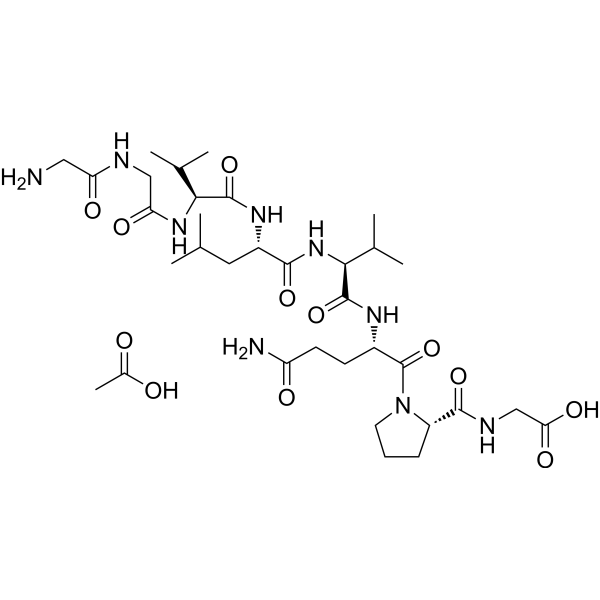
Larazotide acetate is a peptide which is an orally active zonulin antagonist. Larazotide acetate shows antiviral activity to varicella-zoster virus (VZV) with EC50s of 44.14 and 59.06 μM for strain OKA and 07-1, respectively. Larazotide acetate can be used for the research of celiac disease and infection.
|
-
- HY-153810
-
|
JNJ-1802
|
Virus Protease
Flavivirus
Dengue Virus
|
Infection
|
|
Mosnodenvir (JNJ-1802) is an orally active pan serotype dengue virus (DENV) inhibitor, with EC50 values ranging from 0.057 to 11 nM for four dengue virus (DENV) serotypes. Mosnodenvir blocks viral replication by inhibiting the formation of complexes between two viral proteins, nonstructural protein 3 (NS3) and NS4B, thereby preventing the formation of new viral RNA. Mosnodenvir exhibits picomolar to nanomolar antiviral activity in vitro and has antiviral efficacy in mice and non-human primates .
|
-
- HY-169124
-
|
|
Apoptosis
Reactive Oxygen Species (ROS)
Protease Activated Receptor (PAR)
Bcl-2 Family
|
Cancer
|
|
Apoptosis Inducer 28 (Compound X1) is an apoptosis-inducing agent with anticancer activity in vitro. Apoptosis Inducer 28 can arrest the cell cycle at the G1 phase, promote cell death, and induce apoptosis by disrupting mitochondrial membrane potential. Apoptosis inducer 28 can also decrease the production of reactive oxygen species, downregulate the gene expression of BAX, Bcl-xL, and Bcl-2, while upregulating the gene expression of PAR-4 .
|
-
- HY-149060
-
|
|
Influenza Virus
|
Infection
|
|
Neuraminidase-IN-15 is an inhibitor of neuraminidase. Neuraminidase-IN-15 inhibits the activity of La Sota Clone 30 NDV-HN with an IC50 value of 0.06 µM. Neuraminidase-IN-15 can be used for the study of Newcastle disease virus (NDV) .
|
-
- HY-153121
-
|
RAY1216
|
SARS-CoV
|
Infection
|
|
Leritrelvir (RAY1216) is an orally active SARS-CoV-2 main protease slow-tight inhibitor with a Ki of 8.6 nM .
|
-
- HY-174350
-
|
|
Casein Kinase
SARS-CoV
|
Infection
|
|
CK2-IN-15 (Compound Biv5) is a selective and potent bivalent protein kinase CK2 inhibitor with an IC50 value of 51 pM. CK2-IN-15 significantly reduces the replication of SARS-CoV-2 in HEK-ACE2-TMPRSS2 and Vero cells, and also reduces viral replication in an ex vivo model of human nasal epithelial cells. CK2-IN-15 is promising for research of β-coronavirus infection-related diseases .
|
-
- HY-P991766
-
|
|
Flavivirus
|
Infection
|
|
Anti-Venezuelan equine encephalitis virus E2 protein Antibody (VEEV-57) reacts with the E2 protein of the Venezuelan equine encephalitis virus (VEEV). Anti-Venezuelan equine encephalitis virus E2 protein Antibody (VEEV-57) inhibits VEEV attachment to Vero cells, viral egress, viral fusion, and LDLRAD3-D1-Fc binding. Recommend Isotype Controls: Mouse IgG2c kappa, Isotype Control (HY-P99981) .
|
-
- HY-159911
-
|
|
SARS-CoV
Virus Protease
|
|
|
SARS-CoV-2 Mpro-IN-29 (Compound 7) is an inhibitor of the SARS-CoV-2 main protease (Mpro) with an IC50 of 310 nM and an EC50 of 0.5 μM in Vero cells. SARS-CoV-2 Mpro-IN-29 binds to the active site of Mpro, blocking the cleavage of viral polyproteins, showing significant antiviral activity and enhanced metabolic function. SARS-CoV-2 Mpro-IN-29 holds potential for research on SARS-CoV-2 antiviral agents .
|
-
- HY-N8470
-
|
NSC 204855; U 40615
|
Bacterial
|
Infection
|
|
Steffimycin B is an anthracycline bacterial metabolite originally isolated from Streptomyces. It binds to DNA, preferentially intercalating at sites containing cytosine and guanine.2 Steffimycin B is cytotoxic to MCF-7, KB, NCI-H187, and Vero cells (IC50s=3.5, 6.75, 3.28, and 10.5 μM, respectively). It is active against M. tuberculosis (MIC=5.2 nM), B. cereus (MIC=1.56 μg/mL), and P. falciparum (IC50=2.19 μM).
|
-
- HY-155527
-
|
|
SARS-CoV
|
Infection
|
|
SARS-CoV-2 Mpro-IN-9 (compound c7) is a nonpeptidic, noncovalent SARS-CoV-2 M pro inhibitor (IC50=0.085 μM), with improved physicochemical and drug metabolism and pharmacokinetics (DMPK) properties. SARS-CoV-2 Mpro-IN-9 inhibits viral replication (EC50=1.10 μM) in SARS-CoV-2-infected Vero E6 cells, while exhibits low cytotoxic effects (CC50>50 μM) .
|
-
- HY-157405
-
|
|
Dengue Virus
|
Infection
|
|
DENV-IN-11 (SC27), a sulfonamide chalcone, is a potent DENV inhibitor that targeted viral methyltransferase. DENV-IN-11 reduced DENV2 replicon replication. DENV-IN-11 can be used for dengue infection research .
|
-
- HY-N15678
-
|
1,3,6,8-THAQ
|
Bacterial
|
Infection
Cancer
|
|
Rheoemodin is an anthraquinone and antibacterial agent. Rheoemodin can be isolated from Cordyceps morakotii BCC 56811. Rheoemodin exhibits antibacterial activity against Acinetobacter baumannii (MIC: 12.5 μg/mL). Rheoemodin also exhibits weak to moderate antimycobacterial and antifungal activity. Rheoemodin also exhibits anticancer activity against breast cancer and small cell lung cancer .
|
-
- HY-40156A
-
|
|
Bacterial
|
Infection
|
|
Mycobacterium Tuberculosis-IN-5 (Compound 11) is the HCl salt form of 5-Fluoroindole (HY-40156). Mycobacterium Tuberculosis-IN-5 is an antibacterial agent, that inhibits Mycobacterium tuberculosis with a MIC of 29.1 μM. Mycobacterium Tuberculosis-IN-5 exhibits metabolic stability in rat liver microsomes. Mycobacterium Tuberculosis-IN-5 exhibits anti-tuberculosis efficacy in mice .
|
-
- HY-173595
-
|
|
Influenza Virus
TNF Receptor
|
Infection
|
|
ODE-(S)-HPMPA formate is an antiviral compound with strong inhibitory activity against poxviruses and adenoviruses. ODE-(S)-HPMPA formate activates TNF-α secretion .
|
-
- HY-W075353
-
-
- HY-149900
-
|
|
Biochemical Assay Reagents
|
Infection
|
|
Antiviral agent 33 (compound 1c) is a double-stranded DNA (dsDNA) virus inhibitor with IC50 values of 0.0790 and 0.1572 µM for VACV and AdV5, respectively. Antiviral agent 33 also has potential for oral administration .
|
-
- HY-N12231
-
|
|
Antibiotic
Bacterial
Lipoxygenase
|
Infection
Cancer
|
|
Carbazomycin B is a bacterial metabolite and can be isolated from Streptomyces. Carbazomycin B is an antifungal and antibacterial agent. Carbazomycin B inhibits 5-lipoxygenase (5-LO) activity in extract from RBL-1 cell with the IC50 Of 1.5 µM sup>[2]sup>[3]sup>[4].
|
-
- HY-40156
-
|
|
Bacterial
Reactive Oxygen Species (ROS)
Apoptosis
|
Infection
|
|
5-Fluoroindole is an orally active fluorinated indole derivative and antibacterial agent. 5-Fluoroindole induces ROS accumulation and triggers Apoptosis. 5-Fluoroindole inhibits the growth of pan-susceptible Mycobacterium tuberculosis (Mtb) H37Rv strains. 5-Fluoroindole has significant bactericidal activity against Pseudomonas syringae pv. actinidiae (Psa) with an EC50 of 15.34 μg/mL. 5-Fluoroindole introduces fluorine labeling for protein research. 5-Fluoroindole can be used in the study of tuberculosis and kiwifruit bacterial canker .
|
-
- HY-149057
-
|
|
Influenza Virus
|
Infection
|
|
NDV-IN-1 is an antiviral agent with high neuraminidase inhibitory activity. NDV-IN-1 exhibits in vitro inhibitory activity against Newcastle disease virus (NDV). NDV-IN-1 significantly inhibits NDV infection of Vero cells by preventing the release of virus particles from infected cells . Neuraminidase-IN-12 is a click chemistry reagent, it contains an Azide group and can undergo copper-catalyzed azide-alkyne cycloaddition reaction (CuAAc) with molecules containing Alkyne groups. It can also undergo strain-promoted alkyne-azide cycloaddition (SPAAC) reactions with molecules containing DBCO or BCN groups.
|
-
- HY-N11650
-
|
|
Bacterial
|
Infection
|
|
(22S,24E)-3β,22-Diacetoxylanosta-7,9(11),24-trien-26-oic acid (compound 15) is an antitubercular agent with MIC value of 12.5 μg/mL for Mycobacterium tuberculosis H37Ra. (22S,24E)-3β,22-Diacetoxylanosta-7,9(11),24-trien-26-oic acid shows cytotoxicity with IC50 value of 32 μM for Vero cells .
|
-
- HY-180229
-
|
|
SARS-CoV
|
Infection
|
|
GK730 is a potent and selective SARS-CoV-2 main protease inhibitor with an IC50 of 5.75 nM. GK730 does not inhibit cathepsin B, while exhibits weak inhibition of cathepsin L (IC50 = 11 μM). GK730 can simultaneously block the replication of the virus and the entry pathways for variants such as Omicron into cells. GK730 demonstrates an EC50 value of 5.70 μM against a wild-type SARS-CoV-2 strain in Vero E6 cells and CC50 value greater than 100 μM. GK730 can be used for the research of COVID-19 .
|
-
- HY-172870
-
-
- HY-162380
-
|
|
Topoisomerase
|
Cancer
|
|
Topoisomerase II inhibitor 18 (Compound IV) is a Quinoxaline derivative, which inhibits topoisomerase II with IC50 of 7.5 μM. Topoisomerase II inhibitor 18 inhibits proliferation, cell cycle at S phase and induces apoptosis in PC-3 cells. Topoisomerase II inhibitor 18 reveals antitumor activity against cancer .
|
-
- HY-N10441
-
|
|
Parasite
|
Infection
|
|
3β-Hydroxy-hop-22(29)-ene (compound 3) is a potent antiparasitic agent. 3β-Hydroxy-hop-22(29)-ene shows moderate activity against Trypanosoma cruzi and Leishmania mexicana .
|
-
- HY-N10355
-
|
|
Apoptosis
|
Cancer
|
27-TBDMS-4-Dehydrowithaferin A, a withaferin A derivative, exhibits potent antiproliferative effects on the tumor cells.27-TBDMS-4-Dehydrowithaferin A induces tumor cells apoptosis. 27-TBDMS-4-Dehydrowithaferin A is a anticancer agent .
|
-
- HY-178435
-
|
|
SARS-CoV
|
Infection
|
|
SARS-CoV-2 Mpro-IN-48 is a potent SARS-CoV-2 main protease inhibitor with an IC50 of 21.1 nM. SARS-CoV-2 Mpro-IN-48 exhibits potent antiviral activity against the SARS-CoV-2 JN.1 variant. SARS-CoV-2 Mpro-IN-48 can be used for the research of infection, such as COVID-19 .
|
-
- HY-151497
-
-
- HY-151501
-
-
- HY-N12230
-
|
|
Bacterial
Parasite
Fungal
|
Infection
Cancer
|
|
Penicolinate B is a picolinic acid derivative that can be isolated from Penicillium sp. Penicolinate B exhibits antimalarial activity (IC50: 1.40 μg/mL), antitubercular activity (MIC: 25.0 μg/mL), activity against Bacillus cereus (IC50: 25.0 μg/mL), and activity against Candida albicans (IC50: 1.45 μg/mL). Penicolinate B also has certain cytotoxicity against cancer cells such as MCF-7, KB, and NCI-H187. Penicolinate B can be used in research on malaria, tuberculosis, bacterial/fungal infections and tumors .
|
-
- HY-155734
-
|
|
SARS-CoV
|
Infection
|
|
SARS-CoV-2-IN-55(compound 65) is a low cytotoxicity inhibtor of SARS-CoV-2 with an IC50 value of 0.3 μM, by the direct interaction with VSV-S pseudoparticles .
|
-
- HY-175015
-
|
|
SARS-CoV
|
Infection
|
|
SARS-CoV-2 Mpro-IN-46 (Compound 12) is a SARS-CoV-2 main protease inhibitor with an IC50 of ∼25 μM. SARS-CoV-2 Mpro-IN-46 has potent antiviral activity with low cytotoxicity against SARS-CoV-2 (IC50: 7.4 μM). SARS-CoV-2 Mpro-IN-46 can be used for coronaviruses COVID-19 research .
|
-
- HY-151502
-
-
- HY-174429
-
|
|
HSV
|
Infection
|
|
HSV-1-IN-3 (Compound A50) is a HSV inhibitor. HSV-1-IN-3 shows good antiviral efficacy against both Acyclovir (HY-17422) -sensitive and -resistant HSV strains .
|
-
- HY-14805A
-
|
ST-246 monohydrate
|
Orthopoxvirus
Arenavirus
|
Infection
|
Tecovirimat (ST-246) monohydrate is the monohydrate form of Tecovirimat (HY-14805). Tecovirimat monohydrate is an orally bioavailable and selective compound against orthopoxviruses [including vaccinia, monkeypox, camelpox, cowpox, ectromelia (mousepox), smallpox and variola viruses]. Tecovirimat monohydrate is evaluated against vaccinia, cowpox virus, ectromelia virus with EC50 values of 0.01 μM, 0.48 μM and 0.05 μM, respectively. Tecovirimat monohydrate targets the orthopoxvirus protein VP37 which is necessary for membrane envelopment of intracellular mature virus particles to form enveloped virus. Tecovirimat monohydrate exerts antiviral activity on the target of the cowpox virus V061 gene, which is homologous to vaccinia virus F13L, encoding a major envelope protein (p37) required for production of extracellular virus. Tecovirimat monohydrate could be used in the study for orthopoxvirus-induced diseases .
|
-
- HY-151285
-
|
|
Apoptosis
JAK
|
Inflammation/Immunology
Cancer
|
|
JAK-2-/3-IN-3 (compound ST4j) is a potent JAK2/3 inhibitor with IC50s of 13.00 and 14.86 nM for JAK2 and JAK3, respectively. JAK-2-/3-IN-3 inhibits autophosphorylation of JAK2 and induces apoptosis in a dose- and time-dependent manner. JAK-2-/3-IN-3 can be used in studies of lymph derived diseases and leukemia .
|
-
- HY-149059
-
|
|
Influenza Virus
|
Infection
|
|
Neuraminidase-IN-14 is an inhibitor of neuraminidase. Neuraminidase-IN-14 inhibits the activity of La Sota Clone 30 NDV-HN with an IC50 value of 0.20 µM. Neuraminidase-IN-14 can be used for research on Newcastle disease virus (NDV) infection .
|
-
- HY-146246
-
|
4'-FlU; 4'-Fluorouridine
|
RSV
SARS-CoV
HCV
|
Infection
|
|
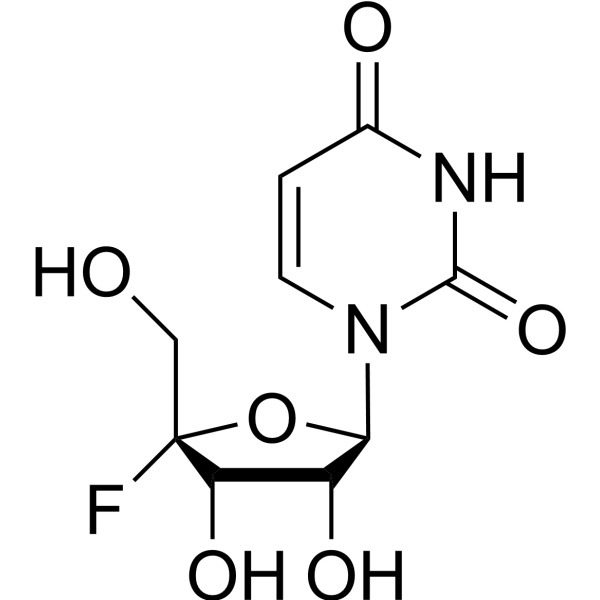
EIDD-2749 (4'-Fluorouridine) is an orally active RdRp inhibitor. EIDD-2749 effectively blocks the replication of RSV and SARS-CoV-2. EIDD-2749 also exhibits activity against HCV and lymphocytic choriomeningitis virus (LCMV). EIDD-2749 is a promising oral therapeutic candidate for COVID-19 and is also suitable for research on other RNA viruses .
|
-
- HY-145994
-
|
ATV006
|
SARS-CoV
|
Infection
|
|
Obeldesivir (ATV006) is a potent, orally active antiviral agent and ester proagents of GS-441524. Obeldesivir inhibits the replication of SARS-CoV-2 and its variants. Obeldesivir can be used for SARS-CoV-2 research .
|
-
- HY-143335
-
|
|
Fungal
|
Infection
|
|
Antifungal agent 52 (compound 6c) is a tetrazole derivative. Antifungal agent 52 inhibits the synthesis of Ergosterol (HY-N0181). Antifungal agent 52 exhibit a significant antifungal activity against Candida albicans. Antifungal agent 52 affects C. albicans sessile cell membrane permeabilization .
|
-
- HY-178992
-
|
|
SphK
|
Cancer
|
|
SphK1-IN-4 (Compound 6b) is a sphingosine kinase 1 (SphK1) inhibitor. SphK1-IN-4 can be used for the research of cancer, such as lung cancer .
|
-
- HY-178436
-
|
|
Bacterial
|
Infection
|
|
Antituberculosis agent-16 is an orally active antituberculosis agent. Antituberculosis agent-16 exhibits stable antituberculosis activity with a MIC of 0.48 μg/mL against Mycobacterium tuberculosis H37Rv sensitive strain and 0.49 μg/mL against multidrug-resistant strain 14862. Antituberculosis agent-16 shows high Caco-2 permeability. Antituberculosis agent-16 can be used for the research of infection .
|
-
- HY-14805
-
|
ST-246
|
Orthopoxvirus
Arenavirus
|
Infection
|
|
Tecovirimat (ST-246) is an orally bioavailable and selective compound against orthopoxviruses including vaccinia, monkeypox, camelpox, cowpox, ectromelia (mousepox), smallpox and variola viruses. Tecovirimat is evaluated against vaccinia, cowpox virus, ectromelia virus with EC50 values of 0.01 μM, 0.48 μM and 0.05 μM, respectively. Tecovirimat targets the orthopoxvirus protein VP37 which is necessary for membrane envelopment of intracellular mature virus particles to form enveloped virus. Tecovirimat exerts antiviral activity on the target of the cowpox virus V061 gene, which is homologous to vaccinia virus F13L, encoding a major envelope protein (p37) required for production of extracellular virus .
|
-
- HY-178156
-
|
|
Dihydroorotate Dehydrogenase
SARS-CoV
|
Infection
|
|
DHODH-IN-31 is a human dihydroorotate dehydrogenase (DHODH) inhibitor with an IC50 of 0.59 μM. DHODH-IN-31 exhibits antiviral activity. DHODH-IN-31 can be used for the research of infection, such as SARS-CoV-2 .
|
-
- HY-N18293
-
|
|
HSV
|
Infection
|
|
Makisterone A 2-acetate is a steroid compound that can be isolated from the 75% ethanol extract of Cyanotis arachnoidea. Experimental tests show that Makisterone A 2-acetate has no anti-HSV-1 activity .
|
-
- HY-175635
-
|
|
EGFR
VEGFR
|
Cancer
|
|
EGFR/VEGFR2-IN-6 (Compound 3k) is a dual-functional inhibitor of EGFR and VEGFR2 with IC50s of 10.53 and 3.37 μM for EGFR and VEGFR2, respectively. EGFR/VEGFR2-IN-6 has significant anti-proliferation activity against breast cancer cells, and induces G0/G1 cell cycle arrest and cell apoptosis, especially early apoptosis. EGFR/VEGFR2-IN-6 can be used for cancers research .
|
-
- HY-186203
-
|
|
HSV
|
Infection
|
|
8-Bromo-harmane is a β-carboline derivative with anti-HSV-1 activity. 8-Bromo-harmane is non-cytotoxic. 8-Bromo-harmane can be used for the research of herpes simplex virus 1 (HSV-1) infection .
|
-
- HY-13324
-
|
RTA 402; NSC 713200; CDDO Methyl ester
|
Keap1-Nrf2
SARS-CoV
Virus Protease
|
Cardiovascular Disease
Infection
Neurological Disease
Metabolic Disease
Inflammation/Immunology
Cancer
|
|
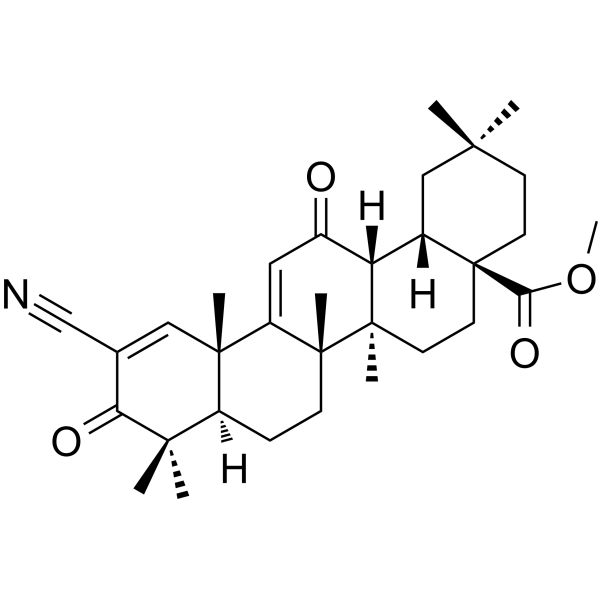
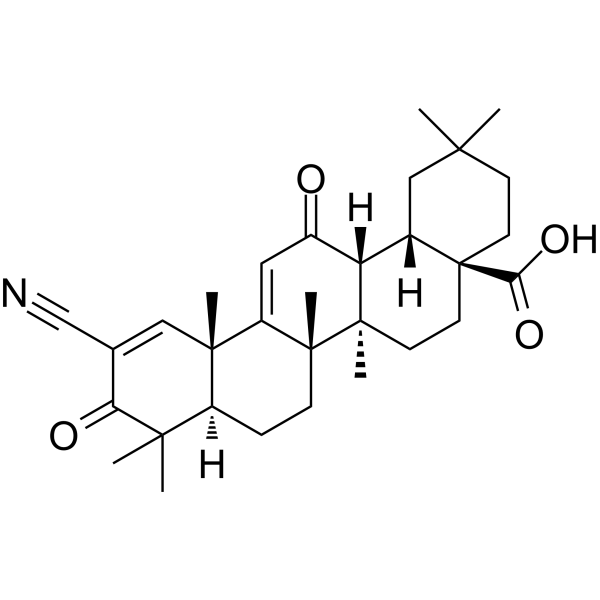
Bardoxolone (CDDO; RTA 401) methyl is an orally active and blood-brain-barrier-penetrant activator of Nrf2 and an inhibitor of SARS-CoV-2 3CL protease. Bardoxolone methyl inhibits SARS-CoV-2 replication in Vero cells with an EC50 value of 0.29 μM. Bardoxolone methyl increases levels of pNrf2 and HO-1, inhibits inflammatory mediators like pNFκB and MCP-1. Bardoxolone methyl activates the Nrf2 pathway to enhance antioxidant and anti-inflammatory responses, inhibits viral replication, and improves mitochondrial function. Bardoxolone methyl can be used in research on chemotherapy-induced neuropathic pain (CINP), COVID-19, and chronic kidney disease (CKD) .
|
-
- HY-14909R
-
|
CDDO (Standard); RTA 401 (Standard)
|
Keap1-Nrf2
Necroptosis
SARS-CoV
Virus Protease
Reference Standards
|
Infection
Cardiovascular Disease
Inflammation/Immunology
|
|
Bardoxolone (Standard) is the analytical standard of Bardoxolone (HY-14909). This product is intended for research and analytical applications. Bardoxolone is an orally active activator of nuclear regulatory factor (NRf-2) and an inhibitor of SARS-CoV-2 3CL protease. Bardoxolone inhibits SARS-CoV-2 3CL protease with an EC50 value of 0.43 μM in vero cells. Bardoxolone also inhibits necroptosis in HT-29 cells with an EC50 value of 1.30 μM by blocking necrosome formation through inhibiting phosphorylation of RIPK1 and RIPK3. Bardoxolone can be used in research on COVID-19, TNF-induced systemic inflammatory response syndrome (SIRS), and cerebral ischemia-reperfusion injury .
|
-
- HY-151614
-
|
|
Bacterial
|
Infection
|
|
Anti-infective agent 7 is a potent anti-infectious agent. Anti-infective agent 7 has anti-infection activity against P. falciparum (IC50=2.5 μM) and M. tuberculosis (MIC=9 μM) .
|
-
- HY-175368
-
|
|
Dengue Virus
|
Infection
|
|
DENV-IN-13 (Compound 30) is a DENV2 protease inhibitor with an EC50 of 9.8 μM for DENV2 protease in HeLa cells. DENV-IN-13 has potent antiviral activity with negligible cytotoxicity and no inhibition of the off-targets thrombin and trypsin. DENV-IN-13 can be used for flaviviral infections research .
|
-
- HY-151445
-
|
|
DNA Methyltransferase
Virus Protease
Flavivirus
|
Infection
|
|
ZIKV-IN-2 (compound 3a) is a potent ZIKV NS5 methyl transferase (MTase) inhibitor with an IC50 value of 38.86 μM. ZIKV-IN-2 inhibits ZIKV replication and infection. ZIKV-IN-2 can be used in research of Zika virus (ZIKV) .
|
-
- HY-N12792
-
|
|
Others
|
Cancer
|
|
5,8-Dihydroxy-3',4',6,7-tetramethoxyflavone (Compound 8) is a flavonoid with anticancer activity. 5,8-Dihydroxy-3',4',6,7-tetramethoxyflavone can be isolated from Euryops arabicus .
|
-
- HY-148310
-
|
|
Virus Protease
|
Infection
|
|
Flaviviruses-IN-2 (compound 78) is a potent flaviviruses inhibitor. Flaviviruses-IN-2 reduces the WNV (West Nile virus) protease activity, with inhibition of 56% .
|
-
- HY-157936
-
|
|
iGluR
|
Neurological Disease
|
|
GluN2B-NMDAR antagonist-2 (compound S-58) is a potent, selective and cross the blood-brain barrier NMDAR-GluN2B antagonist with an IC50 value of 74.01, nM. GluN2B-NMDAR antagonist-2 shows mild cytotoxicity. GluN2B-NMDAR antagonist-2 decreases the cerebral infarction rates and neurologic deficit scores. GluN2B-NMDAR antagonist-2 has the potential for the research of stroke .
|
-
- HY-183885
-
-
- HY-151612
-
|
|
Parasite
|
Infection
|
|
Anti-infective agent 6 (compound 28) is a potent anti-infectious agent. Anti-infective agent 6 shows a good activity against P. falciparum F32-ART (IC50=1.4 μM) with a good selectivity index (SI>36). Anti-infective agent 6 also shows a potency against L. donovani (IC50=3.5 μM) .
|
-
- HY-170799
-
|
|
DNA/RNA Synthesis
SARS-CoV
Arenavirus
|
Infection
|
|
HNC-1664 is the orally active inhibitor for RNA-dependent RNA polymerase (RdRP). HNC-1664 exhibits broad-spectrum antiviral activity against coronavirus (SARS-CoV-2 wildtype and its mutants XBB.1.18, HK.3.1, BF.7.14, BA.1HCoV-229E, HCoV-OC43) and arenavirus. HNC-1664 exhibits anti-infectious activity in SARS-CoV-2 Delta infected mouse models .
|
-
- HY-18234A
-
-
- HY-B1513
-
|
|
Environmental Pollutants
SARS-CoV
Microtubule/Tubulin
|
Infection
Metabolic Disease
Cancer
|
|
α-Cyclodextrin (α-CD) is a soluble fiber derived from corn. α-Cyclodextrin can deplete sphingolipids and phospholipids from cell membranes. α-Cyclodextrin interacts with tubulin. α-Cyclodextrin improves defenses against SARS-CoV-2 infection. α-Cyclodextrin enhances the anticancer efficacy of Crcumin (HY-N0005) against breast, lung and cervical cancer. α-Cyclodextrin has beneficial effects on body weight and blood lipids .
|
-
- HY-122502
-
|
Pirazofurin
|
DNA/RNA Synthesis
Antibiotic
Influenza Virus
HIV
SARS-CoV
|
Infection
Cancer
|
|
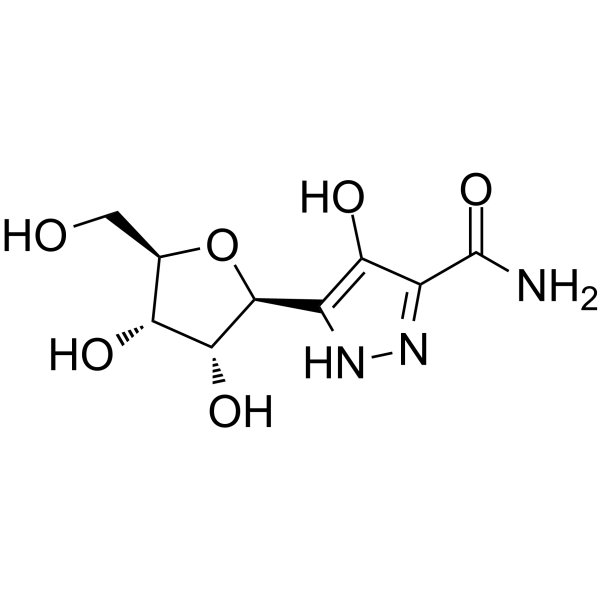
Pyrazofurin is an antitumor pyrimidine nucleoside analogue and a orotate-phosphoribosyltransferase inhibitor. Pyrazofurin inhibits cell proliferation and intracellular DNA synthesis by inhibiting uridine 5'-phosphate synthase. Pyrazofurin is also an antibiotic with a broad spectrum of antiviral activity .
|
-
- HY-18234
-
-
- HY-18234AR
-
|
|
Reference Standards
Cathepsin
Ser/Thr Protease
Virus Protease
|
Infection
Inflammation/Immunology
|
|
Leupeptin (hemisulfate) (Standard) is the analytical standard of Leupeptin (hemisulfate). This product is intended for research and analytical applications. Leupeptin hemisulfate is a broad-spectrum, membrane-permeable protease inhibitor. Leupeptin hemisulfate potently inhibits serine, cysteine and threonine proteases. Leupeptin hemisulfate inhibits Mpro (the main protease of SARS-CoV-2) and also has anti-inflammatory activity[1][2][3].
|
-
- HY-175183
-
|
|
Bacterial
|
Infection
|
|
Antituberculosis agent-15 (Compound 18c) is a selective antimycobacterial agent with MICs of 0.45 and 0.28 μM for M. tuberculosis H37Rv (ATCC 27294) and its wild-type H37Rv-LP (ATCC 25618), respectively. Antituberculosis agent-15 has potent intracellular inhibitory activities in macrophage infection models with IC50s of 0.16 μM. Antituberculosis agent-15 can be used for tuberculosis research .
|
-
- HY-P991501
-
|
HcHAb18
|
ADC Antibody
Transmembrane Glycoprotein
SARS-CoV
|
Infection
Cancer
|
|
Meplazumab (HcHAb18) is a humanized anti-CD147 IgG1 antibody a Kd of 0.47 nM. Meplazumab shows anti-SARS-CoV-2 and antitumor activity. Meplazumab conjugated with DM1 can form an antibody-conjugated drug ( HcHAb18-DM1), which induces G2/M phase cell cycle arrest and exerts antiproliferative activity in cancer cells. Meplazumab can be used for the researches of COVID-19 pneumonia and non-small cell lung cancer .
|
-
- HY-151446
-
|
|
DNA Methyltransferase
Virus Protease
Flavivirus
|
Infection
|
|
ZIKV-IN-3 (compound 5a), an andrographolide derivatives, is a potent ZIKV NS5 methyl transferase (MTase) inhibitor with an IC50 value of 18.34 μM. ZIKV-IN-3 inhibits ZIKV replication and infection. ZIKV-IN-3 can be used in research of Zika virus (ZIKV) .
|
-
- HY-139311
-
|
|
SARS-CoV
|
Infection
|
|
YH-53 is a potent 3CL pro inhibitor with Ki values of 6.3 nM, 34.7 nM for SARS-CoV-1 3CL pro and SARS-CoV-2 3CL pro, respectively. YH-53 strongly blocks the SARS-CoV-2 replication. YH-53 is a peptidomimetic compound with a unique benzothiazolyl ketone. YH-53 has the potential for COVID-19 research .
|
-
- HY-N16130
-
|
|
Drug Derivative
|
Others
|
|
Kuwanon S is a flavonoid compound that can be isolated from the root bark of Morus alba L. Kuwanon S is commonly used in organic synthesis and biochemistry experiments .
|
-
- HY-P99376
-
|
OMS 721; Anti-MASP2 Reference Antibody (narsoplimab)
|
SARS-CoV
|
Infection
|
|
Narsoplimab (OMS 721) is a high-affinity fully human immunoglobulin gamma 4 (IgG4) monoclonal antibody that binds MASP-2 and blocks lectin pathway activation. Narsoplimab can be used in research of hematopoietic stem-cell transplantation and SARS-CoV-2 .
|
-
- HY-181165
-
|
|
PKC
SARS-CoV
IFNAR
|
Infection
|
|
SB2960 is a receptor for activated protein C kinase 1 (RACK1) binder with a human KD of 5.65 μM. SB2960 can promote stress granule (SG) formation and exhibit potent antiviral activity across diverse viral species. SB2960 suppresses viral replication with minimal cytotoxicity by modulating host antiviral immune responses. SB2960 increases the thermal stability of RACK1 and reduces SARS-CoV-2 N protein levels. SB2960 enhances type I interferon (IFN-β) expression and inhibits RIG-I, ISG56, and RANTES expression. SB2960 can be used for the research of virus infection .
|
-
- HY-181713
-
|
|
Bacterial
G-quadruplex
|
Infection
|
|
Antibiofilm agent-19 is an antibiofilm agent with iron-chelating activity. Antibiofilm agent-19 potently inhibits biofilm formation by wild-type PAO1 and the hyper-biofilm mutant strain PAO1-ΔwspF. Antibiofilm agent-19 promotes the formation of c-di-GMP G-quadruplexes and disrupts iron acquisition systems. It can be used in studies on antibacterial adjuvants .
|
-
- HY-B1212
-
|
Dibromohydroxyquinoline; 5,7-Dibromo-8-hydroxyquinoline
|
Parasite
Influenza Virus
|
Infection
|
|
Broxyquinoline (Dibromohydroxyquinoline) is an effective inhibitor of severe fever with thrombocytopenia syndrome virus (SFTSV) with an IC50 of 5.8 µM. Additionally, Broxyquinoline is an inhibitor of CpACBP1 with an IC50 of 64.9 μM. CpACBP1 is a fatty acyl-CoA binding protein of Cryptosporidium parvum, thus Broxyquinoline has the potential to inhibit parasite growth. Broxyquinoline shows promise for research in the field of infectious diseases .
|
-
- HY-174402
-
|
|
SARS-CoV
|
Infection
|
|
PLpro-IN-9 (Compound 14e) is a SARS-CoV-2 PLpro inhibitor with an IC50 of 12.0 μM and a KD of 1.86 μM. PLpro-IN-9 has low cytotoxicity but poor metabolic stability. PLpro-IN-9 can be used in the research of SARS-CoV-2 .
|
-
- HY-14909
-
-
- HY-181603
-
|
|
Enterovirus
IFNAR
|
Infection
|
|
Antiviral agent 79 is a broad-spectrum antiviral agent. Antiviral agent 79 exhibits anti-EV71, anti-CVB3 and anti-ADV7 activities. Antiviral agent 79 activates the host type I interferon signaling pathway to enhance antiviral defense. Antiviral agent 79 can be used in research related to viral infections .
|
-
- HY-162701
-
|
|
SARS-CoV
Influenza Virus
RSV
HSV
|
Infection
|
|
Antiviral agent 58 (Compound J1) is an orally active antiviral agent with broad-spectrum antiviral activity against enveloped viruses, including influenza A virus (IAV), respiratory syncytial virus (RSV), severe acute respiratory syndrome coronavirus 2 (SARS-CoV-2), human coronavirus OC43 (HCoV-OC43), herpes simplex virus type 1 (HSV-1), and HSV-2 .
|
-
- HY-183747
-
|
|
Parasite
|
Infection
|
|
Antitrypanosomal agent 32 is a antitrypanosomal agent with nanomolar potency against multiple Trypanosoma cruzi strains, including CL-Brener, Y, Dm28c-Luc and Tulahuen. Antitrypanosomal agent 32 sustains inhibition of parasite growth after washing and reduces parasitemia levels in BALB/c mice. Antitrypanosomal agent 32 can be used for the research of trypanosome infection .
|
-
- HY-181469
-
|
Adamantanyl GluCer (d18:1/2:0); Adamantanyl glucosylceramide (d18:1/2:0); AdaGluCer (d18:1/2:0)
|
Glycosidase
|
Metabolic Disease
|
|
C2 Adamantanyl glucosylceramide (d18:1/2:0) (Adamantanyl GluCer (d18:1/2:0)) is an inhibitor of glucocerebrosidase (GCC) and LacCer synthase. At low doses, C2 Adamantanyl glucosylceramide (d18:1/2:0) increases intracellular glycolipid levels by inhibiting glucocerebrosidase. C2 Adamantanyl glucosylceramide (d18:1/2:0) alters glycolipid metabolism. C2 Adamantanyl glucosylceramide (d18:1/2:0) can be used for the research of Gaucher disease and Fabry disease .
|
-
- HY-180387
-
|
|
SARS-CoV
Virus Protease
|
Infection
|
|
UAWJ246 is a covalent reversible inhibitor of the SARS-CoV-2 main protease (Mpro), with an IC50 of 0.045 μM and a Ki of 0.036 μM. UAWJ246 exhibits potent antiviral activity by inhibiting SARS-CoV-2 viral replication and shows low cytotoxicity. UAWJ246 can be used in research related to SARS-CoV-2 infection, such as studies on COVID-19 [1][2].
|
-
- HY-181990
-
|
|
Virus Protease
Flavivirus
|
|
|
IRBM-Z-1 is a non-competitive inhibitor of Zika virus (ZIKV) NS2B-NS3 protease, with an IC50 of 1.8 μM. IRBM-Z-1 also exhibits inhibitory activity against the NS2B-NS3 proteases of T156I-mutated dengue virus 2 (DENV2) and West Nile virus (WNV), with IC50 values of 3.9 μM and 4.7 μM, respectively. IRBM-Z-1 inhibits ZIKV replication, attenuates virus-induced cytopathic effects. IRBM-Z-1 is applicable to research related to ZIKV infection .
|
-
- HY-N9515
-
|
|
Apoptosis
Reactive Oxygen Species (ROS)
|
Neurological Disease
Metabolic Disease
|
|
Diallyl tetrasulfide is an orally active diallyl tetrasulfide. Diallyl tetrasulfide ameliorates cadmium-induced changes in acetylcholinesterase and adenosine triphosphatase activities as well as oxidative stress injury in the brain of rats . Diallyl tetrasulfide inhibits lipid peroxidation in rat liver microsomes . Diallyl tetrasulfide ameliorates cadmium-induced oxidative liver injury in rats . Diallyl tetrasulfide protects cells against cadmium-induced loss of cell viability, reduces apoptosis rate and ROS production. Diallyl tetrasulfide is applicable to research related to cadmium-induced neurotoxicity and cadmium-induced oxidative liver injury .
|
-
- HY-N15574
-
|
|
LXR
Bacterial
PPAR
|
Infection
Neurological Disease
Metabolic Disease
Inflammation/Immunology
|
|
Saringosterol is an orally active steroid found in Sargassum muticum. Saringosterol is a LXR agonist. Saringosterol can lower cholesterol levels and inhibit the mRNA and protein expression of peroxisome proliferator-activated receptor γ (PPARγ) and CCAAT enhancer-binding protein α (C/EBPα). Saringosterol has anti-obesity, anti-atherosclerosis, anti-Mycobacterium tuberculosis and anti-depressant activities .
|
-
- HY-183668
-
|
|
Bacterial
Carbonic Anhydrase
|
Infection
|
|
Carbonic anhydrase-IN-39 is a bacterial carbonic anhydrase inhibitor with oral bioavailability. Carbonic anhydrase-IN-39 inhibits α-NgCA and β-NgCA from Neisseria gonorrhoeae, as well as human hCA I and hCA II. Carbonic anhydrase-IN-39 exhibits bactericidal activity against Neisseria gonorrhoeae and reduces gonococcal burden in infected mouse models. Carbonic anhydrase-IN-39 can be used in the research of gonorrhea .
|
-
- HY-45588
-
-
- HY-N16845
-
-
- HY-181745
-
|
|
Bacterial
|
Infection
|
|
Pks13-IN-3 is a furo[2,3-b]isoquinoline derivative and Pks13 inhibitor with an IC50 of 1.12 μM. Pks13-IN-3 reduces inhibition of the hERG ion channel. Pks13-IN-3 can be used for the research of tuberculosis .
|
-
- HY-182464
-
|
|
Potassium Channel
|
Infection
Others
|
|
DABMA is a TMEM175 channel activator with a human EC50 of 17.9 μM. DABMA directly increases TMEM175 channel current via interaction with intracellular, transmembrane, or endosomal lumen-associated domains, and does not alter TMEM175 mRNA or protein levels. DABMA delays endolysosomal substrate degradation, modulates endolysosomal trafficking, increases acidic organelle accumulation, induces cholesterol accumulation and altered late endosome morphology. DABMA can be used for the research of coronavirus disease, Clostridium difficile infection, Pseudomonas aeruginosa infection, rabies, and influenza virus infection .
|
-
- HY-N14145
-
|
|
Antibiotic
Bacterial
|
Infection
|
|
Collinone is a recombinant angular polyketide antibiotic. Collinone shows antibacterial activities for gram-positive bacterial. Collinone shows cytotoxicity .
|
-
- HY-180405
-
|
|
SARS-CoV
Virus Protease
|
Infection
|
|
UAWJ-247 is a potent and reversible SARS-CoV-2 main protease (Mpro) inhibitor with an IC50 of 0.042 μM and a Ki of 0.035 μM. UAWJ-247 can be used for the research of covid-19 .
|
-
- HY-N12717
-
|
|
PAK
FASTK
HSP
p38 MAPK
NF-κB
NO Synthase
COX
HSV
Caspase
TNF Receptor
Fungal
Apoptosis
|
Infection
Inflammation/Immunology
Cancer
|
|
Casuarinin is an orally active antiproliferative, anti-inflammatory, antifungal, virucidal and gastroprotective agent. Casuarinin upregulates the expression of p21/WAF1, Fas/APO‑1, mFasL, sFasL and HSP‑70, arrests cell cycle, induces apoptosis and inhibits cancer cell proliferation. Casuarinin inhibits TNF‑α-induced phosphorylation of MAPK and activation of NF‑κB, downregulates the expression of iNOS, NF‑κB, COX‑2 and ICAM‑1, and reduces the production of proinflammatory mediators. Casuarinin attenuates ethanol-induced activation of caspase‑3 and elevation of TNF‑α, inhibits the growth of Candida albicans, and inhibits HSV‑2. Casuarinin can be used in research related to mammary adenocarcinoma, inflammatory skin diseases, gastric ulcers, candidiasis and herpes simplex virus infections .
|
-
- HY-N2127
-
-
- HY-181997
-
|
|
LDLR
SARS-CoV
|
Infection
|
|
LDLRAP1-IN-1 (Compound B19) is a LDLRAP1 inhibitor and antiviral agent, with an IC50 of 4.98 μM for disrupting the interaction between LDLRAP1 and LDLR. LDLRAP1-IN-1 covalently modifies the C119 residue of LDLRAP1 at the LDLRAP1-LDLR binding interface, thereby disrupting the interaction between LDLRAP1 and LDLR. LDLRAP1-IN-1 exhibits antiviral activity against HCoV-OC43 .
|
-
- HY-182428
-
|
|
SARS-CoV
|
Infection
|
|
UAWJ248 is a SARS-CoV-2 main protease (M pro) inhibitor with an IC50 of 0.012 μM. UAWJ248 inhibits activity via initial reversible binding followed by irreversible inactivation. UAWJ248 inhibits SARS-CoV-2 replication and can be used for the research of SARS-CoV-2 infection .
|
-
- HY-105136A
-
|
|
Drug Derivative
|
Infection
Cancer
|
|
Dezaguanine is a purine analog. Dezaguanine exhibits antitumor activity in leukemia and breast cancer cells. Dezaguanine can be used in cancer-related research .
|
-
- HY-181249
-
|
|
SARS-CoV
Virus Protease
|
Infection
|
|
SARS-CoV-2 Mpro-IN-55 is a SARS-CoV-2 M pro inhibitor with a IC50 value of 7.20 nM. SARS-CoV-2 Mpro-IN-55 shows limited inhibitory activity against SARS-CoV-2. SARS-CoV-2 Mpro-IN-55 can be used in research related to COVID-19 .
|
-
- HY-172350
-
|
|
SARS-CoV
Virus Protease
Interleukin Related
|
Infection
|
|
WEHI-P8 is an orally active SARS-CoV-2 papain-like protease (PLpro) inhibitor with an IC50 of 12 nM and a Kd of 9.0 nM. WEHI-P8 reduces viral load, body weight loss, pulmonary inflammation, immune cell infiltration and pro-inflammatory mediator levels in SARS-CoV-2-infected mice. WEHI-P8 prevents pulmonary hemorrhage, immune cell infiltration, fibrotic remodeling and neuroinflammation, and improves cognitive function in a mouse model of post-acute sequelae of SARS-CoV-2 infection (PASC). WEHI-P8 is applicable for the research of COVID-19 and PASC .
|
-
- HY-P11022
-
|
A-3302-B
|
Endogenous Metabolite
HSV
TRP Channel
|
Infection
Cancer
|
|
TL-119 (A-3302-B) is a polypeptide. TL-119 can be isolated from the bacteria Micromonospora sp. MAG 9-7 and Saccharomonospora sp. CNQ-490. TL-119 inhibits TRPV-1. TL-119 exhibits antiviral activity against HSV-2. TL-119 possesses anticancer activity against gastric cancer and colorectal cancer .
|
-
- HY-183752
-
|
|
SARS-CoV
Virus Protease
|
Infection
|
|
CG-0988 is a selective SARS-CoV-2 3C-like protease (3CL pro) inhibitor with an IC50 of 8.5 nM. CG-0988 functionally inhibits SARS-CoV-2 3CL pro, blocks SARS-CoV-2 replication, and exerts antiviral activity against SARS-CoV-2 variants. CG-0988 can be used in research related to coronavirus disease 2019 (COVID-19) .
|
-
- HY-B0182
-
-
- HY-183592
-
|
|
Orthopoxvirus
Drug Derivative
|
Infection
|
|
Anti-virus agent 2 is an orally active and selective anti-orthopoxvirus (poxvirus) agent, with EC50 values of 6.1 μM and 47.1 μM against VTT-Fluc and MPXV clade IIb, respectively. Anti-virus agent 2 covalently binds to viral A17L protein and mRNA methyltransferase, blocks viral membrane fusion and intracellular biosynthesis, and acts on multiple stages of the viral replication cycle. Anti-virus agent 2 achieves viral inhibition in nude mouse models. Anti-virus agent 2 can be used for the research of orthopoxvirus infections such as monkeypox and smallpox .
|
-
- HY-183314
-
|
|
Flavivirus
|
Infection
|
|
ZIKV-IN-9 is a ZIKV inhibitor that blocks the early binding of viral particles to the cell surface. ZIKV-IN-9 inhibits ZIKV in various cell models. ZIKV-IN-9 is applicable to research related to Zika virus infection .
|
-
- HY-B0182R
-
-
- HY-N9869
-
|
|
Bacterial
|
Infection
|
|
(E,Z)-Platanoside is a flavonoid glycoside. (E,Z)-Platanoside is a potent and highly selective MRSA inhibitor; it exhibits low activity against other tested strains, including Gram-negative bacteria, intracellular Mycobacterium intracellulare, Candida albicans, Cryptococcus neoformans, and Aspergillus fumigatus. (E,Z)-Platanoside can be used in research on MRSA infections .
|
-
- HY-181263
-
|
|
SARS-CoV
Virus Protease
|
Infection
|
|
Jun13698 is a SARS-CoV-2 main protease (M pro) inhibitor with Ki values of 65.6 nM, 510.0 nM, and 117.5 nM against the wild-type, E166V, and E166A mutants, respectively. Jun13698 forms stable complexes with wild-type and mutant M pro to mediate enzyme inhibition. Jun13698 exhibits antiviral activity against SARS-CoV-2 variants carrying the E166V/A mutation. Jun13698 is applicable to COVID-19-related research .
|
-
- HY-182704
-
|
SBI-1275844
|
Eukaryotic Initiation Factor (eIF)
SARS-CoV
|
Infection
|
|
SBI-5844 (SBI-1275844) is a eIF4F complex inhibitor and antiviral agent. SBI-5844 disrupts the assembly of the eIF4F complex and blocks the interaction between eIF4E and eIF4G. SBI-5844 inhibits the synthesis of HCoV-OC43 nucleocapsid protein and reduces the levels of HCoV-OC43 RNA and total protein. SBI-5844 can be used in studies related to human coronavirus OC43 (HCoV-OC43) infection .
|
-
- HY-182674
-
|
|
Sec61
HIV
Flavivirus
Neurotensin Receptor
|
Infection
Cancer
|
|
VGD020 is a highly potent and selective Sec61 translocon inhibitor . VGD020 suppresses the expression of cell surface CD4 by inhibiting signal peptide-dependent co-translational ER translocation, interferes with the initiation of ER translocation of dengue virus polyprotein, and reduces the expression of Sortilin in breast cancer cells. VGD020 exhibits broad anti-flavivirus and anti-HIV activities. VGD020 can be used in research related to dengue virus infection, Zika virus infection, yellow fever virus infection, human immunodeficiency virus infection, and breast cancer .
|
-
- HY-W1135843
-
|
|
Arenavirus
|
Infection
|
|
ARN-75039 is an orally active arenavirus inhibitor. ARN-75039 binds to sites on the GP2 subunit of the mammarenavirus glycoprotein complex, stabilizes prefusion conformation, and blocks viral entry and endosomal membrane fusion to inhibit viral replication and spread. ARN-75039 can be used for the research of lassa fever, arenaviral hemorrhagic fever, and lethal Junín virus infection .
|
-
- HY-W816575
-
|
|
RAR/RXR
SARS-CoV
|
Infection
|
MDI-403 is a retinoic acid receptor (RAR) agonist with an EC50 value of less than 1 μM. MDI-403 exhibits significant antiviral activity against SARS-CoV-2, and can dose-dependently inhibit the expression of viral nucleoprotein (NP) and reduce the proportion of infected cells. MDI-403 mainly acts during the virus invasion stage. MDI-403 can be used in research on anti-SARS-CoV-2 .
|
-
- HY-183873
-
|
|
SARS-CoV
Flavivirus
|
Infection
|
|
HLB-0532247 is a cell-permeable phosphoramidate prodrug of 3'-deoxy-3',4'-didehydrocytidine (ddhC). HLB-0532247 increases the intracellular level of the endogenous antiviral nucleotide ddhCTP. HLB-0532247 reduces the titers of Zika virus and West Nile virus in cell cultures. HLB-0532247 can be used in studies related to Zika virus infection, West Nile virus infection, and coronavirus infection .
|
-
- HY-125258
-
|
|
Phosphatase
Filovirus
|
Infection
|
|
EBOV-IN-11 is a protein phosphatase 1 (PP1) inhibitor, with Kd values of 1.88 nM and 8.01 nM against wild-type and quadruple-mutant PP1, respectively. EBOV-IN-11 potently inhibits the replication and transcription of EBOV-eGFP virus. EBOV-IN-11 can be used in studies related to Ebola virus infection .
|
-
- HY-N17251
-
|
FAC21
|
Endonuclease
|
Infection
|
|
Cusculine (FAC21) is an oropouche virus (OROV) endonuclease inhibitor with an IC50 of 1.4 μM. Cusculine strongly interacts with OROV endonuclease, possibly limiting viral RNA interaction with other proteins, intercalates into double-stranded RNA (a viral replication intermediate), and efficiently inhibits OROV viral replication in vitro. Cusculine can be used for the research of oropouche fever .
|
-
- HY-186075
-
|
|
Flavivirus
Orthopoxvirus
SARS-CoV
CHIKV
Enterovirus
|
Infection
|
|
PS1097 is a broad-spectrum antiviral inhibitor with a BVDV RdRp IC50 of 0.64 μM. PS1097 selectively reduces RTN3 protein levels, causes partial RTN3 mRNA reduction, and leaves other endoplasmic reticulum-resident proteins unaffected. PS1097 inhibits replication of Zika virus and multiple viruses that use the endoplasmic reticulum as a replication hub. PS1097 inhibits BVDV RdRp enzymatic activity and exerts activity against Bovine Viral Diarrhea Virus. PS1097 can be used for the research of zika virus infection, usutu virus infection, west nile virus infection, COVID-19, coxsackie b virus 5 infection, chikungunya virus infection, vaccinia virus infection .
|
-
- HY-N1341
-
|
|
HCV
HCV Protease
DNA/RNA Synthesis
Bacterial
|
Infection
|
|
Roseoside is an inhibitor of DNA gyrase and HAV 3C protease, and also inhibits HCV NS5A/B replicase in human systems with an IC50 of 20 μM. Roseoside binds to the active site of enzymes and stabilizes the interaction by forming hydrogen bonds with key amino acid residues. Roseoside inhibits the growth of Gram-positive bacteria, Gram-negative bacteria, and Candida albicans, and interferes with HCV RNA replication in vitro by inhibiting HCV NS5A/B replicase (IC50=20 μM). Roseoside shows no cytotoxicity and serves as a research tool for studies related to bacterial infections, candidiasis, HAV and HCV .
|
-
- HY-181870
-
|
|
PROTACs
SARS-CoV
|
Infection
|
PROTAC SARS-CoV-2 Mpro degrader-8 is an antiviral PROTAC degrader targeting the SARS-CoV-2 main protease (Mpro), with weak direct binding affinity to Mpro (Kd=80.5 μM). PROTAC SARS-CoV-2 Mpro degrader-8 exhibits broad-spectrum antiviral activity against SARS-CoV-2 and the human endemic coronavirus HCoV-OC43. It can be used for research on coronavirus infections .
|
-
- HY-181785
-
|
|
Influenza Virus
|
Infection
|
|
Influenza A virus-IN-18 (Compound C2e) is an orally active inhibitor of Influenza A virus (IC50: 2.5 μM against PR8/H1N1; 6.42 μM against H3N2). Influenza A virus-IN-18 binds directly to the H1N1/PR8 HA protein with high affinity, with a KD of 0.25 μM. Influenza A virus-IN-18 is applicable to research related to Influenza A virus infection .
|
-
- HY-B1028R
-
|
D-Pantethine (Standard); LBF disulfide (Standard)
|
Reference Standards
Endogenous Metabolite
SARS-CoV
|
Cardiovascular Disease
Neurological Disease
Inflammation/Immunology
Endocrinology
Cancer
|
|
Pantethine (Standard) is the analytical standard of Pantethine. This product is intended for research and analytical applications. Pantethine is an orally active lipid-lowering agent. Pantethine has anti-tumor, anti-inflammatory and anti-SARS-COV virus activities. Pantethine is also a neuroprotective agent. Pantethine can be used in the study of Alzheimer's disease, Parkinson's disease, major depression, systemic sclerosis and pantothenate kinase-related neurodegeneration .
|
-
- HY-B1028
-
-
- HY-183542
-
|
|
Bacterial
|
Infection
|
|
DprE1-IN-15 is a covalent Mycobacterium tuberculosis essential cell wall enzyme DprE1 inhibitor with an IC50 of 0.073 μM. DprE1-IN-15 forms an irreversible covalent adduct with its target enzyme. DprE1-IN-15 shows inhibitory effects against multiple Mycobacterium tuberculosis .
|
-
- HY-163030
-
|
|
Elastase
NF-κB
p38 MAPK
Bacterial
|
Infection
Inflammation/Immunology
|
|
LasB-IN-1 (compound 5f) is a potent and orally active inhibitor of LasB (IC50 = 8.7 μM). LasB-IN-1 effectively attenuates elastase production and biofilm formation by P. aeruginosa while alleviating the inflammatory response through downregulating MAPK and NF-κB pathways. LasB-IN-1 is potential to be a novel anti-infective candidate against drug-resistant infections .
|
-
- HY-N4183
-
|
|
Apoptosis
Caspase
Estrogen Receptor/ERR
|
Cardiovascular Disease
Infection
|
|
Licoflavone C is a broad-spectrum antiviral inhibitor with estrogen-like properties. Licoflavone C binds to viral endonuclease (CEN) and inhibits the replication of various bunyaviruses including severe fever with thrombocytopenia syndrome virus (SFTSV) and lymphocytic choriomeningitis virus in a non-substrate competitive manner. The IC50 values of Licoflavone C against SFTSV CEN and SFTSV CEN are 35.5 μM and 135.8 μM, respectively, and its Kd value against SFTSV CEN is 9.53 μM. After viral entry into cells, Licoflavone C reduces viral loads in mouse tissues in a dose-dependent manner, and exhibits extremely low cytotoxicity and genotoxicity. Licoflavone C induces apoptosis by increasing caspase 3/7 activity, blocks the cell cycle, and alleviates chemotherapy-induced chromosomal damage. Licoflavone C is applicable to the research on severe fever with thrombocytopenia syndrome and related viral infection mechanisms .
|
-
- HY-137978
-
|
GNS561
|
SARS-CoV
IFNAR
Autophagy
Apoptosis
|
Infection
Metabolic Disease
Inflammation/Immunology
Cancer
|
|
Ezurpimtrostat (GNS561) is an orally active PPT1 inhibitor, autophagy inhibitor, immunomodulator, anti-inflammatory agent, and anticancer agent. Ezurpimtrostat inhibits PPT1, dysregulates lysosomal function, redistributes mTOR, and induces apoptosis. Ezurpimtrostat reduces IFN‑α, CRP, immune complex deposition, and SARS‑CoV‑2 viral load. Ezurpimtrostat can be used for the study of systemic lupus erythematosus, SARS‑CoV‑2, hepatocellular carcinoma, fibrosis, and related disorders .
|
-
- HY-183185
-
|
|
SARS-CoV
|
Infection
|
|
BZ-30 is an orally active broad-spectrum SARS-CoV-2 inhibitor. BZ-30 acts on the early stage of the viral life cycle, can partially inhibit the endosomal entry process and reduce viral replication levels. BZ-30 reduces viral load, improves pulmonary pathological conditions, and decreases the lung-to-body weight ratio in hamster models challenged with SARS-CoV-2. BZ-30 can be used for research related to COVID-19 .
|
-
- HY-169092
-
|
|
SARS-CoV
Virus Protease
|
Infection
|
|
PF-07957472 (Compound 4) is an orally active and selective SARS-CoV-2 papain-like protease (PLpro) inhibitor, with a Ki of 2 nM against SARS-CoV-2 PLpro. PF-07957472 reduces SARS-CoV-2 viral titers in the lungs of infected mice and inhibits SARS-CoV-2-induced cytopathic effects in cells. PF-07957472 can be used for the research of COVID-19 .
|
-
- HY-50735
-
|
NSC 382097; FIAC; FOAC
|
HSV
EBV
DNA/RNA Synthesis
|
Infection
|
|
Fiacitabine (NSC 382097; FIAC; FOAC) is a potent and highly selective anti-herpesvirus agent. Fiacitabine acts as an inhibitor of HSV DNA polymerase, with a Ki of 0.26 μM for HSV-1 and 0.42 μM for HSV-2, respectively. Fiacitabine can be efficiently phosphorylated by thymidine kinase encoded by the virus itself to generate FIACTP, an active triphosphate metabolite. Fiacitabine is applicable to research related to herpesvirus infections .
|
-
- HY-N16806
-
-
- HY-178334
-
|
|
CHIKV
|
Infection
|
|
GAP-1173149 is a Chikungunya Virus polymerase inhibitor targeting the CHIKV nsP4 RNA-dependent RNA polymerase .
|
-
- HY-181782
-
|
GaHP
|
Bacterial
Reactive Oxygen Species (ROS)
|
Infection
|
|
Gallium hematoporphyrin is a heme analogue and a selective targeting agent against Mycobacteroides abscessus. Gallium hematoporphyrin induces ROS production and inhibits biofilm formation as well as disrupts preformed biofilms in both smooth and rough colony morphotypes of Mycobacteroides abscessus. Gallium hematoporphyrin interferes with heme-dependent metabolic pathways and suppresses the growth of clinical Mycobacteroides abscessus isolatess, with MICs ranging from 0.5 to 1 μg/ml. Gallium hematoporphyrin exhibits synergistic antibacterial activity with Clarithromycin (HY-17508) against Mycobacteroides abscessus. Gallium hematoporphyrin can be used for the research of Mycobacteroides abscessus infection .
|
-
- HY-P10466A
-
|
|
Sec61
SARS-CoV
Interleukin Related
TNF Receptor
IFNAR
|
Infection
Inflammation/Immunology
|
|
KZR-8445 TFA, a cyclic depsipeptide, is a client-selective Sec61 inhibitor. KZR-8445 TFA binds to the fully opened Sec61 lateral gate, blocks lumenal plug domain access, stabilizes lateral gate helices, traps select signal peptides, and disrupts secretory and membrane protein biogenesis. KZR-8445 TFA inhibits pro-inflammatory cytokine secretion in primary immune cells. KZR-8445 TFA inhibits SARS-CoV-2 replication, virus-induced cytotoxicity, and spike protein biogenesis. KZR-8445 TFA blocks disease progression in a mouse model of rheumatoid arthritis. KZR-8445 TFA can be used for the researches of rheumatoid arthritis and SARS-CoV-2 infection .
|
-
- HY-P10466
-
|
|
Sec61
SARS-CoV
Interleukin Related
TNF Receptor
IFNAR
|
Infection
Inflammation/Immunology
|
|
KZR-8445, a cyclic depsipeptide, is a client-selective Sec61 inhibitor. KZR-8445 binds to the fully opened Sec61 lateral gate, blocks lumenal plug domain access, stabilizes lateral gate helices, traps select signal peptides, and disrupts secretory and membrane protein biogenesis. KZR-8445 inhibits pro-inflammatory cytokine secretion in primary immune cells. KZR-8445 inhibits SARS-CoV-2 replication, virus-induced cytotoxicity, and spike protein biogenesis. KZR-8445 blocks disease progression in a mouse model of rheumatoid arthritis. KZR-8445 can be used for the researches of rheumatoid arthritis and SARS-CoV-2 infection .
|
-
- HY-160062
-
|
|
Mucin
|
Cancer
|
|
S2.2 aptamer sodium is a nucleic acid-based MUC1-binding aptamer with high affinity and low toxicity. Upon binding to its target, S2.2 aptamer sodium undergoes a conformational switch and restores fluorescence signal, serving as a targeted imaging agent for MUC1-positive cancer cells. S2.2 aptamer sodium enables targeted delivery to breast cancer cells with overexpressed MUC1. When formulated as the S2.2-PEG-MZF molecular probe, S2.2 aptamer sodium possesses the functions of T2 signal inhibition, magnetic field-induced hyperthermia and targeted magnetic resonance molecular imaging. In the S2.2-PEG-MZF/DOX nanoliposome, S2.2 aptamer sodium supports targeted thermochemotherapy, effectively inhibiting cancer cell proliferation and invasion as well as inducing apoptosis, and is widely used in studies related to breast cancer .
|
-
- HY-159059
-
|
|
c-Myc
Bcl-2 Family
Eukaryotic Initiation Factor (eIF)
Survivin
β-catenin
MMP
Interleukin Related
|
Cardiovascular Disease
Neurological Disease
Inflammation/Immunology
Cancer
|
|
Ganoderma Lucidum/Reishi Extract is a Ganoderma lucidum extract. Ganoderma Lucidum/Reishi Extract reduces the expression of c-Myc, BCL-2, BCL-XL, TERT, PDGFB, eIF4G, Survivin, β-catenin, and eIF4E. Ganoderma Lucidum/Reishi Extract downregulates the gene expression of MMP-9. Ganoderma Lucidum/Reishi Extract upregulates the expression of IL8. Ganoderma Lucidum/Reishi Extract is applicable to the research of inflammatory breast cancer. Ganoderma Lucidum is used in the research of various diseases, such as allergy, arthritis, hypertension, neurasthenia, inflammation, and cancer .
|
-
- HY-161844
-
|
|
SARS-CoV
Dengue Virus
|
Infection
|
|
Virapinib is a macropinocytosis inhibitor with antiviral activity. Virapinib exhibits broad-spectrum antiviral activity against SARS-CoV-2, monkeypox virus, tick-borne encephalitis virus, and Ebola pseudotyped vesicular stomatitis virus, and it enhances Dengue Virus infection. Virapinib blocks viral entry by inhibiting macropinocytosis, reduces syncytium formation in SARS-CoV-2-infected cells, and impairs cellular entry of SARS-CoV-2 variants. Virapinib upregulates the expression of genes related to sterol biosynthesis. Virapinib can be used in studies related to COVID-19, monkeypox, tick-borne encephalitis, and Ebola virus infection .
|
-
- HY-121020
-
|
|
SARS-CoV
|
Infection
Others
Inflammation/Immunology
|
|
Arcapillin is a flavonoid that can be isolated from Artemisia capillaris Thunb. Arcapillin induces dose-dependent relaxation of ileum and pulmonary artery smooth muscle, causes slight urinary bladder smooth muscle contraction at highest tested concentrations. Arcapillin binds to the active site of SARS-CoV-2 Mpro via interactions with Gln139, His163, and His164, exhibits antiviral activity against SARS-CoV-2 and MERS-CoV. Arcapillin can be used for the research of gastrointestinal disorders, COVID-19, and Middle East respiratory syndrome (MERS) .
|
-
- HY-181991
-
|
|
Virus Protease
Flavivirus
|
Infection
|
|
IRBM-Z-2 is a non-competitive, orally active Zika virus (ZIKV) NS2B-NS3 protease inhibitor, with IC50 values of 0.04 μM and 3.1 μM against the wild-type and I156T mutant strains, respectively. IRBM-Z-2 exhibits broad-spectrum anti-flavivirus potential, with IC50 values of 2.1 μM and 0.09 μM against the NS2B-NS3 proteases of dengue virus 2 (DENV2) and West Nile virus (WNV), respectively. IRBM-Z-1 inhibits ZIKV replication and alleviates virus-induced cytopathic effects. IRBM-Z-1 can be used in studies related to ZIKV infection .
|
-
- HY-186120A
-
|
|
Amino Acid Derivatives
|
Cancer
|
|
N-(Aminoiminomethyl)-N-methyl-L-alanine is an Amino acid analog. N-(Aminoiminomethyl)-N-methyl-L-alanine can be used in cancer-related research .
|
-
- HY-W653905
-
|
1-Adamantanamine hydrochloride-d15
|
Isotope-Labeled Compounds
|
Infection
Neurological Disease
Cancer
|
|
Amantadine-d15 hydrochloride is deuterated labeled Amantadine. Amantadine (1-Adamantanamine) is an orally avtive and potent antiviral agent with activity against influenza A viruses. Amantadine inhibits several ion channels such as NMDA and M2, and also inhibits Coronavirus ion channels. Amantadine also has anti-orthopoxvirus and anticancer activity. Amantadine can be used for Parkinson's disease, postoperative cognitive dysfunction (POCD) and COVID-19 research .
|
-
- HY-B0402A
-
|
1-Adamantanamine hydrochloride; 1-Adamantylamine hydrochloride; 1-Aminoadamantane hydrochloride
|
Influenza Virus
Orthopoxvirus
SARS-CoV
Apoptosis
Bcl-2 Family
CDK
|
Infection
Neurological Disease
Cancer
|
|
Amantadine (1-Adamantanamine) hydrochloride is an orally avtive and potent antiviral agent with activity against influenza A viruses. Amantadine hydrochloride inhibits several ion channels such as NMDA and M2, and also inhibits Coronavirus ion channels. Amantadine hydrochloride also has anti-orthopoxvirus and anticancer activity. Amantadine hydrochloride can be used for Parkinson's disease, postoperative cognitive dysfunction (POCD) and COVID-19 research .
|
-
- HY-B0402AR
-
|
1-Adamantanamine hydrochloride (Standard); 1-Adamantylamine hydrochloride (Standard); 1-Aminoadamantane hydrochloride (Standard)
|
Reference Standards
Influenza Virus
Orthopoxvirus
SARS-CoV
Apoptosis
Bcl-2 Family
CDK
|
Infection
Neurological Disease
Cancer
|
|
Amantadine (hydrochloride) (Standard) is the analytical standard of Amantadine (hydrochloride). This product is intended for research and analytical applications. Amantadine (1-Adamantanamine) hydrochloride is an orally avtive and potent antiviral agent with activity against influenza A viruses. Amantadine hydrochloride inhibits several ion channels such as NMDA and M2, and also inhibits Coronavirus ion channels. Amantadine hydrochloride also has anti-orthopoxvirus and anticancer activity. Amantadine hydrochloride can be used for Parkinson's disease, postoperative cognitive dysfunction (POCD) and COVID-19 research .
|
-
- HY-B0402R
-
|
1-Adamantanamine (Standard); 1-Aminoadamantane (Standard)
|
Reference Standards
Influenza Virus
Orthopoxvirus
SARS-CoV
Apoptosis
CDK
Bcl-2 Family
|
Infection
Neurological Disease
Cancer
|
|
Amantadine (Standard) is the analytical standard of Amantadine. This product is intended for research and analytical applications. Amantadine (1-Adamantanamine) is an orally avtive and potent antiviral agent with activity against influenza A viruses. Amantadine inhibits several ion channels such as NMDA and M2, and also inhibits Coronavirus ion channels. Amantadine also has anti-orthopoxvirus and anticancer activity. Amantadine can be used for Parkinson's disease, postoperative cognitive dysfunction (POCD) and COVID-19 research [4] .
|
-
- HY-B0402R1
-
|
1-Adamantanamine in Methanol (Standard); 1-Aminoadamantane in Methanol (Standard)
|
Reference Standards
Influenza Virus
Orthopoxvirus
SARS-CoV
Apoptosis
CDK
Bcl-2 Family
|
Infection
Neurological Disease
Cancer
|
|
Amantadine in Methanol (Standard) is the solution of Amantadine (Standard). This product is intended for research and analytical applications. Amantadine (1-Adamantanamine) is an orally avtive and potent antiviral agent with activity against influenza A viruses. Amantadine inhibits several ion channels such as NMDA and M2, and also inhibits Coronavirus ion channels. Amantadine also has anti-orthopoxvirus and anticancer activity. Amantadine can be used for Parkinson's disease, postoperative cognitive dysfunction (POCD) and COVID-19 research [4] .
|
-
- HY-B0402
-
|
1-Adamantanamine; 1-Aminoadamantane
|
Influenza Virus
Orthopoxvirus
SARS-CoV
Apoptosis
CDK
Bcl-2 Family
|
Infection
Neurological Disease
Cancer
|
|
Amantadine (1-Adamantanamine) is an orally avtive and potent antiviral agent with activity against influenza A viruses. Amantadine inhibits several ion channels such as NMDA and M2, and also inhibits Coronavirus ion channels. Amantadine also has anti-orthopoxvirus and anticancer activity. Amantadine can be used for Parkinson's disease, postoperative cognitive dysfunction (POCD) and COVID-19 research .
|
-
- HY-B0402B
-
|
1-Adamantanamine sulfate; 1-Aminoadamantane sulfate
|
Influenza Virus
Orthopoxvirus
SARS-CoV
Apoptosis
CDK
Bcl-2 Family
|
Infection
Neurological Disease
Cancer
|
|
Amantadine (1-Adamantanamine) sulfate is an orally avtive and potent antiviral agent with activity against influenza A viruses. Amantadine sulfate inhibits several ion channels such as NMDA and M2, and also inhibits Coronavirus ion channels. Amantadine sulfate also has anti-orthopoxvirus and anticancer activity. Amantadine sulfate can be used for Parkinson's disease, postoperative cognitive dysfunction (POCD) and COVID-19 research .
|
-
- HY-179334
-
|
|
SARS-CoV
DNA/RNA Synthesis
|
Infection
|
|
DMA-155 is an antiviral agent with binding activity against SARS-CoV-2 5'-terminal stem-loop RNAs, with affinities of 51.1 μM (SL1), 61.1 μM (SL4), 54.5 μM (SL5a), 66.9 μM (SL5b) and 48.6 μM (SL6), respectively. DMA-155 inhibits SARS-CoV-2 viral replication and reduces SARS-CoV-2 viral RNA levels. DMA-155 is applicable to the research of COVID-19 .
|
-
- HY-177332
-
|
|
TAM Receptor
SARS-CoV
Akt
|
Infection
Cancer
|
|
SLC-391 is an orally active AXL kinase inhibitor with an IC50 of 9.6 nM against AXL kinase. SLC-391 inhibits Gas6-induced AXL-dependent phosphorylation of Akt. SLC-391 inhibits SARS-CoV-2 infection, entry and replication in cells. SLC-391 suppresses cancer cell proliferation. SLC-391 inhibits tumor growth in mouse solid tumor xenograft models. SLC-391 can be used for the research of COVID-19, influenza virus infection, triple-negative breast cancer, chronic myeloid leukemia and non-small cell lung cancer .
|
-
| Cat. No. |
Product Name |
Type |
-
- HY-B0497G
-
|
BAY2353
|
Fluorescent Dye
|
|
Niclosamide (GMP) is Niclosamide (HY-B0497) produced by using GMP guidelines. GMP small molecules work appropriately as an auxiliary reagent for cell therapy manufacture. Niclosamide (BAY2353) is an orally active antihelminthic agent used in parasitic infection research . Niclosamide is a STAT3 inhibitor with an IC50 of 0.25 μM in HeLa cells . Niclosamide has biological activities against cancer, inhibits DNA replication in Vero E6 cells .
|
| Cat. No. |
Product Name |
Type |
-
- HY-159059
-
|
|
Biochemical Assay Reagents
|
|
Ganoderma Lucidum/Reishi Extract is a Ganoderma lucidum extract. Ganoderma Lucidum/Reishi Extract reduces the expression of c-Myc, BCL-2, BCL-XL, TERT, PDGFB, eIF4G, Survivin, β-catenin, and eIF4E. Ganoderma Lucidum/Reishi Extract downregulates the gene expression of MMP-9. Ganoderma Lucidum/Reishi Extract upregulates the expression of IL8. Ganoderma Lucidum/Reishi Extract is applicable to the research of inflammatory breast cancer. Ganoderma Lucidum is used in the research of various diseases, such as allergy, arthritis, hypertension, neurasthenia, inflammation, and cancer .
|
-
- HY-40156
-
|
|
Biochemical Assay Reagents
|
|
5-Fluoroindole is an orally active fluorinated indole derivative and antibacterial agent. 5-Fluoroindole induces ROS accumulation and triggers Apoptosis. 5-Fluoroindole inhibits the growth of pan-susceptible Mycobacterium tuberculosis (Mtb) H37Rv strains. 5-Fluoroindole has significant bactericidal activity against Pseudomonas syringae pv. actinidiae (Psa) with an EC50 of 15.34 μg/mL. 5-Fluoroindole introduces fluorine labeling for protein research. 5-Fluoroindole can be used in the study of tuberculosis and kiwifruit bacterial canker .
|
-
- HY-B0497G
-
|
BAY2353
|
Biochemical Assay Reagents
|
|
Niclosamide (GMP) is Niclosamide (HY-B0497) produced by using GMP guidelines. GMP small molecules work appropriately as an auxiliary reagent for cell therapy manufacture. Niclosamide (BAY2353) is an orally active antihelminthic agent used in parasitic infection research . Niclosamide is a STAT3 inhibitor with an IC50 of 0.25 μM in HeLa cells . Niclosamide has biological activities against cancer, inhibits DNA replication in Vero E6 cells .
|
| Cat. No. |
Product Name |
Target |
Research Area |
-
- HY-106268A
-
|
|
VZV
Gap Junction Protein
|
Inflammation/Immunology
|
|
Larazotide acetate is a peptide which is an orally active zonulin antagonist. Larazotide acetate shows antiviral activity to varicella-zoster virus (VZV) with EC50s of 44.14 and 59.06 μM for strain OKA and 07-1, respectively. Larazotide acetate can be used for the research of celiac disease and infection.
|
-
- HY-106268
-
|
|
VZV
Gap Junction Protein
|
Infection
Inflammation/Immunology
|
|
Larazotideis a peptide which is an orally active zonulin antagonist. Larazotide shows antiviral activity to varicella-zoster virus (VZV) with EC50s of 44.14 and 59.06 μM for strain OKA and 07-1, respectively. Larazotide can be used for the research of celiac disease and infection .
|
-
- HY-18234
-
-
- HY-P10872
-
|
|
SARS-CoV
|
Infection
|
|
P315V3 is an pan inhibitor for coronavirus, that inhibits SARS-CoV-2 prototypePT, Delta, BA.1 and BA.4 strain with IC50s of 10.9, 8.9, 8.6, and 2.7 nM. P315V3 exhibits cytotoxicity in Vero cell with CC50 of 4.3 μM. P315V3 exhibits anti-infectious efficacy in mouse models .
|
-
- HY-P11232
-
|
|
Toll-like Receptor (TLR)
Bacterial
|
Infection
|
|
NAB815 is a specific inhibitor of the Stx2a (Kd = 0.01 μM)/TLR4 interaction. NAB815 inhibits the neutrophil/Stx2a interaction (IC50 = 0.057 μg/mL). NAB815 inhibits the formation of Stx2-containing extracellular vesicles (EVs) produced by leukocytes and platelets and reduces their toxic effects in cellular (Vero cells) and animal models (CD-1 mice). NAB815 reduces bacterial loads in the kidneys, urine, and bladders of Escherichia coli-infected mice. NAB815 is useful in the study of hemolytic uremic syndrome (HUS) .
|
-
- HY-106268AR
-
|
|
Reference Standards
Gap Junction Protein
|
Inflammation/Immunology
|
|
Larazotide acetate (Standard) is the analytical standard of Larazotide acetate (HY-106268A). This product is intended for research and analytical applications. Larazotide acetate is a peptide which is an orally active zonulin antagonist. Larazotide acetate shows antiviral activity to varicella-zoster virus (VZV) with EC50s of 44.14 and 59.06 μM for strain OKA and 07-1, respectively. Larazotide acetate can be used for the research of celiac disease and infection.
|
-
- HY-P11022
-
|
A-3302-B
|
Endogenous Metabolite
HSV
TRP Channel
|
Infection
Cancer
|
|
TL-119 (A-3302-B) is a polypeptide. TL-119 can be isolated from the bacteria Micromonospora sp. MAG 9-7 and Saccharomonospora sp. CNQ-490. TL-119 inhibits TRPV-1. TL-119 exhibits antiviral activity against HSV-2. TL-119 possesses anticancer activity against gastric cancer and colorectal cancer .
|
-
- HY-P10466A
-
|
|
Sec61
SARS-CoV
Interleukin Related
TNF Receptor
IFNAR
|
Infection
Inflammation/Immunology
|
|
KZR-8445 TFA, a cyclic depsipeptide, is a client-selective Sec61 inhibitor. KZR-8445 TFA binds to the fully opened Sec61 lateral gate, blocks lumenal plug domain access, stabilizes lateral gate helices, traps select signal peptides, and disrupts secretory and membrane protein biogenesis. KZR-8445 TFA inhibits pro-inflammatory cytokine secretion in primary immune cells. KZR-8445 TFA inhibits SARS-CoV-2 replication, virus-induced cytotoxicity, and spike protein biogenesis. KZR-8445 TFA blocks disease progression in a mouse model of rheumatoid arthritis. KZR-8445 TFA can be used for the researches of rheumatoid arthritis and SARS-CoV-2 infection .
|
-
- HY-P10466
-
|
|
Sec61
SARS-CoV
Interleukin Related
TNF Receptor
IFNAR
|
Infection
Inflammation/Immunology
|
|
KZR-8445, a cyclic depsipeptide, is a client-selective Sec61 inhibitor. KZR-8445 binds to the fully opened Sec61 lateral gate, blocks lumenal plug domain access, stabilizes lateral gate helices, traps select signal peptides, and disrupts secretory and membrane protein biogenesis. KZR-8445 inhibits pro-inflammatory cytokine secretion in primary immune cells. KZR-8445 inhibits SARS-CoV-2 replication, virus-induced cytotoxicity, and spike protein biogenesis. KZR-8445 blocks disease progression in a mouse model of rheumatoid arthritis. KZR-8445 can be used for the researches of rheumatoid arthritis and SARS-CoV-2 infection .
|
| Cat. No. |
Product Name |
Target |
Research Area |
Image |
-
- HY-P99376
-
|
OMS 721; Anti-MASP2 Reference Antibody (narsoplimab)
|
SARS-CoV
|
Infection
|
|
Narsoplimab (OMS 721) is a high-affinity fully human immunoglobulin gamma 4 (IgG4) monoclonal antibody that binds MASP-2 and blocks lectin pathway activation. Narsoplimab can be used in research of hematopoietic stem-cell transplantation and SARS-CoV-2 .
|
-
(5)
-
- HY-P991501
-
|
HcHAb18
|
ADC Antibody
Transmembrane Glycoprotein
SARS-CoV
|
Infection
Cancer
|
|
Meplazumab (HcHAb18) is a humanized anti-CD147 IgG1 antibody a Kd of 0.47 nM. Meplazumab shows anti-SARS-CoV-2 and antitumor activity. Meplazumab conjugated with DM1 can form an antibody-conjugated drug ( HcHAb18-DM1), which induces G2/M phase cell cycle arrest and exerts antiproliferative activity in cancer cells. Meplazumab can be used for the researches of COVID-19 pneumonia and non-small cell lung cancer .
|
-
(5)
-
- HY-P991771
-
|
|
Flavivirus
|
Infection
|
|
Anti-WNV E protein DI-DII Antibody (E53) reacts with an epitope in domain I and II of the envelope (E) protein. Anti-WNV E protein DI-DII Antibody (E53) blocks Vero cell infection with WNV in vitro. Recommend Isotype Controls: Mouse IgG2a kappa, Isotype Control (HY-P99978) .
|
-
(5)
-
- HY-P991766
-
|
|
Flavivirus
|
Infection
|
|
Anti-Venezuelan equine encephalitis virus E2 protein Antibody (VEEV-57) reacts with the E2 protein of the Venezuelan equine encephalitis virus (VEEV). Anti-Venezuelan equine encephalitis virus E2 protein Antibody (VEEV-57) inhibits VEEV attachment to Vero cells, viral egress, viral fusion, and LDLRAD3-D1-Fc binding. Recommend Isotype Controls: Mouse IgG2c kappa, Isotype Control (HY-P99981) .
|
-
(5)
| Cat. No. |
Product Name |
Category |
Target |
Chemical Structure |
-
- HY-18234A
-
-
-
- HY-B1028
-
-
-
- HY-W017522
-
-
-
- HY-B1513
-
-
-
- HY-107789
-
-
-
- HY-N2127
-
-
-
- HY-N4183
-
|
|
Structural Classification
Flavonoids
Classification of Application Fields
Flavones
Leguminosae
Phenols
Polyphenols
Plants
Glycyrrhiza uralensis Fisch.
Disease Research Fields
Source Classification
Cancer
|
Apoptosis
Caspase
Estrogen Receptor/ERR
|
|
Licoflavone C is a broad-spectrum antiviral inhibitor with estrogen-like properties. Licoflavone C binds to viral endonuclease (CEN) and inhibits the replication of various bunyaviruses including severe fever with thrombocytopenia syndrome virus (SFTSV) and lymphocytic choriomeningitis virus in a non-substrate competitive manner. The IC50 values of Licoflavone C against SFTSV CEN and SFTSV CEN are 35.5 μM and 135.8 μM, respectively, and its Kd value against SFTSV CEN is 9.53 μM. After viral entry into cells, Licoflavone C reduces viral loads in mouse tissues in a dose-dependent manner, and exhibits extremely low cytotoxicity and genotoxicity. Licoflavone C induces apoptosis by increasing caspase 3/7 activity, blocks the cell cycle, and alleviates chemotherapy-induced chromosomal damage. Licoflavone C is applicable to the research on severe fever with thrombocytopenia syndrome and related viral infection mechanisms .
|
-
-
- HY-B0222
-
-
-
- HY-N15574
-
-
-
- HY-113135
-
-
-
- HY-N12717
-
|
|
Terminalia arjuna (Roxb. ex DC.) Wight & Arn.
Structural Classification
Combretaceae
Phenols
Polyphenols
Plants
Source Classification
|
PAK
FASTK
HSP
p38 MAPK
NF-κB
NO Synthase
COX
HSV
Caspase
TNF Receptor
Fungal
Apoptosis
|
|
Casuarinin is an orally active antiproliferative, anti-inflammatory, antifungal, virucidal and gastroprotective agent. Casuarinin upregulates the expression of p21/WAF1, Fas/APO‑1, mFasL, sFasL and HSP‑70, arrests cell cycle, induces apoptosis and inhibits cancer cell proliferation. Casuarinin inhibits TNF‑α-induced phosphorylation of MAPK and activation of NF‑κB, downregulates the expression of iNOS, NF‑κB, COX‑2 and ICAM‑1, and reduces the production of proinflammatory mediators. Casuarinin attenuates ethanol-induced activation of caspase‑3 and elevation of TNF‑α, inhibits the growth of Candida albicans, and inhibits HSV‑2. Casuarinin can be used in research related to mammary adenocarcinoma, inflammatory skin diseases, gastric ulcers, candidiasis and herpes simplex virus infections .
|
-
-
- HY-N9351
-
-
-
- HY-N12792
-
-
-
- HY-N15414
-
-
-
- HY-126640
-
|
|
Quinones
Microorganisms
Anthraquinones
Source Classification
|
Parasite
|
|
Phomoxanthone A is a xanthone dimer, which can be isolated from Phomopsis. Phomoxanthone A exhibits antimalarial and antitubercular activities against Plasmodium falciparum (K1, multidrug-resistant strain, IC50 is 0.11 µg/mL) and Mycobacterium tuberculosis (H37Ra strain, MIC is 0.50 µg/mL). Phomoxanthone A exhibits cytotoxicity in cells KB, BC-1 and Vero, IC50 is 0.99, 0.51 and 1.4 µg/mL, respectively .
|
-
-
- HY-N10850
-
|
|
Triterpenes
Terpenoids
Celastraceae
Plants
Source Classification
|
Bacterial
|
|
Blepharotriol is a phenolic triterpene that can be found in Maytenus blepharodes. Blepharotriol shows antimicrobial activity with a MIC value of 8-4 µg/ml for Bacillus subtilis. Blepharotriol shows cytotoxic activity with IC50s of 12.2, >20, >20 µM for HeLa, Hep-2, Vero cells, respectively .
|
-
-
- HY-N15215
-
|
|
Structural Classification
Monophenols
Phenols
Alpinia officinarum Hance
Plants
Source Classification
Zingiberaceae
|
Enterovirus
Influenza Virus
RSV
HSV
|
|
Antiviral agent 64 (Compound 12) is a diarylheptanoid that can be isolated from Alpinia officinarum. Antiviral agent 64 exhibits cytotoxicity in human neuroblastoma cell IMR-32 with an IC50 of 0.23 μM. Antiviral agent 64 exhibits antiviral efficacy, that inhibits RSV, poliovirus, measles virus, HSV-1, and influenza virus H1N1, with EC50 of 13.3, 3.7, 6.3, 5.7, and <10 μg/mL, respectively .
|
-
-
- HY-18234AR
-
-
-
- HY-N16130
-
-
-
- HY-N9515
-
|
|
Structural Classification
Natural Products
Allium sativum L.
Plants
Amaryllidaceae
Source Classification
|
Apoptosis
Reactive Oxygen Species (ROS)
|
|
Diallyl tetrasulfide is an orally active diallyl tetrasulfide. Diallyl tetrasulfide ameliorates cadmium-induced changes in acetylcholinesterase and adenosine triphosphatase activities as well as oxidative stress injury in the brain of rats . Diallyl tetrasulfide inhibits lipid peroxidation in rat liver microsomes . Diallyl tetrasulfide ameliorates cadmium-induced oxidative liver injury in rats . Diallyl tetrasulfide protects cells against cadmium-induced loss of cell viability, reduces apoptosis rate and ROS production. Diallyl tetrasulfide is applicable to research related to cadmium-induced neurotoxicity and cadmium-induced oxidative liver injury .
|
-
-
- HY-B1028R
-
|
D-Pantethine (Standard); LBF disulfide (Standard)
|
Structural Classification
Natural Products
Endogenous metabolite
Source Classification
|
Reference Standards
Endogenous Metabolite
SARS-CoV
|
|
Pantethine (Standard) is the analytical standard of Pantethine. This product is intended for research and analytical applications. Pantethine is an orally active lipid-lowering agent. Pantethine has anti-tumor, anti-inflammatory and anti-SARS-COV virus activities. Pantethine is also a neuroprotective agent. Pantethine can be used in the study of Alzheimer's disease, Parkinson's disease, major depression, systemic sclerosis and pantothenate kinase-related neurodegeneration .
|
-
-
- HY-121020
-
|
|
Structural Classification
Flavonoids
Flavones
Plants
Compositae
Artemisia capillaris Thunb.
Source Classification
|
SARS-CoV
|
|
Arcapillin is a flavonoid that can be isolated from Artemisia capillaris Thunb. Arcapillin induces dose-dependent relaxation of ileum and pulmonary artery smooth muscle, causes slight urinary bladder smooth muscle contraction at highest tested concentrations. Arcapillin binds to the active site of SARS-CoV-2 Mpro via interactions with Gln139, His163, and His164, exhibits antiviral activity against SARS-CoV-2 and MERS-CoV. Arcapillin can be used for the research of gastrointestinal disorders, COVID-19, and Middle East respiratory syndrome (MERS) .
|
-
-
- HY-N1716
-
-
-
- HY-N12232
-
-
-
- HY-N9394
-
-
-
- HY-N14309
-
-
-
- HY-B0222R
-
-
-
- HY-N3445
-
-
-
- HY-N10351
-
-
-
- HY-145379
-
-
-
- HY-N15652
-
-
-
- HY-N9475
-
|
|
Triterpenes
Betula alleghaniensis Britton
Terpenoids
Plants
Betulaceae
Source Classification
|
Parasite
|
|
Betulonaldehyde is a pentacyclic triterpenoid that can be isolated from Diospyros filipendula. Betulonaldehyde has antiplasmodial activity (IC50: 3.36 µg/mL). Betulonaldehyde has cytotoxic to NCI H187 lung cancer cells and non-cancerous Vero cells (IC50s: 19.23 and 17.09 µg/mL, respectively). Betulonaldehyde inhibits Phorbol 12-myristate 13-acetate (HY-18739) induced inflammation in mice .
|
-
-
- HY-N15678
-
|
1,3,6,8-THAQ
|
Quinones
Microorganisms
Antibiotics
Anthraquinones
Other Antibiotics
Source Classification
|
Bacterial
|
|
Rheoemodin is an anthraquinone and antibacterial agent. Rheoemodin can be isolated from Cordyceps morakotii BCC 56811. Rheoemodin exhibits antibacterial activity against Acinetobacter baumannii (MIC: 12.5 μg/mL). Rheoemodin also exhibits weak to moderate antimycobacterial and antifungal activity. Rheoemodin also exhibits anticancer activity against breast cancer and small cell lung cancer .
|
-
-
- HY-N12231
-
-
-
- HY-N11650
-
|
|
Triterpenes
Microorganisms
Terpenoids
Source Classification
|
Bacterial
|
|
(22S,24E)-3β,22-Diacetoxylanosta-7,9(11),24-trien-26-oic acid (compound 15) is an antitubercular agent with MIC value of 12.5 μg/mL for Mycobacterium tuberculosis H37Ra. (22S,24E)-3β,22-Diacetoxylanosta-7,9(11),24-trien-26-oic acid shows cytotoxicity with IC50 value of 32 μM for Vero cells .
|
-
-
- HY-N10441
-
-
-
- HY-N10355
-
-
-
- HY-N12230
-
|
|
Microorganisms
Ketones, Aldehydes, Acids
Source Classification
|
Bacterial
Parasite
Fungal
|
|
Penicolinate B is a picolinic acid derivative that can be isolated from Penicillium sp. Penicolinate B exhibits antimalarial activity (IC50: 1.40 μg/mL), antitubercular activity (MIC: 25.0 μg/mL), activity against Bacillus cereus (IC50: 25.0 μg/mL), and activity against Candida albicans (IC50: 1.45 μg/mL). Penicolinate B also has certain cytotoxicity against cancer cells such as MCF-7, KB, and NCI-H187. Penicolinate B can be used in research on malaria, tuberculosis, bacterial/fungal infections and tumors .
|
-
-
- HY-N14145
-
-
-
- HY-N7302
-
-
-
- HY-N15054
-
-
-
- HY-N18293
-
-
-
- HY-N16845
-
-
-
- HY-N9869
-
-
-
- HY-N17251
-
-
-
- HY-N16806
-
-
| Cat. No. |
Product Name |
Chemical Structure |
-
- HY-B0497S2
-
|
|
|
Niclosamide-d3 (BAY2353-d3) is deuterium labeled Niclosamide. Niclosamide (BAY2353) is an orally active antihelminthic agent used in parasitic infection research . Niclosamide is a STAT3 inhibitor with an IC50 of 0.25 μM in HeLa cells . Niclosamide has biological activities against cancer, inhibits DNA replication in Vero E6 cells .
|
-
-
- HY-B0497BS
-
|
|
|
Niclosamide- 13C6 (monohydrate) is the 13C labeled Niclosamide monohydrate . Niclosamide (BAY2353) monohydrate is an orally active antihelminthic agent used in parasitic infection research . Niclosamide monohydrate is a STAT3 inhibitor with an IC50 of 0.25 μM in HeLa cells . Niclosamide monohydrate has biological activities against cancer, and inhibits DNA replication in Vero E6 cells .
|
-
-
- HY-W653905
-
|
|
|
Amantadine-d15 hydrochloride is deuterated labeled Amantadine. Amantadine (1-Adamantanamine) is an orally avtive and potent antiviral agent with activity against influenza A viruses. Amantadine inhibits several ion channels such as NMDA and M2, and also inhibits Coronavirus ion channels. Amantadine also has anti-orthopoxvirus and anticancer activity. Amantadine can be used for Parkinson's disease, postoperative cognitive dysfunction (POCD) and COVID-19 research .
|
-
| Cat. No. |
Product Name |
|
Classification |
-
- HY-149058
-
|
|
|
Azide
|
|
Neuraminidase-IN-13 (Compound 10) is a neuraminidase inhibitor with antiviral activity and low cytotoxicity. Neuraminidase-IN-13 significantly inhibits NDV infection of Vero cells by preventing the release of viral particles from infected cells . Neuraminidase-IN-13 is a click chemistry reagent, it contains an Azide group and can undergo copper-catalyzed azide-alkyne cycloaddition reaction (CuAAc) with molecules containing Alkyne groups. It can also undergo strain-promoted alkyne-azide cycloaddition (SPAAC) reactions with molecules containing DBCO or BCN groups.
|
-
- HY-161793
-
|
|
|
Azide
|
|
(S,R,S)-AHPC-NHCO-C-O-C5-N3 is a conjugate of ligand for E3 ligase (HY-125845) and linker (HY-161792). (S,R,S)-AHPC-NHCO-C-O-C5-N3 can be utilized for synthesis of PROTAC SARS-CoV-2 Mpro degrader-3 (HY-161789) .
|
-
- HY-161792
-
|
|
|
Azide
|
|
N3-C5-O-C-Boc is a linker, which can be utilized for the synthesis of PROTAC SARS-CoV-2 Mpro degrader-3 (HY-161789) .
|
-
- HY-168152
-
|
|
|
Alkynes
|
|
SARS-CoV-2 3CLpro-IN-26 (Compound (S,R)-4y) is an allosteric inhibitor for SARS-CoV-2 3CLpro with an IC50 of 0.43 μM. SARS-CoV-2 3CLpro-IN-26 exhibits good cell permeability and is able to effectively cross the cell membrane, after co-incubation with Vero-E6 cells .
|
-
- HY-149057
-
|
|
|
Azide
|
|
NDV-IN-1 is an antiviral agent with high neuraminidase inhibitory activity. NDV-IN-1 exhibits in vitro inhibitory activity against Newcastle disease virus (NDV). NDV-IN-1 significantly inhibits NDV infection of Vero cells by preventing the release of virus particles from infected cells . Neuraminidase-IN-12 is a click chemistry reagent, it contains an Azide group and can undergo copper-catalyzed azide-alkyne cycloaddition reaction (CuAAc) with molecules containing Alkyne groups. It can also undergo strain-promoted alkyne-azide cycloaddition (SPAAC) reactions with molecules containing DBCO or BCN groups.
|
| Cat. No. |
Product Name |
|
Classification |
-
- HY-B1513
-
|
|
|
Others
|
|
α-Cyclodextrin (α-CD) is a soluble fiber derived from corn. α-Cyclodextrin can deplete sphingolipids and phospholipids from cell membranes. α-Cyclodextrin interacts with tubulin. α-Cyclodextrin improves defenses against SARS-CoV-2 infection. α-Cyclodextrin enhances the anticancer efficacy of Crcumin (HY-N0005) against breast, lung and cervical cancer. α-Cyclodextrin has beneficial effects on body weight and blood lipids .
|
-
- HY-113135
-
|
|
|
Nucleoside Analogs
Cytidine
|
|
5-Methylcytidine is a nucleoside compound. 5-Methylcytidine has antiviral activity, and its IC50 against HSV-1 is 0.06 μM .
|
-
- HY-160062
-
|
|
|
Aptamers
|
|
S2.2 aptamer sodium is a nucleic acid-based MUC1-binding aptamer with high affinity and low toxicity. Upon binding to its target, S2.2 aptamer sodium undergoes a conformational switch and restores fluorescence signal, serving as a targeted imaging agent for MUC1-positive cancer cells. S2.2 aptamer sodium enables targeted delivery to breast cancer cells with overexpressed MUC1. When formulated as the S2.2-PEG-MZF molecular probe, S2.2 aptamer sodium possesses the functions of T2 signal inhibition, magnetic field-induced hyperthermia and targeted magnetic resonance molecular imaging. In the S2.2-PEG-MZF/DOX nanoliposome, S2.2 aptamer sodium supports targeted thermochemotherapy, effectively inhibiting cancer cell proliferation and invasion as well as inducing apoptosis, and is widely used in studies related to breast cancer .
|
| Cat. No. |
Product Name |
Target |
Research Areas |
Chemical Structure |
-
- HY-B0497G
-
|
BAY2353
|
Antibiotic
Parasite
STAT
|
Cancer
|
|
Niclosamide (GMP) is Niclosamide (HY-B0497) produced by using GMP guidelines. GMP small molecules work appropriately as an auxiliary reagent for cell therapy manufacture. Niclosamide (BAY2353) is an orally active antihelminthic agent used in parasitic infection research . Niclosamide is a STAT3 inhibitor with an IC50 of 0.25 μM in HeLa cells . Niclosamide has biological activities against cancer, inhibits DNA replication in Vero E6 cells .
|
-
Your information is safe with us. * Required Fields.
Inquiry Information
- Product Name:
- Cat. No.:
- Quantity:
- MCE Japan Authorized Agent:

