



Famotidine
Based on 7 publication(s) in Google Scholar
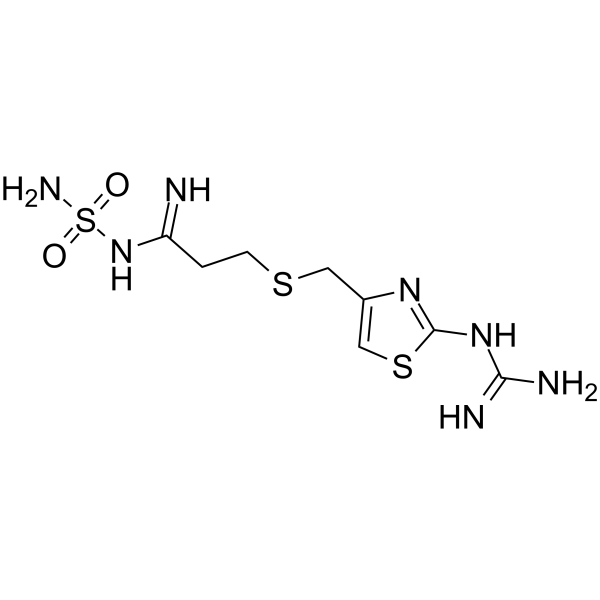
Famotidine (MK-208) is an orally active and highly selective histamine H2 receptor antagonist. It inhibits gastric acid secretion by blocking the Gs signaling pathway, and regulates intracellular cAMP and ERK pathways. Famotidine inhibits TLR3-mediated inflammatory pathways, and reduces the expression of various inflammatory mediators and interferon-related genes. Famotidine scavenges DPPH and nitric oxide free radicals, alleviates oxidative stress damage in gastric tissue, inhibits proMMP-9, improves vascular endothelial permeability, and restores the normal physiological functions of neutrophils and eosinophils. Famotidine crosses intestinal epithelial cells via facilitated diffusion and passive diffusion, blocks paracellular cation transport, and increases intestinal transepithelial electrical resistance. Famotidine reduces serum levels of transaminases and alkaline phosphatase, exerts analgesic effects and gastric protective effects simultaneously. Famotidine can be used in studies related to COVID-19, liver injury and acute gastric ulcer.
For research use only. We do not sell to patients.
- Purity : 99.85%
- CAS No.: 76824-35-6
- Formula: C8H15N7O2S3
- Molecular Weight:337.45
-
Storage:Powder -20°C, 3 years , 4°C, 2 years ; In solvent -80°C, 2 years , -20°C, 1 year

To place orders, for customer services and technical support, please contact: MedChemExpress USA
Tel: 609-228-6898 E-mail: [email protected] [email protected]


-
 Biological Activity
-
Chemical Information
-
Solvent & Solubility
- Protocols
- Purity & Documentation
- References
-
 Help & FAQs


-
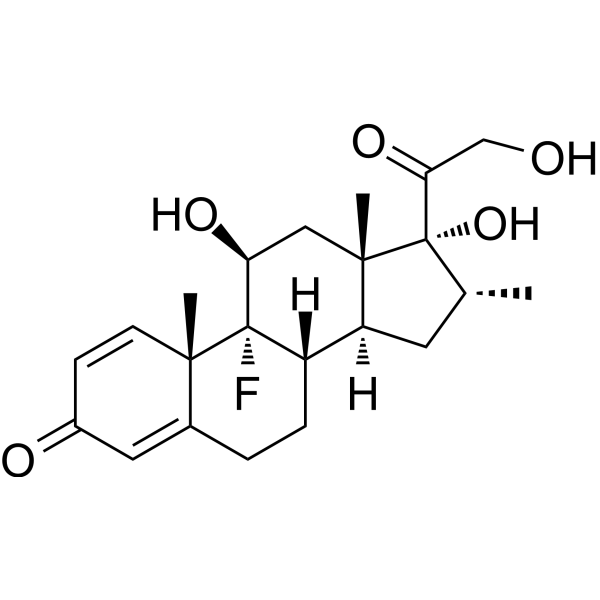
HY-14648
DexamethasoneGR Agonist -
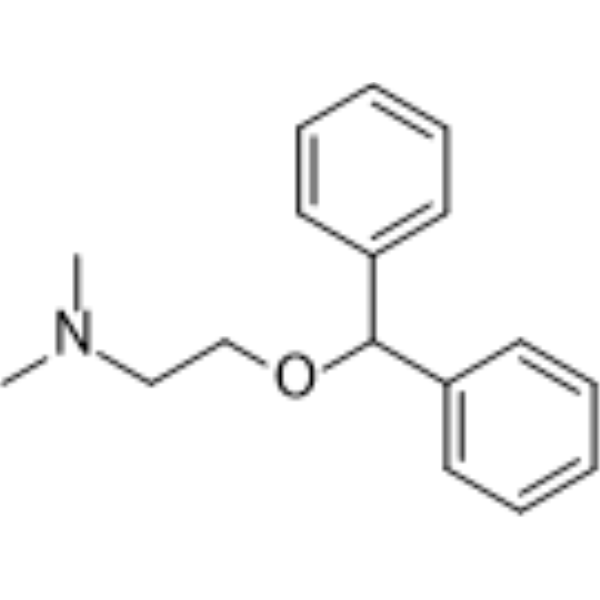
HY-B0303
DiphenhydramineAntihistamine -
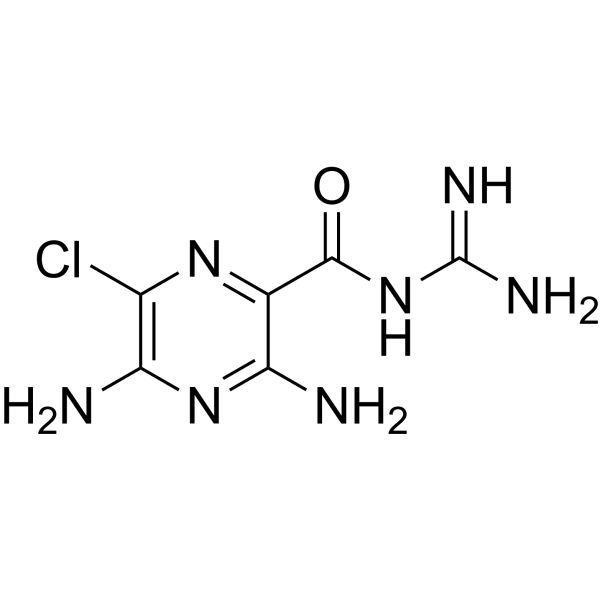
HY-B0285
AmilorideApoptosis Inducer -
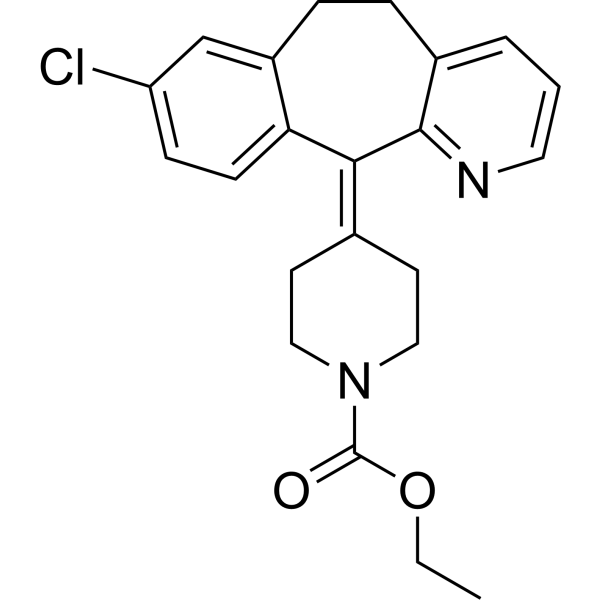
HY-17043
LoratadineInfluenza Virus Inhibitor -
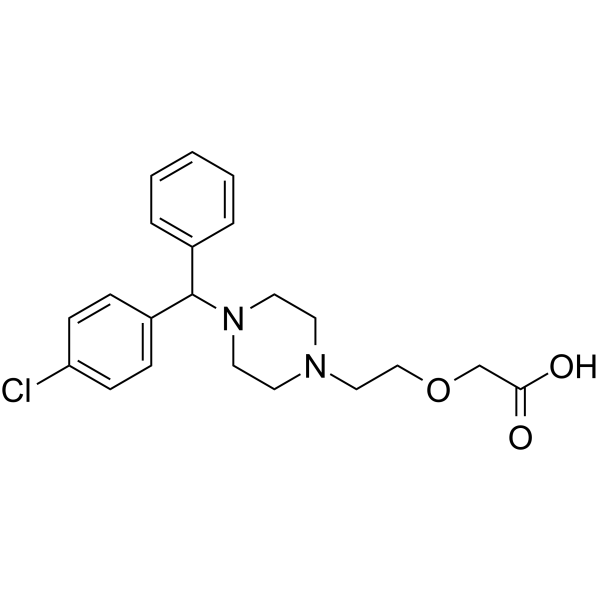
HY-17042
CetirizineH1-receptor Antagonist -
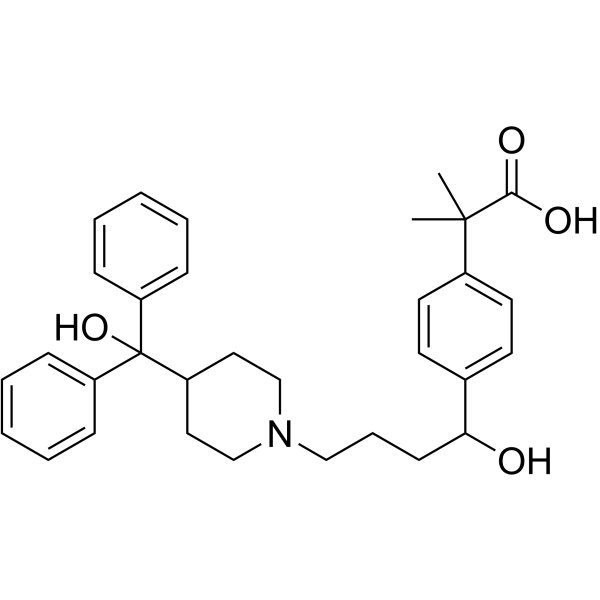
HY-B0801
FexofenadineH1R Antagonist -
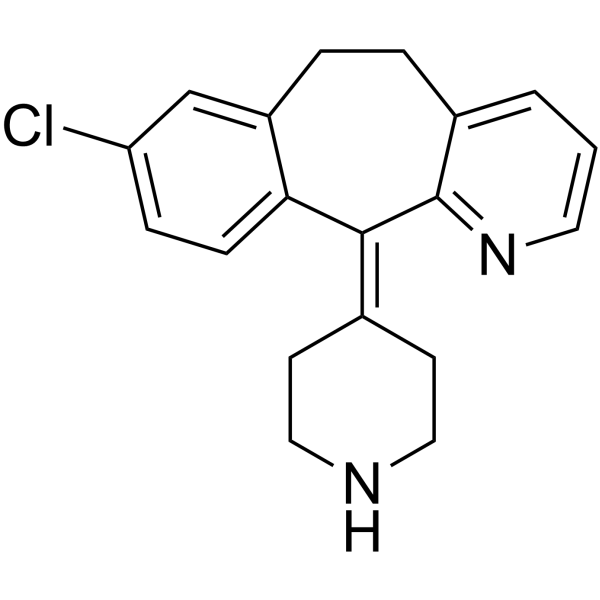
HY-B0539
DesloratadineH1-Receptor Antagonist -
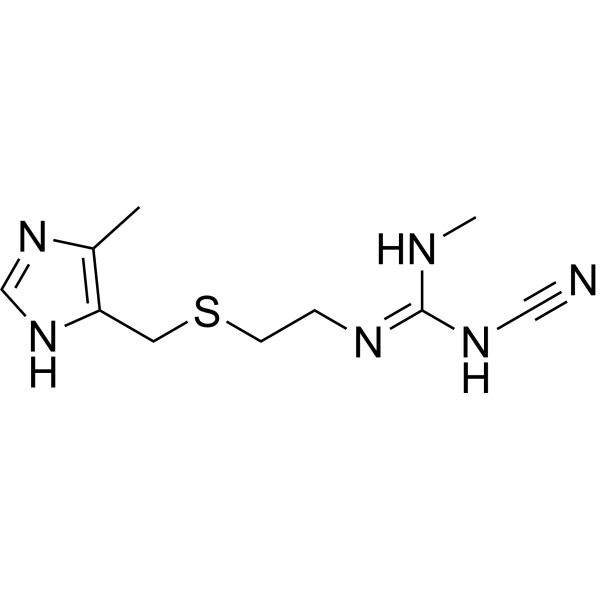
HY-14289
CimetidineHistamine H2 Receptor Antagonist -

HY-B0377R
Famotidine (Standard)Reference Standard -
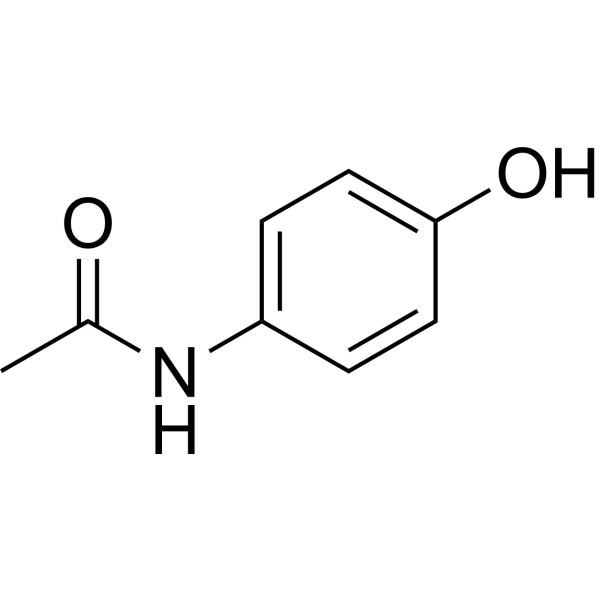
HY-66005
AcetaminophenCOX-2 Inhibitor -
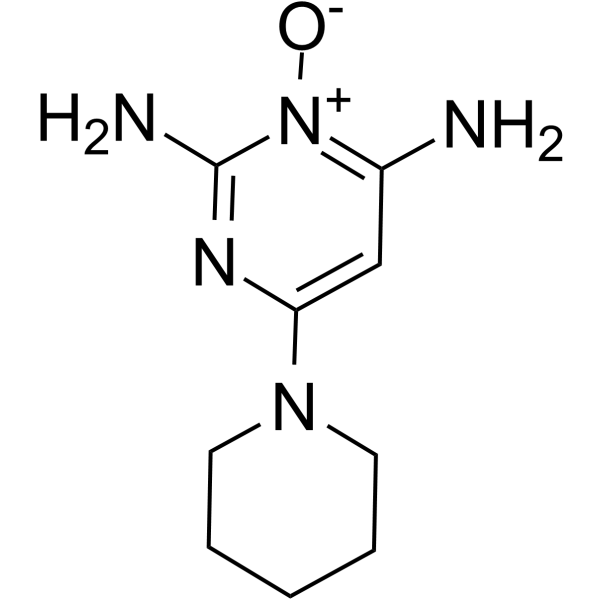
HY-B0112
MinoxidilEndogenous Metabolite -
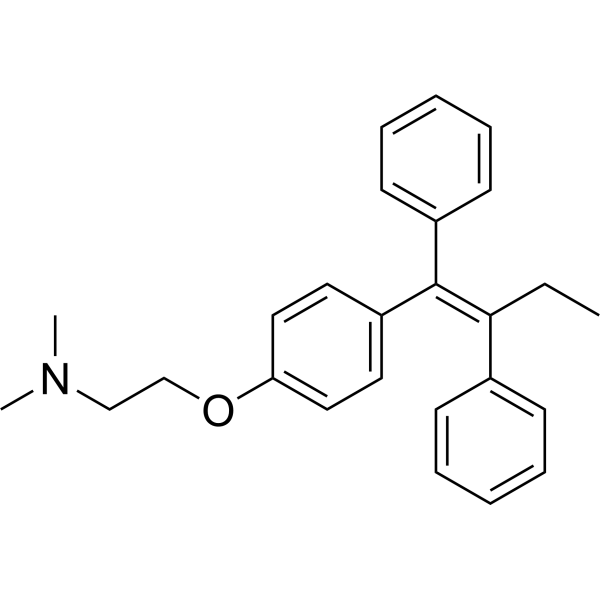
HY-13757A
TamoxifenEstrogen Receptor Modulator
Publications Citing Use of MedChemExpress (MCE) Famotidine
More- ACS Environ Au. 2025 Aug 5;5(6):573-582. [Abstract]
- Int J Biol Macromol. 2024 Jun;269(Pt 2):131964. [Abstract]
- Anal Chem. 2025 Jun 3;97(21):11099-11109. [Abstract]
- Clin Sci. 2019 Feb 12;133(3):483-495. [Abstract]
- EMBO Rep. 2022 Jun 7;23(6):e53932. [Abstract]
- Cancers (Basel). 2021 Aug 6;13(16):3978. [Abstract]
- Curr Med Sci. 2024 Dec;44(6):1071-1080. [Abstract]
 Customer Validation & Images

-
WB

-
Others

-
WB

All Histamine Receptor Isoforms
More

Biological Activity
Description
IC50 & Target
|
H2 Receptor 14 nM (Kd) |
ERK1 |
ERK2 |
TLR3 |
MMP-9 |
Cellular Effect
|
Cell Line

|
Type | Value | Description | References |
|---|---|---|---|---|
| HEK293 | IC50 |
>300 μM
Compound: famotidine
|
Inhibition of human OCT1-mediated ASP+ uptake expressed in HEK293 cells after 3 mins by fluorescence assay
Inhibition of human OCT1-mediated ASP+ uptake expressed in HEK293 cells after 3 mins by fluorescence assay
|
[PMID: 23241029] |
| HEK293 | IC50 |
0.76 μM
Compound: famotidine
|
Inhibition of human MATE1-mediated ASP+ uptake expressed in HEK293 cells after 1.5 mins by fluorescence assay
Inhibition of human MATE1-mediated ASP+ uptake expressed in HEK293 cells after 1.5 mins by fluorescence assay
|
[PMID: 23241029] |
| HEK293 | IC50 |
10.7 μM
Compound: famotidine
|
Inhibition of human OCT3-mediated ASP+ uptake expressed in HEK293 cells after 3 mins by fluorescence assay
Inhibition of human OCT3-mediated ASP+ uptake expressed in HEK293 cells after 3 mins by fluorescence assay
|
[PMID: 23241029] |
| HEK293 | IC50 |
36.1 μM
Compound: famotidine
|
Inhibition of human OCT2-mediated ASP+ uptake expressed in HEK293 cells after 3 mins by fluorescence assay
Inhibition of human OCT2-mediated ASP+ uptake expressed in HEK293 cells after 3 mins by fluorescence assay
|
[PMID: 23241029] |
| HEK293 | IC50 |
36.2 μM
Compound: famotidine
|
Inhibition of human MATE2K-mediated ASP+ uptake expressed in HEK293 cells after 1.5 mins by fluorescence assay
Inhibition of human MATE2K-mediated ASP+ uptake expressed in HEK293 cells after 1.5 mins by fluorescence assay
|
[PMID: 23241029] |
| Sf21 | IC50 |
>1000 μM
Compound: Famotidine
|
Inhibition of human BSEP expressed in plasma membrane vesicles of Sf21 cells assessed as inhibition of ATP-dependent [3H]taurocholate uptake
Inhibition of human BSEP expressed in plasma membrane vesicles of Sf21 cells assessed as inhibition of ATP-dependent [3H]taurocholate uptake
|
[PMID: 21965623] |
| Sf21 | IC50 |
>1000 μM
Compound: Famotidine
|
Inhibition of Sprague-Dawley rat Bsep expressed in plasma membrane vesicles of Sf21 cells assessed as inhibition of ATP-dependent [3H]taurocholate uptake
Inhibition of Sprague-Dawley rat Bsep expressed in plasma membrane vesicles of Sf21 cells assessed as inhibition of ATP-dependent [3H]taurocholate uptake
|
[PMID: 21965623] |
In Vitro
Famotidine (50 μM; 12 h preincubation, 24 h SARS-CoV-2 infection) hydrochloride reduces the expression of TLR3 in SARS-CoV-2-infected Caco-2 cells, inhibits the Histamine-enhanced TLR3-dependent signaling pathway, and downregulates the mRNA levels of downstream inflammatory mediators; it also exerts an inhibitory effect on the Histamine-enhanced TLR3-dependent signaling pathway in SARS-CoV-2-infected Caco-2 cells[1].
Famotidine hydrochloride induces a concentration-dependent, saturable increase in transepithelial electrical resistance (TEER) across Caco-2 cell monolayers via interaction with paracellular anion sites rather than tight junction tightening, reaching 193% of the control group at 25 mM[5].
Famotidine hydrochloride undergoes apical-to-basolateral transport across Caco-2 cell monolayers via a combination of saturable facilitated diffusion and non-saturable passive diffusion, with its Papp value decreasing exponentially with concentration; it selectively inhibits the apical-to-basolateral transport of the cationic Ranitidine (HY-B0693) across Caco-2 cell monolayers, indicating that it targets cation-selective conductance via paracellular anion sites[5].
MedChemExpress (MCE) has not independently confirmed the accuracy of these methods. They are for reference only.
In Vivo
Famotidine (10-40 mg/kg; i.p.; daily; 3 days) hydrochloride pretreatment for three consecutive days dose-dependently reduces carbon tetrachloride-induced hepatotoxicity in mice, as evidenced by significant decreases in serum ALT and ALP levels[3].
MedChemExpress (MCE) has not independently confirmed the accuracy of these methods. They are for reference only.
Clinical Trial
| NCT Number | Sponsor | Condition | Start Date |
Phase
|
|---|---|---|---|---|
| NCT01329991 | 2011-05 | PHASE1 |


Chemical Information
-
CAS No. 76824-35-6
-
Appearance Solid
-
Molecular Weight 337.45
-
Formula C8H15N7O2S3
-
Color White to off-white
-
SMILES
N=C(NS(=O)(N)=O)CCSCC1=CSC(NC(N)=N)=N1
-
Synonyms
MK-208
-
Shipping
Room temperature in continental US; may vary elsewhere.
-
Storage
Powder -20°C 3 years 4°C 2 years In solvent -80°C 2 years -20°C 1 year


Publications (7)
-
Journal Impact Factor
-
Most Recent
-
ACS Environ Au
Machine Learning-Assisted Recognition of Environmental Sulfur-Containing Chemicals in Nontargeted Mass Spectrometry Analysis of Inadequate Mass Resolution. [Abstract]2025 Aug 5;5(6):573-582. PMID: 41277996 -
Int J Biol Macromol
Targeting of KOR by famotidine promotes OPC maturation differentiation and CNS remyelination via STAT3 signaling pathway. [Abstract]2024 Jun;269(Pt 2):131964. PMID: 38692525
Famotidine purchased from MedChemExpress. Usage Cited in: Int J Biol Macromol. 2024 Jun;269(Pt 2):131964. [Abstract]
MBP expression of 5 mixed corpus callosum samples of naïve, vehicle- or Famotidine (10 mg/kg)-treated mice was detected by western blotting.
-
Anal Chem
Exposome-Scale Investigation of Cl-/Br-Containing Chemicals Using High-Resolution Mass Spectrometry, Multistage Machine Learning, and Cloud Computing. [Abstract]2025 Jun 3;97(21):11099-11109. PMID: 40401576 -
Clin Sci
Omeprazole prevents CDX2 and SOX9 expression by inhibiting hedgehog signaling in Barrett's esophagus cells. [Abstract]2019 Feb 12;133(3):483-495. PMID: 30705106 -
EMBO Rep
2022 Jun 7;23(6):e53932. PMID: 35403787 -
Cancers (Basel)
Drug Repurposing to Identify a Synergistic High-Order Drug Combination to Treat Sunitinib-Resistant Renal Cell Carcinoma. [Abstract]2021 Aug 6;13(16):3978. PMID: 34439134 -
Curr Med Sci
Mast Cells Contribute to Pressure Overload-Induced Myocardial Hypertrophy by Upregulating TRPV4 via Histamine: Role of Ca2+/ CnA/NFATc3 Signaling Pathway. [Abstract]2024 Dec;44(6):1071-1080. PMID: 39672998
Famotidine purchased from MedChemExpress. Usage Cited in: Curr Med Sci. 2024 Dec;44(6):1071-1080. [Abstract]
Effect of histamine on BNP expression in H9c2 cells.β-MHC: β-myosin heavy chain; BNP: brain natriuretic peptide; HIS: histamine; FAM: famotidine (20 μM); GSK1016790A:TRPV4 activator; HC067047: TRPV4 channel inhibitor.
Famotidine purchased from MedChemExpress. Usage Cited in: Curr Med Sci. 2024 Dec;44(6):1071-1080. [Abstract]
FAM: famotidine (20 μM). Effect of histamine on TRPV4 mRNA expression.


Solvent & Solubility
In Vitro:
DMSO : ≥ 100 mg/mL (296.34 mM; Hygroscopic DMSO has a significant impact on the solubility of product, please use newly opened DMSO)
H2O : < 0.1 mg/mL (insoluble)
* "≥" means soluble, but saturation unknown.
Please refer to the solubility information to select the appropriate solvent. Once prepared, please aliquot and store the solution to prevent product inactivation from repeated freeze-thaw cycles.
Storage method and period of stock solution: -80°C, 2 years; -20°C, 1 year. When stored at -80°C, please use it within 2 years. When stored at -20°C, please use it within 1 year.
Please refer to the solubility information to select the appropriate solvent. Once prepared, please aliquot and store the solution to prevent product inactivation from repeated freeze-thaw cycles.
Storage method and period of stock solution: -80°C, 2 years; -20°C, 1 year. When stored at -80°C, please use it within 2 years. When stored at -20°C, please use it within 1 year.
Concentration (start) × Volume (start) = Concentration (final) × Volume (final)
In Vivo:
Select the appropriate dissolution method based on your experimental animal and administration route.
- For the following dissolution methods, please ensure to first prepare a clear stock solution using an In Vitro approach and then sequentially add co-solvents:
- To ensure reliable experimental results, the clarified stock solution can be appropriately stored based on storage conditions. As for the working solution for In Vivo experiments, it is recommended to prepare freshly and use it on the same day.
- The percentages shown for the solvents indicate their volumetric ratio in the final prepared solution. If precipitation or phase separation occurs during preparation, heat and/or sonication can be used to aid dissolution.
Add each solvent one by one: 10% DMSO 40% PEG300 5% Tween-80 45% Saline
Solubility: ≥ 2.5 mg/mL (7.41 mM); Clear solution
This protocol yields a clear solution of ≥ 2.5 mg/mL (saturation unknown).
Taking 1 mL working solution as an example, add 100 μL DMSO stock solution (25.0 mg/mL) to 400 μL PEG300, and mix evenly; then add 50 μL Tween-80 and mix evenly; then add 450 μL Saline to adjust the volume to 1 mL.
Preparation of Saline: Dissolve 0.9 g sodium chloride in ddH₂O and dilute to 100 mL to obtain a clear Saline solution.
Add each solvent one by one: 10% DMSO 90% (20% SBE-β-CD in Saline)
Solubility: ≥ 2.5 mg/mL (7.41 mM); Clear solution
This protocol yields a clear solution of ≥ 2.5 mg/mL (saturation unknown).
Taking 1 mL working solution as an example, add 100 μL DMSO stock solution (25.0 mg/mL) to 900 μL 20% SBE-β-CD in Saline, and mix evenly.
Preparation of 20% SBE-β-CD in Saline (4°C, storage for one week): 2 g SBE-β-CD powder is dissolved in 10 mL Saline, completely dissolve until clear.
In Vivo Dissolution Calculator
Please enter the basic information of animal experiments:
-
-
-
-
Recommended: Prepare an additional quantity of animals to account for potential losses during experiments.
Please enter your animal formula composition:
-
%DMSO +
Recommended: Keep the proportion of DMSO in working solution below 2% if your animal is weak.
-
%+
-
+%Tween-80 + +
-
%Saline +
The co-solvents required include: DMSO, . All of co-solvents are available by MedChemExpress (MCE). , Tween 80. All of co-solvents are available by MedChemExpress (MCE).
Working solution concentration: 0.22 mg/mL
Method for preparing stock solution: mg drug dissolved in μL DMSO. Stock solution concentration: mg/mL.
1. Take μL DMSO stock solution;
2. Add μL .
μL , mix evenly;
3. Then add μL Tween 80, mix evenly;
4. Then add μL
Please ensure that the stock solution in the first step is dissolved to a clear state, and add co-solvents in sequence. You can use ultrasonic heating (ultrasonic cleaner, recommended frequency 20-40 kHz), vortexing, etc. to assist dissolution.


Purity & Documentation
-
Data Sheet (286 KB)
-
SDS (394 KB)
- English - EN (394 KB)
- Français - FR (394 KB)
- Deutsch - DE (394 KB)
- Norwegian - NO (394 KB)
- Español - ES (394 KB)
- Swedish - SV (394 KB)
- Italian - IT (394 KB)
- Korean - KR (394 KB)
- Portuguese - PT (394 KB)
-
Handling Instructions (2659 KB)
References
[1]. Mukherjee R, et al. Famotidine inhibits toll-like receptor 3-mediated inflammatory signaling in SARS-CoV-2 infection. The Journal of biological chemistry. 2021 Aug;297(2):100925. [Content Brief]
[2]. Malone RW, et al. COVID-19: Famotidine, Histamine, Mast Cells, and Mechanisms. Frontiers in pharmacology. 2021;12:633680. [Content Brief]
[4]. Pradeepkumar Singh L, et al. Novel role of famotidine in downregulation of matrix metalloproteinase-9 during protection of ethanol-induced acute gastric ulcer. Free radical biology & medicine. 2007 Jul 15;43(2):289-99. [Content Brief]
[5]. Lee K, et al. Saturable transport of H2-antagonists ranitidine and famotidine across Caco-2 cell monolayers. Journal of pharmaceutical sciences. 1999 Jul;88(7):680-7. [Content Brief]


Complete Stock Solution Preparation Table
Please refer to the solubility information to select the appropriate solvent. Once prepared, please aliquot and store the solution to prevent product inactivation from repeated freeze-thaw cycles.
Storage method and period of stock solution: -80°C, 2 years; -20°C, 1 year. When stored at -80°C, please use it within 2 years. When stored at -20°C, please use it within 1 year.
| Optional Solvent | Concentration Solvent Mass | 1 mg | 5 mg | 10 mg | 25 mg |
|---|---|---|---|---|---|
| DMSO | 1 mM | 2.9634 mL | 14.8170 mL | 29.6340 mL | 74.0850 mL |
| 5 mM | 0.5927 mL | 2.9634 mL | 5.9268 mL | 14.8170 mL | |
| 10 mM | 0.2963 mL | 1.4817 mL | 2.9634 mL | 7.4085 mL | |
| 15 mM | 0.1976 mL | 0.9878 mL | 1.9756 mL | 4.9390 mL | |
| 20 mM | 0.1482 mL | 0.7409 mL | 1.4817 mL | 3.7043 mL | |
| 25 mM | 0.1185 mL | 0.5927 mL | 1.1854 mL | 2.9634 mL | |
| 30 mM | 0.0988 mL | 0.4939 mL | 0.9878 mL | 2.4695 mL | |
| 40 mM | 0.0741 mL | 0.3704 mL | 0.7409 mL | 1.8521 mL | |
| 50 mM | 0.0593 mL | 0.2963 mL | 0.5927 mL | 1.4817 mL | |
| 60 mM | 0.0494 mL | 0.2470 mL | 0.4939 mL | 1.2348 mL | |
| 80 mM | 0.0370 mL | 0.1852 mL | 0.3704 mL | 0.9261 mL | |
| 100 mM | 0.0296 mL | 0.1482 mL | 0.2963 mL | 0.7409 mL |


Famotidine Related Classifications
HY-B0377 Related Classifications
 Powered by Bioz