



Ranitidine
Based on 4 publication(s) in Google Scholar
Ranitidine is a potent, selective and orally active histamine H2-receptor antagonist that inhibits gastric secretion. Ranitidine antagonizes Histamine (HY-B1204)-induced increases of the guinea-pig isolated rat atrium and Histamine-induced relaxations of the rat isolated uterine horn, with pA2 values of 7.2 and 6.95, respectively. Ranitidine inhibits breast tumor development and spread in mice.
For research use only. We do not sell to patients.
- Purity : 99.9%
- CAS No.: 66357-35-5
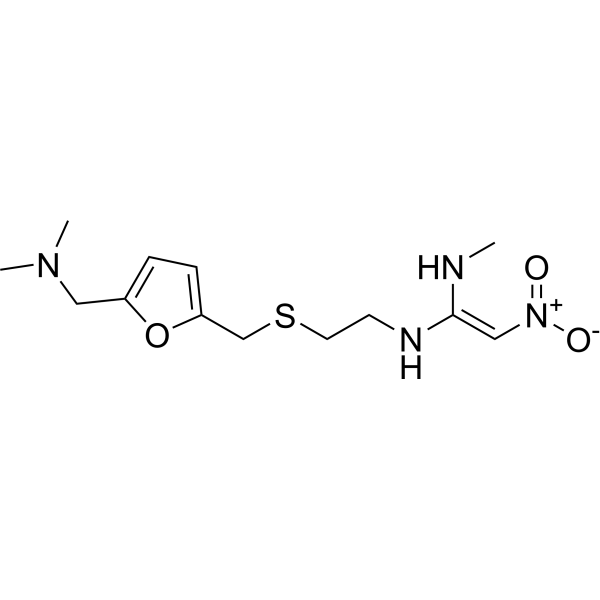
- Formula: C13H22N4O3S
- Molecular Weight:314.40
-
Storage:
4°C, protect from light, stored under nitrogen
* In solvent : -80°C, 6 months; -20°C, 1 month (protect from light, stored under nitrogen)

To place orders, for customer services and technical support, please contact: MedChemExpress USA
Tel: 609-228-6898 E-mail: [email protected] [email protected]


-
 Biological Activity
-
Chemical Information
-
Solvent & Solubility
- Protocols
- Purity & Documentation
- References
-
 Help & FAQs


-
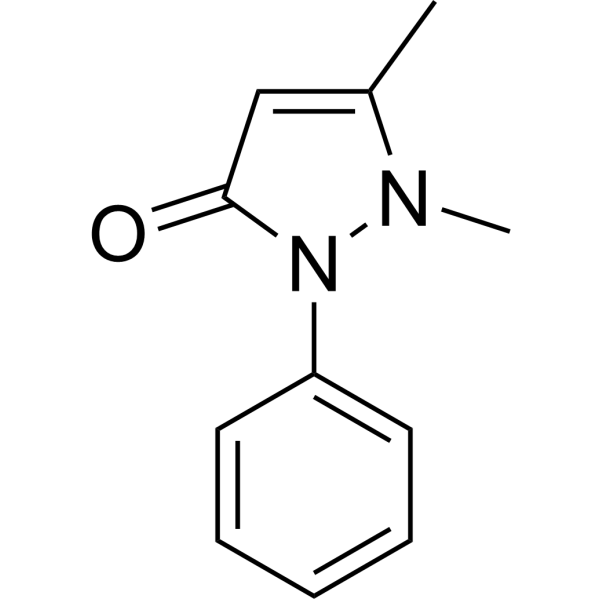
HY-B0171
AntipyrineAntipyretic/Analgesic -
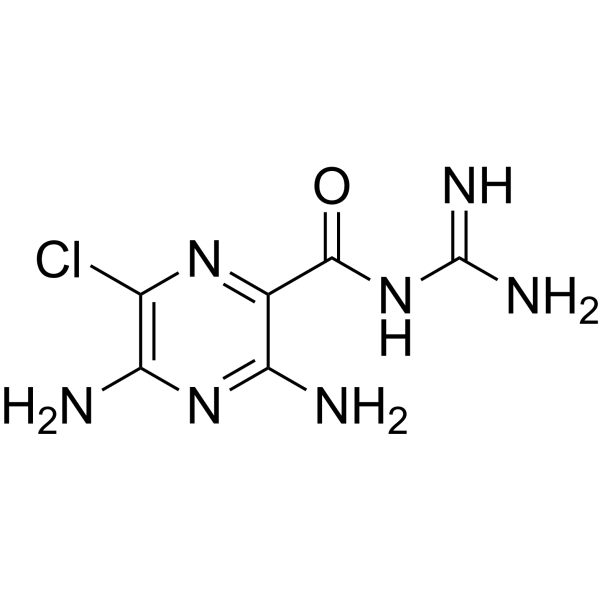
HY-B0285
AmilorideApoptosis Inducer -
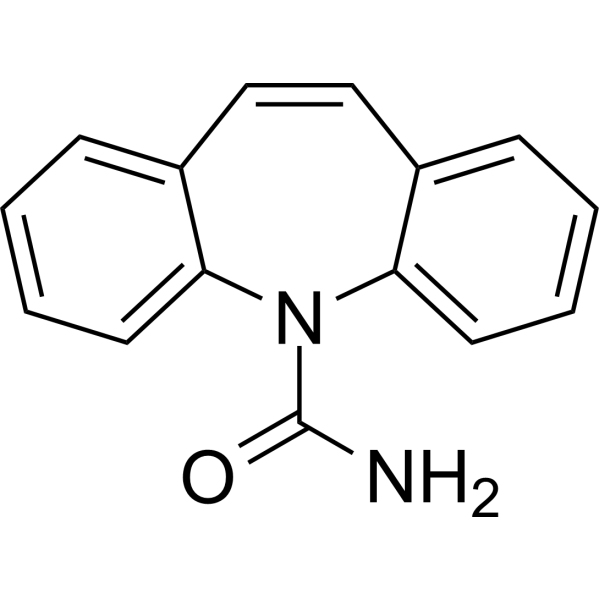
HY-B0246
CarbamazepineAnticonvulsant -
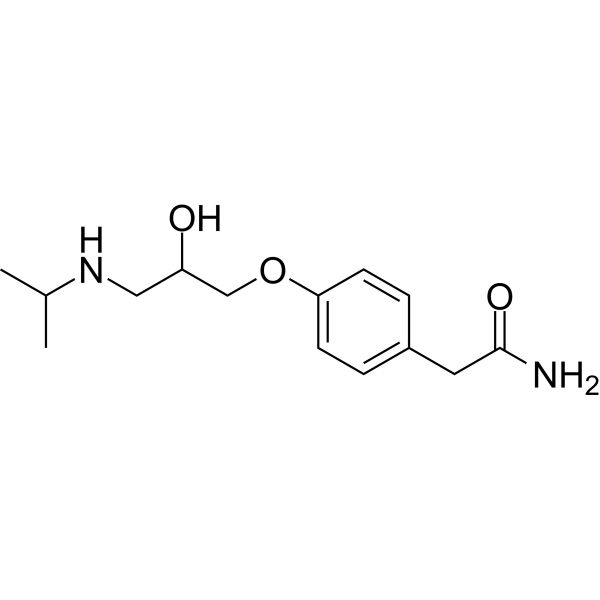
HY-17498
Atenololβ1-Adrenergic Receptor Blocker -
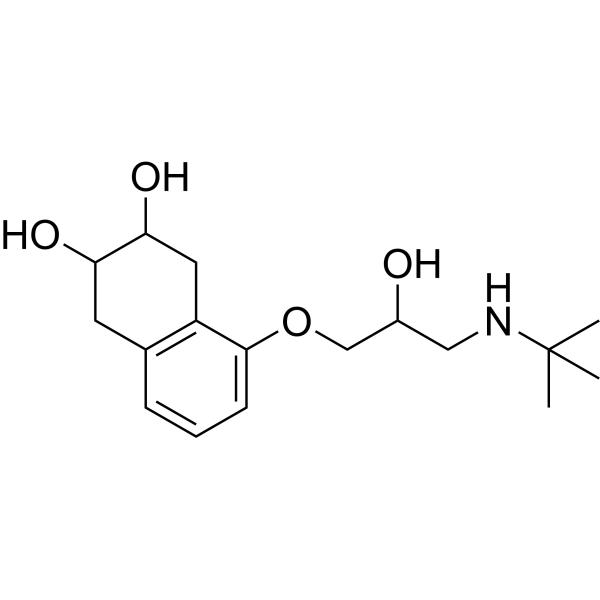
HY-B0804
Nadololβ-adrenergic Receptors Blocker -
HY-B1019
SulpirideD2/D3 Receptor Antagonist -
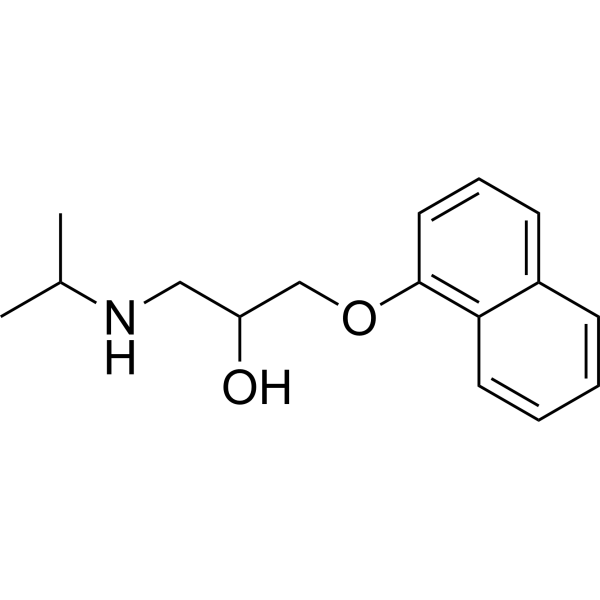
HY-B0573B
Propranololβ-Adrenoceptor Blocker -
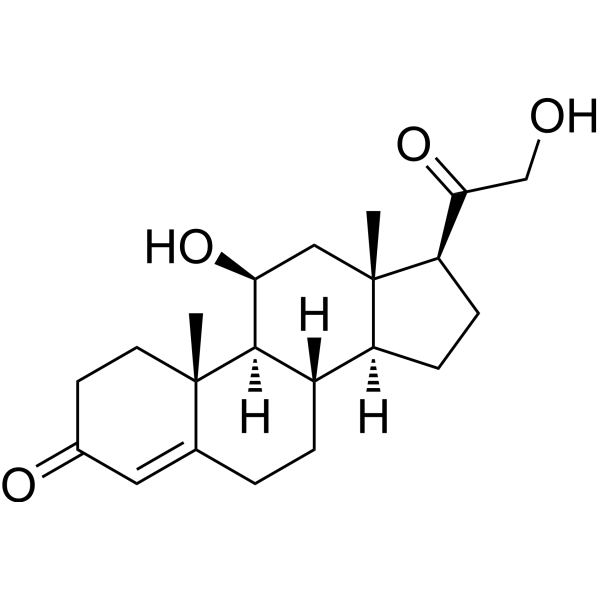
HY-B1618
CorticosteroneEndogenous Glucocorticoids -
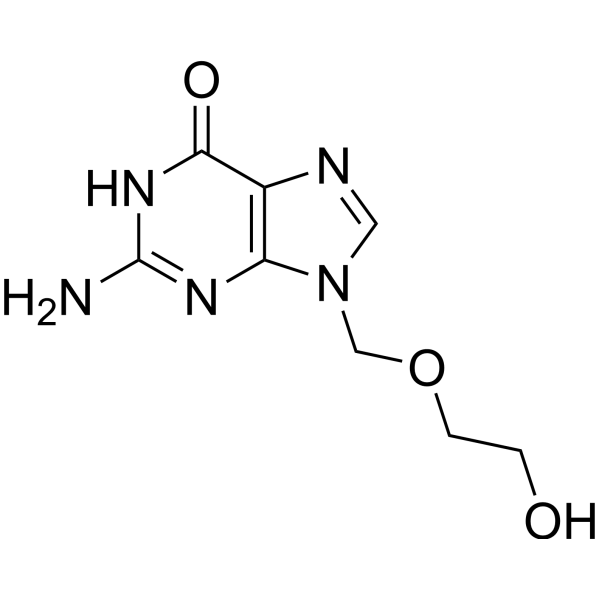
HY-17422
AcyclovirHSV Inhibitor -
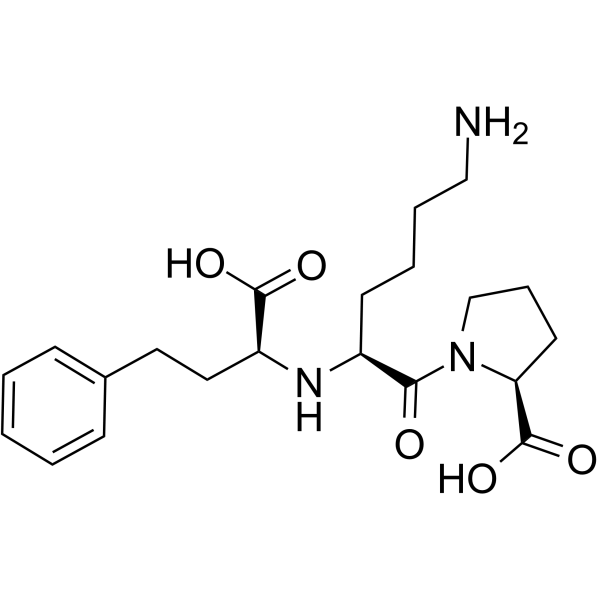
HY-18206
LisinoprilACE Inhibitor -
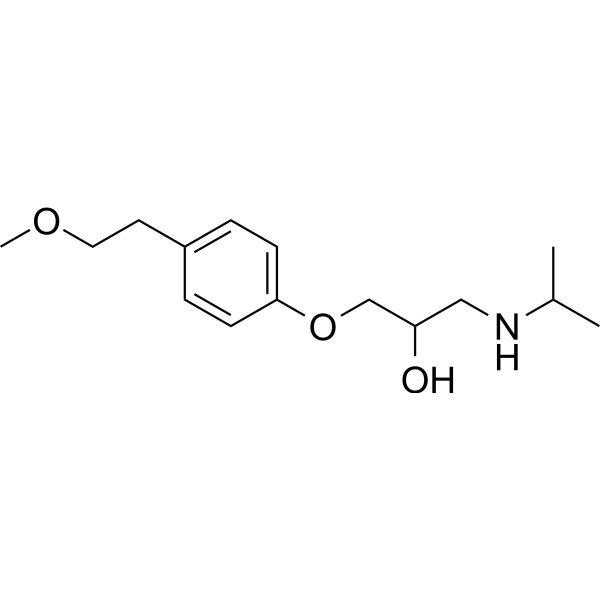
HY-17503
MetoprololBeta1-adrenoceptor Antagonist -
HY-B0231A
EnalaprilatACE Inhibitor
Publications Citing Use of MedChemExpress (MCE) Ranitidine
MoreAll Histamine Receptor Isoforms
More

Biological Activity
Description
|
H2 Receptor |
In Vivo
Ranitidine (8 mg/kg; oral administration; administered every other day; treatment for 8 days) reduces the number of CD11b+Ly6Chi cells in the spleen and bone marrow of BALB/c mice[2].
Ranitidine (8 mg/kg; oral administration; administered every other day; treatment for 8 days) inhibits lung metastasis in BALB/c mice bearing 4T1 breast cancer[2].
Ranitidine (8 mg/kg; oral administration; administered every other day; for 14 days) inhibits primary tumor growth in the E0771 breast cancer model of C57BL/6 mice[2].
Ranitidine (dose enabling mice to ingest 6-8 mg/kg per day; added to drinking water; changed every 3 days; treatment starting from weaning (~4 weeks) until the end of the experiment (23-26 weeks)) increases the latency of breast tumorigenesis and reduces the number of tumors in LKB1-/-NIC mice[2].
MedChemExpress (MCE) has not independently confirmed the accuracy of these methods. They are for reference only.
-
Animal Model:Female Wistar rats (100 to 120 g) were anaesthetized with sodium pentobarbitone (50 mg/kg i.p.), and intravenous with Histamine (100 μg/kg/min) or Pentagastrin (1 μg/kg/min)[1].
-
Dosage:0.03 mg/kg, 0.1 mg/kg, 0.3 mg/kg, 0.6 mg/kg, 1 mg/kg, 3 mg/kg
-
Administration:i.v.; once
-
Result:Inhibited Histamine- and Pentagastrin-induced gastric acid secretion in the perfused stomach preparation of the anaesthetized rat.
-
Animal Model:BALB/c female mice (5-6-8 week old), orthotopic breast cancer model by injecting 100,000 4T1 cells subcutaneously into the mammary fat pad near the fourth nipple[2].
-
Dosage:8 mg/kg
-
Administration:Oral administration, every other day, 8 days
-
Result:Decreased the proportion of CD11b+Ly6Chi monocytic cells in the spleen and inhibited lung metastasis.
-
Animal Model:C57BL/6 female mice (6-8 week old), orthotopic breast cancer model by injecting 200,000 E0771 cells in 100 μL of Matrigel subcutaneously into the mammary fat pad near the fourth nipple[2].
-
Dosage:8 mg/kg
-
Administration:Oral administration, every other day, 8 days
-
Result:Decreased primary tumor growth starting from approximately day 13 post-tumor cell injection.
-
Animal Model:LKB1-/-/NIC female mice (weaned at about 4 weeks old), spontaneous tumor development model starting from weaning[2].
-
Dosage:6-8 mg/kg
-
Administration:Oral administration, every 3 days, from weaning until the end of the experiment
-
Result:Increased the latency of tumorigenesis by an additional 24 days and reduced the average number of tumors per mouse.


Chemical Information
-
CAS No. 66357-35-5
-
Appearance Solid
-
Molecular Weight 314.40
-
Formula C13H22N4O3S
-
Color White to light brown
-
SMILES
O=[N+](/C=C(NC)/NCCSCC1=CC=C(CN(C)C)O1)[O-]
-
Shipping
Room temperature in continental US; may vary elsewhere.
-
Storage
4°C, protect from light, stored under nitrogen
* In solvent : -80°C, 6 months; -20°C, 1 month (protect from light, stored under nitrogen)


Publications (4)
-
Journal Impact Factor
-
Most Recent
-
Cell Host Microbe
Immunometabolic reprogramming of macrophages by gut microbiota-derived cadaverine controls colon inflammation. [Abstract]2025 Sep 30:S1931-3128(25)00375-0. PMID: 41033313 -
Brain Sci
Paraventricular Mast Cell-Derived Histamine Activates CRH Neurons to Mediate Adult Visceral Hypersensitivity Induced by Neonatal Maternal Separation. [Abstract]2023 Nov 16;13(11):1595. PMID: 38002554 -
Indian J Ophthalmol
Ranitidine protects Müller cells against ferroptosis in diabetic retinopathy by regulating the AKT1/GSK3β pathway. [Abstract]2026 Feb 1;74(2):250-258. PMID: 41581041 -


Solvent & Solubility
In Vitro:
DMSO : 100 mg/mL (318.07 mM; Need ultrasonic; Hygroscopic DMSO has a significant impact on the solubility of product, please use newly opened DMSO)
Please refer to the solubility information to select the appropriate solvent. Once prepared, please aliquot and store the solution to prevent product inactivation from repeated freeze-thaw cycles.
Storage method and period of stock solution: -80°C, 6 months; -20°C, 1 month (protect from light, stored under nitrogen). When stored at -80°C, please use it within 6 months. When stored at -20°C, please use it within 1 month.
Please refer to the solubility information to select the appropriate solvent. Once prepared, please aliquot and store the solution to prevent product inactivation from repeated freeze-thaw cycles.
Storage method and period of stock solution: -80°C, 6 months; -20°C, 1 month (protect from light, stored under nitrogen). When stored at -80°C, please use it within 6 months. When stored at -20°C, please use it within 1 month.
Concentration (start) × Volume (start) = Concentration (final) × Volume (final)
In Vivo:
Select the appropriate dissolution method based on your experimental animal and administration route.
- For the following dissolution methods, please ensure to first prepare a clear stock solution using an In Vitro approach and then sequentially add co-solvents:
- To ensure reliable experimental results, the clarified stock solution can be appropriately stored based on storage conditions. As for the working solution for In Vivo experiments, it is recommended to prepare freshly and use it on the same day.
- The percentages shown for the solvents indicate their volumetric ratio in the final prepared solution. If precipitation or phase separation occurs during preparation, heat and/or sonication can be used to aid dissolution.
Add each solvent one by one: 10% DMSO 40% PEG300 5% Tween-80 45% Saline
Solubility: ≥ 2.5 mg/mL (7.95 mM); Clear solution
This protocol yields a clear solution of ≥ 2.5 mg/mL (saturation unknown).
Taking 1 mL working solution as an example, add 100 μL DMSO stock solution (25.0 mg/mL) to 400 μL PEG300, and mix evenly; then add 50 μL Tween-80 and mix evenly; then add 450 μL Saline to adjust the volume to 1 mL.
Preparation of Saline: Dissolve 0.9 g sodium chloride in ddH₂O and dilute to 100 mL to obtain a clear Saline solution.
Add each solvent one by one: 10% DMSO 90% (20% SBE-β-CD in Saline)
Solubility: ≥ 2.5 mg/mL (7.95 mM); Clear solution
This protocol yields a clear solution of ≥ 2.5 mg/mL (saturation unknown).
Taking 1 mL working solution as an example, add 100 μL DMSO stock solution (25.0 mg/mL) to 900 μL 20% SBE-β-CD in Saline, and mix evenly.
Preparation of 20% SBE-β-CD in Saline (4°C, storage for one week): 2 g SBE-β-CD powder is dissolved in 10 mL Saline, completely dissolve until clear.
In Vivo Dissolution Calculator
Please enter the basic information of animal experiments:
-
-
-
-
Recommended: Prepare an additional quantity of animals to account for potential losses during experiments.
Please enter your animal formula composition:
-
%DMSO +
Recommended: Keep the proportion of DMSO in working solution below 2% if your animal is weak.
-
%+
-
+%Tween-80 + +
-
%Saline +
The co-solvents required include: DMSO, . All of co-solvents are available by MedChemExpress (MCE). , Tween 80. All of co-solvents are available by MedChemExpress (MCE).
Working solution concentration: 0.22 mg/mL
Method for preparing stock solution: mg drug dissolved in μL DMSO. Stock solution concentration: mg/mL. * In solvent : -80°C, 6 months; -20°C, 1 month (protect from light, stored under nitrogen)
1. Take μL DMSO stock solution;
2. Add μL .
μL , mix evenly;
3. Then add μL Tween 80, mix evenly;
4. Then add μL
Please ensure that the stock solution in the first step is dissolved to a clear state, and add co-solvents in sequence. You can use ultrasonic heating (ultrasonic cleaner, recommended frequency 20-40 kHz), vortexing, etc. to assist dissolution.


Purity & Documentation
-
Data Sheet (276 KB)
-
SDS (393 KB)
- English - EN (393 KB)
- Français - FR (393 KB)
- Deutsch - DE (393 KB)
- Norwegian - NO (393 KB)
- Español - ES (393 KB)
- Swedish - SV (393 KB)
- Italian - IT (393 KB)
- Korean - KR (393 KB)
- Portuguese - PT (393 KB)
-
Handling Instructions (2659 KB)
References
[1]. Daly MJ, et al. Some in vitro and in vivo actions of the new histamine H2-receptor antagonist, ranitidine. Br J Pharmacol. 1981 Jan;72(1):49-54. [Content Brief]
[2]. Vila-Leahey A, et al. Ranitidine modifies myeloid cell populations and inhibits breast tumor development and spread in mice. Oncoimmunology. 2016 Mar 10;5(7):e1151591. [Content Brief]


Complete Stock Solution Preparation Table
Please refer to the solubility information to select the appropriate solvent. Once prepared, please aliquot and store the solution to prevent product inactivation from repeated freeze-thaw cycles.
Storage method and period of stock solution: -80°C, 6 months; -20°C, 1 month (protect from light, stored under nitrogen). When stored at -80°C, please use it within 6 months. When stored at -20°C, please use it within 1 month.
| Optional Solvent | Concentration Solvent Mass | 1 mg | 5 mg | 10 mg | 25 mg |
|---|---|---|---|---|---|
| DMSO | 1 mM | 3.1807 mL | 15.9033 mL | 31.8066 mL | 79.5165 mL |
| 5 mM | 0.6361 mL | 3.1807 mL | 6.3613 mL | 15.9033 mL | |
| 10 mM | 0.3181 mL | 1.5903 mL | 3.1807 mL | 7.9517 mL | |
| 15 mM | 0.2120 mL | 1.0602 mL | 2.1204 mL | 5.3011 mL | |
| 20 mM | 0.1590 mL | 0.7952 mL | 1.5903 mL | 3.9758 mL | |
| 25 mM | 0.1272 mL | 0.6361 mL | 1.2723 mL | 3.1807 mL | |
| 30 mM | 0.1060 mL | 0.5301 mL | 1.0602 mL | 2.6506 mL | |
| 40 mM | 0.0795 mL | 0.3976 mL | 0.7952 mL | 1.9879 mL | |
| 50 mM | 0.0636 mL | 0.3181 mL | 0.6361 mL | 1.5903 mL | |
| 60 mM | 0.0530 mL | 0.2651 mL | 0.5301 mL | 1.3253 mL | |
| 80 mM | 0.0398 mL | 0.1988 mL | 0.3976 mL | 0.9940 mL | |
| 100 mM | 0.0318 mL | 0.1590 mL | 0.3181 mL | 0.7952 mL |


Ranitidine Related Classifications
HY-B0693 Related Classifications
 Powered by Bioz