5 Results for "

Xanthomonas campestris

" in MedChemExpress (MCE) Product Catalog:
Products (5)

5 Results for "Xanthomonas campestris" in MCE Product Catalog:

Cat. No.: HY-W068682
CAS No.: 528-71-2
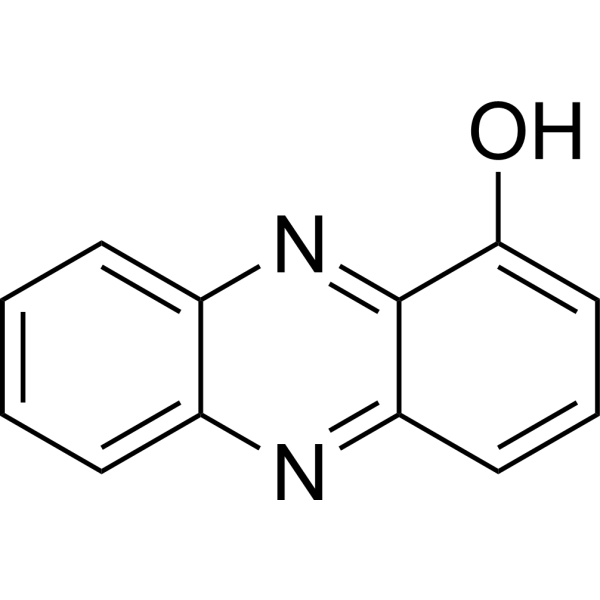
Synonyms: Hemipyocyanine; 1-Phenazinol; Hemi-pyocyanin
1-Hydroxyphenazine (Hemipyocyanine; 1-Phenazinol; Hemi-pyocyanin) is an inhibitor for α-Amylase with an IC50 of 3.1 μg/mL . 1-Hydroxyphenazine exhibits anticancer and anti-inflammatory activity against cells A549, 1321N1 and RAW264.7, antifungal and antibacterial activity against strains Candida albicans, Aspergillus fumigatus, Escherichia coli and Xanthomonas campestris .
loading...
    loading...
Cat. No.: HY-N14257
CAS No.: 108868-95-7
Andrimid is a peptide Antibiotic and acetyl-CoA carboxylase inhibitor. Andrimid is produced by symbiotic bacteria of the genus *Enterobacter* residing in the brown planthopper Nilaparvata lugens. Andrimid exhibits strong specific activity against Xanthomonas campestris pv. oryzae. Andrimid shows no or only weak activity against Gram-positive and Gram-negative bacteria, including most plant pathogenic bacteria. Andrimid can be used in studies related to bacterial infections and rice bacterial blight .
loading...
    loading...
Cat. No.: HY-76096
CAS No.: 492-38-6
Synonyms: 2-Phenylacrylic acid
Atropic acid (2-Phenylacrylic acid) is a herbicide that can be isolated from Xanthomonas campestris pv. retroflexus .
loading...
    loading...
Cat. No.: HY-76096R
CAS No.: 492-38-6
Synonyms: 2-Phenylacrylic acid (Standard)
Research Areas:  

Others

Atropic acid (Standard) (2-Phenylacrylic acid (Standard)) is the analytical standard of Atropic acid (HY-76096). This product is intended for research and analytical applications. Atropic acid (2-Phenylacrylic acid) is a herbicide that can be isolated from Xanthomonas campestris pv. retroflexus .
loading...
    loading...
Cat. No.: HY-183966
Target:  

Bacterial Fungal

Research Areas:  

Infection

Antibacterial agent 348 is an antimicrobial agent containing piperazine-isopropanolamine bifunctional groups. Antibacterial agent 348 suppresses virulence factor expression in plant pathogens. Antibacterial agent 348 compromises bacterial membrane integrity, leading to cytoplasmic leakage. Antibacterial agent 348 inhibits cellular proliferation of plant pathogens, diminishes colonization and infectivity of plant pathogens in host plants. Antibacterial agent 348 can be used for the research of rice bacterial leaf blight, pepper phytophthora blight .
loading...
    loading...

