1. Search Result
Search Result
Results for "

alcohols

" in MedChemExpress (MCE) Product Catalog:

899

Inhibitors & Agonists

2

Screening Libraries

15

Fluorescent Dyes

96

Biochemical Assay Reagents

8

Peptides

251

Natural
Products

118

Isotope-Labeled Compounds

35

Click Chemistry

33

Oligonucleotides

4

GMP Molecules

Cat. No. Product Name Target Research Areas Chemical Structure
  • HY-B0400
    D-Sorbitol
    2 Publications Verification

    Sorbitol; D-Glucitol

    Environmental Pollutants Endogenous Metabolite Bacterial Others
    D-Sorbitol (Sorbitol) is a six-carbon sugar alcohol and can used as a sugar substitute. D-Sorbitol can be used as a stabilizing excipient and/or isotonicity agent, sweetener, humectant, thickener and dietary supplement .
    D-Sorbitol
  • HY-B0876
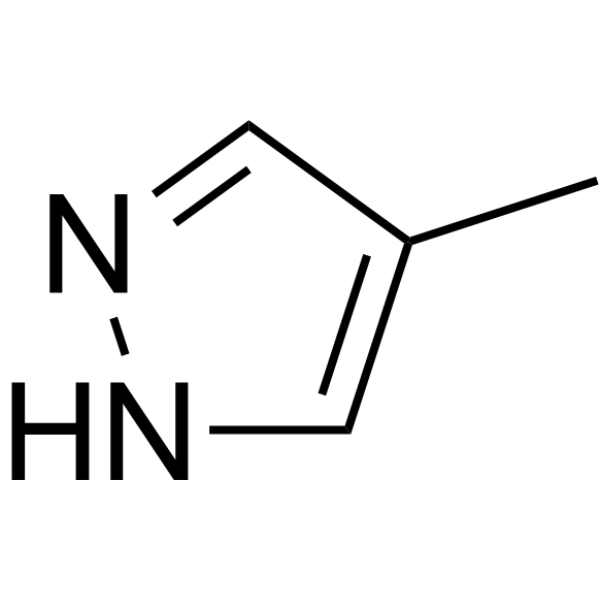
    Fomepizole
    4 Publications Verification

    4-Methylpyrazole

    Cytochrome P450 Metabolic Disease
    Fomepizole (4-Methylpyrazole) is a potent cytochrome P450 (CYP2E1) inhibitor. Fomepizole is a competitive inhibitor of the enzyme alcohol dehydrogenase. Fomepizole blocks further conversion of methanol and ethylene glycol to toxic metabolites. Fomepizole has the potential for an antidote for ethylene glycol or methanol poisoning .
    Fomepizole
  • HY-151851

    ADC Linker Others
    3-Azidopropanol is an azide-containing alcohol and a click reaction substrate. 3-Azidopropanol undergoes Cu-catalyzed addition reaction with propargyl alcohol .
    3-Azidopropanol
  • HY-Y0850J

    PVA (Mw 13000-23000, 87-89% hydrolyzed); Poly(Ethenol) (Mw 13000-23000, 87-89% hydrolyzed)

    Environmental Pollutants Biochemical Assay Reagents Cancer
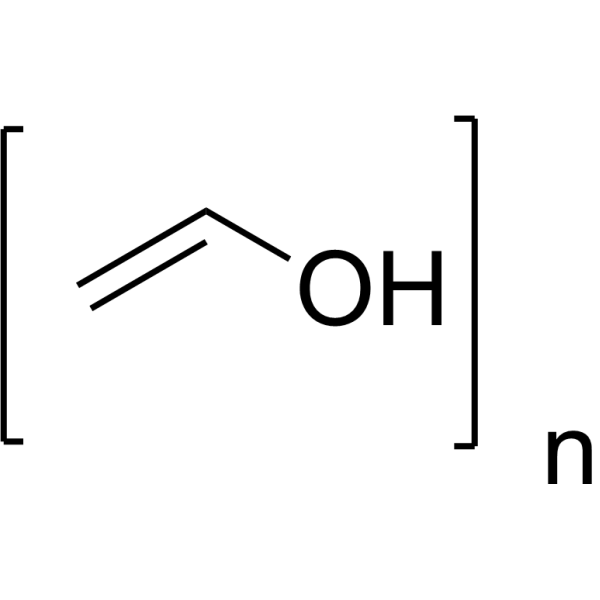
    Polyvinyl alcohol (Mw 13000-23000, 87-89% hydrolyzed) is a polyvinyl alcohol with a molecular weight of 130000-23000 and hydrolytic properties. Polyvinyl alcohol (Mw 13000-23000, 87-89% hydrolyzed) is the hydrolysis and removal of acetate groups after the polymerization of ethylene acetate and polyvinyl alcohol is obtained. A degree of hydrolysis of 87-89% indicates that a large part of the acetate groups have been removed, resulting in a large number of hydroxyl groups in the PVA structure. Polyvinyl alcohol with different degrees of hydrolysis can be used to self-crosslink to form cryogel, which can be used as biological excipient. Polyvinyl alcohol can be used in tissue engineering by electrospinning. Polyvinyl alcohol can achieve high cellular density, infiltration, and uniform distribution, facilitating functional connections between cells. Polyvinyl alcohol can improve cell vitality through in vitro cultivation. Polyvinyl alcohol demonstrates promising inhibition of ostersarcoma cancer cells with Doxorubicin (HY-15142A) .
    Polyvinyl alcohol (Mw 13000-23000, 87-89% hydrolyzed)
  • HY-B1465

    Palmityl alcohol

    Environmental Pollutants Endogenous Metabolite Others
    1-Hexadecanol is a fatty alcohol, a lipophilic substrate. 1-Hexadecanol can be used for the research of ferroptosis .
    1-Hexadecanol
  • HY-100551

    Endogenous Metabolite Others
    meso-Erythritol is a sugar alcohol that found in a variety of foods (e.g., pear, watermelon), is 60-80% as sweet as sucrose, and can be used as low-calorie sweetener food additives .
    meso-Erythritol
  • HY-W005627

    Drug Derivative Metabolic Disease
    Linoleyl alcohol, a structural analog of Linoleic acid with no a-carboxyl group, is a fatty alcohol .
    Linoleyl alcohol
  • HY-Y0850P

    PVA (Mw 146000-186000, 87-89% hydrolyzed); Poly(Ethenol) (Mw 146000-186000, 87-89% hydrolyzed)

    Environmental Pollutants Biochemical Assay Reagents Cancer
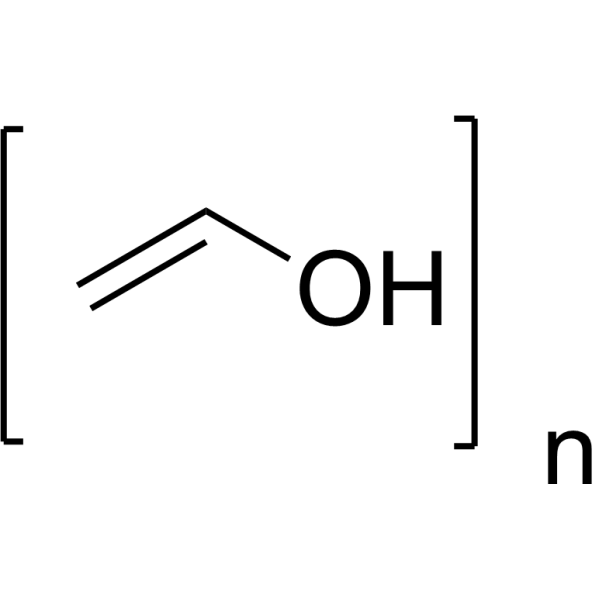
    Polyvinyl alcohol (Mw 146000-186000, 87-89% hydrolyzed) is a polyvinyl alcohol with a molecular weight of 146000-186000 and hydrolytic properties. Polyvinyl alcohol (Mw 146000-186000, 87-89% hydrolyzed) is the hydrolysis and removal of acetate groups after the polymerization of ethylene acetate. And polyvinyl alcohol is obtained. Polyvinyl alcohol with different degrees of hydrolysis can be used to self-crosslink to form cryogel, which can be used as biological excipient. Polyvinyl alcohol can be used in tissue engineering by electrospinning. Polyvinyl alcohol can achieve high cellular density, infiltration, and uniform distribution, facilitating functional connections between cells. Polyvinyl alcohol can improve cell vitality through in vitro cultivation. Polyvinyl alcohol demonstrates promising inhibition of ostersarcoma cancer cells with Doxorubicin (HY-15142A) .
    Polyvinyl alcohol (Mw 146000-186000, 87-89% hydrolyzed)
  • HY-Y0850L

    PVA (Mw 85000-124000, 99+% hydrolyzed); Poly(Ethenol) (Mw 85000-124000, 99+% hydrolyzed)

    Environmental Pollutants Biochemical Assay Reagents Cancer
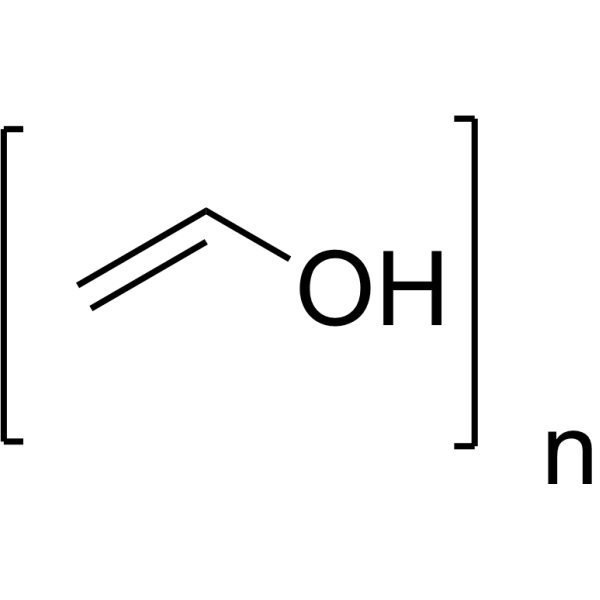
    Polyvinyl alcohol (Mw 85000-124000, 99+% hydrolyzed) is a polyvinyl alcohol with a molecular weight of 85000-124000 and hydrolytic properties. Polyvinyl alcohol (Mw 85000-124000, 99+% hydrolyzed) forms hydrogels that can be used to simulate digestive organs and lesion models for the training of endoscopic ultrasound (EUS) and endoscopic ultrasound elastography (EUS-E). Polyvinyl alcohol with different degrees of hydrolysis can be used to self-crosslink to form cryogel, which can be used as biological excipients .
    Polyvinyl alcohol (Mw 85000-124000, 99+% hydrolyzed)
  • HY-113162
    Bovinic acid
    1 Publications Verification

    Keap1-Nrf2 Ferroptosis Reactive Oxygen Species (ROS) SOD Metabolic Disease Cancer
    Bovinic acid is an orally active anti-inflammatory agent. Bovinic acid inhibits oxidative stress and ferroptosis by regulating the Keap1-Nrf2 signaling pathway. Bovinic acid exerts hepatoprotective effects against alcohol-associated liver disease. Bovinic acid can be used for the research of alcohol-associated liver disease .
    Bovinic acid
  • HY-W032013
    1-Octanol
    1 Publications Verification

    Octanol

    Environmental Pollutants Endogenous Metabolite Calcium Channel Neurological Disease Metabolic Disease
    1-Octanol (Octanol), a saturated fatty alcohol, is a T-type calcium channels (T-channels) inhibitor with an IC50 of 4 μM for native T-currents . 1-Octanol is a highly attractive biofuel with diesel-like properties .
    1-Octanol
  • HY-N6967

    (-)-α-Bisabolol

    Environmental Pollutants Apoptosis Neurological Disease Inflammation/Immunology
    Levomenol ((-)-α-Bisabolol), a monocyclic sesquiterpene alcohol, exerts antioxidant, anti-inflammatory, and anti-apoptotic activities. Levomenol also has neuroprotective effects and prevents neuronal damage and memory deficits through reduction of proinflammatory markers induced by permanent focal cerebral ischemia in mice. Levomenol attenuates nociceptive behaviour and central sensitisation in a rodent model of trigeminal neuropathic pain. Orally active .
    Levomenol
  • HY-107744
    Nalmefene
    1 Publications Verification

    Opioid Receptor Apoptosis Reactive Oxygen Species (ROS) NO Synthase Toll-like Receptor (TLR) p38 MAPK NF-κB Cardiovascular Disease Neurological Disease Inflammation/Immunology
    Nalmefene is a BBB-penetrable opioid receptor modulator. Nalmefene is an antagonist of MOR and DOR, and a partial agonist of KOR. Nalmefene has anti-inflammatory and neuroprotective activities. Nalmefene can be used in the research of reducing alcohol-dependent disorders .
    Nalmefene
  • HY-22340

    PROTAC Linkers Cancer
    Azido-PEG4-alcohol is a PEG-based PROTAC linker can be used in the synthesis of PROTACs . Azido-PEG4-alcohol is a click chemistry reagent, it contains an Azide group and can undergo copper-catalyzed azide-alkyne cycloaddition reaction (CuAAc) with molecules containing Alkyne groups. It can also undergo strain-promoted alkyne-azide cycloaddition (SPAAC) reactions with molecules containing DBCO or BCN groups.
    Azido-PEG4-alcohol
  • HY-118424

    iGluR Neurological Disease Metabolic Disease
    JNJ-55511118 is a selective TARP γ-8 binding AMPA receptor modulator with oral bioavailability and blood-brain barrier permeability, with a Ki of 26 nM. JNJ-55511118 reduces voluntary intake of sweetened alcohol in male mice. In rodent models, JNJ-55511118 inhibits hippocampal neurotransmission, reduces specific electroencephalogram frequency bands, induces transient hyperlocomotion, impairs learning and memory abilities, and exerts anticonvulsant effects. JNJ-55511118 is applicable to research related to alcohol use disorder and seizures .
    JNJ-55511118
  • HY-G0022

    13-Dihydroadriamycin hydrochloride

    Drug Metabolite Cancer
    Doxorubicinol hydrochloride (13-Dihydroadriamycin hydrochloride) is a secondary alcohol metabolite of Doxorubicin .
    Doxorubicinol hydrochloride
  • HY-Y0418

    Dulcitol; Melampyrit; NSC 1944

    Endogenous Metabolite Others
    Dulcite (Dulcitol; Melampyrit; NSC 1944) is a sugar alcohol. Dulcite is produced by the reduction of galactose by aldose reductase in non-insulin-dependent cells .
    Dulcite
  • HY-N0506

    Interleukin Related Neurological Disease
    Rosarin is a cinnamyl alcohol?glycoside isolated from?Rhodiola rosea. Rosarin has anti-inflammatory and neuroprotective effects. Rosarin supresses the expression of the proinflammatory factors iNOS, IL-1?β, and TNF- α in the kidney and prefrontal cortex of brain in mice? .
    Rosarin
  • HY-W007087

    GABA Receptor Metabolic Disease
    Valerate sodium is the sodium salt of valeric acid, a short-chain fatty acid, and exhibits oral activity. Valerate sodium reduces binge ethanol intake and decreases blood ethanol concentration in mice, while also exerting anxiolytic effects. Valerate sodium increases GABA levels, regulates epigenetics and alters gut microbiome function. Valerate sodium can be used in research related to excessive alcohol consumption .
    Valerate sodium
  • HY-167856

    GPR88 Neurological Disease
    RTI-122 is a selective, blood-brain barrier-permeable GPR88 agonist (cAMP EC50=11 nM), with EC50 values of 11.5 nM and 155 nM for human and mouse GPR88, respectively ([ 35S]GTPγS assay). By activating the GPR88 receptor to regulate the cAMP signaling pathway and G protein activity, RTI-122 significantly attenuates Binge-like drinking, reduces alcohol intake, and decreases alcohol-seeking motivation. RTI-122 blocks the reinstatement of alcohol-seeking behavior without affecting water or sucrose intake. RTI-122 exhibits metabolic stability in mice (T1/2=5.8 h) and can be used to investigate alcohol use disorder .
    RTI-122
  • HY-Y0850U9

    Polyvinyl alcohol (Mw 67000, 87-89% hydrolyzed, ~1400 polymerization); Poly(Ethenol) (Mw 67000, 87-89% hydrolyzed, ~1400 polymerization)

    Biochemical Assay Reagents Others
    PVA (Mw 67000, 87-89% hydrolyzed, ~1400 polymerization) is a polyvinyl alcohol with a molecular weight of 67000 and hydrolytic properties. Degree of hydrolysis refers to the conversion rate of acetate groups in the original polyvinyl acetate to hydroxyl groups; PVA (Mw 67000, 87-89% hydrolyzed, ~1400 polymerization) is obtained by hydrolyzing and removing acetate groups after the polymerization of vinyl acetate. Polyvinyl alcohol with different degrees of hydrolysis can be used to form self-crosslinked cryogels and is applied as a biological adjuvant .
    PVA (Mw 67000, 87-89% hydrolyzed, ~1400 polymerization)
  • HY-N1867

    PPAR Metabolic Disease
    trans-Cinnamyl alcohol is a trans-isomer of Cinnamyl alcohol. Cinnamyl Alcohol is an active component from chestnut flower, inhibits increased PPARγ expression, with anti-obesity activity. trans-Cinnamyl alcohol, belongs to the class of organic compounds known as cinnamyl alcohols, is a primary metabolite .
    trans-Cinnamyl alcohol
  • HY-W016735

    PROTAC Linkers Cancer
    Azido-PEG3-alcohol is a PEG-based PROTAC linker can be used in the synthesis of PROTACs . Azido-PEG3-alcohol is a click chemistry reagent, it contains an Azide group and can undergo copper-catalyzed azide-alkyne cycloaddition reaction (CuAAc) with molecules containing Alkyne groups. It can also undergo strain-promoted alkyne-azide cycloaddition (SPAAC) reactions with molecules containing DBCO or BCN groups.
    Azido-PEG3-alcohol
  • HY-D1005B
    Poloxamer 237 (F87)
    1 Publications Verification

    PEG-PPG-PEG, 7700 (Average Mn)

    Environmental Pollutants Others
    Poloxamer 237 (F87) (PEG-PPG-PEG, 7700 (Average Mn)) is an alcohol substance that acts as an oil-in-water emulsifier and solubilizer. Poloxamer 237 (F87) is used in the research of formulations such as contact lens care solutions and eye drops .
    Poloxamer 237 (F87)
  • HY-D1341
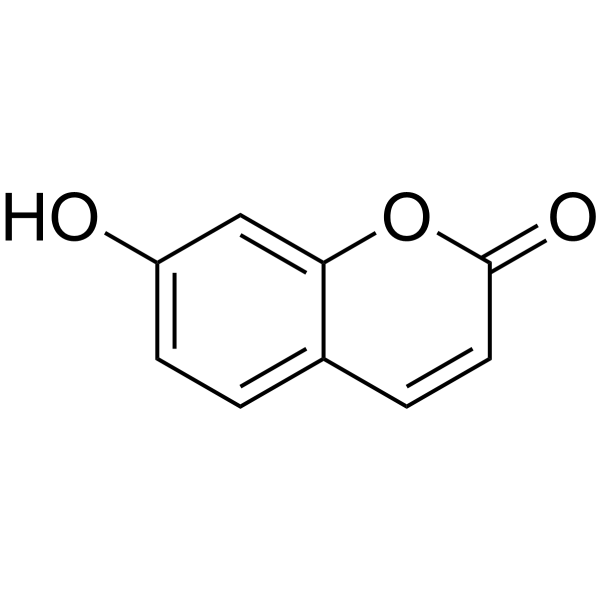
    Coumberone
    2 Publications Verification

    Fluorescent Dye Cancer
    Coumberone is a metabolic fluorogenic probe, and isoform-selective substrate for all AKR1C isoforms. Coumberone can be reduced by all four members of the AKR1C family to its fluorescent alcohol coumberol. Coumberone can be used for the research of AKR1C .
    Coumberone
  • HY-W007511

    Isohexanol; Isohexyl alcohol

    Drug Derivative Neurological Disease
    4-Methyl-1-pentanol is a volatile aroma component of red wine, which is often used in the production and blending of wine. 4-Methyl-1-pentanol can also be used as an alcohol antagonist to antagonize the effects of ethanol and 1-butanol on cell-cell adhesion, and is used in the study of fetal alcohol syndrome .
    4-Methyl-1-pentanol
  • HY-B0876A
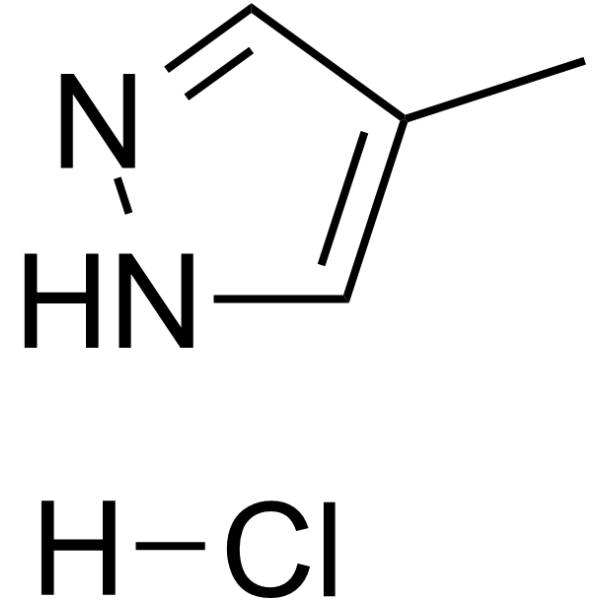
    Fomepizole hydrochloride
    4 Publications Verification

    4-Methylpyrazole hydrochloride

    Cytochrome P450 Metabolic Disease
    Fomepizole (4-Methylpyrazole) hydrochloride is a potent and orally active cytochrome P450 (CYP2E1) inhibitor. Fomepizole hydrochloride is a competitive inhibitor of the enzyme alcohol dehydrogenase. Fomepizole hydrochloride blocks further conversion of methanol and ethylene glycol to toxic metabolites. Fomepizole hydrochloride has the potential for an antidote for ethylene glycol or methanol poisoning .
    Fomepizole hydrochloride
  • HY-164690A

    Endogenous Metabolite Metabolic Disease
    Nicotinamide-guanine dinucleotide sodium, a NAD sodium (HY-B0445A) analog, is an oxidized forms of nicotinamide guanine dinucleotide. Nicotinamide-guanine dinucleotide sodium serves as coenzymes for alcohol dehydrogenase (ADH) in vitro .
    Nicotinamide-guanine dinucleotide sodium
  • HY-B0892R
    Benzyl alcohol (Standard)
    3 Publications Verification

    Benzenemethanol (Standard)

    Toll-like Receptor (TLR) Cytochrome P450 Reference Standards Inflammation/Immunology
    Benzyl alcohol (Standard) is the analytical standard of Benzyl alcohol. This product is intended for research and analytical applications. Benzyl alcohol is an aromatic alcohol, a colorless liquid with a mild aromatic odor.
    Benzyl alcohol (Standard)
  • HY-N4283A

    Fungal Infection
    (E)-Coniferyl alcohol is the isomer of Coniferyl alcohol. Coniferyl alcohol is an intermediate in biosynthesis of eugenol and of stilbenoids and coumarin. Coniferyl alcohol specifically inhibits fungal growth .
    (E)-Coniferyl alcohol
  • HY-W747572

    (R)-(+)-Perillyl alcohol

    Ras Cancer
    (+)-Perillyl alcohol is the enantiomer of S-(-)-Perillyl alcohol (HY-116514). (+)-Perillyl alcohol can inhibit the growth of polypeptides and block the cell cycle in the G0/G1 phase. (+)-Perillyl alcohol induces cell signaling that is associated with changes in cytoskeletal actin organization and reduced protein expression of growth regulatory proteins such as Ras and CDC2 kinase .
    (+)-Perillyl alcohol
  • HY-N3102A

    (E)-p-Hydroxycinnamyl alcohol

    Others Inflammation/Immunology
    (E)-p-Coumaryl alcohol is a metabolite of coumarin that has significant cytotoxicity. (E)-p-Coumaryl alcohol can be isolated from Alpinia officinarum and Rhodiola rosea and can be used for inflammation research .
    (E)-p-Coumaryl alcohol
  • HY-108048

    Deoxypeganine; Deoxyvasicine

    Cholinesterase (ChE) Monoamine Oxidase Neurological Disease
    Desoxypeganine (Deoxypeganine), an alkaloid, is a potent and orally active cholinesterase (BChE and AChE) and selective MAO-A inhibitor, with IC50 values of 2, 17, and 2 μM, respectively. Desoxypeganine can be used for alcohol abuse research .
    Desoxypeganine
  • HY-N1177

    Aldehyde Dehydrogenase (ALDH) Inflammation/Immunology
    Taraxerone is isolated from Sedum sarmentosum. Taraxerone enhances effects on alcohol dehydrogenase (ADH) and acetaldehyde dehydrogenase (ALDH) activities with EC50 values of 512.42 and 500.16 μM, respectively .
    Taraxerone
  • HY-124597

    Ceramidase Inflammation/Immunology
    ARN726 is a potent NAAA (N-acylethanolamine acid amidase) inhibitor with an IC50 of 0.073 µM. ARN726 decreases alcohol self-administration in a dose-dependent manner .
    ARN726
  • HY-N7851

    Others Infection Others Inflammation/Immunology
    Terpineol is a monoterpenoid alcohol compound that is widely found in plants, especially in the peels of citrus fruits. Terpineol has antioxidant, anti-inflammatory and antibacterial activities and is commonly used in the fragrance industry as an additive in food, beverages, cosmetics and perfumes .
    Terpineol
  • HY-B0400R

    Sorbitol (Standard); D-Glucitol (Standard)

    Reference Standards Endogenous Metabolite Bacterial Others
    D-Sorbitol (Standard) is the analytical standard of D-Sorbitol. This product is intended for research and analytical applications. D-Sorbitol (Sorbitol) is a six-carbon sugar alcohol and can used as a sugar substitute. D-Sorbitol can be used as a stabilizing excipient and/or isotonicity agent, sweetener, humectant, thickener and dietary supplement .
    D-Sorbitol (Standard)
  • HY-W099643

    Erucyl alcohol

    Endogenous Metabolite Others
    Cis-13-docosenol (Erucyl alcohol) is a long-chain alcohol pheromone in insects. Cis-13-docosenol exhibits attractive effects on both male and female adult Holotrichia parallela. Cis-13-docosenol can be used for the monitoring and control of adult Holotrichia parallela .
    Cis-13-docosenol
  • HY-B0892S2

    Benzenemethanol-d5

    Isotope-Labeled Compounds Endogenous Metabolite Others
    Benzyl alcohol-d5 is the deuterium labeled Benzyl alcohol. Benzyl alcohol is an aromatic alcohol; a colorless liquid with a mild pleasant aromatic odor.
    Benzyl alcohol-d5
  • HY-B0892S1

    Benzenemethanol-d7

    Isotope-Labeled Compounds Endogenous Metabolite Others
    Benzyl alcohol-d7 is the deuterium labeled Benzyl alcohol. Benzyl alcohol is an aromatic alcohol; a colorless liquid with a mild pleasant aromatic odor.
    Benzyl alcohol-d7
  • HY-W012837

    Drug Derivative Cytochrome P450 Toll-like Receptor (TLR) Others
    Benzylmethyl ether is a derivative of HY-B0892 (Benzyl alcohol). Benzylmethyl ether is an aromatic alcohol, a colorless liquid with a mild aromatic odor. Benzylmethyl ether is an inhibitor of P450 enzyme. Benzylmethyl ether mediated Toll-Like Receptor 4 to reduce the inflammatory response of liver injury in mice .
    Benzylmethyl ether
  • HY-107121

    LY 2196044

    Opioid Receptor Neurological Disease
    Ondelopran (LY 2196044) is a non-selective opioid receptor antagonist. Ondelopran inhibits the release of dopamine in the nucleus accumbens induced by alcohol, reduces the rewarding effect of alcohol consumption, and lowers the craving. Ondelopran can be used for alcohol use disorder (AUD) .
    Ondelopran
  • HY-E70124A

    Biochemical Assay Reagents Metabolic Disease
    Esterase, Bacillus subtilis is a carboxylate hydrolase. Esterase, Bacillus subtilis accepts a branched alcohol moiety as substrate .
    Esterase, Bacillus subtilis
  • HY-W004056

    Environmental Pollutants Bacterial DNA/RNA Synthesis Infection
    4-Methoxyphenethyl alcohol, an aromatic alcohol, is the major component in the anise-like odour produced by Amorphophallus. 4-Methoxyphenethyl alcohol can inhibits the protein, RNA and DNA synthesis in Escherichia coli .
    4-Methoxyphenethyl alcohol
  • HY-B0681

    iGluR Neurological Disease Metabolic Disease
    Acamprosate is an orally active prototypic neuromodulator. Acamprosate can be used for the research of alcohol dependence and alcoholism .
    Acamprosate
  • HY-148617

    Aldehyde Dehydrogenase (ALDH) Metabolic Disease
    ALDH2 modulator 1 is a potent and orally active aldehyde dehydrogenase-2 (ALDH2) modulator. ALDH2 modulator 1 reduces blood alcohol levels in mice .
    ALDH2 modulator 1
  • HY-D1412
    LPd peroxida probe-1
    1 Publications Verification

    Ferroptosis Others
    LPd peroxida probe-1, a marker of ferroptosis, is a useful fluorescent probe for investigating the roles of lipid peroxidation in a variety of cell pathophysiologies. LPd peroxida probe-1 reduces lipid hydroperoxides to lipid alcohols and is used for imaging lipid hydroperoxides in living cells .
    LPd peroxida probe-1
  • HY-B1465R

    Palmityl alcohol (Standard)

    Reference Standards Endogenous Metabolite Others
    1-Hexadecanol (Standard) is the analytical standard of 1-Hexadecanol. This product is intended for research and analytical applications. 1-Hexadecanol is a fatty alcohol, a lipophilic substrate. 1-Hexadecanol can be used for the research of ferroptosis .
    1-Hexadecanol (Standard)
  • HY-Y0689

    MOFs Others
    Thiocarbonyldiimidazole is a synthetic chemical reagent that serves as a nitrogen-containing MOF ligand for synthetic applications. Thiocarbonyldiimidazole enables the preparation of thiocarbonyl imidazolides from alcohols, and is used in the Barton-McCombie deoxygenation reaction and natural product synthesis .
    Thiocarbonyldiimidazole
  • HY-135801

    Drug Intermediate Metabolic Disease
    Arachidonyl alcohol is a long-chain primary fatty alcohol. Arachidonyl alcohol is used as a substrate for the production of several ether lipids possessing beneficial functions .
    Arachidonyl alcohol

Inquiry Online

Your information is safe with us. * Required Fields.

Salutation


Country or Region *

Applicant Name *


Organization Name *

Department *


Email Address *


Product Name *

Cat. No.


Requested quantity *

Phone Number *


Remarks

Inquiry Online

Inquiry Information

Product Name:
Cat. No.:
Quantity:
MCE Japan Authorized Agent:

