9 Results for "

aniline hydroxylase

" in MedChemExpress (MCE) Product Catalog:
Products (9)

9 Results for "aniline hydroxylase" in MCE Product Catalog:

1
1 Cited Publications
Cat. No.: HY-B0859
CAS No.: 94-74-6
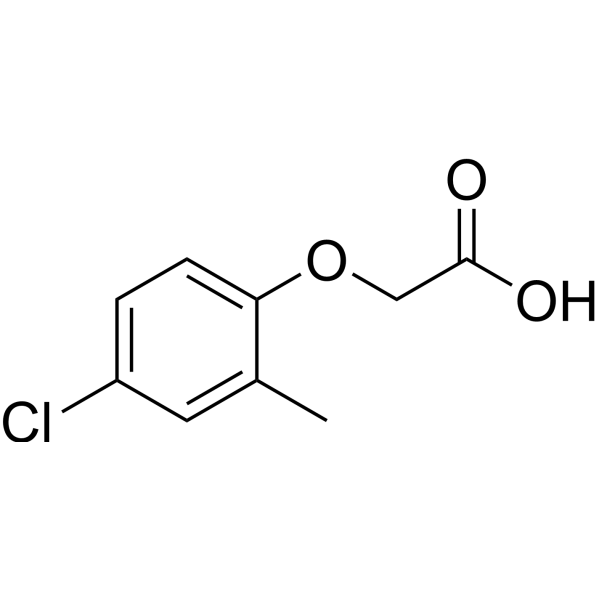
MCPA is an orally active phenoxyacetic acid herbicide. MCPA interferes with membrane integrity, energy metabolism (decreases ATP levels), and redox balance in plant cells. MCPA increases hepatic cytochrome P-450 levels and increases aniline hydroxylase and 7-ethoxycoumarin O-deethylase activities. MCPA can be used to control broadleaf weeds .
loading...
    loading...
1
1 Cited Publications
Cat. No.: HY-B0859A
CAS No.: 3653-48-3
Research Areas:  

Metabolic Disease

MCPA sodium is an orally active phenoxyacetic acid herbicide. MCPA sodium interferes with membrane integrity, energy metabolism (decreases ATP levels), and redox balance in plant cells. MCPA sodium increases hepatic cytochrome P-450 levels and increases aniline hydroxylase and 7-ethoxycoumarin O-deethylase activities. MCPA sodium can be used to control broadleaf weeds .
loading...
    loading...
Cat. No.: HY-125796
CAS No.: 14901-16-7
Purity:  99.67%
Research Areas:  

Neurological Disease

U-14624 is a potent and orally active dopamine beta-hydroxylase inhibitor. U-14624 suppresses the activities of aminopyrine N-demethylase, aniline hydroxylase and p-nitroanisole O-demethylase enzymes .
loading...
    loading...
Cat. No.: HY-B0859S1
CAS No.: 352431-14-2
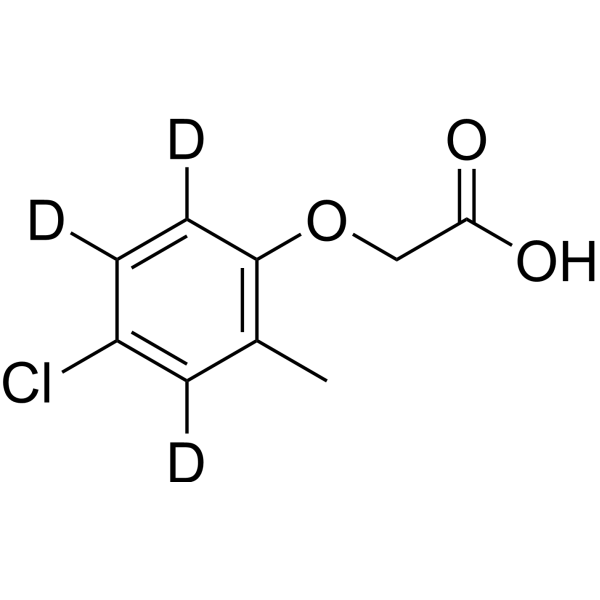
MCPA-d3 is the deuterium labeled MCPA (HY-B0859). MCPA is an orally active phenoxyacetic acid herbicide. MCPA interferes with membrane integrity, energy metabolism (decreases ATP levels), and redox balance in plant cells. MCPA increases hepatic cytochrome P-450 levels and increases aniline hydroxylase and 7-ethoxycoumarin O-deethylase activities. MCPA can be used to control broadleaf weeds .
loading...
    loading...
Cat. No.: HY-W713900
CAS No.: 2469242-78-0
MCPA-d3-1 is the deuterium labeled MCPA (HY-B0859). MCPA is an orally active phenoxyacetic acid herbicide. MCPA interferes with membrane integrity, energy metabolism (decreases ATP levels), and redox balance in plant cells. MCPA increases hepatic cytochrome P-450 levels and increases aniline hydroxylase and 7-ethoxycoumarin O-deethylase activities. MCPA can be used to control broadleaf weeds .
loading...
    loading...
Cat. No.: HY-B0859R
CAS No.: 94-74-6
MCPA (Standard) is the analytical standard of MCPA (HY-B0859). This product is intended for research and analytical applications. MCPA is an orally active phenoxyacetic acid herbicide. MCPA interferes with membrane integrity, energy metabolism (decreases ATP levels), and redox balance in plant cells. MCPA increases hepatic cytochrome P-450 levels and increases aniline hydroxylase and 7-ethoxycoumarin O-deethylase activities. MCPA can be used to control broadleaf weeds .
loading...
    loading...
Cat. No.: HY-B0859S
Synonyms: 4-Chloro-2-Methylphenoxyacetic acid-13C8
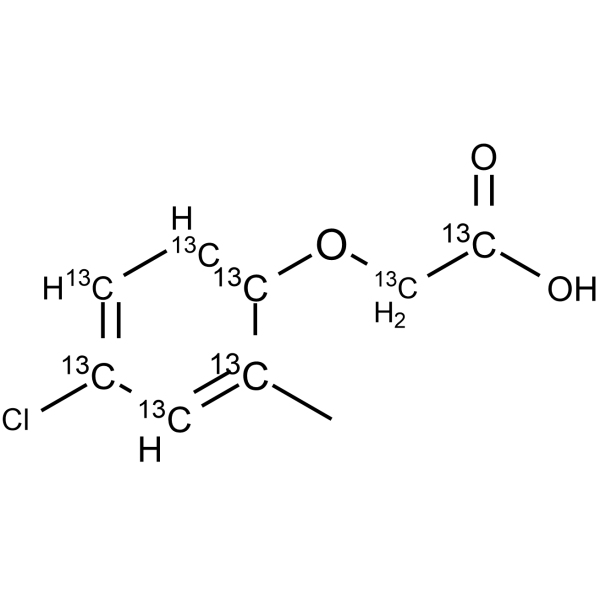
MCPA- 13C8 is the 13C-labeled MCPA (HY-B0859). MCPA is an orally active phenoxyacetic acid herbicide. MCPA interferes with membrane integrity, energy metabolism (decreases ATP levels), and redox balance in plant cells. MCPA increases hepatic cytochrome P-450 levels and increases aniline hydroxylase and 7-ethoxycoumarin O-deethylase activities. MCPA can be used to control broadleaf weeds .
loading...
    loading...
Cat. No.: HY-183457
CAS No.: 69429-84-1
Cilobamine is an orally active antidepressant and a dopamine/norepinephrine reuptake inhibitor. Cilobamine increases the levels of Aniline hydroxylase and cytochrome P-450 in rat liver. Cilobamine promotes hypertrophy of the smooth endoplasmic reticulum in rat liver hepatocytes, increases relative liver weight and recoverable microsomal protein. Cilobamine produces stimulant and anxiogenic effects, and does not inhibit monoamine oxidase. Cilobamine can be used in the research of depression .
loading...
    loading...
Cat. No.: HY-183457A
CAS No.: 69429-85-2
Cilobamine methanesulfonate is an orally active antidepressant and a dopamine/norepinephrine reuptake inhibitor. Cilobamine methanesulfonate increases the levels of Aniline hydroxylase and cytochrome P-450 in rat liver. Cilobamine methanesulfonate promotes hypertrophy of the smooth endoplasmic reticulum in rat liver hepatocytes, increases relative liver weight and recoverable microsomal protein. Cilobamine methanesulfonate produces stimulant and anxiogenic effects, and does not inhibit monoamine oxidase. Cilobamine methanesulfonate can be used in the research of depression .
loading...
    loading...

