16 Results for "

anxiolysis

" in MedChemExpress (MCE) Product Catalog:
Products (16)

16 Results for "anxiolysis" in MCE Product Catalog:

32
32 Publications Verification
Cat. No.: HY-12719
CAS No.: 113775-47-6
Purity:  99.93%
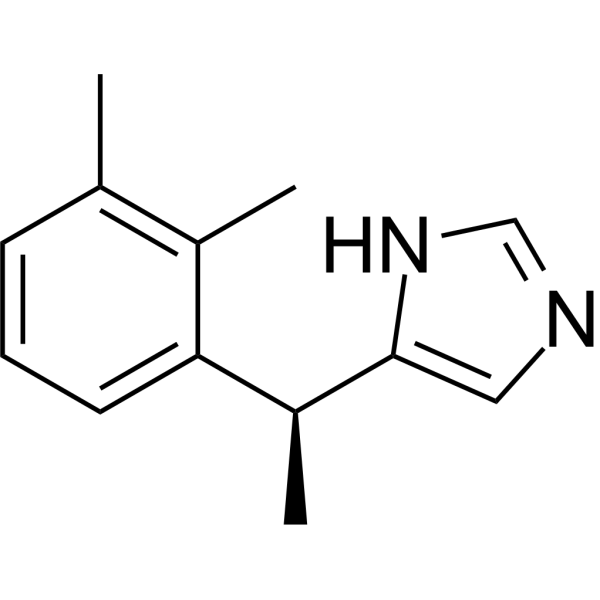
Synonyms: (+)-Medetomidine; (S)-Medetomidine
Target:  

Adrenergic Receptor

Research Areas:  

Neurological Disease Cancer

Dexmedetomidine ((+)-Medetomidine) is a potent, selective and orally active agonist of α2-adrenoceptor, with a Ki of 1.08 nM. Dexmedetomidine shows 1620-fold selectivity against α1-adrenoceptor. Dexmedetomidine exhibits anxiolysis, sedation, and modest analgesia effects .
loading...
    loading...
32
32 Publications Verification
Cat. No.: HY-17034A
CAS No.: 145108-58-3
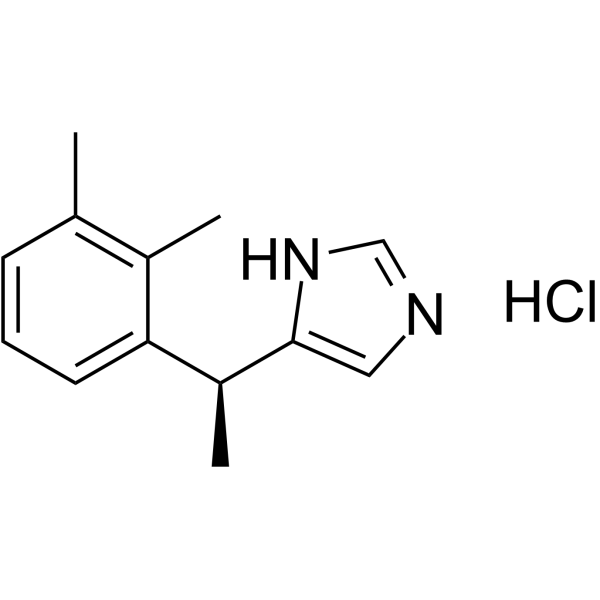
Synonyms: (+)-Medetomidine hydrochloride; (S)-Medetomidine hydrochloride
Target:  

Adrenergic Receptor

Research Areas:  

Infection Cancer

Dexmedetomidine hydrochloride ((+)-Medetomidine hydrochloride) is a potent, selective and orally active agonist of α2-adrenoceptor, with a Ki of 1.08 nM. Dexmedetomidine hydrochloride shows 1620-fold selectivity against α1-adrenoceptor. Dexmedetomidine hydrochloride exhibits anxiolysis, sedation, and modest analgesia effects .
loading...
    loading...
5
5 Cited Publications
Cat. No.: HY-N2364
CAS No.: 63-75-2
Arecoline, a naturally brain-penetrant and orally active occurring psychoactive alkaloid, is a partial agonist of nicotinic and muscarinic acetylcholine receptor. Arecoline exhibits stimulation, alertness, anxiolysis and anti-parasitic effects. Arecoline also can induce oxidative stress .
loading...
    loading...
5
5 Cited Publications
Cat. No.: HY-B0489
CAS No.: 300-08-3
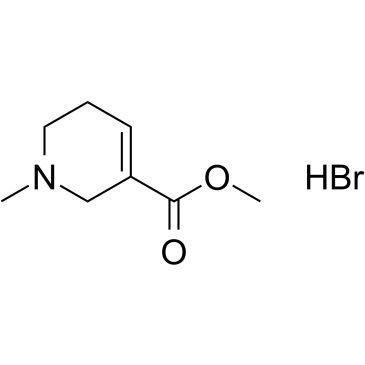
Synonyms: methyl 1,2,5,6-tetrahydro-1-methyl-3-pyridinecarboxylate hydrobromide
Arecoline hydrobromide, a naturally brain-penetrant and orally active occurring psychoactive alkaloid, is a partial agonist of nicotinic and muscarinic acetylcholine receptor. Arecoline hydrobromide exhibits stimulation, alertness, anxiolysis and anti-parasitic effects. Arecoline hydrobromide also can induce oxidative stress .
loading...
    loading...
Cat. No.: HY-12719R
CAS No.: 113775-47-6
Synonyms: (+)-Medetomidine (Standard); (S)-Medetomidine (Standard)
Dexmedetomidine (Standard) is the analytical standard of Dexmedetomidine. This product is intended for research and analytical applications. Dexmedetomidine ((+)-Medetomidine) is a potent, selective and orally active agonist of α2-adrenoceptor, with a Ki of 1.08 nM. Dexmedetomidine shows 1620-fold selectivity against α1-adrenoceptor. Dexmedetomidine exhibits anxiolysis, sedation, and modest analgesia effects .
loading...
    loading...
Cat. No.: HY-17034AR
CAS No.: 145108-58-3
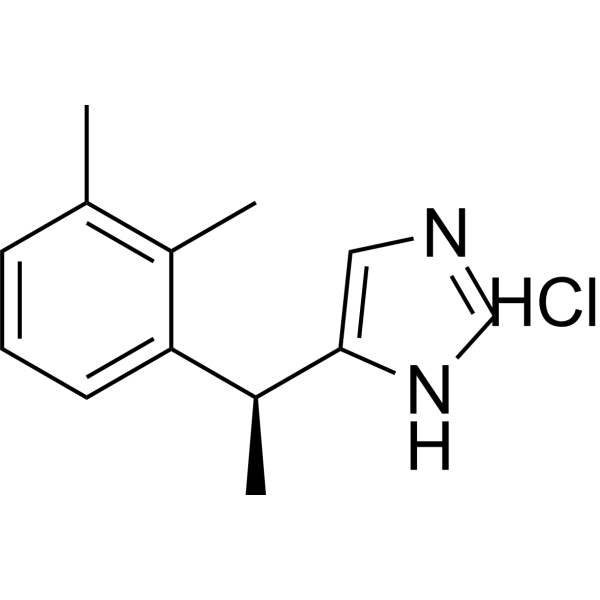
Synonyms: (+)-Medetomidine hydrochloride (Standard); (S)-Medetomidine hydrochloride (Standard)
Dexmedetomidine (hydrochloride) (Standard) is the analytical standard of Dexmedetomidine (hydrochloride). This product is intended for research and analytical applications. Dexmedetomidine hydrochloride ((+)-Medetomidine hydrochloride) is a potent, selective and orally active agonist of α2-adrenoceptor, with a Ki of 1.08 nM. Dexmedetomidine hydrochloride shows 1620-fold selectivity against α1-adrenoceptor. Dexmedetomidine hydrochloride exhibits anxiolysis, sedation, and modest analgesia effects .
loading...
    loading...
Cat. No.: HY-W749797
CAS No.: 28910-99-8
Target:  

GABA Receptor

Research Areas:  

Neurological Disease

Nitrazolam is a benzodiazepine compound, that may exhibit CNS depressant properties as traditional benzodiazepines, including sedation, hypnosis, anxiolysis, and anticonvulsant effects, by acting on GABA receptors .
loading...
    loading...
Cat. No.: HY-103512
CAS No.: 628690-75-5
Purity:  98.99%
Target:  

GABA Receptor

Research Areas:  

Neurological Disease

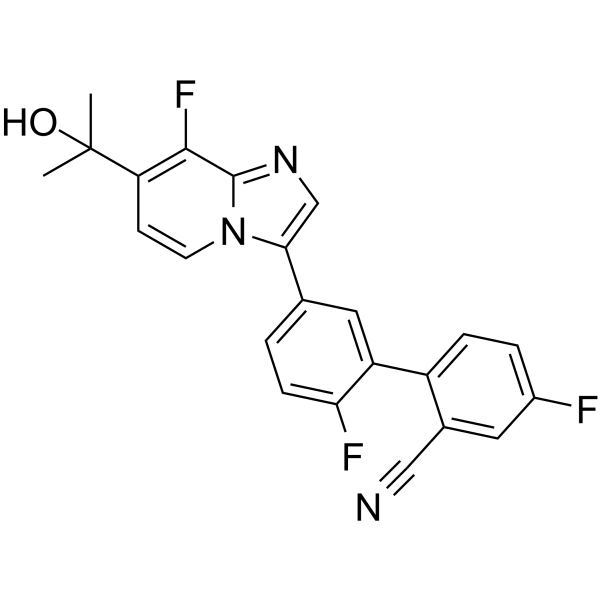
TP003 is a non-selective benzodiazepine site agonist with EC50s of 20.3, 10.6, 3.24, 5.64 nM for α1β2γ2, α2β3γ2, α3β3γ2, α5β2γ2, respectively. TP003 induces anxiolysis via α2GABAA receptors .
loading...
    loading...
Cat. No.: HY-B0489R
CAS No.: 300-08-3
Synonyms: methyl 1,2,5,6-tetrahydro-1-methyl-3-pyridinecarboxylate hydrobromide (Standard)
Arecoline hydrobromide (Standard) is the analytical standard of Arecoline hydrobromide. This product is intended for research and analytical applications. Arecoline hydrobromide, a naturally brain-penetrant and orally active occurring psychoactive alkaloid, is a partial agonist of nicotinic and muscarinic acetylcholine receptor. Arecoline hydrobromide exhibits stimulation, alertness, anxiolysis and anti-parasitic effects. Arecoline hydrobromide also can induce oxidative stress .
loading...
    loading...
Cat. No.: HY-17034AS
Synonyms: (+)-Medetomidine-13C,d3 hydrochloride; (S)-Medetomidine-13C,d3 hydrochloride
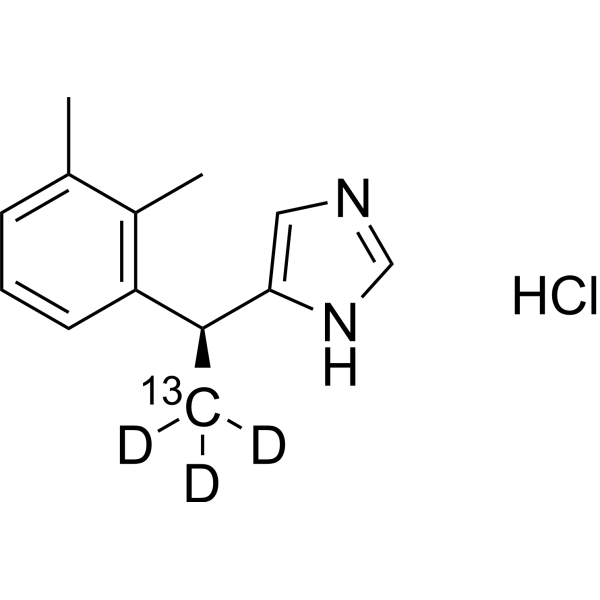
Dexmedetomidine- 13C,d3 (hydrochloride) is the 13C- and deuterium labeled Dexmedetomidine (hydrochloride). Dexmedetomidine hydrochloride ((+)-Medetomidine hydrochloride) is a potent, selective and orally active agonist of α2-adrenoceptor, with a Ki of 1.08 nM. Dexmedetomidine hydrochloride shows 1620-fold selectivity against α1-adrenoceptor. Dexmedetomidine hydrochloride exhibits anxiolysis, sedation, and modest analgesia effects .
loading...
    loading...
Cat. No.: HY-U00244
CAS No.: 63-12-7
Synonyms: P2647; BZQ; Benzoquinamide
Research Areas:  

Metabolic Disease

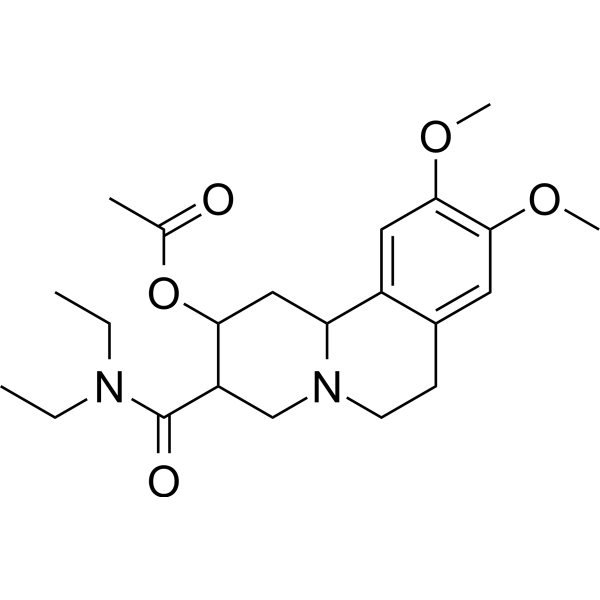
Benzquinamide (P2647; BZQ; Benzoquinamide) is an orally active binder of dopamine receptors and adrenergic receptors. Benzquinamide specifically targets dopamine D2, D3, D4 receptors and α-2A, α-2B, α-2C adrenergic receptors. Benzquinamide regulates blood pressure and heart rate, attenuates the pressor effect of adrenaline, and exhibits activities such as antiemesis, anxiolysis, and reduction of histamine-induced bronchoconstriction. Benzquinamide has good safety and does not deplete serotonin or norepinephrine in the brain. Benzquinamide can be used in studies related to nausea/vomiting, mental disorders, anxiety states, neurosis, and psychosis .
loading...
    loading...
Cat. No.: HY-B0489A
CAS No.: 61-94-9
Arecoline hydrochloride, a naturally brain-penetrant and orally active occurring psychoactive alkaloid, is a partial agonist of nicotinic and muscarinic acetylcholine receptor. Arecoline hydrochloride exhibits stimulation, alertness, anxiolysis and anti-parasitic effects. Arecoline hydrochloride also can induce oxidative stress .
loading...
    loading...
Cat. No.: HY-119097
CAS No.: 338738-66-2
Purity:  ≥99%
Target:  

mGluR

Research Areas:  

Neurological Disease

LY456066 is a selective non-competitive metabotropic glutamate receptors (mGluR1) antagonist with an IC50 value of 52.0 nM. LY456066 is effective in rodent models of anxiolysis and nociception. LY456066 reduces hyperalgesia and the amount of licking and flinching following formalin injection, which is promising for research of analgesics for chronic pain .
loading...
    loading...
Cat. No.: HY-U00244A
CAS No.: 113-69-9
Synonyms: P2647 hydrochloride; BZQ hydrochloride; Benzoquinamide hydrochloride
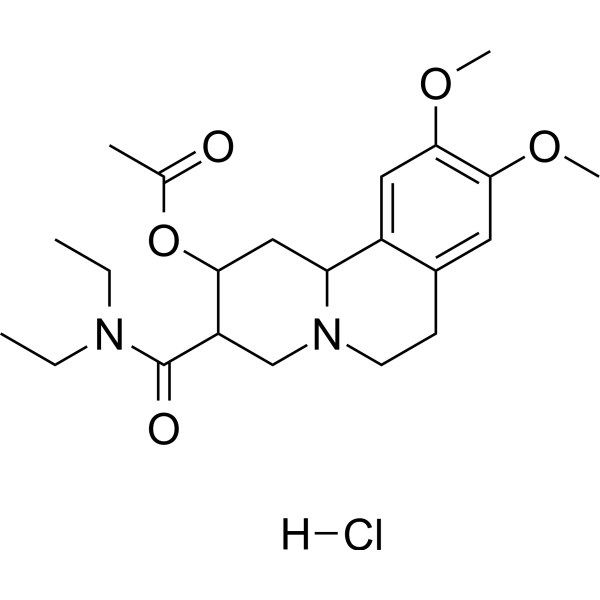
Benzquinamide (P2647; BZQ; Benzoquinamide) hydrochloride is an orally active binder of dopamine receptors and adrenergic receptors. Benzquinamide hydrochloride specifically targets dopamine D2, D3, D4 receptors and α-2A, α-2B, α-2C adrenergic receptors. Benzquinamide hydrochloride regulates blood pressure and heart rate, attenuates the pressor effect of adrenaline, and exhibits activities such as antiemesis, anxiolysis, and reduction of histamine-induced bronchoconstriction. Benzquinamide hydrochloride has good safety and does not deplete serotonin or norepinephrine in the brain. Benzquinamide hydrochloride can be used in studies related to nausea/vomiting, mental disorders, anxiety states, neurosis, and psychosis .
loading...
    loading...
Cat. No.: HY-W739837
CAS No.: 131448-18-5
Arecoline-d5 hydrobromide is the deuterium labeled Arecoline hydrobromide (HY-B0489). Arecoline hydrobromide, a naturally occurring psychoactive alkaloid, is a partial agonist of nicotinic and muscarinic acetylcholine receptor. Arecoline hydrobromide exhibits stimulation, alertness, anxiolysis and anti-parasitic effects. Arecoline hydrobromide also can induce oxidative stress .
loading...
    loading...
Cat. No.: HY-154792
CAS No.: 115621-24-4
Synonyms: PCA
Pyrrolidone carboxylic acid (PCA) is one of the main components (accounting for approximately 12%) of natural moisturizing factors (NMF) in the mammalian epidermal stratum corneum, and it is produced by the degradation of filaggrin. It exhibits multiple biological activities such as skin moisturization, central GABA release, anxiolysis, and auxiliary ethanol metabolism. The content of Pyrrolidone carboxylic acid correlates with the clinical severity of atopic dermatitis lesions, skin barrier function, and inflammation levels, and shows a negative correlation with the expression of TNF-α and IL-13. Pyrrolidone carboxylic acid can serve as a key skin biomarker for skin barrier function and health .
loading...
    loading...
  • 1

