Search Result
Results for "
apical
" in MedChemExpress (MCE) Product Catalog:
2
Biochemical Assay Reagents
7
Isotope-Labeled Compounds
| Cat. No. |
Product Name |
Target |
Research Areas |
Chemical Structure |
-
- HY-109120
-
|
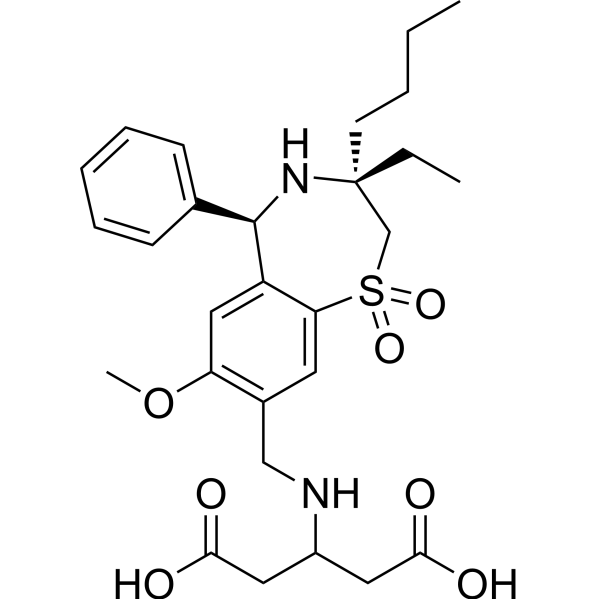
A4250
|
Apical Sodium-Dependent Bile Acid Transporter
|
Metabolic Disease
|
|
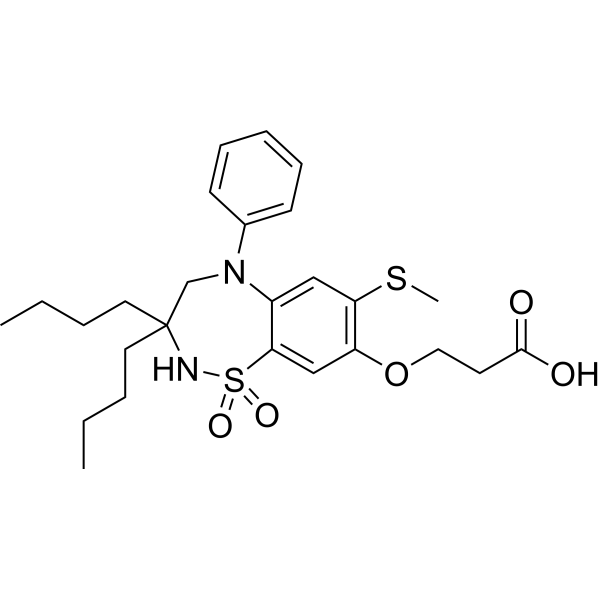
Odevixibat (A4250) is a selective and orally active ileal apical sodium-dependent bile acid transporter (ASBT) inhibitor. Odevixibat decreases cholestatic liver and bile duct injury in mice model. Odevixibat has the potential for the treatment of primary biliary cirrhosis .
|
-
-
- HY-107903
-
|
Thyroglobulin from bovine
|
Biochemical Assay Reagents
|
Cancer
|
|
Thyroglobulin is a 660 kDa, dimeric glycoprotein produced by the follicular cells of the thyroid and used entirely within the thyroid gland. Thyroglobulin acts as a substrate for the synthesis of the thyroid hormones thyroxine (T4) and triiodothyronine (T3), as well as the storage of the inactive forms of thyroid hormone and iodine within the follicular lumen of a thyroid follicle. Thyroglobulin activates Akt kinase activity in FRTL-5 thyroid cell .
|
-
-
- HY-W014622
-
|
|
DNA/RNA Synthesis
|
Cancer
|
|
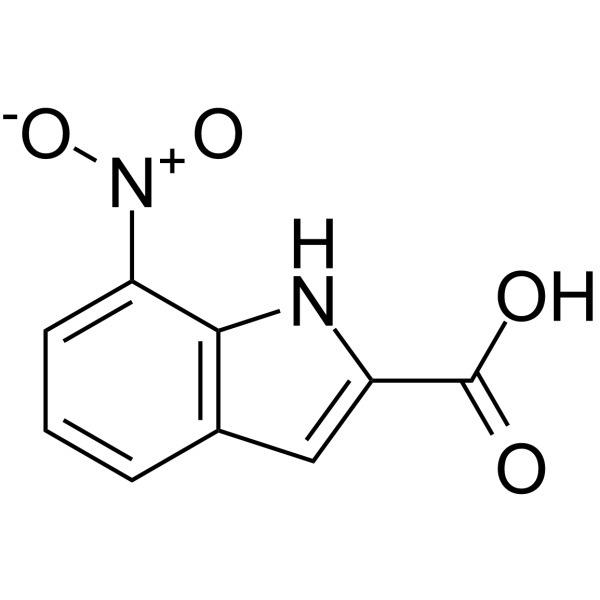
CRT0044876 is a potent and selective apurinic/apyrimidinic endonuclease 1 (APE1) inhibitor (IC50=~3 μM). CRT0044876 inhibits the AP endonuclease, 3′-phosphodiesterase and 3′-phosphatase activities of APE1, and is a specific inhibitor of the exonuclease III family of enzymes to which APE1 belongs. CRT0044876 potentiates the cytotoxicity of several DNA base-targeting compounds .
|
-
-
- HY-19357
-
-
-
- HY-16643
-
-
-
- HY-B1099
-
|
|
DNA/RNA Synthesis
Topoisomerase
Parasite
|
Infection
|
|
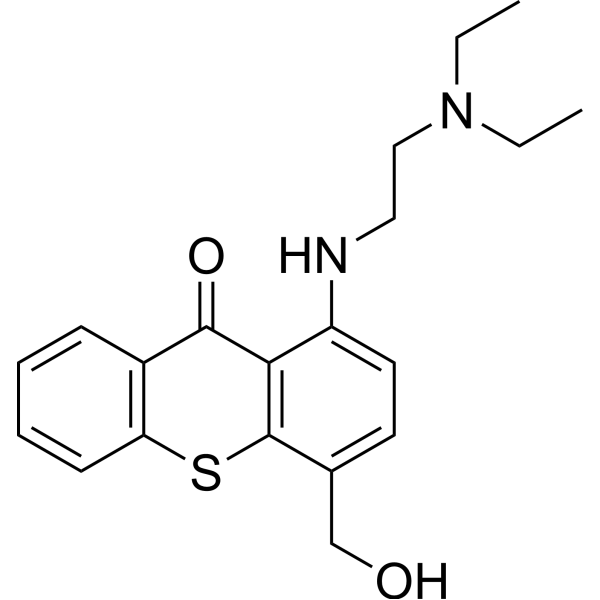
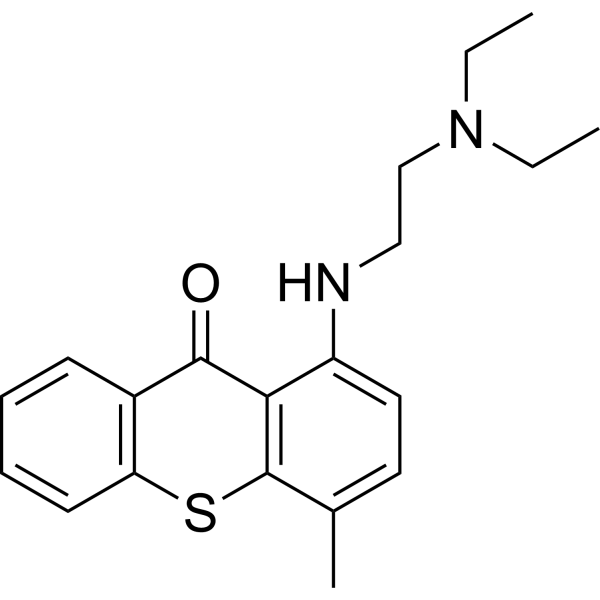
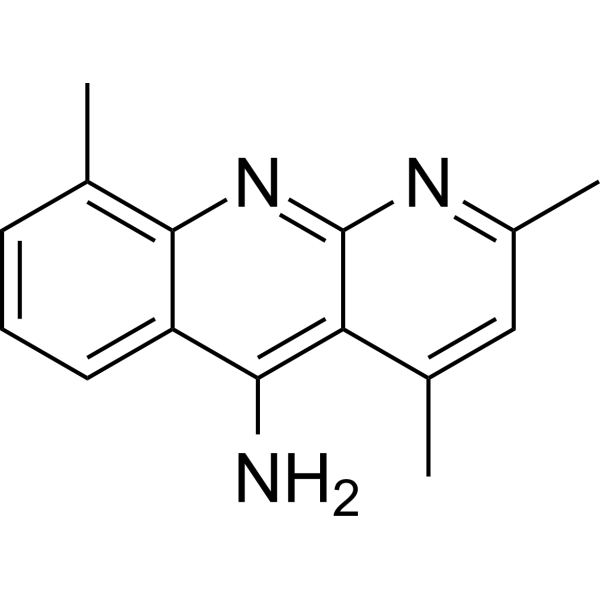
Hycanthone is a thioxanthenone DNA intercalator and inhibits RNA synthesis as well as the DNA topoisomerases I and II. Hycanthone inhibits nucleic acid biosynthesis and inhibits apurinic endonuclease-1 (APE1) by direct protein binding with a KD of 10 nM. Hycanthone is a bioactive metabolite of Lucanthone (HY-B2098) and has anti-schistosomal agent .
|
-
-
- HY-B2098
-
-
-
- HY-136731
-
|
|
DNA/RNA Synthesis
|
Cancer
|
|
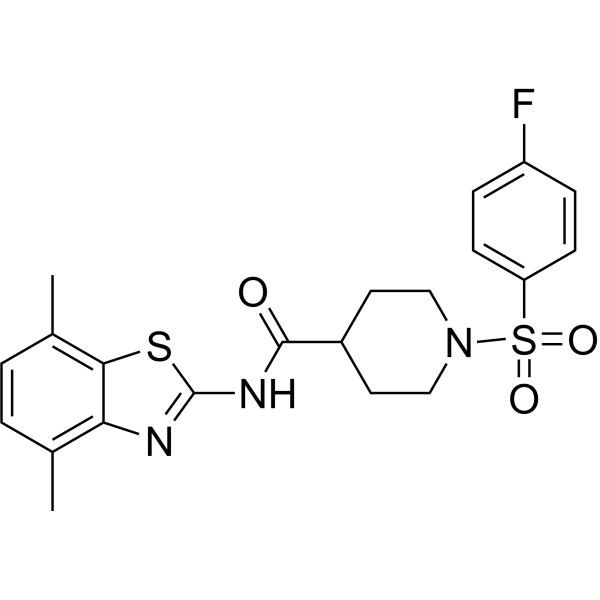
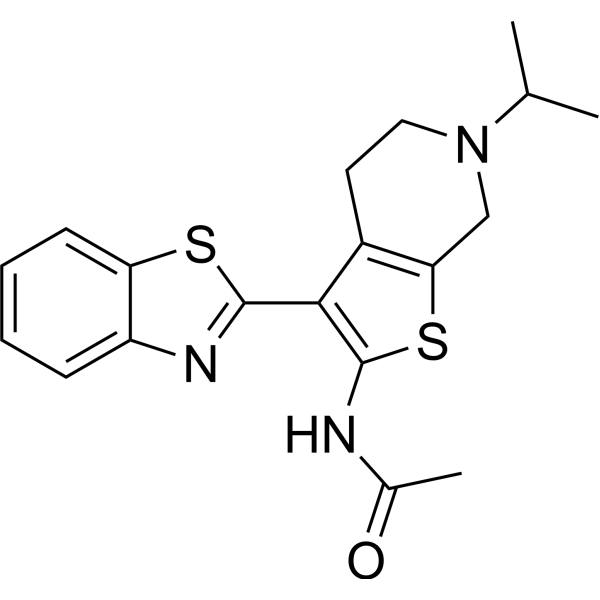
APE1-IN-1 is a potent and blood-brain barrier (BBB) penetrant apurinic/apyrimidinic (AP) endonuclease 1 (APE1) inhibitor with an IC50 value of 2 μM. APE1-IN-1 can potentiate the cytotoxicity of the alkylating agents Methylmethane sulfonate and Temozolomide (HY-17364) to cancer cells .
|
-
-
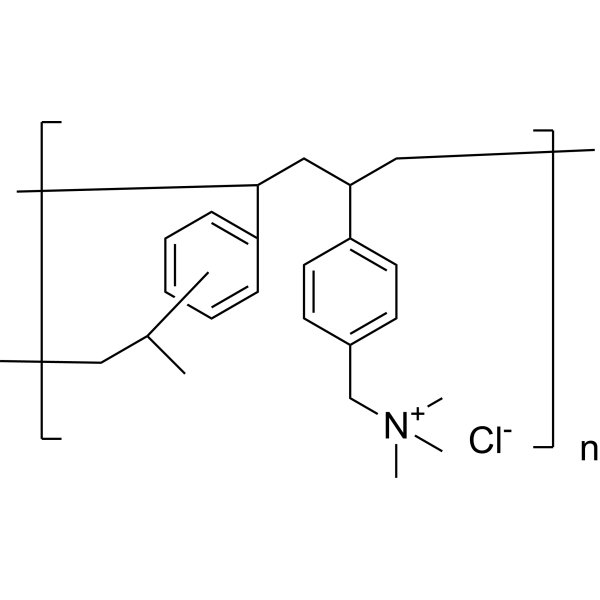
- HY-101190
-
-
-
- HY-B1363
-
|
Bendrofluazide
|
NKCC
|
Cardiovascular Disease
|
|
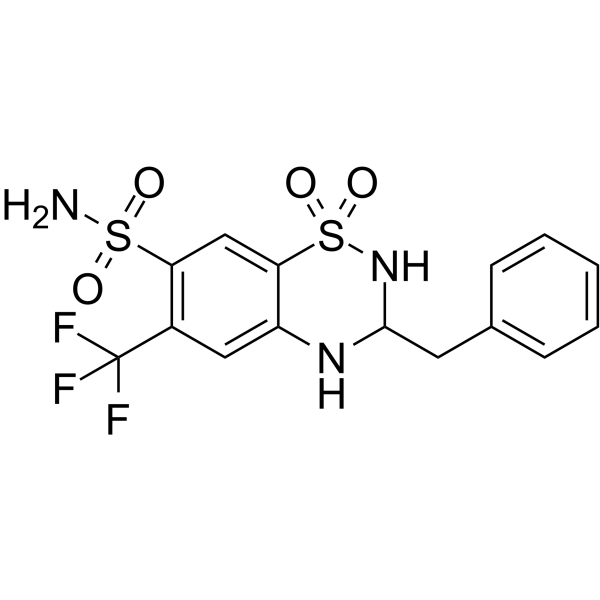
Bendroflumethiazide (Bendrofluazide) is an orally available diuretic. Bendroflumethiazide inhibits the electroneutral sodium-chloride symporter located in the apical membrane of the early segment of the distal convoluted tubule and can effectively lower blood pressure. Bendroflumethiazide is used in the study of hypertension and edema. Bendroflumethiazide has an antidiuretic effect in diabetes insipidus .
|
-
-
- HY-18713
-
|
|
PKC
ROCK
|
Neurological Disease
Inflammation/Immunology
|
|
CRT0066854 is a potent and selective atypical PKC isoenzymes inhibitor. CRT0066854 is against full-length (FL) PKCι, PKCζ, and ROCK-II kinases with IC50 values of 132 nM, 639 nM, and 620 nM, respectively .
|
-
-
- HY-148447
-
|
|
Eukaryotic Initiation Factor (eIF)
|
Cancer
|
|
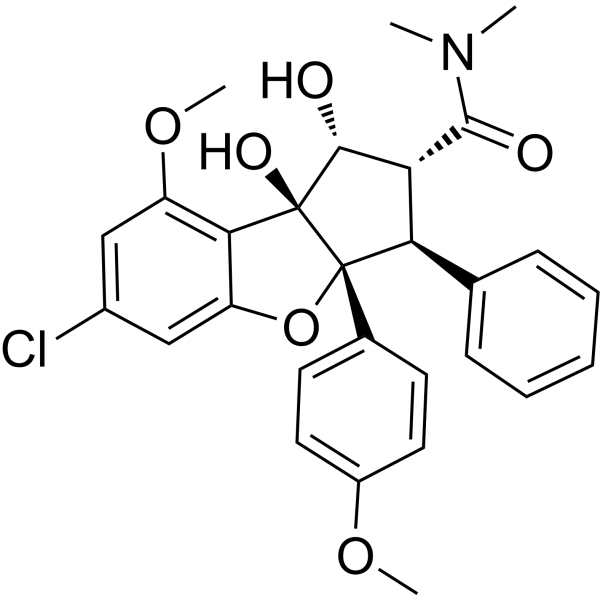
eIF4A-IN-3, Silvestrol (HY-13251) analogue, is an eIF4A inhibitor. eIF4A-IN-3 blocks protein translation initiation by interfering with eIF4F complex assembly, preferentially inhibiting translation of mRNAs with long, highly structured 5'-untranslated regions. eIF4A-IN-3 inhibits proliferation of human breast cancer cells. eIF4A-IN-3 has moderate apical to basolateral permeability in intestinal cell monolayers and a low efflux ratio .
|
-
-
- HY-N7755
-
|
|
Endogenous Metabolite
ATP-binding cassette (ABC) transporters
OAT
|
Others
|
|
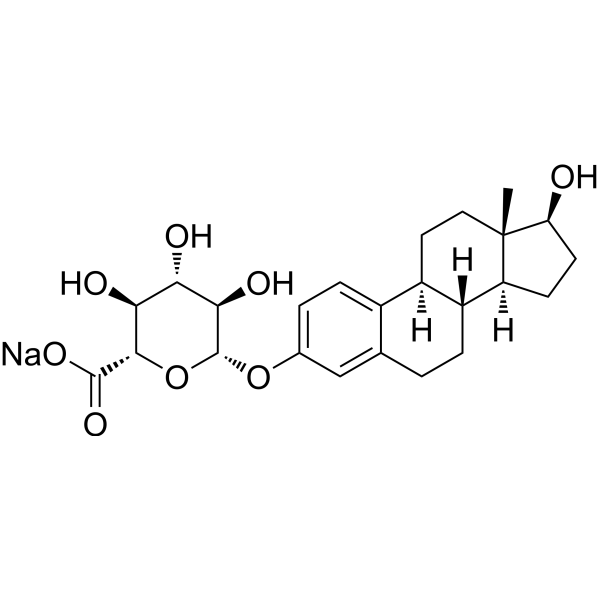
Estradiol 3-glucuronide sodium is an estrogen metabolite, which is a glucuronide conjugate formed by the catalysis of uridine diphosphate glucuronosyltransferase in tissues such as the liver from Estradiol (HY-B0141). Estradiol 3-glucuronide sodium is a potent substrate of Mrp2, with an S50 of 55.7 μM. Estradiol 3-glucuronide sodium achieves hepatobiliary transport in hepatocytes through basolateral uptake via OATP1B1, OATP1B3 and OATP2B1, as well as apical efflux via MRP2 and BCRP .
|
-
-
- HY-126584
-
|
Val-Val
|
Drug Intermediate
Oligopeptide Cotransporter
|
Others
|
|
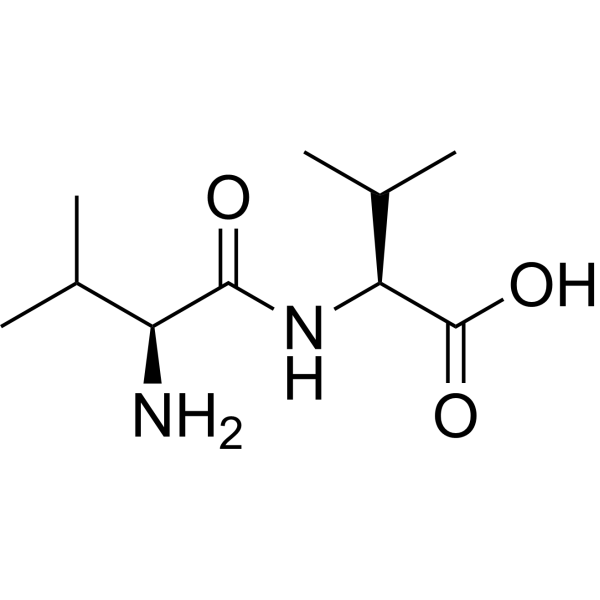
H-Val-Val-OH (Val-Val) is a stereochemistry-dependent substrate and inhibitor of apical oligopeptide transporters. H-Val-Val-OH undergoes apical intracellular accumulation in human intestinal cells via carrier-mediated transport, and inhibits the uptake of Cephalexin (HY-B0200) through interaction with transporters. Substitution of L-valine with D-valine in H-Val-Val-OH abolishes its binding ability to apical oligopeptide transporters .
|
-
-
- HY-18713A
-
|
|
PKC
ROCK
|
Neurological Disease
|
|
CRT0066854 hydrochloride is a potent and selective atypical PKCs inhibitor. CRT0066854 is against full-length (FL) PKCι, PKCζ, and ROCK-II kinases with IC50 values of 132 nM, 639 nM, and 620 nM, respectively .
|
-
-
- HY-135259
-
-
-
- HY-130487
-
|
|
MicroRNA
|
Cancer
|
|
miR-21-IN-2 is a high-affinity miR-21 inhibitor. miR-21-IN-2 binds to the apical loop region of the pre-miR-21 hairpin, inhibits Dicer-mediated processing, and thereby blocks the biosynthesis of mature miR-21. miR-21-IN-2 can be used for the research of microRNA-related diseases .
|
-
-
- HY-W585842
-
|
|
Endogenous Metabolite
ATP-binding cassette (ABC) transporters
OAT
|
Others
|
|
Estradiol 3-glucuronide is an estrogen metabolite, which is a glucuronide conjugate formed from Estradiol (HY-B0141) via catalysis by uridine diphosphate glucuronosyltransferases in tissues such as the liver. Estradiol 3-glucuronide is a potent substrate of Mrp2, with an S50 value of 55.7 μM. Estradiol 3-glucuronide achieves hepatobiliary transport in hepatocytes through basolateral uptake via OATP1B1, OATP1B3 and OATP2B1, as well as apical efflux via MRP2 and BCRP .
|
-
-
- HY-136450
-
|
TCBZ-SO
|
Parasite
BCRP
|
Infection
Cancer
|
|
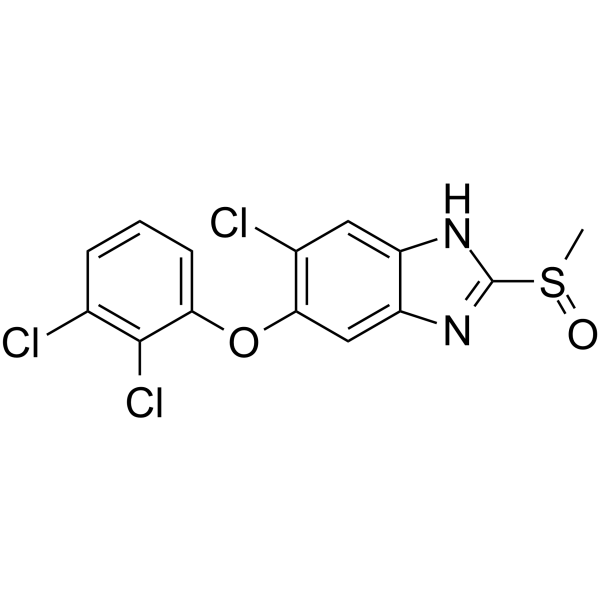
Triclabendazole sulfoxide (TCBZ-SO) is an orally active ABCG2 inhibitor with antiparasitic activity. Triclabendazole sulfoxide inhibits ABCG2-mediated active efflux and ATPase activity. Triclabendazole sulfoxide increases the intracellular accumulation of Mitoxantrone (HY-13502). Triclabendazole sulfoxide reduces the apical-directed transepithelial transport of Nitrofurantoin and Danofloxacin, while increasing their basolateral-directed transepithelial transport. Triclabendazole sulfoxide elevates the plasma levels of sulfasalazine in wild-type mice. Triclabendazole sulfoxide decreases ABCG2-mediated secretion of Nitrofurantoin into milk in wild-type lactating mice. Triclabendazole sulfoxide can be used in the research of insecticidal agents and cancers such as breast cancer .
|
-
-
- HY-148795
-
|
|
Apical Sodium-Dependent Bile Acid Transporter
|
Metabolic Disease
|
|
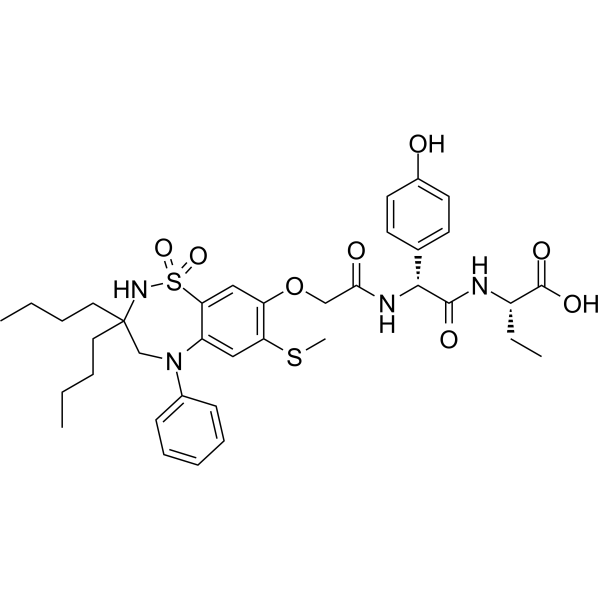
Ritivixibat is an apical sodium-dependent bile acid transporter (ASBT/IBAT) inhibitor. Ritivixibat blocks ASBT/IBAT function, thereby reducing bile acid reabsorption, regulating bile acid homeostasis and alleviating liver injury. Ritivixibat protects cholangiocytes from damage caused by cytotoxic bile acids. Ritivixibat is applicable to research related to primary sclerosing cholangitis .
|
-
-
- HY-120069
-
|
|
Apoptosis
|
Cancer
|
|
APX2009 is a specific APE1/REF-1 redox inhibitor with anticancer activities which decreases the proliferative, migratory, and invasive properties of breast cancer cell and induces apoptosis in breast cancer cell .
|
-
-
- HY-119993
-
|
BMH-23
|
DNA/RNA Synthesis
|
Cancer
|
|
AR03 (BMH-23) is an apurinic/apyrimidinic endonuclease 1 (Ape1) inhibitor with an IC50 of 2.1 µM. AR03 has low affinity for double-stranded DNA. AR03 potentiates the cytotoxicity of methyl methanesulfonate and temozolomide in SF767 cells .
|
-
-
- HY-155774
-
VU533
1 Publications Verification
|
Phospholipase
|
Metabolic Disease
|
|
APE-PLD (VU533) activator is a potent NAPE-PLD activator with an EC50 value of 0.30 µM. NAPE-PLD activator (VU533) can enhance NAPE-PLD activity and increase efferocytosis by macrophages. NAPE-PLD activator (VU533) can be used for cardiometabolic diseases research .
|
-
-
- HY-151883
-
|
|
Apoptosis
MDM-2/p53
|
Cancer
|
|
APE1-IN-2 (compound AP1) is a Pt(IV) proagent, targeting a critical BER protein, apurinic/apyrimidinic endonuclease 1 (APE1). APE1-IN-2 shows anticancer activity. APE1-IN-2 induces intracellular accumulation of platinum and activates DNA damage response and apoptosis signals .
|
-
-
- HY-100210A
-
|
|
MMP
|
Inflammation/Immunology
Cancer
|
|
FN-439 TFA is a selective collagenase-1 inhibitor. FN-439 TFA inhibits collagenase-1 with an IC50 value of 1 μM. FN-439 TFA can be used for the research of cancer and inflammation .
|
-
-
- HY-B1363S
-
|
Bendrofluazide-d5
|
Isotope-Labeled Compounds
NKCC
|
Cardiovascular Disease
|
|
Bendroflumethiazide-d5 (Bendrofluazide-d5) is the deuterium labeled Bendroflumethiazide (HY-B1363).Bendroflumethiazide (Bendrofluazide) is an orally available diuretic. Bendroflumethiazide inhibits the electroneutral sodium-chloride symporter located in the apical membrane of the early segment of the distal convoluted tubule and can effectively lower blood pressure. Bendroflumethiazide is used in the study of hypertension and edema. Bendroflumethiazide has an antidiuretic effect in diabetes insipidus .
|
-
-
- HY-B1363R
-
|
Bendrofluazide (Standard)
|
NKCC
Reference Standards
|
Cardiovascular Disease
|
|
Bendroflumethiazide (Standard) (Bendrofluazide (Standard)) is the analytical standard of Bendroflumethiazide (HY-B1363). This product is intended for research and analytical applications. Bendroflumethiazide (Bendrofluazide) is an orally available diuretic. Bendroflumethiazide inhibits the electroneutral sodium-chloride symporter located in the apical membrane of the early segment of the distal convoluted tubule and can effectively lower blood pressure. Bendroflumethiazide is used in the study of hypertension and edema. Bendroflumethiazide has an antidiuretic effect in diabetes insipidus .
|
-
-
- HY-E70425
-
|
|
Glycosyltransferase
|
Metabolic Disease
|
|
Sucrose synthase belongs to glycosyltransferases and is a reversible catalyst present in plants, which catalyzes the conversion of sucrose into fructose and UDP-G or ADP-G. Sucrose synthase localizes to the cytoplasm, plasma membrane, cell wall, vacuole and mitochondria of plants. Sucrose synthase regulates sugar metabolism, supports the development of taproots, fruits, seeds and vascular tissues, drives the synthesis of starch, cellulose and callose, and enhances nitrogen fixation capacity. Sucrose synthase mediates signal transduction in plant meristems. Sucrose synthase is associated with plant growth, anaerobic stress tolerance, as well as shoot apical meristem and leaf morphology; overexpression of this enzyme promotes plant growth, increases xylem size, and elevates cellulose and starch contents .
|
-
-
- HY-175595
-
|
ADEP26
|
ClpP
Bacterial
|
Infection
|
|
ADEP-14 (ADEP26) is a ClpP activator. ADEP-14 exhibits antibacterial activity against Gram-negative and Gram-positive bacteria. ADEP-14 can be used in studies related to bacterial infections .
|
-
-
- HY-126425
-
|
|
Parasite
|
Infection
|
|
NCGC00262650 is a potent apical membrane antigen 1-rhoptry neck protein 2 (AMA1-RON2) interaction inhibitor. NCGC00262650 can block entry of merozoites into red blood cells with an IC50 of 9.8 μM .
|
-
-
- HY-NP014
-
|
|
Biochemical Assay Reagents
|
Others
|
|
Protein A-PE is a biochemical reagent that can be used as a biological material or organic compound for life science related research .
|
-
-
- HY-129982
-
|
|
Apical Sodium-Dependent Bile Acid Transporter
|
Metabolic Disease
|
|
SC-435 is an orally effective apical sodium codependent bile acid transporter (ASBT) inhibitor. SC-435 effectively removes neurotoxic bile acids and ammonia from the blood by inhibiting intestinal ASBT, thereby alleviating liver and brain damage caused by liver failure. SC-435 can alter hepatic cholesterol metabolism and lower plasma low-density lipoprotein-cholesterol concentrations .
|
-
-
- HY-149442
-
|
|
DNA/RNA Synthesis
|
Cancer
|
|
APE1-IN-3 (Compound 1) is a APE1 inhibitor. APE1-IN-3 can be used for the research of cancer .
|
-
-
- HY-15131
-
|
|
Interleukin Related
|
Inflammation/Immunology
|
|
PNRI-299 is a selective AP-1 transcription inhibitor with an IC50 of 20 uM. PNRI-299 is a selective APE/Ref-1 inhibitor. PNRI-299 has no effect on NF-κB transcription or thioredoxin (up to 200 uM). PNRI-299 significantly reduces airway eosinophil infiltration, mucus hypersecretion, edema, and IL-4 levels in a mouse asthma model .
|
-
-
- HY-15790H
-
-
-
- HY-19133
-
|
EF-4040
|
Na+/K+ ATPase
Myosin
PKA
|
Metabolic Disease
|
|
ME-3407 (EF-4040) is a H +-K +-ATPase redistribution disruptor and myosin light chain kinase (MLCK) and protein kinase A inhibitor. ME-3407 blocks gastric acid secretion and aminopyrine accumulation by inhibiting microsomal-to-apical membrane redistribution of H +-K +-ATPase and suppressing MLCK-mediated myosin light chain phosphorylation. ME-3407 is promising for research of peptic ulcer .
|
-
-
- HY-P3347
-
|
|
Apelin Receptor (APJ)
|
Cardiovascular Disease
|
|
NH2-c[X-R-L-S-X]-K-G-P-(D-2Nal) (compound 40), a macrocyclic analogue of Ape13, is a potent APJ agonist (Ki=5.7 nM). NH2-c[X-R-L-S-X]-K-G-P-(D-2Nal) exhibits a favorable Gα12-biased signaling and an increased in vivo half-life .
|
-
-
- HY-179014
-
|
|
DNA Glycosylase
|
Neurological Disease
Inflammation/Immunology
Cancer
|
|
OGG1 activator-1 (Compound 30) is a selective 8-oxoguanine DNA glycosylase-1 (OGG1) activator with an AC50 value of 0.58 μM. OGG1 activator-1 does not activate nor inhibit the key downstream repair enzyme APE1, and shows > 150-fold selectivity for the activation effect on OGG1. OGG1 activator-1 exhibits extremely high metabolic stability and almost no cytotoxicity. OGG1 activator-1 can be used for the study of oxidative stress-related diseases (such as neurodegenerative diseases, fibrotic diseases, cancer, inflammation, etc.) .
|
-
-
- HY-N3625
-
|
Coronalonic acid
|
NF-κB
|
Inflammation/Immunology
|
|
Coronalolic acid, extract from the apical bud of Gardenia sootepenesis Hutch, inhibits TNF-α-induced NF-κB activity and NO production .
|
-
-
- HY-122521
-
|
|
NF-κB
|
Inflammation/Immunology
|
|
Sootepin D (compound 6), a triterpene from the apical bud of Gardenia sootepensis, inhibits TNF-α-induced NF-κB activity with an IC50 of 8.3μM. Sootepin D has anti-inflammatory activity .
|
-
-
- HY-B2098A
-
|
|
Autophagy
Parasite
|
Cancer
|
|
Lucanthone hydrochloride is an endonuclease inhibitor of Apurinic endonuclease-1 (APE-1).
|
-
-
- HY-133795
-
|
|
DNA/RNA Synthesis
|
Others
|
|
Lucanthone N-oxide is the nitrogen oxide of Lucanthone (HY-B2098), an endonuclease inhibitor of Apurinic endonuclease-1 (APE-1) .
|
-
-
- HY-B2098R
-
|
|
Autophagy
Parasite
Reference Standards
|
Cancer
|
|
Lucanthone (Standard) is the analytical standard of Lucanthone. This product is intended for research and analytical applications. Lucanthone is an endonuclease inhibitor of Apurinic endonuclease-1 (APE-1).
|
-
-
- HY-P5824
-
-
-
- HY-100210
-
|
|
MMP
|
Inflammation/Immunology
Cancer
|
|
FN-439 is a selective collagenase-1 inhibitor. FN-439 inhibits collagenase-1 with an IC50 value of 1 μM. FN-439 can be used for the research of cancer and inflammation .
|
-
-
- HY-167735
-
|
Bisdequalinium diacetate
|
Bacterial
|
Infection
|
|
Salvizol (Bisdequalinium diacetate) is a chemotherapeutic agent with a broad spectrum of bactericidal activity, effective in the apical third of root canals. Salvizol possesses the ability to dissolve organic dentin matrix, facilitating mineralization and tubule exposure. Salvizol maintains a neutral pH, ensuring biological compatibility while exhibiting significant cleansing potency.
|
-
-
- HY-109120S
-
-
-
- HY-109120R
-
|
A4250 (Standard)
|
Apical Sodium-Dependent Bile Acid Transporter
Reference Standards
|
Metabolic Disease
|
|
Odevixibat (Standard) is the analytical standard of Odevixibat. This product is intended for research and analytical applications. Odevixibat (A4250) is a selective and orally active ileal apical sodium-dependent bile acid transporter (ASBT) inhibitor. Odevixibat decreases cholestatic liver and bile duct injury in mice model. Odevixibat has the potential for the treatment of primary biliary cirrhosis .
|
-
-
- HY-W338581
-
|
|
Estrogen Receptor/ERR
|
Others
|
|
4-tert-Octylphenol monoethoxylate is an alkylphenolethoxylate (APE) and a degradation product of non-ionic surfactants (such as 4-tert-octylphenol polyethoxylate). 4-tert-Octylphenol monoethoxylate also possesses non-steroidal estrogenic activity. Additionally, 4-tert-Octylphenol monoethoxylate has been found in wastewater effluent .
|
-
-
- HY-109120S1
-
-
- HY-B1099R
-
|
|
DNA/RNA Synthesis
Topoisomerase
Parasite
Reference Standards
|
Infection
|
|
Hycanthone (Standard) is the analytical standard of Hycanthone. This product is intended for research and analytical applications. Hycanthone is a thioxanthenone DNA intercalator and inhibits RNA synthesis as well as the DNA topoisomerases I and II. Hycanthone inhibits nucleic acid biosynthesis and inhibits apurinic endonuclease-1 (APE1) by direct protein binding with a KD of 10 nM. Hycanthone is a bioactive metabolite of Lucanthone (HY-B2098) and has anti-schistosomal agent .
|
-
- HY-B1363S1
-
|
Bendrofluazide-d7
|
Isotope-Labeled Compounds
NKCC
|
Cardiovascular Disease
|
|
Bendroflumethiazide-d7 (Bendrofluazide-d7) is deuterium labeled Bendroflumethiazide (HY-B1363). Bendroflumethiazide (Bendrofluazide) is an orally available diuretic. Bendroflumethiazide inhibits the electroneutral sodium-chloride symporter located in the apical membrane of the early segment of the distal convoluted tubule and can effectively lower blood pressure. Bendroflumethiazide is used in the study of hypertension and edema. Bendroflumethiazide has an antidiuretic effect in diabetes insipidus .
|
-
- HY-W777582
-
|
|
Isotope-Labeled Compounds
|
Others
|
|
4-tert-Octylphenol monoethoxylate- 13C6 is the 13C labeled isotope of 4-tert-Octylphenol monoethoxylate (HY-W777582) . 4-tert-Octylphenol monoethoxylate is an alkylphenolethoxylate (APE) and a degradation product of non-ionic surfactants (such as 4-tert-octylphenol polyethoxylate). 4-tert-Octylphenol monoethoxylate also possesses non-steroidal estrogenic activity. Additionally, 4-tert-Octylphenol monoethoxylate has been found in wastewater effluent .
|
-
- HY-123056A
-
|
|
Autophagy
Apoptosis
|
Others
|
|
EAD1 TFA is an aluminum-activated malate transporter with activity in regulating corn ear development. EAD1 TFA is preferentially expressed in the xylem of immature ears and localized across the plasma membrane. The EAD1 TFA transports malic acid in the apical part of developing inflorescences, and its deletion results in reduced malic acid content in this part. The overexpression of EAD1 TFA was significantly positively correlated with ear length and the number of kernels per row. EAD1 TFA serves as a potential genetic resource to help improve grain yield in maize .
|
-
- HY-136450R
-
|
TCBZ-SO (Standard)
|
Reference Standards
Parasite
BCRP
|
Infection
|
|
Triclabendazole sulfoxide (Standard) is the analytical standard of Triclabendazole sulfoxide. This product is intended for research and analytical applications. Triclabendazole sulfoxide (TCBZ-SO) is an orally active ABCG2 inhibitor with antiparasitic activity. Triclabendazole sulfoxide inhibits ABCG2-mediated active efflux and ATPase activity. Triclabendazole sulfoxide increases the intracellular accumulation of Mitoxantrone (HY-13502). Triclabendazole sulfoxide reduces the apical-directed transepithelial transport of Nitrofurantoin and Danofloxacin, while increasing their basolateral-directed transepithelial transport. Triclabendazole sulfoxide elevates the plasma levels of sulfasalazine in wild-type mice. Triclabendazole sulfoxide decreases ABCG2-mediated secretion of Nitrofurantoin into milk in wild-type lactating mice. Triclabendazole sulfoxide can be used in the research of insecticidal agents and cancers such as breast cancer .
|
-
- HY-136450S
-
|
TCBZ-SO-d3
|
Isotope-Labeled Compounds
Parasite
BCRP
|
Infection
|
|
Triclabendazole sulfoxide-d3 is the deuterium labeled Triclabendazole sulfoxide. Triclabendazole sulfoxide (TCBZ-SO) is an orally active ABCG2 inhibitor with antiparasitic activity. Triclabendazole sulfoxide inhibits ABCG2-mediated active efflux and ATPase activity. Triclabendazole sulfoxide increases the intracellular accumulation of Mitoxantrone (HY-13502). Triclabendazole sulfoxide reduces the apical-directed transepithelial transport of Nitrofurantoin and Danofloxacin, while increasing their basolateral-directed transepithelial transport. Triclabendazole sulfoxide elevates the plasma levels of sulfasalazine in wild-type mice. Triclabendazole sulfoxide decreases ABCG2-mediated secretion of Nitrofurantoin into milk in wild-type lactating mice. Triclabendazole sulfoxide can be used in the research of insecticidal agents and cancers such as breast cancer .
|
-
- HY-136450S1
-
|
TCBZ-SO-13C,d3
|
Isotope-Labeled Compounds
Parasite
BCRP
|
Infection
|
|
Triclabendazole sulfoxide- 13C,d3 is the 13C- and deuterium labeled Triclabendazole sulfoxide. Triclabendazole sulfoxide (TCBZ-SO) is an orally active ABCG2 inhibitor with antiparasitic activity. Triclabendazole sulfoxide inhibits ABCG2-mediated active efflux and ATPase activity. Triclabendazole sulfoxide increases the intracellular accumulation of Mitoxantrone (HY-13502). Triclabendazole sulfoxide reduces the apical-directed transepithelial transport of Nitrofurantoin and Danofloxacin, while increasing their basolateral-directed transepithelial transport. Triclabendazole sulfoxide elevates the plasma levels of sulfasalazine in wild-type mice. Triclabendazole sulfoxide decreases ABCG2-mediated secretion of Nitrofurantoin into milk in wild-type lactating mice. Triclabendazole sulfoxide can be used in the research of insecticidal agents and cancers such as breast cancer .
|
-
- HY-176996
-
|
|
DNA/RNA Synthesis
|
Cancer
|
|
Ape1/Ref-1 redox-IN-1 (Compound 52) is an Ape1/Ref-1 redox inhibitor. Ape1/Ref-1 redox-IN-1 can be used in the research of cancer .
|
-
- HY-N18490
-
|
|
Drug Derivative
|
Metabolic Disease
|
|
5α-Cyprinol sulfate is an orally active bile salt and heterospecific pheromone. 5α-Cyprinol sulfate promotes lipid digestion in fish. 5α-Cyprinol sulfate inhibits taurocholic acid uptake mediated by apical bile salt transporters in rat ileum. 5α-Cyprinol sulfate can be used in studies of fish toxic acute renal failure .
|
-
- HY-130301
-
-
- HY-101190A
-
|
(3R,4S,5S)-SHP626; (3R,4S,5S)-LUM002
|
Drug Isomer
|
Inflammation/Immunology
|
|
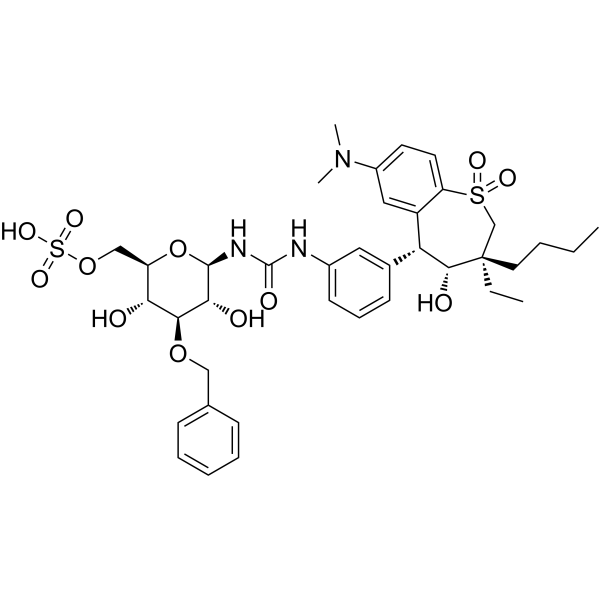
(3R,4S,5S)-Volixibat ((3R,4S,5S)-SHP626) is an isomer of Volixibat (HY-101190). Volixibat is a highly selective, minimally absorbed, and competitive apical sodium-dependent bile acid transporter (ASBT) inhibitor. (3R,4S,5S)-Volixibat may be used in research on non-alcoholic steatohepatitis (NASH) .
|
-
| Cat. No. |
Product Name |
Type |
-
- HY-107903
-
|
Thyroglobulin from bovine
|
Biochemical Assay Reagents
|
|
Thyroglobulin is a 660 kDa, dimeric glycoprotein produced by the follicular cells of the thyroid and used entirely within the thyroid gland. Thyroglobulin acts as a substrate for the synthesis of the thyroid hormones thyroxine (T4) and triiodothyronine (T3), as well as the storage of the inactive forms of thyroid hormone and iodine within the follicular lumen of a thyroid follicle. Thyroglobulin activates Akt kinase activity in FRTL-5 thyroid cell .
|
-
- HY-NP014
-
|
|
Biochemical Assay Reagents
|
|
Protein A-PE is a biochemical reagent that can be used as a biological material or organic compound for life science related research .
|
| Cat. No. |
Product Name |
Target |
Research Area |
-
- HY-126584
-
|
Val-Val
|
Drug Intermediate
Oligopeptide Cotransporter
|
Others
|
|
H-Val-Val-OH (Val-Val) is a stereochemistry-dependent substrate and inhibitor of apical oligopeptide transporters. H-Val-Val-OH undergoes apical intracellular accumulation in human intestinal cells via carrier-mediated transport, and inhibits the uptake of Cephalexin (HY-B0200) through interaction with transporters. Substitution of L-valine with D-valine in H-Val-Val-OH abolishes its binding ability to apical oligopeptide transporters .
|
-
- HY-P3347
-
|
|
Apelin Receptor (APJ)
|
Cardiovascular Disease
|
|
NH2-c[X-R-L-S-X]-K-G-P-(D-2Nal) (compound 40), a macrocyclic analogue of Ape13, is a potent APJ agonist (Ki=5.7 nM). NH2-c[X-R-L-S-X]-K-G-P-(D-2Nal) exhibits a favorable Gα12-biased signaling and an increased in vivo half-life .
|
-
- HY-P5824
-
-
- HY-100210
-
|
|
MMP
|
Inflammation/Immunology
Cancer
|
|
FN-439 is a selective collagenase-1 inhibitor. FN-439 inhibits collagenase-1 with an IC50 value of 1 μM. FN-439 can be used for the research of cancer and inflammation .
|
-
- HY-KE7001
-
|
|
|
MCE ApaL I is a restriction enzyme for rapid DNA digestion, including plasmid, genomic DNA as well as PCR products. Isoschizomers: Alw44 I, Vne I.
|
| Cat. No. |
Product Name |
Category |
Target |
Chemical Structure |
| Cat. No. |
Compare |
Product Name |
Species |
Source |
Image |
Compare Products
|
| Products |
|
| Cat. No. |
|
| Species |
|
| Source |
|
| Tag |
|
| Accession |
|
| Gene ID |
|
| Molecular Weight |
|
| Purity |
|
| Endotoxin Level |
|
| Biological Activity |
|
| Appearance |
|
| Formulation |
|
| Storage & Stability |
|
| Shipping |
|
| Free Sample |
Yes
No
|
| Size |
* This product has been "discontinued".
Optimized version of product available:
|
| Cat. No. |
Product Name |
Chemical Structure |
-
- HY-B1363S
-
|
|
|
Bendroflumethiazide-d5 (Bendrofluazide-d5) is the deuterium labeled Bendroflumethiazide (HY-B1363).Bendroflumethiazide (Bendrofluazide) is an orally available diuretic. Bendroflumethiazide inhibits the electroneutral sodium-chloride symporter located in the apical membrane of the early segment of the distal convoluted tubule and can effectively lower blood pressure. Bendroflumethiazide is used in the study of hypertension and edema. Bendroflumethiazide has an antidiuretic effect in diabetes insipidus .
|
-
-
- HY-109120S
-
|
|
|
Odevixibat-d5 is deuterated labeled Odevixibat (HY-109120). Odevixibat (A4250) is a selective and orally active ileal apical sodium-dependent bile acid transporter (ASBT) inhibitor. Odevixibat decreases cholestatic liver and bile duct injury in mice model. Odevixibat has the potential for the treatment of primary biliary cirrhosis .
|
-
-
- HY-109120S1
-
|
|
|
Odevixibat- 13C6 is 13C labeled Odevixibat (HY-109120). Odevixibat (A4250) is a selective and orally active ileal apical sodium-dependent bile acid transporter (ASBT) inhibitor. Odevixibat decreases cholestatic liver and bile duct injury in mice model. Odevixibat has the potential for the treatment of primary biliary cirrhosis .
|
-
-
- HY-B1363S1
-
|
|
|
Bendroflumethiazide-d7 (Bendrofluazide-d7) is deuterium labeled Bendroflumethiazide (HY-B1363). Bendroflumethiazide (Bendrofluazide) is an orally available diuretic. Bendroflumethiazide inhibits the electroneutral sodium-chloride symporter located in the apical membrane of the early segment of the distal convoluted tubule and can effectively lower blood pressure. Bendroflumethiazide is used in the study of hypertension and edema. Bendroflumethiazide has an antidiuretic effect in diabetes insipidus .
|
-
-
- HY-W777582
-
|
|
|
4-tert-Octylphenol monoethoxylate- 13C6 is the 13C labeled isotope of 4-tert-Octylphenol monoethoxylate (HY-W777582) . 4-tert-Octylphenol monoethoxylate is an alkylphenolethoxylate (APE) and a degradation product of non-ionic surfactants (such as 4-tert-octylphenol polyethoxylate). 4-tert-Octylphenol monoethoxylate also possesses non-steroidal estrogenic activity. Additionally, 4-tert-Octylphenol monoethoxylate has been found in wastewater effluent .
|
-
-
- HY-136450S
-
|
|
|
Triclabendazole sulfoxide-d3 is the deuterium labeled Triclabendazole sulfoxide. Triclabendazole sulfoxide (TCBZ-SO) is an orally active ABCG2 inhibitor with antiparasitic activity. Triclabendazole sulfoxide inhibits ABCG2-mediated active efflux and ATPase activity. Triclabendazole sulfoxide increases the intracellular accumulation of Mitoxantrone (HY-13502). Triclabendazole sulfoxide reduces the apical-directed transepithelial transport of Nitrofurantoin and Danofloxacin, while increasing their basolateral-directed transepithelial transport. Triclabendazole sulfoxide elevates the plasma levels of sulfasalazine in wild-type mice. Triclabendazole sulfoxide decreases ABCG2-mediated secretion of Nitrofurantoin into milk in wild-type lactating mice. Triclabendazole sulfoxide can be used in the research of insecticidal agents and cancers such as breast cancer .
|
-
-
- HY-136450S1
-
|
|
|
Triclabendazole sulfoxide- 13C,d3 is the 13C- and deuterium labeled Triclabendazole sulfoxide. Triclabendazole sulfoxide (TCBZ-SO) is an orally active ABCG2 inhibitor with antiparasitic activity. Triclabendazole sulfoxide inhibits ABCG2-mediated active efflux and ATPase activity. Triclabendazole sulfoxide increases the intracellular accumulation of Mitoxantrone (HY-13502). Triclabendazole sulfoxide reduces the apical-directed transepithelial transport of Nitrofurantoin and Danofloxacin, while increasing their basolateral-directed transepithelial transport. Triclabendazole sulfoxide elevates the plasma levels of sulfasalazine in wild-type mice. Triclabendazole sulfoxide decreases ABCG2-mediated secretion of Nitrofurantoin into milk in wild-type lactating mice. Triclabendazole sulfoxide can be used in the research of insecticidal agents and cancers such as breast cancer .
|
-
Your information is safe with us. * Required Fields.
Inquiry Information
- Product Name:
- Cat. No.:
- Quantity:
- MCE Japan Authorized Agent:

