11 Results for "

biophysics

" in MedChemExpress (MCE) Product Catalog:
Products (11)

11 Results for "biophysics" in MCE Product Catalog:

8
8 Cited Publications
Cat. No.: HY-12949
CAS No.: 5465-86-1
Purity:  98.45%
Target:  

TRP Channel

Research Areas:  

Neurological Disease

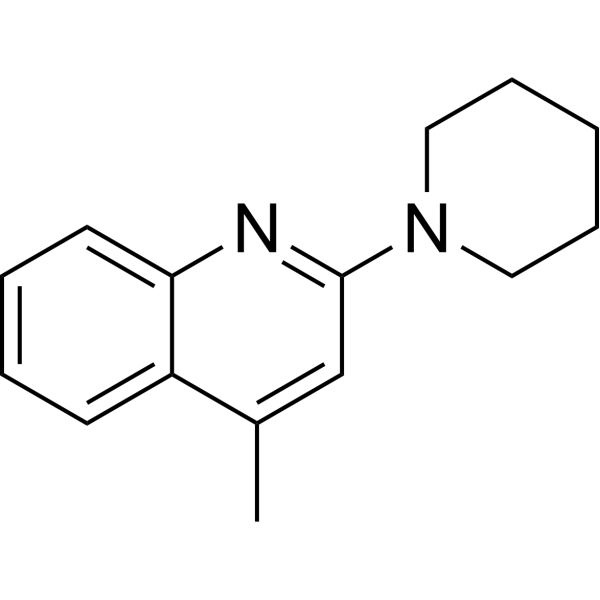
ML204 is a potent, selective TRPC4/TRPC5 channel inhibitor, with at least 19-fold selectivity against TRPC6 and no appreciable effect on all other TRP channels, nor on voltage-gated sodium, potassium, or Ca 2+ channels .
loading...
    loading...
8
8 Cited Publications
Cat. No.: HY-12949A
CAS No.: 2070015-10-8
Purity:  99.74%
Target:  

TRP Channel

Research Areas:  

Neurological Disease

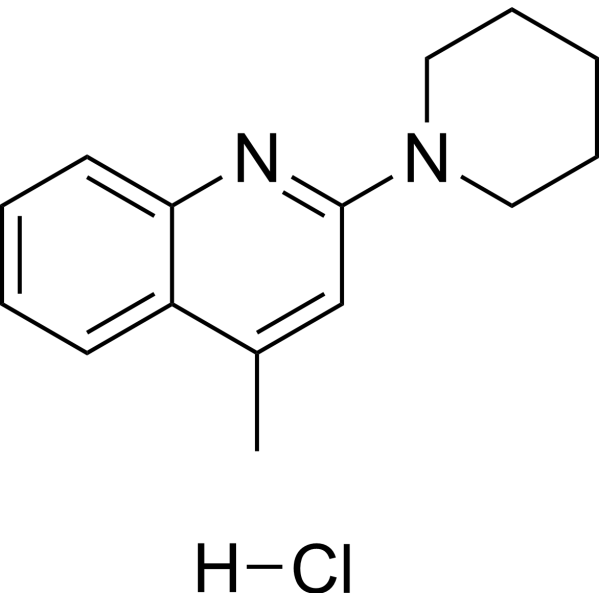
ML204 hydrochloride is a novel, potent, selective TRPC4/TRPC5 channel inhibitor, with at least 19-fold selectivity against TRPC6 and no appreciable effect on all other TRP channels, nor on voltage-gated sodium, potassium, or Ca 2+ channels .
loading...
    loading...
Cat. No.: HY-W010572
CAS No.: 96-27-5
Synonyms: alpha-Thioglycerol
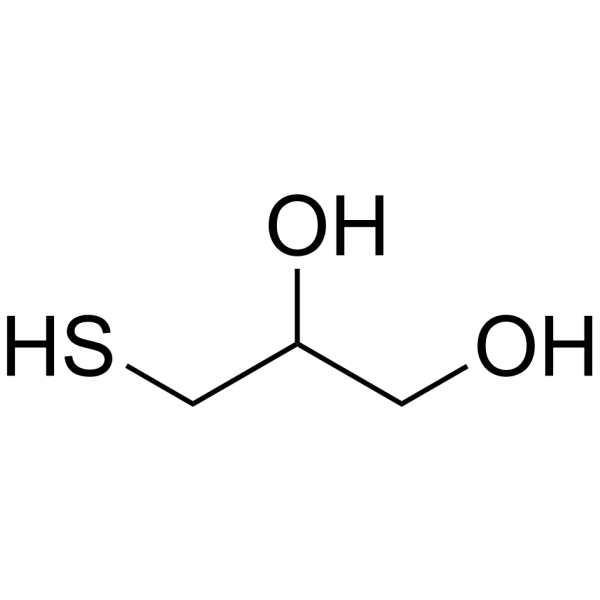
1-Thioglycerol, commonly used as a reducing agent in various biochemical and biophysical applications, especially in protein chemistry and molecular biology, it can protect proteins from oxidation and denaturation, and can reduce disulfide bonds to thiols base, which can then be modified or analyzed. In addition, 1-Thioglycerol has been investigated for potential medical applications, including as an inhibitor of cystic fibrosis, which may help improve the function of lung cells, and has also been studied for Used in the preparation of metal nanoparticles and as a stabilizer for certain pharmaceutical preparations.
loading...
    loading...
Cat. No.: HY-126377
CAS No.: 15163-36-7
Purity:  ≥98.0%
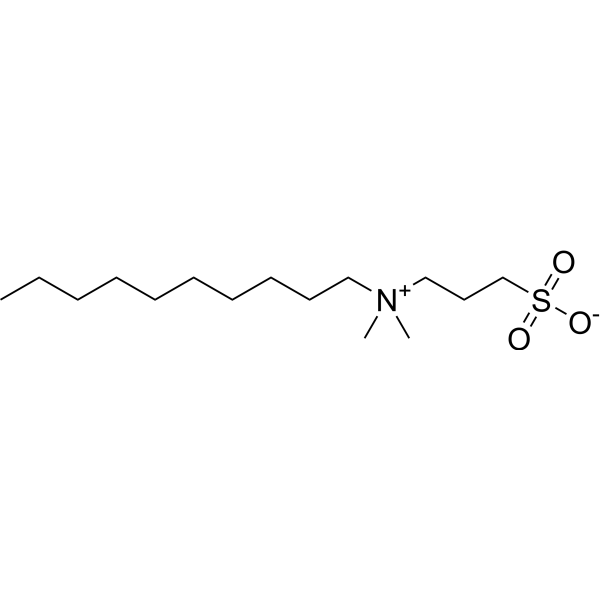
Sulfobetaine 10, is a zwitterionic surfactant commonly used in biochemistry and biophysics. It is commonly used to dissolve membrane proteins and other hydrophobic molecules in aqueous solutions. Sulfobetaine 10 has both positively and negatively charged groups in its structure, which allows it to maintain a neutral charge in solution and reduces its tendency to denature proteins. It is considered a mild, non-denaturing surfactant and is widely used in protein research.
loading...
    loading...
Cat. No.: HY-W250181
CAS No.: 148616-91-5
Synonyms: Octyl β-D-thiomaltopyranoside
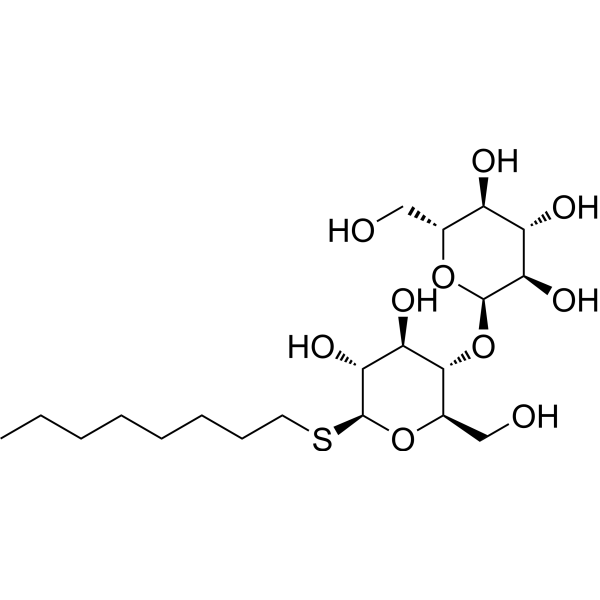
Octyl thiomaltoside (OTM) is a nonionic detergent commonly used in the purification and crystallization of membrane proteins. It belongs to the family of maltoside detergents and has a hydrophilic head group and a lipophilic tail group, enabling it to interact with water-soluble and membrane-bound proteins. OTMs are known for their ability to solubilize integral membrane proteins without disrupting their structure or function, making them an invaluable tool in biochemical and biophysical research. In addition to protein research, OTMs are used in a variety of other applications, including drug delivery systems, nanotechnology, and diagnostic analysis.
loading...
    loading...
Cat. No.: HY-178166
CAS No.: 2773474-99-8
ETI41 is an orally active, selective TLR inhibitor that targets the nucleoside-binding Site I on TLR7 (IC50 = 0.63 μM) and TLR9 (IC50 = 0.16 μM), sparing surface TLRs (including TLR1/TLR2, TLR2/TLR6, TLR4 and TLR5). ETI41 potently inhibits endosomal TLR-mediated pro-inflammatory signaling with nanomolar activity in cellular, biophysical and in vivo assays. ETI41 suppresses the expression of inflammation-associated genes and effectively ameliorates symptoms in mouse models of psoriasis, and systemic lupus erythematosus (SLE). ETI41 can be used for autoimmune and inflammatory diseases research .
loading...
    loading...
Cat. No.: HY-D1916A
ATTO 594 TEA is a highly hydrophilic fluorescent dye used to label the outermost position of the glycan moiety of glycosphingolipids to retain the biophysical and biochemical properties of native glycosphingolipids .
loading...
    loading...
Cat. No.: HY-P1704
CAS No.: 63798-73-2
Synonyms: 11-Demethylcyclosporin A
Cyclosporin E (11-Demethylcyclosporin A) is a cyclic oligopeptide that can be isolated from fungi such as TTrichoderma polysporum and other imperfect fungi. Cyclosporin E belongs to the Cyclosporins family. Cyclosporin E can be used for studying the structure-activity relationships and molecular dynamic properties of cyclosporin compounds. As a structural control compound, Cyclosporin E holds significant research value in the fields of medicinal chemistry and biophysics .
loading...
    loading...
Cat. No.: HY-178169
CAS No.: 2773475-11-7
ETI60 is an orally active, selective TLR inhibitor that targets the nucleoside-binding Site I on TLR7 (IC50 = 0.68 μM) and TLR9 (IC50 = 0.12 μM), sparing surface TLRs (including TLR1/TLR2, TLR2/TLR6, TLR4 and TLR5). ETI60 potently inhibits endosomal TLR-mediated pro-inflammatory signaling with nanomolar activity in cellular, biophysical and in vivo assays. ETI60 modulates the expression of genes associated with inflammation. ETI60 effectively ameliorates symptoms in mouse models of psoriasis, and systemic lupus erythematosus (SLE). ETI60 can be used for autoimmune and inflammatory diseases research .
loading...
    loading...
Cat. No.: HY-164283
CAS No.: 1360461-57-9
Synonyms: 2-((2,3-Bis(oleoyloxy)propyl)dimethylammonio)ethyl hydrogen phosphate
Target:  

Endogenous Metabolite

Research Areas:  

Others

DOCP (2-((2,3-Bis(oleoyloxy)propyl)dimethylammonio)ethyl hydrogen phosphate), characterized by their inverted charge orientation compared to traditional phosphocholine (PC) lipids, feature a quaternary amine positioned near the bilayer interface and a phosphate group that protrudes into the aqueous environment. This unique configuration of iPC lipids provides an exceptional opportunity to explore the biophysical properties and bioactivity implications resulting from the charge inversion at the bilayer surface.
loading...
    loading...
Cat. No.: HY-W010572R
CAS No.: 96-27-5
Synonyms: alpha-Thioglycerol (Standard)
1-Thioglycerol (Standard) is the analytical standard of 1-Thioglycerol. This product is intended for research and analytical applications. 1-Thioglycerol, commonly used as a reducing agent in various biochemical and biophysical applications, especially in protein chemistry and molecular biology, it can protect proteins from oxidation and denaturation, and can reduce disulfide bonds to thiols base, which can then be modified or analyzed. In addition, 1-Thioglycerol has been investigated for potential medical applications, including as an inhibitor of cystic fibrosis, which may help improve the function of lung cells, and has also been studied for Used in the preparation of metal nanoparticles and as a stabilizer for certain pharmaceutical preparations.
loading...
    loading...
  • 1

