
1. Search Result
Search Result
Results for "

brain permeability

" in MedChemExpress (MCE) Product Catalog:

615

Inhibitors & Agonists

5

Screening Libraries

15

Fluorescent Dye

3

Biochemical Assay Reagents

22

Peptides

7

Inhibitory Antibodies

59

Natural
Products

30

Isotope-Labeled Compounds

6

Click Chemistry

1

Oligonucleotides

Cat. No. Product Name Target Research Areas Chemical Structure
  • HY-128868A
    FITC-Dextran (MW 4000)
    Maximum Cited Publications
    90 Publications Verification

    Fluorescent Dye Others
    FITC-Dextran (MW 4000) is a fluorescent probe for fluorescein isothiocyanate (FITC) dextran (Ex=495 nm; Em=525 nm). FITC-Dextran (MW 4000) can be used as a marker to reveal heat shock-induced cell damage and to study the early and late stages of apoptosis. FITC-Dextran (MW 4000) can also be used for cell permeability studies, such as blood-brain barrier permeability and determination of the extent of blood-brain barrier disruption .
    FITC-Dextran (MW 4000)
  • HY-100614
    AS1517499
    45+ Cited Publications

    STAT Inflammation/Immunology Cancer
    AS1517499 is a potent and brain-permeable STAT6 phosphorylation inhibitor with an IC50 of 21 nM.
    AS1517499
  • HY-128868
    FITC-Dextran (MW 10000)
    Maximum Cited Publications
    90 Publications Verification

    Fluorescent Dye Others
    FITC-Dextran (MW 10000) is a fluorescent probe for fluorescein isothiocyanate (FITC) dextran (Ex=495 nm; Em=525 nm). FITC-Dextran (MW 10000) can be used as a marker to reveal heat shock-induced cell damage and to study the early and late stages of apoptosis. FITC-Dextran (MW 10000) can also be used for cell permeability studies, such as blood-brain barrier permeability and determination of the extent of blood-brain barrier disruption .
    FITC-Dextran (MW 10000)
  • HY-128868D
    FITC-Dextran (MW 40000)
    10+ Cited Publications

    Fluorescent Dye Others
    FITC-Dextran (MW 40000) is a fluorescent probe for fluorescein isothiocyanate (FITC) dextran (Ex=495 nm; Em=525 nm). FITC-Dextran (MW 40000) can be used as a marker to reveal heat shock-induced cell damage and to study the early and late stages of apoptosis. FITC-Dextran (MW 40000) can also be used for cell permeability studies, such as blood-brain barrier permeability and determination of the extent of blood-brain barrier disruption .
    FITC-Dextran (MW 40000)
  • HY-B1473
    Serotonin hydrochloride
    30+ Cited Publications

    5-Hydroxytryptamine hydrochloride; 5-HT hydrochloride

    5-HT Receptor COMT Endogenous Metabolite Neurological Disease
    Serotonin (5-Hydroxytryptamine) hydrochloride is a monoamine neurotransmitter in the CNS and an endogenous 5-HT receptor agonist, with blood-brain barrier permeability. Serotonin hydrochloride is also a catechol O-methyltransferase (COMT) inhibitor with a Ki of 44 μM.
    Serotonin hydrochloride
  • HY-112906
    C-176
    105+ Cited Publications

    STING Inflammation/Immunology
    C-176 is a selective and blood-brain barrier permeable STING inhibitor. C-176 covalently targets transmembrane cysteine residue 91 and thereby blocking activation-induced palmitoylation of STING .
    C-176
  • HY-18738

    Ammonium pyrrolidinedithiocarbamate; PDTC ammonium; APDC

    NF-κB Inflammation/Immunology Cancer
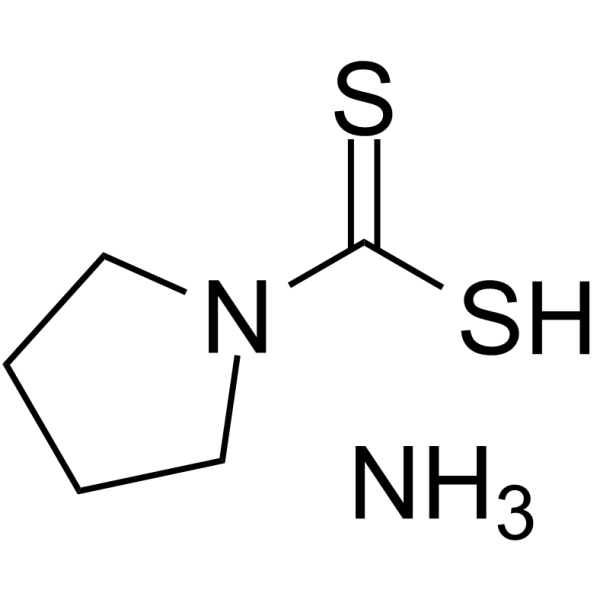
    Pyrrolidinedithiocarbamate ammonium (Ammonium pyrrolidinedithiocarbamate) is a selective and blood-brain barrier (BBB) permeable NF-κB inhibitor.
    Pyrrolidinedithiocarbamate ammonium
  • HY-128868B
    FITC-Dextran (MW 3000-5000)
    2 Publications Verification

    Biochemical Assay Reagents Others
    FITC-Dextran (MW 3000-5000) is a fluorescent probe for fluorescein isothiocyanate (FITC) dextran (Ex=495 nm; Em=525 nm). FITC-Dextran (MW 3000-5000) can be used as a marker to reveal heat shock-induced cell damage and to study the early and late stages of apoptosis. FITC-Dextran (MW 3000-5000) can also be used for cell permeability studies, such as blood-brain barrier permeability and determination of the extent of blood-brain barrier disruption . Storage: protect from light.
    FITC-Dextran (MW 3000-5000)
  • HY-B0167
    Salicylic acid
    10+ Cited Publications

    2-Hydroxybenzoic acid

    Environmental Pollutants Endogenous Metabolite COX Autophagy Apoptosis Mitophagy Infection Neurological Disease Inflammation/Immunology Cancer
    Salicylic acid (2-Hydroxybenzoic acid) inhibits cyclo-oxygenase-2 (COX-2) activity independently of transcription factor (NF-κB) activation. Salicylic acid has blood-brain barrier permeability .
    Salicylic acid
  • HY-D0799
    Sulfo-NHS-LC-Biotin sodium
    5+ Cited Publications

    Fluorescent Dye Others
    Sulfo-NHS-LC-Biotin sodium is an amine-reactive ester derivative of biotin and cannot pass the intact blood-retinal barrier. It can be used to assess vascular permeability of the brain and retinal vasculature.
    Sulfo-NHS-LC-Biotin sodium
  • HY-13930
    Miquelianin
    10+ Cited Publications

    Quercetin 3-O-glucuronide; Quercetin 3-glucuronide

    Endogenous Metabolite Neurological Disease Cancer
    Miquelianin (Quercetin 3-O-glucuronide) is a metabolite of quercetin and a type of natural flavonoid. Miquelianin is also a CBR1 inhibitor. Miquelianin is permeable to the blood-brain barrier .
    Miquelianin
  • HY-111653
    CycLuc1
    2 Publications Verification

    Reactive Oxygen Species (ROS) Others
    CycLuc1 is a blood-brain barrier permeable luciferase substrate that displays near-infrared (NIR) emission with a peak luminescence wavelength of 599 nm. CycLuc1 can be used for in vivo bioluminescence imaging .
    CycLuc1
  • HY-136964

    Biochemical Assay Reagents Neurological Disease
    Sulfo-NHS-Biotin sodium is a low-molecular-weight (MW 443.4 Da) tracer. Sulfo-NHS-Biotin sodium can used to assess blood-brain barrier permeability .
    Sulfo-NHS-Biotin sodium
  • HY-160019

    Deubiquitinase Mitophagy Neurological Disease
    MTX115325 (Example 1) is an orally active, brain-penetrating USP30 inhibitor (IC50=12 nM) with neuroprotective activity. MTX115325 increases ubiquitination (EC50=32 nM) of the mitochondrial outer membrane protein TOM20 (a USP30 substrate), increasing mitophagy. MTX115325 prevents dopaminergic neuron loss and preserves striatal dopamine .
    MTX115325
  • HY-100347A
    SRI-011381 hydrochloride
    55+ Cited Publications

    TGF-beta/Smad Neurological Disease
    SRI-011381 hydrochloride is an orally active TGF-β signaling agonist, exhibits neuroprotective effects, with blood-brain barrier permeability .
    SRI-011381 hydrochloride
  • HY-17020A
    Miglustat hydrochloride
    5+ Cited Publications

    N-Butyldeoxynojirimycin hydrochloride; NB-DNJ hydrochloride; OGT 918 hydrochloride

    Glucosylceramide Synthase (GCS) Neurological Disease Inflammation/Immunology
    Miglustat (N-Butyldeoxynojirimycin) hydrochloride is an orally active and reversible ceramide glucosyltransferase inhibitor, with blood-brain barrier permeability. Miglustat hydrochloride can be used for the research of type I gaucher disease .
    Miglustat hydrochloride
  • HY-W176557

    Aquaporin Neurological Disease
    TGN-073 is a aquaporin 4 (AQP4) modulator, as well as an orally available, blood-brain barrier-permeable agent. TGN-073 increases the uptake and distribution of brain MRI tracers in the brain parenchyma and reduces the levels of insoluble amyloid-β 40 and β 42. TGN-073 can be used in research related to Alzheimer's disease, dementia, traumatic brain injury and pain .
    TGN-073
  • HY-10547
    OSU-03012
    5+ Cited Publications

    AR-12; PDK1 inhibitor AR-12

    PDK-1 Autophagy Cancer
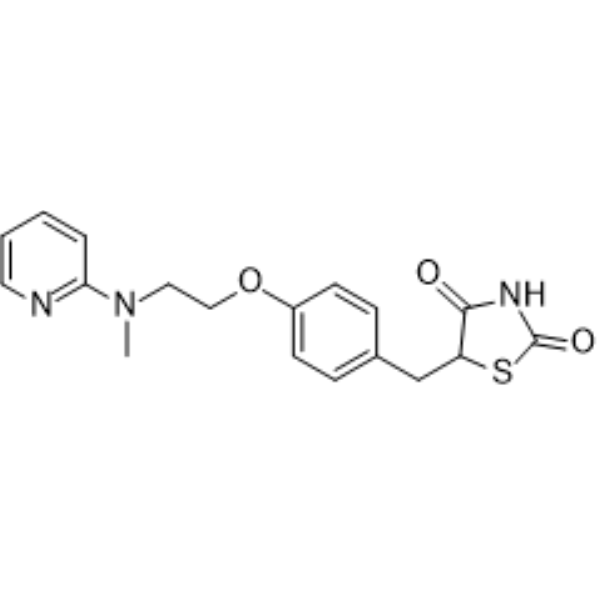
    OSU-03012 (AR-12; PDK1 inhibitor AR-12) is a blood-brain permeable PDK-1 inhibitor with an IC50 of 5 μM .
    OSU-03012
  • HY-124379
    TPCK
    1 Publications Verification

    L-1-Tosylamido-2-phenylethyl chloromethyl ketone; L-TPCK

    Ser/Thr Protease HPV Apoptosis PDK-1 Infection Neurological Disease Inflammation/Immunology Cancer
    TPCK (L-1-Tosylamido-2-phenylethyl chloromethyl ketone; L-TPCK) is an effective serine protease inhibitor and also a blocker of the PDK1/Akt pathway. TPCK can modify the E7 protein in actively keratinocyte cells. TPCK can induce cellular apoptosis, suppress tumor growth, reduce hypoxic-ischemic brain injury in rat pups, and affect vascular permeability in inflamed rats .
    TPCK
  • HY-16691
    AK-7
    5+ Cited Publications

    Sirtuin Neurological Disease
    AK-7 is a selective cell- and brain-permeable SIRT2 inhibitor, with an IC50 of 15.5 μM.
    AK-7
  • HY-117632
    Elcubragistat
    2 Publications Verification

    ABX-1431

    MAGL Neurological Disease
    Elcubragistat (ABX-1431) is a highly effective, selective, orally active, and blood-brain barrier-permeable monoacylglycerol lipase (MAGL) inhibitor, with an IC50 value of 14 nM .
    Elcubragistat
  • HY-175715

    Mitochondrial Metabolism Neurological Disease
    NRG1271 is an orally active mitochondrial permeability transition pore (mPTP) inhibitor with blood-brain barrier penetration. NRG1271 can be used for the study of Neurological Disease .
    NRG1271
  • HY-172412

    ALKS 2680

    Orexin Receptor (OX Receptor) Neurological Disease
    Alixorexton (ALKS 2680) is an orally bioavailable, blood-brain barrier-permeable OX2R-selective activator and wake-promoting agent. Alixorexton can be used for the research of narcolepsy and idiopathic hypersomnia .
    Alixorexton
  • HY-158155

    Potassium Channel NOD-like Receptor (NLR) Neurological Disease Inflammation/Immunology
    CVN293 is a selective and brain permeable potassium ion (K +) channel KCNK13 inhibtor with IC50s of 41 nM and 28 nM for hKCNK13 and mKCNK13, respectively. CVN293 potently inhibits the NLRP3-inflammasome mediated production of the proinflammatory cytokine IL-1β in microglia .
    CVN293
  • HY-DY1016

    Fluorescent Dye Others
    FITC-Dextran (MW 10000) (solution) is a fluorescent probe for fluorescein isothiocyanate (FITC) dextran (Ex=495 nm; Em=525 nm). FITC-Dextran (MW 10000) can be used as a marker to reveal heat shock-induced cell damage and to study the early and late stages of apoptosis. FITC-Dextran (MW 10000) can also be used for cell permeability studies, such as blood-brain barrier permeability and determination of the extent of blood-brain barrier disruption .
    Solvent and Concentration: Sterile water: 2 mM
    FITC-Dextran (MW 10000) (solution)
  • HY-107409

    iGluR Neurological Disease
    GNE 5729 is a brain permeable positive allosteric modulator of NMDAR, with an EC50 of 37 nM for GluN2A, 4.7 and 9.5 μM for GluN2C and GluN2D, respectively.
    GNE 5729
  • HY-105155

    RMP 7

    Bradykinin Receptor Cancer
    Lobradimil (RMP 7), a synthetic bradykinin analog, is a potent and selective bradykinin B2 receptor agonist (Ki: 0.54 nM). Lobradimil increases the permeability of the BBB. Lobradimil can be used in the research of brain tumors .
    Lobradimil
  • HY-149555

    Eukaryotic Initiation Factor (eIF) Neurological Disease
    DNL343 is a potent, selective, orally active and brain-penetrant activator of eukaryotic initiation factor eIF2B. DNL343 inhibits the activity of the integrated stress response (ISR) in the central nervous system (CNS) and reverses neurodegeneration and neuroinflammation. DNL343 also prevents motor dysfunction and premature death in eIF2B loss-of-function (LOF) mutant mice. DNL343 can be used in the study of neurodegenerative diseases .
    DNL343
  • HY-12844
    Ro 64-6198
    1 Publications Verification

    Opioid Receptor Neurological Disease
    Ro 64-6198 is a potent, selective, nonpeptide, high-affinity, high cellular permeability and brain penetration N/OFQ receptor (NOP) agonist with an EC50 value of 25.6 nM. Ro 64-6198 is at least 100 times more selective for the NOP receptor over the classic opioid receptors. Ro 64-6198 can be used for stress and anxiety, addiction, neuropathic pain, cough, and anorexia .
    Ro 64-6198
  • HY-154959

    Ras Cancer
    AZD4747 is a selective, blood-brain barrier-permeable mutant GTPase KRAS G12C inhibitor. AZD4747 has the potential to study cancer .
    AZD4747
  • HY-153248

    Biochemical Assay Reagents Neurological Disease Inflammation/Immunology
    PBR28 is a translocator protein (TSPO) binding positron emission tomography (PET) radiotracer with blood-brain barrier permeability . PBR28 binds to TSPO, a marker of microglial activation and neuroinflammation, and is used for neuroinflammation imaging in brain diseases and HIV-infected individuals .
    PBR28
  • HY-19945
    DAA-1106
    1 Publications Verification

    GABA Receptor Neurological Disease
    DAA1106 is a peripheral benzodiazepine receptor (PBR) agonist that is permeable to the blood-brain barrier, but has no affinity for GABAA receptors.
    DAA-1106
  • HY-120332

    KH176 hydrochloride

    Reactive Oxygen Species (ROS) Metabolic Disease
    Sonlicromanol (KH176) hydrochloride, a chemical entity derivative of Trolox, is a blood-brain barrier permeable ROS-redox modulator. Sonlicromanol (KH176) hydrochloride is used in the study for mitochondrial disorders .
    Sonlicromanol hydrochloride
  • HY-139300

    HMPL-813

    EGFR Cancer
    Epitinib (HMPL-813) is a selective, orally active, blood-brain barrier-permeable EGFR tyrosine kinase inhibitor. Epitinib is applicable to research on EGFR T790M-positive non-small cell lung cancer with brain metastasis and advanced solid tumors .
    Epitinib
  • HY-161683

    JAK Neurological Disease
    Tyk2-IN-19 (Compound 1) is an orally active and blood-brain barrier (BBB) permeable Tyk2 inhibitor. Tyk2-IN-19 can be used for study of neurodegenerative diseases .
    Tyk2-IN-19
  • HY-160791

    Phosphatase Infection Cancer
    Claramine is a steroid polyamine with blood-brain barrier permeability. Claramine can regulate the properties of lipid membranes and protect cells from various biological toxins, including misfolded protein oligomers and biological protein-based toxins .
    Claramine
  • HY-13918

    Ethimizole; Ethymisol; Ethymisole

    Potassium Channel Neurological Disease
    Etimizol(Ethymisole; Antiffine; Ethylnorantifein) was shown to relieve amnesia effectively in the origin of which there is the hypoxic component (hypobaric hypoxia, actinomycin D, mechanical injury of the brain). Etimizol can decrease the K- + permeability of neurons' membrane during action potential.
    Etimizol
  • HY-14405A

    GW679769B

    Neurokinin Receptor Cytochrome P450 Neurological Disease Cancer
    Casopitant mesylate (GW679769B) is a potent, selective, brain permeable and orally active neurokinin 1 (NK1) receptor antagonist. Casopitant mesylate is a second in the class of antiemetics that acts to antagonise the emetogenic effect of Substance P (HY-P0201). Casopitant mesylate is also a substrate and a weak-to-moderate inhibitor of CYP3A4. Casopitant mesylate can be used for chemotherapy-induced nausea and vomiting (CINV) and postoperative nausea and vomiting (PONV) .
    Casopitant mesylate
  • HY-126899

    Microtubule/Tubulin Cancer
    TPI-287, a blood-brain barrier-permeable microtubule stabilizer, can significantly reduce metastatic colonization of breast cancer in the brain .
    TPI-287
  • HY-14503

    DWK-1339

    Amyloid-β Neurological Disease
    MDR-1339 (DWK-1339) is an orally active and blood-brain-barrier-permeable Aβ-aggregation inhibitor, used in the research of Alzheimer's disease.
    MDR-1339
  • HY-14197
    Clorgyline
    5+ Cited Publications

    M&B 9302

    Monoamine Oxidase Neurological Disease
    Clorgyline (M&B 9302) is an orally active, blood-brain barrier permeable and selective monoamine oxidase A (MAO-A) inhibitor. Clorgyline's selective inhibition of MAO-A leads to reduced metabolism of neurotransmitters such as serotonin (5-hydroxytryptamine), which accumulates in the brain. Clorgyline can be used in the study of depression and neurodegenerative diseases .
    Clorgyline
  • HY-108337

    iGluR Neurological Disease
    GNE-0723 is a brain permeable positive allosteric modulator of NMDAR, with an EC50 of 21 nM for GluN2A, 7.4 and 6.2 μM for GluN2C and GluN2D, respectively .
    GNE-0723
  • HY-176487

    Toll-like Receptor (TLR) Neurological Disease
    SARM1-IN-6 (Compound 22b) is a brain-permeable SARM1 orthosteric inhibitor, the IC50 of SARM1-IN-6 against NAM is 0.069 μM .
    SARM1-IN-6
  • HY-155079

    EGFR Cancer
    DZD1516 is a potent and selective HER2 inhibitor (IC50=0.56 nM) with good blood-brain permeability. DZD1516 exhibits antitumor activity in CNS and subcutaneous xenograft mouse models .
    DZD1516
  • HY-DY1018

    Fluorescent Dye Others
    FITC-Dextran (MW 4000) (solution) is a fluorescent probe for fluorescein isothiocyanate (FITC) dextran (Ex=495 nm; Em=525 nm). FITC-Dextran (MW 4000) can be used as a marker to reveal heat shock-induced cell damage and to study the early and late stages of apoptosis. FITC-Dextran (MW 4000) can also be used for cell permeability studies, such as blood-brain barrier permeability and determination of the extent of blood-brain barrier disruption .
    Solvent and Concentration: Sterile water: 2 mM
    FITC-Dextran (MW 4000) (solution)
  • HY-N15001

    GABA Receptor Neurological Disease
    Gabaculine is an amino acid neurotoxin and blood-brain barrier-permeable GABA transaminase inhibitor, with an IC50 of 1 μM in beef and Pseudomonas ovalis. Gabaculine elevates endogenous synaptic and brain GABA levels and enhances GABA activity. Gabaculine induces sedation, hypothermia, loss of righting reflex, and prevents convulsions in mice. Gabaculine is applicable to research related to neurological disorders .
    Gabaculine
  • HY-148246

    TGF-β Receptor Cancer
    MU1700, a chemical probe, is an orally active and potent ALK1/2 inhibitor with IC50s of 13 nM and 6 nM, respectively. MU1700 shows cell membrane permeability and high brain permeability .
    MU1700
  • HY-151391

    Biochemical Assay Reagents Neurological Disease
    LPA5 antagonist 1 (Compound 66) is a potent and selective lysophosphatidic acid receptor 5 (LPA5) antagonist (IC50=32 nM). LPA5 antagonist 1 shows high blood-brain-barrier permeability and anti-nociceptive activity. LPA5 antagonist 1 can be used in inflammatory and neuropathic pain research . LPA5 antagonist 1 is a click chemistry reagent, it contains an Alkyne group and can undergo copper-catalyzed azide-alkyne cycloaddition (CuAAc) with molecules containing Azide groups.
    LPA5 antagonist 1
  • HY-155088

    mGluR Metabolic Disease
    MK-8768 is a highly potent, orally bioavailable and selective class of mGluR2 negative allosteric modulator (IC50 of 9 .6nM) with excellent brain permeability.
    MK-8768
  • HY-P11315

    Biochemical Assay Reagents Cardiovascular Disease Neurological Disease
    MG1 peptide is an M1 microglia-targeting peptide with blood-brain barrier permeability. MG1 peptide can be used in studies related to ischemic stroke and cerebral ischemia-reperfusion injury .
    MG1 peptide

Inquiry Online

Your information is safe with us. * Required Fields.

Salutation


Country or Region *

Applicant Name *


Organization Name *

Department *


Email Address *


Product Name *

Cat. No.


Requested quantity *

Phone Number *


Remarks

Inquiry Online

Inquiry Information

Product Name:
Cat. No.:
Quantity:
MCE Japan Authorized Agent:

