1. Search Result
Search Result
Isoforms Recommended: cIAP-1 cIAP1 cIAP1 IAP
Results for "

cIAP1

" in MedChemExpress (MCE) Product Catalog:

74

Inhibitors & Agonists

3

Natural
Products

2

Antibodies

3

Click Chemistry

3

Oligonucleotides

Cat. No. Product Name Target Research Areas Chemical Structure
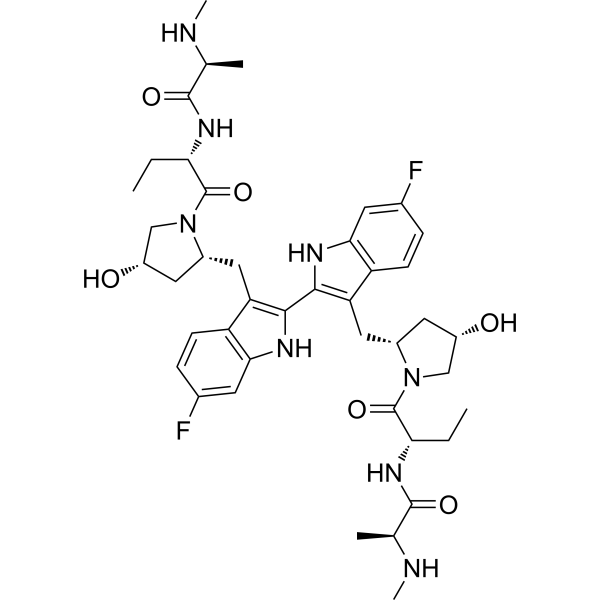
  • HY-16591
    Birinapant
    Maximum Cited Publications
    42 Publications Verification

    TL32711

    IAP Apoptosis HIV Cancer
    Birinapant (TL32711), a bivalent Smac mimetic, is a potent antagonist for XIAP and cIAP1 with Kds of 45 nM and less than 1 nM, respectively. Birinapant (TL32711) induces the autoubiquitylation and proteasomal degradation of cIAP1 and cIAP2 in intact cells, which results in formation of a RIPK1: caspase-8 complex, caspase-8 activation, and induction of tumor cell death. Birinapant (TL32711) targets TRAF2-associated cIAPs and abrogates TNF-induced NF-κB activation.
    Birinapant
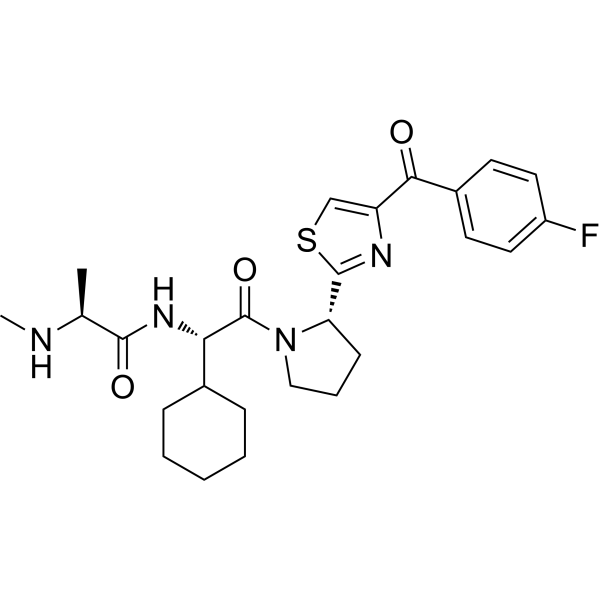
  • HY-15454
    Xevinapant
    10+ Cited Publications

    AT-406; Debio 1143; SM-406

    IAP Apoptosis Cancer
    Xevinapant (AT-406) is a potent and orally bioavailable Smac mimetic and an antagonist of IAPs, and it binds to XIAP, cIAP1, and cIAP2 proteins with Ki of 66.4, 1.9, and 5.1 nM, respectively.
    Xevinapant
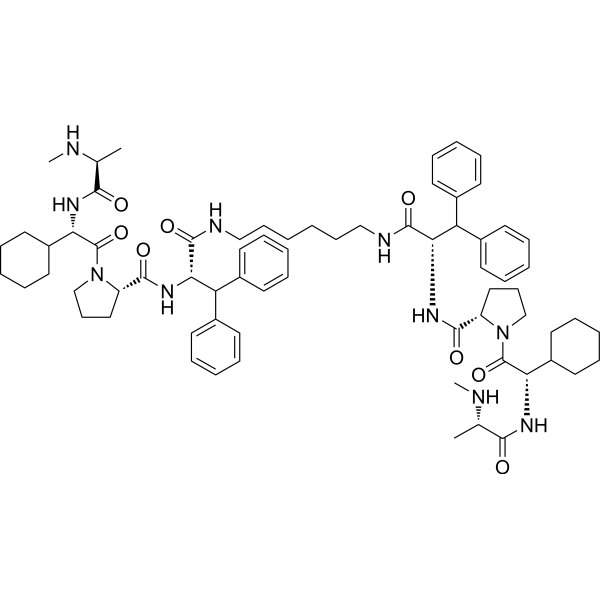
  • HY-16701
    BV6
    20+ Cited Publications

    IAP Cancer
    BV6 is an antagonist of cIAP1 and XIAP, members of the inhibitors of apoptosis (IAP) family. BV6 shows an IC50 of 7.2 μM in MTS assays in HCC193 cells. BV6 can be used in the research of endometrial cancer and endometriosis [1] .
    BV6
  • HY-15518
    LCL161
    40+ Cited Publications

    IAP Cancer
    LCL161 is a IAP inhibitor which inhibits XIAP in HEK293 cell and cIAP1 in MDA-MB-231 cell with IC50s of 35 and 0.4 nM, respectively.
    LCL161
  • HY-12600
    AZD5582
    15+ Cited Publications

    IAP Apoptosis Cancer
    AZD5582 is an antagonist of the inhibitor of apoptosis proteins (IAPs), which binds to the BIR3 domains cIAP1, cIAP2, and XIAP with IC50s of 15, 21, and 15 nM, respectively. AZD5582 induces apoptosis [1].
    AZD5582
  • HY-N0732
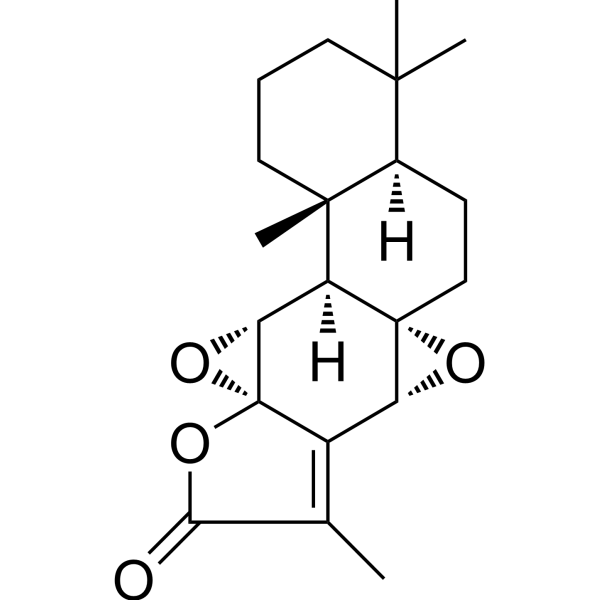
    Jolkinolide B
    1 Publications Verification

    IAP Akt Caspase NF-κB TGF-beta/Smad JAK Bacterial Apoptosis Infection Metabolic Disease Inflammation/Immunology Cancer
    Jolkinolide B is a bioactive diterpene isolated from the roots of Euphorbia fischeriana Steud with oral activity. Jolkinolide B downregulates XIAP, cIAP1, cIAP2, and phosphorylated Akt, upregulates Smac, activates caspase-3 and caspase-9, and inhibits NF-κB, TGFβ/smad3 and JAK/STAT3 pathways. Jolkinolide B exerts comprehensive biological effects including inducing cancer cell apoptosis, suppressing inflammatory responses, improving lung function, alleviating hepatic steatosis and eliminating intracellular Mycobacterium tuberculosis. Jolkinolide B can be used for the research of leukemia, histiocytic lymphoma, asthma, metabolic dysfunction-associated steatotic liver disease and tuberculosis [1] .
    Jolkinolide B
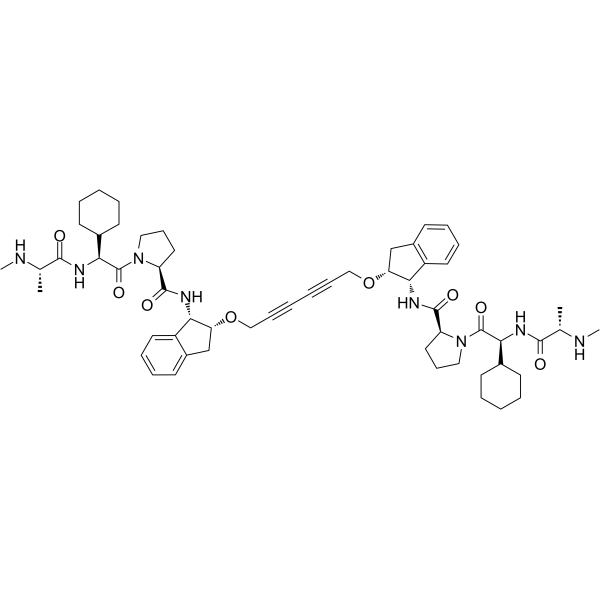
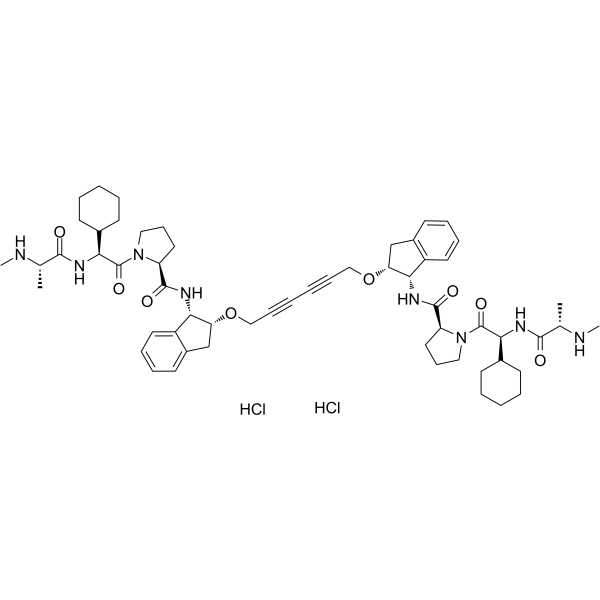
  • HY-125593

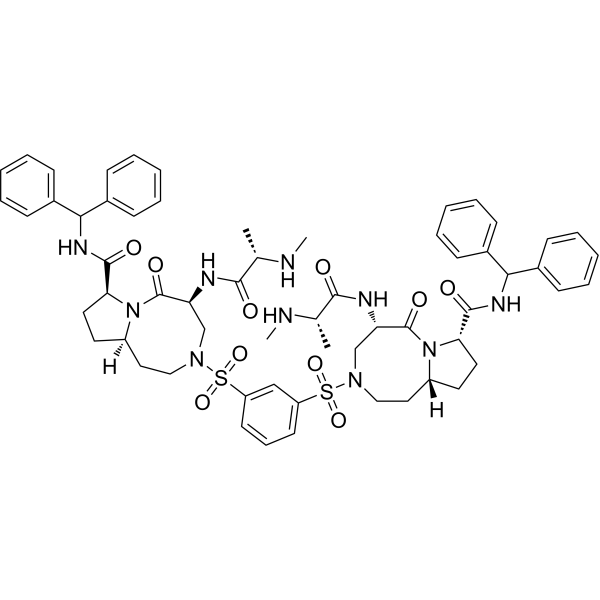
    APG-1387

    IAP Apoptosis Cancer
    Dasminapant (APG-1387), a bivalent SMAC mimetic and an IAP antagonist, blocks the activity of IAPs family proteins (XIAP, cIAP-1, cIAP-2, and ML-IAP). Dasminapant induces degradation of cIAP-1 and XIAP proteins, as well as caspase-3 activation and PARP cleavage, which leads to apoptosis. Dasminapant can be used for the research of hepatocellular carcinoma, ovarian cancer, and nasopharyngeal carcinoma [1] .
    Dasminapant
  • HY-13208
    Xevinapant hydrochloride
    10+ Cited Publications

    AT-406 hydrochloride; Debio 1143 hydrochloride; SM-406 hydrochloride

    IAP Apoptosis Cancer
    Xevinapant (AT-406) hydrochloride is a potent and orally bioavailable Smac mimetic and an antagonist of the inhibitor of apoptosis proteins (IAPs). Xevinapant hydrochloride binds to XIAP, cIAP1, and cIAP2 proteins with Kis of 66.4, 1.9, and 5.1 nM, respectively. Xevinapant hydrochloride effectively antagonizes XIAP BIR3 protein in a cell-free functional assay, induces rapid degradation of cellular cIAP1 protein, and inhibits cancer cell growth in various human cancer cell lines. Xevinapant hydrochloride is highly effective in induction of apoptosis in xenograft tumors [1] .
    Xevinapant hydrochloride
  • HY-13638
    GDC-0152
    10+ Cited Publications

    IAP Cancer
    GDC-0152 is a potent IAPs inhibitor, and binds to the BIR3 domains of XIAP, cIAP1, cIAP2 and the BIR domain of ML-IAP with Ki values of 28 nM, 17 nM, 43 nM and 14 nM, respectively.
    GDC-0152
  • HY-128808

    E3 ligase Ligand 12

    Ligands for E3 Ligase Cancer
    cIAP1 ligand 1 is the LCL161 derivative based IAP ligand. cIAP1 ligand 1 can be connected to the ABL ligand for protein by a linker to form SNIPER. cIAP1 ligand 1 can be used in prostate cancer research [1].
    cIAP1 ligand 1
  • HY-111875

    SNIPERs PROTACs Epigenetic Reader Domain Cancer
    SNIPER(BRD)-1 is a SNIPER degrader of BRD4, cIAP1 and XIAP. SNIPER(BRD)-1 has IC50 values of 6.8 nM, 17 nM and 49 nM for cIAP1, cIAP2 and XIAP, respectively. SNIPER(BRD)-1 can be used for cancer research [1]. (Blue: LCL161 (HY-15518); Black: linker (HY-W008005); Pink: (+)-JQ-1 (HY-13030))
    SNIPER(BRD)-1
  • HY-138779
    ICCB-19 hydrochloride
    1 Publications Verification

    Autophagy RIP kinase Apoptosis Inflammation/Immunology
    ICCB-19 hydrochloride is a TRADD (TNFRSF1A associated via death domain) inhibitor. ICCB-19 hydrochloride binds with N-terminal domain of TRADD (TRADD-N), disrupting its binding to both TRADD-C and TRAF2. ICCB-19 hydrochloride is indirect inhibitor of RIPK1 kinase activity. ICCB-19 hydrochloride effectively induces autophagy and the degradation of long-lived proteins [1].
    ICCB-19 hydrochloride
  • HY-N6064
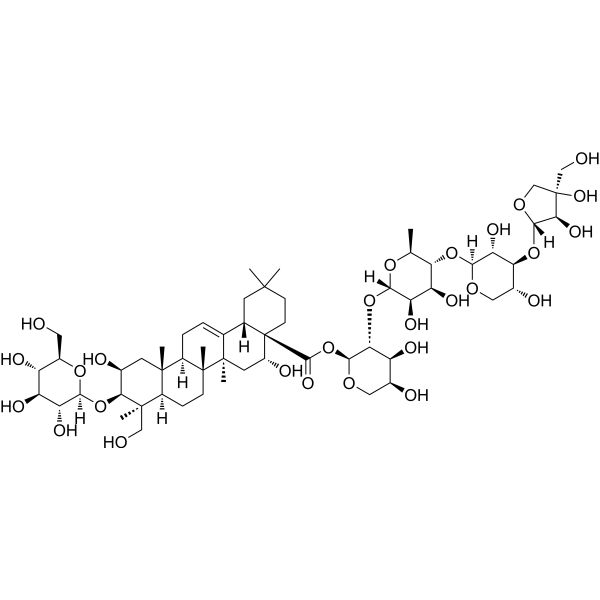
    Polygalacin D
    3 Publications Verification

    Apoptosis IAP Cancer
    Polygalacin D (PGD) is a bioactive compound isolated from Platycodon grandiflorum with anticancer and anti-proliferative properties. PGD suppresses the expression of the IAP family of proteins including survivin, cIAP-1 and cIAP-2 and blocks the PI3K/Akt pathway by inhibiting the phosphorylation of GSK3β, Akt and the expression of PI3K. Polygalacin D induces apoptosis [1]
    Polygalacin D
  • HY-102051

    IAP Cancer
    XIAP/cIAP1 antagonist-1 is a potent and orally active XIAP/cIAP1 antagonist with EC50s of 5.1 nM and 0.32 nM for XIAP and cIAP1, respectively. XIAP/cIAP1 antagonist-1 inhibits the tumor growth in dose-dependent manner in vivo [1].
    XIAP/cIAP1 antagonist-1
  • HY-128809

    E3 ligase Ligand 11

    Ligands for E3 Ligase Cancer
    cIAP1 ligand 2 is the LCL161 derivative based IAP ligand. cIAP1 ligand 2 can be connected to the ABL ligand for protein by a linker to form SNIPER.
    cIAP1 ligand 2
  • HY-110346
    AZD5582 dihydrochloride
    15+ Cited Publications

    IAP Apoptosis Cancer
    AZD5582 dihydrochloride is an antagonist of the inhibitor of apoptosis proteins (IAPs), which binds to the BIR3 domains cIAP1, cIAP2, and XIAP with IC50s of 15, 21, and 15 nM, respectively. AZD5582 induces apoptosis [1].
    AZD5582 dihydrochloride
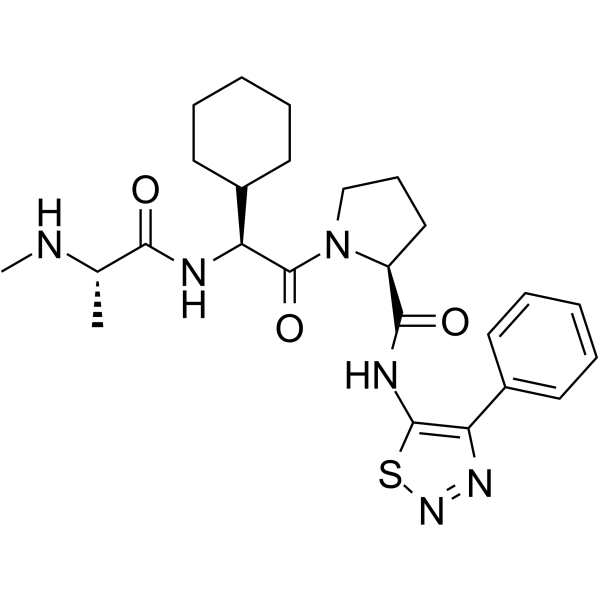
  • HY-149924

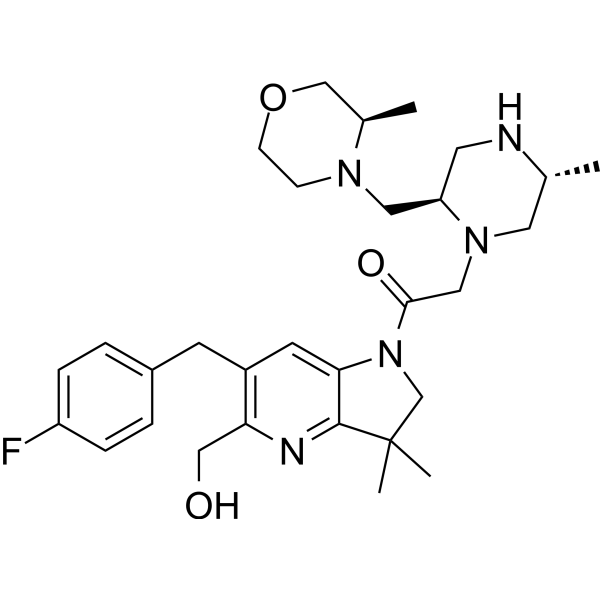
    PROTACs IAP Cancer
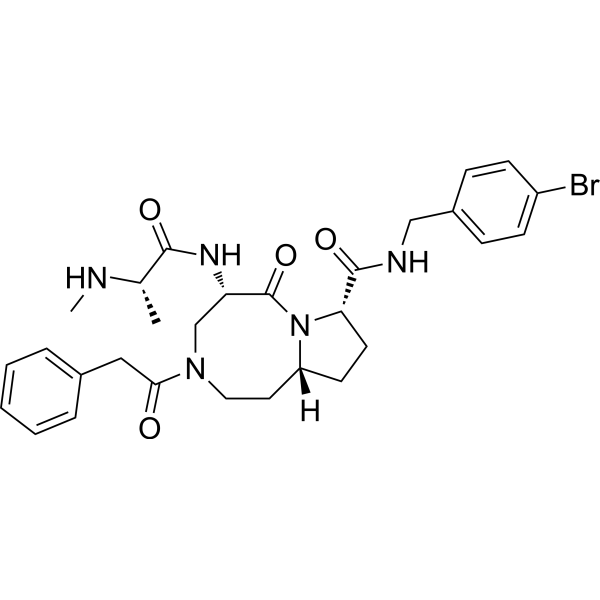
    CST626 (Compound 9) is a pan-IAP degrader PROTAC. CST626 degrades XIAP, cIAP1 and cIAP2 with DC50s of 0.7, 2.4, and 6.2 nM in MM.1S cells, respectively [1].
    CST626
  • HY-124181

    IAP Apoptosis Cancer
    SM-1295 is an inhibitor of apoptosis protein (IAP) antagonist, with Kd values of 3077 nM, 3.2 nM and 9.5 nM for XIAP-BIR3, c-IAP1-BIR3 and c-IAP2-BIR3, respectively [1] .
    SM-1295
  • HY-151966

    PROTACs IAP Caspase PANoptosis Cancer
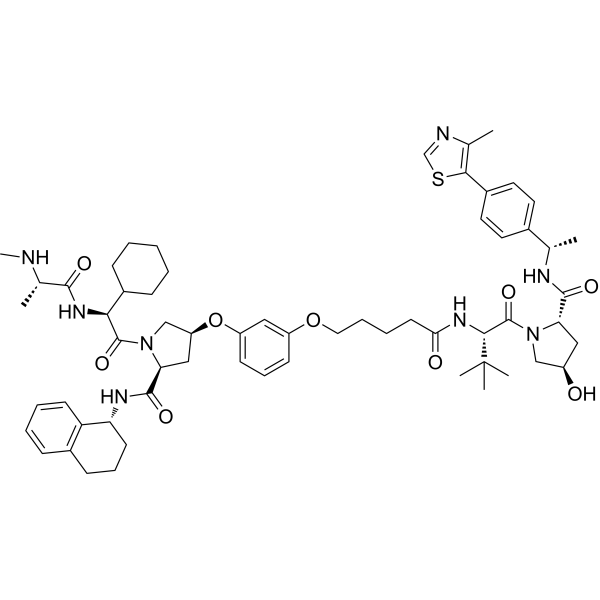
    TD1092 is a pan-IAP degrader, degrades cIAP1, cIAP2, and XIAP. TD1092 activates Caspase 3/7, and promotes cancer cells apoptosis via IAP degradation. TD1092 inhibits TNFα mediated NF-κB pathway and reduces the phosphorylation of IKK, IkBα, p65, and p38. TD1092 can act as PROTAC, and is used for cancer research [1].
    TD1092
  • HY-128818

    E3 ligase Ligand-Linker Conjugates 39

    E3 Ligase Ligand-Linker Conjugates Cancer
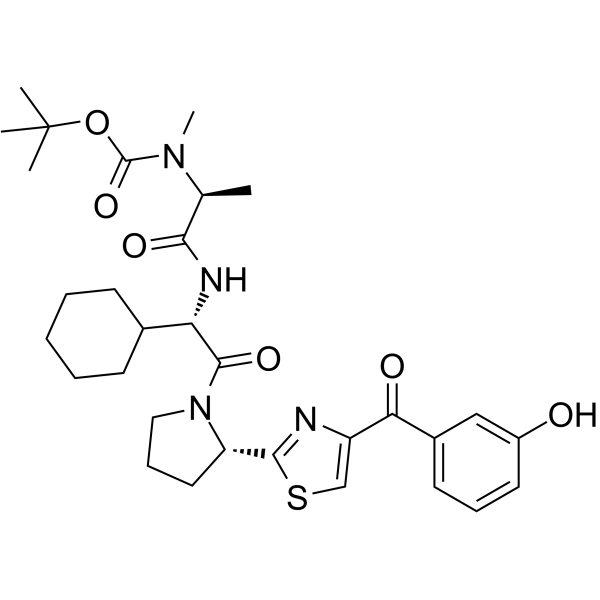
    cIAP1 Ligand-Linker Conjugates 5 incorporates an IAP ligand for the E3 ubiquitin ligase, and a PROTAC linker. cIAP1 Ligand-Linker Conjugates 5 can be used to design SNIPERs [1].
    cIAP1 Ligand-Linker Conjugates 5
  • HY-139656

    Ligands for E3 Ligase Cancer
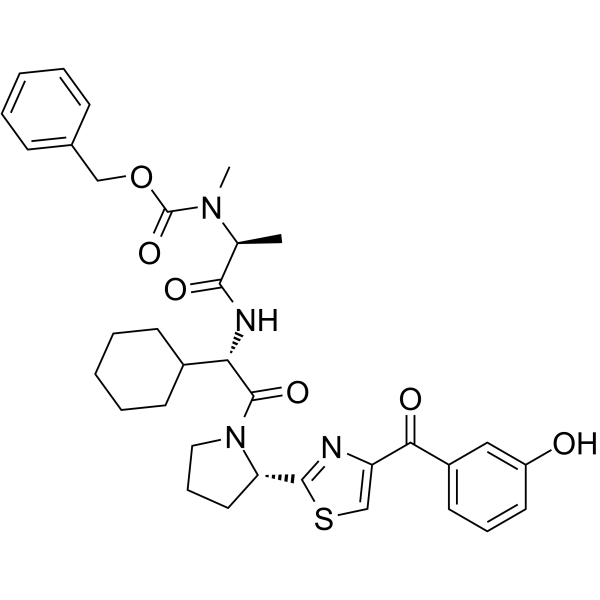
    cIAP1 ligand 4 is a ligand for E3 ligase that can be used in the synthesis of PROTACs.
    cIAP1 ligand 4
  • HY-120434

    HGS1029

    IAP Cancer
    AEG40826 (HGS1029), a second mitochondria-derived activator of caspases (SMAC) mimetic, is an inhibitor of apoptosis (IAP) inhibitor. AEG40826 degrades cellular IAP1 (cIAP1) and blocks TNF-α pro-survival signaling. AEG40826 can be used for cancer research [1].
    AEG40826
  • HY-139655

    E3 Ligase Ligand-Linker Conjugates Cancer
    cIAP1 Ligand-Linker Conjugates 16 is an E3 ligase ligand-linker conjugate that can be used in the synthesis of PROTACs.
    cIAP1 Ligand-Linker Conjugates 16
  • HY-128822

    E3 ligase Ligand-Linker Conjugates 43

    E3 Ligase Ligand-Linker Conjugates Cancer
    cIAP1 Ligand-Linker Conjugates 13 incorporates an IAP ligand for the E3 ubiquitin ligase, and a PROTAC linker. cIAP1 Ligand-Linker Conjugates 13 can be used to design SNIPERs [1].
    cIAP1 Ligand-Linker Conjugates 13
  • HY-128813A

    E3 ligase Ligand-Linker Conjugates 34 hydrochloride

    E3 Ligase Ligand-Linker Conjugates Cancer
    cIAP1 Ligand-Linker Conjugates 15 hydrochloride incorporates an IAP ligand for the E3 ubiquitin ligase, and a PROTAC linker. cIAP1 Ligand-Linker Conjugates 15 hydrochloride can be used to design SNIPERs [1].
    cIAP1 Ligand-Linker Conjugates 15 hydrochloride
  • HY-128815

    E3 ligase Ligand-Linker Conjugates 36

    E3 Ligase Ligand-Linker Conjugates Cancer
    cIAP1 Ligand-Linker Conjugates 14 incorporates an IAP ligand for the E3 ubiquitin ligase, and a PROTAC linker. cIAP1 Ligand-Linker Conjugates 14 can be used to design SNIPERs [1].
    cIAP1 Ligand-Linker Conjugates 14
  • HY-128816A

    E3 ligase Ligand-Linker Conjugates 37 Hydrochloride

    E3 Ligase Ligand-Linker Conjugates Cancer
    cIAP1 Ligand-Linker Conjugates 2 Hydrochloride incorporates an IAP ligand for the E3 ubiquitin ligase, and a PROTAC linker. cIAP1 Ligand-Linker Conjugates 2 Hydrochloride can be used to design SNIPERs [1].
    cIAP1 Ligand-Linker Conjugates 2 Hydrochloride
  • HY-128820

    E3 ligase Ligand-Linker Conjugates 41

    E3 Ligase Ligand-Linker Conjugates Cancer
    cIAP1 Ligand-Linker Conjugates 1 incorporates an IAP ligand for the E3 ubiquitin ligase, and a PROTAC linker. cIAP1 Ligand-Linker Conjugates 1 can be used to design SNIPERs [1].
    cIAP1 Ligand-Linker Conjugates 1
  • HY-128819

    E3 ligase Ligand-Linker Conjugates 40

    E3 Ligase Ligand-Linker Conjugates Cancer
    cIAP1 Ligand-Linker Conjugates 3 incorporates an IAP ligand for the E3 ubiquitin ligase, and a PROTAC linker. cIAP1 Ligand-Linker Conjugates 3 can be used to design SNIPERs [1].
    cIAP1 Ligand-Linker Conjugates 3
  • HY-128813

    E3 ligase Ligand-Linker Conjugates 34

    E3 Ligase Ligand-Linker Conjugates Cancer
    cIAP1 Ligand-Linker Conjugates 15 incorporates an IAP ligand for the E3 ubiquitin ligase, and a PROTAC linker. cIAP1 Ligand-Linker Conjugates 15 can be used to design SNIPERs [1].
    cIAP1 Ligand-Linker Conjugates 15
  • HY-128824

    E3 ligase Ligand-Linker Conjugates 45

    E3 Ligase Ligand-Linker Conjugates Cancer
    cIAP1 Ligand-Linker Conjugates 9 incorporates an IAP ligand for the E3 ubiquitin ligase, and a PROTAC linker. cIAP1 Ligand-Linker Conjugates 9 can be used to design SNIPERs [1].
    cIAP1 Ligand-Linker Conjugates 9
  • HY-128812

    E3 ligase Ligand-Linker Conjugates 33

    E3 Ligase Ligand-Linker Conjugates Cancer
    cIAP1 Ligand-Linker Conjugates 11 incorporates an IAP ligand for the E3 ubiquitin ligase, and a PROTAC linker. cIAP1 Ligand-Linker Conjugates 11 can be used to design SNIPERs [1].
    cIAP1 Ligand-Linker Conjugates 11
  • HY-128817

    E3 ligase Ligand-Linker Conjugates 38

    E3 Ligase Ligand-Linker Conjugates Cancer
    cIAP1 Ligand-Linker Conjugates 12 incorporates an IAP ligand for the E3 ubiquitin ligase, and a PROTAC linker. cIAP1 Ligand-Linker Conjugates 12 can be used to design SNIPERs [1].
    cIAP1 Ligand-Linker Conjugates 12
  • HY-128812A

    E3 ligase Ligand-Linker Conjugates 33 Hydrochloride

    E3 Ligase Ligand-Linker Conjugates Cancer
    cIAP1 Ligand-Linker Conjugates 11 Hydrochloride incorporates an IAP ligand for the E3 ubiquitin ligase, and a PROTAC linker. cIAP1 Ligand-Linker Conjugates 11 Hydrochloride can be used to design SNIPERs [1].
    cIAP1 Ligand-Linker Conjugates 11 Hydrochloride
  • HY-128826

    E3 ligase Ligand-Linker Conjugates 47

    E3 Ligase Ligand-Linker Conjugates Cancer
    cIAP1 Ligand-Linker Conjugates 10 incorporates an IAP ligand for the E3 ubiquitin ligase, and a PROTAC linker. cIAP1 Ligand-Linker Conjugates 10 can be used to design SNIPERs [1].
    cIAP1 Ligand-Linker Conjugates 10
  • HY-128825

    E3 ligase Ligand-Linker Conjugates 46

    E3 Ligase Ligand-Linker Conjugates Cancer
    cIAP1 Ligand-Linker Conjugates 8 incorporates an IAP ligand for the E3 ubiquitin ligase, and a PROTAC linker. cIAP1 Ligand-Linker Conjugates 8 can be used to design SNIPERs [1].
    cIAP1 Ligand-Linker Conjugates 8
  • HY-128823

    E3 ligase Ligand-Linker Conjugates 44

    E3 Ligase Ligand-Linker Conjugates Cancer
    cIAP1 Ligand-Linker Conjugates 7 incorporates an IAP ligand for the E3 ubiquitin ligase, and a PROTAC linker. cIAP1 Ligand-Linker Conjugates 7 can be used to design SNIPERs [1].
    cIAP1 Ligand-Linker Conjugates 7
  • HY-128821

    E3 ligase Ligand-Linker Conjugates 42

    E3 Ligase Ligand-Linker Conjugates Cancer
    cIAP1 Ligand-Linker Conjugates 4 incorporates an IAP ligand for the E3 ubiquitin ligase, and a PROTAC linker. cIAP1 Ligand-Linker Conjugates 4 can be used to design SNIPERs [1].
    cIAP1 Ligand-Linker Conjugates 4
  • HY-128816

    E3 ligase Ligand-Linker Conjugates 37

    E3 Ligase Ligand-Linker Conjugates Cancer
    cIAP1 Ligand-Linker Conjugates 2 incorporates an IAP ligand for the E3 ubiquitin ligase, and a PROTAC linker. cIAP1 Ligand-Linker Conjugates 2 can be used to design SNIPERs [1].
    cIAP1 Ligand-Linker Conjugates 2
  • HY-128814

    E3 ligase Ligand-Linker Conjugates 35 hydrochloride

    E3 Ligase Ligand-Linker Conjugates Cancer
    cIAP1 Ligand-Linker Conjugates 6 hydrochloride incorporates an IAP ligand for the E3 ubiquitin ligase, and a PROTAC linker. cIAP1 Ligand-Linker Conjugates 6 hydrochloride can be used to design SNIPERs [1].
    cIAP1 Ligand-Linker Conjugates 6 hydrochloride
  • HY-111848A

    SNIPERs PROTACs Androgen Receptor Cancer
    PROTAC AR Degrader-4 comprises a IAP ligand binding group, a linker and an Androgen Receptor (AR) binding group. PROTAC AR Degrader-4 is an AR degrader. Degradation inducers based on cIAP1 are called specific and non-genetic IAP-dependent protein erasers (SNIPERs) [1].
    PROTAC AR Degrader-4 TFA
  • HY-150825

    IAP Ligands for E3 Ligase Cancer
    CST530 is an inhibitor of apoptosis protein (IAP) antagonist. CST530 is an IAP-type Ligands for E3 Ligase. CST530 binds to the BIR3 domain of IAP and interferes with its function, thereby promoting the ubiquitination and degradation of cIAP1. CST530 can be used to prepare PROTACs [1].
    CST530
  • HY-111848

    SNIPERs PROTACs Androgen Receptor Cancer
    PROTAC AR Degrader-4 comprises a IAP ligand binding group, a linker and an Androgen Receptor (AR) binding group. PROTAC AR Degrader-4 is an AR degrader. Degradation inducers based on cIAP1 are called specific and non-genetic IAP-dependent protein erasers (SNIPERs) [1].
    PROTAC AR Degrader-4
  • HY-155019

    IAP Cancer
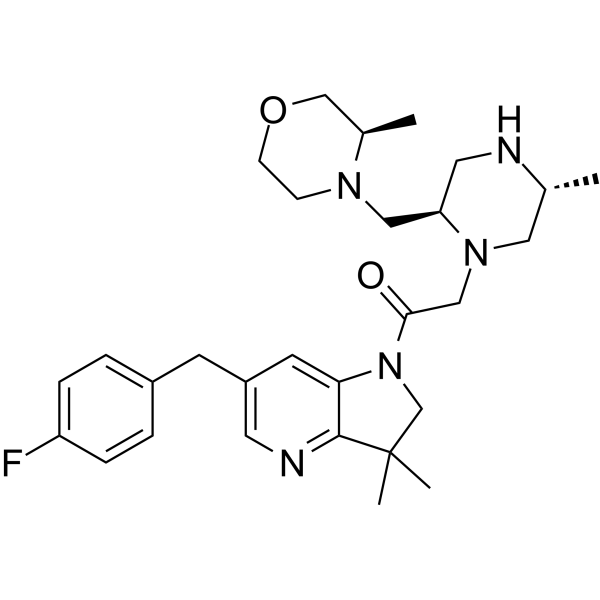
    Anticancer agent 128 (compound 1) is an IAP inhibitor that covalently targets the BIR3 domains of XIAP, cIAP1, and cIAP2. Anticancer agent 128 targets the BIR3 domains of XIAP, cIAP1, and cIAP2 with IC50s of 24.9 nM, 19.3 nM, and 10.3 nM, respectively [1].
    Anticancer agent 128
  • HY-155018

    IAP Cancer
    Anticancer agent 127 (142D6) is an IAP inhibitor that covalently targets the BIR3 domains of XIAP, cIAP1, and cIAP2. Anticancer agent 127 targets the BIR3 domains of XIAP, cIAP1, and cIAP2 with IC50s of 12 nM, 14 nM, and 9 nM, respectively. Anticancer agent 127 has anticancer effects [1].
    Anticancer agent 127
  • HY-16701A
    BV6 TFA
    20+ Cited Publications

    IAP Cancer
    BV6 TFA is an antagonist of cIAP1 and XIAP, members of the inhibitors of apoptosis (IAP) family. BV6 TFA shows an IC50 of 7.2 μM in MTS assays in HCC193 cells. BV6 TFA can be used in the research of endometrial cancer and endometriosis [1] .
    BV6 TFA
  • HY-111878

    SNIPERs Cancer
    BzNH-BS contains two different ligands, methyl-bestatin (MeBS) for cIAP1 and benzoyl-amide, which are connected by linkers. MeBS as a ligand for cellular inhibitor of apoptosis protein 1 (cIAP1) ubiquitin ligase [1].
    BzNH-BS
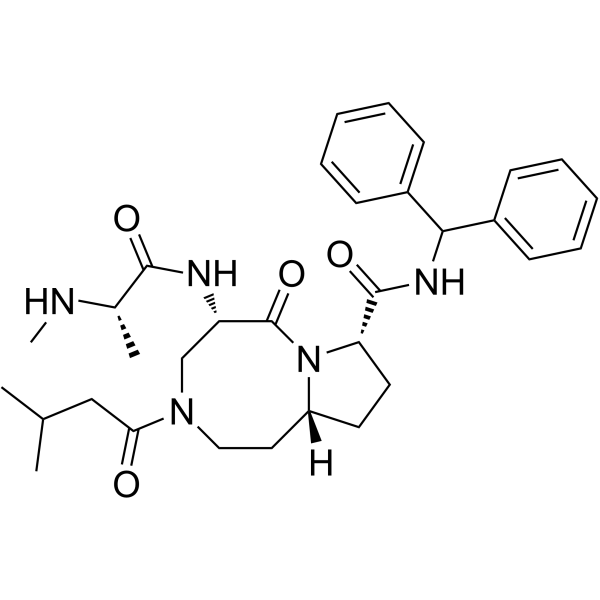
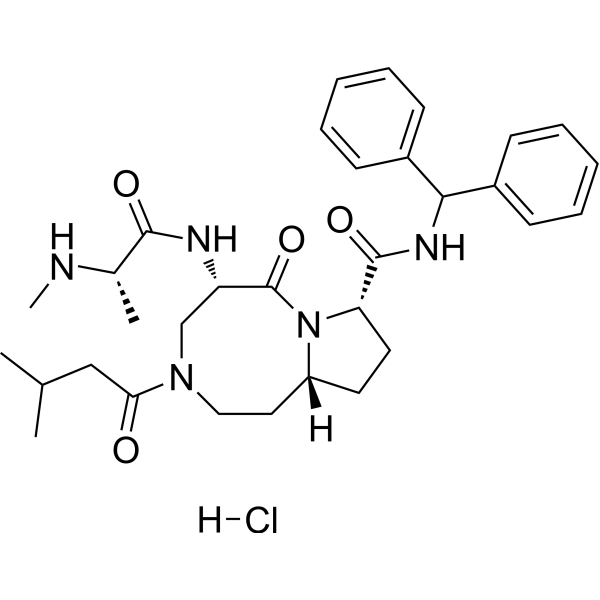
  • HY-100682

    IAP Cancer
    T-3256336 is a potent and orally active cIAP1 and XIAP inhibitor with IC50s of 1.3, 200 nM, respectively. T-3256336 shows anti-tumor activity [1].
    T-3256336
  • HY-111874

    SNIPERs Bcr-Abl Cancer
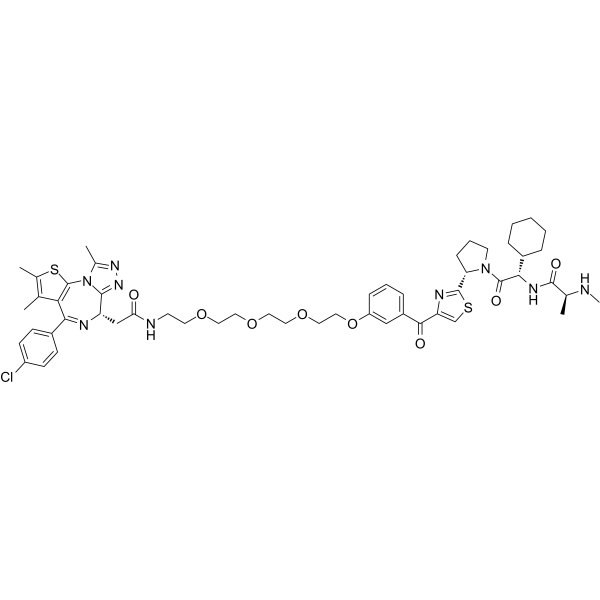
    SNIPER(ABL)-039, conjugating Dasatinib (ABL inhibitor) to LCL161 derivative (IAP ligand) with a linker, induces the reduction of BCR-ABL protein with a DC50 of 10 nM. IC50s are 0.54 nM, 10 nM, 12 nM, and 50 nM for ABL, cIAP1, cIAP2, XIAP, respectively [1].
    SNIPER(ABL)-039
  • HY-111886

    SNIPERs IAP Cancer
    KHS108-MV1 is a conjugate of KHS108 and MV1. KHS108 is a ligand for TACC3. MV1 is an IAP antagonist that binds to cIAP1, cIAP2, and XIAP. KHS108-MV1 can be used in the research of breast cancer and fibrosarcoma [1].
    KHS108-MV1

Inquiry Online

Your information is safe with us. * Required Fields.

Salutation


Country or Region *

Applicant Name *


Organization Name *

Department *


Email Address *


Product Name *

Cat. No.


Requested quantity *

Phone Number *


Remarks

Inquiry Online

Inquiry Information

Product Name:
Cat. No.:
Quantity:
MCE Japan Authorized Agent:

