2998 Results for "

catalyze

" in MedChemExpress (MCE) Product Catalog:
Products (2998)

2998 Results for "catalyze" in MCE Product Catalog:

126
126 Publications Verification
Cat. No.: HY-12591
CAS No.: 103404-75-7
Purity:  99.92%
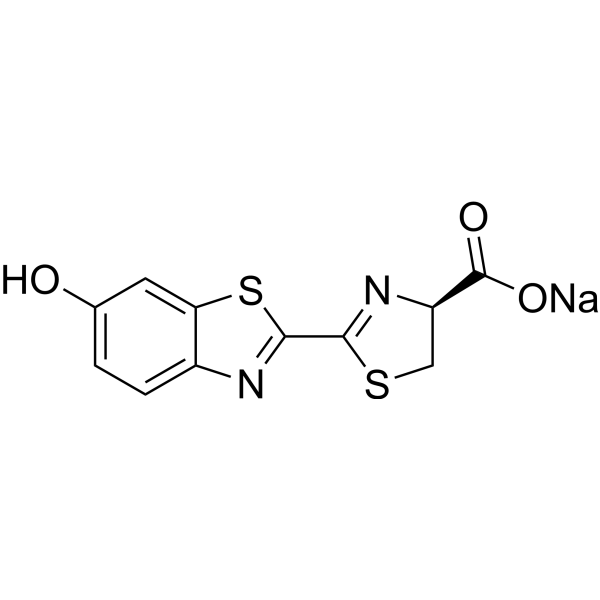
Synonyms: D-(-)-Luciferin sodium; Firefly luciferin sodium; Beetle Luciferin sodium
D-luciferin sodium is the natural substrate of the enzyme luciferase (Luc) that catalyzes the production of the typical yellowgreen light of fireflies. The 560 nm chemiluminescence from this reaction peaks within seconds, with light output that is proportional to luciferase concentration when the substrate luciferin is present in excess. The luciferase (luc) gene is a popular reporter gene for research and agent screening. Chemiluminescent techniques are virtually background-free, making the luc reporter gene ideal for detecting low-level gene expression. As little as 0.02 pg of luciferase can be reliably measured in a standard scintillation counter. In addition to its role as a reporter of gene expression, luciferase is commonly used in an extremely sensitive assay for ATP . We of er the firefly luciferase (HY-P1004A), luciferin free acid (HY-12591A), as well as its water-soluble sodium salts (HY-12591) and potassium salts (HY-12591B) .
loading...
    loading...
126
126 Publications Verification
Cat. No.: HY-12591A
CAS No.: 2591-17-5
Purity:  99.54%
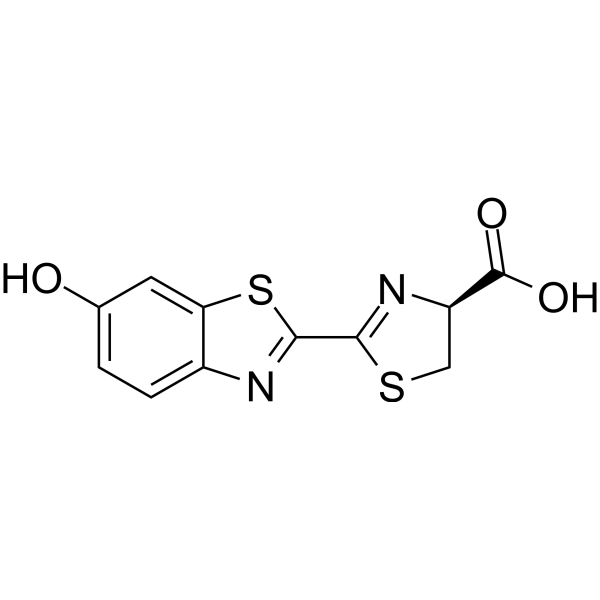
Synonyms: D-(-)-Luciferin; Firefly luciferin; Beetle Luciferin
D-luciferin is the natural substrate of the enzyme luciferase (Luc) that catalyzes the production of the typical yellowgreen light of fireflies. The 560 nm chemiluminescence from this reaction peaks within seconds, with light output that is proportional to luciferase concentration when the substrate luciferin is present in excess. The luciferase (luc) gene is a popular reporter gene for research and agent screening. Chemiluminescent techniques are virtually background-free, making the luc reporter gene ideal for detecting low-level gene expression. As little as 0.02 pg of luciferase can be reliably measured in a standard scintillation counter. In addition to its role as a reporter of gene expression, luciferase is commonly used in an extremely sensitive assay for ATP . We of er the firefly luciferase (HY-P1004A), luciferin free acid (HY-12591A), as well as its water-soluble sodium salts (HY-12591) and potassium salts (HY-12591B) .
loading...
    loading...
126
126 Publications Verification
Cat. No.: HY-12591B
CAS No.: 115144-35-9
Purity:  99.97%
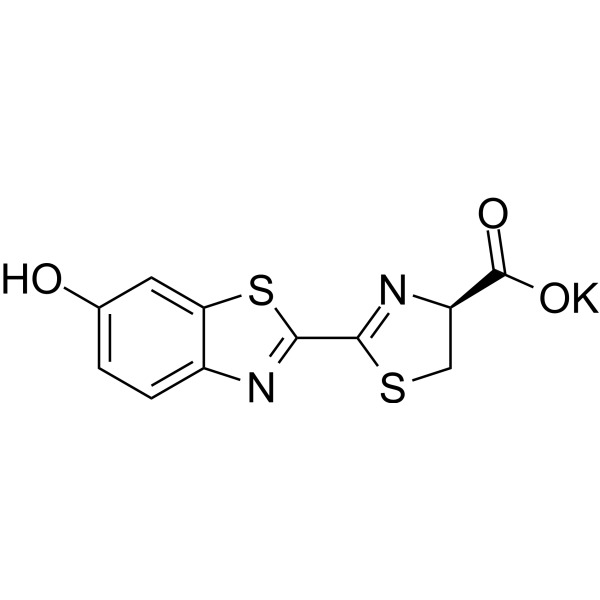
Synonyms: D-(-)-Luciferin potassium; Firefly luciferin potassium; Beetle Luciferin potassium
D-luciferin potassium is the natural substrate of the enzyme luciferase (Luc) that catalyzes the production of the typical yellowgreen light of fireflies. The 560 nm chemiluminescence from this reaction peaks within seconds, with light output that is proportional to luciferase concentration when the substrate luciferin is present in excess. The luciferase (luc) gene is a popular reporter gene for research and agent screening. Chemiluminescent techniques are virtually background-free, making the luc reporter gene ideal for detecting low-level gene expression. As little as 0.02 pg of luciferase can be reliably measured in a standard scintillation counter. In addition to its role as a reporter of gene expression, luciferase is commonly used in an extremely sensitive assay for ATP . We offer the firefly luciferase (HY-P1004A), luciferin free acid (HY-12591A), as well as its water-soluble sodium salts (HY-12591) and potassium salts (HY-12591B) .
loading...
    loading...
58
58 Cited Publications
Cat. No.: HY-134813
CAS No.: 2621928-55-8
Purity:  99.97%
Target:  

Ras

Research Areas:  

Cancer

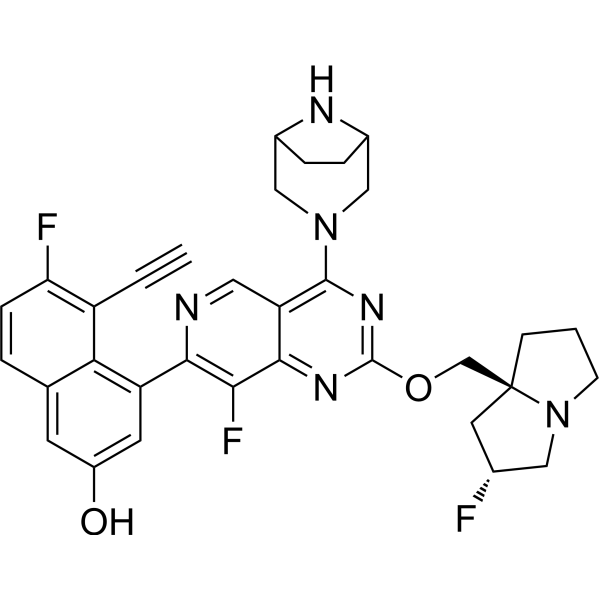
MRTX1133 is a noncovalent, potent, and selective alkyne-based KRAS G12D inhibitor. MRTX1133 optimally fills the switch II pocket and extends three substituents to favorably interact with the protein, resulting in an estimated KD against KRAS G12D of 0.2 pM. MRTX1133 prevents SOS1-catalyzed nucleotide exchange and/or formation of the KRAS G12D/GTP/RAF1 complex, thereby inhibiting mutant KRAS-dependent signal transduction. MRTX1133 selectively inhibits KRAS G12D mutant, but not KRAS wild-type, tumor cells. MRTX1133 has single digit nanomolar activity in cellular assays and marked in vivo efficacy in tumor models harboring KRAS G12D mutations .
loading...
    loading...
37
37 Cited Publications
Cat. No.: HY-118411
CAS No.: 61135-33-9
Purity:  99.78%
Synonyms: EdU
Target:  

PROTAC Linkers

Research Areas:  

Cancer

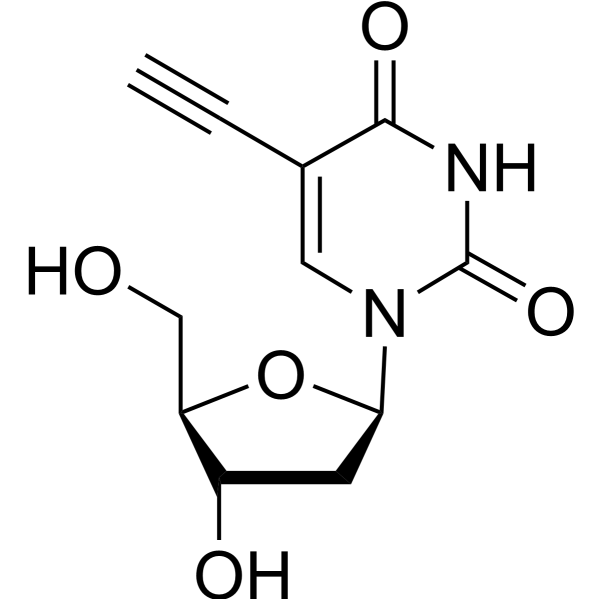
5-Ethynyl-2'-deoxyuridine (EdU), a thymidine analogue, is incorporated into cellular DNA during DNA replication and the subsequent reaction of EdU with a fluorescent azide in a “Click” reaction. EdU staining is a fast, sensitive and reproducible method to study cell proliferation . 5-Ethynyl-2'-deoxyuridine is an alkyl chain-based PROTAC linker that can be used in the synthesis of PROTACs . 5-Ethynyl-2'-deoxyuridine is a click chemistry reagent, it contains an Alkyne group and can undergo copper-catalyzed azide-alkyne cycloaddition (CuAAc) with molecules containing Azide groups.
loading...
    loading...
35
35 Cited Publications
Cat. No.: HY-17600
CAS No.: 1420477-60-6
Synonyms: Calquence; ACP-196
Target:  

Btk

Research Areas:  

Inflammation/Immunology Cancer

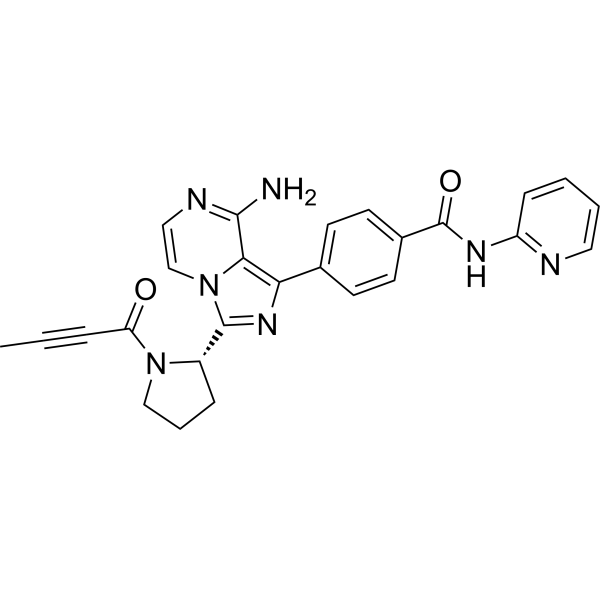
Acalabrutinib (ACP-196) is an orally active, irreversible, and highly selective second-generation BTK inhibitor. Acalabrutinib binds covalently to Cys481 in the ATP-binding pocket of BTK. Acalabrutinib demonstrates potent on-target effects and efficacy in mouse models of chronic lymphocytic leukemia (CLL). Acalabrutinib can be used for CLL research . Acalabrutinib is a click chemistry reagent, itcontains an Alkyne group and can undergo copper-catalyzed azide-alkyne cycloaddition (CuAAc) with molecules containing Azide groups.
loading...
    loading...
35
35 Cited Publications
Cat. No.: HY-13238
CAS No.: 1051375-16-6
Purity:  99.85%
Synonyms: S/GSK1349572
Target:  

HIV Integrase HIV

Research Areas:  

Infection

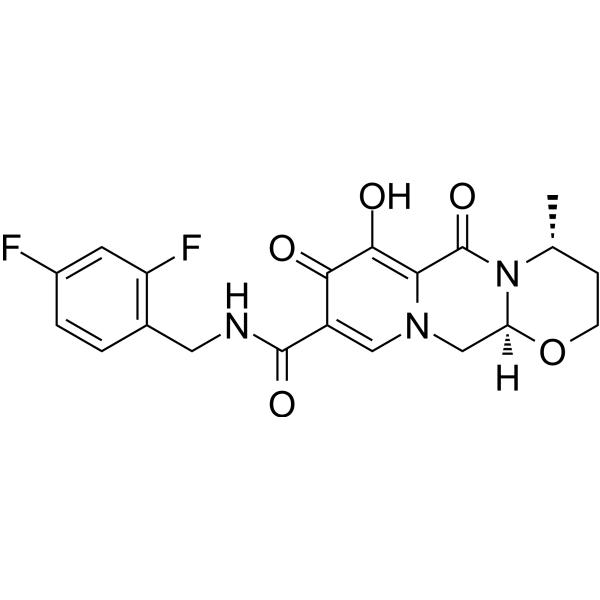
Dolutegravir (S/GSK1349572) is a highly potent and orally bioavailable HIV integrase strand transfer inhibitor with an IC50 of 2.7 nM for HIV-1 integrase-catalyzed strand transfer. Dolutegravir (S/GSK1349572) inhibits HIV-1 viral replication with an IC50 of 0.51 nM in peripheral blood mononuclear cells. Dolutegravir retains a high potency against the HIV-1 Y143R, N155H, and G140S/Q148H mutants (EC50=3.6-5.8 nM) .
loading...
    loading...
35
35 Cited Publications
Cat. No.: HY-13238A
CAS No.: 1051375-19-9
Purity:  99.97%
Synonyms: S/GSK1349572 sodium
Target:  

HIV Integrase HIV

Research Areas:  

Infection

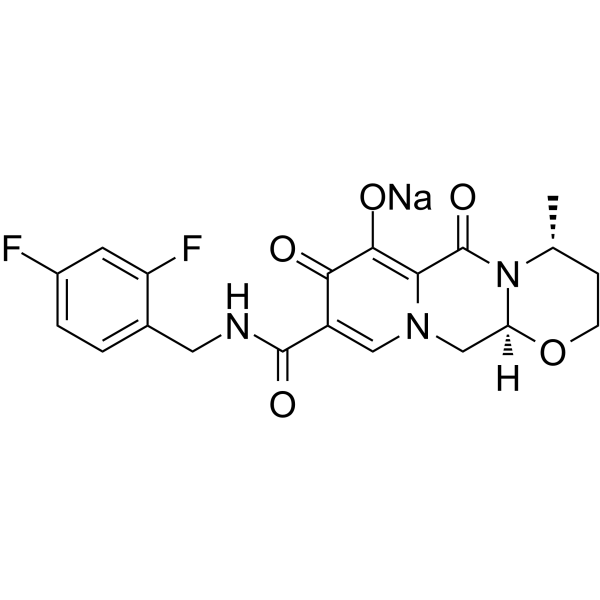
Dolutegravir sodium (S/GSK1349572 sodium) is a highly potent and orally bioavailable HIV integrase strand transfer inhibitor with an IC50 of 2.7 nM for HIV-1 integrase-catalyzed strand transfer. Dolutegravir sodium (S/GSK1349572 sodium) inhibits HIV-1 viral replication with an IC50 of 0.51 nM in peripheral blood mononuclear cells. Dolutegravir sodium (S/GSK1349572 sodium) retains a high potency against the HIV-1 Y143R, N155H, and G140S/Q148H mutants (EC50=3.6-5.8 nM) .
loading...
    loading...
33
33 Cited Publications
Cat. No.: HY-15680
CAS No.: 1416561-90-4
Purity:  98.41%
Research Areas:  

Others

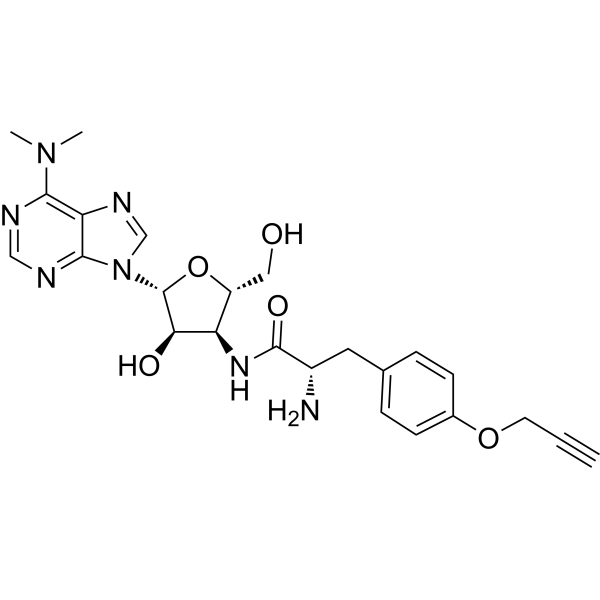
O-Propargyl-Puromycin, an alkyne analog of puromycin, is a potent protein synthesis inhibitor. O-Propargyl-Puromycin is a click chemistry reagent, it contains an Alkyne group and can undergo copper-catalyzed azide-alkyne cycloaddition (CuAAc) with molecules containing Azide groups.
loading...
    loading...
32
32 Cited Publications
Cat. No.: HY-Y0682
CAS No.: 60-00-4
Synonyms: EDTA
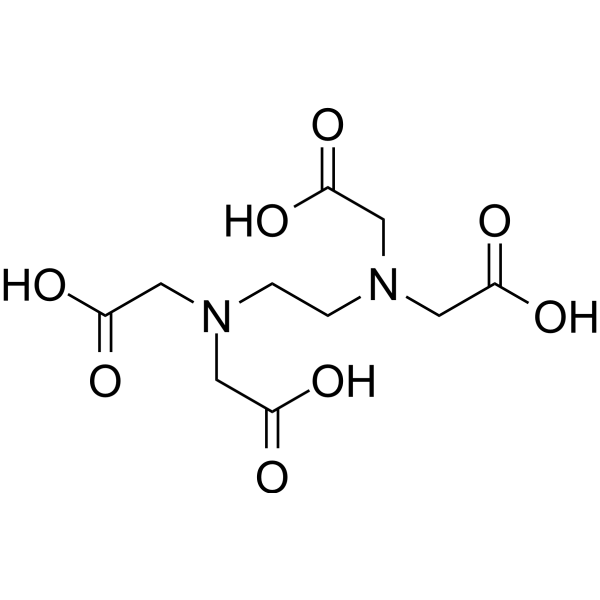
Ethylenediaminetetraacetic acid (EDTA) is a kind of metal chelating agent (binds to bivalent and trivalent metal cations, including calcium). Ethylenediaminetetraacetic acid has antibacterial, anti-inflammatory, antioxidant, anti-hypercalcemia and anticoagulant activities. Ethylenediaminetetraacetic acid decreases the metal ion-catalyzed oxidative damage to proteins, and allows maintenance of reducing environment during protein purification. Ethylenediaminetetraacetic acid can alleviate the liver fibrosis. Ethylenediaminetetraacetic acid can be used for coronary artery disease and neural system disease research .
loading...
    loading...
31
31 Cited Publications
Cat. No.: HY-B1009
CAS No.: 150-38-9
Synonyms: EDTA trisodium salt; Trisodium EDTA
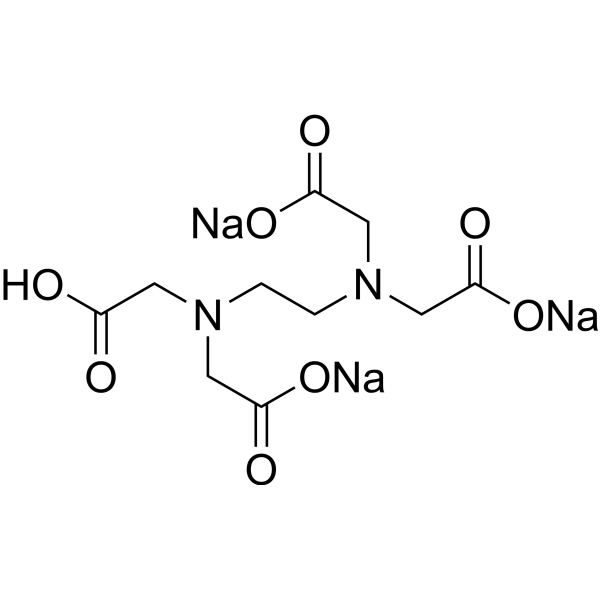
Ethylenediaminetetraacetic acid trisodium salt (EDTA trisodium salt; Trisodium EDTA) is a kind of metal chelating agent (binds to bivalent and trivalent metal cations, including calcium). Ethylenediaminetetraacetic acid trisodium salt has antibacterial, anti-inflammatory, antioxidant, anti-hypercalcemia and anticoagulant activities. Ethylenediaminetetraacetic acid trisodium salt decreases the metal ion-catalyzed oxidative damage to proteins, and allows maintenance of reducing environment during protein purification. Ethylenediaminetetraacetic acid trisodium salt can alleviate the liver fibrosis. Ethylenediaminetetraacetic acid can be used for coronary artery disease and neural system disease research .
loading...
    loading...
27
27 Cited Publications
Cat. No.: HY-W105700
CAS No.: 10378-23-1
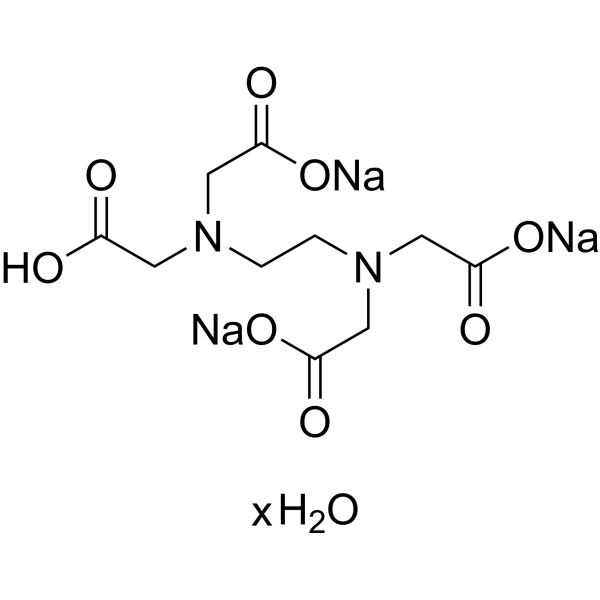
Synonyms: EDTA sodium hydrate
Ethylenediaminetetraacetic acid (EDTA) sodium hydrate is a kind of metal chelating agent (binds to bivalent and trivalent metal cations, including calcium). Ethylenediaminetetraacetic acid sodium hydrate has antibacterial, anti-inflammatory, antioxidant, anti-hypercalcemia and anticoagulant activities. Ethylenediaminetetraacetic acid sodium hydrate decreases the metal ion-catalyzed oxidative damage to proteins, and allows maintenance of reducing environment during protein purification. Ethylenediaminetetraacetic acid sodium hydrate can alleviate the liver fibrosis. Ethylenediaminetetraacetic acid sodium hydrate can be used for coronary artery disease and neural system disease research .
loading...
    loading...
27
27 Cited Publications
Cat. No.: HY-W127774
CAS No.: 85715-60-2
Synonyms: Ethylenediaminetetraacetic acid hydrate sodium
EDTA (Ethylenediaminetetraacetic acid) hydrate sodium is a kind of metal chelating agent (binds to bivalent and trivalent metal cations, including calcium). EDTA hydrate sodium has antibacterial, anti-inflammatory, antioxidant, anti-hypercalcemia and anticoagulant activities. EDTA hydrate sodium decreases the metal ion-catalyzed oxidative damage to proteins, and allows maintenance of reducing environment during protein purification. EDTA hydrate sodium can alleviate the liver fibrosis. Ethylenediaminetetraacetic acid can be used for coronary artery disease and neural system disease research .
loading...
    loading...
27
27 Cited Publications
Cat. No.: HY-Y0682B
CAS No.: 64-02-8
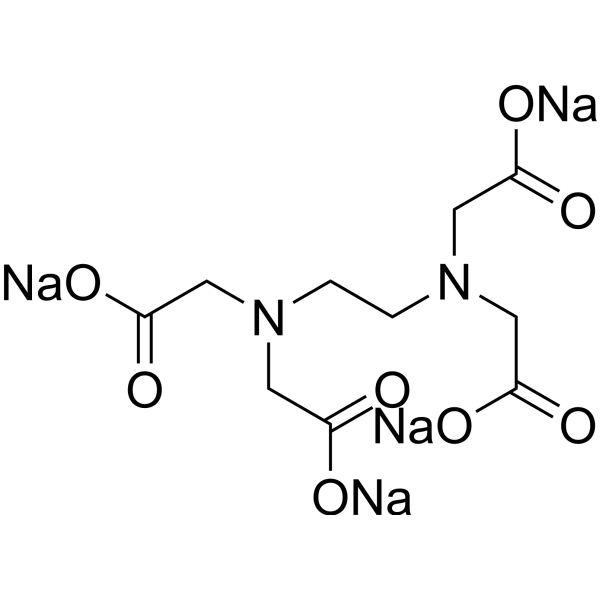
Synonyms: EDTA tetrasodium
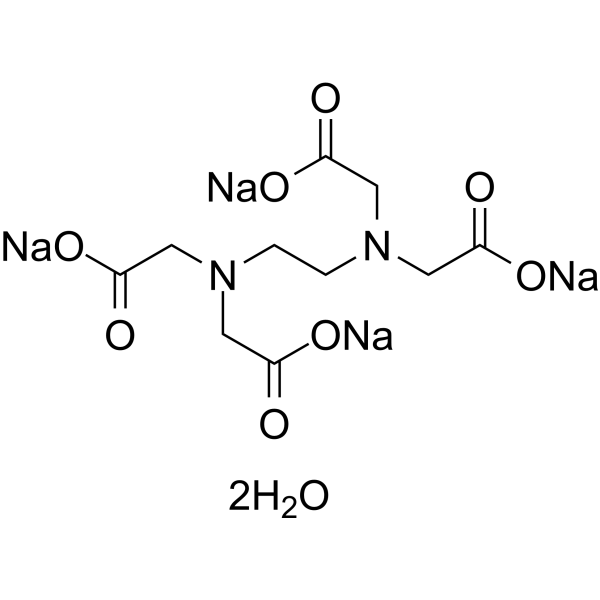
Ethylenediaminetetraacetic acid (EDTA) tetrasodium is a kind of metal chelating agent (binds to bivalent and trivalent metal cations, including calcium). Ethylenediaminetetraacetic acid tetrasodium has antibacterial, anti-inflammatory, antioxidant, anti-hypercalcemia and anticoagulant activities. Ethylenediaminetetraacetic acid tetrasodium decreases the metal ion-catalyzed oxidative damage to proteins, and allows maintenance of reducing environment during protein purification. Ethylenediaminetetraacetic acid tetrasodium can alleviate the liver fibrosis. Ethylenediaminetetraacetic acid tetrasodium can be used for coronary artery disease and neural system disease research .
loading...
    loading...
27
27 Cited Publications
Cat. No.: HY-Y0682A
CAS No.: 6381-92-6
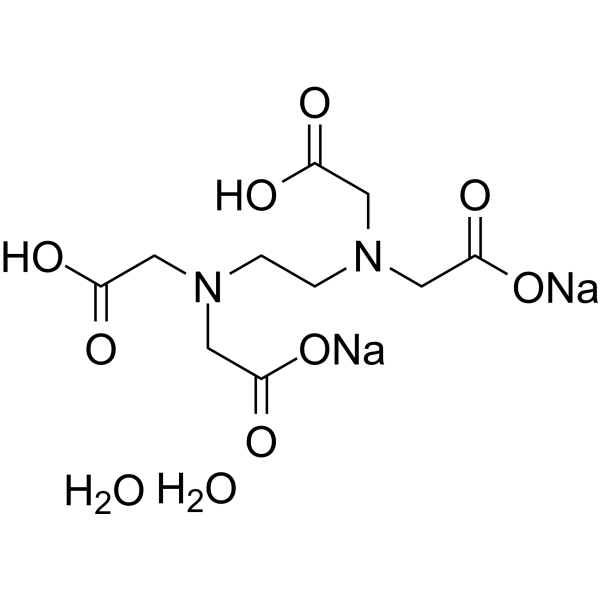
Synonyms: EDTA disodium dihydrate
Ethylenediaminetetraacetic acid (EDTA) disodium dehydrate is a kind of metal chelating agent (binds to bivalent and trivalent metal cations, including calcium). Ethylenediaminetetraacetic acid disodium dehydrate has antibacterial, anti-inflammatory, antioxidant, anti-hypercalcemia and anticoagulant activities. Ethylenediaminetetraacetic acid disodium dehydrate decreases the metal ion-catalyzed oxidative damage to proteins, and allows maintenance of reducing environment during protein purification. Ethylenediaminetetraacetic acid disodium dehydrate can alleviate the liver fibrosis. Ethylenediaminetetraacetic acid disodium dehydrate can be used for coronary artery disease and neural system disease research .
loading...
    loading...
27
27 Cited Publications
Cat. No.: HY-W087947
CAS No.: 65501-24-8
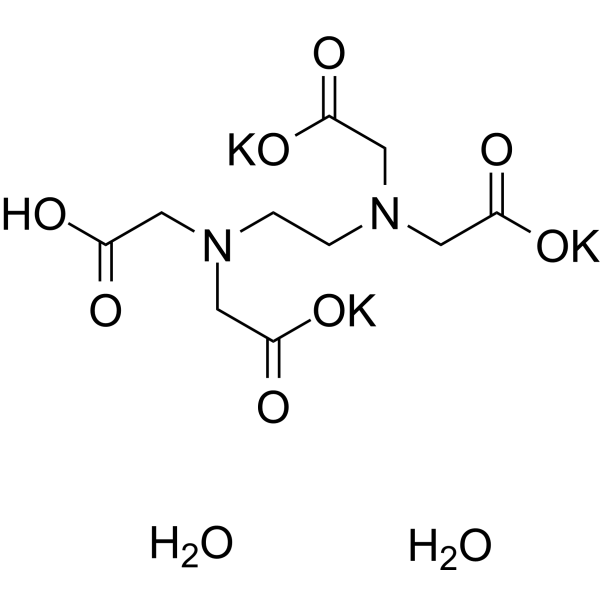
Synonyms: Ethylenediaminetetraacetic acid dihydrate tripotassium
EDTA dihydrate tripotassium (Ethylenediaminetetraacetic acid dihydrate tripotassium) is a kind of metal chelating agent (binds to bivalent and trivalent metal cations, including calcium). EDTA dihydrate tripotassium has antibacterial, anti-inflammatory, antioxidant, anti-hypercalcemia and anticoagulant activities. EDTA dihydrate tripotassium decreases the metal ion-catalyzed oxidative damage to proteins, and allows maintenance of reducing environment during protein purification. EDTA dihydrate tripotassium can alleviate the liver fibrosis. EDTA dihydrate tripotassium can be used for coronary artery disease and neural system disease research .
loading...
    loading...
24
24 Cited Publications
Cat. No.: HY-19725
CAS No.: 1235034-55-5
Target:  

Bcl-2 Family

Research Areas:  

Cancer

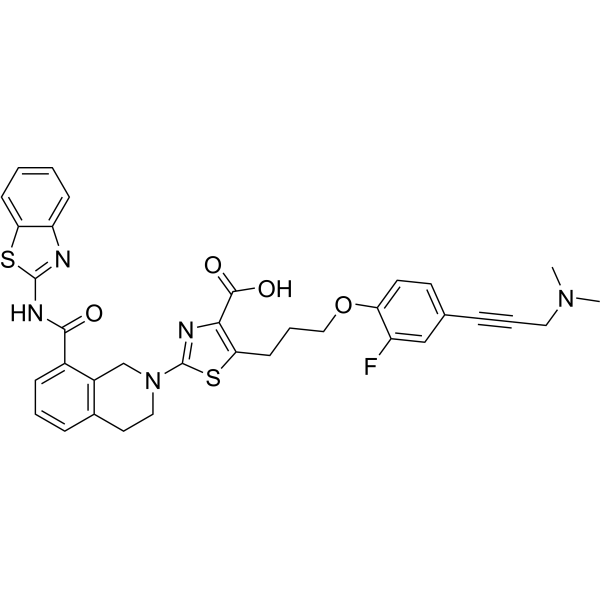
A-1155463, a chemical probe, is a highly potent and selective BCL-XL inhibitor with an EC50 of 70 nM in Molt-4 cell. A-1155463 is a click chemistry reagent, it contains an Alkyne group and can undergo copper-catalyzed azide-alkyne cycloaddition (CuAAc) with molecules containing Azide groups.
loading...
    loading...
23
23 Cited Publications
Cat. No.: HY-17508
CAS No.: 81103-11-9
Research Areas:  

Infection Cancer

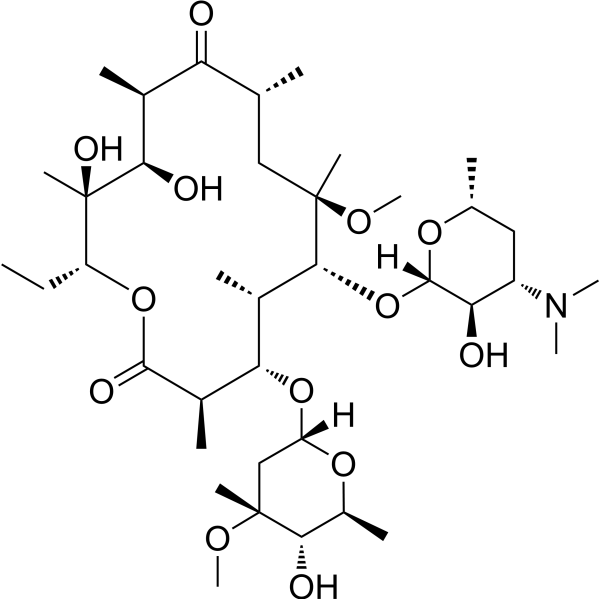
Clarithromycin has a broad spectrum of antimicrobial activity. Clarithromycin inhibits the CYP3A4-catalyzed triazolam alpha-hydroxylation with the IC50 (Ki) value of 56 (43) μM . Clarithromycin significantly inhibits the HERG potassium current .Clarithromycin affects the autophagic flux by impairing the signaling pathway linking hERG1 and PI3K .
loading...
    loading...
19
19 Cited Publications
Cat. No.: HY-108903
CAS No.: 37326-33-3
Synonyms: Vorhyaluronidase alfa; rHuPH 20
Research Areas:  

Metabolic Disease

Hyaluronidase (human recombinant) (Vorhyaluronidase alfa; rHuPH 20) is an enzyme that catalyzes the degradation of hyaluronic acid. Hyaluronidase (human recombinant) is used to improve the absorption and dispersal of parenteral fluids, medications, and contrast media .
loading...
    loading...
19
19 Cited Publications
Cat. No.: HY-120501
CAS No.: 1202764-53-1
Purity:  99.37%
Target:  

NF-κB

Research Areas:  

Inflammation/Immunology

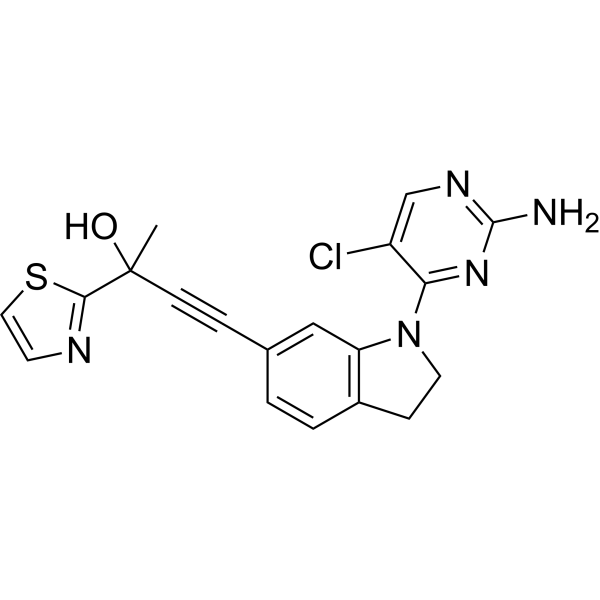
B022 is a potent and selective NF-κB-inducing kinase (NIK) inhibitor (Ki of 4.2 nM; IC50=15.1 nM). B022 protects liver from toxin-induced inflammation, oxidative stress, and injury . B022 is a click chemistry reagent, it contains an Alkyne group and can undergo copper-catalyzed azide-alkyne cycloaddition (CuAAc) with molecules containing Azide groups.
loading...
    loading...

